

How to Reduce Your Utility Bills Year-Round
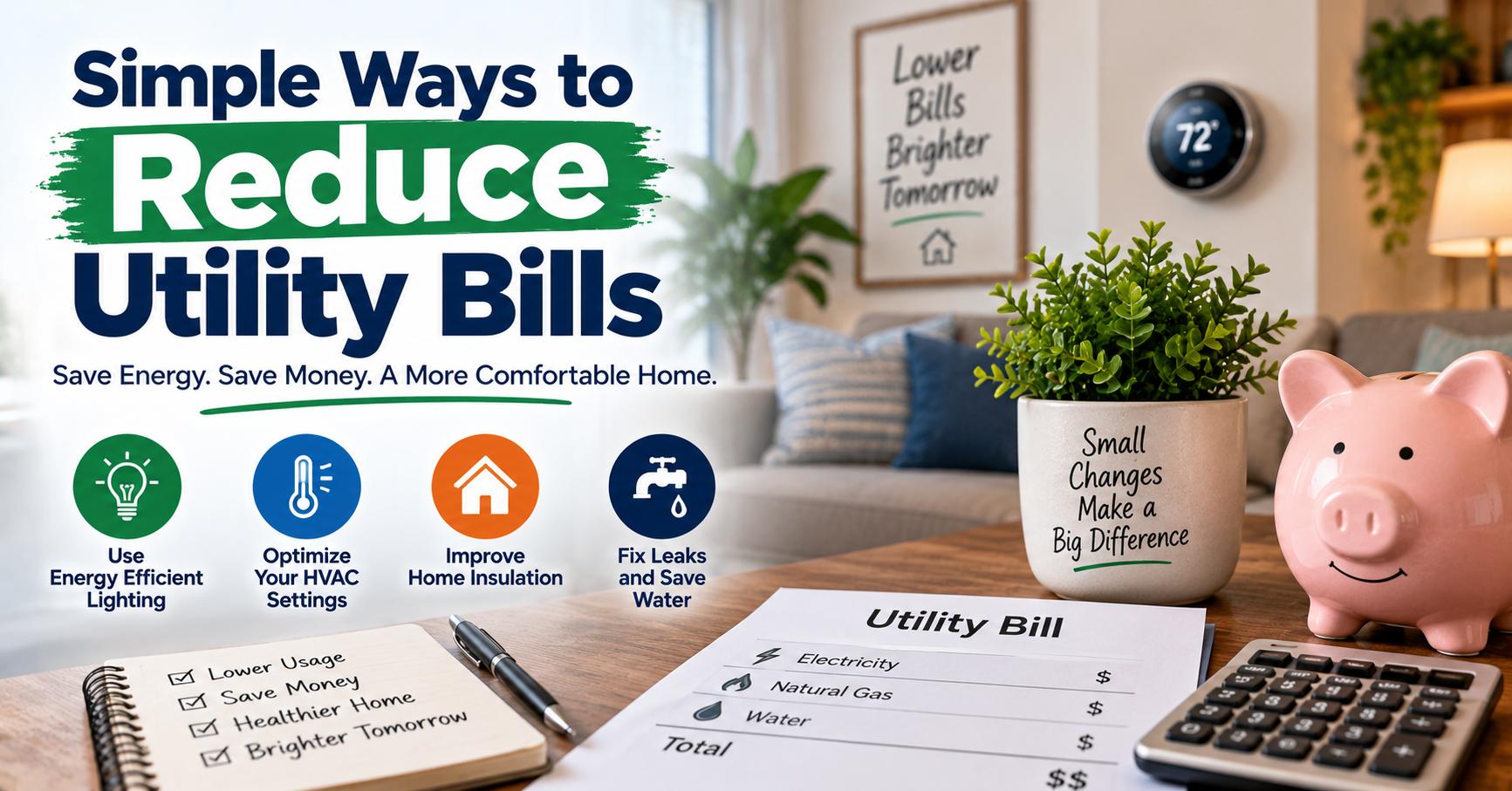
You can reduce your utility bills year-round by using less energy and water without sacrificing comfort. The biggest savings usually come from managing heating and cooling, fixing water leaks, reducing hot-water use, using appliances efficiently, and stopping unnecessary electricity use.
You do not need to make expensive upgrades to start. Simple changes to how you heat, cool, and use your home can make a noticeable difference over time.
What Is the Best Way to Reduce Utility Bills?
The best way to reduce utility bills is to focus first on the systems and habits that use the most energy or waste the most water. For most homes, that means managing HVAC use, fixing leaks, reducing hot-water consumption, and improving everyday energy habits.
Start with these steps:
- Adjust your thermostat when you are sleeping or away.
- Keep your HVAC system properly maintained.
- Replace or clean HVAC filters when needed.
- Fix dripping faucets and running toilets.
- Reduce unnecessary hot-water use.
- Run appliances efficiently.
- Seal obvious drafts around doors and windows.
- Turn off lights and electronics when they are not needed.
- Monitor your monthly utility usage.
You do not have to change everything at once. Start with the areas where you notice the most waste.
1. Adjust Your Thermostat to Use Less Energy
Adjusting your thermostat when you are asleep or away can reduce the amount of energy your HVAC system uses.
Heating and cooling can account for a large portion of a home’s energy use. Running your system continuously to maintain an extreme indoor temperature can increase your bill.
Instead:
- Set the thermostat to a comfortable temperature rather than an extreme one.
- Adjust the setting when everyone is asleep.
- Raise or lower the temperature when the home is empty.
- Use a programmable thermostat to automate temperature changes.
- Use a smart thermostat if its features are useful for your household.
For more guidance, see our recommendations for smart thermostat cooling settings.
Avoid making large, frequent temperature changes just to save money. A consistent, reasonable setting is usually easier to maintain.
2. Keep Your HVAC System Running Efficiently
Regular HVAC maintenance can help your heating and cooling system operate efficiently and avoid unnecessary energy use.
A dirty filter, blocked airflow, or poorly maintained equipment can make the system work harder to deliver the same comfort.
Simple steps include:
- Check the air filter regularly.
- Replace or clean it when needed.
- Keep supply vents and return vents clear.
- Keep furniture away from important airflow paths.
- Keep outdoor HVAC equipment free from leaves and debris.
- Schedule professional maintenance as recommended for your system.
Knowing how often to change your AC filter can also help maintain proper airflow and system performance.
If your cooling system is struggling to maintain a comfortable temperature or your energy costs have increased unexpectedly, professional cooling services can help identify the problem.
3. Seal Air Leaks Around Your Home
Sealing obvious air leaks can help prevent heated or cooled air from escaping your home.
Gaps around exterior doors, windows, attic access points, and other openings can allow outdoor air to enter and conditioned air to escape. This makes your HVAC system work harder.
Check for drafts around:
- Exterior doors
- Windows
- Attic access panels
- Pipe penetrations
- Electrical penetrations
- Other openings between conditioned and unconditioned areas
Weatherstripping and caulk can help with many small, accessible gaps. Larger air-leak problems may require professional evaluation.
4. Improve Insulation Where Your Home Needs It
Proper insulation helps slow heat transfer between your home and the outdoors, which can reduce the amount of heating and cooling your home needs.
The attic is an important area to check because inadequate insulation there can contribute to unwanted heat gain in summer and heat loss in winter.
Signs that your home may have an insulation or air-sealing problem include:
- Rooms that are consistently hotter or colder than others
- High heating or cooling costs
- Drafty areas
- Large temperature differences between floors
You do not necessarily need to replace all of your insulation. If you suspect a problem, start by identifying where heat is being lost or gained.
5. Reduce Your Water Heating Costs
Using less hot water is a simple way to reduce both water use and the energy required to heat that water.
Try these habits:
- Take shorter showers.
- Turn off the faucet while brushing your teeth.
- Wash clothes in cold water when appropriate.
- Run the dishwasher only when it is reasonably full.
- Fix leaking hot-water faucets.
- Avoid letting hot water run when you do not need it.
If your water heater is old or inefficient, professional maintenance or an efficiency assessment may also be worthwhile. Regular water heater maintenance can help identify developing problems and keep the system operating properly.
6. Fix Plumbing Leaks That Waste Water
Fixing plumbing leaks can lower your water bill and prevent damage to your home.
A dripping faucet may seem insignificant, but a leak that continues day and night can waste water. Running toilets and leaking pipes can waste even more.
Check:
- Faucets
- Toilets
- Showerheads
- Under-sink connections
- Appliance supply lines
- Exposed pipes
- Water heater connections
An unexplained increase in water usage can also be a warning sign of a hidden leak. Learn how to detect hidden plumbing leaks if you notice unexplained water usage, damp areas, or other signs of moisture.
If you notice damp areas, musty odors, water stains, or other signs of moisture along with higher water usage, investigate the problem promptly.
7. Use Major Appliances More Efficiently
Using appliances efficiently can reduce electricity and water consumption without requiring you to replace them.
For everyday savings:
- Run the dishwasher with a reasonably full load.
- Wash full loads of laundry when practical.
- Use energy-saving cycles when they meet your needs.
- Avoid unnecessarily high-temperature washing.
- Clean the dryer lint filter after each load.
- Keep refrigerator and freezer doors properly sealed.
- Avoid leaving appliances running when they are not needed.
Replacing an appliance may eventually make sense if it is very old or inefficient, but better usage habits are a good place to start.
8. Cut Unnecessary Electricity Use
Turning off electricity you do not need is one of the easiest ways to reduce household energy consumption.
Make a habit of:
- Turning off lights in empty rooms.
- Shutting down computers when they are not needed.
- Using sleep settings on electronics.
- Turning off entertainment equipment when it is not being used.
- Using smart power strips for groups of electronics.
Some devices continue using a small amount of electricity while plugged in. This standby consumption is usually modest for individual devices, but reducing unnecessary use across many devices can still help.
9. Switch to Energy-Efficient Lighting
LED bulbs use less electricity than traditional incandescent bulbs and can be a practical way to reduce lighting costs.
Start with the lights you use most often. Replacing a rarely used bulb will have a smaller effect than replacing bulbs that stay on for several hours every day.
You can also reduce lighting costs by:
- Turning lights off when leaving a room.
- Using natural daylight when practical.
- Using task lighting instead of lighting an entire room.
- Choosing the appropriate brightness for each space.
10. Use Ceiling Fans the Right Way
Ceiling fans can help you feel cooler without requiring you to lower the thermostat as much.
Fans cool people rather than lowering the actual temperature of the room. That means they are most useful when someone is in the room.
Use them when the room is occupied and turn them off when you leave. During cooler seasons, the appropriate fan direction can also help circulate indoor air more effectively.
Fans work best as a comfort tool alongside reasonable thermostat settings, not as a replacement for necessary heating or cooling.
11. Reduce Heating and Cooling Loss Through Windows
Managing sunlight and checking window seals can help reduce unnecessary heating and cooling demand.
During hot weather, curtains or shades can block some direct sunlight and reduce heat entering the home. During cooler weather, opening curtains during sunny periods can allow useful sunlight into rooms.
Also check for:
- Drafts around window frames
- Damaged seals
- Gaps around trim
- Condensation that appears unusually often
If you have significant drafts, improving the window seals may be more practical than immediately replacing the entire window.
12. Use Less Water Indoors and Outdoors
Reducing water use can lower your water bill and, when hot water is involved, may also reduce energy costs.
Simple changes include:
- Turn off faucets when water is not needed.
- Fix leaks quickly.
- Use efficient showerheads and faucets.
- Run full loads in the dishwasher and washing machine.
- Avoid unnecessarily long showers.
- Water landscaping only when needed.
- Water plants during cooler parts of the day when appropriate.
- Check outdoor faucets and irrigation systems for leaks.
Small changes become more valuable when they are repeated every day.
13. Check Your Utility Rate Plan
Your utility rate plan can affect how much you pay for the energy you use, especially if your provider offers different rates during peak and off-peak hours.
Check with your utility provider to see whether you have:
- Time-of-use pricing
- Peak and off-peak rates
- Energy-efficiency rebates
- Appliance rebates
- Other available programs
If your provider charges different rates at different times, shifting some energy-intensive activities to lower-cost periods may reduce your bill.
Always check the current rates and rules for your specific utility provider before changing your routine.
Which Home Upgrades Can Lower Utility Bills the Most?
The upgrades that save the most depend on your home, climate, utility rates, and existing equipment, but air sealing, insulation improvements, HVAC improvements, and efficient water heating can have a significant impact.
| Upgrade | May Reduce | Priority |
| Air sealing | Heating and cooling costs | High |
| Insulation improvements | Heating and cooling costs | High |
| HVAC improvements | Electricity or gas use | High |
| Efficient water heating | Water-heating costs | Medium–High |
| Programmable thermostat | Heating and cooling costs | Medium |
| LED lighting | Electricity use | Medium |
| Efficient appliances | Electricity and water use | Varies |
Do not assume an expensive upgrade will automatically produce the biggest savings. Fixing obvious leaks, drafts, and inefficient habits should usually come first.
How to Lower Utility Bills in Summer
In summer, focus on reducing unnecessary cooling and controlling heat entering the home.
Try these steps:
- Keep your thermostat at a reasonable setting.
- Use ceiling fans when rooms are occupied.
- Keep HVAC filters clean.
- Block excessive direct sunlight with curtains or shades.
- Seal obvious air leaks.
- Avoid adding unnecessary heat indoors during the hottest part of the day.
- Maintain your air conditioner properly.
Before the hottest weather arrives, follow these HVAC summer prep steps to help your cooling system operate efficiently.
If your AC runs almost constantly or your home cannot maintain a comfortable temperature, have the system checked instead of simply lowering the thermostat further.
How to Lower Utility Bills in Winter
In winter, focus on reducing heat loss and helping your heating system work efficiently.
Useful steps include:
- Seal drafts around doors and windows.
- Check your HVAC filter.
- Keep heating vents clear.
- Use your thermostat efficiently.
- Take advantage of useful sunlight during the day.
- Close curtains when they help reduce heat loss at night.
- Have your heating system maintained as needed.
If certain rooms remain cold even when the heating system is running normally, there may be an airflow, insulation, or ductwork problem that needs attention.
How Can You Find What Is Making Your Utility Bill So High?
The best way to find the cause of a high utility bill is to compare your actual usage with previous periods and then check the home’s biggest energy and water users.
Follow these steps:
- Compare your current bill with previous bills.
- Look at energy or water usage, not just the dollar amount.
- Check whether your utility provider changed its rates.
- Look for plumbing leaks.
- Check HVAC operation and filter condition.
- Consider whether extreme weather increased heating or cooling demand.
- Review changes in appliance or hot-water use.
- Check whether household occupancy or daily routines changed.
- Consider a professional inspection if usage remains unusually high.
A higher bill does not always mean your home suddenly became less efficient. Changes in weather, utility rates, or household usage can also affect the final amount.
Common Mistakes That Increase Utility Bills
Several everyday habits can quietly increase utility costs, including extreme thermostat settings, neglected HVAC maintenance, plumbing leaks, unnecessary hot-water use, and leaving electronics running.
Other common mistakes include:
- Heating or cooling an empty home unnecessarily
- Ignoring a running toilet
- Blocking HVAC vents
- Running appliances with very small loads
- Leaving lights on in empty rooms
- Ignoring drafts around doors and windows
- Using more hot water than necessary
- Delaying repairs when an HVAC system starts performing poorly
The easiest savings often come from correcting these small sources of waste.
How Much Can You Save by Reducing Utility Use?
There is no single savings amount that applies to every home because utility costs depend on climate, home size, energy prices, equipment efficiency, insulation, water use, and household habits.
A home with an inefficient HVAC system may have much more potential for savings than a highly efficient home. Likewise, a household with a plumbing leak may save more by fixing that leak than by changing lighting habits.
The best approach is to identify your home’s biggest source of waste first. Then make changes that address that specific problem.
A Simple Year-Round Utility-Saving Checklist
A simple routine can help you keep utility costs under control throughout the year.
Monthly:
- Review your utility usage.
- Look for unusual increases.
- Check for visible plumbing leaks.
- Check your HVAC filter.
- Look for unusual changes in heating or cooling performance.
Seasonally:
- Check doors and windows for drafts.
- Adjust thermostat schedules.
- Inspect accessible plumbing connections.
- Review outdoor water use.
- Prepare your HVAC system for the upcoming season.
Annually:
- Have major systems inspected as appropriate.
- Review your home’s air sealing and insulation needs.
- Check available utility rebates.
- Evaluate whether older equipment is still operating efficiently.
You do not need to spend a lot of money to follow this checklist. Regular attention can help you catch waste and small problems before they become expensive. A seasonal plumbing maintenance checklist can also help you identify leaks and other sources of unnecessary water use. For a more detailed inspection, use our home plumbing inspection checklist to see what to check around your home.
Final Takeaway
The most effective way to reduce utility bills year-round is to focus on the areas that consume or waste the most energy and water. Start with your HVAC system, thermostat settings, plumbing leaks, hot-water use, appliances, and obvious air leaks.
You can then build simple habits around those areas, such as checking your utility usage each month and adjusting your routine as the seasons change.
If your bills remain unusually high despite normal usage, the problem may be an inefficient HVAC system, hidden plumbing leak, air leak, or another issue that is difficult to identify without professional testing.
FAQs
How can I reduce my utility bills without spending money?
You can reduce utility bills without spending money by adjusting your thermostat, turning off unused lights and electronics, reducing hot-water use, running full appliance loads, and fixing wasteful habits.
What is the easiest way to lower utility bills?
The easiest way to lower utility bills is to reduce unnecessary heating, cooling, water, and electricity use. Adjusting your thermostat and fixing leaks are good places to start.
Does changing the thermostat really lower utility bills?
Yes, using reasonable thermostat settings and adjusting them when you are asleep or away can reduce the amount of energy your HVAC system uses.
Can a water leak increase my utility bill?
Yes. A leaking faucet, running toilet, or hidden plumbing leak can continuously waste water and increase your water bill.
Why did my utility bill suddenly increase?
A sudden increase can result from higher utility rates, extreme weather, increased HVAC use, a plumbing leak, changes in household usage, or an appliance or HVAC problem.
What uses the most energy in a home?
Heating and cooling often represent some of the largest sources of household energy use, although the exact amount varies by home, climate, equipment, and household habits.
Is it cheaper to leave the AC running all day?
Not necessarily. The best approach depends on the home, climate, system, and thermostat settings. Avoiding unnecessary cooling when the home is empty can help reduce energy use, while extreme temperature changes may not always be practical.
Do unplugged appliances lower electricity bills?
Unplugging some electronics can eliminate their standby electricity use, but the savings from individual devices are usually small. Focus first on larger energy users and unnecessary equipment that stays powered for long periods.