Plumbing Maintenance Checklist for Every Season
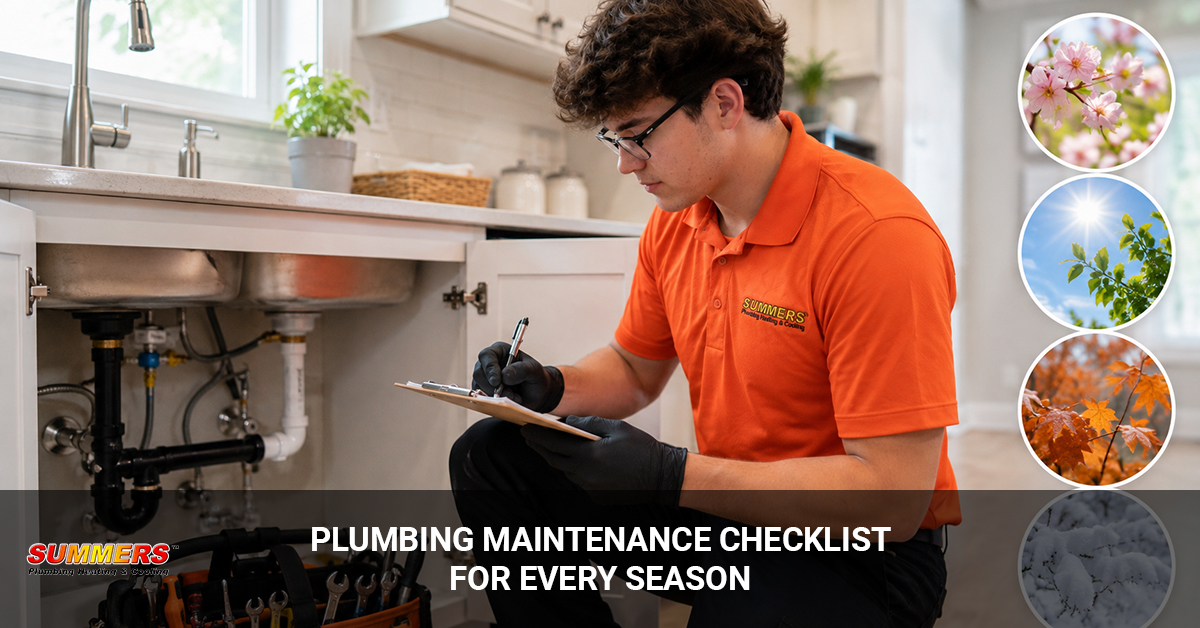
A seasonal plumbing maintenance checklist helps you prevent leaks, clogged drains, frozen pipes, and other common plumbing problems before they become expensive repairs. Spending a few minutes inspecting your plumbing at the start of each season can save you time, money, and the stress of dealing with unexpected emergencies.
Every season affects your plumbing system differently. Spring is the time to check for damage left behind by winter. Summer puts more demand on outdoor faucets, sprinkler systems, and water use. Fall is your chance to prepare pipes and fixtures for freezing temperatures, while winter focuses on protecting your plumbing from cold-weather damage.
Most of these maintenance tasks are simple enough for homeowners to do on their own. By making seasonal inspections part of your home maintenance routine, you can spot small issues early, improve your plumbing system’s performance, and help extend the life of your pipes, fixtures, and appliances.
Use the seasonal plumbing maintenance checklist below to keep your plumbing system running smoothly throughout the year.
Spring Plumbing Maintenance Checklist
Spring is the best time to check your plumbing for damage caused by winter. Cold temperatures can weaken pipes, outdoor faucets, and other plumbing components, and some problems may not become noticeable until the weather warms up.
A simple inspection now can help you catch small issues before they turn into costly repairs. Start with these spring plumbing maintenance tasks to keep your system in good shape.
Inspect Outdoor Faucets for Winter Damage
Inspect your outdoor faucets for cracks or leaks before you start using them regularly. Water trapped inside pipes during freezing weather can expand and damage outdoor faucets without obvious signs.
Turn on each outdoor faucet and check for:
- Water leaking around the faucet
- Dripping after the faucet is turned off
- Low water pressure
- Water leaking from the wall where the pipe enters your home
If you notice any of these issues, repair the faucet as soon as possible. Fixing freeze damage early can help prevent larger plumbing problems later in the year.
Check for Plumbing Leaks
Check your home for plumbing leaks to prevent water damage and high water bills. Even a slow leak can waste water and lead to mold, wood rot, or damaged drywall if it’s left untreated.
Inspect common areas, including:
- Under kitchen and bathroom sinks
- Around toilets
- Near bathtubs and showers
- Around the water heater
- Washing machine supply hoses
- Exposed pipes in the basement or crawl space
Look for damp spots, water stains, corrosion, mold, or dripping pipes. Repairing a small leak now is much easier than dealing with major water damage later.
Test Your Sump Pump
Test your sump pump before spring storms arrive to make sure it’s ready to protect your home from flooding. A sump pump that fails during heavy rain can leave your basement or crawl space vulnerable to water damage.
Here’s a quick way to test it:
- Pour a bucket of water into the sump pit.
- Make sure the float rises.
- Confirm the pump turns on automatically.
- Check that it pumps the water outside.
- Verify that it shuts off after the pit is empty.
If the pump doesn’t start, runs continuously, or fails to remove the water, schedule repairs before the next heavy rainfall.
Quick Tip: If your sump pump has a battery backup, test it too. It can keep the pump running during a power outage.
Inspect Washing Machine Hoses
Inspect your washing machine hoses for signs of wear to reduce the risk of unexpected leaks. These hoses are under constant water pressure and can fail as they age.
Check for:
- Cracks
- Bulges
- Kinks
- Loose connections
- Signs of leaking
If the hoses look worn or are several years old, consider replacing them before they burst and cause water damage.
Check Your Water Heater
Check your water heater for leaks and other warning signs to help prevent unexpected breakdowns. A quick inspection can reveal small problems before they affect your hot water supply.
Look for:
- Water around the base of the tank
- Rust or corrosion on fittings
- Dripping valves
- Unusual popping or rumbling noises
- Rust-colored hot water
If you notice any of these signs, schedule professional water heater repair before the problem becomes more serious. Prompt repairs can help restore reliable hot water and prevent more expensive damage.
Clean Gutters and Downspouts
Clean your gutters and downspouts to help move rainwater away from your home’s foundation. Although they’re not part of your plumbing system, clogged gutters can contribute to water pooling around your home and increase the risk of moisture problems.
Remove leaves, twigs, and other debris, and make sure downspouts discharge water several feet away from your foundation.
Spring Plumbing Checklist at a Glance
Complete these tasks at the beginning of spring to help keep your plumbing system in good condition:
- Inspect outdoor faucets for winter damage.
- Check your home for plumbing leaks.
- Test your sump pump.
- Inspect washing machine hoses.
- Check your water heater.
- Clean gutters and downspouts.
Spending a little time on spring plumbing maintenance can help you catch problems early, avoid unexpected repairs, and prepare your home for the months ahead.
Summer Plumbing Maintenance Checklist
Summer is the best time to inspect your outdoor plumbing and make sure you’re using water efficiently. Higher temperatures, lawn watering, gardening, and outdoor activities put extra demand on your plumbing system, making regular maintenance even more important.
Use this summer plumbing maintenance checklist to help prevent leaks, reduce water waste, and keep your plumbing working properly throughout the season.
Inspect Your Irrigation System
Inspect your irrigation system for leaks and damaged sprinkler heads before they waste water. Even a small leak can increase your water bill and leave parts of your lawn overwatered or too dry.
Turn on your irrigation system and check for:
- Broken or clogged sprinkler heads
- Leaking valves or pipe connections
- Sprinklers spraying sidewalks or driveways
- Dry patches or uneven watering
Replace damaged components and adjust sprinkler heads so water reaches your lawn instead of paved surfaces.
Check Outdoor Hose Bibs
Check your outdoor hose bibs for leaks before heavy summer use. Hose bibs are used more often during the warmer months, and worn parts can lead to water waste.
Inspect each faucet for:
- Water dripping from the spout
- Leaks around the handle
- Loose hose connections
- Cracks or corrosion
Tighten loose fittings or replace worn washers to stop small leaks before they get worse.
Quick Tip: Disconnect your garden hose when you’re finished using it. Leaving a hose attached all summer can put extra pressure on the faucet and shorten its lifespan.
Clean Your Garbage Disposal
Clean your garbage disposal regularly to prevent odors and clogs. Summer meals often include fresh fruits, vegetables, and backyard cookouts, which can put extra strain on your disposal.
To keep it running smoothly:
- Run cold water before, during, and after using it.
- Grind small amounts of food at a time.
- Avoid putting grease, bones, coffee grounds, pasta, rice, or fibrous vegetables down the disposal.
- Clean the disposal regularly to remove food residue and odors.
A well-maintained garbage disposal is less likely to clog and will continue to perform efficiently.
Monitor Your Water Usage
Monitor your water usage throughout the summer to catch leaks early and avoid higher utility bills. Increased outdoor watering can make it difficult to notice when you’re wasting water.
You can reduce water use by:
- Watering your lawn early in the morning or late in the evening.
- Adjusting sprinkler timers after rainfall.
- Repairing dripping outdoor faucets promptly.
- Using a spray nozzle when washing your car.
- Comparing your monthly water bill to previous summers.
If your water usage suddenly increases without a clear reason, inspect your plumbing for hidden leaks.
Watch for Sewer Line Warning Signs
Watch for sewer line warning signs before a small blockage turns into a major plumbing problem. Tree roots grow rapidly during the summer and can enter underground sewer lines through small cracks or joints.
Common warning signs include:
- Multiple slow drains
- Gurgling sounds from sinks or toilets
- Sewage odors inside or outside your home
- Wet or unusually green patches in your yard
If you notice more than one of these signs, contact a licensed plumber for an inspection before the blockage gets worse.
Summer Plumbing Checklist at a Glance
Complete these maintenance tasks during the summer to keep your plumbing system in good condition:
- Inspect your irrigation system.
- Check outdoor hose bibs for leaks.
- Clean your garbage disposal.
- Monitor your water usage.
- Watch for sewer line warning signs.
A few simple maintenance tasks can help you save water, prevent common plumbing problems, and keep your plumbing system running efficiently throughout the summer.
Fall Plumbing Maintenance Checklist
Fall is the best time to prepare your plumbing for freezing temperatures. Completing a few maintenance tasks before winter arrives can help prevent frozen pipes, water heater problems, and unexpected plumbing repairs.
Use this fall plumbing maintenance checklist to get your home’s plumbing ready for colder weather.
Disconnect Garden Hoses
Disconnect your garden hoses before the first freeze to protect outdoor faucets and water lines. Water left inside a connected hose can freeze, expand, and damage both the hose and the pipe behind the faucet.
After removing the hose:
- Drain any remaining water.
- Store the hose in a dry location.
- Check the outdoor faucet for leaks or cracks.
- Install an insulated faucet cover if you live in a cold climate.
Taking a few minutes to disconnect and store your hoses can help prevent burst pipes during the winter.
Shut Off Outdoor Faucets
Shut off the water supply to outdoor faucets before freezing temperatures arrive. This helps keep water from sitting inside exterior pipes where it can freeze and expand.
If your home has shut-off valves for outdoor faucets:
- Turn off the indoor shut-off valve.
- Open the outdoor faucet.
- Allow any remaining water to drain out.
- Leave the faucet open if recommended for your plumbing system.
Draining outdoor water lines is one of the simplest ways to reduce the risk of freeze damage.
Insulate Exposed Pipes
Insulate exposed pipes before winter to help keep them from freezing. Pipes located in unheated spaces are especially vulnerable when temperatures drop.
Inspect pipes in areas such as:
- Basements
- Crawl spaces
- Garages
- Attics
- Utility rooms
Replace damaged insulation and install foam pipe insulation on any exposed pipes that aren’t already protected.
Quick Tip: Pay extra attention to pipes near exterior walls. These areas tend to get colder and are more likely to freeze during winter.
Flush Your Water Heater
Flush your water heater in the fall to improve its efficiency before winter. Removing sediment from the tank helps the unit heat water more effectively and may extend its lifespan.
Signs your water heater may need flushing include:
- Rumbling or popping noises
- Reduced hot water supply
- Longer heating times
If you’re not comfortable flushing the tank yourself, schedule professional water heater maintenance before winter begins to improve efficiency and extend the unit’s lifespan.
Clean Sink and Shower Drains
Clean your sink and shower drains to help prevent clogs during the busy holiday season. Hair, soap scum, and food debris can build up over time and slow water flow.
To keep drains clear:
- Remove hair and visible debris.
- Clean drain strainers regularly.
- Flush drains with hot water.
- Avoid pouring grease or cooking oil down the kitchen sink.
Routine drain cleaning helps keep water flowing properly and reduces the chance of stubborn blockages.
Test Shut-Off Valves
Test your shut-off valves before winter so they’ll work properly during a plumbing emergency. A valve that’s stuck or leaking can make it difficult to stop the water if a pipe bursts.
Check the shut-off valves:
- Under sinks
- Behind toilets
- Behind the washing machine
- Near the dishwasher
Turn each valve on and off to make sure it operates smoothly. Replace any valve that leaks or doesn’t close completely.
Fall Plumbing Checklist at a Glance
Complete these maintenance tasks before the weather turns cold:
- Disconnect and store garden hoses.
- Shut off outdoor faucets.
- Insulate exposed pipes.
- Flush your water heater.
- Clean sink and shower drains.
- Test shut-off valves.
Preparing your plumbing system in the fall can help reduce the risk of frozen pipes, improve your water heater’s performance, and keep your home ready for the winter months.
Winter Plumbing Maintenance Checklist
Winter is the most important season for plumbing maintenance because freezing temperatures can cause pipes to freeze and burst. Taking a few preventive steps before and during cold weather can help protect your home from water damage and expensive emergency repairs.
Use this winter plumbing maintenance checklist to keep your plumbing system protected throughout the colder months.
Keep Your Home Warm
Keep your home at a consistent temperature to help prevent pipes from freezing. Even if you’re away for a day or two, don’t turn the heat off completely.
Set your thermostat to at least 55°F (13°C) so warm air continues circulating around your plumbing system.
Pay extra attention if you have pipes located in:
- Basements
- Crawl spaces
- Attics
- Garages
- Exterior walls
Maintaining a steady indoor temperature is one of the easiest ways to reduce the risk of frozen pipes.
Protect Exposed Pipes
Protect exposed pipes with insulation before freezing weather arrives. For additional ways to protect your pipes from freezing, including tips for extremely cold weather, read our complete guide. Pipes in unheated areas are the most likely to freeze during cold temperatures.
Inspect exposed pipes in:
- Basements
- Crawl spaces
- Garages
- Attics
- Utility rooms
Replace damaged insulation or install foam pipe sleeves where needed.
If extremely cold weather is forecast, open the cabinet doors under kitchen and bathroom sinks. This allows warm indoor air to circulate around the pipes.
Quick Tip: Seal cracks and gaps around pipes, windows, and doors where cold air can enter. Reducing drafts provides extra protection against frozen pipes.
Let Faucets Drip During Extreme Cold
Letting faucets drip during extreme cold can help keep water moving and reduce the chance of frozen pipes. Running water is less likely to freeze than standing water.
When temperatures drop below freezing:
- Let both the hot and cold water drip slowly from faucets connected to vulnerable pipes.
- Only a small, steady drip is necessary.
- Keep the water running until temperatures rise.
Using a small amount of water is far less expensive than repairing a burst pipe and the water damage it can cause.
Know Where Your Main Water Shut-Off Valve Is
Know the location of your main water shut-off valve before a plumbing emergency happens. If a pipe bursts, shutting off the water quickly can limit damage to your home.
Make sure you know:
- Where the valve is located.
- How to turn it off.
- That everyone in your household knows how to operate it.
Being prepared can save valuable time when every minute counts.
Watch for Frozen Pipe Warning Signs
Watch for signs of frozen pipes so you can act before they burst. Frozen pipes often show warning symptoms before they fail completely.
Common signs include:
- Little or no water coming from a faucet
- Frost forming on exposed pipes
- Banging or whistling noises inside the plumbing
- Bulging sections of pipe
- Unusual odors coming from drains
If you suspect a pipe has frozen, don’t use an open flame to thaw it. Instead, contact a plumber for professional pipe thawing to safely restore water flow before the pipe bursts.
Winter Plumbing Checklist at a Glance
Complete these maintenance tasks before and during the winter season:
- Keep your home at a consistent temperature.
- Protect exposed pipes with insulation.
- Let faucets drip during extreme cold.
- Know where your main water shut-off valve is located.
- Watch for signs of frozen pipes.
A little preparation before winter can help protect your plumbing system from freeze damage, reduce the risk of costly repairs, and keep your home running smoothly until warmer weather returns.
Seasonal Plumbing Maintenance Checklist
Use this quick-reference checklist at the beginning of each season to help keep your plumbing system in good condition.
| Season | Maintenance Tasks |
| Spring |
|
| Summer |
|
| Fall |
|
| Winter |
|
Keeping this checklist handy makes it easy to stay on top of routine maintenance and reduce the risk of plumbing problems throughout the year.
Final Thoughts
Following a seasonal plumbing maintenance checklist is one of the easiest ways to keep your plumbing system in good condition. A few simple inspections each season can help you catch small problems early, reduce the risk of costly repairs, and prevent water damage before it affects your home’s walls, floors, or foundation.
Focus on the maintenance tasks that fit the season. Check for damage after winter, inspect outdoor plumbing during summer, prepare your pipes for freezing weather in the fall, and take extra steps to protect your plumbing during the winter months.
While many routine maintenance tasks are easy for homeowners to handle, some problems require professional attention. If you notice persistent leaks, frozen or burst pipes, recurring drain clogs, sewer line issues, or water heater problems, contact a licensed plumber. Addressing these issues early can help prevent more serious damage and extend the life of your plumbing system.
By making seasonal plumbing maintenance part of your regular home care routine, you’ll improve your plumbing system’s reliability, avoid many common plumbing emergencies, and enjoy greater peace of mind all year long.