

Smart Thermostats Worth Buying in 2026
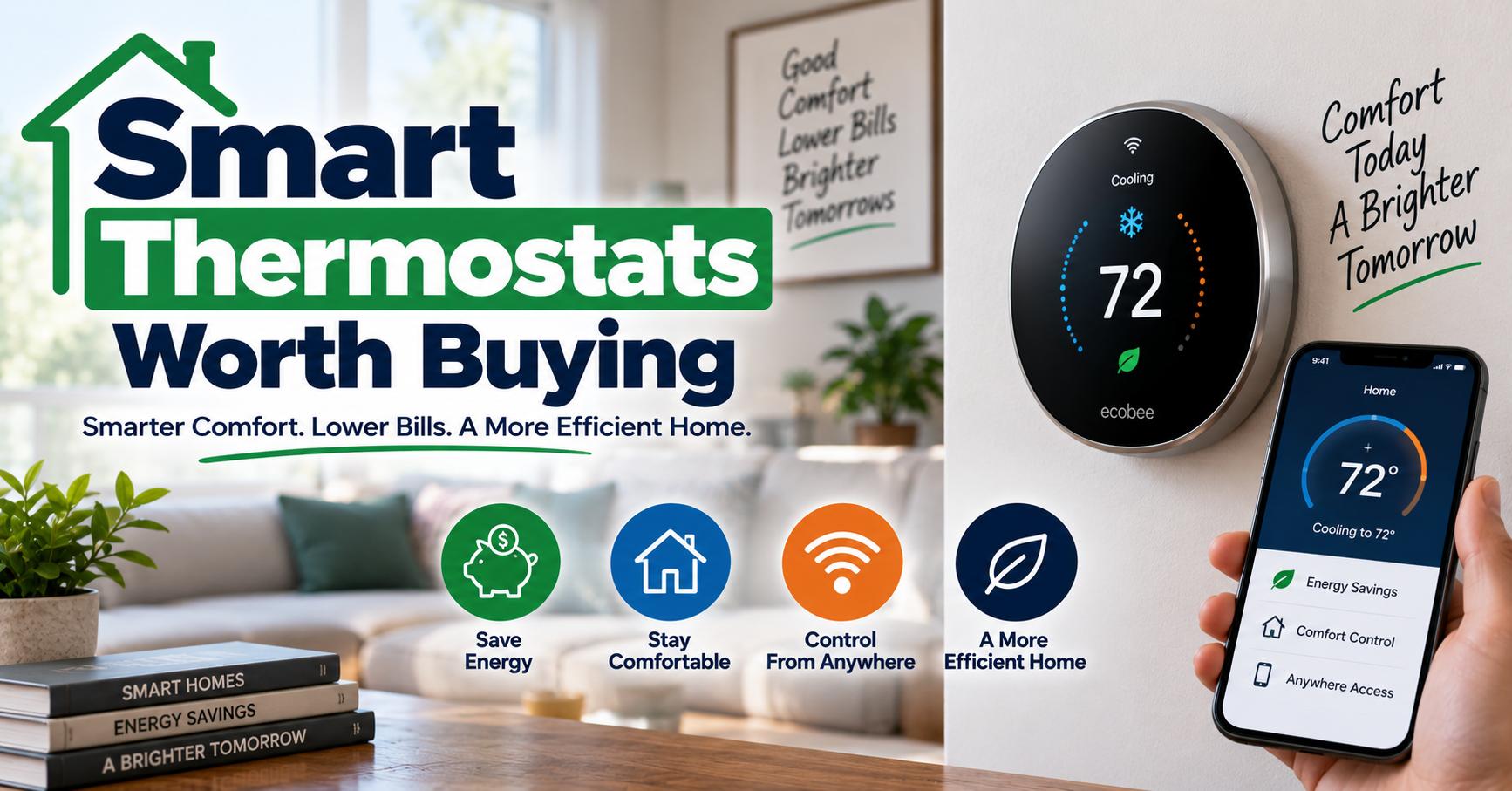
Yes, smart thermostats are worth buying in 2026 if you want better control over your heating and cooling, remote access, automatic scheduling, or room-by-room temperature control. They can also help reduce HVAC energy use, but the savings depend on your home, HVAC system, climate, and how you use the thermostat.
The biggest mistake is choosing a thermostat based only on features or price. Your first priority should be making sure it works with your HVAC system.
Are Smart Thermostats Worth Buying in 2026?
Smart thermostats are worth buying in 2026 for many homeowners, especially those who want to control their HVAC system from a phone and automate temperature settings.
A smart thermostat can do more than turn your heating or cooling on and off. Depending on the model, it can learn your schedule, detect when people are home, adjust temperatures automatically, and provide energy-use information.
They are especially useful if:
- You regularly leave home for work or school.
- You want to control the thermostat remotely.
- Your schedule changes often.
- You want automatic temperature adjustments.
- Different rooms in your home have different comfort needs.
- You want to monitor HVAC use from your phone.
A smart thermostat may not be worth the extra cost if you already use a programmable thermostat effectively and do not need remote control or automation. If you want to get the most from your thermostat, learn more about smart thermostat cooling settings and how to use temperature schedules effectively.
What Should You Look for in a Smart Thermostat?
The most important things to look for are HVAC compatibility, scheduling, remote control, sensors, automation, and the wiring your home requires.
Before buying one, check these features:
HVAC compatibility: Make sure the thermostat supports your heating and cooling system, including heat pumps or multi-stage equipment if you have them.
Scheduling: Look for flexible schedules that let you reduce heating or cooling when you are asleep or away.
Remote control: A phone app lets you check and change the temperature when you are away from home.
Temperature sensors: Remote sensors can help balance temperatures between rooms.
Occupancy detection: Some models can detect when people are home and adjust settings accordingly.
Geofencing: This can change the temperature when your phone indicates that you have left or returned home.
Smart-home compatibility: Check whether the thermostat works with the smart-home platform or voice assistant you already use.
C-wire requirements: Some thermostats need a common wire for power, while others have alternative installation options.
Do not pay for features you will never use. A simpler thermostat may be a better choice if you only need scheduling and remote control.
Best Smart Thermostats Worth Buying in 2026
The best smart thermostats worth considering in 2026 include the Google Nest Learning Thermostat, ecobee Smart Thermostat Premium, Honeywell Home T9, and ecobee Smart Thermostat Enhanced.
Your best option depends on your HVAC system and the features you care about most.
1. Google Nest Learning Thermostat
The Google Nest Learning Thermostat is a strong choice for homeowners who want automatic scheduling and a polished smart-home experience.
It can learn temperature preferences and create schedules based on your routine. You can also control it remotely through the Google Home ecosystem.
It is a good fit if you want:
- Automatic temperature adjustments
- A simple interface
- Remote control
- Smart-home integration
- Learning features
Check compatibility carefully before buying, especially if you have a heat pump, multi-stage system, or another specialized HVAC setup.
2. ecobee Smart Thermostat Premium
The ecobee Smart Thermostat Premium is a good choice if room sensors and advanced home controls are important to you.
Its remote sensors can help monitor temperatures in different parts of your home. This can be useful when one room is consistently warmer or colder than the rest of the house.
It is worth considering if you want:
- Remote temperature sensors
- Room-by-room temperature monitoring
- Advanced scheduling
- Smart-home integration
- More detailed comfort control
It may be more thermostat than you need if your main goal is simply setting a schedule.
3. Honeywell Home T9
The Honeywell Home T9 is a good option for homeowners who want room sensors without choosing the most expensive thermostat available.
Its sensor-based approach can help address uneven temperatures between rooms. That makes it useful for larger homes or homes where certain rooms are rarely comfortable.
Consider it if you want:
- Remote room sensors
- Better temperature balance
- Scheduling
- Remote control
- A straightforward interface
As with any smart thermostat, confirm compatibility with your existing HVAC equipment before purchasing.
4. ecobee Smart Thermostat Enhanced
The ecobee Smart Thermostat Enhanced is a good middle-ground option if you want smart controls without paying for every premium feature.
It provides core smart thermostat functions such as remote control, scheduling, and smart-home integration.
It can make sense if you want:
- A modern smart thermostat
- App-based control
- Automated scheduling
- Smart-home integration
- A lower-cost option than premium models
The right choice comes down to whether you actually need the additional features offered by higher-end models.
Smart Thermostat Comparison
Here is a quick comparison of the main smart thermostats worth considering in 2026:
| Thermostat | Best For | Room Sensors | Learning/Automation | Remote Control | Price Range |
| Google Nest Learning Thermostat | Automatic scheduling | Yes | Yes | Yes | $200–$300 |
| ecobee Smart Thermostat Premium | Advanced comfort control | Yes | Yes | Yes | $200–$250 |
| Honeywell Home T9 | Room-by-room control | Yes | Automation features | Yes | $150–$200 |
| ecobee Smart Thermostat Enhanced | Value | Optional | Smart automation | Yes | $120–$180 |
Prices can vary by retailer, promotions, bundles, and included sensors. Check the current manufacturer specifications and pricing before purchasing.
Which Smart Thermostat Is Best for Your HVAC System?
The best smart thermostat is the one that is fully compatible with your HVAC system.
A thermostat designed for a basic furnace and central AC system may not work the same way with a heat pump, multi-stage system, variable-speed equipment, or zoned HVAC. If you have a heat pump, understanding common heating problems can also help you choose compatible controls; see our guide to heat pump not heating.
Before buying, identify whether you have:
- Central air conditioning
- A furnace
- A heat pump
- Multi-stage heating or cooling
- A zoned HVAC system
- A boiler
- Another specialized heating system
You should also check the existing thermostat wiring and the manufacturer’s compatibility checker.
If you are unsure about your system, ask an HVAC professional before purchasing. Choosing the wrong thermostat can lead to installation problems or prevent your equipment from operating correctly.
Do You Need a C-Wire for a Smart Thermostat?
You may need a C-wire for a smart thermostat because it provides continuous power to the thermostat.
Traditional thermostats can sometimes operate with very little power, while smart thermostats need more consistent power for features such as Wi-Fi, displays, sensors, and automation.
Some smart thermostats can work without a C-wire or include an alternative power solution. However, this depends on the specific model and HVAC system.
Before buying, check:
- Whether your current thermostat has a C-wire
- Whether the new thermostat requires one
- Whether the manufacturer provides an adapter or alternative
- Whether your HVAC system supports the thermostat
If the wiring is unclear, professional installation is safer than guessing.
Can a Smart Thermostat Actually Lower Your Energy Bill?
A smart thermostat can lower your energy bill by reducing unnecessary heating and cooling when you are asleep or away.
The thermostat itself does not magically make your HVAC system more efficient. The savings come from better control of when and how long the system runs. When evaluating overall HVAC efficiency, it’s also useful to understand SEER2 ratings, which measure cooling efficiency under standardized conditions.
Useful features include:
- Automatic scheduling
- Occupancy detection
- Geofencing
- Remote control
- Energy-use reports
- Temperature setbacks when the home is empty
For example, if your home is empty for eight hours during the workday, automatically reducing heating or cooling during that period can prevent your HVAC system from conditioning an empty house.
Your actual savings will vary. A smart thermostat will usually have less impact if you already use a programmable thermostat correctly and rarely leave the home empty.
When Is a Smart Thermostat Not Worth Buying?
A smart thermostat may not be worth buying if you already have a programmable thermostat that meets your needs or your HVAC system has compatibility limitations.
You may not need one if:
- You rarely change your thermostat settings.
- Someone is home most of the day.
- You already use an effective heating and cooling schedule.
- You do not need phone or remote control.
- Your HVAC system requires specialized controls.
- The additional cost is not justified by the features you will use.
A basic programmable thermostat can still be a good choice. Smart does not automatically mean better for every home.
Smart Thermostat vs Programmable Thermostat
A smart thermostat offers more automation and remote control, while a programmable thermostat provides basic scheduling at a lower upfront cost.
| Feature | Smart Thermostat | Programmable Thermostat |
| Temperature scheduling | Yes | Yes |
| Phone control | Yes | Usually no |
| Remote monitoring | Yes | No |
| Occupancy detection | Some models | Usually no |
| Learning | Some models | No |
| Smart-home integration | Yes | Usually no |
| Upfront cost | Higher | Lower |
If you only want your thermostat to follow a daily schedule, a programmable model may be all you need.
If you want to control your HVAC from anywhere and automate temperature changes based on your routine, a smart thermostat is more useful.
How Much Should You Spend on a Smart Thermostat?
You should spend enough to get the features and HVAC compatibility you need, rather than simply buying the most expensive model.
Budget models can handle basic scheduling and remote control. Mid-range models may add sensors and more automation. Premium models usually offer more advanced comfort controls and smart-home features.
Before comparing prices, decide which features actually matter to you.
For example, paying more for multiple room sensors makes sense if your home has major temperature differences. It may not make sense if your home already maintains an even temperature.
Is a Smart Thermostat Easy to Install?
A smart thermostat can be straightforward to install when the HVAC system and existing wiring are compatible, but some installations are better left to a professional.
Before installation:
- Check your HVAC system type.
- Check the existing thermostat wiring.
- Confirm whether a C-wire is required.
- Use the manufacturer’s compatibility checker.
- Follow the installation instructions for your exact model.
Complex systems, unusual wiring, heat pumps, multi-stage equipment, and zoned HVAC can require additional care. If you’re unsure about compatibility, wiring, or the condition of your system, professional heating and cooling services can help ensure the thermostat and HVAC equipment work together properly.
If you are not comfortable identifying thermostat wires or working around HVAC controls, professional installation is a better option.
How to Choose the Right Smart Thermostat
Choose a smart thermostat by starting with your HVAC system and then selecting the features you will actually use.
Use this process:
- Identify your HVAC system.
Know whether you have central AC, a furnace, heat pump, boiler, or another system. - Check compatibility.
Use the manufacturer’s compatibility tool before buying. - Check your wiring.
Find out whether your system has a C-wire or needs another power solution. - Decide if you need room sensors.
Sensors are useful when temperatures vary significantly between rooms. - Decide how much automation you want.
Basic scheduling may be enough for some households. Others may benefit from occupancy detection or learning features. - Check smart-home compatibility.
Make sure the thermostat works with the platform you already use. - Compare the total cost.
Consider the thermostat, sensors, adapters, and professional installation if needed. - Consider ENERGY STAR certification.
ENERGY STAR-certified smart thermostats are evaluated against energy-saving performance requirements, making certification a useful factor when comparing models.
Final Thought
The best smart thermostat depends on your HVAC system, budget, and the features you will actually use.
For a simple buying guide:
- Best for automatic scheduling: Google Nest Learning Thermostat
- Best for advanced room comfort: ecobee Smart Thermostat Premium
- Best for room-by-room temperature control: Honeywell Home T9
- Best for a balance of features and price: ecobee Smart Thermostat Enhanced
A smart thermostat is worth buying if you want more control over your HVAC system and will use its automation features. But if you only need basic temperature scheduling, a less expensive programmable thermostat may be the better choice.
Most importantly, check HVAC compatibility before buying. A thermostat with fewer features that works correctly with your system is a better choice than an expensive model that does not.
FAQs
Are smart thermostats worth the money in 2026?
Smart thermostats can be worth the money if you want remote control, automatic scheduling, occupancy features, or better temperature management. They may not be worthwhile if a programmable thermostat already meets your needs.
What is the best smart thermostat in 2026?
There is no single best smart thermostat for every home. Google Nest Learning Thermostat, ecobee Smart Thermostat Premium, Honeywell Home T9, and ecobee Smart Thermostat Enhanced are strong options for different needs.
Which smart thermostat saves the most energy?
No single smart thermostat will save the most energy in every home. Savings depend more on your HVAC system, climate, thermostat settings, and how effectively you use scheduling and automation.
Do smart thermostats work with all HVAC systems?
No. Smart thermostats are not universally compatible with every HVAC system. Check the manufacturer’s compatibility information before purchasing, especially for heat pumps, multi-stage systems, boilers, and zoned systems.
Do I need a C-wire for a smart thermostat?
Not always. Some smart thermostats require a C-wire, while others can operate without one or use an adapter. Check the specific thermostat’s requirements and your existing wiring before installation.
Is Nest better than ecobee?
Neither is automatically better. Nest is a strong choice for automatic scheduling and the Google smart-home ecosystem, while ecobee is particularly useful for homeowners who want room sensors and detailed comfort control.
Can a smart thermostat lower my electricity bill?
Yes, a smart thermostat can lower electricity use by automatically reducing unnecessary heating and cooling. The amount you save depends on your existing thermostat habits, HVAC system, climate, and home.
Should I install a smart thermostat myself?
You can install some smart thermostats yourself if the system is compatible and the wiring is straightforward. Professional installation is a better choice if you have a complex HVAC system or are unsure about the wiring.