
Smart Thermostat Settings for Lower Cooling Bills
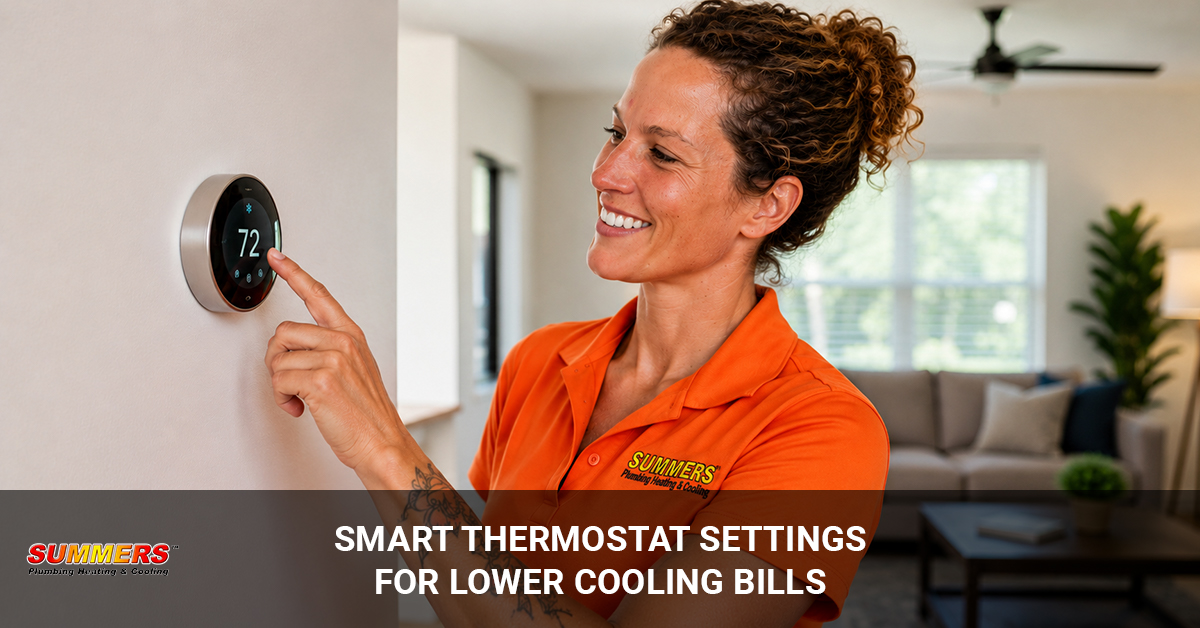
The right smart thermostat settings can lower your cooling bills by reducing unnecessary air conditioner run time while keeping your home comfortable. Simply installing a smart thermostat doesn’t guarantee lower energy costs. The biggest savings come from using features such as automatic scheduling, temperature setbacks, geofencing, and energy-saving modes to match your household’s daily routine.
Many homeowners leave the thermostat at one temperature all day or adjust it manually whenever they feel too warm or too cool. While this may seem harmless, it often causes the air conditioner to run longer than necessary, increasing electricity use without improving comfort. A properly programmed smart thermostat automatically raises the temperature when no one is home and returns it to a comfortable setting before you arrive, helping reduce wasted energy without requiring constant attention.
Small temperature adjustments can make a meaningful difference over the course of an entire cooling season. Raising the thermostat a few degrees while you’re at work, asleep, or away on vacation reduces the workload on your air conditioner, lowering electricity consumption and reducing wear on major components such as the compressor and blower motor. At the same time, smart scheduling helps ensure your home is comfortable when you need it, rather than cooling empty rooms throughout the day.
However, thermostat settings are only one part of an efficient cooling system. Proper air conditioner sizing, clean air filters, well-sealed ductwork, adequate insulation, and regular HVAC maintenance all affect how much energy your system uses. Even the most advanced smart thermostat can’t fully compensate for an oversized air conditioner, restricted airflow, or neglected maintenance.
In this guide, you’ll learn the best smart thermostat settings for summer, how different temperature schedules affect cooling costs, which smart features provide the greatest energy savings, common mistakes that reduce efficiency, and practical ways to get the most value from your thermostat while maintaining a comfortable home.
How Does a Smart Thermostat Save Money?
A smart thermostat saves money by automatically reducing unnecessary air conditioner run time while keeping your home comfortable. Instead of relying on you to adjust the temperature throughout the day, it uses scheduling, occupancy detection, and other automation features to cool your home only when it’s needed.
With a traditional thermostat, it’s easy to forget to change the temperature before leaving for work or going to bed. As a result, the air conditioner may continue cooling an empty home for hours, wasting electricity and increasing your utility bills. A smart thermostat helps eliminate this problem by making temperature adjustments automatically based on your schedule or whether anyone is home.
Several built-in features work together to improve energy efficiency and lower cooling costs.
Automatic Scheduling
Automatic scheduling reduces energy use by matching your thermostat settings to your daily routine.
For example, your thermostat can maintain a comfortable temperature while you’re home, increase the setting after everyone leaves for work or school, and begin cooling the house shortly before you return. Because the air conditioner runs fewer hours during the day, electricity use decreases without sacrificing comfort.
Unlike manual adjustments, scheduled temperature changes happen consistently every day, making it easier to reduce cooling costs over an entire summer.
Occupancy Detection and Geofencing
Occupancy detection and geofencing prevent your air conditioner from cooling an empty home.
Some smart thermostats use built-in motion sensors to detect whether anyone is home. Others use geofencing, which tracks your smartphone’s location. When everyone leaves, the thermostat automatically switches to an energy-saving temperature. As someone returns, it begins cooling the house before they arrive.
This feature reduces unnecessary AC operation while ensuring your home is comfortable when you walk through the door.
Learning Your Routine
Some smart thermostats learn your daily habits and create schedules automatically.
Rather than requiring you to program every temperature change, learning thermostats observe when you typically leave home, return, wake up, and go to bed. Over time, they build a schedule designed to reduce energy use while maintaining comfort.
Even if your thermostat has learning capabilities, it’s a good idea to review its schedule occasionally and update it whenever your routine changes.
Energy Reports
Energy reports show how your cooling habits affect electricity consumption.
Many smart thermostats provide weekly or monthly summaries that include:
- Daily AC run time
- Estimated energy usage
- Comparisons with previous weeks or months
- Personalized recommendations for improving efficiency
These reports help you identify patterns that may be increasing your cooling costs, making it easier to adjust your schedule or thermostat settings to save energy.
Remote Control
Remote access allows you to adjust your thermostat from almost anywhere.
Using a smartphone app, you can change the temperature while you’re at work, on vacation, or running errands. If your plans change unexpectedly, you don’t have to leave your air conditioner running all day just to keep the house cool. Instead, you can start cooling your home shortly before you arrive.
Remote control also provides peace of mind during extended trips by allowing you to monitor and adjust indoor temperatures without being at home.
Better HVAC Efficiency
A smart thermostat can’t increase your air conditioner’s rated efficiency, but it can help the system operate more efficiently.
By reducing unnecessary run time, the thermostat lowers electricity consumption and decreases wear on important components such as the compressor, blower motor, and condenser fan motor. Combined with routine HVAC maintenance, clean air filters, proper airflow, and correct system sizing, these operating improvements can help reduce cooling costs and support long-term system reliability.
The biggest savings come from letting the thermostat do its job. Homeowners who use scheduling, automation, and occupancy features consistently often reduce cooling costs more than those who frequently override settings or leave the thermostat at one temperature all day. By working with your daily routine instead of against it, a smart thermostat helps improve both comfort and energy efficiency throughout the cooling season.
Best Smart Thermostat Settings for Summer
For most homes, setting your smart thermostat between 76°F and 78°F while you’re home provides the best balance between comfort and lower cooling costs. Raising the temperature when you’re away and lowering it slightly while you sleep can further reduce energy use without making your home uncomfortable.
The table below provides general summer thermostat recommendations for most households.
| Situation | Recommended Temperature |
| Home and awake | 76–78°F |
| Sleeping | 72–76°F |
| Away for a few hours | 82–85°F |
| Vacation | 85–88°F |
These settings are starting points rather than fixed rules. The ideal temperature depends on factors such as your local climate, indoor humidity, insulation, home layout, and personal comfort preferences. If you have young children, older adults, or individuals with certain medical conditions in your home, you may need to adjust the settings accordingly.
When You’re Home
A setting between 76°F and 78°F keeps most homes comfortable while helping reduce electricity use.
At this temperature, your air conditioner can maintain a comfortable indoor environment without running longer than necessary. If the house feels slightly warm, try using ceiling fans before lowering the thermostat. Moving air helps people feel cooler, allowing you to stay comfortable at a higher thermostat setting.
Keep in mind that ceiling fans cool people, not rooms, so turn them off when a room is unoccupied to avoid wasting electricity.
While You’re Sleeping
Most people sleep comfortably with the thermostat set between 72°F and 76°F.
A slightly cooler bedroom can improve sleeping comfort without causing a significant increase in cooling costs. If your smart thermostat supports scheduling, program it to lower the temperature shortly before bedtime and return to your daytime setting before everyone wakes up.
This approach improves comfort while avoiding unnecessary overnight cooling after you’ve already fallen asleep.
When You’re Away
Raise the thermostat to 82°F–85°F whenever your home will be empty for several hours.
There’s little benefit to cooling an empty house. Increasing the temperature while you’re at work or running errands reduces unnecessary AC run time and lowers electricity consumption.
Most smart thermostats can automatically begin cooling your home before you return, so you’ll arrive at a comfortable indoor temperature without leaving the air conditioner running all day.
During Vacation
For extended trips, setting the thermostat between 85°F and 88°F helps reduce energy costs while protecting your home.
Completely turning the air conditioner off isn’t always the best option, especially in hot or humid climates. Allowing indoor temperatures to rise excessively can increase humidity levels, place additional stress on wood flooring and furnishings, and require the air conditioner to work much harder when it’s turned back on.
A moderate vacation setting reduces energy use while helping control indoor moisture and preventing extreme indoor temperatures.
One of the biggest advantages of a smart thermostat is remote access. If weather conditions change while you’re away, you can monitor your home’s temperature and make adjustments from your smartphone without returning home.
Adjust Your Schedule to Match Your Lifestyle
The most effective thermostat schedule is one that reflects your actual daily routine.
If you work from home, travel frequently, or have an irregular schedule, customize your automation settings accordingly. A thermostat schedule that’s accurate for your household will reduce unnecessary cooling without affecting comfort.
Rather than making frequent manual adjustments throughout the day, let your smart thermostat manage temperature changes automatically. Consistent scheduling not only lowers cooling costs but also reduces wear on your air conditioner by eliminating unnecessary run time. Over the course of an entire cooling season, these small adjustments can add up to meaningful energy savings while keeping your home consistently comfortable.
Why Raising the Temperature Saves Energy
Raising your thermostat saves energy because your air conditioner has less heat to remove from your home. When the thermostat is set a few degrees higher, the HVAC system runs less often and for shorter periods, reducing electricity consumption while still maintaining a comfortable indoor environment.
Every time your air conditioner turns on, the compressor, blower motor, evaporator coil, and condenser work together to remove heat from your home. The longer these components operate, the more electricity they consume. By increasing the thermostat setting slightly, your system reaches the desired temperature more easily, reducing total run time throughout the day.
A higher thermostat setting provides several benefits:
- Shorter cooling cycles
- Lower electricity consumption
- Reduced wear on the compressor and other HVAC components
- Lower monthly cooling costs
- Less strain on the entire air conditioning system
The biggest opportunity for savings comes when no one is home. Cooling an empty house to the same temperature as an occupied one wastes energy because there’s no immediate comfort benefit. Setting the thermostat to 82°F–85°F while you’re away allows the air conditioner to run less frequently while preventing excessive indoor heat and humidity.
It’s important to avoid extreme temperature setbacks, especially if you’ll only be gone for a few hours. Allowing the house to become excessively hot can make the air conditioner work harder for an extended period when you return. In many cases, a moderate increase in temperature provides the best balance between energy savings, humidity control, and comfort.
Keep in mind that raising the thermostat doesn’t make your air conditioner cool more slowly; it simply changes the temperature at which it turns on and off. The system cools at the same rate, but because it operates fewer hours over the course of the day, it uses less electricity.
The goal isn’t to make your home feel warm or uncomfortable. Instead, it’s to eliminate unnecessary cooling while maintaining temperatures that fit your lifestyle, climate, and comfort preferences. Combined with a smart thermostat’s scheduling and automation features, small temperature adjustments can reduce cooling costs throughout the summer without noticeably affecting indoor comfort.
Should You Turn the AC Off When You Leave?
Usually not. For most homeowners, it’s more efficient to raise the thermostat while you’re away than to turn the air conditioner off completely. A smart thermostat can do this automatically, reducing cooling costs while preventing your home from becoming excessively hot or humid.
If you’ll only be away for a few hours, shutting the AC off completely often isn’t the best approach. During hot weather, indoor temperatures can rise quickly, especially in homes with large windows, limited insulation, or significant sun exposure. When you return, the air conditioner may need to run continuously for an extended period to remove the accumulated heat and restore a comfortable temperature.
Instead, set your smart thermostat to 82°F to 85°F while you’re away. This temperature setback reduces unnecessary cooling without allowing the house to overheat. It also helps control indoor humidity, which is particularly important in warm, humid climates where excess moisture can affect comfort and indoor air quality.
For longer absences, such as vacations, increasing the thermostat to 85°F to 88°F is generally a better choice than shutting the system down entirely. Maintaining some cooling helps protect wood flooring, furniture, electronics, artwork, musical instruments, and other household items that can be affected by prolonged heat and high humidity. It also prevents the air conditioner from having to recover from extremely high indoor temperatures when you return home.
One of the biggest advantages of a smart thermostat is that these adjustments happen automatically. Using scheduling, occupancy sensors, or geofencing, the thermostat can switch to an energy-saving temperature after everyone leaves and begin cooling your home before you arrive. This provides both lower energy bills and a comfortable indoor temperature without requiring you to remember to adjust the thermostat every time you leave.
There are a few situations where different settings may make sense. For example, if someone remains at home during the day, if pets require a cooler environment, or if sensitive equipment needs climate control, you’ll want to choose a temperature that balances energy savings with those specific needs.
For most households, moderate temperature setbacks provide the best combination of comfort, humidity control, and energy efficiency. Rather than turning the AC off completely, let your smart thermostat automatically manage temperature changes based on your daily routine, so your air conditioner runs only when it needs to.
Smart Thermostat Features That Lower Cooling Bills
The most effective smart thermostat features lower cooling bills by automatically adjusting your home’s temperature based on your routine instead of relying on manual changes. While features vary by model, the greatest energy savings usually come from automation that reduces unnecessary air conditioner run time without affecting comfort.
Using these features together allows your HVAC system to cool your home only when it’s needed, improving efficiency while reducing electricity consumption throughout the summer.
Scheduling
Scheduling is one of the easiest and most effective ways to reduce cooling costs.
Instead of leaving your thermostat at one temperature all day, create a schedule that matches your household’s routine. For example, your thermostat can maintain 77°F while everyone is home in the evening, increase the temperature to 84°F after everyone leaves for work or school, and begin cooling the house about 30 to 60 minutes before someone returns.
Because these adjustments happen automatically every day, scheduling eliminates wasted cooling without requiring you to remember to change the thermostat manually.
Geofencing
Geofencing saves energy by adjusting the thermostat based on your location.
Using your smartphone’s GPS, the thermostat can determine when everyone has left the house and automatically switch to an energy-saving setting. As someone heads home, it begins cooling the house so it’s comfortable upon arrival.
This feature is especially useful for households with unpredictable schedules because the thermostat responds to where you are rather than following a fixed timetable.
Learning Mode
Learning mode automatically creates a schedule based on your daily habits.
Some smart thermostats observe when you typically wake up, leave home, return, and go to bed. After learning your routine, they automatically adjust temperatures to improve efficiency without requiring extensive programming.
Learning thermostats work best for households with consistent schedules. If your routine changes because of remote work, vacations, or seasonal activities, review the schedule periodically and make adjustments when necessary.
Eco Mode
Eco Mode reduces energy use by allowing the indoor temperature to rise slightly before cooling begins.
Rather than maintaining a narrow temperature range, Eco Mode lets your air conditioner run less frequently while still keeping your home within a comfortable range. This reduces compressor run time, lowers electricity consumption, and minimizes unnecessary cooling.
Many homeowners use Eco Mode during work hours, while running errands, or anytime the home is unoccupied.
Humidity Control
Humidity control can improve comfort while helping reduce cooling costs.
Some smart thermostats work with compatible HVAC systems to prioritize humidity removal in addition to temperature control. Because lower humidity makes indoor air feel cooler, many homeowners remain comfortable even when the thermostat is set one or two degrees higher.
This feature is particularly valuable in hot, humid climates where excess moisture often makes homes feel warmer than the thermostat reading suggests.
Energy Reports
Energy reports help you understand how your cooling habits affect electricity use.
Many smart thermostats generate weekly or monthly reports that show:
- Daily or monthly AC run time
- Estimated energy usage
- Comparisons with previous periods
- Personalized recommendations for reducing energy consumption
Reviewing these reports can help you identify inefficient schedules or unnecessary cooling without relying on guesswork.
Remote App Control
Remote access allows you to manage your home’s temperature from virtually anywhere.
Whether you’re staying late at work, returning from vacation, or coming home earlier than expected, you can adjust your thermostat using a smartphone app. This flexibility prevents your air conditioner from cooling an empty house while ensuring your home is comfortable when you arrive.
Remote monitoring can also be useful during extended trips, allowing you to check indoor temperatures and make adjustments if weather conditions change.
Automation Delivers the Biggest Savings
The greatest energy savings come from letting your smart thermostat handle routine temperature adjustments automatically.
While each feature offers individual benefits, scheduling, geofencing, learning mode, Eco Mode, and remote access work best when used together. By automating temperature changes instead of relying on frequent manual adjustments, your air conditioner runs only when necessary, helping reduce cooling costs, improve comfort, and minimize wear on the HVAC system throughout the cooling season.
Common Smart Thermostat Mistakes
Many homeowners don’t see the energy savings they expect because they aren’t using their smart thermostat correctly. Even the best smart thermostat can’t lower cooling bills if it’s programmed poorly or its energy-saving features are constantly overridden.
If your thermostat is set correctly but your home still isn’t cooling properly, the issue may be mechanical rather than programming-related. Learn why your AC is running but not cooling.
Avoiding the following mistakes will help your air conditioner operate more efficiently while keeping your home comfortable throughout the summer.
Constantly Adjusting the Temperature
Frequently changing the thermostat reduces the effectiveness of automation.
One of the biggest advantages of a smart thermostat is its ability to follow a schedule automatically. However, many homeowners lower the temperature every time they feel slightly warm, overriding carefully programmed settings throughout the day.
Instead of making constant manual changes, give your schedule time to work. If you’re consistently uncomfortable, adjust the schedule itself rather than changing the temperature multiple times each day.
Setting Extreme Temperature Setbacks
Large temperature setbacks don’t always produce greater energy savings.
It’s tempting to set the thermostat very high before leaving home, but allowing indoor temperatures to rise excessively can make the air conditioner run much longer when you return. This can also increase indoor humidity, especially during hot, humid weather.
For most homes, setting the thermostat between 82°F and 85°F while you’re away provides a better balance between energy savings, humidity control, and indoor comfort.
Ignoring Thermostat Placement
A poorly located thermostat can’t accurately control your home’s temperature.
If the thermostat is installed near a sunny window, supply vent, kitchen, exterior door, or other heat source, it may receive inaccurate temperature readings. This can cause the air conditioner to cycle too frequently or not often enough, reducing both comfort and efficiency.
Ideally, the thermostat should be located on an interior wall away from direct sunlight, drafts, and heat-producing appliances.
Leaving Windows or Doors Open
Open windows and exterior doors make your air conditioner work much harder.
Warm outdoor air continually enters the home while conditioned air escapes, forcing the HVAC system to run longer to maintain the thermostat setting. Even a properly programmed smart thermostat can’t overcome constant air leakage caused by open windows or doors.
During the cooling season, keep windows and exterior doors closed whenever the air conditioner is operating.
Ignoring Maintenance Reminders
Routine HVAC maintenance is essential for maintaining energy efficiency.
Many smart thermostats provide reminders to replace air filters or schedule seasonal maintenance. Ignoring these alerts can reduce airflow, increase energy consumption, and place additional strain on major components such as the compressor and blower motor.
Replacing dirty filters regularly and scheduling annual HVAC tune-ups helps your air conditioner operate at peak performance while extending its lifespan.
Creating Unrealistic Schedules
Your thermostat schedule should match how your household actually lives.
If your work hours change, someone begins working from home, children return from school earlier, or your routine changes during the summer, update your thermostat schedule accordingly. A schedule designed for an empty home won’t provide the comfort you expect if people are home throughout the day.
Review your schedule every few months to make sure it still reflects your daily routine.
Turning Off Smart Features
Disabling automation limits many of the benefits of a smart thermostat.
Features such as scheduling, geofencing, occupancy detection, and Eco Mode are designed to reduce unnecessary cooling automatically. If these features are turned off or constantly overridden, the thermostat functions much like a standard programmable thermostat, reducing its ability to save energy.
Whenever possible, let the thermostat manage routine temperature changes instead of making frequent manual adjustments.
Using a smart thermostat effectively isn’t complicated, but it does require a thoughtful setup. A realistic schedule, moderate temperature setbacks, regular maintenance, and consistent use of automation features will help you maximize energy savings while keeping your home comfortable all summer long.
Other Ways to Lower Cooling Bills
Smart thermostat settings deliver the best results when they’re combined with other energy-saving improvements throughout your home. Reducing your home’s cooling load allows your air conditioner to run less often, improving efficiency while lowering electricity costs and reducing wear on the HVAC system.
Here are some of the most effective ways to reduce cooling bills beyond adjusting your thermostat.
Use Ceiling Fans
Ceiling fans can help you feel cooler without lowering the thermostat.
Moving air increases the evaporation of moisture from your skin, making the room feel several degrees cooler. As a result, many homeowners remain comfortable with the thermostat set 1°F to 2°F higher, reducing how often the air conditioner needs to run.
Remember that ceiling fans cool people—not rooms. Turn them off when a room is empty to avoid wasting electricity.
Replace Air Filters Regularly
A clean air filter improves airflow and helps your HVAC system operate more efficiently.
Dirty filters restrict airflow through the system, forcing the blower motor and air conditioner to work harder to cool your home. Reduced airflow can also increase energy consumption and place additional strain on the compressor.
Check your filter every month during the cooling season and replace it whenever it becomes dirty or according to the manufacturer’s recommendations.
Seal Air Leaks
Sealing air leaks prevents cooled air from escaping and hot outdoor air from entering your home.
Gaps around windows, doors, attic penetrations, recessed lighting, and ductwork allow conditioned air to escape while letting warm air inside. This increases the cooling load and forces your air conditioner to operate longer.
Sealing these leaks with weatherstripping, caulk, or professional air sealing improves comfort while reducing cooling costs.
Improve Insulation
Good insulation helps keep outdoor heat from entering your home.
Proper attic and wall insulation slows heat transfer, reducing the amount of work your air conditioner must do throughout the day. Homes with insufficient insulation often experience longer cooling cycles and higher utility bills, especially during periods of extreme heat.
Improving insulation is one of the most effective long-term investments for reducing year-round heating and cooling costs.
Block Direct Sunlight
Limiting solar heat gain helps your home stay cooler naturally.
Sunlight entering through windows can significantly increase indoor temperatures, particularly during the afternoon. Closing blinds, curtains, or shades during the hottest part of the day helps reduce heat gain and decreases the demand on your air conditioner.
Homes with large south- or west-facing windows often benefit the most from effective window coverings.
Schedule Annual HVAC Maintenance
Regular maintenance helps your air conditioner operate at peak efficiency.
During an annual tune-up, an HVAC technician typically cleans the condenser and evaporator coils, checks refrigerant levels, inspects electrical components, tests system performance, and identifies worn parts before they fail.
Routine maintenance not only improves efficiency but can also reduce the likelihood of unexpected breakdowns during the hottest part of the summer. If your air conditioner is struggling to keep your home cool or your energy bills continue to rise despite proper thermostat settings, schedule professional AC repair to restore your system’s efficiency.
Make Sure Your AC Is Properly Sized
A properly sized air conditioner is essential for both comfort and energy efficiency.
An oversized system may cool the house too quickly, causing short cycling and poor humidity control. An undersized system may run almost continuously while struggling to maintain the thermostat setting.
If you’re replacing your air conditioner, ask your HVAC contractor to perform a Manual J load calculation. This industry-standard assessment considers your home’s insulation, windows, ceiling height, climate, and other factors to determine the correct cooling capacity.
Lower Your Cooling Load, Lower Your Bills
The easiest way to reduce cooling costs is to make your air conditioner work less.
A smart thermostat is an excellent starting point, but it’s only one piece of an energy-efficient home. If you’re planning to upgrade your cooling system, understanding SEER2 ratings can help you choose a more energy-efficient air conditioner that works even better with a smart thermostat.
Combining smart temperature schedules with clean air filters, good insulation, sealed air leaks, routine maintenance, ceiling fans, and a properly sized HVAC system can significantly reduce electricity consumption while improving comfort.
When these improvements work together, your air conditioner runs fewer hours, your energy bills stay lower, and your HVAC system experiences less wear throughout the cooling season.
Are Smart Thermostats Worth It?
For many homeowners, a smart thermostat is worth the investment because it can reduce cooling costs, improve convenience, and maintain more consistent indoor comfort. While the exact energy savings vary from one home to another, smart thermostats help lower electricity use by automatically reducing unnecessary air conditioner run time.
Unlike a standard thermostat, a smart thermostat doesn’t rely on you remembering to change the temperature throughout the day. Instead, it uses scheduling, automation, occupancy detection, or geofencing to adjust your home’s temperature based on when people are home, asleep, or away. Over time, these automatic adjustments can reduce energy consumption without sacrificing comfort.
Beyond potential savings on your utility bills, smart thermostats offer several practical benefits, including:
- Automatic temperature scheduling
- Smartphone app control from anywhere
- Occupancy detection
- Geofencing based on your location
- Learning schedules that adapt to your routine
- Energy usage reports and insights
- Filter replacement and maintenance reminders
- Integration with many smart home systems
These features make it easier to manage your HVAC system while reducing the need for constant manual thermostat adjustments.
Whether a smart thermostat is a good financial investment depends on several factors, including:
- The purchase price of the thermostat
- Installation costs, if professional installation is needed
- Local electricity rates
- How often your air conditioner operates
- Your home’s insulation and overall energy efficiency
- How consistently you use scheduling and automation features
For example, a homeowner who leaves the house every weekday and allows the thermostat to automatically increase the temperature during those hours will usually save more energy than someone who stays home all day with a constant thermostat setting.
It’s also important to have realistic expectations. If your current air conditioner is aging or inefficient, comparing the cost of AC replacement may show that upgrading the system delivers greater energy savings than a thermostat alone.
A smart thermostat can’t fix an oversized air conditioner, leaking ductwork, dirty air filters, low refrigerant, or poor insulation. If your HVAC system isn’t operating efficiently, correcting those issues may provide greater savings than installing a new thermostat alone.
For many households, the value of a smart thermostat goes beyond lower utility bills. Features such as remote access, automatic scheduling, maintenance reminders, and better temperature control can make managing your home’s comfort easier while reducing unnecessary wear on the HVAC system.
If you have a compatible heating and cooling system and are willing to use its automation features, a smart thermostat is often a worthwhile upgrade that can provide both immediate convenience and long-term energy savings.
Choosing the Right Smart Thermostat
The best smart thermostat is the one that’s compatible with your HVAC system, easy to use, and equipped with features that match your lifestyle. The most expensive model isn’t always the best choice. A thermostat that integrates properly with your heating and cooling equipment and supports the features you’ll actually use will usually provide the greatest value.
Before purchasing a smart thermostat, consider the following factors.
HVAC Compatibility
Always confirm that the thermostat is compatible with your HVAC system before buying.
Not every smart thermostat works with every heating and cooling system. Some models require a C-wire (common wire), while others support only specific equipment types.
Check whether the thermostat is compatible with your:
- Central air conditioner
- Gas furnace
- Heat pump
- Zoned HVAC system
- Multi-stage heating and cooling equipment
- Variable-speed system
Choosing a compatible thermostat ensures all features function correctly and helps prevent installation problems.
System Type
Advanced HVAC systems often require thermostats with advanced capabilities.
If your home has a heat pump, two-stage air conditioner, or variable-speed HVAC system, select a thermostat designed to support those features. A basic thermostat may not fully utilize the equipment’s efficiency or comfort capabilities.
Using the correct thermostat allows advanced systems to operate as intended, improving temperature consistency, humidity control, and overall energy efficiency.
Smart Home Integration
If you already use smart home devices, choose a thermostat that integrates with your existing ecosystem.
Many smart thermostats work with voice assistants and home automation platforms, allowing you to adjust temperatures using voice commands or include the thermostat in automated routines.
For example, your thermostat may automatically switch to an energy-saving mode when you activate an “Away” routine or adjust the temperature as part of a bedtime schedule.
Ease of Use
A smart thermostat should make managing your home’s temperature easier—not more complicated.
Look for a thermostat with an intuitive mobile app, simple scheduling options, clear energy reports, and straightforward controls. The easier the system is to use, the more likely you’ll take advantage of its automation features and maximize energy savings.
If multiple family members will use the thermostat, choose a model that’s easy for everyone to understand.
Professional Installation
Professional installation helps ensure your smart thermostat operates correctly from the start.
Many homeowners can install a smart thermostat themselves, particularly if the existing wiring is compatible. However, professional installation is often worthwhile for more complex HVAC systems.
An experienced HVAC technician can:
- Verify system compatibility
- Confirm proper wiring connections
- Install or identify a C-wire if needed
- Configure heating and cooling settings correctly
- Test communication between the thermostat and HVAC equipment
- Ensure advanced features operate as intended
Proper installation helps prevent wiring errors, communication problems, and incorrect equipment settings that could affect comfort or efficiency.
Focus on Long-Term Value
Choose a thermostat that fits both your HVAC system and your daily routine.
The best smart thermostat isn’t necessarily the one with the most features it’s the one you’ll actually use. Automatic scheduling, geofencing, learning capabilities, remote access, and energy reports can all help reduce cooling costs, but only if they’re compatible with your system and fit the way you live.
By selecting the right thermostat and using its automation features consistently, you can improve comfort, lower energy bills, reduce unnecessary air conditioner run time, and make managing your home’s temperature easier throughout the year.
Frequently Asked Questions
What temperature saves the most money in summer?
For most homes, 78°F is one of the most energy-efficient thermostat settings while you’re home. If you’ll be away for several hours, increasing the temperature to 82°F–85°F can further reduce cooling costs without allowing the house to become excessively hot. The ideal setting depends on your climate, indoor humidity, insulation, and personal comfort preferences.
Is 78°F really the best thermostat setting?
For many homeowners, yes. A thermostat setting of 78°F is widely recommended because it provides a good balance between comfort and energy efficiency during the cooling season. If it feels slightly warm, using ceiling fans can improve comfort without lowering the thermostat. Homes in humid climates or households with different comfort needs may benefit from small adjustments.
Can a smart thermostat lower my electric bill?
Yes. A smart thermostat can help lower your electric bill by reducing unnecessary air conditioner run time. Features such as automatic scheduling, geofencing, occupancy detection, and learning capabilities allow the system to cool your home only when needed. The actual savings depend on your thermostat settings, local electricity rates, cooling habits, and how consistently you use the automation features.
Should I turn my AC off when I go on vacation?
Usually not. Instead of turning the air conditioner off completely, set your thermostat between 85°F and 88°F while you’re away. This helps control indoor humidity, protects furniture, electronics, wood flooring, and other household materials from excessive heat, and prevents the system from working as hard when you return. Most smart thermostats also allow you to monitor and adjust the temperature remotely throughout your trip.
Do smart thermostats work with older HVAC systems?
Many do, but compatibility depends on your existing equipment. Some older HVAC systems require a C-wire (common wire) or a manufacturer-approved adapter to support all smart thermostat features. Before purchasing a thermostat, verify that it’s compatible with your air conditioner, furnace, or heat pump. If you’re unsure, an HVAC technician can inspect your system and recommend a compatible model.
How long does it take to recover the cost of a smart thermostat?
The payback period varies depending on your home and energy use. Homeowners who regularly use scheduling, geofencing, and other automation features often recover the purchase cost sooner than those who keep the thermostat at one temperature throughout the day. Electricity rates, climate, AC usage, and the cost of the thermostat all influence how quickly it pays for itself.
Will a smart thermostat extend the life of my air conditioner?
A smart thermostat can help reduce unnecessary wear, but it doesn’t guarantee a longer HVAC lifespan. By minimizing excessive run time and preventing unnecessary cooling, it may reduce stress on components such as the compressor and blower motor. However, proper system sizing, professional installation, routine maintenance, clean air filters, and correct refrigerant levels have a much greater impact on how long your air conditioner lasts.
Can I install a smart thermostat myself?
Many homeowners can install a smart thermostat themselves, but professional installation is often the better option for complex HVAC systems. Most modern thermostats include step-by-step installation instructions, but systems with heat pumps, multi-stage equipment, zoning systems, or missing C-wires can require additional wiring or configuration. Professional installation helps ensure the thermostat communicates correctly with your HVAC equipment and that all advanced features operate as intended.
Final Thoughts
Using the right smart thermostat settings is one of the simplest and most effective ways to lower cooling bills without giving up comfort. Setting realistic temperature schedules, increasing the thermostat while you’re away, and using features such as scheduling, geofencing, and Eco Mode can reduce unnecessary air conditioner run time while keeping your home comfortable when it matters most.
However, a smart thermostat delivers the best results when it’s part of a complete approach to home energy efficiency. Proper air conditioner sizing, routine HVAC maintenance, clean air filters, sealed ductwork, good insulation, and adequate airflow all help your cooling system operate more efficiently. Even the most advanced thermostat can’t overcome problems such as an oversized AC, low refrigerant, dirty coils, or significant air leaks.
It’s also important to use your thermostat wisely. Lowering the temperature dramatically won’t cool your home faster, and constantly adjusting the thermostat often increases energy use instead of reducing it. Small, consistent temperature setbacks combined with automation typically provide the best balance of comfort, humidity control, and long-term energy savings.
Before purchasing a smart thermostat, make sure it’s compatible with your HVAC system and includes features you’ll actually use. Automatic scheduling, remote access, occupancy detection, learning capabilities, and energy reports can make managing your home’s temperature easier while helping you reduce electricity consumption throughout the cooling season.
Whether you’re installing your first smart thermostat or fine-tuning the settings on one you already own, thoughtful programming can make a noticeable difference in your monthly utility bills. If you’re upgrading your cooling system, professional AC installation ensures your new equipment and smart thermostat work together for maximum efficiency. Over time, combining smart thermostat automation with regular HVAC maintenance and an energy-efficient home can reduce cooling costs, minimize wear on your air conditioner, and provide reliable comfort throughout the summer.