

Heat Pump Auxiliary Heat vs. Emergency Heat: What’s the Difference?
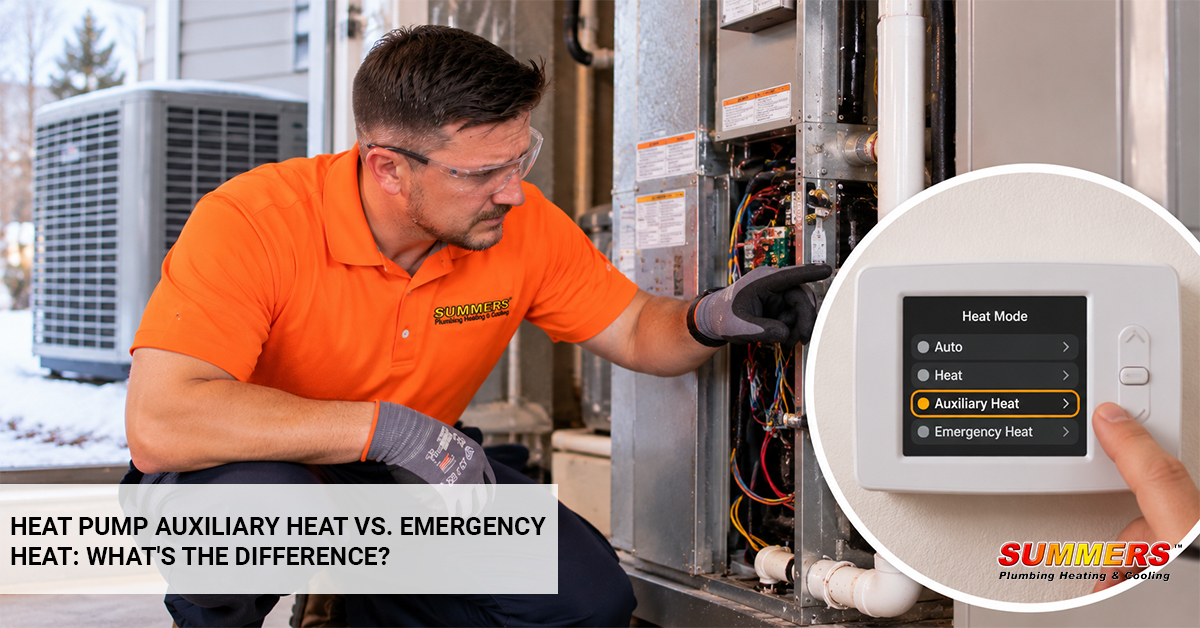
If your thermostat displays AUX Heat or EM Heat, you may wonder what these settings mean and which one you should use. The difference is simple: Auxiliary heat automatically helps your heat pump when it needs extra heating power, while emergency heat uses the backup heating system without normal heat-pump compressor operation.
You usually don’t need to turn on auxiliary heat yourself. Your thermostat activates it when your home needs extra warmth. Emergency heat is a separate setting that you may need if your heat pump stops working properly or an HVAC technician recommends it.
Knowing when to use each setting can help you keep your home comfortable, understand your thermostat, and avoid unnecessary heating costs.
What Is the Difference Between Auxiliary Heat and Emergency Heat?
Auxiliary heat automatically adds extra warmth when your heat pump can’t keep up with your home’s heating needs. Emergency heat uses the backup heating system without normal heat-pump compressor operation in most conventional systems.
Both settings help keep your home warm, but they work differently.
| Feature | Auxiliary Heat (AUX) | Emergency Heat (EM HEAT) |
| How it starts | Usually activates automatically | Usually turned on manually |
| Main purpose | Helps the heat pump meet heating demand | Provides backup heating when normal heat-pump operation isn’t available |
| Heat pump operation | May run alongside backup heat | Typically disables the compressor |
| Backup heat source | Electric heat strips or another configured heating source | The system’s designated backup heating source |
| When to use it | Cold weather, defrost cycles, or high heating demand | Heat pump problems or when a technician recommends it |
| Energy costs | Can increase your energy bill when backup heat runs | May cost more if it relies entirely on electric resistance heat |
The exact operation depends on your heat pump, thermostat, and backup heating system. For example, some dual-fuel systems switch from the heat pump to a gas furnace instead of running both heating sources together.
If your heat pump works properly, leave the thermostat in normal Heat mode. The system can activate auxiliary heat automatically when needed. Use emergency heat when your equipment’s instructions or an HVAC technician recommends it.
Is Auxiliary Heat the Same as Emergency Heat?
No. Auxiliary heat and emergency heat serve different purposes, even when they use the same backup heating system.
Auxiliary heat turns on automatically when your heat pump needs extra help warming your home. Emergency heat is a separate thermostat setting that typically disables the heat pump compressor and relies on the backup heating source.
You usually don’t need to turn on auxiliary heat yourself. Your thermostat manages it automatically. Use emergency heat when your heat pump isn’t working properly or your HVAC technician recommends it.
What Is Auxiliary Heat on a Heat Pump?
Auxiliary heat is a backup heating source that helps your heat pump warm your home when it can’t meet the heating demand on its own.
Many heat pumps use electric heat strips for extra warmth. Others use a backup furnace, depending on the system. Your thermostat controls when auxiliary heat turns on, so you usually don’t need to activate it yourself.
A heat pump normally pulls heat from outdoor air and transfers it indoors. When it struggles to keep up with your home’s heating needs, auxiliary heat provides extra warmth to help maintain your desired temperature.
When Does Auxiliary Heat Turn On?
Auxiliary heat usually turns on when your heat pump needs help keeping your home warm. This can happen in several situations.
- When outdoor temperatures drop
Cold weather can reduce a heat pump’s heating capacity. If it can’t produce enough heat to maintain your thermostat setting, the system may activate auxiliary heat.
- When you raise the thermostat temperature
If you raise the thermostat several degrees at once, some systems activate auxiliary heat to warm your home faster. Smaller temperature adjustments may help reduce unnecessary backup heating.
- During a defrost cycle
Frost can build up on the outdoor coil during cold weather. Your heat pump periodically runs a defrost cycle to remove it. Auxiliary heat may turn on during this process to help keep your home comfortable.
- When your home loses heat quickly
Poor insulation, air leaks, and high heating demand can make it harder for your heat pump to maintain the desired temperature. Auxiliary heat may activate to make up the difference.
The exact activation conditions depend on your heat pump and thermostat settings. There isn’t one outdoor temperature that triggers auxiliary heat in every system.
Is It Normal for Auxiliary Heat to Come On in Winter?
Yes. It’s normal for many heat pumps to use auxiliary heat during cold weather, defrost cycles, or sudden thermostat adjustments.
However, if AUX stays on for long periods in mild weather, your system may need attention. A dirty air filter, restricted airflow, incorrect thermostat settings, or a heat pump problem could cause it to rely on backup heat too often.
If your home isn’t warming up, your thermostat shows AUX frequently, or your electricity bill increases unexpectedly, check the air filter and thermostat settings. If the problem continues, contact an HVAC technician.
What Is Emergency Heat on a Heat Pump?
Emergency heat is a backup heating mode that keeps your home warm when your heat pump can’t operate normally. In most conventional systems, it disables the outdoor compressor for heating and uses the backup heat source instead.
To turn it on, select EM Heat or Emergency Heat on your thermostat. Depending on your system, the backup heat may come from electric heat strips or a compatible furnace.
Emergency heat is meant for situations when your heat pump has a problem or an HVAC technician recommends using it. You don’t need to switch to this mode just because the weather gets cold.
If your system still struggles to produce warm air, read our guide on what to do when your heat pump isn’t heating properly.
When Should You Use Emergency Heat?
Use emergency heat when your heat pump isn’t working properly and you need backup heating, provided your system’s instructions allow it.
You may need it if:
- Your heat pump stops heating and the indoor temperature begins to drop.
- The outdoor unit has a confirmed fault that prevents normal operation.
- An HVAC technician tells you to use emergency heat while arranging a repair.
If your heat pump isn’t heating properly or keeps relying on backup heat, contact our team for professional heating services in Bloomington, IN.
If the outdoor unit is visibly damaged, makes unusual noises, or produces a burning smell, don’t attempt to repair it yourself. Follow the manufacturer’s safety instructions and contact an HVAC professional.
Should You Use Emergency Heat When It’s Extremely Cold Outside?
No, not just because the temperature is low. If your heat pump is working properly, leave your thermostat in normal Heat mode and let the system activate auxiliary heat when needed.
Many heat pumps can operate in very cold weather, although their performance depends on the model and outdoor conditions. Some systems use auxiliary heat more often as temperatures drop. Choosing one of the heat pumps designed for Indiana weather can help your home maintain comfortable temperatures during winter.
Switching to emergency heat unnecessarily may increase your energy bill, especially if your system relies on electric resistance heat. Use this setting when your heat pump has a problem or your HVAC technician recommends it.
Does Auxiliary Heat or Emergency Heat Cost More?
Emergency heat can cost more to run than auxiliary heat because it typically relies on the backup heating source without normal heat-pump compressor operation. However, the actual cost depends on your system and the type of backup heat it uses.
A heat pump moves heat from one place to another, so it can deliver more heat energy than the electricity it consumes. Electric resistance heat, such as heat strips, uses electricity directly to produce heat and generally costs more to operate for the same heating output.
Your heating costs also depend on outdoor temperatures, electricity rates, equipment efficiency, and how long the backup heat runs. You can also find practical ways to reduce your home’s energy bills by improving your home’s energy efficiency.
Why Does Auxiliary Heat Increase Your Electric Bill?
Auxiliary heat can increase your electric bill because electric heat strips use more electricity than a heat pump operating efficiently on its own.
Your backup heat may run more often when:
- Outdoor temperatures drop: Your heat pump may need extra help to keep your home warm.
- You raise the thermostat too much at once: A large temperature adjustment can trigger auxiliary heat.
- Airflow is restricted: A dirty air filter can affect your system’s heating performance.
- Your home loses heat: Poor insulation and air leaks make it harder to maintain a comfortable temperature.
- Your heat pump needs repair: A mechanical problem may cause the system to rely on backup heat more often.
If your system uses a gas furnace for backup heating, your costs will also depend on gas prices and furnace efficiency.
Is Emergency Heat More Expensive Than AUX Heat?
Emergency heat can be more expensive than auxiliary heat when both use electric resistance heating, because emergency mode typically relies on that backup source instead of normal heat-pump operation.
Auxiliary heat may run alongside the heat pump, allowing the heat pump to provide part of the required heating. Emergency heat generally relies on the backup source alone.
However, costs vary by system. Some heat pumps use backup heat under conditions that prevent the compressor from running, while dual-fuel systems may switch to a gas furnace. The backup heating source and how your system operates determine the actual cost.
How Can You Reduce Auxiliary Heat Usage?
You can reduce unnecessary auxiliary heat use by improving airflow, limiting heat loss, and avoiding sudden thermostat changes. A smart thermostat may also help you manage heating schedules and temperature adjustments. Learn about the benefits of using a smart thermostat before choosing one.
- Make smaller thermostat adjustments. Avoid raising the temperature several degrees at once.
- Replace dirty air filters. Follow the manufacturer’s recommended maintenance schedule.
- Keep the outdoor unit clear. Remove loose debris and maintain clear airflow around the unit.
- Seal air leaks. Check around windows, doors, and other openings where warm air may escape.
- Schedule regular maintenance. Have an HVAC technician check your system if auxiliary heat runs frequently or your energy bills increase unexpectedly.
Don’t disable auxiliary heat or change system controls to reduce costs without understanding how your heat pump operates. Backup heat is sometimes necessary to keep your home comfortable.
AUX Heat vs. Emergency Heat: Which Setting Should You Use?
Use normal Heat mode when your heat pump works properly and let the thermostat activate auxiliary heat automatically when needed. Switch to emergency heat only when your system’s instructions or an HVAC technician recommend it.
Here’s what to do in common situations:
| Situation | What You Should Do |
| AUX appears during cold weather, and your home stays warm | Leave the thermostat in normal Heat mode. |
| AUX turns on briefly during a defrost cycle | Let the system complete the cycle. |
| AUX runs frequently in mild weather | Check the air filter and contact an HVAC technician if the problem continues. |
| Your heat pump stops heating properly | Contact an HVAC technician and ask whether emergency heat is appropriate. |
| The outdoor unit looks damaged or smells like something is burning | Follow the manufacturer’s safety instructions and seek professional help. |
| A technician has repaired your heat pump | Return to normal Heat mode when the technician confirms it’s safe. |
Can You Leave Auxiliary Heat On?
Yes, you can leave your heat pump in normal Heat mode and let auxiliary heat turn on automatically when needed. Your thermostat controls when the system needs extra heating.
You don’t need to turn AUX heat on or off yourself in most systems. Occasional AUX operation is normal during cold weather or when your home needs extra warmth.
If AUX stays on for long periods, your home struggles to reach the set temperature, or your electricity bill increases unexpectedly, check the air filter and thermostat settings. If the problem continues, contact an HVAC technician.
Should You Turn Emergency Heat Off After Repairs?
Yes, you can usually switch back to normal Heat mode once your heat pump has been repaired and your HVAC technician confirms it’s safe to operate.
Set your thermostat to Heat instead of EM Heat. This allows the heat pump to resume normal operation and use auxiliary heat automatically when needed.
If the problem hasn’t been fixed, switching back to normal Heat mode may not restore proper heating. Follow your technician’s instructions and arrange further repairs if necessary.
Why Is My Heat Pump Stuck on Auxiliary Heat?
If your heat pump stays on auxiliary heat, it may be struggling to keep your home warm or have an airflow, thermostat, or equipment problem. Occasional AUX operation is normal, but frequent or prolonged use can increase your energy bill.
Common Reasons AUX Heat Runs Constantly
Several issues can cause your heat pump to rely on auxiliary heat more often than usual.
Very cold outdoor temperatures: Your heat pump may need extra heating support when outdoor temperatures drop and the system can’t meet your home’s heating demand alone.
Restricted airflow: A dirty air filter or blocked airflow can reduce heating performance and cause the system to rely more heavily on backup heat.
Large thermostat adjustments: If you lower the temperature overnight and raise it several degrees in the morning, your thermostat may activate AUX heat to warm your home faster.
Heat pump problems: Refrigerant issues, faulty sensors, or defrost system problems can affect heating performance and cause frequent AUX operation.
Incorrect thermostat settings: A thermostat that isn’t configured correctly may activate backup heat more often than necessary.
The AUX indicator alone can’t tell you which problem is causing the issue. If auxiliary heat runs constantly in mild weather or your home never reaches the set temperature, have an HVAC technician inspect the system.
How to Troubleshoot Auxiliary Heat Safely
You can check a few things yourself before calling an HVAC technician. Start with these simple steps.
- Check your thermostat. Make sure the system is set to Heat, and the temperature setting is reasonable.
- Inspect the air filter. Replace it if it’s dirty, following the manufacturer’s instructions.
- Check the outdoor unit. Remove loose leaves and debris around the unit. Don’t chip away ice or touch the fan and internal components.
- Monitor the heating performance. Check whether your home reaches the set temperature and whether AUX stays on longer than usual.
- Call an HVAC technician if the problem continues. A professional can check the system’s airflow, controls, defrost operation, and other components.
Never attempt to handle refrigerant or live electrical components yourself. If you notice a burning smell, visible electrical damage, or other signs of a serious fault, follow the manufacturer’s safety instructions and seek professional help.
Frequently Asked Questions
Is AUX Heat Better Than Emergency Heat?
Neither setting is better in every situation because they serve different purposes. AUX heat automatically helps your heat pump when it needs extra heating power. Emergency heat relies on the backup heating system when normal heat-pump operation isn’t being used. Keep your thermostat on normal Heat mode when the system works properly. Use emergency heat when your equipment instructions or an HVAC technician recommend it.
Does AUX Heat Mean My Heat Pump Is Broken?
No, AUX heat doesn’t automatically mean your heat pump is broken. It can turn on normally during cold weather, defrost cycles, or sudden temperature adjustments. However, if AUX heat runs for long periods in mild weather, your home stays cold, or your energy bills rise unexpectedly, check the air filter and contact an HVAC technician if the problem continues.
Should I Use Emergency Heat if My Heat Pump Is Covered in Ice?
Not necessarily. A light layer of frost can form during normal winter operation, and your heat pump should periodically run a defrost cycle to remove it. If thick ice builds up, blocks airflow, or remains after repeated defrost cycles, contact an HVAC technician. Don’t chip away the ice or switch to emergency heat automatically. Follow your equipment’s instructions while you arrange an inspection.
At What Temperature Does AUX Heat Turn On?
There is no single temperature that activates AUX heat on every heat pump. Your system may turn it on based on outdoor temperature, how far your indoor temperature is below the thermostat setting, and how quickly your home warms up. The thermostat’s settings and the heat pump’s capacity also affect when auxiliary heat starts.
Can AUX Heat and the Heat Pump Run at the Same Time?
Yes, many heat pumps can run auxiliary heat and the heat pump compressor at the same time. This allows the system to provide extra warmth when the heat pump alone can’t meet demand. However, some dual-fuel systems switch between the heat pump and a gas furnace instead of running both together. Your equipment type and thermostat controls determine how your system operates.
Does Emergency Heat Use More Electricity?
Emergency heat can use more electricity when it relies on electric resistance heat strips. In emergency mode, a typical system stops using the heat pump compressor for normal heating and relies on its backup heat source instead. Electric heat strips can consume more electricity than a heat pump needs to deliver the same amount of heat. Actual costs depend on your system, backup heating source, and local energy rates.
Can I Switch From Emergency Heat Back to Normal Heat?
Usually, yes, once your heat pump is safe to operate and any necessary repairs are complete. Set your thermostat back to normal Heat mode and let the system manage auxiliary heat automatically. If a technician repaired the system, follow their instructions before switching modes. If the heat pump still isn’t working properly, contact an HVAC professional rather than repeatedly changing thermostat settings.
Why Does My Thermostat Show AUX Heat When It Isn’t Very Cold Outside?
AUX heat can activate in mild weather if you raise the thermostat several degrees, if the system runs a defrost cycle, or if the thermostat’s control settings call for extra heating. If AUX heat appears frequently without an obvious reason, check your air filter and thermostat settings. If it continues running for long periods, your heat pump may have an airflow, control, or equipment problem that needs professional diagnosis.
Final Thoughts
Knowing the difference between auxiliary heat and emergency heat helps you use your heat pump correctly and avoid unnecessary heating costs.
Auxiliary heat automatically provides extra warmth when your heat pump needs help. Emergency heat is a separate backup mode that typically bypasses the heat pump’s normal heating operation. You usually don’t need to turn on AUX heat yourself. Keep your thermostat on normal Heat mode and let the system manage backup heating automatically.
Occasional AUX heat use during cold weather is normal. However, if it runs constantly, your home struggles to reach the set temperature, or your energy bills rise unexpectedly, check the air filter and arrange an HVAC inspection if the problem continues.
Regular maintenance and proper thermostat settings can help your heat pump heat your home efficiently and keep you comfortable throughout winter.