
Heat Pump Not Heating in Bloomington, Indiana? Troubleshooting Guide
A heat pump may stop heating because of thermostat problems, restricted airflow, low refrigerant, electrical issues, or normal cold-weather operation. While some heating problems have simple fixes, others require professional HVAC repair to restore reliable performance.
If your heat pump isn’t keeping your Bloomington home warm, it doesn’t always mean the system has failed. Many heating issues are caused by everyday problems such as a dirty air filter, incorrect thermostat settings, or debris blocking the outdoor unit. These issues can reduce heating performance and often can be resolved without major repairs.
However, some problems require professional attention. Refrigerant leaks, frozen coils, faulty electrical components, or a malfunctioning defrost system can prevent your heat pump from producing enough heat and should be diagnosed by a qualified HVAC technician.
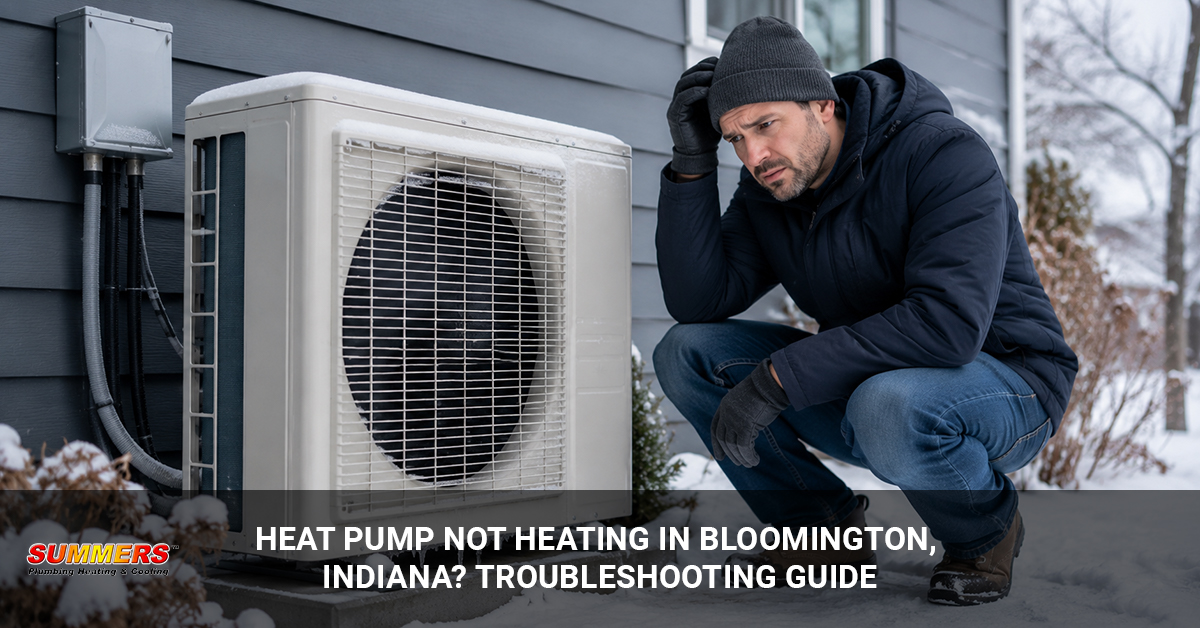
Bloomington’s winter weather can also affect how your heat pump operates. During freezing temperatures, the outdoor unit may develop frost and automatically switch into a defrost cycle. This is a normal function that temporarily pauses heating to melt ice from the outdoor coil. Many homeowners mistake this process for a system failure when it is actually working as designed.
The good news is that many heat pump heating problems can be identified with a few simple troubleshooting steps. In this guide, you’ll learn the most common reasons a heat pump stops heating, the checks you can safely perform yourself, and when it’s time to call an HVAC professional for repairs.
Why Is My Heat Pump Not Heating?
A heat pump may stop heating because of restricted airflow, thermostat issues, frozen coils, low refrigerant, electrical problems, or cold-weather conditions. Finding the exact cause is the first step toward restoring heat and preventing more serious damage.
Unlike a furnace, a heat pump doesn’t create heat by burning fuel. Instead, it transfers heat from the outdoor air into your home. Even when temperatures are below freezing, there is still enough heat in the outside air for the system to use. If any part of this process is interrupted, your heat pump may struggle to keep your home warm.
Some heating problems are simple and can be fixed quickly. A clogged air filter, incorrect thermostat settings, or debris around the outdoor unit can all reduce heating performance. Other problems, such as low refrigerant, frozen coils, electrical failures, or worn components, require professional diagnosis and repair.
If your heat pump is running but your home still feels cold or never reaches the thermostat setting, don’t ignore the problem. Addressing it early can improve efficiency, prevent larger repairs, and restore your home’s comfort.
Signs Your Heat Pump Isn’t Heating Properly
A heat pump usually shows warning signs before it stops heating completely. Recognizing these symptoms early can help you fix minor issues before they turn into expensive repairs.
One of the most common signs is cool or cold air coming from the vents while the thermostat is set to heating mode. Heat pumps normally produce air that feels cooler than a gas furnace, but it should still be warm enough to keep your home comfortable. If your indoor temperature never reaches the thermostat setting, your system likely needs attention.
Other common signs that your heat pump isn’t heating properly include:
- Cool or cold air blowing from the vents
- Your home won’t reach the thermostat setting
- The system runs continuously without warming the house
- Uneven temperatures between rooms
- Ice buildup on the outdoor unit that doesn’t melt
- Higher-than-normal energy bills
- Strange noises such as grinding, buzzing, or rattling
- Frequent on-and-off cycling
If you notice any of these warning signs, it’s a good idea to inspect the system and perform a few basic troubleshooting steps. Taking action early can help prevent a complete heating failure and reduce the risk of more costly repairs.
Common Reasons Your Heat Pump Is Not Heating
A heat pump may stop heating because of thermostat problems, restricted airflow, ice buildup, low refrigerant, electrical failures, or an improperly sized system. Some of these issues are easy to fix, while others require professional HVAC repair.
Understanding the most common causes can help you identify the problem quickly and decide whether you can troubleshoot it yourself or need to call a technician.
The thermostat is set incorrectly
Incorrect thermostat settings are one of the most common reasons a heat pump won’t heat properly. Before assuming there’s a mechanical problem, check that the thermostat is set to Heat and the temperature is higher than the current room temperature.
If your thermostat uses batteries, replace them if the display is blank or responding slowly. Also, make sure the fan is set to Auto instead of On. When the fan is set to On, it may continue circulating unheated air between heating cycles, making it feel like the system is blowing cold air.
Dirty Air Filter
A dirty air filter can significantly reduce your heat pump’s heating performance. As the filter fills with dust and debris, airflow becomes restricted, making it harder for the system to circulate warm air throughout your home.
Reduced airflow forces your heat pump to work longer and harder, which can increase energy bills and put unnecessary strain on the equipment. Replacing the air filter every one to three months is one of the easiest and most effective ways to improve heating performance. Learn more about the signs your furnace is failing in Bloomington, Indiana, so you can catch bigger problems early.
Outdoor Unit Is Covered with Ice
A light layer of frost on the outdoor unit is normal during cold weather. Your heat pump automatically enters a defrost cycle to melt the frost before it affects system performance.
However, thick ice covering the entire outdoor unit or ice that doesn’t melt after the defrost cycle is not normal. This may indicate a problem with the defrost system, sensors, airflow, or refrigerant levels. If the ice remains after several hours, it’s time to schedule a professional inspection.
Blocked Outdoor Unit
Your outdoor unit needs adequate airflow to collect heat from the outside air. Leaves, snow, ice, grass clippings, and other debris can block airflow and reduce your heat pump’s efficiency.
Inspect the area around the outdoor unit regularly and remove anything that could restrict airflow. Keeping at least two feet of open space around the unit helps ensure it operates efficiently throughout the winter.
Refrigerant Problems
Low refrigerant or a refrigerant leak can prevent your heat pump from transferring enough heat into your home. As refrigerant levels drop, heating performance declines and the system may run continuously without reaching the desired temperature.
Common signs of a refrigerant problem include:
- Weak heating performance
- Cool air from the vents
- Frozen indoor or outdoor coils
- Longer heating cycles
- Higher energy bills
Because refrigerant systems require specialized tools and EPA-certified handling, these repairs should always be performed by a licensed HVAC technician.
Electrical or Component Failure
A heat pump relies on several electrical and mechanical components to operate properly. If one of these parts fails, the system may stop producing heat or fail to operate altogether.
Common component failures include problems with the compressor, capacitor, contactor, blower motor, reversing valve, or control board. Because these components work together, identifying the exact cause usually requires professional testing and diagnosis.
Heat Pump Is Too Small
An undersized heat pump may struggle to heat your home during Bloomington’s coldest winter days. Even if the system is operating correctly, it may not have enough capacity to keep up with your home’s heating demand.
Poor insulation, air leaks, or home additions can make this problem even worse by increasing heat loss. If your heat pump runs almost continuously but never reaches the thermostat setting, an HVAC professional can determine whether the equipment is properly sized or recommend improvements that increase your home’s energy efficiency.
Why Is My Heat Pump Blowing Cold Air?
A heat pump may blow cool air because it’s in a normal defrost cycle, the thermostat is set incorrectly, or the system has a mechanical problem. While this can be normal for short periods, your home should still reach the temperature you’ve set on the thermostat.
Unlike a gas furnace, a heat pump doesn’t produce extremely hot air. Instead, it delivers steady, moderately warm air that gradually heats your home. Because of this, the air coming from the vents may feel cool to your hand even though the system is working properly.
However, if the air feels cold for an extended period or your home isn’t getting warmer, there’s likely an issue that needs attention.
Common reasons a heat pump blows cold air include:
- The system is in a normal defrost cycle.
- The thermostat is set incorrectly.
- The HVAC air filter is dirty or clogged.
- Refrigerant levels are low.
- The outdoor unit is blocked or covered with ice.
- The reversing valve isn’t operating properly.
- An electrical component has failed.
If your heat pump continues blowing cold air and your home remains uncomfortable, it’s time to inspect the system or schedule a professional repair.
Troubleshooting Steps Homeowners Can Try
Many heat pump heating problems can be solved with a few simple troubleshooting steps. Checking these items first may restore your system’s performance and help you avoid an unnecessary service call.
Before contacting an HVAC technician, try the following:
- Make sure the thermostat is set to Heat, and the temperature is above the current room temperature.
- Replace the HVAC air filter if it’s dirty or hasn’t been changed recently.
- Check that all supply and return vents are fully open and not blocked by furniture or rugs.
- Remove leaves, snow, ice, and other debris from around the outdoor unit.
- Inspect your electrical panel for a tripped circuit breaker.
- Allow the heat pump enough time to complete its normal defrost cycle if frost is present.
- Walk around your home to make sure nothing is blocking indoor airflow.
These simple checks solve many common heating problems and help your heat pump operate more efficiently.
If your heat pump still isn’t producing enough heat after completing these steps, don’t attempt electrical repairs or refrigerant work yourself. These systems require specialized tools and training. A qualified HVAC technician can safely diagnose the problem and recommend the appropriate repair.
When to Call a Heat Pump Repair Professional
You should call a heat pump repair professional if your system still isn’t heating after basic troubleshooting or if it shows signs of a mechanical or electrical problem. Prompt repairs can restore your home’s comfort, prevent further damage, and help you avoid more expensive repairs later.
While replacing an air filter or adjusting the thermostat may solve minor issues, some problems require specialized tools and training. Continuing to operate a faulty heat pump can reduce efficiency and place additional strain on the system.
Schedule professional service if you notice:
- The heat pump continues blowing cold air.
- Your home never reaches the thermostat setting.
- The outdoor unit remains covered in thick ice.
- The circuit breaker trips repeatedly.
- You hear grinding, buzzing, or rattling noises.
- Burning or unusual odors come from the system.
- The heat pump won’t start or shuts off unexpectedly.
- You suspect a refrigerant leak.
A qualified HVAC technician can inspect your system, identify the root cause of the problem, and recommend the most effective repair. Fixing heating issues early helps protect your equipment, improve energy efficiency, and reduce the risk of a complete breakdown during Bloomington’s cold winter months.
How Regular Maintenance Prevents Heat Pump Heating Problems
Regular maintenance is one of the best ways to prevent heat pump heating problems and keep your system operating all winter efficiently. Annual service helps identify small issues before they turn into costly repairs and ensures your equipment is ready for cold weather.
During a professional heat pump tune-up, an HVAC technician will typically:
- Inspect or replace HVAC air filters
- Clean the indoor and outdoor coils
- Check refrigerant levels and inspect for leaks
- Inspect electrical wiring and connections
- Test the defrost cycle
- Measure airflow throughout the system
- Lubricate moving parts when needed
- Verify safe and efficient operation
Routine maintenance helps your heat pump run more efficiently, lowers energy costs, extends the life of the equipment, and reduces the chance of unexpected heating failures. Scheduling annual maintenance before winter is one of the smartest ways to keep your Bloomington home warm and comfortable throughout the heating season. Check our winter furnace maintenance tips in Bloomington, Indiana, for additional steps you can take before cold weather arrives.
Tips to Keep Your Heat Pump Heating Efficiently During Bloomington Winters
Keeping your heat pump properly maintained is the best way to ensure reliable heating during Bloomington’s cold winters. A few simple maintenance habits can improve efficiency, lower energy bills, and reduce the chance of unexpected breakdowns.
To help your heat pump perform at its best:
- Replace HVAC air filters regularly.
- Keep the outdoor unit free of leaves, snow, ice, and other debris.
- Seal air leaks around doors and windows to reduce heat loss.
- Add insulation to the attic or walls if needed.
- Schedule professional heat pump maintenance every year.
- Use a programmable or smart thermostat to maintain consistent temperatures.
- Avoid making frequent or large thermostat adjustments throughout the day.
These simple steps help your heat pump transfer heat more efficiently, reduce unnecessary wear on the system, and keep your home comfortable throughout the heating season. Regular maintenance also extends the lifespan of your equipment and can help prevent costly repairs.
Final Thoughts
A heat pump that isn’t heating properly doesn’t always need a major repair. In many cases, the problem is caused by something simple, such as incorrect thermostat settings, a dirty air filter, a blocked outdoor unit, or a normal defrost cycle. Checking these common issues first may restore your system quickly and save you the cost of an unnecessary service call.
If your heat pump continues blowing cold air, can’t reach the thermostat setting, develops heavy ice buildup, or shuts down unexpectedly, it’s time to contact an HVAC professional. Prompt repairs can prevent further damage, improve energy efficiency, and reduce the risk of losing heat during Bloomington’s coldest winter days.
The best way to avoid heating problems is through regular maintenance. Annual tune-ups, routine filter changes, and keeping the outdoor unit clean all help your heat pump operate more efficiently and reliably.
With proper care and timely repairs, your heat pump can deliver dependable, energy-efficient heating and keep your Bloomington home comfortable throughout the winter season.