

Signs of Poor Air Quality in Bloomington, Indiana Homes
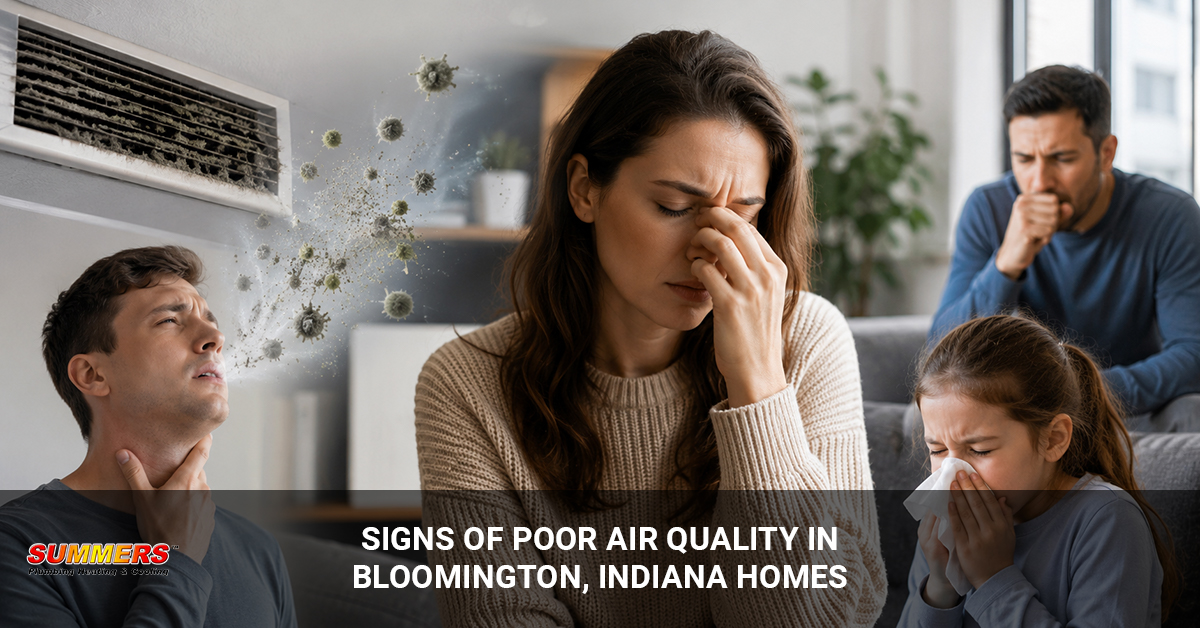
Poor indoor air quality can cause allergy symptoms, breathing problems, unpleasant odors, and reduced comfort inside your home. When dust, pollen, mold spores, pet dander, and other airborne pollutants build up indoors, they can affect both your family’s health and your HVAC system’s performance.
Many homeowners don’t realize their indoor air quality has declined until they begin experiencing frequent sneezing, coughing, headaches, or excessive dust around the house. In some cases, poor indoor air quality can also make your heating and cooling system work harder, leading to higher energy bills and additional wear on HVAC equipment.
Bloomington’s climate can make indoor air quality even more challenging. Spring brings high pollen levels, summer humidity can encourage mold and dust mites, fall introduces seasonal allergens, and tightly sealed homes during winter can trap pollutants indoors. Without proper ventilation and filtration, these contaminants can continue circulating throughout your home.
The good news is that most indoor air quality problems can be improved. Regular HVAC maintenance, replacing air filters on schedule, controlling indoor humidity, improving ventilation, and reducing indoor pollutants can all make a noticeable difference.
In this guide, you’ll learn the most common signs of poor indoor air quality, what causes these problems in Bloomington homes, and the practical steps you can take to create a cleaner, healthier, and more comfortable indoor environment.
Why Indoor Air Quality Matters
Indoor air quality matters because it directly affects your health, comfort, energy bills, and the performance of your HVAC system. When the air inside your home is clean, it’s easier to breathe, your heating and cooling system operates more efficiently, and your home feels more comfortable throughout the year.
Poor indoor air quality can expose your family to dust, pollen, mold spores, pet dander, and other airborne pollutants. Over time, these contaminants may trigger allergy symptoms, worsen asthma, irritate your eyes and throat, and cause headaches or fatigue. Children, older adults, and people with respiratory conditions are often the most affected.
Indoor air quality also has a direct impact on your HVAC system. Dust and debris can clog air filters, restrict airflow, and build up inside system components. As a result, your heating and cooling equipment has to work harder to maintain the desired temperature, which can increase energy costs and shorten the lifespan of the system.
Maintaining good indoor air quality helps create a healthier home while improving HVAC efficiency and indoor comfort. Simple steps such as replacing air filters regularly, controlling indoor humidity, and improving ventilation can make a noticeable difference.
Common Signs of Poor Air Quality in Your Home
Poor indoor air quality often causes allergy symptoms, excessive dust, musty odors, poor airflow, and ongoing respiratory irritation. These are common warning signs that pollutants or excess moisture may be affecting the air inside your home.
Many homeowners mistake these symptoms for seasonal allergies or normal household dust. However, if you feel better after leaving your home and your symptoms return when you come back, poor indoor air quality could be the underlying cause.
Some of the most common signs include:
- Frequent sneezing, coughing, or allergy symptoms while indoors
- Excessive dust buildup on furniture and other surfaces
- Musty, stale, or unpleasant odors
- Dry eyes, irritated throat, or sinus discomfort
- Headaches or fatigue that occur mainly at home
- Uneven airflow between rooms
- High indoor humidity or condensation on windows
- Visible mold or mildew growth
- More frequent asthma flare-ups
- Rooms that feel stuffy even when the HVAC system is running
Ignoring these warning signs can allow indoor air quality problems to become worse over time. If you regularly notice one or more of these issues, it’s a good idea to inspect your HVAC system and consider a professional indoor air quality evaluation to identify the source of the problem.
What Causes Poor Indoor Air Quality?
Poor indoor air quality is most often caused by airborne pollutants, excess moisture, poor ventilation, and HVAC system issues. In many homes, several of these factors combine to reduce air quality and make your living environment less healthy.
Identifying the source of indoor air pollution is the first step toward improving the air you breathe. The following are some of the most common causes of poor indoor air quality in Bloomington homes.
Dust and Dust Mites
Dust is one of the most common indoor air pollutants. It contains dirt, fabric fibers, pollen, skin cells, and other tiny particles that settle on surfaces and circulate through the air. Dust mites thrive in these environments and can trigger allergy and asthma symptoms, especially in bedrooms and carpeted areas.
Pet Dander
Pet dander is another common cause of poor indoor air quality. Dogs, cats, and other furry pets shed microscopic skin flakes that can remain airborne for long periods. These particles can build up throughout the home and trigger allergies, asthma, and other respiratory problems.
Mold and Mildew
Mold and mildew grow in damp areas where moisture is present. Bathrooms, basements, crawl spaces, and areas with water leaks are especially vulnerable. As mold releases spores into the air, it can reduce indoor air quality and contribute to allergy symptoms, respiratory irritation, and unpleasant odors.
Pollen Entering the Home
Pollen doesn’t stay outside. During the spring and fall, it can enter your home through open windows and doors, as well as on clothing, shoes, and pets. Without proper filtration, pollen can continue circulating through your HVAC system and trigger seasonal allergies indoors.
Volatile Organic Compounds (VOCs)
Many household products release volatile organic compounds, or VOCs, into the air. Paints, cleaning supplies, air fresheners, furniture, flooring materials, adhesives, and other everyday products can emit these chemicals. High levels of VOCs may contribute to headaches, eye irritation, dizziness, and poor indoor air quality.
Dirty HVAC Filters
HVAC filters are designed to capture dust, pollen, pet dander, and other airborne contaminants before they circulate throughout your home. When filters become clogged, airflow is reduced and the system becomes less effective at removing pollutants. Replacing air filters regularly is one of the simplest ways to improve indoor air quality.
Poor Ventilation
Poor ventilation allows indoor pollutants to build up over time. Everyday activities such as cooking, showering, cleaning, and doing laundry release moisture and airborne particles into the air. Without proper ventilation, these contaminants remain trapped inside your home and continue circulating through your living spaces.
Because Bloomington experiences humid summers and tightly sealed homes during winter, maintaining proper ventilation is an important part of improving indoor air quality year-round.
How Bloomington’s Climate Affects Indoor Air Quality
Bloomington’s changing seasons can have a significant impact on indoor air quality throughout the year. Pollen, humidity, temperature changes, and reduced ventilation can all increase the amount of airborne pollutants inside your home if they aren’t properly managed.
Each season brings its own indoor air quality challenges, making it important to adjust your HVAC maintenance and air quality practices throughout the year.
Spring
Spring often brings high pollen levels from trees, grasses, and flowering plants. Pollen can enter your home through open windows and doors or on clothing and pets. Once inside, these allergens may continue circulating through your HVAC system, triggering allergy symptoms and reducing indoor air quality.
Summer
Warm temperatures and high humidity create ideal conditions for mold growth, mildew, and dust mites. Excess moisture can also make your home feel uncomfortable and increase the workload on your air conditioning system. Regular HVAC maintenance and proper humidity control are especially important during the summer months. See our HVAC summer prep in Bloomington guide to get your system ready before the heat arrives.
Fall
As leaves fall and weeds release pollen, additional outdoor allergens can make their way indoors. Cooler weather also means many homeowners begin closing their windows, reducing fresh air circulation and allowing indoor pollutants to build up more easily.
Winter
During winter, homes are typically sealed to keep warm air inside and reduce heating costs. While this improves energy efficiency, it also limits natural ventilation. Dust, pet dander, cooking fumes, and other indoor pollutants can accumulate more quickly, leading to stale indoor air and reduced comfort.
Because Bloomington experiences all four seasons, maintaining good indoor air quality requires year-round attention. Replacing HVAC filters regularly, controlling indoor humidity, improving ventilation, and scheduling routine HVAC maintenance can help keep your home’s air cleaner and healthier in every season.
Health Problems Linked to Poor Indoor Air Quality
Poor indoor air quality can contribute to allergies, asthma, respiratory irritation, headaches, fatigue, and other health concerns. When dust, pollen, mold spores, pet dander, and other pollutants remain trapped indoors, they can affect your health every time you breathe.
One of the most common effects of poor indoor air quality is allergy symptoms. Airborne allergens can cause frequent sneezing, coughing, itchy eyes, runny noses, and nasal congestion. If these symptoms improve when you leave your home but return when you come back, indoor air quality may be contributing to the problem.
Poor indoor air quality can also make asthma symptoms worse. Pollutants in the air may trigger more frequent asthma attacks, increase wheezing, and make breathing more difficult for people with respiratory conditions.
Other health problems linked to poor indoor air quality include:
- Frequent headaches
- Fatigue or low energy
- Dry eyes and irritated throat
- Persistent coughing
- Shortness of breath
- Difficulty sleeping because of congestion or poor air quality
Children, older adults, and people with allergies or existing respiratory conditions are often the most sensitive to indoor air pollution. Improving indoor air quality can help reduce exposure to airborne contaminants and create a healthier home for your entire family.
How Poor Air Quality Affects Your HVAC System
Poor indoor air quality can reduce HVAC efficiency, increase equipment wear, and raise your energy bills. As dust, dirt, and other airborne particles circulate through your home, they gradually build up inside your heating and cooling system.
One of the first components affected is the HVAC air filter. As the filter collects dust, pollen, pet dander, and other contaminants, airflow becomes restricted. This forces your HVAC system to work harder to maintain the desired temperature, increasing energy consumption and placing additional stress on the equipment.
Poor indoor air quality can also lead to:
- Dirty or clogged HVAC filters
- Dust buildup on evaporator coils and blower components
- Restricted airflow throughout the system
- Reduced heating and cooling performance
- Higher energy bills
- More frequent repairs
- Shortened HVAC equipment lifespan
Routine HVAC maintenance is one of the most effective ways to improve indoor air quality and protect your heating and cooling system. Replacing air filters on schedule, cleaning critical components, and scheduling annual inspections can improve airflow, increase efficiency, and reduce the amount of airborne pollutants circulating throughout your Bloomington home.
How to Improve Indoor Air Quality
Improving indoor air quality starts with reducing airborne pollutants, maintaining your HVAC system, and bringing more clean air into your home. Even small changes can make a noticeable difference in your family’s comfort, health, and the efficiency of your heating and cooling system.
Some of the most effective ways to improve indoor air quality include:
- Replace HVAC air filters every one to three months
- Schedule professional HVAC maintenance every year
- Improve ventilation by using exhaust fans and allowing fresh air inside when the weather permits
- Keep indoor humidity between 30% and 50%
- Vacuum and dust regularly to reduce allergens
- Choose low-VOC paints, cleaners, and household products
- Install a whole-home air purifier
- Consider a UV air purification system to help reduce airborne microorganisms
- Schedule professional indoor air quality testing if problems persist
Taking a proactive approach can help reduce dust, pollen, mold spores, pet dander, and other airborne contaminants before they affect your health. Maintaining cleaner indoor air also improves HVAC performance, increases energy efficiency, and creates a more comfortable living environment throughout the year.
When to Schedule an Indoor Air Quality Inspection
You should schedule an indoor air quality inspection if you continue experiencing air quality problems after replacing filters, cleaning your home, and maintaining your HVAC system. Professional testing can identify hidden pollutants and moisture issues that are difficult to detect on your own.
Consider scheduling an indoor air quality inspection if you notice:
- Persistent allergy symptoms while indoors
- Musty, stale, or unpleasant odors
- Visible mold or mildew growth
- Excessive dust despite regular cleaning
- Weak or uneven airflow from vents
- High indoor humidity or condensation on windows
- Ongoing coughing or respiratory irritation
- Headaches or fatigue that improve when you leave your home
An indoor air quality professional can evaluate your home’s air, inspect your HVAC system, identify sources of pollution, and recommend solutions that address the underlying problem. Depending on the results, recommendations may include improved filtration, ventilation upgrades, humidity control, air purification systems, or HVAC repairs.
Addressing indoor air quality concerns early can help protect your family’s health, improve indoor comfort, lower energy costs, and extend the life of your HVAC system.
Final Thoughts
Poor indoor air quality can affect your family’s health, indoor comfort, and the performance of your HVAC system. Recognizing the warning signs early, such as excessive dust, allergy symptoms, musty odors, poor airflow, or high humidity, can help you prevent more serious problems and costly repairs.
Many indoor air quality issues can be improved with simple, proactive steps. Replacing HVAC air filters on schedule, improving ventilation, controlling indoor humidity, reducing indoor pollutants, and scheduling routine HVAC maintenance all help create cleaner, healthier air inside your home.
If your home continues to have poor air quality despite these efforts, a professional indoor air quality inspection can identify hidden problems and recommend the right solutions. Taking action early can improve your family’s comfort, protect your HVAC system, and help maintain a healthier indoor environment throughout every season in Bloomington, Indiana.