

Why Is My Home Too Dry in Winter? Causes & Fixes
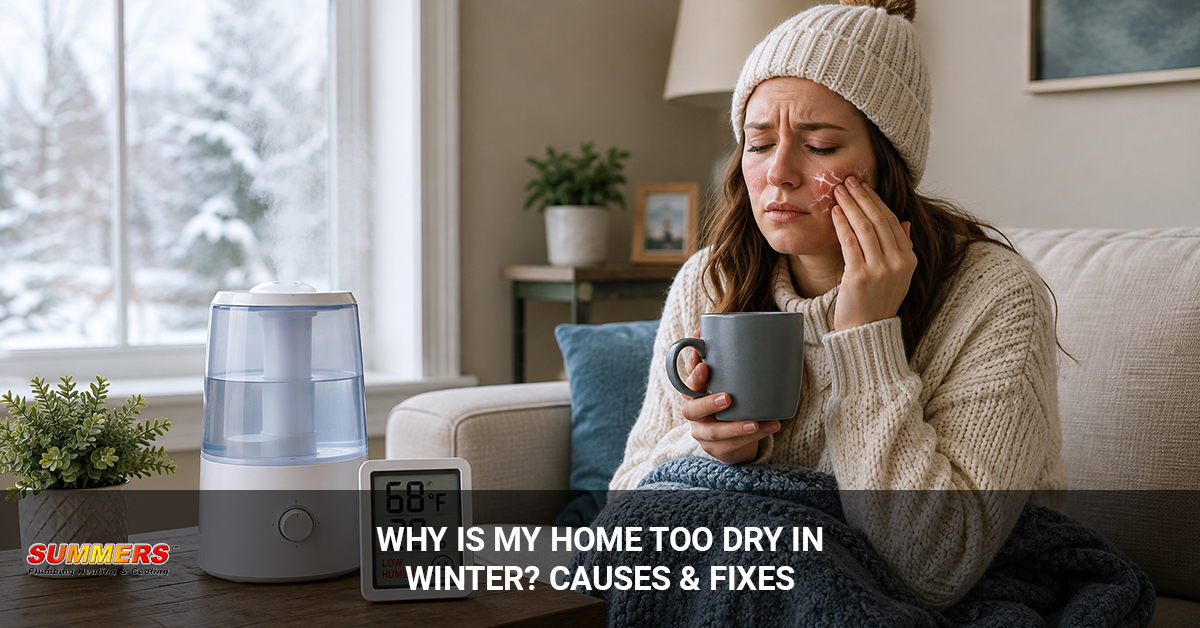
Your home gets too dry in winter mainly because cold outdoor air contains less moisture, and heating that air lowers its relative humidity even further. Air leaks around windows and doors can make the problem worse by bringing more cold, dry air inside.
For many homes, indoor humidity around 30% to 40% in winter is a comfortable target. If humidity stays below 30%, you may notice dry skin, static electricity, irritated eyes or throat, and cracking wood.
Why Does My Home Get So Dry in Winter?
Cold outdoor air, indoor heating, and air leaks are the main reasons homes become too dry during winter.
When cold air enters your home, it does not contain much moisture. Once your heating system warms that air, its relative humidity drops.
This is why a home can feel dry even when the thermostat shows a comfortable temperature.
Cold Outdoor Air Holds Less Moisture
Cold air holds less moisture than warm air, which is why winter air can make your home feel dry.
When outdoor air enters through doors, windows, cracks, or normal ventilation, it brings relatively little moisture with it.
Once that air is heated indoors, its relative humidity becomes even lower.
For example, outdoor air may feel damp on a cold day because of fog or rain, but once that air is brought inside and heated, the relative humidity can drop significantly.
Your Heating System Lowers Relative Humidity
Heating your home can lower relative humidity because warming cold, dry air increases its moisture-holding capacity without adding more water to the air.
Your furnace does not normally remove moisture from indoor air like an air conditioner or dehumidifier does.
Instead, it heats the air that is already there.
The result is lower relative humidity.
This is why people often say that a furnace “dries out” the house. Keeping your heating system properly maintained can also improve overall winter performance. See our furnace maintenance guide.
The furnace is not necessarily removing water. Heating changes the relationship between the amount of moisture in the air and the air’s temperature.
Air Leaks Bring Dry Outdoor Air Inside
Drafts around windows, doors, and other openings can make winter dryness worse by allowing cold outdoor air to enter your home.
Common air-leak areas include:
- Exterior doors
- Window frames
- Attic penetrations
- Electrical outlets on exterior walls
- Plumbing penetrations
- Recessed lights
- Gaps around pipes and ducts
The more uncontrolled air exchange your home has, the harder it can be to maintain comfortable indoor humidity.
Sealing obvious drafts can therefore help with both comfort and humidity control.
Poor Ventilation Can Make the Problem More Noticeable
Excessive air exchange with the outdoors can remove indoor moisture and replace it with cold, dry air.
Homes need appropriate ventilation, but unnecessary air leakage can make winter humidity harder to maintain.
Exhaust fans in bathrooms and kitchens also remove indoor air. When that air leaves, outdoor air eventually enters to replace it.
Use exhaust fans when needed, but avoid running them longer than necessary.
How Do I Know If My Home Is Too Dry?
Indoor humidity below about 30% in winter is generally considered too dry for many homes.
The easiest way to know your home’s humidity level is to use a small digital hygrometer.
Common signs of low indoor humidity include:
- Dry or itchy skin
- Chapped lips
- Dry nose or throat
- Irritated eyes
- Frequent static shocks
- Cracking wood floors or furniture
- Shrinking wood trim
- A home that feels dry even at a comfortable temperature
These symptoms do not prove that humidity is too low. Measuring the humidity gives you a much better answer. Humidity is also an important part of overall indoor air quality in Bloomington.
Dry, Itchy Skin and Chapped Lips
Low indoor humidity can pull moisture from your skin and make dry or itchy skin and chapped lips more noticeable.
You may notice the problem more during winter because you spend more time indoors with heated air.
If the air in your home is consistently below the recommended humidity range, raising the humidity may improve comfort.
Dry Nose, Throat, or Irritated Eyes
Very dry indoor air can make your nose, throat, and eyes feel dry or irritated.
Low humidity affects the moisture on exposed surfaces of the body.
However, these symptoms can have many causes. Allergies, illness, medications, and other environmental factors can also contribute.
If symptoms persist, do not assume humidity is the only cause.
Static Electricity
Frequent static shocks are a common sign that indoor air is very dry.
Dry air allows static electrical charges to build up more easily on people, clothing, carpets, and other materials.
If you suddenly notice static shocks whenever you touch a door handle or another object, check your indoor humidity.
Cracking Wood Floors or Furniture
Very low humidity can cause wood to lose moisture, which may lead to shrinking, gaps, or cracking.
You may notice changes in:
- Hardwood floors
- Wood furniture
- Cabinets
- Trim
- Doors
- Musical instruments
Wood responds to changes in moisture. Keeping indoor humidity within a reasonable range can help reduce excessive drying.
Your Home Feels Dry Even When the Temperature Is Comfortable
A home can feel uncomfortable when humidity is too low even if the thermostat shows a normal temperature.
Humidity affects how comfortable the air feels against your skin.
If the temperature is set comfortably but the air still feels unusually dry, check the humidity with a hygrometer before changing the thermostat.
What Humidity Should My Home Be in Winter?
A winter indoor humidity level of about 30% to 40% is a practical target for many homes, although the ideal level depends on outdoor temperature and condensation risk.
Keeping humidity too low can cause the dry-air problems described above.
But adding too much moisture can create another problem.
When warm, humid indoor air contacts cold windows, walls, or other surfaces, condensation can form. Persistent condensation can contribute to moisture damage and other problems.
That is why you should not simply set a humidifier to the highest possible level.
A hygrometer can help you monitor the actual humidity and adjust your humidifier accordingly. For more winter humidity tips, see our guide to air humidification in Indiana.
How Can I Add Humidity to My Home in Winter?
The most effective way to raise winter humidity is to use a properly sized humidifier while reducing unnecessary air leakage.
A humidifier gives you much more control than trying to add moisture through everyday household activities.
Use a Whole-Home Humidifier
A whole-home humidifier can add moisture throughout the house and maintain a more consistent humidity level.
These systems are typically connected to the home’s HVAC system and water supply. If your humidifier is connected to your heating system, regular HVAC maintenance is also important. See our furnace tune-up checklist.
Depending on the equipment, they can automatically add moisture when indoor humidity falls below the selected setting.
A whole-home humidifier can be especially useful when several rooms are consistently dry or a portable humidifier cannot keep up.
Use a Portable Humidifier
A portable humidifier can raise humidity in a single room or small area without requiring HVAC installation.
It can be useful for bedrooms, offices, or other spaces where dryness is most noticeable.
However, portable units have limited coverage. You also need to clean and maintain them regularly.
A dirty humidifier can become a source of unwanted buildup and microbial growth.
Follow the manufacturer’s cleaning and maintenance instructions.
Reduce Unnecessary Air Leaks
Sealing obvious drafts around doors, windows, and other openings can help your home hold onto moisture during winter.
Check weatherstripping around exterior doors and look for noticeable drafts around windows.
Air sealing can also improve overall comfort and reduce unwanted outdoor air infiltration. If air is entering through leaking HVAC ductwork, professional duct sealing may help address the problem.
For larger air leaks around the building envelope, a professional home energy assessment may be more appropriate than simply adding more humidity.
Avoid Over-Ventilating the Home
Excessive ventilation can remove indoor moisture faster than you can replace it.
Bathroom and kitchen exhaust fans are important, especially when showering or cooking.
But leaving them running unnecessarily can increase air exchange with the outdoors.
Use exhaust fans when needed and turn them off after the moisture or odor has been removed.
Do not block or disable required ventilation systems simply to increase humidity.
Add Moisture From Everyday Activities
Cooking, showering, and other normal household activities naturally add some moisture to indoor air.
You may also notice a small increase in humidity when drying clothes indoors.
However, these methods are difficult to control and usually are not enough to solve a consistently dry home.
If humidity remains below 30%, a properly sized humidifier is a more reliable solution.
Why Is My House Still Dry Even With a Humidifier?
A humidifier may not solve the problem if it is too small, incorrectly set, poorly maintained, or the home is losing moisture through excessive air leakage.
Start by checking the humidity reading with a reliable hygrometer.
Then check the humidifier itself.
Possible problems include:
- The humidifier is undersized.
- The humidity setting is too low.
- The unit needs cleaning.
- The water supply is restricted.
- The humidifier is not operating properly.
- The home has significant air leakage.
- The humidity sensor is inaccurate.
- Humidified air is not being distributed effectively.
If the humidifier is running regularly but indoor humidity remains very low, have the system checked rather than simply increasing the setting. If you are dealing with ongoing indoor comfort or humidity problems, see our indoor air services.
Can Dry Winter Air Cause Problems in Your Home?
Very dry indoor air can cause comfort problems, static electricity, and excessive drying of wood materials.
You may notice:
- Dry skin
- Chapped lips
- Dry eyes or throat
- Frequent static shocks
- Gaps in wood flooring
- Cracks in wood furniture
- Dry or shrinking wood trim
Low humidity can also make the home feel less comfortable even when the thermostat is set to a normal temperature.
The goal is not to make the home as humid as possible. It is to maintain a balanced level that provides comfort without creating condensation.
When Should You Install a Whole-Home Humidifier?
A whole-home humidifier is worth considering when winter humidity stays low throughout the house and portable humidifiers cannot maintain a comfortable level.
It may be a good option if:
- Several rooms feel consistently dry.
- Indoor humidity remains below 30%.
- You constantly refill portable humidifiers.
- Wood flooring or furniture shows signs of excessive dryness.
- You want automatic humidity control.
- You want one system to manage humidity throughout the home.
A professional can evaluate your HVAC system and determine whether a whole-home humidifier is appropriate for your home. A professional air humidification service can help determine the right solution for your home.
Frequently Asked Questions
Why is my house so dry in winter?
Your house gets dry in winter because cold outdoor air contains less moisture, and heating that air lowers its relative humidity. Air leaks around doors, windows, and other openings can bring more dry outdoor air inside.
How do I fix dry air in my house in winter?
The most reliable way to fix dry winter air is to maintain indoor humidity around 30% to 40% with a properly sized humidifier. Sealing obvious air leaks can also help your home retain moisture.
What humidity level is too low for a house?
Indoor humidity below about 30% is generally considered too low for many homes during winter. A hygrometer can tell you whether your home’s humidity is actually below that level.
Does a furnace make the air dry?
A furnace does not normally remove moisture from the air like a dehumidifier. Instead, it heats cold air, which lowers its relative humidity unless additional moisture is added.
How can I increase humidity without a humidifier?
Cooking, showering, and drying clothes indoors can add some moisture to the air. However, these methods are difficult to control and may not provide enough moisture for a consistently dry home.
Is dry air worse in winter?
Dry indoor air is more common in winter because cold outdoor air contains less moisture and homes are heated. Air leakage and ventilation can bring this dry air inside, lowering indoor humidity.
Why is my house dry even with a humidifier?
Your house may remain dry if the humidifier is undersized, incorrectly set, poorly maintained, or unable to keep up with air leakage. Check the actual humidity level and have the system inspected if it remains low.
Final Thought
Your home becomes dry in winter mainly because cold outdoor air contains less moisture, while heating that air lowers its relative humidity. Drafts and uncontrolled air exchange can make the problem worse.
Start by measuring your indoor humidity with a hygrometer. If it stays below about 30%, your home may be too dry.
For many homes, keeping winter humidity around 30% to 40% provides a good balance between comfort and condensation control. A portable humidifier can help with individual rooms, while a whole-home humidifier can provide more consistent control throughout the house.
If your home stays dry despite using a humidifier, check for air leaks and make sure the humidifier is correctly sized, maintained, and operating properly.