

Whole-Home Humidifier vs Room Humidifier: Which Is Better?
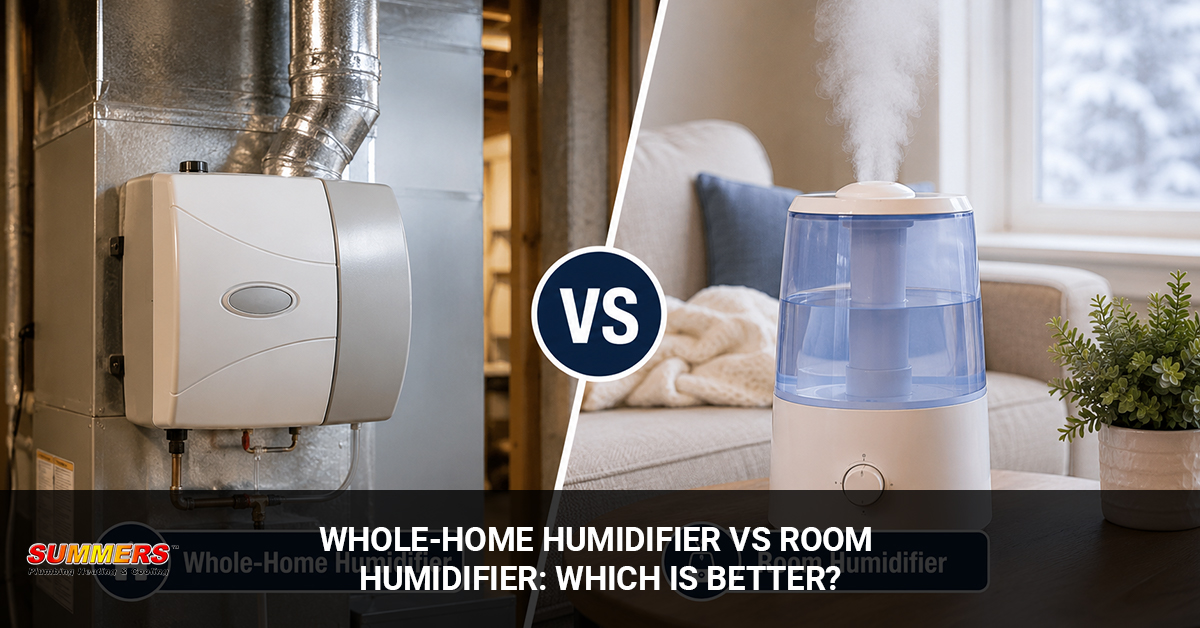
A whole-home humidifier is usually better for consistent humidity throughout the house, while a room humidifier is better for adding moisture to one room or a small area. The right choice depends on how much of your home is dry, your budget, how much maintenance you want to handle, and whether you want a permanent solution.
If several rooms feel dry during winter, a whole-home system is usually more practical. If only a bedroom or office needs extra moisture, a portable room humidifier may be all you need.
Whole-Home Humidifier vs Room Humidifier: What’s the Difference?
The main difference is coverage: a whole-home humidifier works with the HVAC system to distribute moisture throughout the house, while a room humidifier adds moisture directly to one room.
| Feature | Whole-Home Humidifier | Room Humidifier |
| Coverage | Entire home | One room or small area |
| Installation | Usually HVAC-connected | Plug-in |
| Upfront cost | Higher | Lower |
| Water refills | Often automatic | Usually manual |
| Humidity control | Whole-home | Room-level |
| Maintenance | Less frequent hands-on work | More frequent cleaning and refilling |
| Best for | Whole-house dryness | Localized dryness |
A whole-home humidifier is designed to work as part of the home’s HVAC system. A portable unit works independently and can be moved from room to room.
How Does a Whole-Home Humidifier Work?
A whole-home humidifier adds moisture to the air as it moves through the HVAC system and distributes that moisture through the home’s ductwork.
These systems are usually installed near the furnace or air handler. Depending on the model, water flows into the humidifier, and the HVAC blower helps distribute humidified air through the supply ducts.
Many whole-home systems also use a humidistat to monitor indoor humidity. When humidity drops below the selected level, the humidifier can add moisture automatically.
For more information about managing winter humidity, see our guide to air humidification in Indiana.
This means you do not have to carry a water tank from the sink to the bedroom every day.
How Does a Room Humidifier Work?
A room humidifier adds moisture directly to the air in a single room using a water reservoir.
Most portable models have a tank that you fill manually. The unit then releases moisture into the room while it operates.
Room humidifiers are useful when dryness is limited to a specific space. For example, you might use one in a bedroom at night or in a home office during the winter.
Their main limitation is coverage. A small portable unit cannot distribute moisture throughout an entire house as effectively as a system designed for whole-home use.
Whole-Home Humidifier vs Room Humidifier: Which Is Better?
A whole-home humidifier is better when multiple rooms are dry, while a room humidifier is better when you only need to increase humidity in one room.
The best choice depends on the size and nature of the problem. Humidity is one part of maintaining comfortable indoor air quality in Bloomington, along with filtration and air cleaning.
Choose a Whole-Home Humidifier If…
A whole-home humidifier makes more sense when low humidity affects several rooms or the entire house.
Consider one if:
- Multiple rooms feel dry.
- Indoor humidity stays low throughout winter.
- You want automatic humidity control.
- You do not want to refill water tanks every day.
- You want one system instead of several portable units.
- You own your home and want a more permanent solution.
- Your HVAC system can support the installation.
A whole-home system is particularly convenient when you already use a central HVAC system and want humidity control throughout the house.
Choose a Room Humidifier If…
A room humidifier is usually the better choice when dryness is limited to one room or you need a low-cost, temporary solution.
A portable unit may be a good fit if:
- Only one room feels dry.
- You live in a rental.
- You want a lower upfront cost.
- You do not want HVAC installation.
- You only need extra humidity during certain times.
- You want to move the humidifier between rooms.
For a single bedroom or office, installing a whole-home system may provide more coverage than you actually need.
Whole-Home Humidifier vs Room Humidifier Cost
Room humidifiers cost much less upfront, while whole-home humidifiers cost more because they require equipment, installation, and connection to the HVAC system.
A portable room humidifier can often cost anywhere from around $30 to $200, depending on its capacity and features.
A whole-home humidifier can cost roughly $400 to $1,500 or more installed, depending on the system, HVAC setup, labor, and installation requirements.
These are general price ranges, not fixed quotes.
The cost comparison should also consider how you plan to use the humidifier.
A room humidifier may have a low purchase price, but you may need multiple units if several rooms are dry. You will also need to refill and clean them regularly.
A whole-home system has a higher upfront cost but can provide humidity throughout the home from one central system.
Which Humidifier Is Easier to Maintain?
Room humidifiers usually require more hands-on maintenance because you have to refill and clean the water tank regularly.
Both types need maintenance. The difference is how that maintenance is handled.
Whole-Home Humidifier Maintenance
Whole-home systems generally require less daily attention.
Depending on the model, maintenance may include:
- Replacing a water panel or humidifier pad
- Cleaning the unit
- Checking the water supply
- Inspecting the drain
- Checking the humidistat
- Seasonal HVAC maintenance
You can also use this furnace tune-up checklist to review other important maintenance tasks.
Many systems connect directly to the home’s water supply, so you do not need to manually fill a tank.
The exact maintenance schedule depends on the humidifier design and manufacturer.
Room Humidifier Maintenance
Portable humidifiers need regular cleaning and water changes to keep the unit operating properly.
Typical maintenance includes:
- Emptying and refilling the tank
- Cleaning the tank
- Removing mineral buildup
- Cleaning internal components
- Replacing filters when applicable
- Drying the unit when it is not in use
Follow the manufacturer’s cleaning instructions.
Do not leave stagnant water sitting in the tank for extended periods.
Which Humidifier Uses More Water?
Water use depends on humidity demand, home size, climate, and how often the humidifier operates, so neither type always uses more water.
A whole-home humidifier can use more total water because it is designed to humidify a much larger area.
A room humidifier generally uses less water because it treats a smaller space.
However, several portable humidifiers operating in different rooms can use as much or more water than one whole-home system.
The amount of water used is therefore less important than the amount of space you need to humidify.
Can a Room Humidifier Humidify the Whole House?
A typical room humidifier is not designed to humidify an entire house effectively.
Its output is intended for a limited area.
Moisture may spread beyond the room if doors are open and air circulates, but the humidity level will usually be much harder to control throughout the entire house.
You could use multiple portable humidifiers in different rooms, but that creates more work.
Each unit needs to be filled, cleaned, monitored, and maintained.
If your entire home consistently has low humidity, a whole-home humidifier is generally the more practical solution.
Can a Whole-Home Humidifier Work Without the HVAC Running?
Many whole-home humidifiers rely on the HVAC blower to distribute moisture, so operation can depend on the system design and controls.
Some whole-home humidifiers are designed to operate only when the HVAC blower is running.
Others may have controls that allow the blower to operate when humidity needs to be increased.
The exact behavior depends on the humidifier, HVAC system, thermostat, and control setup.
If you want humidity control without heating or cooling, ask an HVAC professional whether the humidifier you are considering can operate that way with your system.
Which One Should You Choose?
Choose a whole-home humidifier for consistent humidity throughout the house, and choose a room humidifier when you only need to treat one room.
Use this simple comparison:
Choose a Whole-Home Humidifier If:
- Your entire house feels dry.
- Multiple rooms have low humidity.
- You want automatic humidity control.
- You want less daily maintenance.
- You want a permanent solution.
- You already have a central HVAC system.
Choose a Room Humidifier If:
- Only one room is dry.
- You rent your home.
- You want a low-cost option.
- You need temporary humidity.
- You do not want HVAC installation.
- You want to move the unit between rooms.
Before buying either option, measure your indoor humidity with a hygrometer. Humidity is only one part of indoor comfort, so you may also want to consider other air purification options for your home.
If only one room has low humidity, a portable unit may be enough. If humidity is low throughout the house, whole-home humidification is usually more practical.
Frequently Asked Questions
Is a whole-home humidifier better than a room humidifier?
A whole-home humidifier is better for maintaining humidity throughout the house, while a room humidifier is better for treating one room. The better option depends on how much space needs additional moisture and how much maintenance you want to handle.
Is a whole-house humidifier worth the money?
A whole-house humidifier can be worth the cost when low humidity affects several rooms and you want automatic, consistent humidity control. It is less compelling when only one room needs additional moisture.
Are room humidifiers cheaper than whole-home humidifiers?
Yes, room humidifiers have a much lower upfront cost than whole-home systems. Portable units can cost tens or a few hundred dollars, while whole-home systems require equipment and professional installation.
Can a portable humidifier humidify multiple rooms?
A portable humidifier can affect nearby spaces, but it is generally designed to humidify one room. Using multiple units can increase coverage, but it also means more refilling, cleaning, and maintenance.
How often do room humidifiers need cleaning?
Portable humidifiers generally need frequent cleaning, especially when used regularly. Follow the manufacturer’s instructions for cleaning frequency and water replacement. Regular maintenance helps prevent mineral buildup and unwanted microbial growth.
Do whole-home humidifiers need a lot of maintenance?
Whole-home humidifiers usually require less hands-on maintenance than portable units, but they still need regular service. Depending on the model, this can include replacing a water panel, cleaning the unit, checking the drain, and inspecting the controls.
Which humidifier is better for winter?
A whole-home humidifier is generally better when winter dryness affects the entire house, while a room humidifier works well for a single dry bedroom or living space.
Final Thought
The choice between a whole-home humidifier and a room humidifier comes down to coverage and convenience.
A whole-home humidifier costs more upfront, but it can provide consistent humidity throughout the house with less daily hands-on work.
A room humidifier is much cheaper and easier to start using. It is a practical option when only one room needs additional moisture or when you need a temporary solution. For professional help improving your home’s indoor comfort and air quality, explore our indoor air services.
If you are unsure which option you need, measure your indoor humidity first. A whole-home system may be worth considering when several rooms consistently fall below your desired humidity level. For a single room with low humidity, a portable humidifier may be enough.