

Water Around the Base of the Toilet: Causes, Fixes & When to Call a Plumber
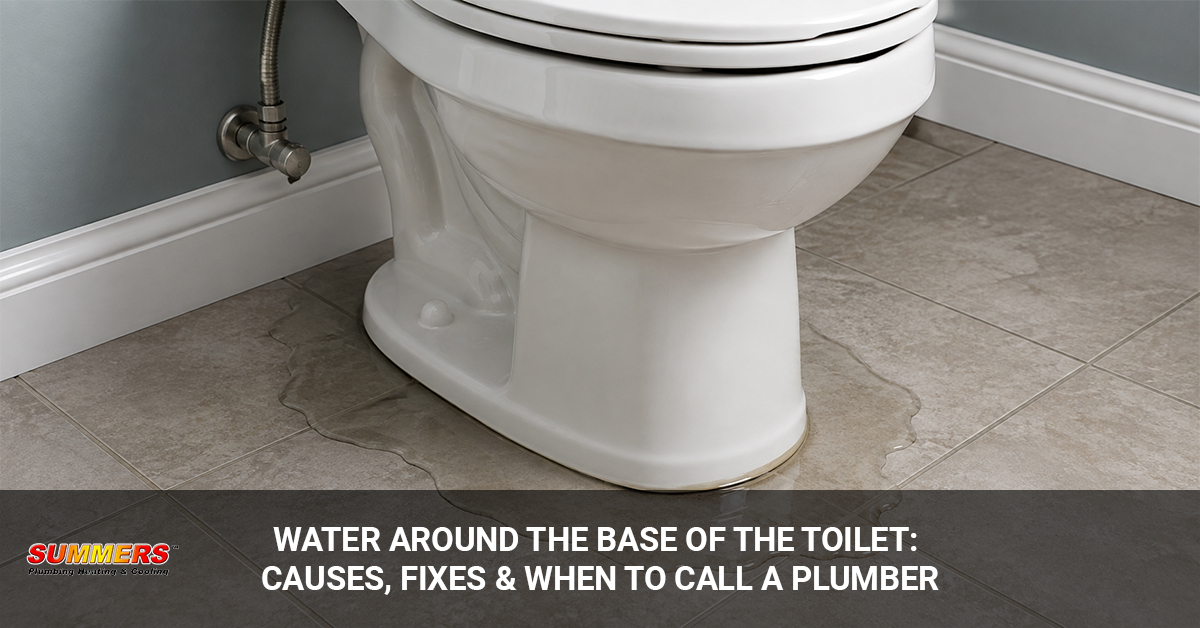
Water around the base of a toilet usually comes from a failed toilet seal, a loose or damaged flange, a leaking supply connection, condensation, or a cracked toilet. Finding the source first is important because the right repair depends on where the water is coming from.
A small amount of water may seem harmless, but repeated moisture can damage the flooring and subfloor around the toilet. If the toilet is also wobbling, the movement may have damaged the seal.
Here’s how to identify the problem and what to do about it.
Why Is There Water Around the Base of My Toilet?
Water around the toilet base is commonly caused by a failed wax ring or toilet seal, a loose toilet, a damaged flange, or water leaking from another part of the toilet.
The most common causes include:
- Failed toilet wax ring or seal
- Loose or wobbly toilet
- Damaged toilet flange
- Leaking toilet supply line
- Condensation
- Cracked toilet tank or bowl
- Water leaking from the tank or connections
The location and timing of the water can help narrow down the cause.
Failed Wax Ring or Toilet Seal
A failed toilet seal can allow water to leak from the toilet base, especially when you flush.
The wax ring or another toilet seal creates a watertight connection between the toilet and the drain flange.
Over time, the seal can deteriorate. A toilet that moves or rocks can also damage the seal.
If water consistently appears around the base shortly after flushing, the toilet seal is one of the first things to check. You can also learn more about common toilet problems in our guide to toilet repair.
Loose or Wobbly Toilet
A loose or wobbly toilet can damage the seal and allow water to escape around the base.
The toilet should sit firmly on the floor.
If it rocks when you sit down or push it gently from side to side, don’t simply keep tightening the bolts.
A damaged flange, loose closet bolts, or uneven flooring could be causing the movement.
Overtightening the bolts can crack the porcelain without fixing the underlying problem.
Cracked or Damaged Toilet Flange
A damaged toilet flange can cause leaks when it prevents the toilet from sitting securely or properly compressing the seal.
The flange connects the toilet to the drain and provides the mounting points for the closet bolts.
Flanges can crack, corrode, or break around the bolt slots.
A flange repair ring may fix certain types of damage when the existing flange and drain connection are still structurally sound. If the damage extends into the drain system, you may need professional drain repair to address the underlying plumbing problem.
Leaking Toilet Supply Line
A leaking supply line can send water down the back or side of the toilet, making it look like the leak is coming from the base.
Check the connection between the water supply line and the toilet tank.
Also check the shutoff valve and the supply line itself. If you can’t find the source, learning how to detect a hidden plumbing leak can help you narrow down the problem.
Dry the area completely and watch for fresh water while the toilet is not being flushed. This can help distinguish a supply-line leak from a toilet-base leak.
Condensation Around the Toilet
Condensation can create water around the toilet without there being a plumbing leak.
Cold water inside the toilet tank can cause moisture to form on the outside of the tank when the surrounding air is warm and humid.
The moisture can drip onto the floor and collect around the toilet.
If the water appears even when the toilet hasn’t been flushed or used, condensation is one possibility.
Cracked Toilet Tank or Bowl
A cracked toilet tank or bowl can leak water onto the floor and eventually collect around the toilet base.
Look closely for visible cracks, especially around the tank, bowl, and connection points.
A cracked porcelain toilet should generally be replaced rather than repaired with a temporary patch.
How to Tell Where the Toilet Water Is Coming From
You can often find the source by drying the entire area and watching where new water appears first.
Start by wiping the floor and the outside of the toilet completely dry.
Then check the area after flushing and while the toilet is sitting unused.
Water Appears Only After Flushing
Water that appears around the toilet base only after flushing can indicate a failed toilet seal, flange problem, or another leak in the toilet-to-drain connection.
Pay attention to exactly where the water first appears.
If it comes directly from underneath the toilet, the seal and flange deserve inspection.
Water Appears Even When the Toilet Hasn’t Been Used
Water that appears while the toilet is sitting unused is more likely to come from a supply connection, tank leak, condensation, or cracked component.
Check the supply line and tank connections first.
If those areas are dry, inspect the tank and bowl for cracks or signs of condensation.
Water Comes From Under the Toilet Base
Water that appears directly underneath the toilet base often points to a failed seal, flange problem, or water that has traveled from another leak.
Don’t assume the visible location is the exact source.
Water can run along the toilet or floor before becoming visible.
Dry the area and watch where fresh water appears.
Water Is Coming From the Back of the Toilet
Water coming from the back of the toilet is often related to the supply line, tank connection, or condensation rather than the toilet seal.
Check the supply line connection and the area where the tank connects to the bowl.
If water is coming from inside the wall behind the toilet, stop using the fixture and have the plumbing inspected.
Is Water Around the Toilet Base an Emergency?
Water around the toilet base isn’t always an emergency, but a recurring leak should be repaired promptly to prevent floor and subfloor damage.
A small amount of condensation isn’t usually the same concern as wastewater leaking from underneath the toilet. However, repeated leaks can lead to expensive flooring and structural problems, so it’s important to prevent water damage before the problem gets worse.
However, don’t ignore repeated moisture.
You should take the problem more seriously if:
- Water appears after every flush.
- The toilet is wobbling.
- The floor feels soft.
- You notice a sewer smell.
- Water is spreading beyond the toilet.
- The leak is getting worse.
- You see staining or damage around the floor.
If wastewater is leaking from the toilet base, avoid using the toilet until the problem is addressed.
How to Fix Water Around the Base of a Toilet
The correct fix depends on the source, but common repairs include replacing the toilet seal, repairing the flange, fixing the supply connection, or replacing a damaged toilet.
Replace the Toilet Wax Ring or Seal
Replacing the toilet seal is the usual fix when water is leaking from the toilet base because the existing seal has failed.
The basic process involves:
- Shut off the water.
- Empty the toilet.
- Disconnect the supply line.
- Remove the toilet.
- Remove the old seal.
- Inspect the flange and floor.
- Install a new seal.
- Reinstall the toilet.
- Reconnect the water supply.
- Test for leaks.
The flange should be inspected while the toilet is removed. Installing a new wax ring won’t solve a broken flange.
Repair a Damaged Toilet Flange
A damaged toilet flange may need a repair ring or replacement, depending on the extent of the damage.
A flange repair ring can work when the existing flange is still securely connected but has damaged mounting areas or broken closet-bolt slots.
If the flange is completely detached, the drain connection is damaged, or the surrounding floor is unstable, a more extensive repair may be necessary.
Repair or Replace a Leaking Supply Line
A leaking toilet supply line usually needs a new connection or replacement supply line rather than a new wax ring.
Turn off the water before working on the connection.
Don’t overtighten the fittings. Excessive force can damage the connection and create another leak.
Replace a Cracked Toilet
A cracked toilet tank or bowl usually needs replacement because damaged porcelain can continue leaking and may become unsafe.
Don’t rely on a temporary repair if the toilet bowl or tank has a significant crack.
A plumber can determine whether the toilet itself needs replacement.
How Much Does It Cost to Fix Water Around a Toilet Base?
Fixing water around a toilet base can cost about $100 to $500 or more, depending on whether the problem is a seal, supply line, flange, toilet, or damaged flooring.
Typical costs can vary as follows:
| Repair | Typical Cost |
| Toilet seal replacement | 150–300 |
| Supply line replacement | 100–200 |
| Flange repair | 150–500 |
| Toilet replacement | 300–800+ |
| Subfloor repair | Varies |
These are general ranges, not fixed prices. Local labor rates and the condition of the plumbing can significantly affect the final bill.
A simple seal replacement is much less involved than repairing water-damaged flooring or a damaged drain connection.
Can I Fix Water Around the Toilet Base Myself?
You can often fix a simple toilet-base leak yourself, but flange problems, hidden leaks, and water-damaged flooring are better handled by a plumber.
Replacing a toilet seal is possible for an experienced DIY homeowner, but removing a toilet can be awkward and heavy.
You’ll also need to inspect the flange after removing the toilet.
If you find:
- A broken flange
- A soft floor
- A damaged drain pipe
- Significant corrosion
- Water damage
it’s usually better to stop and call a professional.
How to Replace a Toilet Wax Ring
Replacing a toilet wax ring requires removing the toilet, cleaning the old seal, checking the flange, installing the new seal, and resetting the toilet.
Step 1: Shut Off the Water
Turn off the toilet’s water supply before removing the toilet.
The shutoff valve is usually located near the floor behind or beside the toilet.
Turn the valve clockwise and flush the toilet to empty the tank.
Step 2: Empty the Toilet
Remove as much remaining water as possible from the tank and bowl before lifting the toilet.
A sponge, towel, or suitable container can help remove the remaining water.
This makes the toilet easier and cleaner to handle.
Step 3: Disconnect the Supply Line
Disconnect the water supply line from the toilet after confirming the water is fully shut off.
Keep a towel nearby because some water may remain inside the line.
Step 4: Remove the Toilet
Remove the closet-bolt nuts and carefully lift the toilet away from the flange.
Toilets are heavy, so get help if necessary.
Place the toilet on a protected surface.
Step 5: Remove the Old Wax Ring
Remove the old wax ring completely and clean the flange surface before installing the new seal.
Don’t reuse the old wax ring.
Once the toilet has been removed, inspect the flange for cracks, corrosion, or broken bolt slots.
Step 6: Inspect the Flange and Floor
Check the flange and surrounding floor for damage before installing the new wax ring.
Look for:
- Broken flange sections
- Loose mounting points
- Corrosion
- Soft flooring
- Water damage
If the floor is soft or the flange is badly damaged, fix those problems before reinstalling the toilet.
Step 7: Install the New Seal
Install a new wax ring or compatible toilet seal according to the manufacturer’s instructions.
Make sure it is correctly positioned over the drain opening.
Step 8: Reinstall the Toilet
Lower the toilet straight down over the closet bolts and gently press it into place.
Avoid twisting the toilet excessively because this can affect the seal.
Step 9: Test for Leaks
Turn the water back on, flush the toilet several times, and check around the base for fresh water.
Also check the supply connection.
If the floor stays dry and the toilet remains stable, the repair is likely successful.
How to Prevent Water From Collecting Around the Toilet Base
The best way to prevent recurring water around the toilet base is to fix leaks promptly, keep the toilet stable, and check the seal and plumbing connections when problems appear.
A few simple habits can help:
- Don’t ignore a wobbly toilet.
- Check the supply line for leaks.
- Don’t overtighten toilet bolts.
- Fix tank or bowl leaks promptly.
- Watch for condensation.
- Check the floor around the toilet regularly.
- Address recurring leaks instead of repeatedly drying the floor.
Regular maintenance can also help you catch small plumbing problems before they become expensive repairs. See our plumbing maintenance checklist for more tips.
A small leak is easier and cheaper to fix before it damages the subfloor.
When Should You Call a Plumber?
Call a plumber for toilet leak repair when water continues to appear after a basic repair, the flange is damaged, the floor feels soft, or you can’t identify the source of the leak.
You should also get professional help if:
- Water appears after every flush.
- The toilet is wobbly.
- Water is coming from underneath the toilet.
- The flange is broken.
- The floor is soft or damaged.
- You see signs of water damage.
- The supply line continues leaking.
- The toilet has a crack.
- A new toilet seal doesn’t stop the leak.
A plumber can determine whether the problem is limited to the toilet seal or involves the flange, drain connection, or flooring.
Water Around Toilet Base FAQs
Why is there water around the base of my toilet?
Water around the toilet base is usually caused by a failed toilet seal, loose toilet, damaged flange, leaking supply connection, condensation, or a cracked toilet. The timing and location of the water can help identify the source.
How do I know if my toilet wax ring is leaking?
A leaking wax ring often causes water to appear around the toilet base after flushing, especially when the toilet itself is stable and the supply connections are dry. The toilet may also develop a sewer odor or show signs of moisture around the base.
Can a wobbly toilet cause water to leak from the base?
Yes, a wobbly toilet can damage the seal between the toilet and drain flange and eventually cause water to leak from the base. The wobble itself should be repaired rather than repeatedly tightening the toilet bolts.
Is water around the toilet base always a wax ring problem?
No, water around the toilet base isn’t always caused by a wax ring. A leaking supply line, tank, cracked toilet, condensation, damaged flange, or water running down from another location can create similar symptoms.
Can I replace a toilet wax ring myself?
Yes, a homeowner can replace a toilet wax ring, but the toilet must be removed and the flange and floor should be inspected before installing the new seal. If you find flange or flooring damage, call a plumber.
How much does it cost to fix a leaking toilet base?
Fixing a leaking toilet base typically costs about $100 to $500 or more, depending on whether the problem is the seal, flange, supply line, toilet, or flooring.
How long does it take to replace a toilet wax ring?
Replacing a toilet wax ring can often take about one to two hours, depending on the toilet, flange condition, and ease of removal. Repairs take longer when the flange or floor is damaged.
Should I stop using the toilet if water is leaking from the base?
Yes, it’s best to limit or stop using the toilet when water repeatedly leaks from the base until you identify the cause. Continued use can allow more water to reach the flooring and subfloor.
Can water around the toilet base damage the floor?
Yes, repeated water exposure can damage flooring and the subfloor around the toilet. Prolonged moisture can cause staining, swelling, soft spots, and other damage.
When should I call a plumber for a leaking toilet base?
Call a plumber when the leak continues after replacing the seal, the flange is damaged, the floor is soft, or you can’t determine where the water is coming from.
Final Takeaway
Water around the base of a toilet usually means there is a leak or moisture problem that needs to be identified before you replace any parts.
A failed wax ring is a common cause, especially when water appears after flushing. But a loose toilet, damaged flange, leaking supply line, condensation, or cracked toilet can produce similar symptoms.
Start by drying the area and watching where fresh water appears. If the toilet is wobbly, don’t simply tighten the bolts harder. Check the flange, seal, and floor for the actual cause.
Fixing the problem early can prevent a small toilet leak from turning into expensive flooring or subfloor damage.