

Toilet Repair in Bloomington, Indiana: Common Toilet Leak Problems
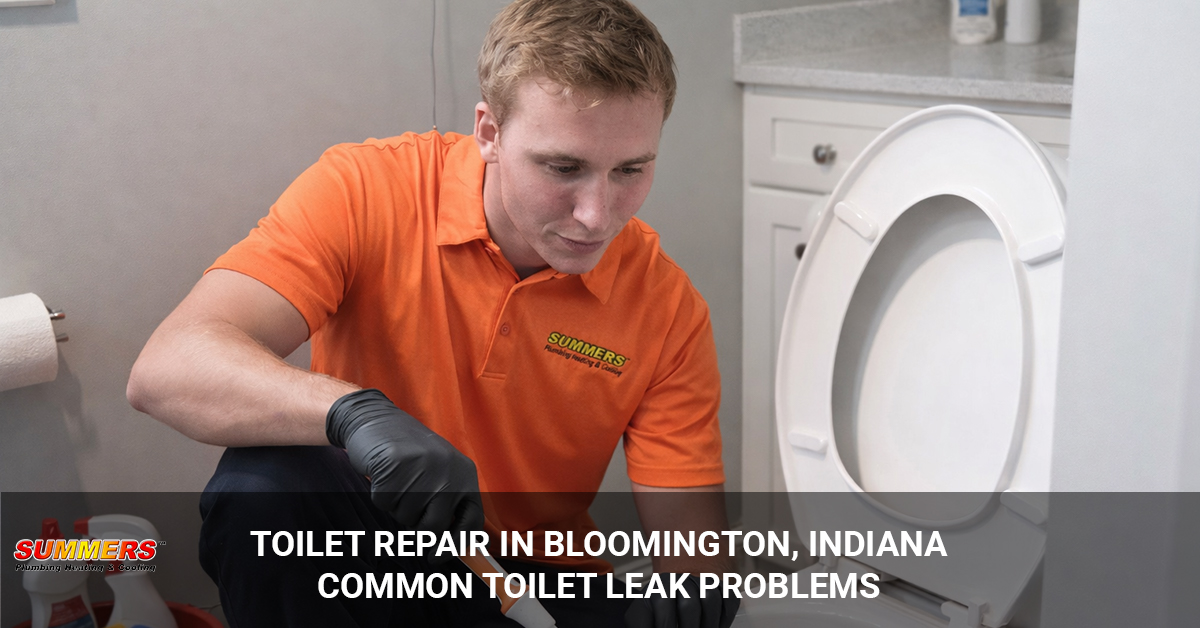
Toilet repair in Bloomington, Indiana, usually involves fixing leaks at the base, inside the tank, at the supply line, or between the tank and bowl.
Most toilet leaks start small. You may see a little water on the floor. You may hear the toilet running when no one has flushed. It doesn’t seem urgent at first.
But even a slow leak can cause real damage. Water can soak into the floor. Your water bill can slowly climb. Moisture can lead to mold growth over time. The longer you wait, the more expensive the repair can become.
If you notice water around your toilet or hear it running constantly, it’s a sign that something is wrong. Below is what Bloomington homeowners should know about common toilet leak problems and how they are fixed.
Where Do Toilet Leaks Usually Come From?
Most toilet leaks come from the base of the toilet, the tank, the water supply line, or worn parts inside the tank.
Each area can leak for a different reason. A base leak usually involves the seal underneath the toilet. A tank leak often comes from loose bolts or worn gaskets. A supply line leak may be caused by a loose connection or an aging hose. Internal leaks happen when parts like the flapper or fill valve wear out.
The key is finding the exact source first. Once you know where the leak is coming from, you can fix the right part instead of guessing and dealing with the same problem again later.
Leak at the Base of the Toilet
A leak at the base of the toilet is usually caused by a worn wax ring or loose mounting bolts.
The wax ring sits under the toilet and seals it to the drain pipe. Over time, that seal can dry out, crack, or shift out of place. When it fails, water leaks out each time you flush.
You may see water collecting around the bottom of the toilet. The toilet might also feel loose or rock slightly when you sit on it. If you notice water around the base of your toilet, learn more about the causes of water around the base of a toilet, how to fix the problem, and when to call a plumber. In older Bloomington homes, aging seals and soft subfloors can make this problem more common.
If you ignore a base leak, water can seep into the flooring and weaken the structure underneath. Fixing the seal early helps prevent costly floor repairs later.
Toilet Tank Leaks
Toilet tank leaks are usually caused by worn gaskets, loose bolts, or cracks in the porcelain.
The tank is attached to the bowl with bolts and sealed with a rubber gasket. Over time, these parts can wear out or loosen. When that happens, water can slowly drip from the tank onto the floor. In some cases, small hairline cracks in the tank itself can also cause leaks.
You may notice water running down the back of the bowl or hear a faint dripping sound after flushing. Even if the leak seems minor, it should be fixed quickly. Tank leaks can cause hidden water damage behind or beneath the toilet if left untreated.
Water Supply Line Leaks
Water supply line leaks usually happen at the shut-off valve or where the hose connects to the tank.
The flexible hose that carries water from the wall to the toilet tank can loosen or wear out over time. The fittings at each end can also corrode, especially in older homes. When that happens, small drips can start around the connection points.
At first, the leak may seem minor. You might only notice a small puddle or damp spot near the wall. But over time, even a slow drip can stain flooring and damage nearby cabinets or baseboards.
Tightening the connection or replacing the hose often solves the problem. Catching it early prevents larger water damage later.
Internal Tank Leaks (Running Toilet)
A running toilet is caused by an internal leak, usually from a worn flapper or a faulty fill valve.
Inside the tank, the flapper controls the flow of water into the bowl. If it doesn’t seal tightly, water slowly leaks out of the tank. The fill valve then turns on to refill the tank, and the cycle repeats over and over.
You may not see water on the floor, but you’ll often hear the sound of water running even when the toilet hasn’t been flushed. That steady refill wastes water all day and increases your monthly utility bill.
Fixing the flapper or fill valve usually stops the leak and restores normal operation.
Signs You Have a Hidden Toilet Leak
Hidden toilet leaks usually show up as higher water bills, soft flooring, or musty odors in the bathroom.
Not all leaks are obvious. You may not see water on the floor, but the toilet may run randomly when no one has flushed it. The flooring around the base might feel slightly soft or spongy. Over time, you could notice a damp or mildew smell that doesn’t go away.
If your water bill suddenly increases without a clear reason, your toilet may be leaking silently inside the tank or beneath the base.
Catching these signs early can prevent larger repairs and protect your flooring from long-term damage.
Why Toilet Leaks Should Be Fixed Immediately
Toilet leaks should be fixed right away to prevent water damage and higher utility bills.
Even a small leak can cause bigger problems over time. Water that seeps into the flooring can weaken the subfloor and damage the structure beneath the toilet. Once moisture gets trapped, it can lead to mold growth and unpleasant odors. Toilet leaks are just one of several bathroom plumbing problems homeowners may overlook, so it’s important to understand the warning signs before minor issues become costly repairs.
Internal tank leaks are just as serious. A constantly running toilet can waste a large amount of water each day, which increases your monthly bill without you realizing it.
Fixing the problem early protects your home, reduces water waste, and keeps repair costs much lower than waiting until the damage spreads.
How Professionals Diagnose Toilet Leaks
Professionals diagnose toilet leaks by carefully inspecting the seals, tank parts, water supply connections, and the base of the toilet.
They start by checking the wax ring and mounting bolts to see if the leak is coming from underneath. Then they inspect the tank gasket, flapper, and fill valve for internal leaks. The supply hose and shut-off valve are also examined for drips or loose fittings.
If the source isn’t obvious, plumbers may perform simple tests to confirm where the water is escaping.
This step-by-step process identifies the exact cause of the leak so it can be repaired properly, not just patched temporarily.
Toilet Repair vs Toilet Replacement
Most toilet leaks can be repaired, but replacement is necessary if the toilet is cracked, severely worn out, or no longer efficient.
If the porcelain bowl or tank has a crack, replacing the toilet is usually the safest option. Cracks can spread over time and lead to sudden leaks. In that case, repairing internal parts will not solve the main problem.
If the toilet is older and needs repeated repairs, replacing it may make more sense long term. Newer models use less water and often flush more efficiently. If you’re unsure whether your toilet needs another repair or a full replacement, see our guide on when to replace a toilet and what signs to look for.
For leaks caused by worn seals, gaskets, flappers, or fill valves, repair is usually enough. A professional inspection helps determine whether fixing the current toilet is the smart choice or if upgrading is a better investment.
How Much Does Toilet Repair Cost in Bloomington, Indiana?
Toilet repair costs in Bloomington depend on the type of leak and the parts needed to fix it.
Some repairs are simple and affordable. For example, replacing a flapper or tank gasket usually costs less than fixing a leak at the base or replacing damaged parts. The cost can also vary based on how long the job takes, how easy the toilet is to access, and whether the repair is done during regular hours or as an emergency call.
A professional inspection gives you a clear estimate based on your specific issue. That way, you avoid paying for work you don’t need and get the right fix the first time.
When to Call for Toilet Repair in Bloomington, Indiana
Call for professional toilet repair as soon as you see water pooling around the toilet, hear the tank running constantly, or notice leaks that keep coming back.
Small leaks rarely fix themselves. If basic adjustments don’t solve the problem, there is likely a worn seal, loose connection, or damaged part that needs proper repair. Waiting can lead to floor damage, mold growth, and higher water bills.
Professional Toilet Repair in Bloomington, Indiana, ensures the leak is correctly diagnosed and repaired before it causes more serious issues.
If you notice signs of a toilet leak, schedule service now. Acting early protects your flooring, reduces water waste, and prevents larger plumbing problems.