

Sewer Line Repair in Bloomington, Indiana: Tree Root Problems
Tree roots are one of the most common causes of sewer line damage in Bloomington, Indiana.
They don’t break into pipes overnight. It starts small. A tiny crack. A loose joint. A little moisture in the soil. Roots naturally grow toward that moisture. Once they reach the pipe, they push their way inside and keep growing.
If your drains are slow, your toilets clog often, or you notice sewage odors, roots may already be inside your sewer line. At first, the problem feels minor. But it doesn’t stay that way. As roots expand, they block water flow and put pressure on the pipe. That can lead to cracks, leaks, or even a collapsed line.
Here’s what Bloomington homeowners need to know about tree root sewer problems, warning signs, and repair options before the damage gets worse.
Why Tree Roots Damage Sewer Lines
Tree roots damage sewer lines because they grow toward moisture and push into small cracks in underground pipes.
Your sewer line constantly carries water and waste. Even a tiny crack or loose joint lets out moisture into the soil. Roots are naturally drawn to that moisture. They grow toward it without you ever noticing.
Once roots find their way inside the pipe, they don’t stop growing. They begin to:
- Expand and thicken inside the line
- Catch toilet paper and debris
- Slow down wastewater flow
- Increase pressure in the pipe
At first, it may only cause a partial blockage. But as the roots grow larger, they can widen cracks and weaken the structure of the pipe.
Over time, the pipe may crack further, shift, or completely collapse if the problem isn’t addressed early.
Why Tree Root Problems Are Common in Bloomington, Indiana
Tree root sewer problems are common in Bloomington because of mature trees, older sewer pipes, and shifting soil during seasonal weather changes.
Many neighborhoods in Bloomington have large, well-established trees. Their roots spread wide and deep in search of water. If your sewer line has even a small weakness, those roots can find it.
At the same time, many older homes still use clay or cast-iron sewer pipes. These materials weaken over time. They can crack, corrode, or separate at the joints. That makes it easier for roots to enter.
Indiana’s freeze-thaw cycles also play a role. When the ground freezes, it expands. When it warms up, it contracts. This movement can shift the soil and slightly separate pipe joints. Even a small gap is enough for roots to push through.
Strong root systems combined with aging pipes make sewer line issues a frequent problem for homeowners in Bloomington.
Signs Tree Roots Are in Your Sewer Line
Tree root intrusion usually shows warning signs before a major backup happens.
Most homeowners never see the roots themselves. Instead, they notice changes in how their plumbing behaves. These small changes are early warnings that something is blocking the main sewer line.
Slow Drains Throughout the House
If multiple drains are slow at the same time, your main sewer line may be partially blocked by roots.
A single slow sink is often just a minor clog. But when your tubs, toilets, and sinks all start draining slowly together, that usually points to a deeper issue in the main line. This happens because roots inside the pipe restrict the normal flow of wastewater.
At first, the drainage is just sluggish. Over time, as the roots grow thicker and catch debris, the blockage becomes worse and can eventually lead to a complete backup.
Gurgling Noises in Pipes
If your toilet or drains make bubbling or gurgling sounds, there may be a blockage in your main sewer line.
Plumbing should run quietly. When you start hearing strange noises after flushing the toilet or running water, it usually means air is trapped in the pipes. That trapped air is often caused by a partial blockage underground.
Tree roots commonly create these partial obstructions. Water tries to push past the roots, which changes the pressure inside the pipe. That pressure shift creates the bubbling or gurgling sound you hear.
If the noise happens more than once, it’s often an early sign that roots are restricting flow inside your sewer line.
Frequent Drain Clogs
If your drains keep clogging even after cleaning, tree roots may be growing inside your sewer pipe.
A one-time clog is common. But if you need drain cleaning again and again, that usually means the blockage is deeper in the main sewer line. Roots can grow through small cracks and continue expanding inside the pipe.
Snaking the drain may clear part of the roots and restore flow for a short time. But it does not remove the full root system. The roots remain inside the pipe and continue growing. That’s why the clog often comes back within a few months.
If the same drains keep backing up, it’s a strong sign that roots are causing the problem underground.
Sewage Odors Indoors or Outdoors
If you smell sewage in your basement or yard, your sewer line may have a crack or leak.
Sewer systems are sealed to keep odors contained. When you notice a strong sewage smell that doesn’t go away, it often means something is wrong underground. Tree roots can enter small cracks and slowly force them wider over time.
As those cracks expand, sewer gases escape into the soil or even into your home. The smell may seem faint at first. Then it becomes stronger and more frequent.
Persistent sewage odors are often an early warning that the pipe is damaged and needs professional inspection before the problem gets worse.
Wet or Sunken Areas in the Yard
If part of your yard feels soft, soggy, or starts to sink, your sewer line may be leaking underground.
A damaged pipe allows wastewater to slowly seep into the surrounding soil. Over time, that constant moisture weakens the ground. The soil can begin to wash away, creating low spots or uneven areas in your yard.
You might first notice a patch of grass that stays wet even when it hasn’t rained. As the leak continues, the area can become soft underfoot or start to form shallow depressions.
These changes in your yard often point to a leaking sewer line that needs attention before the damage spreads further.
How Professionals Confirm Tree Root Intrusion
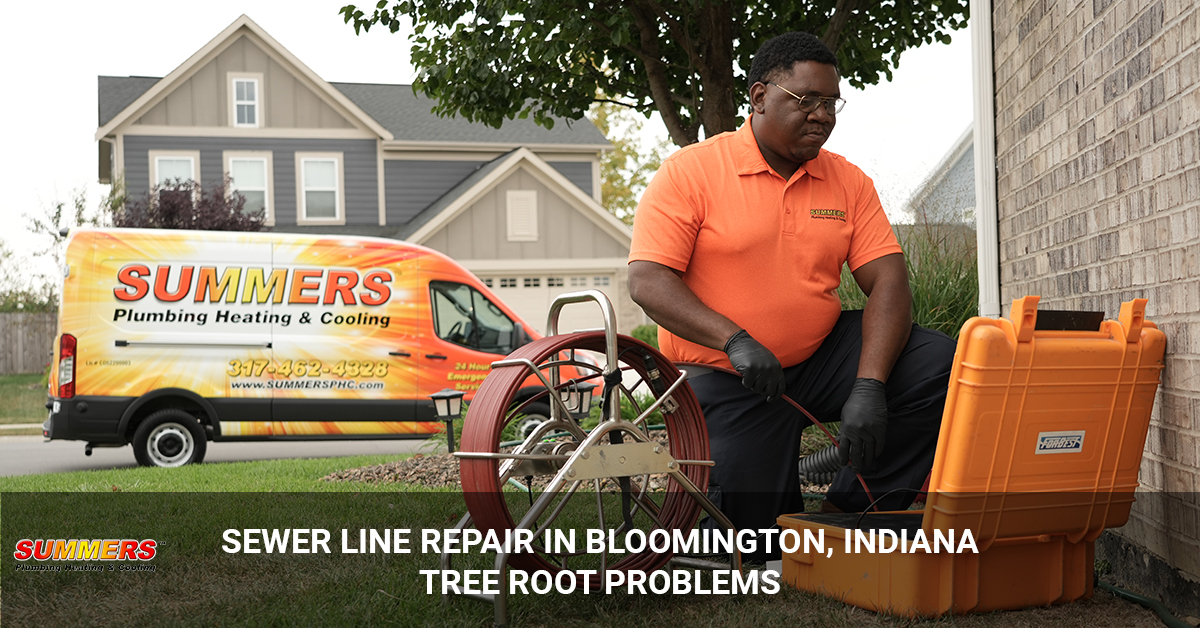
Plumbers confirm tree root intrusion by performing a sewer camera inspection.
Because the pipe is underground, the only way to know for sure is to look inside it. A small waterproof camera is fed through the sewer line. The technician watches a live video feed as the camera moves through the pipe.
This inspection allows them to see roots growing inside the line, locate cracks or separated joints, measure how severe the damage is, and pinpoint the exact spot that needs repair.
This step removes guesswork. It prevents unnecessary digging and ensures the right repair method is chosen based on the actual condition of the pipe.
Sewer Line Repair Options for Tree Root Damage
The right sewer line repair depends on how severe the root intrusion is and how much damage the pipe has sustained.
In some cases, the pipe is still structurally sound and only needs clearing. In other cases, the roots have cracked or weakened the line, and full repair is necessary.
Root Removal and Hydro Jetting
Hydro jetting removes tree roots by using high-pressure water to cut and flush them out of the pipe.
A specialized nozzle is inserted into the sewer line. It sprays powerful streams of water that break apart roots and clear built-up debris. This restores proper flow and relieves pressure inside the pipe.
However, hydro jetting does not repair cracks. If the pipe has openings where roots entered, they can grow back over time. That’s why this option is often considered a short-term or maintenance solution unless the pipe is sealed afterward.
Trenchless Pipe Lining
Trenchless pipe lining repairs a damaged sewer line by creating a new pipe inside the old one.
This method does not require large trenches across your yard. Instead, a flexible liner coated with resin is inserted into the existing pipe. Once it’s in place, it is inflated and hardened. The result is a smooth, durable inner pipe that seals cracks and closes gaps where roots entered.
Pipe lining blocks future root intrusion because it removes the openings that allowed roots inside in the first place. It works best when the original pipe is still mostly intact and has not completely collapsed.
For many homeowners, this option offers a long-lasting solution with minimal disruption to landscaping or driveways.
Pipe Bursting
Pipe bursting replaces a damaged sewer line by breaking the old pipe apart and pulling a new pipe into place.
This method is used when the existing pipe is too damaged to be repaired from the inside. A specialized tool is inserted into the old line. As it moves forward, it breaks the pipe outward while a new, durable pipe is pulled in behind it.
Pipe bursting usually requires only small access points instead of a full trench across the yard. It works well for severe root damage, cracked pipes, or sections that have shifted out of place.
This option provides a full replacement without the disruption of traditional excavation.
Full Excavation
Full excavation is required when the sewer pipe has collapsed or is too damaged to be repaired from the inside.
In this method, the damaged section of the sewer line is exposed by digging a trench. The broken pipe is removed and replaced with a new one. This approach allows contractors to fully inspect the area and ensure the problem is completely resolved.
While full excavation is more invasive and may disturb landscaping, driveways, or sidewalks, it is sometimes the only reliable solution in advanced cases where the pipe structure has failed.
How Much Does Sewer Line Repair Cost in Bloomington, Indiana?
The cost of sewer line repair in Bloomington depends on how severe the root damage is and which repair method is needed.
There isn’t one set price because every home and sewer line is different. Some repairs only involve clearing roots and restoring flow, while others require replacing entire sections of pipe.
Costs are typically influenced by how long the damaged section is, how deep the sewer line runs underground, where the access point is (for example, in the yard, under a driveway, or near a foundation), and whether a simple cleaning, trenchless repair, or full replacement is needed.
Minor root removal is usually much less expensive than a full pipe replacement. The most accurate way to estimate cost is through a sewer camera inspection, which shows exactly what kind of repair is required.
Can Tree Root Sewer Damage Be Prevented?
Tree root sewer damage can often be reduced with regular maintenance and early action.
You can’t stop roots from growing, but you can reduce the chances of them entering your sewer line. The key is staying ahead of the problem instead of waiting for a backup.
Homeowners can lower the risk by scheduling periodic sewer inspections to catch small cracks before roots find them. Removing roots early, before they thicken and spread, can also prevent serious blockages.
Installing root barriers near large trees helps redirect growth away from underground pipes. Avoiding planting trees directly above sewer lines reduces long-term risk. Replacing aging clay pipes with modern, durable materials can also eliminate weak points where roots commonly enter.
Early detection makes prevention much easier and far less expensive than repairing a collapsed sewer line later.
When to Call for Sewer Line Repair in Bloomington, Indiana
You should call for sewer line repair as soon as multiple drains slow down, clogs keep coming back, or sewage odors don’t go away.
These are not small plumbing issues. When more than one fixture is affected, the problem is usually in the main sewer line. Tree root damage does not fix itself. It gets worse over time as roots grow thicker and put more pressure on the pipe.
Waiting for a full backup can lead to water damage, yard disruption, and higher repair costs. Acting early gives you more repair options and can prevent a collapse.
Professional Sewer Line Repair in Bloomington, Indiana can identify the issue with a camera inspection and recommend the right solution before the damage spreads.
If you’re noticing warning signs, schedule a sewer inspection now to protect your home and avoid major repairs later.