

How to Know When to Replace a Toilet
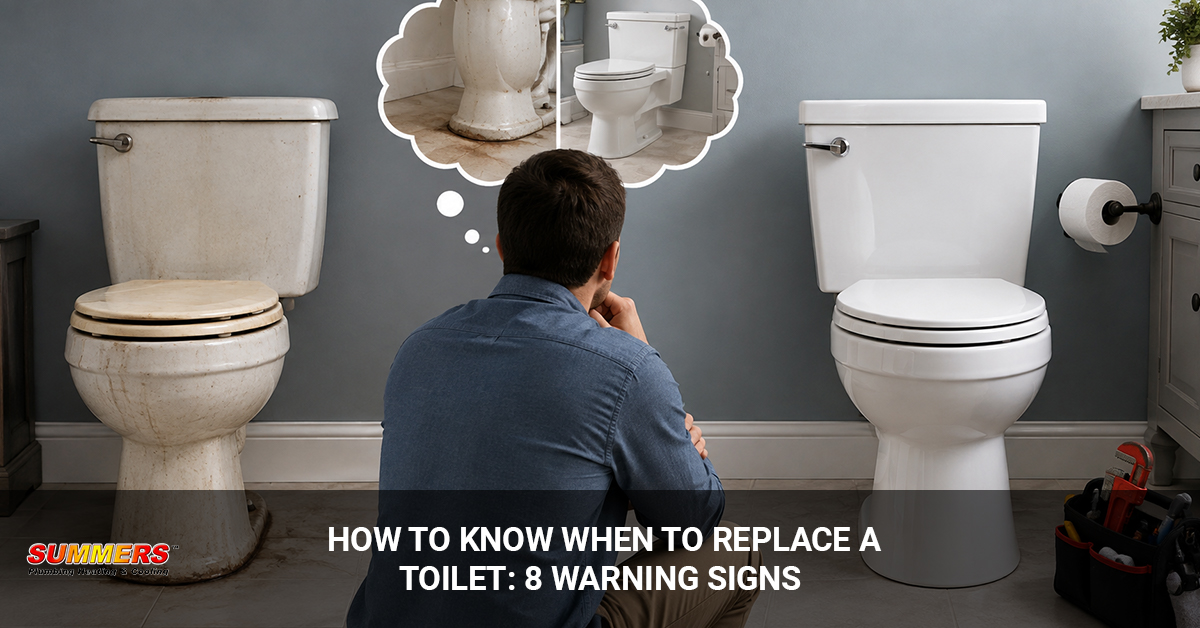
You should replace a toilet when it has a cracked bowl, repeated leaks, frequent clogs, poor flushing, severe corrosion, or recurring problems that make repairs no longer worthwhile. A minor problem such as a worn flapper or fill valve doesn’t mean the entire toilet needs replacement.
The decision usually comes down to the condition of the toilet itself. If the porcelain is intact and the problem is limited to a replaceable part, repair is often the better option. But when problems keep coming back, replacement can save you from repeated repair costs and frustration.
How Do You Know When to Replace a Toilet?
A toilet is usually ready for replacement when it has structural damage, repeated leaks, frequent clogs, poor performance, or requires repairs over and over again.
Look for these signs:
- Cracked toilet bowl or tank
- Repeated leaks
- Frequent clogs
- Weak or incomplete flushing
- Frequent repairs
- Severe mineral or corrosion buildup
- Persistent wobbling
- An old toilet with ongoing problems
Age alone doesn’t mean you need a new toilet. A well-maintained toilet can continue working properly for many years.
The condition and performance matter more than the calendar.
8 Signs Your Toilet Needs to Be Replaced
-
The Toilet Bowl Is Cracked
A cracked toilet bowl is one of the clearest reasons to replace the toilet because damaged porcelain can leak and may become unsafe.
A small surface mark isn’t necessarily the same as a structural crack.
However, if the crack goes through the porcelain and the bowl is holding water, replacement is the safer choice.
Don’t rely on a temporary patch for a significant crack. The toilet is under constant water and mechanical stress, and a repair may not provide a reliable long-term solution.
-
The Toilet Keeps Leaking
A toilet that continues leaking after replacing seals or repairing the affected components may be a candidate for replacement.
First, identify where the leak is coming from. If the problem continues, professional toilet leak repair can help identify and fix the source before it causes further damage.
It could be:
- The flapper
- Fill valve
- Tank-to-bowl connection
- Supply line
- Toilet base
- Toilet flange
Many of these problems are inexpensive to repair.
But if the toilet has developed several different leaks over time, replacing it may make more sense than continuing to repair one component after another.
-
The Toilet Clogs Frequently
Frequent clogs can be a reason to replace a toilet when the toilet itself has poor flushing performance and basic repairs don’t solve the problem.
Before replacing it, make sure the problem isn’t actually in the drain line. If you suspect a plumbing blockage or damaged pipe, drain repair may be needed instead of replacing the toilet.
A partially blocked drain can make even a good toilet appear to flush poorly.
If the plumbing is clear but the toilet consistently requires multiple flushes or frequently clogs, an older or poorly performing toilet may be worth replacing.
-
The Toilet Requires Frequent Repairs
If you keep replacing toilet components, the cost and inconvenience of repeated repairs can make replacement the better choice.
For example, you may have already replaced the:
- Flapper
- Fill valve
- Flush valve
- Handle
- Tank bolts
- Seals
One repair isn’t a reason to replace a toilet.
Several repairs in a short period are different.
If the toilet itself is old and other components continue to fail, compare the expected repair costs with the price of a new toilet.
-
The Toilet Rocks or Wobbles
A toilet that continues to wobble after repairing the flange, tightening the mounting hardware, and correcting an uneven floor may need replacement.
Don’t assume the toilet itself is damaged right away.
A wobbly toilet can be caused by:
- Loose closet bolts
- Damaged toilet flange
- Uneven floor
- Damaged subfloor
- Uneven toilet base
If those problems have been corrected and the toilet still doesn’t sit securely, inspect the toilet base for damage.
A damaged or uneven base can prevent the toilet from sitting properly.
-
The Toilet Flushes Poorly
A toilet that consistently struggles to flush may be worth replacing when cleaning, adjusting, and repairing its components don’t improve its performance.
Signs include:
- Weak flush
- Incomplete flush
- Frequent double flushing
- Waste remaining in the bowl
- Frequent clogs
Start by checking the water level, flapper, flush valve, and other components.
If everything is working properly but the toilet still performs poorly, replacement may be the better option.
-
The Toilet Has Severe Mineral or Rust Buildup
Severe mineral buildup or corrosion can make an older toilet difficult to maintain and may be a reason to replace it.
Hard-water deposits can affect internal components and water passages.
Over time, corrosion can also make repairs more difficult.
If the toilet is otherwise in good condition, cleaning or replacing an individual component may be enough.
But if corrosion affects multiple parts and repairs keep adding up, a new toilet may be more practical.
-
The Toilet Is Very Old
An old toilet doesn’t automatically need replacement, but age combined with frequent repairs, poor flushing, leaks, or outdated performance can make replacement worthwhile.
Some older toilets continue to work well.
Others become increasingly difficult to maintain because replacement parts are worn, hard to find, or repeatedly fail.
Consider the toilet’s condition rather than replacing it based on age alone.
How Long Does a Toilet Last?
A toilet can last for many years, but its practical lifespan depends on its condition, internal components, water quality, and how often it needs repairs.
The porcelain itself can remain usable for a long time.
However, the mechanical parts inside the tank and the seals around the toilet can wear out much sooner.
That’s why an older toilet may still have a perfectly good bowl but require frequent replacement of internal parts.
Instead of replacing a toilet simply because it is old, consider:
- How often it needs repairs
- Whether it flushes properly
- Whether it leaks
- Whether the porcelain is damaged
- Whether replacement parts are available
- Whether it sits securely on the floor
Should I Repair or Replace My Toilet?
Repair the toilet when the problem is limited to an inexpensive replaceable component, but replace it when the toilet has structural damage or recurring problems that make repairs impractical.
Repair Usually Makes Sense When:
- The bowl and tank are intact.
- The toilet flushes properly.
- The problem is a worn flapper.
- The fill valve needs replacement.
- The handle is broken.
- A seal needs replacement.
- The toilet is otherwise in good condition.
These are usually isolated component problems.
Replacement Usually Makes Sense When:
- The bowl is cracked.
- The toilet repeatedly leaks.
- It clogs despite proper repairs.
- Flush performance remains poor.
- Several components keep failing.
- The toilet is badly corroded.
- The toilet remains unstable after the flange and floor are repaired.
- Repair costs are approaching the cost of replacement.
The goal isn’t to replace a toilet at the first sign of trouble.
The goal is to avoid spending repeatedly on a toilet that is reaching the end of its useful life.
How Much Does It Cost to Replace a Toilet?
Professional toilet replacement commonly costs about $250 to $800 or more, depending on the toilet, labor, plumbing condition, and installation difficulty.
Your total cost may include:
- New toilet
- Labor
- Wax ring or other seal
- Closet bolts
- Supply line
- Removal and disposal of the old toilet
- Flange repair
- Floor or plumbing repairs
A straightforward replacement is usually less expensive than a replacement that requires repairing the flange or damaged flooring.
Before buying a toilet, find out whether the existing flange and plumbing are in good condition. Otherwise, unexpected repair costs can increase the project total.
Is It Worth Replacing an Old Toilet?
Replacing an old toilet is usually worthwhile when it has frequent repairs, recurring leaks, poor flushing, or other problems that keep coming back.
If an older toilet works well and doesn’t leak, there’s no need to replace it simply because it’s old.
Replacement becomes more attractive when you’re spending money on repairs repeatedly.
You should also consider water efficiency. A newer toilet may use less water per flush than an older model.
Compare the cost of keeping the existing toilet with the cost of installing a new one. Regular maintenance can also help you catch plumbing problems before they turn into expensive repairs. See our plumbing maintenance checklist for additional maintenance tips.
Can a Cracked Toilet Be Repaired?
A cracked toilet bowl or tank should generally be replaced rather than permanently repaired.
Porcelain can develop cracks from impact, stress, freezing temperatures, or other causes.
A small cosmetic mark is different from a crack that penetrates the porcelain and allows water to escape.
If the tank or bowl is leaking through a crack, replacement is the safer solution. Fixing the problem quickly can also help prevent water damage to the flooring and subfloor around the toilet.
A temporary patch may stop visible moisture for a short time, but it shouldn’t be treated as a permanent fix for a structurally damaged toilet.
What Should You Check Before Replacing a Toilet?
Before buying a replacement toilet, check the rough-in measurement, available bathroom space, bowl shape, flange condition, and water connection.
Getting these details right can prevent installation problems.
Measure the Rough-In
Measure from the finished wall behind the toilet to the center of the closet bolts to determine the toilet’s rough-in size.
Don’t measure from the baseboard if it changes the distance from the actual finished wall.
Check the manufacturer’s specifications before purchasing.
Check the Toilet Size and Shape
Choose a toilet that fits the available bathroom space and matches your preferred bowl shape and height.
Common choices include:
- Round bowl
- Elongated bowl
- Standard height
- Comfort or chair height
Make sure the new toilet won’t interfere with nearby walls, cabinets, doors, or other fixtures.
Inspect the Flange
Inspect the existing toilet flange before installing a new toilet to make sure it is secure and in good condition.
Look for:
- Cracks
- Corrosion
- Broken bolt slots
- Loose mounting
- Signs of water damage
A new toilet won’t stay secure if the flange underneath it is damaged.
Check the Supply Connection
Check the toilet’s water supply connection and replace worn components if necessary.
A new toilet is a good opportunity to replace an old or corroded supply line.
This can help prevent a separate leak after the installation.
What Happens When a Toilet Is Replaced?
Replacing a toilet involves shutting off the water, removing the old toilet, inspecting the flange and floor, installing a new seal, setting the new toilet, and testing it for leaks. If you’re replacing an old or damaged fixture, professional toilet installation can ensure the new toilet is properly sealed, secured, and connected.
Step 1: Shut Off the Water
Turn off the toilet’s water supply before removing the old toilet.
Flush the toilet to empty the tank.
Remove any remaining water before disconnecting the supply line.
Step 2: Empty and Disconnect the Toilet
Disconnect the water supply line and remove the mounting hardware holding the toilet to the floor.
Keep a towel nearby because some water may remain in the tank or bowl.
Step 3: Remove the Old Toilet
Carefully lift the old toilet away from the flange and place it on a protected surface.
Toilets can be heavy and awkward, so get help if needed.
Step 4: Inspect the Flange and Floor
Inspect the flange and surrounding floor before installing the replacement toilet.
Look for cracks, corrosion, loose mounting points, and water damage.
If the floor feels soft or the flange is damaged, repair those problems before installing the new toilet.
Step 5: Install a New Toilet Seal
Install a new wax ring or compatible toilet seal before setting the new toilet.
Never reuse the old wax ring after removing the toilet.
Follow the seal manufacturer’s instructions for proper placement.
Step 6: Set the New Toilet
Lower the new toilet straight down over the closet bolts and press it gently into position.
Make sure the toilet sits evenly on the floor.
Don’t force it into position.
Step 7: Secure the Toilet
Tighten the closet-bolt nuts evenly until the toilet is stable, but don’t overtighten them.
Too much pressure can crack the porcelain.
If a gap remains because of an uneven floor, appropriate toilet shims may be needed.
Step 8: Reconnect Water and Test
Reconnect the water supply, fill the tank, and flush the toilet several times while checking for leaks.
Check around:
- The toilet base
- Supply connection
- Tank connections
- Floor around the toilet
Make sure the toilet doesn’t wobble after installation.
When Should You Call a Plumber?
Call a plumber when the toilet has a damaged flange, water-damaged flooring, a cracked drain connection, or installation problems you can’t safely handle yourself.
Professional help is especially useful when:
- The flange is broken.
- The floor feels soft.
- Water has damaged the subfloor.
- The toilet won’t sit level.
- The old toilet is difficult to remove.
- The new toilet continues leaking.
- The drain connection is damaged.
- You can’t determine why the toilet keeps failing.
A plumber can inspect the toilet and surrounding plumbing before you spend money on a replacement that may not solve the actual problem. If the toilet can be repaired instead, professional toilet repair may be the better option.
Toilet Replacement FAQs
How do I know if my toilet needs to be replaced?
You should consider replacing a toilet when it has a cracked bowl, repeated leaks, frequent clogs, poor flushing, severe corrosion, or recurring repair problems. A single worn component usually doesn’t require a complete replacement.
How often should you replace a toilet?
There is no fixed replacement schedule for every toilet because condition and performance matter more than age alone. Replace it when structural damage, recurring problems, or poor performance make continued repairs impractical.
Is it cheaper to repair or replace a toilet?
Repair is usually cheaper when the problem is a single replaceable component, while replacement may be more cost-effective when the toilet has repeated or structural problems.
How much does it cost to replace a toilet?
Professional toilet replacement commonly costs about $250 to $800 or more, depending on the toilet, labor, plumbing condition, and installation requirements.
Should I replace a toilet if it keeps clogging?
Consider replacing a toilet that keeps clogging when the drain is clear and the toilet still has poor flushing performance after repairs. If the drain itself is blocked, replacing the toilet won’t solve the problem.
Can a cracked toilet be repaired?
A toilet with a significant crack in the bowl or tank should generally be replaced rather than permanently repaired. A cracked porcelain fixture can continue leaking and may become unsafe.
How long does a toilet last?
A toilet can last for many years, but its useful life depends on its condition, performance, and repair history. An old toilet that works well doesn’t necessarily need replacement.
Is an old toilet worth replacing?
An old toilet is worth replacing when it has frequent repairs, recurring leaks, poor flushing, or outdated performance. Age by itself isn’t a reason to replace a toilet that still works reliably.
Can a wobbly toilet be repaired?
Yes, many wobbly toilets can be repaired by fixing loose bolts, a damaged flange, or an uneven floor. If the toilet itself is damaged and remains unstable after those repairs, replacement may be necessary.
What should I check before buying a replacement toilet?
Check the rough-in measurement, bathroom space, bowl shape, toilet height, flange condition, and water connection before buying a replacement toilet. These measurements help ensure the new toilet will fit and install correctly.
Final Takeaway
The best time to replace a toilet is when structural damage, recurring problems, or poor performance make continued repairs impractical.
A worn flapper, fill valve, handle, or seal usually doesn’t justify replacing the entire toilet. Those parts can often be replaced quickly and inexpensively.
But a cracked bowl, repeated leaks, constant clogs, severe corrosion, or frequent repairs are stronger signs that it’s time for a new toilet.
Before replacing one, inspect the flange, floor, and plumbing connection as well. A new toilet won’t solve an underlying plumbing or flooring problem.