

Why Does My Faucet Keep Dripping? Causes & Quick Fixes
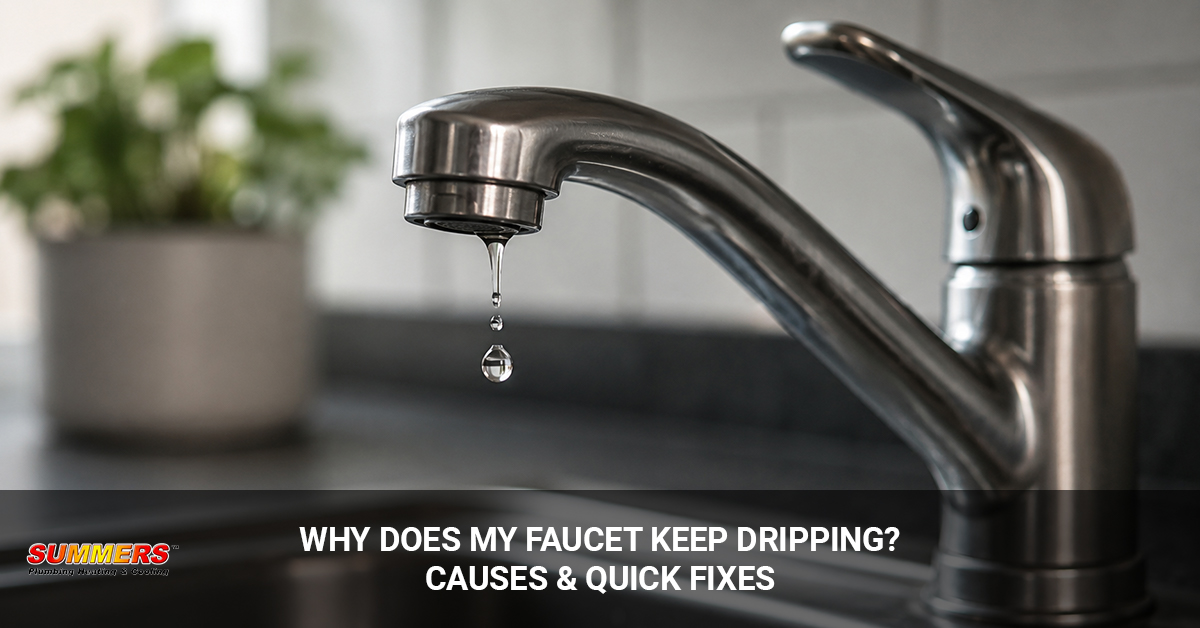
A faucet keeps dripping because a washer, cartridge, O-ring, valve seat, or another internal component is worn or damaged and no longer creates a tight seal. Mineral buildup and corrosion can also prevent the faucet from shutting off completely.
The right repair depends on the type of faucet and where the water is coming from. A drip from the spout usually points to an internal valve or seal problem, while water around the handle often indicates an O-ring, cartridge seal, or stem problem.
Why Does My Faucet Keep Dripping?
The most common reason a faucet keeps dripping is that an internal sealing component has worn out and allows water to pass through when the faucet is turned off.
Common causes include:
- Worn washer
- Bad faucet cartridge
- Damaged O-ring
- Worn valve seat
- Mineral buildup
- Corrosion
- Loose faucet components
- Damaged internal valve parts
A faucet can continue dripping even when the handle feels tight. That’s because tightening the handle doesn’t necessarily restore a worn internal seal.
Worn or Damaged Washer
A worn washer can cause a faucet to drip because it no longer seals the valve opening completely.
This is especially common with older compression-style faucets.
The washer can become hard, cracked, flattened, or worn down over time. Once it can’t press firmly against the valve seat, water can get through and drip from the spout.
Replacing the washer can often solve the problem if the valve seat and other components are still in good condition.
Bad Faucet Cartridge
A worn faucet cartridge can make a faucet drip even when the handle is fully turned off.
Cartridge faucets are common in single-handle fixtures.
The cartridge controls the flow of water through the faucet. Internal seals can wear out or mineral deposits can interfere with the cartridge.
Signs of a cartridge problem can include:
- Dripping from the spout
- Water leaking around the handle
- Difficulty moving the handle
- Poor temperature control
- Reduced water flow
If cleaning doesn’t solve the problem, the cartridge may need replacement.
Damaged O-Ring
A damaged O-ring can cause water to leak around the faucet handle, spout, or another connection.
O-rings are small rubber seals that prevent water from escaping around moving components.
Over time, an O-ring can become:
- Cracked
- Flattened
- Brittle
- Stretched
Replacing the correct O-ring can stop the leak when the seal is the only damaged component.
Worn Valve Seat
A worn or corroded valve seat can prevent the faucet from shutting off completely and cause a persistent drip.
The valve seat works with the washer or other internal components to create a seal.
Mineral deposits and corrosion can damage the sealing surface.
If a new washer doesn’t stop the drip, the valve seat or another internal component may also need attention.
Mineral Buildup or Corrosion
Mineral buildup and corrosion can prevent faucet components from sealing properly and cause continued dripping.
This is more common in areas with hard water.
Mineral deposits can build up around cartridges, valves, and other internal parts.
Cleaning may help when buildup is the only problem. But severely corroded or damaged components usually need replacement. Regular maintenance can help identify buildup and other issues before they turn into larger plumbing problems. See our kitchen plumbing maintenance tips for more prevention advice.
Why Does My Faucet Drip Only When It’s Turned Off?
A faucet that drips after you turn it off usually has a worn washer, cartridge, valve, or seal that isn’t closing the water passage completely.
When the faucet is operating normally, the internal valve or cartridge controls water flow.
When you turn it off, that component should create a tight seal.
If the seal is worn or damaged, a small amount of water can continue passing through and appear as a drip.
Tightening the handle harder usually won’t fix the problem. It can actually damage the faucet if you apply too much force.
Why Is My Faucet Dripping From the Spout?
Water dripping from the faucet spout usually indicates a problem with an internal washer, cartridge, valve, or seal.
The type of faucet can help narrow down the cause.
Two-Handle Faucet
A dripping two-handle faucet often has a worn washer, valve stem, or valve seat on the affected side.
You can test each handle separately.
If the faucet only drips when the hot-water side has a problem, the hot-water valve may need repair. The same applies to the cold-water side.
Older compression faucets commonly use washers that can be replaced separately.
Single-Handle Faucet
A dripping single-handle faucet commonly has a worn cartridge or internal seal.
The cartridge controls both water flow and temperature.
If the faucet drips even when the handle is completely closed, replacing the cartridge may solve the problem.
Make sure you buy a cartridge that matches the faucet’s brand and model.
Why Is My Faucet Leaking Around the Handle?
Water leaking around the faucet handle often points to a worn O-ring, cartridge seal, stem seal, or loose internal component.
This is different from a drip that comes directly from the spout.
Dry the area around the handle and turn the faucet on and off. Watch carefully to see where fresh water first appears. If you can’t identify the source or suspect the water is coming from inside the wall, see our guide on how to detect a hidden plumbing leak.
If the leak comes from underneath or around the handle, the faucet may need a new seal or cartridge.
How to Stop a Faucet From Dripping
To stop a dripping faucet, shut off the water, identify the faucet type, inspect the internal components, and replace the worn washer, cartridge, O-ring, or other failed part.
Step 1: Turn Off the Water
Turn off the faucet’s water supply before removing any internal components.
Look for shutoff valves underneath the sink or near the fixture.
If you can’t find individual shutoffs, you may need to turn off the home’s main water supply.
Open the faucet briefly after shutting off the water to release pressure.
Step 2: Identify the Faucet Type
Identify the faucet type before buying replacement parts because different faucets use different internal components.
You may have a:
- Compression faucet
- Cartridge faucet
- Ceramic-disc faucet
- Other manufacturer-specific design
Knowing the type helps you identify the likely cause and choose the correct replacement part.
Step 3: Remove the Handle
Remove the faucet handle carefully to access the washer, cartridge, stem, or valve underneath.
Look for a screw under a decorative cap or on the side of the handle.
Remove the screw and pull the handle off.
If the handle is stuck, don’t use excessive force. Corrosion can make older handles difficult to remove, and aggressive prying can damage the faucet.
Step 4: Inspect the Internal Component
Inspect the washer, cartridge, O-ring, valve, and surrounding components for visible wear or damage.
Look for:
- Cracked rubber
- Flattened seals
- Corrosion
- Mineral buildup
- Damaged cartridge surfaces
- Worn valve components
Take a photo before removing complicated parts. It can help you remember their original position.
Step 5: Replace the Damaged Part
Replace the failed component with a part that matches the faucet’s brand and model.
Don’t assume two cartridges that look similar are interchangeable.
For washers and O-rings, the size also matters.
Follow the manufacturer’s instructions when installing the replacement and use plumber’s grease only where appropriate.
Avoid overtightening.
Step 6: Reassemble and Test
Reassemble the faucet, turn the water back on slowly, and check whether the dripping has stopped.
Test the faucet in both the open and closed positions.
Check around the handle and spout for additional leaks.
If the faucet still drips, another internal component may be damaged.
Can You Fix a Dripping Faucet Yourself?
Many dripping faucets can be repaired by homeowners when the problem is limited to a washer, O-ring, or accessible cartridge.
Basic repairs may only require a screwdriver, wrench, replacement part, and a little patience.
DIY repair is more reasonable when:
- You can safely shut off the water.
- The faucet is easy to access.
- The replacement part is readily available.
- The internal components aren’t badly corroded.
Be more cautious with older faucets.
If a cartridge or valve is seized, forcing it out can damage the faucet body or plumbing connection.
How Much Does It Cost to Fix a Dripping Faucet?
Professional dripping faucet repair commonly costs about $100 to $400, depending on the faucet type, failed component, labor, and accessibility.
A simple washer or O-ring repair may cost less than a cartridge or valve repair.
The price can increase when:
- The faucet is badly corroded.
- A specialty cartridge is required.
- The faucet is difficult to access.
- The entire faucet needs replacement.
- Emergency service is required.
If only one inexpensive component has failed, repairing it is usually more economical than replacing the entire faucet.
Should I Repair or Replace a Dripping Faucet?
Repair the faucet when it is in good condition and only one component has failed, but consider replacement when the faucet is badly corroded, repeatedly leaks, or needs several repairs.
Repair When:
- The faucet body is in good condition.
- Replacement parts are available.
- One washer or cartridge has failed.
- The faucet has no major corrosion.
- Repair costs are relatively low.
Replace When:
- The faucet is badly corroded.
- Multiple internal components are failing.
- Replacement parts are unavailable.
- Leaks keep returning.
- The faucet body is cracked or damaged.
- Repair costs are close to the cost of a new faucet.
A single dripping problem doesn’t automatically mean you need a new faucet.
Why Does My Faucet Keep Dripping After I Replaced the Washer?
A faucet can keep dripping after a washer replacement if the washer is the wrong size, installed incorrectly, or another component such as the valve seat or stem is damaged.
Common reasons include:
- Wrong washer size
- Washer installed incorrectly
- Damaged valve seat
- Corroded valve
- Worn valve stem
- Damaged faucet body
- Mineral buildup
If you’ve installed the correct washer and the faucet still drips, don’t keep replacing washers without checking the other components.
The problem may be deeper inside the valve.
How Much Water Does a Dripping Faucet Waste?
A continuously dripping faucet can waste thousands of gallons of water over a year, depending on how quickly it drips.
One drop at a time may seem insignificant, but the faucet can continue dripping every minute of every day.
A faster drip wastes more water.
Fixing the leak promptly can reduce unnecessary water use and prevent the problem from getting worse.
When Should You Call a Plumber?
Call a plumber when the faucet continues dripping after a repair, internal components are badly corroded, or you can’t safely access or repair the valve.
Professional help is especially useful when:
- The faucet still drips after replacing the suspected part.
- The cartridge won’t come out.
- The valve is badly corroded.
- The handle is seized.
- The faucet body is damaged.
- You can’t shut off the water.
- Water is leaking inside the wall.
- You aren’t sure which component is causing the leak.
A plumber can determine whether the faucet needs a specific component replaced or whether the entire fixture should be replaced. If the faucet continues dripping after repair, faucet repair can address the underlying problem.
Faucet Dripping FAQs
Why does my faucet keep dripping after I turn it off?
A faucet usually keeps dripping because a washer, cartridge, valve, or internal seal is worn and isn’t shutting off the water completely. The correct repair depends on the faucet type.
Why is my faucet dripping from the spout?
A dripping faucet spout usually points to a worn washer, cartridge, valve, or internal seal. Two-handle faucets often use washers, while many single-handle faucets use cartridges.
Why is my faucet leaking around the handle?
Water around the faucet handle often indicates a worn O-ring, cartridge seal, stem seal, or loose internal component. The repair depends on the faucet design.
How do I stop a faucet from dripping?
Shut off the water and replace the worn washer, cartridge, O-ring, or other component responsible for the leak. Identify the faucet type first so you install the correct replacement part.
Can a dripping faucet be fixed without replacing it?
Yes, most minor faucet drips can be repaired without replacing the entire faucet. A washer, cartridge, O-ring, or valve component may be all that’s needed.
Why does my faucet still drip after replacing the washer?
The faucet may still drip because the washer is incorrect, improperly installed, or another component such as the valve seat or stem is damaged.
How do I know if my faucet cartridge is bad?
A worn cartridge can cause dripping, leaks around the handle, difficulty operating the faucet, or poor temperature control. If cleaning doesn’t help, cartridge replacement may be necessary.
How much does it cost to fix a dripping faucet?
Professional dripping faucet repair commonly costs about $100 to $400, depending on the failed component, faucet type, labor, and access.
How much water does a dripping faucet waste?
A dripping faucet can waste thousands of gallons of water over time, with the exact amount depending on the drip rate. Faster leaks waste considerably more water than a slow occasional drip.
When should I call a plumber for a dripping faucet?
Call a plumber if the faucet keeps dripping after repair, the valve or cartridge is badly corroded, or you can’t safely remove or replace the internal component.
Final Takeaway
A faucet that keeps dripping usually has a worn washer, cartridge, O-ring, valve, or seal that needs attention.
Start by identifying where the water is coming from. A drip from the spout usually points to an internal shutoff component, while water around the handle often points to a seal or cartridge problem.
Don’t keep tightening the handle to stop the drip. That rarely fixes the underlying problem and can damage the faucet.
For a simple washer or cartridge issue, you may be able to make the repair yourself. If the faucet is badly corroded, the repair doesn’t stop the drip, or water is leaking from the plumbing behind the wall, call a plumber.