

Signs Your Home Has Hidden Water Damage
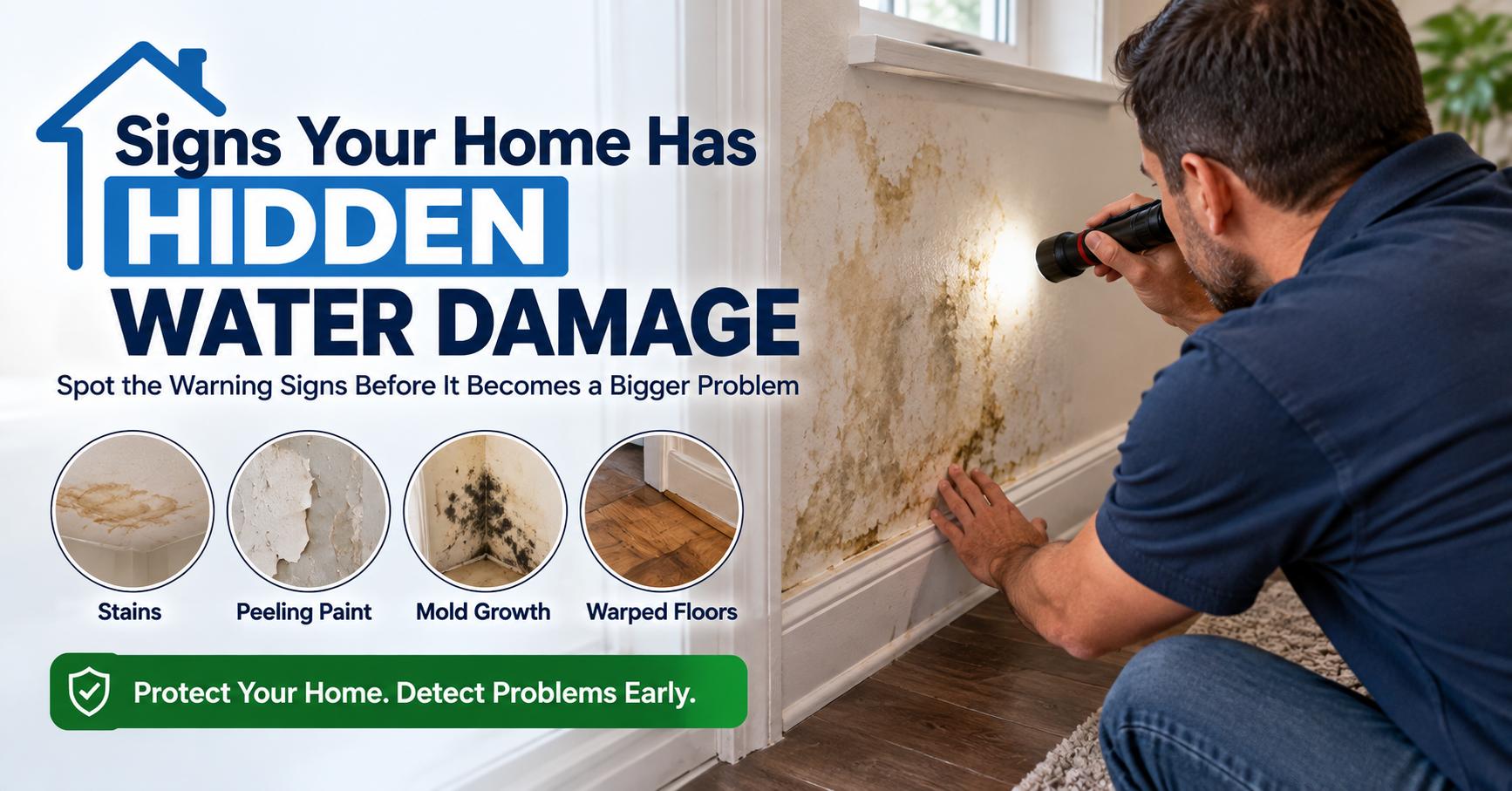
Hidden water damage can develop behind walls, under floors, inside ceilings, and in other areas you cannot easily see. The most common signs include musty smells, water stains, peeling paint, warped flooring, mold growth, swollen materials, and an unexplained increase in your water bill.
A small leak may not seem serious at first, but moisture that stays hidden can damage building materials and create bigger problems over time. Knowing what to look for can help you catch the problem before the damage spreads.
What Are the Signs of Hidden Water Damage?
The most common signs of hidden water damage are musty odors, discoloration, peeling paint, warped floors, mold, swollen walls or trim, unusual humidity, dripping sounds, and unexplained changes in water usage.
Here are the warning signs homeowners should take seriously:
- Musty or damp smells
- Brown, yellow, or dark water stains
- Peeling or bubbling paint
- Warped or buckled flooring
- Mold or mildew growth
- Soft or swollen drywall
- Damaged baseboards or cabinets
- Unexplained increase in your water bill
- Persistent indoor humidity
- Sounds of dripping or running water
One sign does not always confirm water damage, but several signs appearing together are a strong reason to investigate.
1. Musty or Damp Smells
A persistent musty smell can be one of the earliest signs of hidden water damage because moisture trapped in enclosed spaces can create conditions where mold and mildew grow.
You may notice the smell even when there is no visible water. It may become stronger after rain, when the HVAC system runs, or when a room has been closed for a while.
Check areas such as:
- Under sinks
- Behind appliances
- Around toilets and tubs
- Inside cabinets
- Near baseboards
- In basements and crawl spaces
- Around ceilings and exterior walls
If cleaning the area does not remove the smell, there may be moisture hidden behind or underneath the surface. If you suspect a plumbing leak is causing the moisture, learn how to detect hidden plumbing leaks and identify common warning signs.
2. Water Stains on Ceilings or Walls
Brown, yellow, or dark stains on a ceiling or wall can indicate that water has entered the material.
Ceiling stains often come from roof leaks, plumbing above the ceiling, or a bathroom located on an upper floor. Wall stains may come from leaking pipes, windows, exterior water intrusion, or plumbing fixtures.
Do not assume an old stain is harmless. A stain may remain after a leak stops, but if it grows, becomes darker, or returns after cleaning or painting, there may still be an active moisture problem.
3. Peeling Paint or Bubbling Wallpaper
Peeling, blistering, or bubbling paint can happen when moisture gets behind the surface.
Water trapped inside a wall can cause paint to lose its bond with drywall or plaster. Wallpaper can also loosen, bubble, or separate from the wall.
Pay particular attention to these changes around:
- Bathrooms
- Kitchens
- Laundry rooms
- Windows
- Exterior walls
- Plumbing fixtures
Simply repainting the damaged area will not solve the problem if moisture is still getting into the wall.
4. Warped, Buckled, or Swollen Flooring
Warped or buckled flooring can indicate that water has seeped underneath the floor or into the flooring material.
Hardwood may cup, crown, or buckle. Laminate flooring can swell at the edges and seams. Other flooring materials may loosen, lift, or develop soft spots.
Look for changes such as:
- Raised edges
- Buckled boards
- Swollen seams
- Loose flooring
- Soft spots
- New gaps between boards
A small plumbing leak can sometimes travel underneath flooring before you notice visible water, so the damaged area may not be directly above the leak. A slab leak repair may be necessary when a water line beneath a concrete slab is responsible for the hidden moisture.
5. Mold or Mildew in Unusual Places
Unexpected mold or mildew growth can indicate a moisture problem, especially when it keeps returning after cleaning.
Mold may appear around windows, ceilings, walls, cabinets, bathrooms, and other damp areas. However, it can also develop in hidden spaces where moisture has accumulated.
If mold repeatedly returns in the same location, focus on finding the moisture source rather than repeatedly cleaning the surface.
Moisture behind drywall, under flooring, or inside cabinets may need further investigation.
6. Soft, Sagging, or Swollen Walls and Ceilings
Soft or swollen drywall can be a sign that water has been absorbed into the material.
Pressing on an accessible area may reveal a noticeable difference in firmness, but avoid damaging the surface to investigate it. Sagging ceilings are especially important because prolonged moisture can weaken ceiling materials.
Call a professional if you notice:
- A ceiling that is sagging
- Soft or crumbling drywall
- Large swollen areas
- Cracks developing around water-damaged surfaces
- Water collecting inside a ceiling
Do not stand underneath a severely sagging ceiling or attempt to open it yourself.
7. Damaged Baseboards, Cabinets, or Trim
Swollen or discolored baseboards, cabinets, and trim can reveal water damage that is not obvious elsewhere.
For example, a slow leak under a kitchen sink may soak the cabinet floor before water reaches the rest of the room. A bathroom leak may damage baseboards before you see water on the floor.
Look for:
- Swelling
- Warping
- Dark spots
- Discoloration
- Peeling finishes
- Soft wood or composite materials
- Gaps between trim and walls
Pay close attention to areas directly around plumbing fixtures.
8. Your Water Bill Suddenly Increases
An unexplained increase in your water bill can be a sign of a hidden plumbing leak.
If your household water use has stayed about the same but your bill suddenly rises, check for leaks from toilets, faucets, pipes, and appliances. A small leak that continues around the clock can waste a surprising amount of water.
One simple check is to make sure all water-using fixtures and appliances are off and then watch your water meter. If the meter continues showing water use, you may have a leak somewhere in the plumbing system.
A meter test cannot tell you exactly where the leak is, but it can indicate that further investigation is needed.
9. You Hear Dripping or Running Water
Hearing dripping, hissing, or running water when your fixtures are turned off can indicate a concealed plumbing problem.
You may hear the sound behind a wall, underneath a floor, or near a ceiling. Some leaks are quiet, so you may only notice them when the house is otherwise silent.
Listen carefully near:
- Bathrooms
- Kitchens
- Laundry rooms
- Water heaters
- Utility rooms
- Walls containing plumbing
Do not ignore a persistent water sound simply because you cannot see water.
10. Your Home Feels More Humid Than Usual
Unusual indoor humidity can be another clue that moisture is entering your home.
A sudden change in humidity may have many causes, including weather, poor ventilation, or HVAC problems. But if a room feels damp along with other signs such as musty odors, mold, or damaged materials, hidden moisture may be contributing to the problem.
Pay special attention to rooms where humidity stays high even when the rest of the house feels normal.
Where Is Hidden Water Damage Most Commonly Found?
Hidden water damage is most common around plumbing, roofs, appliances, windows, and areas where water can enter or become trapped.
Check these locations regularly:
Behind Walls
Leaking supply lines, drain pipes, and plumbing connections can release water inside walls where it may remain unnoticed.
Under Flooring
Water can travel beneath flooring from leaking appliances, plumbing fixtures, or other sources.
Around Toilets, Tubs, and Showers
Failed seals, damaged caulking, leaking pipes, and overflowing fixtures can allow water to enter floors and walls.
Under Sinks
Cabinet interiors can hide slow leaks from supply lines, drains, faucets, or garbage disposals.
Around Water Heaters
A leaking tank, valve, or connection can cause water damage around the unit and nearby flooring. Regular water heater maintenance can help identify developing leaks and other problems before they cause more extensive damage.
Behind Appliances
Dishwashers, washing machines, refrigerators with water connections, and other appliances can develop leaks that are easy to miss.
Around Windows and Exterior Doors
Damaged seals, flashing, or exterior drainage problems can allow rainwater to enter walls.
In Attics, Basements, and Crawl Spaces
These areas can reveal roof leaks, foundation water intrusion, plumbing leaks, and drainage problems before the damage becomes obvious inside the living space.
How Can You Check for Hidden Water Damage?
You can start by inspecting accessible areas for odors, stains, moisture, damaged materials, and signs of leaks.
Use this basic checklist:
- Look for water stains on walls and ceilings.
- Check under sinks and inside cabinets.
- Inspect around toilets, tubs, and showers.
- Look for warped or swollen flooring.
- Check baseboards for discoloration or swelling.
- Look for mold or mildew.
- Pay attention to musty odors.
- Listen for unexplained dripping or running water.
- Check your water meter when no water is being used.
- Inspect accessible areas around appliances and water heaters.
A moisture meter can also help identify elevated moisture in some building materials, but it does not always identify the source of the water.
Do not cut into walls, ceilings, or floors just to search for a leak. If you suspect water is trapped inside a structure, professional leak detection can help locate the problem with less unnecessary damage.
What Causes Hidden Water Damage?
Hidden water damage is usually caused by slow leaks, plumbing failures, roof leaks, appliance leaks, or water entering through the exterior of the home.
Common causes include:
- Leaking water supply pipes
- Damaged drain pipes
- Leaking toilets
- Failed shower or tub seals
- Appliance supply-line leaks
- Water heater leaks
- Roof leaks
- Damaged window seals
- Poor exterior drainage
- Foundation water intrusion
- Condensation problems
Some leaks happen slowly enough that homeowners do not notice them until building materials begin to change.
Is Hidden Water Damage Serious?
Hidden water damage can become serious because continued moisture can damage drywall, flooring, insulation, wood, and other building materials.
The longer the moisture remains, the greater the chance of more extensive damage. Persistent moisture can also contribute to mold growth.
Water damage can lead to:
- Damaged drywall
- Rotting wood
- Damaged flooring
- Wet insulation
- Mold growth
- Structural damage
- Electrical hazards
- More expensive repairs
The visible damage may also be smaller than the actual affected area. Water can travel through building materials and appear far away from the original leak.
When Should You Call a Professional?
You should call a professional when you cannot find the source of the moisture, the damage keeps returning, or water has entered areas that may contain electrical components or structural materials.
Professional help is especially important when:
- A ceiling is sagging.
- You suspect a leak inside a wall.
- Flooring is significantly swollen or buckled.
- You see recurring mold or moisture.
- Your water meter shows unexplained water use.
- You cannot locate the source of a leak.
- Water has reached electrical wiring or equipment.
- Sewage or contaminated water is involved.
- A leak continues after you shut off accessible fixtures.
If you know where the water is coming from and can safely stop it, do that first. For a plumbing leak, shutting off the appropriate water supply can help limit additional damage while you arrange repairs.
How Can You Prevent Hidden Water Damage?
Regular inspections and quick repairs are the best ways to prevent small leaks from becoming hidden water damage. Following these water damage prevention practices can help reduce the risk of leaks causing expensive damage to your home.
A few simple habits can help:
- Check under sinks every few months.
- Inspect toilet bases for moisture.
- Look around water heaters for leaks.
- Check appliance hoses and connections.
- Keep gutters and downspouts clear.
- Watch for changes in your water bill.
- Fix dripping faucets and leaking toilets.
- Check ceilings and walls for new stains.
- Maintain bathroom seals and caulking.
- Know where your main water shutoff valve is located.
It is much easier to repair a small leak than to deal with extensive damage after moisture has been trapped inside your home for months. A regular plumbing maintenance checklist can also help you spot leaks and other plumbing problems before they lead to hidden water damage.
Final Takeaway
The biggest signs of hidden water damage are musty odors, unexplained water stains, peeling paint, warped flooring, mold growth, swollen materials, unusual humidity, and unexplained increases in water use.
If you notice one of these signs, look for the source before covering up the visible damage. A new coat of paint or replacing a damaged piece of flooring will not solve the problem if water is still getting into the home.
When the source is hidden or the damage appears extensive, a professional inspection can help identify the problem before it becomes more costly to repair.
FAQs About Hidden Water Damage
Can hidden water damage go unnoticed for years?
Yes, hidden water damage can go unnoticed for a long time when a leak is small or occurs inside a wall, ceiling, or under flooring. Musty odors, stains, mold, and unexplained water usage can eventually reveal the problem.
How do I know if there is water behind my wall?
Signs of water behind a wall can include soft drywall, discoloration, peeling paint, swelling, musty odors, mold, and unexplained water sounds. A professional can use moisture-detection equipment to investigate without immediately opening the wall.
What does hidden water damage smell like?
Hidden water damage often produces a persistent musty, damp, or earthy smell. The odor may become stronger in enclosed areas or rooms where moisture has accumulated.
Can a high water bill indicate a hidden leak?
Yes. An unexplained increase in water usage can indicate a leaking pipe, toilet, faucet, or other plumbing fixture. Checking the water meter when no water is being used can help identify possible leaks.
Does mold always mean there is hidden water damage?
No. Mold can have several causes, but moisture is necessary for mold growth. If mold repeatedly appears in the same location, look for the moisture source instead of treating only the visible mold.
How do professionals find hidden water leaks?
Professionals may use moisture meters, thermal imaging, acoustic equipment, pressure testing, or other leak-detection methods depending on the suspected source and location.
Can hidden water damage cause structural problems?
Yes. Long-term moisture can damage wood and other structural materials. If you notice sagging ceilings, soft floors, significant swelling, or other major changes, have the area professionally inspected.