

Signs You Need Air Duct Sealing: 7 Warning Signs to Know
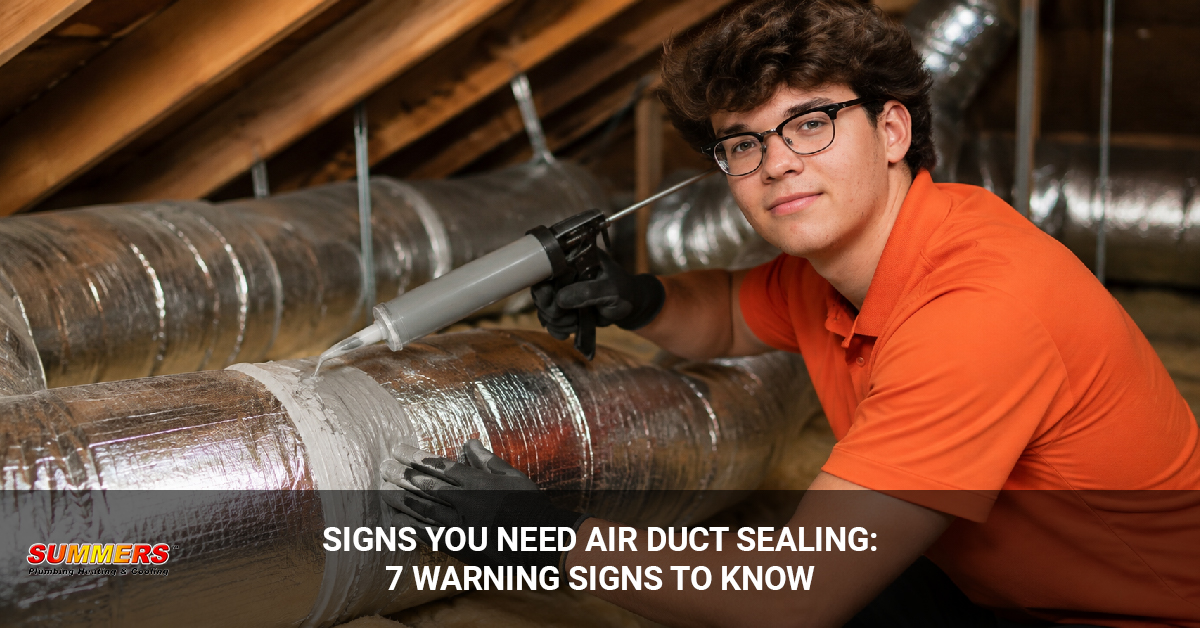
The clearest signs you need air duct sealing are uneven room temperatures, weak airflow, higher energy bills, longer HVAC run times, excessive dust, unusual duct noises, and visible gaps or disconnected ductwork. These signs do not always prove a duct leak, but several occurring together are a good reason to have the duct system inspected.
Leaking ducts can allow heated or cooled air to escape before it reaches your living spaces. They can also make your HVAC system work harder than it should.
What Are the Signs You Need Air Duct Sealing?
You may need air duct sealing if your home has uneven temperatures, weak airflow, rising energy costs, long HVAC cycles, dusty rooms, or visible duct leaks.
Here are the most common signs to watch for.
Uneven Temperatures Between Rooms
Persistent temperature differences between rooms can indicate that conditioned air is escaping through leaking ductwork.
For example, the living room may stay comfortable while a bedroom remains noticeably warmer in summer or colder in winter.
Some temperature variation is normal. However, if the same rooms are consistently uncomfortable, leaking ducts may be part of the problem.
The issue is especially worth checking when those rooms are far from the HVAC equipment or connected to ducts running through an attic or crawl space.
Weak Airflow From Vents
Weak airflow from one or more vents can be a sign that air is escaping before it reaches the room.
A gap, loose connection, or damaged section of duct can allow conditioned air to escape.
However, duct leaks are not the only possible cause of weak airflow. A dirty filter, blocked vent, blower problem, or restricted duct can produce similar symptoms.
If several vents have weak airflow, the duct system deserves closer inspection.
Higher Energy Bills Without a Major Change in Usage
Unexpectedly higher energy bills can occur when leaking ducts cause your HVAC system to run longer.
When conditioned air escapes into an attic, crawl space, basement, or wall cavity, less air reaches the rooms in your home.
The HVAC system may then need to run longer to reach the thermostat setting.
A higher energy bill by itself does not confirm a duct leak. Weather, utility rates, equipment problems, and changes in usage can also affect energy costs.
But if higher bills appear along with comfort or airflow problems, duct leakage is worth investigating.
Your HVAC System Runs Longer Than Normal
An HVAC system that runs longer than usual can be a sign that conditioned air is being lost through leaking ducts.
If the system is running but the home takes longer to reach the thermostat setting, the problem may be somewhere in the airflow system.
Duct leaks can reduce the amount of heated or cooled air that actually reaches the living space.
Other HVAC problems can cause long run times too, so sealing ducts should not be the first assumption without checking the system.
Excessive Dust Around Vents
Unusual dust around vents can sometimes indicate duct leaks, especially when the duct system runs through a dusty attic or crawl space.
A leak can allow unconditioned air and particles to enter parts of the duct system, depending on where the leak is located.
However, dust around a vent does not automatically mean the ductwork is leaking. Dirty filters, gaps around the register, poor cleaning, and normal household dust can cause similar problems.
If dust problems continue throughout the home, see our guide on dirty air ducts and related problems.
Look for this sign alongside other symptoms rather than treating it as proof of a leak.
If excessive dust is a recurring problem, you may also want to consider professional air duct cleaning.
Ducts Are Visibly Loose, Cracked, or Disconnected
Visible gaps, cracks, tears, and disconnected duct sections are strong signs that the ductwork needs attention.
If accessible ductwork looks damaged, check for:
- Gaps around connections
- Loose joints
- Torn flexible duct
- Disconnected sections
- Crushed flexible duct
- Damaged insulation
- Open seams
Do not enter an unsafe attic or crawl space just to inspect the ductwork.
If you can safely see damaged ductwork, take note of its location and have it properly inspected.
You Hear Whistling or Hissing Near Ductwork
Whistling or hissing near a duct connection can indicate air escaping through a gap or opening.
You may notice the sound when the blower starts or while the HVAC system is running.
The sound may be easier to hear near loose connections or damaged duct sections.
Not every HVAC noise means there is a duct leak. But if the sound occurs in the same area as visible damage or weak airflow, the ductwork should be checked.
Rooms Feel Better When Interior Doors Are Open
A room that becomes more comfortable when you open the door may have an airflow or pressure problem, although it does not prove the ductwork is leaking.
Some rooms can develop pressure differences when the HVAC system is running.
Opening a door can temporarily change airflow and make the room feel better.
This can happen because of duct leakage, restricted return airflow, poor duct design, or other airflow issues. A professional inspection can determine the actual cause.
How Do You Know If Your Ducts Are Actually Leaking?
You can look for visible gaps and damaged connections, but professional duct leakage testing is the most reliable way to confirm how much air the system is losing.
Start with the ductwork you can safely access.
Look around:
- Duct joints
- Connections near the furnace or air handler
- Plenums
- Flexible duct connections
- Accessible seams
- Areas with visible damage
You may also notice insulation that is loose, torn, or missing.
If the ductwork is hidden behind walls, above ceilings, or in difficult attic spaces, visual inspection may not be enough.
A professional can inspect the system more thoroughly and, when appropriate, perform duct leakage testing to determine whether significant air loss is occurring.
This matters because not every comfort problem is caused by a duct leak. Confirming the problem helps prevent unnecessary sealing work. It is also important to distinguish duct sealing from routine cleaning. See how often air ducts should be cleaned.
Where Do Air Ducts Commonly Leak?
Air ducts most commonly leak at connections, joints, seams, plenums, flexible duct connections, and damaged sections.
These areas experience movement, pressure, and normal wear over time.
Duct Connections and Joints
Loose or poorly sealed duct connections are common places for air to escape.
Small gaps can develop where two duct sections meet.
These connections may need proper sealing to prevent conditioned air from escaping.
Plenum Connections
Gaps around the plenum can allow conditioned air to escape near the HVAC equipment.
The plenum connects the HVAC equipment to the duct system.
Because it handles a large volume of airflow, sealing gaps in this area can be important when leaks are present.
Flexible Duct Connections
Flexible ducts can leak where they connect to collars, plenums, or other duct sections.
Loose connections, damaged insulation, or improper installation can create openings.
The connection needs to be secured and sealed properly rather than simply covered with a temporary patch.
Damaged or Torn Flexible Ducts
A torn or crushed flexible duct can leak a significant amount of conditioned air.
Small damage may be repairable. Severely damaged sections may need replacement.
Trying to seal a badly deteriorated duct repeatedly may not be worthwhile.
Duct Penetrations and Seams
Seams and openings around duct penetrations can also allow air to escape.
These areas may be found where ductwork passes through walls, floors, or other parts of the home.
Proper sealing can reduce unwanted air loss when these areas are confirmed as leak points.
Does Your Ductwork Need Sealing or Replacement?
Small gaps and loose connections can often be sealed, while badly damaged or deteriorated duct sections may need replacement.
The condition of the ductwork determines which option makes more sense.
Sealing may be appropriate when:
- The duct is structurally sound.
- The problem is limited to a small gap.
- A connection has become loose.
- There is a minor tear that can be properly repaired.
Replacement may be better when:
- A duct section is badly torn.
- Flexible ductwork has collapsed.
- Insulation is severely damaged.
- The duct has repeated failures.
- The material is deteriorated.
- The section cannot be repaired reliably.
The goal is not simply to cover a visible hole. The repair needs to restore a durable, properly sealed duct connection.
How Much Does Air Duct Sealing Cost?
Air duct sealing commonly costs around $300 to $1,500 for residential work, but minor repairs can cost less and extensive sealing projects can cost considerably more.
The final price depends on the amount of leakage and how difficult the ductwork is to access.
The main cost factors include:
- Number of leaks
- Size of the duct system
- Location of the leaks
- Accessibility
- Duct condition
- Amount of sealing required
- Local HVAC labor rates
A few accessible leaks may be relatively inexpensive to seal.
A larger system with numerous leaks in an attic or crawl space can require much more labor.
If damaged duct sections also need replacement, the cost will be higher than sealing alone.
Can You Seal Air Ducts Yourself?
You can seal a small, accessible duct leak yourself, but larger leaks and inaccessible ductwork are better handled by an HVAC professional.
For a minor exposed leak, homeowners may be able to use materials specifically designed for HVAC duct sealing.
However, DIY work becomes more difficult when the duct is:
- Inside an attic or crawl space
- Behind a wall or ceiling
- Severely damaged
- Disconnected
- Poorly insulated
- Difficult to reach safely
Avoid using ordinary cloth-backed duct tape as a permanent solution. Despite its name, it is not designed to provide a durable seal for HVAC ductwork.
If you are unsure where the leak is coming from, professional testing can help identify the actual problem before you start sealing.
When Should You Have Your Air Ducts Professionally Sealed?
You should consider professional duct sealing when you have persistent comfort or airflow problems and there is evidence that the ductwork is leaking.
Professional inspection is especially useful when:
- Multiple rooms have uneven temperatures.
- Several vents have weak airflow.
- The HVAC system runs longer than normal.
- Energy costs have increased without another clear reason.
- You can see gaps or damaged ductwork.
- Ducts run through an attic or crawl space.
- You hear persistent hissing or whistling near the ducts.
- Previous DIY sealing did not solve the problem.
A professional can determine whether duct sealing is actually needed and identify which sections are responsible for the air loss. If you are also experiencing broader air-quality concerns, see our guide to indoor air quality in Bloomington.
Frequently Asked Questions
How do I know if my air ducts need sealing?
The strongest signs are persistent uneven temperatures, weak airflow, higher energy bills, longer HVAC run times, visible duct gaps or damage, and unusual sounds near duct connections. Several symptoms occurring together make a duct inspection more worthwhile.
What happens if air ducts are not sealed?
Unsealed duct leaks can allow conditioned air to escape, which may reduce comfort and make the HVAC system run longer. The impact depends on the size and location of the leaks.
Is air duct sealing worth it?
Air duct sealing can be worthwhile when significant leaks are causing comfort or airflow problems. The value depends on the amount of air loss, repair cost, and overall condition of the ductwork.
How much does it cost to seal air ducts?
Air duct sealing commonly costs around $300 to $1,500, but minor sealing can cost less and larger projects can cost more. Accessibility, leak size, duct condition, and labor rates all affect the price.
Can I seal my air ducts myself?
You can sometimes seal a small, accessible leak using proper HVAC duct-sealing materials. Larger leaks, damaged sections, and ductwork in difficult locations are better handled by a professional.
How long does air duct sealing last?
Properly performed duct sealing can last for many years when the underlying ductwork is in good condition. The lifespan depends on the materials used, installation quality, duct movement, and the condition of the surrounding system.
Final Thought
The most common signs you need air duct sealing are uneven room temperatures, weak airflow, rising energy bills, long HVAC run times, excessive dust, unusual duct noises, and visible gaps or damage.
One symptom does not necessarily mean your ducts are leaking. But when several signs appear together, the ductwork is worth inspecting.
Small leaks and loose connections can often be sealed. Severely damaged or deteriorated duct sections may need replacement instead.
If the ductwork is difficult to access or you cannot identify the source of the problem, an HVAC professional can inspect the system and determine whether sealing will actually solve the issue.
If your ductwork needs professional inspection or sealing, Summers Plumbing Heating & Cooling provides duct sealing services in Bloomington.