

Can Dirty Air Ducts Make You Sick?
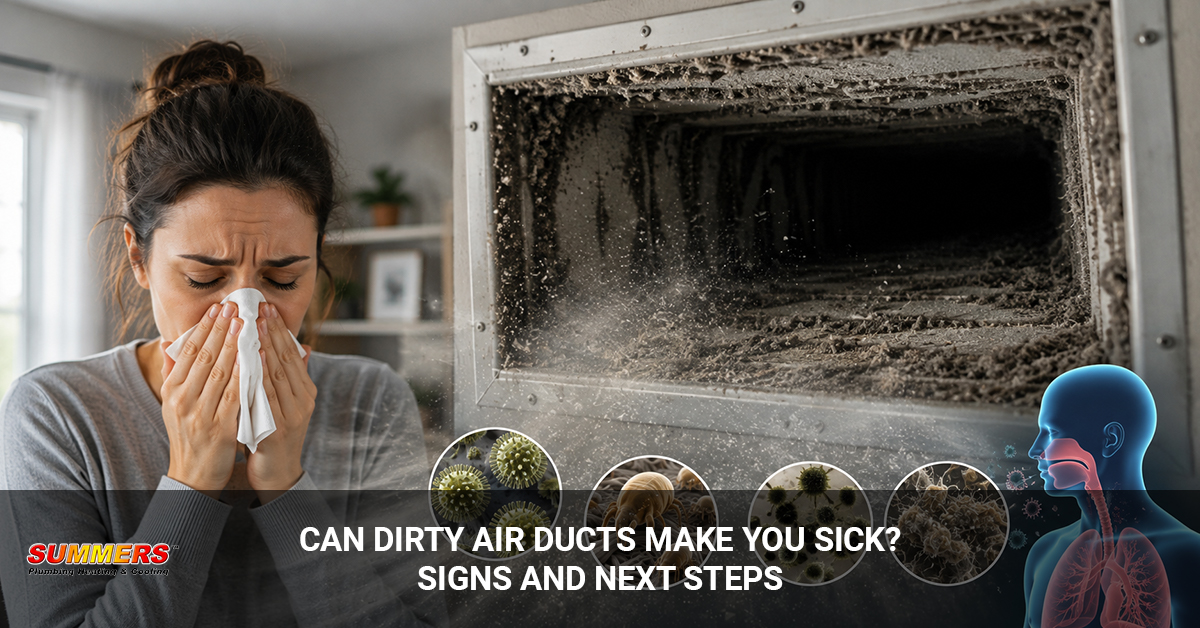
Dirty air ducts usually do not make you sick. But they can affect your indoor air if they contain mold, pests, or a large amount of dust and debris that is coming out through your vents.
A small amount of dust inside ductwork is normal. It does not mean your home has unsafe air, and it does not always mean you need professional duct cleaning.
The main concern is a clear sign of contamination. For example, you may see dust blowing from supply vents, notice a musty smell when your HVAC system starts, or find evidence of moisture, mold, insects, or rodents.
If you notice any of these signs, check the filter and have the HVAC system inspected. If you only see light dust on vent covers, regular cleaning and filter changes are usually the right first step.
Can Dirty Air Ducts Actually Make You Sick?
Dirty air ducts usually do not make people sick. A small amount of dust in ductwork is normal, and most of it stays inside the ducts instead of blowing into your rooms.
The concern starts when your ducts contain more than ordinary dust. Mold can grow when moisture gets into the system. Rodents and insects can leave droppings, nesting material, and other debris behind. Renovation dust can also build up and spread through the home if the HVAC system runs during the work.
You do not need routine duct cleaning just because your ducts are dusty. The EPA recommends considering it when you have visible mold, pest activity, or large amounts of dust and debris coming out of supply vents.
Signs Your Air Ducts May Be Affecting Your Air
Your air ducts may be affecting your indoor air if you see debris coming from vents, notice a musty smell when the system runs, or find signs of mold, moisture, or pests.
You See Dust or Debris Blowing From Vents
Dust blowing out of supply vents can mean your HVAC system has a filter, airflow, or ductwork problem. A dusty vent cover is normal, especially on a return grille, because it pulls dusty air into the system.
Check the HVAC filter first. Replace it if it is dirty or does not fit properly. If you still see particles coming from supply vents after replacing the filter, have an HVAC technician inspect the system.
You Smell Mustiness When the HVAC System Runs
A musty smell when your heating or cooling starts usually means there is moisture somewhere in the HVAC system. Moisture can collect around cooling coils, drain pans, duct leaks, or other parts of the system.
Do not assume every musty smell means mold in your ducts. But do not ignore it. Find and fix the moisture source first, because cleaning will not stop mold from coming back if the system stays damp.
You See Suspected Mold, Pest Droppings, or Insects
Suspected mold, rodent droppings, insects, or nesting material in ductwork needs professional attention. These are signs of contamination, not normal household dust.
Ask an HVAC professional to inspect the system and show you what they found before you agree to any cleaning service. Dark marks are not always mold, so avoid making that call based on appearance alone.
Your Symptoms Improve When You Leave the House
If your symptoms improve when you leave home, something in your indoor environment may be bothering you. Your ducts could be one possible source, but they are not the only one.
Pets, carpets, pollen, smoke, cooking fumes, cleaning products, and dampness can also affect your home’s indoor air quality. If coughing, wheezing, eye irritation, or other symptoms keep returning at home, share that pattern with your doctor and have your HVAC system checked.
What Symptoms Can Poor Indoor Air Trigger?
Air purification can also help reduce airborne particles in your home, although it should not replace fixing a contamination or moisture problem.
Common symptoms include:
- Stuffy or runny nose
- Sore throat
- Coughing or wheezing
- Burning, itchy, or watery eyes
- Skin irritation
- Worse asthma symptoms
Damp or moldy areas can trigger these symptoms in some people. People with asthma, mold allergies, chronic lung conditions, or weakened immune systems may be more sensitive. CDC mold guidance
These symptoms do not prove that dirty air ducts are the cause. Pets, pollen, smoke, cleaning products, and other signs of poor indoor air quality can cause similar issues. Talk to a healthcare professional if symptoms continue, get worse, or affect your breathing.
Get urgent medical care for severe breathing trouble, chest pain, swelling, fainting, or signs of a severe allergic reaction.
Should You Have Your Air Ducts Cleaned?
You should have your air ducts cleaned only when there is clear evidence of mold, pests, or heavy debris in the system. A dusty home or allergies alone do not usually mean duct cleaning is necessary.
Duct cleaning may be worth considering if:
- You see suspected mold inside hard-surface ducts or on HVAC parts.
- You find rodents, insects, droppings, or nesting material in the ductwork.
- Heavy dust or debris is blocking the ducts.
- You can see particles blowing from supply vents.
- The problem started after major construction or renovation work.
Start with basic HVAC maintenance if you only notice light dust on vent covers. Replace a dirty filter, clean the vent covers and return grilles, and check for other dust sources in your home first.
Be cautious of companies that promise duct cleaning will cure allergies, prevent illness, or solve every indoor-air problem. Duct cleaning can help in the right situation, but it is not a guaranteed health fix.
What to Do Before Booking Duct Cleaning
Check your HVAC filter, vents, and signs of moisture or pests before paying for duct cleaning. In many homes, a simple maintenance issue causes the problem.
Start with these steps:
- Replace the HVAC filter if it is dirty, damaged, or overdue.
- Make sure the new filter fits properly and faces the direction shown by the airflow arrow.
- Vacuum and wipe vent covers and return grilles.
- Check around the HVAC system for leaks, condensation, water stains, or musty smells.
- Look for signs of pests near vents, attic spaces, and utility areas.
- Call an HVAC technician if you see visible contamination or debris coming from supply vents.
If you decide to hire a duct-cleaning company, ask them to show you the issue before work begins. Get written estimates from more than one company, and ask exactly which parts of the HVAC system they plan to clean.
Frequently Asked Questions
Can dirty air ducts cause coughing or allergies?
Dirty air ducts can contribute to coughing or allergy symptoms if they contain mold, allergens, or debris that is moving into your home through the vents. Ordinary dust inside ducts does not prove it is causing your symptoms.
Can mold in air ducts make you sick?
Mold in a damp HVAC system can trigger symptoms in some people, especially those with asthma, mold allergies, or chronic lung conditions. Fix the moisture problem first, then have contaminated HVAC parts cleaned or replaced as needed.
Will duct cleaning help with allergies?
Duct cleaning may help if there is a clear contamination problem, such as mold, pests, or debris coming from vents. It is not a proven treatment for allergies and should not replace medical advice, regular filter changes, or HVAC maintenance.
How often should air ducts be cleaned?
Air ducts do not need cleaning on a set schedule. Consider cleaning them only when you find mold, pests, heavy debris, or particles blowing from supply vents.
Final Answer
Dirty air ducts usually do not make people sick. But mold, moisture, pests, or heavy debris inside an HVAC system can affect the air moving through your home.
Start by replacing the HVAC filter and checking for clear signs of a problem, such as musty smells, moisture, pests, or particles coming from vents. Fix the source of the issue instead of relying on duct cleaning alone.
If symptoms keep happening at home, get medical advice and ask a qualified HVAC technician to inspect the system.