

How Often Should You Change Your AC Filter?
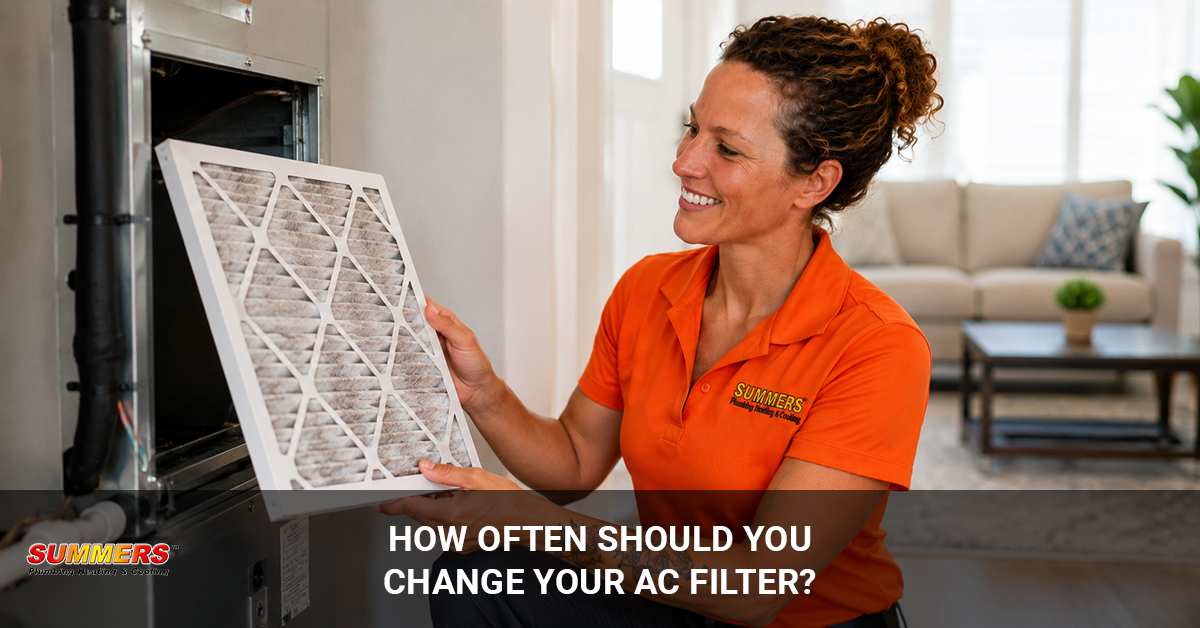
Most homeowners should change their AC filter every 1 to 3 months, but the right replacement schedule depends on your filter type, HVAC usage, pets, indoor air quality, and household conditions. A clean air filter allows your HVAC system to move air efficiently, improves indoor air quality, and helps protect expensive components such as the blower motor, evaporator coil, and compressor.
Despite its importance, the AC filter is one of the most overlooked parts of an air conditioning system. Many homeowners don’t think about it until they notice weak airflow, uneven cooling, higher energy bills, or excessive dust around the house. By that point, the filter may already be restricting airflow and forcing the system to work harder than necessary.
A dirty air filter affects much more than cooling performance. As dust, pet hair, pollen, and other airborne particles accumulate, airflow through the system gradually decreases. The air conditioner must run longer to maintain the thermostat setting, increasing electricity consumption and placing additional strain on key HVAC components. Over time, this extra workload can contribute to frozen evaporator coils, reduced cooling capacity, poor indoor air quality, and costly repairs that could have been avoided with routine maintenance.
Replacing an AC filter is one of the simplest and least expensive ways to improve HVAC performance. In most cases, changing the filter takes only a few minutes and costs far less than repairing a damaged blower motor or replacing a failed compressor. It’s also one of the easiest ways to maintain healthy airflow, improve energy efficiency, and help extend the lifespan of your air conditioner.
The challenge is that there isn’t a universal replacement schedule. A vacation home that’s occupied only occasionally doesn’t need the same maintenance as a primary residence with multiple pets, young children, or family members who suffer from allergies or asthma. Filter thickness, MERV rating, local climate, dust levels, and how often your air conditioner operates all influence how quickly a filter becomes clogged.
Rather than replacing your filter on a fixed calendar schedule, it’s better to understand what affects its lifespan and inspect it regularly. A filter that lasts three months in one home may need replacement after only a month in another, depending on indoor conditions and cooling demand.
In this guide, you’ll learn how often to change your AC filter, what factors affect replacement frequency, how to recognize the signs of a clogged filter, what can happen if you wait too long, how to choose the right replacement filter, and practical maintenance tips that can help your air conditioner operate efficiently while reducing energy costs throughout the cooling season.
How Often Should You Change Your AC Filter?
Most AC filters should be replaced every 1 to 3 months, but the right schedule depends on your filter type, household conditions, and how often your HVAC system runs. While checking your filter every month is a smart habit, the actual replacement interval varies from one home to another.
The table below provides general recommendations for the most common residential situations.
| Home or Filter Type | Recommended Replacement |
| Standard household | Every 60–90 days |
| 1-inch filter | Every 30–60 days |
| Home with pets | Every 30–60 days |
| Allergies or asthma | Every 20–45 days |
| Vacation home | Every 6–12 months (inspect regularly) |
| 4–5-inch high-efficiency filter | Every 6–12 months (follow manufacturer recommendations) |
These recommendations are useful starting points, not fixed rules. For example, a home with multiple pets, several occupants, or heavy AC use will usually need more frequent filter changes than a smaller household with cleaner indoor air. Likewise, homes in dusty climates or areas affected by seasonal pollen or wildfire smoke may clog filters much faster than homes in milder environments.
Rather than relying only on the calendar, make it a habit to inspect your filter every month. Remove it and hold it up to a light source. If it’s heavily coated with dust, pet hair, or other debris—or if very little light passes through the filter media it’s time for a replacement, even if it hasn’t reached the suggested replacement interval.
Filter thickness also plays an important role in replacement frequency. Standard 1-inch filters have less surface area, so they fill with debris more quickly and usually need to be replaced every one to two months. 4-inch and 5-inch media filters can trap much more dust before restricting airflow, allowing them to last significantly longer under normal conditions. Even so, they should still be inspected regularly instead of being replaced only according to the maximum lifespan listed by the manufacturer.
Keep in mind that replacing a filter too early is rarely a problem, but waiting too long can reduce airflow, increase energy consumption, and place unnecessary strain on your HVAC system. A clogged filter forces the blower motor and compressor to work harder, which can lead to reduced cooling performance, frozen evaporator coils, higher utility bills, and avoidable wear on expensive components.
The best approach is simple: check your AC filter every month and replace it when it’s dirty, not just when the calendar says it’s time. This small maintenance task takes only a few minutes, but it can improve indoor air quality, lower cooling costs, reduce the likelihood of costly repairs, and help your air conditioner operate efficiently throughout its lifespan.
What Affects How Often You Should Replace an AC Filter?
The lifespan of an AC filter depends on much more than time. Filter thickness, MERV rating, household size, pets, allergies, indoor air quality, local climate, and how often your HVAC system runs all determine how quickly a filter becomes clogged.
That’s why two homes with the same air conditioner can have completely different filter replacement schedules. A filter that lasts three months in a small household may need replacing after only one month in a busy home with pets or heavy AC use.
Understanding the factors below will help you create a maintenance schedule that’s based on your home’s actual conditions instead of relying on a one-size-fits-all recommendation.
Filter Thickness
Thicker filters generally last longer because they have more surface area to capture dust and debris.
Most residential HVAC systems use either standard 1-inch disposable filters or thicker 4-inch to 5-inch media filters. A typical 1-inch filter often needs replacement every 30 to 60 days, while a high-capacity media filter may last 6 to 12 months under normal operating conditions.
However, thickness alone doesn’t determine replacement frequency. Even high-capacity filters should be inspected every month because homes with pets, excessive dust, or frequent HVAC use may clog them much sooner than expected.
MERV Rating
A filter’s MERV rating affects both filtration performance and replacement frequency.
MERV (Minimum Efficiency Reporting Value) measures how effectively a filter captures airborne particles. Higher-rated filters trap smaller contaminants such as pollen, mold spores, pet dander, and fine dust, helping improve indoor air quality.
While higher MERV ratings provide better filtration, they can also increase airflow resistance if your HVAC system isn’t designed for them. For most homes, MERV 8 to MERV 13 offers an excellent balance between filtration and airflow. Before upgrading to a higher MERV filter, check your HVAC manufacturer’s recommendations or ask an HVAC professional to ensure compatibility.
Number of Occupants
The more people living in your home, the faster your air filter usually becomes dirty.
Every occupant contributes dust, skin cells, hair, fabric fibers, and other airborne particles that circulate through the HVAC system. Larger households naturally generate more indoor contaminants, causing filters to fill more quickly.
If you’ve recently added family members or spend more time at home than before, you may need to replace your filter more often.
Pets
Homes with pets almost always require more frequent filter changes.
Dogs, cats, and other furry pets constantly shed hair and dander that become trapped in the air filter. Even breeds that shed very little still produce microscopic dander that circulates through your HVAC system.
Homes with one or more pets often benefit from replacing standard filters every 30 to 60 days, especially during seasonal shedding periods.
Allergies or Asthma
If someone in your home has allergies or asthma, replacing the filter more frequently can help improve indoor air quality.
A clean air filter captures pollen, dust mites, mold spores, and pet dander before those particles circulate through your home. As the filter fills with debris, its ability to maintain proper airflow gradually declines.
Many HVAC professionals recommend checking the filter monthly and replacing it every 20 to 45 days for households with allergy or asthma sufferers, particularly during spring and fall allergy seasons.
Smoking Indoors
Indoor smoking significantly shortens the lifespan of an HVAC filter.
Tobacco smoke contains extremely fine particles that accumulate rapidly inside the filter. Over time, these particles reduce airflow, lower filtration efficiency, and can contribute to lingering indoor odors.
Homes where people smoke indoors generally require more frequent filter replacement than smoke-free homes.
Construction or Remodeling
Home improvement projects can clog an AC filter surprisingly quickly.
Activities such as sanding drywall, cutting lumber, installing flooring, or remodeling kitchens and bathrooms generate large amounts of fine construction dust. Even when contractors use plastic barriers, airborne particles often find their way into the HVAC system.
After completing any major renovation, inspect your filter immediately and replace it if it’s noticeably dirty rather than waiting for your normal replacement schedule.
Climate and Outdoor Air Quality
Your local environment has a direct impact on how quickly your air filter becomes dirty.
Homes in dry or windy climates often collect more dust than homes in humid or heavily wooded areas. Seasonal pollen, wildfire smoke, nearby construction, farming activity, and heavy traffic can all increase the amount of airborne debris entering your home.
During periods of poor outdoor air quality, checking your filter more frequently helps maintain proper airflow and protects indoor air quality.
How Often You Use Your Air Conditioner
The more your HVAC system runs, the faster the filter fills with airborne particles.
In warmer climates, where air conditioners operate for much of the year, filters generally need to be replaced more often than in regions with shorter cooling seasons. Likewise, households that keep the AC running throughout the day will accumulate debris more quickly than homes where the system operates only occasionally.
If your air conditioner runs daily during the summer, make monthly filter inspections part of your regular home maintenance routine.
The Best Replacement Schedule Is the One That Fits Your Home
There’s no single replacement schedule that’s right for every household. The ideal interval depends on your filter, your HVAC system, your home’s environment, and the way you live. Rather than replacing your filter only when the calendar reminds you, inspect it every month and let its condition guide your decision.
Taking a few minutes to check your air filter can improve airflow, lower energy bills, reduce wear on your HVAC system, enhance indoor air quality, and help prevent costly repairs before they happen.
Signs Your AC Filter Needs Changing
A dirty AC filter usually shows several warning signs before it causes serious HVAC problems. If your air conditioner isn’t cooling as well as it used to, your energy bills are rising, or your system is running longer than normal, a clogged filter may be restricting airflow.
Although these symptoms don’t always point to a dirty filter, it’s one of the first things you should check because replacing it is quick, inexpensive, and often solves the problem before it leads to more costly repairs.
Reduced Airflow
Weak airflow from your supply vents is one of the clearest signs that your AC filter needs replacing.
As dust, pet hair, and other debris build up, it becomes harder for the blower motor to push air through the filter. You may notice less air coming from your vents even though the air conditioner is running normally.
Before assuming you have a blower motor or ductwork problem, inspect the air filter. In many cases, replacing a clogged filter restores normal airflow immediately.
Weak Cooling Performance
A dirty filter can make your home feel warmer because it restricts the amount of cooled air reaching your living spaces.
When airflow decreases, your air conditioner can’t distribute conditioned air efficiently. Some rooms may cool slowly, while others never reach the thermostat setting, especially during hot weather.
Poor cooling can also result from refrigerant leaks, dirty coils, or compressor problems, but checking the air filter should always be one of your first troubleshooting steps. If replacing the filter doesn’t restore cooling performance, learn the most common reasons your AC is running but not cooling.
Higher Energy Bills
A sudden increase in cooling costs often means your HVAC system is working harder than it should.
Restricted airflow forces the blower motor and compressor to run longer to maintain the desired indoor temperature. Those longer cooling cycles increase electricity consumption and can noticeably raise your monthly utility bills.
If your cooling habits haven’t changed but your energy costs continue to climb, replacing the filter may improve efficiency and reduce unnecessary system strain.
More Dust Around Your Home
If your home seems dustier than usual, your air filter may no longer be trapping airborne particles effectively.
A clean filter captures dust, pollen, pet dander, and other contaminants before they circulate through your home. Once the filter becomes overloaded, more of those particles remain in the air and eventually settle on furniture, flooring, and around supply vents.
If you’re dusting more often than normal, inspect the filter before assuming the problem is poor housekeeping or outdoor dust.
The Filter Looks Dirty
Sometimes the easiest way to know it’s time for a replacement is to inspect the filter itself.
Remove the filter and hold it toward a light source. If very little light passes through the filter media or it’s covered with dust, pet hair, and debris, replace it.
Keep in mind that appearance alone doesn’t always tell the full story. Even a filter that looks only lightly gray can significantly restrict airflow if it’s filled with fine particles.
Longer Cooling Cycles
An air conditioner that runs longer than usual may be struggling to move enough air through the system.
Restricted airflow reduces cooling efficiency, forcing the system to operate for longer periods before reaching the thermostat setting. Over time, this increases electricity use and places additional wear on important components such as the compressor and blower motor.
If your AC seems to run almost continuously during normal summer weather, check the filter before assuming a more expensive repair is needed.
Frozen Evaporator Coil
A clogged air filter is one of the most common causes of a frozen evaporator coil.
When airflow becomes restricted, not enough warm indoor air passes over the evaporator coil. As the coil temperature drops below freezing, moisture condenses and freezes on its surface, reducing cooling performance even further.
Common signs of a frozen evaporator coil include:
- Warm air coming from the vents
- Ice on the refrigerant lines or the indoor coil
- Water around the indoor unit after the ice melts
- An air conditioner that runs continuously without cooling effectively
If you suspect the evaporator coil has frozen, turn the system off to allow the ice to melt. If replacing the filter doesn’t solve the problem, schedule an HVAC inspection to identify the underlying cause.
Increased Allergy Symptoms
A clogged filter can reduce indoor air quality and allow more allergens to circulate throughout your home. If you’ve noticed more dust, allergy symptoms, or stale indoor air, review the common signs of poor indoor air quality to determine whether your HVAC system could be contributing to the problem.
As the filter fills with dust, pollen, mold spores, and pet dander, its ability to capture additional airborne particles gradually decreases. Family members with allergies or asthma may notice worsening symptoms, especially during high-pollen seasons.
Replacing the filter regularly helps maintain cleaner indoor air and supports a healthier home environment.
Unusual HVAC Noises
Restricted airflow can sometimes change the way your HVAC system sounds during operation.
The blower motor may work harder to pull air through a clogged filter, resulting in louder airflow, whistling noises, or other unusual operating sounds.
Although HVAC noises can have many causes, checking the air filter is one of the quickest and least expensive troubleshooting steps.
Burning Smell
A persistent burning smell may indicate that restricted airflow is causing components to overheat.
When the filter becomes severely clogged, the blower motor and other electrical components may operate under greater stress and generate excess heat. If you notice a burning odor while your air conditioner is running, turn the system off and inspect the filter immediately.
If replacing the filter doesn’t eliminate the smell, don’t continue operating the system. Schedule a professional HVAC inspection to identify the source of the problem and prevent potential damage.
Don’t Ignore the Warning Signs
Most air filters don’t become completely clogged overnight—they gradually lose efficiency over time. Paying attention to early warning signs such as weak airflow, longer cooling cycles, rising energy bills, and increased dust can help you replace the filter before it affects your comfort or leads to expensive HVAC repairs.
A simple filter replacement often restores proper airflow, improves cooling performance, lowers energy consumption, and helps protect your air conditioner from unnecessary wear throughout the cooling season.
What Happens If You Don’t Change Your AC Filter?
Not changing your AC filter can reduce energy efficiency, increase repair costs, and shorten the lifespan of your HVAC system. What begins as a simple maintenance task can eventually lead to poor cooling performance, expensive repairs, and unnecessary wear on major components if the filter remains clogged for too long.
A dirty air filter doesn’t usually cause immediate failure. Instead, problems develop gradually as airflow becomes more restricted and the entire system has to work harder to cool your home.
Restricted Airflow
A clogged air filter restricts airflow throughout your HVAC system.
As dust and debris accumulate, less air can pass through the filter. The blower motor has to work harder to move conditioned air through the ductwork, reducing the overall efficiency of the system.
Restricted airflow often leads to weaker airflow from supply vents, uneven temperatures, and longer cooling cycles throughout the home.
Higher Energy Bills
A dirty filter increases electricity consumption because your air conditioner has to run longer.
When airflow is reduced, the system takes more time to reach the thermostat setting. Longer operating cycles mean the compressor, blower motor, and condenser fan use more electricity, increasing your monthly cooling costs.
Even a partially clogged filter can noticeably affect energy efficiency over an entire cooling season. Replacing the filter on schedule is one of the simplest ways to keep operating costs under control.
Reduced Cooling Performance
Poor airflow makes it more difficult for your air conditioner to cool your home effectively.
Rooms may feel warmer than usual, some areas of the home may never reach the desired temperature, and the air conditioner may seem to run constantly without delivering the same level of comfort.
Because these symptoms are similar to those caused by refrigerant leaks or compressor problems, homeowners sometimes assume they need an expensive repair when the real issue is simply a clogged filter.
Frozen Evaporator Coil
A dirty air filter is one of the most common causes of a frozen evaporator coil.
The evaporator coil depends on a steady flow of warm indoor air to absorb heat. When airflow becomes restricted, the coil temperature can drop below freezing, causing moisture to freeze on its surface.
As ice builds, airflow decreases even further, creating a cycle that reduces cooling performance and may eventually prevent the system from cooling altogether.
Repeated freeze-ups can also increase the risk of additional HVAC repairs if the underlying airflow problem isn’t corrected.
Compressor Damage
Ignoring a clogged filter can place unnecessary strain on the compressor over time.
The compressor is the heart of your air conditioning system and one of its most expensive components. While a dirty filter won’t usually cause immediate compressor failure, prolonged restricted airflow forces the compressor to work harder and operate for longer periods.
Reducing unnecessary strain by replacing the filter regularly can help extend the life of this critical component and lower the likelihood of costly repairs.
Poor Indoor Air Quality
A clogged filter allows more dust, pollen, and other airborne particles to circulate throughout your home.
As the filter becomes overloaded, its ability to capture contaminants gradually declines. Dust, pet dander, mold spores, pollen, and other particles remain in the indoor air instead of being trapped by the filter.
This can reduce indoor air quality and make allergy or asthma symptoms worse for sensitive family members.
More Dust Throughout the Home
Dirty filters often lead to dustier living spaces.
When filtration becomes less effective, airborne particles settle more quickly on furniture, flooring, electronics, countertops, and other surfaces.
If you find yourself dusting much more frequently than usual, checking the HVAC filter is a good place to start.
Shorter HVAC Lifespan
Continuous operation with restricted airflow increases wear on your entire HVAC system.
Components such as the blower motor, evaporator coil, compressor, and fan motor all experience greater stress when the system struggles to move enough air.
Over many years, this additional workload can reduce the overall lifespan of your air conditioner and increase the likelihood of premature equipment replacement.
More Frequent Repairs
Many avoidable HVAC repairs begin with a neglected air filter.
Poor airflow can contribute to frozen evaporator coils, blower motor strain, overheating, reduced cooling performance, and increased compressor wear. While these problems may seem unrelated, they often share the same underlying cause—a clogged filter restricting airflow through the system.
Replacing an inexpensive air filter every few months is far more affordable than repairing or replacing major HVAC components.
A Small Maintenance Task That Prevents Big Problems
Changing your AC filter regularly is one of the easiest ways to protect your HVAC system and avoid unnecessary repair costs. It takes only a few minutes, requires no specialized tools, and can improve airflow, lower energy bills, enhance indoor air quality, and help your air conditioner operate reliably for years to come.
For most homeowners, checking the filter every month and replacing it before it becomes heavily clogged is one of the highest-value maintenance tasks they can perform.
How to Check Whether Your AC Filter Is Dirty
Checking your AC filter takes just a few minutes and is the easiest way to know whether it needs replacing. Instead of relying only on a calendar reminder, inspect the filter every month. This simple habit helps maintain proper airflow, improve energy efficiency, and prevent avoidable HVAC problems.
Follow these steps to inspect your air filter safely:
- Turn off your HVAC system. Shut the system off at the thermostat before removing the filter. This prevents dust and debris from being pulled into the equipment while the filter is out.
- Locate the air filter. In most homes, the filter is located behind a return air grille, inside the air handler, in a filter cabinet, or next to the furnace. If you’re unsure where it is, check your HVAC owner’s manual or ask your HVAC contractor.
- Remove the filter carefully. Slide the filter out slowly to avoid knocking accumulated dust into the system or onto the floor. Take note of the airflow arrow printed on the filter frame so you can install the replacement in the correct direction.
- Hold the filter up to a light source. A clean filter should allow some light to pass through the filter media. If very little light is visible or the surface is covered with dust, pet hair, or debris, it’s time to replace the filter.
- Inspect both sides of the filter. Dust doesn’t always collect evenly. Depending on airflow and household conditions, one side may appear dirtier than the other, so examine both sides before deciding whether the filter can remain in service.
While a visual inspection is helpful, don’t judge the filter by color alone. Fine dust, pollen, smoke particles, and other microscopic contaminants can restrict airflow even when the filter doesn’t appear heavily soiled. Likewise, a filter may look only slightly gray but still be full enough to reduce your HVAC system’s efficiency.
If you’re unsure whether the filter should be replaced, it’s usually best to install a new one. Air filters are inexpensive compared to the cost of repairing a blower motor, replacing a frozen evaporator coil, or addressing other airflow-related HVAC problems.
Making filter inspections part of your monthly home maintenance routine allows you to create a replacement schedule based on your home’s actual conditions rather than general recommendations. Over time, you’ll learn how quickly filters become dirty in your household and can replace them before they begin affecting comfort, indoor air quality, or energy efficiency.
How to Choose the Right AC Filter
The best AC filter is one that fits your HVAC system correctly, provides the right level of filtration, and maintains proper airflow. Choosing the most expensive or highest-rated filter isn’t always the best decision. A filter that’s too restrictive can reduce airflow, lower efficiency, and put unnecessary strain on your air conditioner.
When selecting a replacement filter, consider the following factors.
Filter Size
Always buy the filter size recommended by your HVAC manufacturer.
An incorrectly sized filter can create gaps that allow unfiltered air to bypass the filter or fit too tightly, making installation difficult and potentially affecting airflow.
The correct dimensions are usually printed on the frame of your existing filter in a format such as 16 × 25 × 1 or 20 × 25 × 4. If the size isn’t visible, check your HVAC owner’s manual or ask an HVAC technician before purchasing a replacement.
MERV Rating
The MERV rating determines how effectively a filter captures airborne particles.
MERV stands for Minimum Efficiency Reporting Value, and it measures a filter’s ability to trap particles of different sizes. Higher MERV ratings capture smaller contaminants, but they may also create greater airflow resistance if your HVAC system isn’t designed to handle them.
The table below provides a general comparison.
| MERV Rating | Typical Use |
| MERV 1–4 | Basic dust protection |
| MERV 5–8 | Standard residential filtration |
| MERV 8–13 | Better filtration for most homes |
| MERV 14+ | Specialized applications may require compatible HVAC systems |
For most households, MERV 8 to MERV 13 offers the best balance between indoor air quality and airflow. If you’re looking to improve your home’s air quality beyond changing the filter, our indoor air services can help you choose the right filtration and air quality solutions.
These filters effectively capture dust, pollen, pet dander, mold spores, and many other airborne particles without significantly restricting airflow in most residential HVAC systems.
Before upgrading to a higher MERV rating, confirm that your heating and cooling system is designed to accommodate it. If you’re unsure, consult your HVAC manufacturer’s recommendations or ask a qualified HVAC professional.
Fiberglass vs. Pleated Filters
Pleated filters generally outperform fiberglass filters in both filtration and overall HVAC protection.
Fiberglass filters are the least expensive option and primarily capture larger particles such as lint and dust. While they provide basic protection for HVAC equipment, they’re less effective at removing smaller airborne contaminants that affect indoor air quality.
Pleated filters have a much larger surface area, allowing them to trap finer particles such as pollen, pet dander, mold spores, and dust mites while maintaining good airflow. They also tend to last longer than fiberglass filters and provide better overall protection for your HVAC system.
For most homeowners, a quality pleated filter is the better long-term investment.
Don’t Automatically Choose the Highest MERV Rating
Higher filtration isn’t always better if your HVAC system can’t support it.
Many homeowners assume that choosing the highest MERV rating available will automatically improve air quality. However, filters with very high MERV ratings can restrict airflow if the system isn’t designed for them.
Reduced airflow forces the blower motor and compressor to work harder, which can decrease cooling efficiency, increase energy consumption, and contribute to premature wear on HVAC components.
The goal is to find the highest MERV rating your system can handle without reducing airflow—not simply the highest number on the shelf.
Consider Your Household’s Needs
Your lifestyle should also influence your filter choice.
If you have pets, family members with allergies or asthma, or live in an area with high pollen or dust levels, a pleated MERV 8 to MERV 13 filter is often the best choice. Homes with very clean indoor air and no special filtration needs may perform well with a lower-rated filter recommended by the manufacturer.
Likewise, if your home undergoes remodeling or experiences periods of poor outdoor air quality, you may need to inspect and replace filters more frequently regardless of the MERV rating.
The Right Filter Protects Your Entire HVAC System
Choosing the right AC filter helps your air conditioner operate more efficiently while improving indoor air quality and protecting expensive HVAC components. The best filter isn’t necessarily the one with the highest efficiency rating; it’s the one that’s the correct size, compatible with your HVAC system, and appropriate for your home’s specific needs.
When paired with regular replacement and routine HVAC maintenance, the right air filter can improve airflow, lower energy bills, reduce system wear, and help your air conditioner perform reliably for years to come.
Can You Clean Instead of Replace an AC Filter?
It depends on the type of AC filter your HVAC system uses. Most residential air conditioners use disposable filters that are designed to be replaced, not cleaned. However, some HVAC systems are equipped with washable filters that can be cleaned and reused according to the manufacturer’s instructions.
Before cleaning any air filter, check your owner’s manual or the information printed on the filter frame. Using the wrong cleaning method can damage the filter material, reduce filtration efficiency, and restrict airflow through your HVAC system.
Disposable Filters
Disposable air filters should always be replaced once they become dirty.
Most 1-inch pleated filters and fiberglass filters are intended for one-time use. Although it may seem economical to vacuum or wash them, doing so doesn’t restore their original filtration performance. In fact, cleaning can damage the filter media, create small tears, or reduce its ability to trap dust, pollen, pet dander, and other airborne particles.
When a disposable filter becomes clogged, replace it with a new filter that matches the correct size and recommended MERV rating for your HVAC system. Because disposable filters are relatively inexpensive, replacement is almost always more effective than attempting to clean them.
Washable Filters
Washable filters can be cleaned and reused, but they require proper maintenance to remain effective.
These filters are typically made from durable synthetic materials that allow dust and debris to be rinsed away with water. Follow the manufacturer’s cleaning instructions carefully, as some filters require only a gentle rinse while others may recommend mild soap.
After cleaning, allow the filter to dry completely before reinstalling it. Installing a damp filter can encourage mold or mildew growth inside the HVAC system and may reduce airflow.
Although washable filters can last for several years, they don’t last forever. If the frame becomes cracked, warped, or damaged, or if the filter material begins to break down, replace it with a new one.
Which Option Is Better?
For most homeowners, high-quality disposable pleated filters offer the best combination of filtration, convenience, and consistent HVAC performance.
Disposable pleated filters generally capture more airborne particles than washable filters and maintain reliable filtration throughout their service life. They also eliminate the time and effort required for cleaning and drying.
Washable filters can reduce long-term replacement costs and produce less waste, but they require regular maintenance. If they aren’t cleaned thoroughly or allowed to dry completely before reinstallation, their performance can decline, and indoor air quality may suffer.
How to Replace an AC Filter
Replacing an AC filter is one of the simplest HVAC maintenance tasks most homeowners can do themselves. The job usually takes less than five minutes, requires no special tools, and can improve airflow, lower energy costs, and help prevent unnecessary wear on your air conditioning system.
Follow these steps to replace your air filter correctly.
1. Turn Off Your HVAC System
Always turn off your heating and cooling system before removing the filter.
Set your thermostat to the Off position to prevent the blower from pulling dust and debris into the HVAC system while the filter is removed. This also makes the replacement process safer and cleaner.
2. Locate the Air Filter
Find the filter before purchasing a replacement so you can verify the correct size.
Depending on your HVAC system, the filter is usually located in one of these places:
- Behind a return air grille
- Inside the air handler
- Next to the furnace
- Inside a dedicated filter cabinet
If you can’t find the filter, consult your HVAC owner’s manual or ask your HVAC contractor during your next maintenance visit.
3. Remove the Old Filter Carefully
Slide the filter out slowly to avoid spreading dust into your home or HVAC system.
Before throwing it away, check the information printed on the frame. Most filters include:
- Filter dimensions
- MERV rating
- Airflow direction arrow
Taking a quick photo of the label can make it easier to buy the correct replacement later.
4. Install the New Filter Correctly
Insert the replacement filter with the airflow arrow pointing toward the air handler or furnace.
The airflow direction is important because the filter is designed to capture particles as air moves through it in one direction. Installing it backward can reduce filtration efficiency and restrict airflow.
After installation, make sure the filter sits securely in its slot without gaps around the edges. Air should pass through the filter, not around it.
5. Turn the HVAC System Back On
Restore power to the system and verify that it’s operating normally.
Switch the thermostat back to your preferred cooling or heating setting and allow the system to run for a few minutes. Check that airflow from the supply vents feels normal and listen for any unusual noises.
If the system still has weak airflow after replacing the filter, another HVAC issue may need professional attention.
6. Record the Replacement Date
Keeping track of filter changes makes future maintenance much easier.
You can:
- Write the installation date on the filter frame.
- Set a recurring reminder on your phone.
- Use your smart thermostat’s maintenance alerts.
- Add the replacement date to your home maintenance calendar.
Remember that the reminder is simply a prompt to inspect the filter. Depending on your home’s conditions, it may or may not need replacement at that time.
Tips to Make Your AC Filter Last Longer
You can’t stop an AC filter from collecting dust, but you can slow down how quickly it becomes clogged. Keeping your home cleaner, reducing airborne particles, and maintaining your HVAC system can help your filter last longer without sacrificing airflow or indoor air quality.
While these tips won’t eliminate the need for regular filter replacement, they can help your air conditioner operate more efficiently and reduce unnecessary strain on the system.
Vacuum Regularly
Frequent vacuuming reduces the amount of dust that reaches your HVAC filter.
Dust, pet hair, dirt, and other debris on floors, rugs, and furniture eventually become airborne and circulate through your HVAC system. Vacuuming at least once a week—especially with a vacuum equipped with a HEPA filter—helps remove these particles before they reach the air filter.
Homes with pets, children, or high foot traffic may benefit from more frequent vacuuming.
Keep Supply and Return Vents Unobstructed
Open, unobstructed vents help maintain proper airflow throughout your HVAC system.
Furniture, rugs, curtains, and storage boxes placed over supply or return vents restrict airflow, forcing your air conditioner to work harder. Poor airflow can also cause dust to accumulate more quickly within the system.
Walk through your home occasionally to make sure all vents remain open and free from obstructions.
Control Indoor Humidity
Maintaining proper humidity levels helps reduce airborne particles and improves indoor comfort.
Excess humidity allows dust, pet dander, and other contaminants to cling together more easily, making them harder to filter efficiently. High humidity can also encourage mold growth inside the home.
Using bathroom and kitchen exhaust fans, repairing water leaks promptly, and maintaining indoor humidity between 30% and 50% can help improve air quality while reducing unnecessary strain on your HVAC system.
Seal Air Leaks
Reducing air leaks keeps outdoor dust and pollutants from entering your home.
Small gaps around windows, doors, attic openings, electrical penetrations, and ductwork allow outdoor air, pollen, and dust to enter continuously. The more contaminants that enter your home, the faster your air filter fills with debris.
Sealing these leaks improves energy efficiency, enhances indoor comfort, and helps your filter stay cleaner for longer.
Schedule Annual HVAC Maintenance
Routine professional maintenance helps your entire HVAC system operate more efficiently.
During an annual tune-up, an HVAC technician typically:
- Inspects system airflow
- Cleans the evaporator and condenser coils
- Checks refrigerant levels
- Examines electrical components
- Identifies worn or failing parts
A well-maintained system experiences fewer airflow problems, helping your air filter perform as intended.
Buy Replacement Filters in Advance
Keeping extra filters on hand makes it much easier to replace them on time.
Many homeowners delay replacing a dirty filter simply because they don’t have the correct size available. Purchasing several filters at once ensures you’ll always have a replacement when you need one.
Store unused filters in a clean, dry location to prevent moisture or dust from affecting them before installation.
Set Monthly Maintenance Reminders
Checking your filter every month is more important than replacing it on a fixed schedule.
Not every filter becomes dirty at the same rate. A monthly reminder encourages you to inspect the filter and replace it only when necessary.
You can use:
- A smartphone reminder
- A digital calendar
- A smart thermostat maintenance alert
- A home maintenance app
This approach helps you build a replacement schedule based on your home’s actual conditions rather than relying solely on general recommendations.
Reduce Indoor Sources of Dust
Small changes to your daily routine can help keep your filter cleaner.
Simple habits such as removing shoes before entering the house, grooming pets regularly, using high-quality doormats, and changing HVAC filters after remodeling projects can significantly reduce the amount of debris circulating through your home.
Although no filter lasts forever, reducing indoor dust means your HVAC system spends less time filtering unnecessary contaminants.
Remember: A Longer-Lasting Filter Should Never Be an Overdue Filter
The goal isn’t to make your filter last as long as possible; it’s to keep your HVAC system operating efficiently. If your filter becomes dirty before the expected replacement interval, replace it. A new air filter costs very little compared to the energy waste and repair costs that can result from restricted airflow.
Combined with routine HVAC maintenance and regular inspections, these simple habits can improve indoor air quality, lower cooling costs, and help your air conditioner perform reliably throughout the year.
Frequently Asked Questions
How often should I change a 1-inch AC filter?
Most 1-inch AC filters should be replaced every 30 to 60 days. However, the ideal schedule depends on your home’s conditions. If you have pets, family members with allergies or asthma, smokers, or your air conditioner runs daily during the summer, you may need to replace the filter more often. The best practice is to inspect it every month and replace it when it becomes dirty.
Can I wait longer than three months to replace my AC filter?
Sometimes, but only if your filter and household conditions allow it. High-capacity 4-inch and 5-inch media filters often last 6 to 12 months under normal conditions, while standard 1-inch filters usually need replacement much sooner. Instead of relying only on the calendar, inspect the filter regularly and replace it whenever airflow begins to decline or the filter becomes heavily coated with dust.
What happens if I never change my AC filter?
A neglected air filter can lead to reduced efficiency, higher energy bills, poor cooling performance, and expensive HVAC repairs. Over time, restricted airflow can contribute to frozen evaporator coils, increased compressor strain, poor indoor air quality, excessive dust buildup, and a shorter lifespan for your air conditioning system.
Is it safe to run my AC without a filter?
No. You should never operate your air conditioner without an air filter installed. Without a filter, dust, dirt, pet hair, and other debris can enter the HVAC system and collect on the evaporator coil and other internal components. This reduces efficiency, increases wear, and can lead to costly repairs. Always install the correct filter before turning the system back on.
Which MERV rating is best for most homes?
For most households, a MERV 8 to MERV 13 filter provides the best balance between filtration and airflow. These filters effectively capture dust, pollen, pet dander, mold spores, and many other airborne particles while maintaining proper airflow in most residential HVAC systems. Before installing a higher-MERV filter, verify that your HVAC equipment is designed to handle it.
Why is my AC filter dirty after only one month?
A filter can become dirty quickly if your home has higher-than-average airborne particles. Common reasons include multiple pets, indoor smoking, ongoing remodeling, seasonal pollen, wildfire smoke, dusty climates, or a large household. Heavy air conditioner use during hot weather also causes filters to collect debris more quickly because more air passes through them each day.
Does changing the AC filter lower electric bills?
Yes, replacing a dirty filter can help reduce cooling costs. A clean filter improves airflow, allowing your air conditioner to cool your home more efficiently. Better airflow reduces unnecessary run time, lowers electricity consumption, and places less strain on the blower motor and compressor.
Can a dirty filter damage the compressor?
Indirectly, yes. A clogged air filter restricts airflow, forcing your air conditioner to operate longer and work harder to maintain the thermostat setting. Over time, this additional workload increases stress on the compressor and other HVAC components, raising the risk of premature wear and expensive repairs.
Should I change the filter if I haven’t used the AC recently?
Inspect the filter before using your air conditioner again. Even if the system hasn’t been running, dust, moisture, and airborne particles can accumulate over time. Replacing a dirty filter before the cooling season begins helps ensure proper airflow, better energy efficiency, and reliable system performance from the first day you turn on your AC.
How do I know if I’ve installed the filter correctly?
Check the airflow arrow printed on the filter frame. The arrow should point toward the air handler or furnace, which is the direction the air flows through the HVAC system. Installing the filter backward can reduce filtration efficiency and restrict airflow, so always verify the orientation before turning the system back on.
Final Thoughts
Replacing your AC filter on time is one of the simplest and most cost-effective ways to keep your HVAC system operating efficiently. Most homeowners should replace their air filter every 1 to 3 months, but the right schedule depends on your filter type, household size, pets, allergies, indoor air quality, and how often your air conditioner runs. There isn’t a one-size-fits-all replacement interval, which is why monthly inspections are more reliable than relying solely on the calendar.
A clean air filter does far more than improve indoor air quality. It helps maintain proper airflow, allows your air conditioner to cool more efficiently, reduces energy consumption, and minimizes unnecessary strain on major components such as the blower motor, evaporator coil, and compressor. In contrast, a clogged filter can lead to higher utility bills, longer cooling cycles, frozen evaporator coils, poor airflow, uneven temperatures, and avoidable HVAC repairs.
The best approach is to make checking your air filter part of your regular home maintenance routine. Inspect it once a month and replace it whenever it becomes dirty instead of waiting for a predetermined date. Homes with multiple pets, allergy sufferers, smokers, heavy AC use, or high levels of dust and pollen often require more frequent filter changes than the average household.
It’s also important to remember that air filter replacement is only one part of keeping your cooling system in top condition. Professional indoor air services can help improve filtration, airflow, and overall indoor air quality while keeping your HVAC system operating at peak efficiency.
Annual HVAC maintenance, clean condenser and evaporator coils, proper refrigerant levels, sealed ductwork, and a correctly sized air conditioner all work together to improve efficiency, lower operating costs, and extend the life of your HVAC system.
If you’re unsure which filter is right for your system, what MERV rating to choose, or how often it should be replaced, consult a qualified HVAC professional. They can recommend the best filter for your equipment, verify that your system has adequate airflow, and help you develop a maintenance schedule based on your home’s specific needs.
Spending a few minutes replacing your AC filter today can help you avoid expensive repairs tomorrow while keeping your home cooler, cleaner, and more comfortable throughout the cooling season.