
SEER2 Ratings Explained Before Buying a New AC
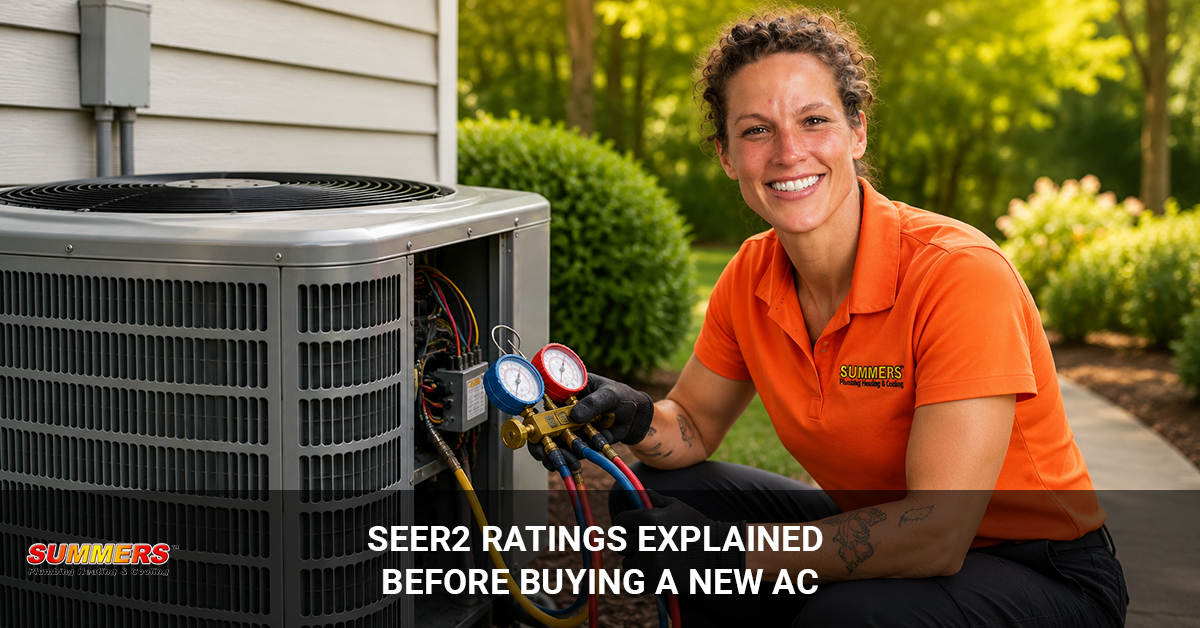
SEER2 measures how efficiently an air conditioner uses electricity over an entire cooling season, making it one of the most important ratings to consider when buying a new AC. In general, a higher SEER2 rating means the system uses less electricity to deliver the same amount of cooling, which can help lower your monthly energy bills without sacrificing indoor comfort.
That doesn’t mean the highest SEER2 rating is always the best investment. The right efficiency level depends on several factors, including your local climate, electricity rates, cooling habits, budget, and how long you plan to stay in your home. In some situations, paying more for a premium-efficiency system can produce meaningful long-term savings. In others, a mid-range SEER2 rating may offer a better return on your investment.
It’s also important to remember that energy efficiency is only one part of overall HVAC performance. A properly sized air conditioner that’s installed correctly will usually outperform a higher-SEER2 unit that’s oversized, undersized, or installed improperly. Ductwork condition, insulation, airflow, thermostat settings, and routine maintenance all influence how efficiently an air conditioner operates after installation.
When comparing new air conditioners, look beyond the efficiency label alone. Features such as a two-stage or variable-speed compressor, proper system sizing, and professional installation often have just as much impact on comfort, humidity control, operating costs, and long-term reliability as the SEER2 rating itself.
In this guide, you’ll learn what a SEER2 rating means, how it works, how it differs from the older SEER standard, what the current minimum efficiency requirements are, and how to choose the right SEER2 rating based on your home, budget, and long-term energy-saving goals.
What Is a SEER2 Rating?
A SEER2 rating measures how efficiently an air conditioner uses electricity to cool your home over an entire cooling season. It gives homeowners a reliable way to compare the energy efficiency of different air conditioners before deciding which system to buy.
SEER2 stands for Seasonal Energy Efficiency Ratio 2, the current efficiency standard for residential air conditioners and heat pumps in the United States. In simple terms, the higher the SEER2 rating, the less electricity the system typically uses to deliver the same amount of cooling. That can translate into lower utility bills over the life of the equipment, especially in areas where air conditioners run frequently.
Unlike a single efficiency test performed under fixed conditions, SEER2 measures performance across a range of operating conditions that better represent an entire cooling season. This gives homeowners a more realistic picture of how efficiently an air conditioner is likely to perform during everyday use rather than under ideal laboratory conditions.
The U.S. Department of Energy (DOE) introduced SEER2 to replace the older SEER testing standard. The updated testing method uses higher external static pressure to better simulate the resistance created by ductwork, air filters, and other components found in a typical residential HVAC system. As a result, SEER2 ratings provide a more accurate representation of real-world energy performance.
It’s important to understand what a SEER2 rating does and doesn’t tell you. SEER2 measures energy efficiency, not cooling capacity. A 20 SEER2 air conditioner won’t cool your home faster than a properly sized 15 SEER2 model. Instead, it can provide the same cooling while using less electricity, reducing operating costs over time.
When comparing new air conditioners, think of SEER2 as a tool for evaluating long-term efficiency rather than cooling performance. Choosing the right rating requires balancing energy savings with your budget, climate, cooling habits, and expected years of home ownership.
How Does SEER2 Work?
SEER2 works by comparing an air conditioner’s total cooling output with the amount of electricity it uses over an entire cooling season. The result is an efficiency rating that helps homeowners compare how much energy different air conditioners are likely to consume under similar operating conditions.
In simple terms, the formula is:
Cooling Output ÷ Electricity Used = SEER2 Rating
A higher SEER2 rating means the air conditioner produces the same amount of cooling while using less electricity. In other words, it’s a measure of energy efficiency, not cooling power.
The table below shows how common SEER2 ratings compare.
| SEER2 Rating | Relative Efficiency |
| 13.4 SEER2 | Standard efficiency |
| 15.2 SEER2 | More energy efficient |
| 17 SEER2+ | High efficiency |
| 20 SEER2+ | Premium efficiency |
For example, imagine two properly sized air conditioners cooling the same home. One has a 14 SEER2 rating, while the other is rated 17 SEER2. Both systems can maintain the same indoor temperature, but the 17 SEER2 unit typically uses less electricity to do so. If your air conditioner runs frequently during the summer, that improved efficiency can reduce your monthly energy bills over time.
However, SEER2 doesn’t guarantee a specific amount of savings. The actual difference in operating costs depends on several factors, including:
- Your local climate
- Electricity rates
- Insulation quality
- Duct leakage
- Thermostat settings
- Home size
- Air conditioner run time
- Installation quality
For example, homeowners in hot climates where the air conditioner operates for several months each year often see greater savings from a higher SEER2 system than those in cooler regions with shorter cooling seasons.
It’s also important to remember that a high SEER2 rating can’t compensate for poor installation or an incorrectly sized system. An oversized air conditioner may short cycle, while an undersized one may run continuously, reducing efficiency regardless of its SEER2 rating. Likewise, leaking ductwork, dirty air filters, and neglected maintenance can all increase energy use.
The best way to think about SEER2 is as a comparison tool. It helps you evaluate the energy efficiency of different air conditioners, but it shouldn’t be used by itself to predict your future utility bills. For the best results, combine the right SEER2 rating with proper system sizing, professional installation, and regular maintenance to maximize both comfort and long-term energy savings.
SEER2 vs. SEER: What’s the Difference?
SEER2 and SEER both measure air conditioner efficiency, but SEER2 uses an updated testing method that better reflects real-world HVAC performance. If you’re shopping for a new air conditioner, you’ll see SEER2 ratings instead of the older SEER ratings because SEER2 is now the industry standard for residential cooling equipment in the United States.
For many years, manufacturers used SEER (Seasonal Energy Efficiency Ratio) to measure how efficiently air conditioners operated over a typical cooling season. While SEER was useful for comparing equipment, its testing procedures didn’t fully account for the airflow resistance created by ductwork, air filters, and other components found in an installed HVAC system.
To provide a more accurate measurement, the U.S. Department of Energy (DOE) introduced SEER2 with updated testing requirements. The new standard measures equipment under higher external static pressure, which more closely simulates the conditions an air conditioner experiences after it’s installed in a home. As a result, SEER2 ratings give homeowners a better indication of real-world energy performance.
The table below summarizes the key differences.
| SEER | SEER2 |
| Older efficiency testing standard | Updated efficiency testing standard |
| Lower external static pressure during testing | Higher external static pressure during testing |
| Less representative of installed HVAC systems | Better reflects real-world operating conditions |
| Found on older air conditioners | Required for new residential air conditioners |
One of the most important things to remember is that SEER and SEER2 ratings shouldn’t be compared directly. Because the testing procedures are different, a 16 SEER air conditioner isn’t equivalent to a 16 SEER2 model. The equipment hasn’t necessarily become less efficient; the testing method has simply become more realistic.
If you’re replacing an older air conditioner, you’ll likely notice that your existing unit has a SEER rating while new equipment is labeled with SEER2. This is completely normal. Manufacturers now use SEER2 because it provides a more accurate way to compare energy efficiency under conditions that better represent how residential HVAC systems actually operate.
For homeowners, the takeaway is simple: focus on comparing SEER2 ratings when evaluating new air conditioners. If you’re replacing an older system with a SEER rating, don’t try to match the numbers directly. Instead, compare new SEER2-rated models and ask your HVAC contractor to explain the expected energy savings based on your home’s climate, cooling needs, and annual electricity costs.
What Is the Minimum SEER2 Rating?
The minimum SEER2 rating for a new residential air conditioner depends on where you live because federal efficiency standards vary by region. The U.S. Department of Energy (DOE) sets regional minimum efficiency requirements to reflect differences in climate and annual cooling demand across the country.
Homes in warmer regions typically require higher minimum SEER2 ratings because air conditioners run for more hours each year. Requiring more efficient equipment in these areas helps reduce electricity consumption, lower long-term operating costs, and improve overall energy efficiency.
Meeting the minimum SEER2 requirement means the system complies with current federal standards, but it doesn’t necessarily mean it’s the best choice for your home. The most cost-effective option depends on how often you use your air conditioner, local electricity rates, your budget, and how long you expect to stay in the home.
For homeowners in hot climates with long cooling seasons, upgrading to a higher SEER2 rating can often produce meaningful energy savings over the life of the system. Although the initial purchase price is usually higher, lower monthly utility bills may offset part of that additional investment over time.
In milder climates where air conditioning is used less frequently, the savings from a premium-efficiency system may take much longer to recover the added upfront cost. In these situations, a mid-range SEER2 rating often provides a better balance between purchase price, operating costs, and long-term value.
Rather than choosing an air conditioner simply because it meets the minimum efficiency standard, evaluate the total cost of ownership. Consider factors such as your climate, annual cooling hours, electricity rates, expected length of home ownership, available rebates or tax incentives, and the difference in purchase price between efficiency levels.
An experienced HVAC contractor can compare the estimated operating costs of different SEER2 ratings and help you determine which system offers the best return on investment for your home. In many cases, selecting the right SEER2 rating, not necessarily the highest one, provides the best combination of comfort, energy savings, and long-term value.
What SEER2 Rating Is Best for Your Home?
The best SEER2 rating for your home is the one that balances energy savings, upfront cost, and long-term value. While a higher SEER2 rating reduces electricity consumption, it also increases the purchase price, so choosing the highest-rated system isn’t always the most cost-effective decision.
There’s no universal “best” SEER2 rating for every homeowner. The right choice depends on how often you use your air conditioner, local electricity rates, your climate, and how long you expect to own your home. A premium-efficiency system may pay for itself relatively quickly in one region but take much longer to recover its additional cost in another.
Before selecting a new air conditioner, consider the following factors.
Climate
Your local climate has one of the biggest influences on whether a higher SEER2 rating is worth the investment.
If you live in an area with long, hot summers, your air conditioner may run for several months each year. In these conditions, a higher-SEER2 system can significantly reduce electricity use over its lifetime, making the additional upfront cost easier to justify.
In cooler climates where air conditioning is used less frequently, the energy savings are usually smaller. For many homeowners in these regions, a mid-range SEER2 rating offers a better balance between purchase price and operating costs.
Electricity Costs
The higher your electricity rates, the more valuable an energy-efficient air conditioner becomes.
If utility costs are high where you live, even modest improvements in efficiency can reduce your monthly energy bills. In areas with lower electricity prices, it generally takes longer for the energy savings to offset the higher purchase price of a premium-efficiency system.
Budget
Think about the total cost of ownership, not just the purchase price.
Higher-SEER2 air conditioners typically cost more because they often include advanced technologies such as two-stage or variable-speed compressors, improved fan motors, and more sophisticated control systems. While these features can lower operating costs, it’s important to determine whether the long-term savings justify the additional investment.
How Long You Plan to Stay in Your Home
The length of time you expect to own your home affects the value of a higher-efficiency system.
If you plan to stay in your home for many years, you’ll have more time to recover the additional cost through lower utility bills. If you’re planning to move within a few years, a mid-range SEER2 system may provide a better financial return.
Daily AC Usage
The more your air conditioner runs, the greater the potential benefit of a higher SEER2 rating.
Homes in warmer climates or households that rely heavily on air conditioning throughout the summer often experience larger energy savings than homes where the AC operates only occasionally.
Existing Ductwork
An efficient air conditioner can’t perform efficiently if the duct system is wasting conditioned air.
Leaky, undersized, or poorly insulated ductwork can reduce airflow and force the system to work harder, regardless of its SEER2 rating. In some homes, sealing or upgrading the ductwork may improve efficiency more than purchasing a higher-SEER2 air conditioner alone.
Comfort Expectations
Many higher-SEER2 systems offer more than just lower energy bills.
Premium-efficiency air conditioners often include two-stage or variable-speed compressors that run at lower speeds for longer periods. This allows them to maintain more consistent indoor temperatures, remove more humidity from the air, operate more quietly, and reduce frequent on-and-off cycling. For homeowners who value consistent comfort, these features can be just as important as the energy savings.
The best SEER2 rating isn’t simply the highest number on the specification sheet; it’s the one that fits your home’s cooling needs, your budget, and your long-term plans. A qualified HVAC contractor can compare different efficiency levels, estimate annual operating costs, and help you choose a system that delivers the best balance of comfort, efficiency, and return on investment.
Is a Higher SEER2 Rating Worth the Extra Cost?
Yes, a higher SEER2 rating can be worth the extra cost if the long-term energy savings offset the higher upfront investment. Whether it’s the right choice depends on your climate, electricity rates, how often you use your air conditioner, and how long you plan to own your home. You can also compare the cost of AC replacement to determine which efficiency level fits your budget.
A higher-SEER2 air conditioner uses less electricity to produce the same amount of cooling as a lower-efficiency model. Over the lifespan of the system, that improved efficiency can reduce your monthly utility bills and lower the total cost of ownership. However, the amount you save varies from one home to another. Homeowners in hot climates who run their air conditioners daily usually see greater savings than those in cooler regions with shorter cooling seasons.
Many high-efficiency air conditioners also include advanced features that improve comfort as well as efficiency. Depending on the model, a higher-SEER2 system may offer:
- Lower monthly energy bills
- Reduced electricity consumption
- Better humidity control
- Quieter operation
- Longer, more consistent cooling cycles
- Variable-speed or two-stage compressor technology
- Potential eligibility for utility rebates or energy-efficiency tax incentives
These benefits often make premium-efficiency systems an excellent investment for homeowners who expect to stay in their homes for many years or who live in areas with high electricity costs.
However, buying the highest SEER2 rating available isn’t always the most economical decision. Premium-efficiency equipment generally costs more to purchase and install, and it may take several years before the energy savings recover the additional investment.
Potential drawbacks include:
- Higher upfront equipment costs
- Increased installation costs
- Longer payback periods in mild climates
- More sophisticated components that may cost more to repair if they fail outside the warranty period
The comparison below highlights the trade-offs.
| Standard SEER2 | Higher SEER2 |
| Lower purchase price | Higher purchase price |
| Higher energy consumption | Lower energy consumption |
| Lower long-term energy savings | Greater long-term energy savings |
| Basic comfort features | Often includes advanced comfort features |
| Lower upfront investment | Lower operating costs over time |
When deciding whether to upgrade, focus on the total cost of ownership rather than the purchase price alone. Consider how many hours your air conditioner runs each year, local electricity rates, available rebates, and how long you expect to own your home.
An experienced HVAC contractor can estimate your annual operating costs for different SEER2 ratings and calculate how long it may take for the additional investment to pay for itself. In many cases, a mid-range or high-efficiency system provides the best balance of upfront cost, energy savings, comfort, and long-term value without paying for more efficiency than you’ll realistically use.
Does a Higher SEER2 Rating Mean Better Comfort?
Not necessarily. A higher SEER2 rating improves energy efficiency, but it doesn’t automatically make your home more comfortable. Comfort depends on a combination of factors, including proper system sizing, installation quality, airflow, humidity control, and your home’s overall energy efficiency.
Even the highest-SEER2 air conditioner can perform poorly if it’s oversized, undersized, or installed incorrectly. For example, an oversized system may cool your home too quickly and short cycle, leaving excess humidity in the air. An undersized system may run almost continuously without reaching the thermostat setting, resulting in uneven temperatures and higher energy bills.
Several factors have a direct impact on indoor comfort, including:
- Proper system sizing
- Professional installation
- Well-designed and sealed ductwork
- Balanced airflow throughout the home
- Effective humidity control
- Accurate thermostat placement and settings
- Adequate insulation and air sealing
While the SEER2 rating itself doesn’t determine comfort, many higher-efficiency air conditioners include technologies that do. Premium models often feature two-stage or variable-speed compressors, which adjust their cooling output to match your home’s changing needs instead of operating at full capacity all the time.
Because these systems run at lower speeds for longer periods, they can:
- Maintain more consistent indoor temperatures
- Remove more humidity from the air
- Reduce hot and cold spots throughout the home
- Operate more quietly
- Minimize frequent on-and-off cycling
These comfort improvements come from the system’s advanced design rather than its SEER2 rating alone. In other words, two air conditioners with similar SEER2 ratings may provide noticeably different comfort levels if one includes variable-speed technology and the other is a basic single-stage model.
The key takeaway is that SEER2 measures efficiency, not comfort. When choosing a new air conditioner, consider the complete system, including compressor type, humidity control, installation quality, and proper sizing. A correctly sized, professionally installed air conditioner with the right features will typically provide better comfort than simply choosing the model with the highest SEER2 rating.
Does SEER2 Affect AC Lifespan?
Not directly. A higher SEER2 rating doesn’t automatically mean your air conditioner will last longer. While high-efficiency systems often include advanced technology that can reduce mechanical stress, an air conditioner’s lifespan depends far more on how well it’s sized, installed, maintained, and operated.
The biggest factors that determine how long an AC system lasts include:
- Proper system sizing
- Professional installation
- Routine maintenance
- Operating conditions and climate
- Frequency of use
- Refrigerant charge
- Airflow and ductwork condition
Even a premium 20 SEER2 air conditioner can experience premature failure if it’s oversized, installed incorrectly, or neglected. On the other hand, a properly installed mid-range system that receives regular maintenance can often provide reliable cooling for 15 years or more.
Routine maintenance has the greatest impact on long-term reliability. If your current system is showing signs of failure, such as the outside AC unit not turning on, it may be time to evaluate replacement options. Simple tasks such as replacing air filters, cleaning condenser coils, maintaining proper refrigerant levels, and scheduling annual HVAC tune-ups help reduce unnecessary strain on the compressor, blower motor, and other major components. Addressing small issues early can also prevent expensive repairs later.
Many higher-SEER2 air conditioners use variable-speed or inverter-driven compressors, which adjust their output instead of constantly switching on and off. Because these systems often operate at lower speeds for longer periods, they may experience less wear from repeated start-up cycles. They also tend to maintain more stable operating temperatures, which can reduce stress on certain components during normal use.
However, these potential benefits shouldn’t be confused with a guarantee of a longer lifespan. Installation quality and ongoing maintenance remain much more important than the SEER2 rating itself. A high-efficiency system that’s poorly installed or rarely serviced is unlikely to outlast a standard-efficiency unit that’s properly maintained.
The bottom line is that SEER2 measures energy efficiency, not durability. If you want your air conditioner to last as long as possible, focus on choosing the correct size, hiring a qualified HVAC contractor, replacing filters regularly, scheduling annual maintenance, and addressing repairs before they become major problems. Those steps will have a much greater impact on your system’s lifespan than the efficiency rating alone.
Other HVAC Efficiency Ratings You Should Know
SEER2 isn’t the only efficiency rating you’ll see when shopping for HVAC equipment. Depending on whether you’re buying an air conditioner, heat pump, or furnace, you may also encounter ratings such as EER2, HSPF2, and AFUE. Understanding what these ratings measure can help you compare systems more accurately and choose equipment that fits your home’s heating and cooling needs.
EER2 (Energy Efficiency Ratio 2)
EER2 measures how efficiently an air conditioner operates at a specific outdoor temperature.
Unlike SEER2, which estimates efficiency over an entire cooling season, EER2 evaluates performance under fixed test conditions, typically during hotter weather when cooling demand is at its highest. This makes EER2 especially useful for homeowners in very hot climates where air conditioners often operate under heavy loads.
If you live in an area with long periods of extreme summer heat, comparing EER2 ratings alongside SEER2 can provide a better understanding of how efficiently a system may perform during peak cooling conditions.
HSPF2 (Heating Seasonal Performance Factor 2)
HSPF2 measures the heating efficiency of heat pumps over an entire heating season.
If you’re considering a heat pump instead of a traditional air conditioner and furnace, HSPF2 becomes an important rating to review. Just as SEER2 measures cooling efficiency, HSPF2 indicates how efficiently a heat pump produces heat during colder months.
A higher HSPF2 rating generally means the heat pump uses less electricity to provide the same amount of heat, which can help reduce winter heating costs.
AFUE (Annual Fuel Utilization Efficiency)
AFUE measures the heating efficiency of gas furnaces.
Unlike SEER2 and HSPF2, which apply to electrically powered cooling and heating equipment, AFUE measures how efficiently a gas furnace converts fuel into usable heat. It’s expressed as a percentage.
For example:
- 80% AFUE means approximately 80% of the fuel becomes usable heat, while the remaining 20% is lost through the exhaust system.
- 95% AFUE means about 95% of the fuel is converted into heat, making it significantly more efficient.
A higher AFUE rating typically results in lower natural gas or propane consumption during the heating season.
Which Efficiency Rating Matters Most?
The most important efficiency rating depends on the type of HVAC system you’re purchasing.
| Rating | Measures | Applies To |
| SEER2 | Seasonal cooling efficiency | Air conditioners and heat pumps (cooling mode) |
| EER2 | Cooling efficiency at a fixed outdoor temperature | Air conditioners and heat pumps |
| HSPF2 | Seasonal heating efficiency | Heat pumps |
| AFUE | Fuel-to-heat conversion efficiency | Gas furnaces |
If you’re replacing only your air conditioner, SEER2 will usually be the primary efficiency rating to compare. However, if you’re installing a heat pump or replacing your entire HVAC system, reviewing EER2, HSPF2, and AFUE alongside SEER2 provides a more complete picture of how efficiently the equipment will operate throughout the year.
Looking at all of the relevant efficiency ratings rather than focusing on just one can help you choose an HVAC system that delivers the right balance of comfort, energy savings, and long-term operating costs.
Tips for Choosing an Energy-Efficient Air Conditioner
Choosing an energy-efficient air conditioner involves much more than selecting the highest SEER2 rating. The most efficient system is one that’s correctly sized, professionally installed, and well maintained throughout its lifespan. Even a premium-efficiency air conditioner won’t deliver the expected energy savings if it’s oversized, installed improperly, or connected to inefficient ductwork.
Before investing in a new air conditioner, consider the following factors.
Choose the Right Size
Proper sizing is the most important step in maximizing energy efficiency.
An oversized air conditioner can short cycle, waste electricity, and leave your home feeling cool but humid. An undersized system may run almost continuously without maintaining the desired indoor temperature, increasing both energy consumption and equipment wear.
Rather than relying on your home’s square footage or the size of your existing unit, ask your HVAC contractor to perform a Manual J load calculation. This industry-standard assessment evaluates your home’s insulation, windows, climate, ductwork, and other factors to determine the correct cooling capacity.
Don’t Overlook Installation Quality
Even the most efficient air conditioner can’t perform well if it’s installed incorrectly. Learn how professional AC installation helps maximize the efficiency and performance of your new high-SEER2 air conditioner.
Improper refrigerant charging, restricted airflow, poorly sealed duct connections, or electrical installation errors can reduce efficiency, increase operating costs, and shorten the lifespan of the equipment. Choosing an experienced, qualified HVAC contractor is just as important as selecting the right air conditioner.
Inspect Your Ductwork
Your duct system has a major impact on overall HVAC efficiency.
Leaky, poorly insulated, or undersized ducts can allow conditioned air to escape before it reaches your living spaces, forcing the air conditioner to run longer to maintain the thermostat setting. Sealing duct leaks, improving insulation, and correcting airflow issues can significantly improve comfort while lowering energy bills.
Improve Your Home’s Energy Efficiency
Reducing your home’s cooling load helps any air conditioner operate more efficiently.
Simple improvements such as adding attic insulation, sealing gaps around windows and doors, upgrading to energy-efficient windows, and using blinds or curtains to block direct sunlight reduce the amount of heat entering your home. When your home gains less heat, your air conditioner doesn’t have to work as hard to keep it comfortable.
Install a Smart Thermostat
A smart thermostat helps reduce unnecessary cooling and lower energy costs.
By automatically adjusting temperatures when you’re asleep or away from home, a smart thermostat reduces the number of hours your air conditioner operates without sacrificing comfort. Many models also provide energy reports, maintenance reminders, and scheduling features that help homeowners manage energy use more effectively.
Keep Up With Routine Maintenance
Regular maintenance is essential for preserving efficiency and preventing costly repairs.
Replacing air filters, cleaning condenser coils, checking refrigerant levels, inspecting electrical components, and scheduling annual HVAC tune-ups all help your system operate at peak performance. Routine maintenance also reduces unnecessary wear on major components such as the compressor, blower motor, and condenser fan motor, helping extend the life of the equipment.
The most energy-efficient air conditioner isn’t simply the one with the highest SEER2 rating; it’s the one that’s properly sized, professionally installed, and consistently maintained. Combining the right equipment with good installation practices, efficient ductwork, and regular maintenance will deliver lower utility bills, better indoor comfort, and reliable performance for many years.
If you’re upgrading to a new high-efficiency system, our AC installation professionals can help you choose the right SEER2-rated air conditioner and ensure it’s properly sized and installed for maximum comfort and energy savings.
Frequently Asked Questions
Is a higher SEER2 rating always better?
No. A higher SEER2 rating isn’t always the best choice for every homeowner. While it improves energy efficiency and can lower electricity bills, it also increases the upfront cost of the air conditioner. The best SEER2 rating depends on your climate, electricity rates, cooling habits, budget, and how long you plan to stay in your home. For many homeowners, a 15 to 17 SEER2 system offers the best balance between purchase price, energy savings, and long-term value.
Is a 20 SEER2 air conditioner worth it?
It can be, but it depends on your home’s cooling needs. A 20 SEER2 air conditioner often makes the most sense in hot climates where the system runs for many hours each year. The increased energy savings can help offset the higher purchase price over time. In cooler climates or homes with lower cooling demand, however, the payback period may be much longer, making a mid-range SEER2 system a more cost-effective option.
Can a higher SEER2 rating lower my electric bill?
Yes. A higher-SEER2 air conditioner generally uses less electricity to produce the same amount of cooling. Over time, this can reduce your monthly utility bills. The amount you save depends on factors such as local electricity rates, climate, insulation, thermostat settings, system sizing, installation quality, and how frequently your air conditioner operates.
What’s a good SEER2 rating for a new air conditioner?
For most homeowners, a 15 to 17 SEER2 rating provides an excellent balance of efficiency, comfort, and cost. The ideal rating varies based on where you live, how much you use your air conditioner, and your long-term budget. An HVAC contractor can compare different efficiency levels and estimate the operating costs of each system to help you make an informed decision.
Does SEER2 affect cooling performance?
Not directly. SEER2 measures energy efficiency, not cooling capacity. A higher-SEER2 air conditioner won’t cool your home faster or produce colder air than a properly sized lower-SEER2 model. Instead, it delivers the same cooling while using less electricity. Overall comfort depends much more on proper sizing, professional installation, balanced airflow, and effective humidity control.
Can I replace only the outdoor AC unit?
Usually not. The indoor evaporator coil and outdoor condenser are designed to operate as a matched system. Replacing only the outdoor unit can reduce efficiency, create compatibility issues, and potentially void the manufacturer’s warranty. In most cases, replacing both components together provides better performance, higher efficiency, and greater long-term reliability.
How do I find my current AC’s SEER rating?
You can often find your air conditioner’s SEER or SEER2 rating on the equipment label or manufacturer documentation. The rating may also appear on the original installation paperwork. If it’s not listed, an HVAC technician can usually identify the system’s efficiency by checking the model number and manufacturer specifications.
Is SEER2 required by law?
Yes. New residential air conditioners installed in the United States must meet current federal SEER2 efficiency standards. The minimum required SEER2 rating varies by region because cooling needs differ across the country. These standards help reduce energy consumption, lower operating costs, and improve the overall efficiency of residential HVAC systems.
Final Thoughts
A SEER2 rating is one of the best tools for comparing the energy efficiency of new air conditioners, but it shouldn’t be the only factor that guides your decision. While a higher SEER2 rating can reduce electricity consumption and lower long-term operating costs, the best system for your home is the one that balances efficiency, comfort, upfront cost, and expected return on investment.
Choosing the right air conditioner means looking beyond the efficiency label. Your local climate, electricity rates, cooling habits, budget, and how long you plan to stay in your home all influence whether upgrading to a higher-SEER2 system makes financial sense. In many cases, a mid-range efficiency model provides the ideal balance of purchase price and long-term savings, while homeowners in hotter climates may benefit from investing in a higher-SEER2 system.
It’s equally important to remember that proper sizing and professional installation have a greater impact on performance than the SEER2 rating alone. Even the most efficient air conditioner can waste energy and struggle to keep your home comfortable if it’s oversized, undersized, installed incorrectly, or connected to leaking ductwork. A properly sized system with good airflow and routine maintenance will almost always deliver better comfort, humidity control, and reliability.
Before replacing your air conditioner, ask your HVAC contractor to perform a Manual J load calculation, explain the estimated operating costs of different SEER2 ratings, and recommend a system based on your home’s actual cooling load rather than square footage alone. If you’re still deciding whether a new system is the right choice, compare AC repair vs. replacement before making your investment. Comparing long-term energy savings, installation costs, warranty coverage, and available rebates will help you make a more informed decision.
Whether you’re replacing an aging air conditioner or installing a system in a new home, choosing the right combination of SEER2 rating, proper sizing, quality installation, and regular maintenance will provide lower energy bills, consistent indoor comfort, and reliable performance for many years. Taking the time to select the right system today can help you maximize the value of your investment over the life of your HVAC equipment.