

Why Is My Outside AC Unit Not Turning On? Causes, Fixes, and When to Call a Professional
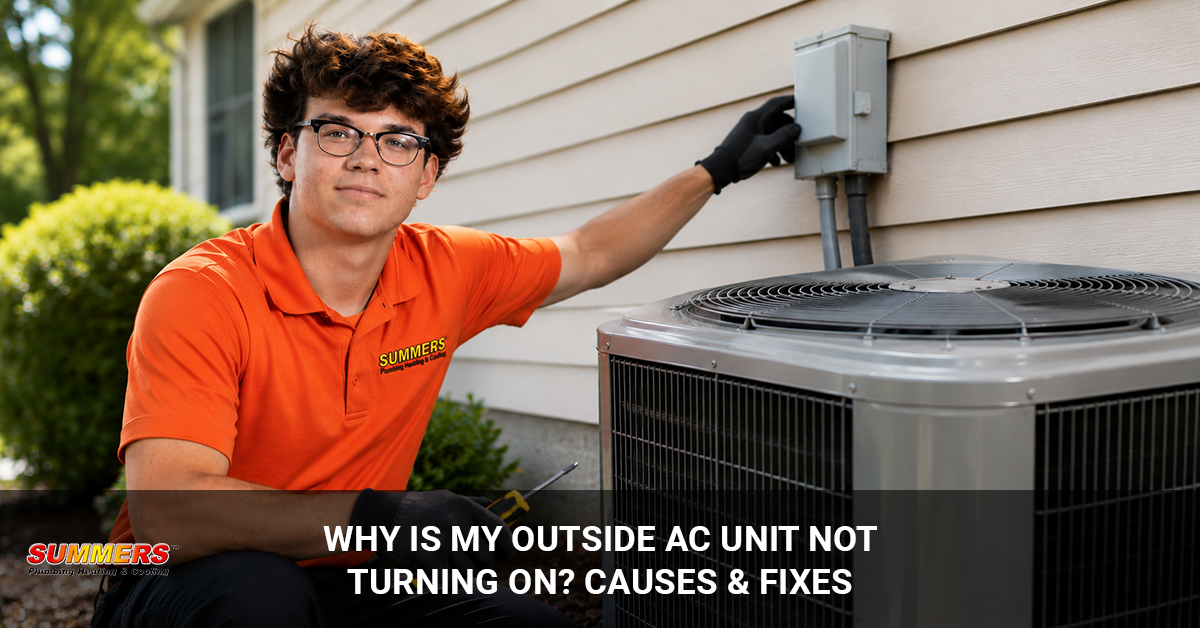
If your outside AC unit isn’t turning on, your air conditioner can’t remove heat from your home, so it won’t cool properly. In many cases, you’ll still hear the indoor blower running, but the air coming from the vents will feel warm or only slightly cool because the outdoor condenser isn’t working.
The good news is that this problem isn’t always expensive to fix. A tripped circuit breaker, incorrect thermostat setting, blown disconnect fuse, dirty contactor, or failed capacitor can all keep the outdoor unit from starting. While some of these issues are simple enough for homeowners to check, others require professional diagnosis and repair.
Before assuming you need a new air conditioner, there are a few safe troubleshooting steps you can try. Checking the thermostat, resetting a breaker, or making sure the outdoor disconnect hasn’t been switched off may solve the problem in just a few minutes. If those steps don’t work, it’s best to have the system inspected before a small issue turns into a costly repair.
In this guide, we’ll explain the most common reasons an outside AC unit won’t turn on, what you can safely check yourself, and when it’s time to call an HVAC professional.
How Does the Outside AC Unit Work?
The outside AC unit removes heat from your home so your air conditioner can produce cold air. It works with the indoor unit to complete the cooling cycle. If the outdoor unit doesn’t turn on, your AC can’t cool your home, even if the indoor fan is still blowing air.
What Does the Outside AC Unit Do?
The outside AC unit, also called the condenser unit, contains several parts that work together to move heat out of your home.
Compressor
The compressor pumps refrigerant through your air conditioning system. It’s often called the heart of the AC because it keeps refrigerant moving between the indoor and outdoor units. Without the compressor, the cooling cycle stops completely.
Condenser Fan
The condenser fan pushes outdoor air across the condenser coil to remove heat. As the fan runs, it carries heat away from the refrigerant so it can cool down before returning indoors.
Condenser Coil
The condenser coil releases the heat your AC removes from inside your home. Warm refrigerant flows through the coil, and the outside air carries that heat away. The cooled refrigerant then travels back to the indoor unit to absorb more heat from your home.
Why Is the Outside AC Unit So Important?
The outside AC unit is essential because it removes the heat collected from inside your home. Your air conditioner needs both the indoor and outdoor units to work together. The indoor unit absorbs heat from your indoor air, and the outdoor unit releases that heat outside.
If the outside unit doesn’t start, refrigerant can’t circulate through the system. As a result, your AC won’t produce cold air. The indoor blower may still run, but you’ll usually feel warm or slightly cool air coming from the vents instead of the cool air you expect.
Signs Your Outside AC Unit Isn’t Turning On
If your outside AC unit isn’t turning on, you’ll usually notice warm air, a silent outdoor unit, or your home never reaching the temperature set on the thermostat. These warning signs can point to electrical problems, failed components, or power issues. Catching them early may help prevent a more expensive repair.
The Indoor Blower Is Running, but the Outside Unit Is Silent
If the indoor blower runs but the outdoor unit stays silent, the condenser isn’t starting. You may feel air coming from the vents, but it won’t be properly cooled because the outdoor unit isn’t removing heat.
Walk outside and listen for the normal humming sound or fan noise. If you don’t hear anything, the unit may have lost power, or a component like the capacitor, contactor, or compressor may have failed.
Warm Air Is Coming From the Vents
Warm air from your vents is one of the clearest signs the outdoor AC unit isn’t working. Since the condenser isn’t removing heat, your system can’t produce cold air.
If your thermostat is set to cooling but the air feels warm or only slightly cool, the outdoor unit should be inspected. If your system is blowing warm air instead of cooling your home, our guide on AC running but not cooling covers other common causes and troubleshooting steps that may help identify the problem.
The Thermostat Never Reaches the Set Temperature
If your thermostat can’t reach the temperature you’ve selected, the outdoor unit may not be running. The thermostat continues calling for cooling, but without the condenser, your AC can’t lower the indoor temperature.
You may notice the system running for long periods with little or no improvement in comfort.
The Outdoor Fan Isn’t Spinning
A fan that doesn’t spin usually means the outside AC unit isn’t operating correctly. The condenser fan should start shortly after the thermostat calls for cooling.
If the fan stays still while the system is trying to cool your home, the problem could be a failed capacitor, fan motor, contactor, or another electrical component.
The Condenser Unit Is Completely Silent
A completely silent outdoor unit often means it’s not receiving power or has an electrical failure. Most air conditioners make a steady humming sound while they’re running.
If you hear no noise at all, check the thermostat, circuit breaker, and disconnect switch before calling for service.
The Circuit Breaker Keeps Tripping
A breaker that trips repeatedly usually points to an electrical problem. It may be caused by a failing compressor, a short circuit, damaged wiring, or another issue inside the outdoor unit.
If the breaker continues to trip after being reset, leave it off and schedule a professional inspection. Repeatedly resetting it can damage the system and create a safety hazard.
Your Energy Bills Keep Going Up
An outside AC unit that isn’t working properly can increase your energy bills. When the system struggles to cool your home, it runs longer and uses more electricity without delivering the comfort you expect.
If you’ve noticed higher utility bills along with poor cooling performance, the outdoor unit may need repair.
Why Is My Outside AC Unit Not Turning On?
An outside AC unit may not turn on because of a thermostat problem, power issue, failed electrical component, or mechanical failure. Some causes are simple enough to check yourself, while others require professional repair.
Here are the most common reasons your outside AC unit won’t start.
1. Thermostat Problems
A thermostat problem can prevent your outside AC unit from receiving the signal to turn on. If the thermostat isn’t set correctly or isn’t working properly, your air conditioner won’t begin the cooling cycle.
Common thermostat problems include:
- The thermostat is set to Heat, Fan, or Off instead of Cool.
- The temperature is set higher than the current room temperature.
- The batteries are dead or running low.
- Loose or damaged thermostat wiring.
- A faulty thermostat that can no longer communicate with the HVAC system.
Signs of a Thermostat Problem
You may have a thermostat issue if you notice:
- The outdoor unit never starts.
- The indoor fan runs, but the air isn’t cold.
- The thermostat display is blank.
- The room temperature shown on the thermostat is inaccurate.
- The system doesn’t respond when you adjust the temperature.
Before looking for bigger problems, check that the thermostat is set to Cool and lower the temperature by 3 to 5 degrees below the current room temperature. If your thermostat uses batteries, replacing them is a quick and inexpensive step that often solves the problem.
2. A Tripped Circuit Breaker
A tripped circuit breaker can shut off power to the outside AC unit. Many central air conditioners use separate breakers for the indoor air handler and the outdoor condenser. If only the outdoor breaker trips, the indoor blower may still run while the condenser stays off.
A breaker can trip for several reasons, including:
- Power surges
- Electrical overload
- Loose or damaged wiring
- A failing compressor
- Worn electrical components
If you find a tripped breaker, you can reset it once. If it trips again shortly afterward, stop resetting it. A breaker that keeps tripping usually points to an electrical problem that needs professional diagnosis. Ignoring it can lead to more expensive repairs or damage to your air conditioning system.
3. A Blown Disconnect Fuse
A blown disconnect fuse can prevent power from reaching your outside AC unit. Even if your thermostat is calling for cooling, the condenser won’t start because it’s no longer receiving electricity.
Most outdoor AC units have a disconnect box mounted on the wall nearby. Inside the box is a fuse that protects the system from electrical damage. If that fuse blows, the outdoor unit will remain off while the indoor blower may continue running.
Signs of a Blown Disconnect Fuse
You may have a blown disconnect fuse if:
- The outdoor unit is completely silent.
- The indoor blower is still running.
- The circuit breaker hasn’t tripped.
- The outdoor fan and compressor never start.
Because the disconnect box contains high-voltage electricity, don’t try to replace the fuse yourself. A licensed HVAC technician can safely test the fuse, identify why it failed, and replace it if needed.
4. Power Supply Problems
A power supply problem can keep your outside AC unit from turning on, even if nothing is wrong with the air conditioner itself. Without a steady power supply, the condenser can’t start.
Common power supply problems include:
- A neighborhood power outage
- Loose electrical connections
- Damaged electrical wiring
- Low voltage from the power supply
- Utility power interruptions after storms or severe weather
If your AC suddenly stops working after a storm or outage, check whether other lights and appliances in your home are working normally. If they aren’t, the problem may be with your home’s electrical service or your utility provider.
If everything else in your home has power but the outside AC unit still won’t turn on, the issue is likely inside the air conditioning system. In that case, it’s best to schedule a professional inspection to find and fix the problem safely.
5. A Failed Start or Run Capacitor
A failed capacitor is one of the most common reasons an outside AC unit won’t turn on. The capacitor provides the extra burst of electricity needed to start the compressor and the condenser fan motor.
Many air conditioners use a dual-run capacitor that supports both the compressor and the fan. When it fails, one or both components may not start. In many cases, the outdoor unit stays completely silent or makes a humming sound without turning on.
Signs of a Bad Capacitor
You may have a failed capacitor if you notice:
- The outdoor unit won’t start.
- A humming sound, but nothing turns on.
- Clicking noises from the condenser.
- The outdoor fan isn’t spinning.
- Warm air is coming from the vents.
Capacitors wear out over time due to age, heat, and normal electrical stress. Because they can hold a dangerous electrical charge even after the power is turned off, capacitor replacement should always be left to a qualified HVAC technician.
6. A Faulty Contactor
A faulty contactor can stop power from reaching your outside AC unit. The contactor acts like an electrical switch. When your thermostat calls for cooling, it sends power to the compressor and condenser fan.
Over time, the contactor can wear out. Its electrical contacts may become burned, pitted, or corroded, preventing the outdoor unit from starting even though the thermostat is working properly.
Signs of a Bad Contactor
Common signs include:
- Clicking sounds, but the unit doesn’t start.
- The outdoor unit works only occasionally.
- The compressor and fan won’t turn on.
- Burn marks or visible damage on the contactor.
A failing contactor usually gets worse over time instead of failing all at once. That’s why annual AC maintenance is important. During a routine inspection, an HVAC technician can spot a worn contactor and replace it before it causes a complete system shutdown.
7. A Faulty Condenser Fan Motor
A faulty condenser fan motor can cause your outside AC unit to stop working or shut down shortly after it starts. The fan motor powers the outdoor fan, which pulls air through the condenser coil to remove heat from your home.
If the fan stops working, heat can’t escape properly. To protect the compressor from overheating, many air conditioners automatically shut down the outdoor unit.
Signs of a Bad Condenser Fan Motor
You may have a failing condenser fan motor if you notice:
- The fan blades don’t spin.
- A burning smell near the outdoor unit.
- The fan starts slowly or runs only sometimes.
- Grinding, squealing, or other unusual noises.
- The outdoor unit becomes very hot or shuts itself off.
Some fan motors fail gradually, while others stop working without warning. Repairing the problem early can help prevent damage to the compressor, which is much more expensive to replace.
8. Compressor Failure
A failed compressor can prevent your outside AC unit from turning on and stop your air conditioner from cooling your home. The compressor is the heart of the system because it circulates refrigerant between the indoor and outdoor units.
Compressors can fail for several reasons, including:
- Normal wear and age
- Electrical damage
- Repeated overheating
- Low refrigerant caused by a leak
- Internal mechanical failure
Signs of Compressor Failure
Common warning signs include:
- A loud humming sound was followed by the system shutting off.
- The circuit breaker trips as soon as the AC tries to start.
- A burning odor near the outdoor unit.
- The compressor feels extremely hot.
- The outside AC unit won’t start at all.
A failed compressor is one of the most expensive AC repairs. Your HVAC technician can test the compressor and help you decide whether replacing it or installing a new air conditioning system makes more financial sense, especially if your unit is older.
9. Low Refrigerant
Low refrigerant can keep your outside AC unit from running properly because the system may shut down to protect itself. Most modern air conditioners have safety controls that stop the compressor when refrigerant pressure becomes too low.
Unlike fuel, refrigerant isn’t used up over time. If the level is low, it almost always means there’s a leak somewhere in the system.
Signs of Low Refrigerant
Common signs include:
- Warm air is coming from the vents.
- Ice forming on the refrigerant lines.
- Ice on the indoor evaporator coil.
- Hissing or bubbling sounds near the AC.
- Longer cooling cycles.
- Higher energy bills.
If you suspect a refrigerant leak, don’t ignore it. Running your AC with low refrigerant can damage the compressor and lead to much more expensive repairs. Because refrigerant is regulated and requires specialized equipment to handle, leak repairs and system recharging should always be performed by a licensed HVAC technician.
10. Loose or Damaged Electrical Wiring
Loose or damaged wiring can interrupt power to your outside AC unit and prevent it from starting. Since the condenser sits outdoors year-round, its electrical connections are constantly exposed to heat, rain, moisture, insects, and changing weather conditions.
Common wiring problems include:
- Corroded electrical terminals.
- Burned or melted wire connections.
- Rodent-damaged wiring.
- Loose electrical connections.
- Weather-related wear and corrosion.
Electrical problems can prevent the compressor or fan from receiving power and may also create a safety hazard. Because diagnosing electrical faults involves high-voltage components, these repairs should always be handled by a qualified HVAC technician.
11. Safety Switch Activation
A safety switch can shut down your outside AC unit to prevent damage when the system detects a problem. Modern air conditioners include several built-in safety devices that automatically stop the unit if operating conditions become unsafe.
Common safety switches include:
- Float switch
- High-pressure switch
- Low-pressure switch
- Condensate overflow safety switch
These switches don’t fail without a reason. They usually indicate another issue, such as a clogged condensate drain, refrigerant problem, or abnormal system pressure. While resetting the switch may seem like a quick fix, the underlying problem still needs to be diagnosed and repaired.
Safety switches are designed to protect your air conditioner from costly damage. They should never be bypassed or disabled.
Can You Fix an Outside AC Unit That Isn’t Turning On Yourself?
Yes, you can safely check a few common issues before calling an HVAC technician. Problems like an incorrect thermostat setting, a tripped circuit breaker, or a dirty air filter are often easy to inspect. However, repairs involving electrical parts, refrigerant, or the compressor should always be left to a licensed professional.
Here are the troubleshooting steps you can safely perform.
Check the Thermostat
Start by making sure your thermostat is calling for cooling. Set it to Cool mode and lower the temperature at least 3 to 5 degrees below the current room temperature.
If your thermostat runs on batteries, replace them if the display is blank or the system isn’t responding.
Check the Circuit Breaker
A tripped breaker can cut power to the outside AC unit. Open your home’s electrical panel and locate the breaker labeled for the air conditioner or condenser.
If it’s tripped, reset it once. If it trips again, don’t keep resetting it. Repeated breaker trips usually point to an electrical problem that needs professional repair.
Inspect the Disconnect Switch
Make sure the outdoor disconnect switch is turned on. The disconnect box is usually mounted on the wall next to the outdoor unit and allows power to be shut off during maintenance.
If someone recently worked around the unit or completed landscaping, the disconnect may have been switched off by accident.
Clear Debris Around the Outdoor Unit
Remove anything blocking airflow around the condenser. Leaves, grass clippings, weeds, branches, and other debris can reduce airflow and make your AC work harder.
Keep at least 2 feet of open space around the outdoor unit so it can release heat efficiently.
Listen for Unusual Sounds
The sounds your AC makes can help identify the problem. Before turning the system off, listen to the outdoor unit.
Notice whether it’s:
- Completely silent
- Clicking repeatedly
- Humming without starting
- Trying to start and then shutting off
These details can help an HVAC technician diagnose the issue more quickly.
Check the Air Filter
A dirty air filter can reduce airflow and cause your AC to overheat. While a clogged filter usually isn’t the only reason an outside unit won’t turn on, it can contribute to system problems and poor performance.
If the filter looks dirty or hasn’t been replaced in the last one to three months, install a new one before restarting your system.
Repairs You Should Never Attempt
You should never attempt repairs that involve high-voltage electricity, refrigerant, or major AC components. These repairs require specialized tools, technical training, and the proper safety procedures. Trying to fix them yourself can lead to serious injury, expensive equipment damage, or even void your manufacturer’s warranty.
Leave the following repairs to a licensed HVAC technician:
- Replacing a start or run capacitor
- Replacing a contactor
- Testing high-voltage electrical components
- Recharging refrigerant
- Finding and repairing refrigerant leaks
- Repairing or replacing electrical wiring
- Replacing the compressor
If you’ve already checked the thermostat, circuit breaker, disconnect switch, and air filter but your outside AC unit still won’t turn on, it’s time to call a professional. A trained HVAC technician can safely diagnose the problem, make the necessary repairs, and get your air conditioner running again without risking further damage.
Step-by-Step Troubleshooting Checklist
If your outside AC unit won’t turn on, start with a few simple checks before calling an HVAC technician. These steps can help you identify common problems, such as thermostat settings or power issues, and may even restore your system without a repair.
Step 1: Check the Thermostat
Make sure your thermostat is set to Cool mode. Lower the temperature 3 to 5 degrees below the current room temperature and wait a few minutes to see if the outdoor unit starts.
Step 2: Replace the Thermostat Batteries
Replace the batteries if your thermostat uses them. Weak or dead batteries can prevent the thermostat from sending the signal to start your air conditioner.
Step 3: Check the Circuit Breakers
Inspect your home’s electrical panel for a tripped breaker. If the breaker for the outdoor AC unit has tripped, reset it once.
If it trips again, don’t keep resetting it. This usually indicates an electrical problem that requires professional repair.
Step 4: Verify the Disconnect Switch
Confirm that the outdoor disconnect switch is fully engaged. The disconnect box is usually mounted on the wall next to the condenser and may have been switched off during maintenance or yard work.
Step 5: Listen for Unusual Sounds
Pay attention to what the outdoor unit is doing when the thermostat calls for cooling.
Notice whether it’s:
- Completely silent
- Clicking
- Humming
- Trying to start and then shutting off
These sounds can provide valuable clues about what’s causing the problem.
Step 6: Inspect the Outdoor Unit
Look for any obvious signs of trouble. Check for leaves, grass, or other debris blocking airflow. Also look for ice buildup, damaged wiring, or visible damage to the condenser.
Don’t remove electrical panels or touch internal components.
Step 7: Call an HVAC Technician
If your outside AC unit still won’t turn on, it’s time to schedule professional service. A trained HVAC technician can safely diagnose the problem and recommend the right repair.
Continuing to run your air conditioner when it’s not working properly can put extra strain on the system and lead to more expensive repairs.
How HVAC Technicians Diagnose the Problem
HVAC technicians diagnose an outside AC unit that won’t turn on by testing the system’s electrical, mechanical, and refrigerant components. Rather than guessing which part has failed, they use specialized tools to find the exact cause of the problem. This approach helps avoid unnecessary repairs and gets your air conditioner working again faster.
A professional AC inspection typically includes the following checks.
Electrical Voltage Testing
The technician verifies that the outdoor unit is receiving the correct power supply. If the proper voltage isn’t reaching the condenser, the problem may be a tripped breaker, faulty disconnect, damaged wiring, or another electrical issue.
Capacitor Testing
The capacitor is tested to make sure it can provide enough power to start the compressor and fan motor. Using a digital capacitance meter, the technician compares its performance to the manufacturer’s specifications. If the reading is too low, the capacitor needs to be replaced.
Contactor Inspection
The contactor is inspected to confirm it’s sending power to the outdoor unit. The technician looks for burned contacts, corrosion, pitting, or signs of wear that could prevent the compressor and fan from starting.
Compressor Testing
The compressor is tested to determine whether it’s operating correctly or has failed. Electrical measurements help identify problems such as an open winding, a short circuit, or an internally damaged compressor.
Fan Motor Testing
The condenser fan motor is checked to make sure it’s running properly. The technician tests the motor’s electrical continuity and verifies that it starts and operates as it should.
Refrigerant Pressure Testing
The technician measures refrigerant pressure to identify leaks or other cooling system problems. Low or abnormal pressure readings can indicate a refrigerant leak, a restriction in the system, or another issue that’s preventing the outdoor unit from operating correctly.
Wiring Inspection
All electrical wiring is inspected for damage or loose connections. The technician checks for burned wires, corrosion, rodent damage, and other problems that could interrupt power to the outdoor unit.
Safety Switch Testing
Safety switches are tested to make sure they’re working properly. If a float switch, pressure switch, or another safety control has been activated, the technician will determine why it tripped and fix the underlying problem instead of simply resetting it.
Why a Professional Diagnosis Matters
A professional diagnosis identifies the real cause of the problem before any repairs are made. This saves time, prevents unnecessary part replacements, and helps ensure your outside AC unit is repaired the first time correctly.
Outside AC Unit Repair Costs
The cost to repair an outside AC unit that won’t turn on typically ranges from around $120 for a minor repair to more than $3,500 for a major component like a compressor. The final price depends on what’s causing the problem, the age of your system, your location, labor rates, and whether any parts are covered under warranty.
Here’s a general estimate of common repair costs.
| Repair | Typical Cost |
| Thermostat Repair or Replacement | $150–$600 |
| Capacitor Replacement | $120–$350 |
| Contactor Replacement | $150–$400 |
| Disconnect Fuse Replacement | $150–$350 |
| Condenser Fan Motor Replacement | $300–$900 |
| Electrical Wiring Repair | $150–$700 |
| Refrigerant Leak Detection & Repair | $300–$1,500+ |
| Compressor Replacement | $1,500–$3,500+ |
| Complete AC System Replacement | $5,000–$12,000+ |
Note: These are average price ranges. Your actual cost may vary based on your location, AC system size, equipment brand, refrigerant type, warranty coverage, and local labor rates. For a more detailed breakdown of local pricing, see our guide to AC repair costs in Bloomington, Indiana, which explains common repair costs and the factors that affect them.
Is It Better to Repair or Replace?
Small repairs are usually worth fixing, but major repairs on an older system may make replacement the better investment. For example, replacing a capacitor or contactor is relatively inexpensive.
However, if your compressor has failed and your air conditioner is 10 to 15 years old, replacing the entire system may provide better long-term value through improved reliability, lower energy bills, and a new warranty. Our guide on AC repair vs. replacement can help you compare both options before making a decision.
Don’t Wait to Fix the Problem
Repairing a minor issue early is almost always less expensive than waiting. A faulty capacitor, contactor, or fan motor can put extra strain on the compressor. If left unrepaired, a simple fix can eventually turn into one of the most expensive AC repairs or even require a complete system replacement.
How to Prevent Your Outside AC Unit From Not Turning On
Regular maintenance is the best way to prevent your outside AC unit from failing unexpectedly. Simple tasks like replacing the air filter, keeping the outdoor unit clean, and scheduling yearly maintenance can reduce breakdowns, improve efficiency, and extend the life of your air conditioner.
Replace Your Air Filter Regularly
A clean air filter helps your AC run more efficiently and reduces strain on the entire system. When the filter becomes clogged, airflow is restricted, forcing the blower motor and compressor to work harder.
Most homeowners should replace the air filter every 1 to 3 months, depending on system use, pets, and indoor air quality.
Schedule Annual AC Maintenance
A yearly AC tune-up helps catch small problems before they become expensive repairs. During a maintenance visit, an HVAC technician will inspect the electrical system, test the capacitor and contactor, clean the condenser coils, check refrigerant levels, and make sure all major components are working properly.
Preventive maintenance is one of the most effective ways to improve your system’s reliability and reduce the risk of a mid-summer breakdown.
Keep the Outdoor Unit Clean
Your outdoor AC unit needs plenty of airflow to cool your home efficiently. Leaves, dirt, grass clippings, and other debris can block the condenser coil and make the system work harder than necessary.
Keep at least 2 feet of open space around the outdoor unit, and remove debris regularly to maintain proper airflow.
Trim Plants Around the Condenser
Overgrown plants can block airflow and reduce your AC’s performance. Shrubs, weeds, and tree branches that grow too close to the condenser trap heat around the unit and make routine maintenance more difficult.
Trim vegetation back regularly to keep the area around the condenser clear.
Pay Attention to Unusual Noises
Strange noises are often an early warning that something is wrong. Buzzing, clicking, humming, grinding, or rattling sounds can signal electrical or mechanical problems that should be inspected before they lead to a complete system failure.
Scheduling service early is usually less expensive than waiting for the unit to stop working altogether.
Repair Small Problems Before They Get Worse
Fixing minor AC issues early can help you avoid major repairs later. If your system starts blowing warm air, runs longer than normal, short cycles, or struggles to cool your home, don’t ignore it.
Addressing these warning signs promptly can prevent additional damage and reduce repair costs.
Replace Worn Parts Before They Fail
Some AC components wear out naturally and can be replaced before they cause a breakdown. Parts such as capacitors and contactors have a limited lifespan and often show signs of wear during routine maintenance.
Replacing these inexpensive components before they fail can help keep your outside AC unit running reliably during the hottest months of the year.
Frequently Asked Questions
Why is my indoor AC running but the outside unit isn’t?
If your indoor AC is running but the outside unit isn’t, the outdoor condenser isn’t receiving power or can’t start. Common causes include a tripped circuit breaker, failed capacitor, faulty contactor, thermostat problem, blown disconnect fuse, or compressor failure. While the indoor blower can still circulate air, your system won’t produce cold air until the outdoor unit is working.
Why is my outside AC unit completely silent?
A completely silent outside AC unit usually means it has lost power or an electrical component has failed. A tripped breaker, blown disconnect fuse, faulty contactor, bad capacitor, or damaged wiring can all prevent the condenser from starting. If basic troubleshooting doesn’t restore power, schedule a professional inspection.
Can a bad capacitor prevent the outside unit from turning on?
Yes. A bad capacitor is one of the most common reasons an outside AC unit won’t start. The capacitor provides the extra electrical boost needed to start the compressor and condenser fan motor. When it fails, the outdoor unit may stay silent or make a humming sound without starting.
Should I reset the AC breaker?
Yes, but only once. If the breaker has tripped, you can safely reset it one time. If it trips again, leave it off and call an HVAC technician. Repeated breaker trips usually indicate an electrical problem that needs professional repair.
Can low refrigerant stop the outdoor unit?
Yes. Low refrigerant can cause the outdoor unit to shut down. Many modern air conditioners have safety controls that prevent the compressor from running when refrigerant pressure is too low. Since refrigerant doesn’t get used up during normal operation, low refrigerant usually means there’s a leak that should be repaired by a licensed HVAC technician.
Why does my AC breaker keep tripping?
An AC breaker that keeps tripping usually points to an electrical or mechanical problem. Common causes include an overloaded circuit, loose wiring, a failing compressor, short circuits, or damaged electrical components. Because repeated breaker trips can damage your system and create a safety risk, the problem should be diagnosed by an HVAC professional.
Is it safe to run the indoor fan if the outside unit isn’t working?
Yes. Running the indoor fan is generally safe, but it won’t cool your home. The fan will continue circulating air through your vents, but without the outdoor unit removing heat, the air won’t be cold. If the condenser won’t start, arrange for professional service as soon as possible.
When should I replace my AC instead of repairing it?
Replacing your AC may be the better option if it’s older and needs a costly repair. If your air conditioner is 12 to 15 years old, requires frequent repairs, or has a failed compressor, investing in a new high-efficiency system often provides better long-term value, improved energy efficiency, and a new manufacturer’s warranty.
Final Thoughts
If your outside AC unit isn’t turning on, addressing the problem early can help you avoid bigger repairs and restore your home’s comfort faster. In many cases, the issue is something simple, such as an incorrect thermostat setting, a tripped circuit breaker, or a dirty air filter. However, it can also be caused by a failed capacitor, faulty contactor, electrical problem, low refrigerant, or a failing compressor.
Start with the basic troubleshooting steps you can safely perform, including checking the thermostat, replacing the batteries, inspecting the circuit breaker, and verifying that the outdoor disconnect switch is turned on. If the outside unit still won’t start, don’t attempt repairs involving electrical components or refrigerant.
A licensed HVAC technician can accurately diagnose the problem, recommend the right repair, and help prevent additional damage to your system. If your outdoor AC unit won’t turn on, our AC repair in Bloomington, IN team can inspect your system, identify the cause, and restore reliable cooling as quickly as possible. Whether your AC needs a simple capacitor replacement or a more extensive repair, fixing the issue early is usually the most cost-effective way to keep your air conditioner running reliably and your home comfortable all summer long.