

Why Does My AC Freeze Up in Summer? Causes, Fixes, and Prevention
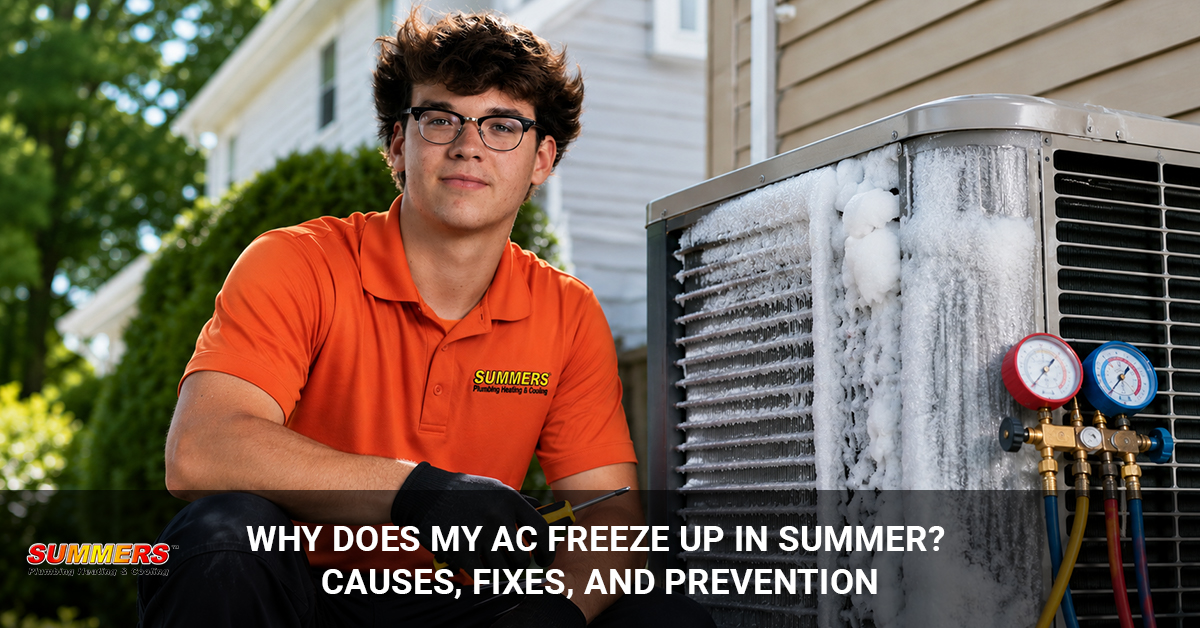
If your AC freezes up in summer, it’s a sign that something is preventing the system from working properly. The most common causes are restricted airflow, a dirty air filter, or low refrigerant. As the evaporator coil gets too cold, moisture in the air freezes into ice, reducing your AC’s ability to cool your home.
Even though it may seem strange, an air conditioner should never freeze, no matter how hot it is outside. Ice on the evaporator coil, refrigerant lines, or outdoor unit means the system needs attention. If you continue running a frozen AC, the ice will keep building up, airflow will become more restricted, and the problem can eventually damage the compressor.
The good news is that not every frozen AC requires an expensive repair. In many cases, replacing a dirty air filter or restoring proper airflow solves the problem. However, if your air conditioner keeps freezing after it has thawed, you could have a refrigerant leak or another issue that requires professional repair.
In this guide, you’ll learn why your AC freezes up during summer, the most common causes, how to safely thaw the system, what you can troubleshoot yourself, and when it’s time to call an HVAC technician.
Why Does an AC Freeze Up in Summer?
An AC freezes up in summer because the evaporator coil becomes too cold, causing moisture in the air to freeze into ice. In most cases, this happens because of restricted airflow or low refrigerant levels.
Your air conditioner cools your home by absorbing heat from the indoor air. As warm air passes over the evaporator coil, it keeps the coil at the proper temperature while allowing the refrigerant to remove heat efficiently.
When there’s not enough airflow or the refrigerant level is too low, the evaporator coil gets colder than it should. Instead of moisture draining away as water, it freezes on the coil. As the system continues to run, more ice forms and covers the coil.
The thicker the ice becomes, the less airflow your AC can move through the system. This creates a cycle where the coil gets even colder, more ice forms, and your air conditioner struggles to cool your home.
If you ignore a frozen AC, you’ll likely notice weaker airflow, warm air from the vents, longer cooling cycles, and higher energy bills. In some cases, continuing to run the system can overwork the compressor and lead to a much more expensive repair.
Signs Your AC Is Frozen
A frozen air conditioner usually shows several warning signs before it stops cooling your home completely. Spotting these symptoms early can help you fix the problem before it leads to costly repairs or compressor damage.
Ice on the Refrigerant Lines
Ice on the refrigerant lines is one of the clearest signs that your AC is frozen. Check the copper lines connected to your outdoor unit. They should feel cool during normal operation, but they should never be covered with frost or ice.
Ice on the Indoor Evaporator Coil
Ice on the evaporator coil means your air conditioner can’t absorb heat properly. If you open the access panel on your indoor air handler, you may see frost or a thick layer of ice covering the coil.
As more ice forms, the system becomes less efficient and struggles to cool your home.
Warm Air Coming From the Vents
Warm air from the vents is another common sign of a frozen AC. Even though the system is running, the ice prevents the evaporator coil from removing heat, so the air coming from your vents may feel warm or only slightly cool. If your system is blowing warm air instead of cooling your home, our guide on AC running but not cooling explains other common causes and the troubleshooting steps you can take.
Weak Airflow
A frozen evaporator coil blocks airflow through your HVAC system. You may notice that much less air is coming from your vents, even though the indoor blower is still running.
Water Leaking Around the Indoor Unit
Water leaking around the indoor unit often appears after the ice begins to melt. As the frozen coil thaws, the drain pan may overflow if it can’t handle the extra water.
If you notice water around your air handler, check for other signs of a frozen coil.
Your AC Runs Constantly
A frozen air conditioner has to work much harder to cool your home. Because it isn’t cooling efficiently, the thermostat keeps calling for cooling, causing the system to run longer than normal.
Higher Energy Bills
Higher energy bills can be another sign that your AC is freezing up. Since the system runs longer while producing less cooling, it uses more electricity. If your utility bill suddenly increases during the summer without a change in your usage, a frozen air conditioner could be one of the causes.
Common Reasons Your AC Freezes Up
Your AC usually freezes up because of restricted airflow or a problem with the refrigerant system. Some causes are simple to fix, while others require professional repairs. Identifying the cause early can help prevent compressor damage and restore your system’s cooling performance.
Here are the most common reasons an air conditioner freezes during the summer.
1. Dirty Air Filter
A dirty air filter is the most common cause of a frozen air conditioner. When the filter becomes clogged with dust, dirt, and other debris, it restricts the airflow your system needs to keep the evaporator coil at the proper temperature.
With less warm air flowing over the coil, the temperature drops below freezing. Moisture in the air then freezes on the coil, and the layer of ice continues to grow as the system runs.
Signs of a Dirty Air Filter
- Weak airflow from the vents
- Ice on the evaporator coil
- Warm or reduced cooling
- Longer cooling cycles
- Higher energy bills
Replacing your air filter is one of the easiest and least expensive ways to prevent your AC from freezing.
For most homes, replacing the filter every one to three months keeps airflow at the proper level. If you have pets, allergies, or live in a dusty area, you may need to replace it more often.
2. Blocked or Closed Air Vents
Blocked or closed air vents can also cause your AC to freeze by restricting airflow through the system. Your air conditioner is designed to move a specific amount of air throughout your home. When that airflow is reduced, the evaporator coil can become too cold and freeze.
Even closing several supply vents to redirect airflow can create problems. Furniture, curtains, rugs, and other household items can also block airflow without you realizing it.
Common Airflow Restrictions
- Closed supply vents
- Furniture placed over floor vents
- Curtains covering wall vents
- Dirty return air grilles
- Blocked return vents
Walk through your home and make sure all supply and return vents are fully open and free from obstructions. Maintaining good airflow helps your air conditioner cool more efficiently and reduces the risk of the evaporator coil freezing.
3. Dirty Evaporator Coil
A dirty evaporator coil can cause your AC to freeze because it can’t absorb heat efficiently. As dust, dirt, pet hair, and other debris build up on the coil, they create a barrier that prevents heat from transferring properly.
Without enough heat moving across the coil, its temperature drops below freezing. Moisture in the air then freezes on the coil, and the ice continues to build while the system runs.
Signs of a Dirty Evaporator Coil
- Reduced cooling performance
- Weak airflow from the vents
- Ice on the evaporator coil
- Higher energy bills
- Longer cooling cycles
A dirty evaporator coil is usually hidden inside your indoor air handler, making it difficult to inspect and clean without the proper tools. Unlike replacing an air filter, evaporator coil cleaning typically requires removing access panels and using specialized coil cleaners. For the best results and to avoid damaging the coil, this job is usually best left to an HVAC professional.
4. Low Refrigerant Due to a Leak
Low refrigerant is one of the most common causes of a frozen air conditioner. If your AC doesn’t have enough refrigerant, the pressure inside the system drops, causing the evaporator coil to become colder than it should.
As warm indoor air passes over the coil, moisture freezes into ice instead of draining away as water. The longer the system runs, the more ice builds up.
Your air conditioner is a sealed system, so refrigerant isn’t used up during normal operation. If the refrigerant level is low, it almost always means there’s a leak that needs to be repaired.
Signs of Low Refrigerant
- Ice on the evaporator coil or refrigerant lines
- Hissing or bubbling sounds
- Warm air coming from the vents
- Longer cooling cycles
- Higher energy bills
- Reduced cooling performance
Running an air conditioner with low refrigerant puts extra strain on the compressor, increasing the risk of a costly breakdown. That’s why it’s important to repair the leak instead of simply adding more refrigerant.
Because refrigerant is regulated and requires specialized equipment to handle safely, homeowners should never attempt to recharge an AC system themselves. If you suspect a refrigerant leak, our AC repair in Bloomington, IN team can locate the source of the leak, repair it, recharge the system correctly, and restore reliable cooling.
5. Dirty Condenser Coils
Dirty condenser coils can reduce your AC’s efficiency and increase the risk of the evaporator coil freezing. The condenser coil, located in the outdoor unit, releases the heat your air conditioner removes from inside your home. When it’s covered with dirt, leaves, grass clippings, or other debris, it can’t release heat efficiently.
As heat builds up inside the system, the refrigerant cycle is disrupted, making it harder for your AC to cool properly. Over time, this can contribute to ice forming on the evaporator coil.
Signs of Dirty Condenser Coils
- Reduced cooling performance
- Longer cooling cycles
- Higher energy bills
- The outdoor unit feels unusually hot
- Ice forming on the indoor evaporator coil
Keeping the outdoor unit clean is a simple way to improve your AC’s performance. Regularly remove leaves, dirt, and other debris, and keep at least two feet of clear space around the condenser to allow proper airflow.
6. Blower Fan Problems
A blower fan problem can cause your AC to freeze by reducing the amount of warm air flowing over the evaporator coil. The blower fan is responsible for circulating indoor air through your HVAC system. If it isn’t working properly, the coil can become too cold and freeze.
Several issues can affect blower fan performance, including:
- A failing blower motor
- A bad blower capacitor
- Loose or worn fan belts on older systems
- A dirty blower wheel
Signs of a Blower Fan Problem
- Weak airflow from the vents
- Uneven cooling throughout your home
- Unusual noises from the indoor unit
- Ice forming on the evaporator coil
Because blower fan problems often involve electrical components, they’re not usually DIY repairs. An HVAC technician can inspect the blower assembly, identify the faulty part, and restore proper airflow to help prevent your AC from freezing again.
7. A Faulty Thermostat
A faulty thermostat can cause your AC to run longer than it should, increasing the risk of the evaporator coil freezing. If the thermostat doesn’t accurately detect your home’s temperature or doesn’t communicate properly with the air conditioner, the system may continue cooling even after your home reaches the desired temperature.
Over time, the extra runtime can cause the evaporator coil to become too cold and develop ice.
Signs of a Faulty Thermostat
- The AC runs continuously
- The indoor temperature doesn’t match the thermostat setting
- Short or unusually long cooling cycles
- Uneven temperatures throughout the home
Before assuming the thermostat has failed, make sure it’s set to Cool mode and that the temperature is set correctly. If the settings are correct but the problem continues, an HVAC technician can test the thermostat, wiring, and sensors to determine whether they need to be repaired or replaced.
8. A Clogged Condensate Drain
A clogged condensate drain doesn’t always cause your AC to freeze, but it can create moisture problems that affect your system’s performance. As your air conditioner removes humidity from the air, the water drains through the condensate line.
If the drain line becomes clogged with algae, dirt, mold, or debris, water can back up inside the system. Some modern air conditioners have a safety switch that shuts the unit off when this happens, while others may develop excess moisture around the evaporator coil.
Signs of a Clogged Condensate Drain
- Water is leaking around the indoor unit
- A full or overflowing drain pan
- Musty odors near the air handler
- Frequent system shutdowns
- High indoor humidity
Regular AC maintenance includes cleaning the condensate drain line, which helps prevent clogs and reduces the risk of water damage and other moisture-related issues.
9. Running Your AC During Cool Nights
Running your AC during cool summer nights can sometimes cause the evaporator coil to freeze. Most residential air conditioners are designed to operate when the outdoor temperature is above 60°F (16°C).
When outdoor temperatures drop below that level, the refrigerant pressure inside the system can become too low. This allows the evaporator coil to get colder than normal, causing moisture to freeze into ice.
This issue is more likely to occur if you set the thermostat very low overnight or continue running the AC when outdoor temperatures are already comfortable.
If you frequently need cooling during cooler weather, ask an HVAC professional whether your system can be equipped with a low-ambient temperature control kit. This accessory helps the air conditioner operate more efficiently when outdoor temperatures are lower than normal.
What Should You Do If Your AC Freezes Up?
If your AC freezes up, turn off the cooling immediately and let the ice melt completely before restarting the system. Continuing to run a frozen air conditioner can damage the compressor and lead to more expensive repairs.
Follow these steps if you notice ice on your AC.
Turn Off the Cooling
The first thing you should do is switch your thermostat from Cool to Off.
This stops the air conditioner from producing more ice and helps prevent additional strain on the system.
Turn the Fan to ON
Set the thermostat fan to ON instead of Auto.
Running only the blower circulates room-temperature air over the evaporator coil, helping the ice melt faster without creating more ice.
Let the Ice Melt Completely
Wait until all of the ice has melted before turning the cooling back on.
Depending on how much ice has built up, this can take anywhere from a few hours to 24 hours. Restarting the AC too soon can cause the coil to freeze again.
Replace the Air Filter
Check your air filter once the system has thawed.
If it’s dirty or clogged, replace it before restarting the air conditioner. A clean filter improves airflow and may solve the problem if restricted airflow was the cause.
Check Supply and Return Vents
Walk through your home and make sure all supply and return vents are fully open.
Remove any furniture, rugs, curtains, or other objects blocking airflow. Good airflow is essential for keeping the evaporator coil at the proper temperature.
Inspect the Outdoor Unit
Take a quick look at the outdoor condenser and remove any leaves, grass clippings, dirt, or debris around the unit.
Keeping the condenser clean helps your air conditioner release heat more efficiently and reduces unnecessary strain on the system.
Call an HVAC Technician if the Ice Returns
If your AC freezes again after you’ve thawed it and replaced the air filter, the problem is likely more serious than restricted airflow.
Low refrigerant, a blower fan problem, dirty coils, or another mechanical issue may be causing the system to freeze repeatedly. An HVAC technician can diagnose the root cause and make the necessary repairs.
If your air conditioner keeps freezing, don’t ignore it. Addressing the problem early can help prevent compressor damage and avoid more expensive repairs later.
What Not to Do
If your AC freezes up, avoid trying quick fixes that can make the problem worse. Using the wrong approach can damage important components, increase repair costs, and even shorten the lifespan of your air conditioner.
Here are the most common mistakes to avoid.
Don’t Chip Away the Ice
Never use a screwdriver, knife, or any other sharp object to remove ice from the evaporator coil.
The coil’s aluminum fins and refrigerant lines are thin and can be bent or punctured easily. Even a small amount of damage can lead to expensive repairs or a refrigerant leak.
Don’t Pour Hot Water on the Coil
It may be tempting to melt the ice quickly with hot water, but sudden temperature changes can damage sensitive AC components.
Instead, let the ice melt naturally by turning off the cooling and setting the thermostat fan to ON.
Don’t Keep Running the AC
Running your air conditioner while it’s frozen won’t solve the problem. In fact, it usually makes the ice thicker and forces the compressor to work much harder.
Turn the cooling off immediately and wait until the entire system has thawed before restarting it.
Don’t Ignore Repeated Freezing
If your AC freezes more than once, there’s almost always an underlying problem that needs professional attention.
Repeated freezing may be caused by low refrigerant, restricted airflow, dirty coils, or a failing blower motor. Ignoring these issues can reduce your system’s efficiency, increase energy bills, and eventually lead to compressor failure.
If the ice returns after you’ve thawed the system, schedule an inspection with a qualified HVAC technician as soon as possible.
How HVAC Technicians Diagnose a Frozen AC
An HVAC technician uses specialized tools and tests to find the exact reason your air conditioner is freezing. Instead of replacing parts based on guesswork, they identify the root cause so the correct repair is made the first time.
A professional inspection typically includes the following checks.
Airflow Inspection
The technician starts by checking whether enough air is moving through the system. They inspect the air filter, blower fan, ductwork, and supply and return vents for anything that could restrict airflow.
Poor airflow is one of the most common reasons an evaporator coil freezes.
Refrigerant Pressure Testing
The technician uses pressure gauges to measure the refrigerant levels in your air conditioning system.
If the pressure is lower than the manufacturer’s recommended range, it usually indicates a refrigerant leak or another problem affecting the refrigeration cycle.
Leak Detection
If low refrigerant is suspected, the next step is locating the leak.
The technician uses specialized leak detection equipment to find the source before adding refrigerant. Simply recharging the system without repairing the leak is only a temporary fix, and the problem will eventually return.
Blower Motor Testing
The blower motor and its electrical components are tested to make sure they’re moving enough air across the evaporator coil.
The technician may also inspect the blower capacitor and blower wheel to ensure they’re operating properly.
Evaporator Coil Inspection
The evaporator coil is checked for dirt, dust buildup, corrosion, and ice damage.
A dirty or damaged coil can’t absorb heat efficiently, making it much more likely to freeze during normal operation.
Thermostat Testing
The thermostat is tested to make sure it’s accurately reading the indoor temperature and communicating correctly with the air conditioner.
If the thermostat isn’t cycling the system properly, it can cause the AC to run longer than necessary and increase the risk of freezing.
Temperature Difference Measurement
The technician measures the temperature of the air entering and leaving the system, often called the temperature split.
These readings help confirm whether the air conditioner is cooling efficiently or if another issue is affecting system performance.
A complete diagnosis identifies the real cause of the problem, prevents unnecessary part replacements, and helps ensure your air conditioner operates reliably throughout the cooling season.
How Much Does It Cost to Fix a Frozen AC?
The cost to fix a frozen AC depends on what’s causing the problem. A simple repair, like replacing a dirty air filter, is inexpensive. More serious issues, such as repairing a refrigerant leak or replacing an evaporator coil, can cost much more.
Here’s a general breakdown of common repair costs.
| Repair | Typical Cost |
| Air Filter Replacement | $20–$100 |
| Evaporator Coil Cleaning | $150–$500 |
| Blower Motor Repair | $300–$900 |
| Refrigerant Leak Detection & Repair | $300–$1,500+ |
| Refrigerant Recharge | $200–$700 |
| Thermostat Replacement | $150–$600 |
| Evaporator Coil Replacement | $900–$2,500+ |
Note: These are average price ranges. Your actual repair cost will depend on your location, the size and age of your air conditioning system, the equipment brand, the type of refrigerant it uses, warranty coverage, and local labor rates.
If your AC freezes only because of a dirty air filter or blocked airflow, the repair is often quick and affordable. However, if the problem is caused by a refrigerant leak, a failing blower motor, or a damaged evaporator coil, the repair will usually be more expensive.
If your air conditioner keeps freezing after you’ve thawed it, don’t continue restarting the system. Repeated freezing is a sign of an underlying problem that won’t go away on its own. Having an HVAC technician diagnose the issue early can help prevent compressor damage and save you money on future repairs.
For a more detailed breakdown of local pricing, see our guide to AC repair cost in Bloomington, Indiana, which covers common repairs and the factors that affect pricing.
Can You Prevent Your AC from Freezing?
Yes. Regular maintenance and proper airflow can prevent many of the issues that cause an air conditioner to freeze. A few simple habits can improve your AC’s performance, reduce repair costs, and help keep your home comfortable all summer long.
Replace Air Filters Regularly
Replacing your air filter is one of the easiest ways to prevent a frozen AC. A clean filter allows enough air to flow across the evaporator coil, helping it stay at the proper temperature.
Most homeowners should replace the air filter every one to three months. If you have pets, allergies, or live in a dusty environment, you may need to replace it more often.
Keep Supply and Return Vents Open
Your air conditioner needs unrestricted airflow to cool your home efficiently.
Avoid closing supply vents or blocking them with furniture, rugs, or curtains. Also, make sure return vents are clean and free of obstructions so air can circulate properly throughout the system.
Schedule Annual AC Maintenance
Professional maintenance helps catch small problems before they turn into expensive repairs.
During an annual tune-up, an HVAC technician will inspect electrical components, clean the evaporator and condenser coils, check refrigerant levels, test system performance, and make sure your air conditioner is operating efficiently.
Preparing your cooling system before peak summer temperatures is one of the best ways to prevent frozen coils. Our HVAC summer prep guide explains the maintenance steps that help keep your air conditioner running efficiently.
Keep the Outdoor Unit Clean
The outdoor condenser needs plenty of airflow to release heat effectively.
Remove leaves, dirt, grass clippings, and other debris from around the unit, and maintain at least two feet of clear space on all sides. Keeping the condenser clean helps your AC cool more efficiently and reduces strain on the compressor.
Keep the refrigerant at the Correct Level
Your AC is a sealed system, so refrigerant levels should remain constant during normal operation.
If an HVAC technician finds that your system is low on refrigerant, don’t simply refill it. Have the leak repaired first. Fixing the source of the leak prevents the problem from returning and protects your compressor from unnecessary wear.
Address Airflow Problems Early
Weak airflow is one of the leading causes of a frozen evaporator coil.
If you notice reduced airflow, uneven cooling, or unusual noises, don’t wait for the problem to get worse. Having your system inspected early can prevent more serious damage and costly repairs.
Monitor Cooling Performance
Pay attention to how your air conditioner performs throughout the summer.
If your home takes longer than usual to cool, your energy bills increase unexpectedly, or you notice weaker airflow, schedule an inspection. Catching small issues early can prevent frozen coils, improve energy efficiency, and extend the lifespan of your air conditioning system.
Frequently Asked Questions
Why does my AC freeze up when it’s 90°F outside?
Your AC can freeze even when it’s 90°F outside because the problem is usually inside the system, not the outdoor temperature. Restricted airflow, low refrigerant, a dirty air filter, blocked vents, or a dirty evaporator coil can cause the evaporator coil to become too cold and freeze.
Should I turn my AC off if it’s frozen?
Yes. Turn your thermostat from Cool to Off as soon as you notice ice on your air conditioner. Then switch the fan to ON to help melt the ice. Running a frozen AC can damage the compressor and lead to more expensive repairs.
Can a dirty air filter cause an AC to freeze?
Yes. A dirty air filter is one of the most common causes of a frozen air conditioner. When the filter restricts airflow, the evaporator coil gets too cold, causing moisture in the air to freeze into ice.
How long does it take for a frozen AC to thaw?
Most frozen air conditioners take several hours to 24 hours to thaw completely. The exact time depends on how much ice has built up and whether you leave the blower fan running to speed up the melting process.
Can I run the fan while my AC is frozen?
Yes. Setting the thermostat fan to ON is the recommended way to thaw a frozen AC. The fan circulates room-temperature air over the evaporator coil, helping the ice melt faster without creating additional ice.
Will low refrigerant always cause ice?
No. While low refrigerant is a common cause of a frozen evaporator coil, it isn’t the only one. Restricted airflow, a dirty air filter, blocked vents, blower fan problems, dirty coils, and thermostat issues can also cause your AC to freeze.
Is a frozen AC dangerous?
A frozen air conditioner isn’t usually dangerous, but it shouldn’t be ignored. Continuing to run the system while it’s frozen can damage the compressor, reduce energy efficiency, and lead to more expensive repairs.
Can I fix a frozen AC myself?
You can safely thaw the ice, replace a dirty air filter, and check that your vents are open and unobstructed. However, if your AC continues to freeze or the problem is caused by low refrigerant, electrical issues, or a failing component, it’s best to contact a licensed HVAC technician for diagnosis and repair.
Final Thoughts
If your AC freezes up in summer, don’t ignore it. Ice on your air conditioner is a warning sign that the system isn’t operating properly. While the problem may be something simple, like a dirty air filter or blocked airflow, it can also point to a refrigerant leak, a faulty blower fan, or another issue that needs professional repair.
The first step is to turn off the cooling and allow the ice to melt completely. After the system has thawed, replace the air filter if needed, check that all supply and return vents are open, and clear any debris from around the outdoor unit.
If your air conditioner freezes again after restarting it, don’t keep running it. Repeated freezing usually means there’s an underlying problem that won’t go away on its own. Having an HVAC technician inspect the system early can prevent compressor damage, reduce repair costs, improve energy efficiency, and keep your home cool and comfortable throughout the summer.