
High-Efficiency Furnace vs Standard Furnace: Which One Should You Choose?
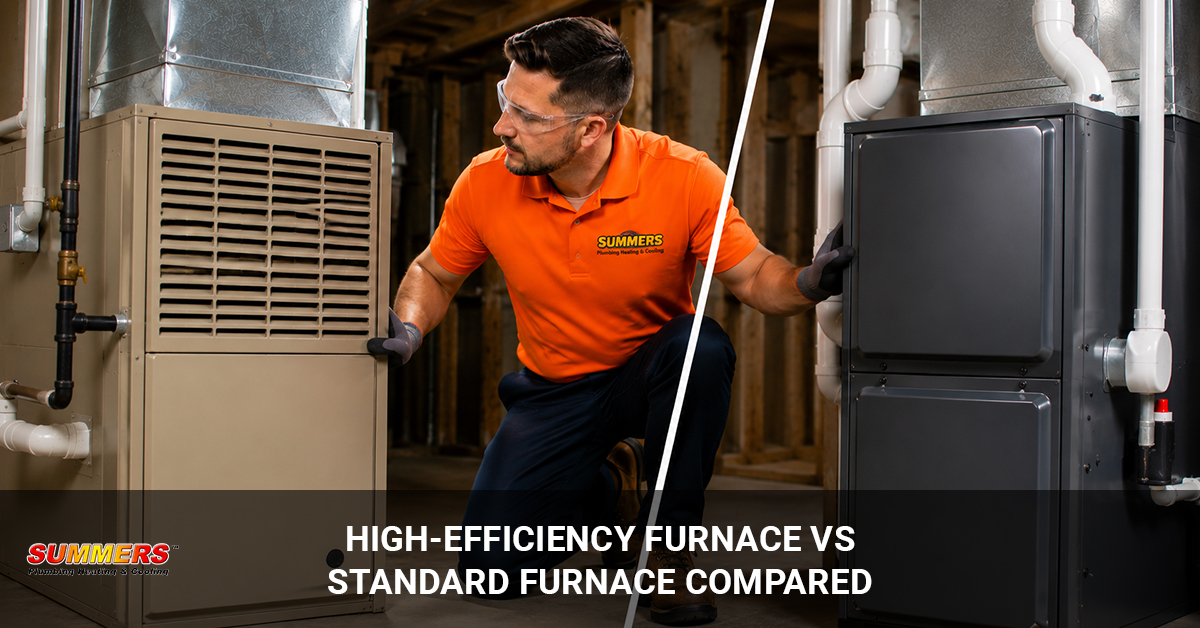
A high-efficiency furnace is the better choice if you want lower heating bills, better energy efficiency, and long-term savings, while a standard furnace is a good option if keeping the upfront cost low is your main priority.
Choosing a new furnace isn’t just about staying warm. The type of furnace you install affects your monthly energy bills, indoor comfort, maintenance costs, and how much you’ll spend over the life of the system.
The biggest difference comes down to efficiency. A high-efficiency furnace captures more heat from the fuel it burns, so less energy is wasted. A standard furnace loses more heat through the exhaust, which means it uses more fuel to produce the same amount of warmth.
Your best choice depends on your home, local climate, budget, and how long you plan to stay in the house. If you live in a cold area and expect to own your home for many years, a high-efficiency furnace can often pay for itself through lower utility bills. If you live in a milder climate or need a lower-cost replacement, a standard furnace may be the better fit.
This guide compares high-efficiency and standard furnaces side by side, including how they work, AFUE ratings, installation costs, energy savings, maintenance requirements, and the pros and cons of each. By the end, you’ll have the information you need to choose the furnace that offers the best value for your home.
High-Efficiency Furnace vs Standard Furnace: Quick Answer
A high-efficiency furnace has an AFUE rating of 90% to 98.5%, meaning it converts most of the fuel it burns into usable heat. A standard furnace typically has an AFUE rating of 80% to 89%, so it wastes more heat through the exhaust system.
If you want to lower your heating bills and improve energy efficiency, a high-efficiency furnace is usually the better long-term investment. Although it costs more to purchase and install, it uses less fuel and provides more consistent indoor comfort. A standard furnace costs less upfront and can be a practical choice for homeowners in milder climates or those with a limited budget.
For most homeowners who plan to stay in their home for several years, a high-efficiency furnace offers better long-term value through lower operating costs and greater energy savings.
What Is a High-Efficiency Furnace?
A high-efficiency furnace is a heating system with an Annual Fuel Utilization Efficiency (AFUE) rating of 90% or higher, meaning it converts at least 90% of the fuel it burns into usable heat. Many of today’s top models achieve 95% to 98.5% AFUE, making them much more efficient than standard furnaces.
The main difference is how the furnace handles heat. Instead of letting hot exhaust gases escape through the vent, a high-efficiency furnace captures much of that remaining heat and uses it to warm your home. This process reduces fuel waste, lowers energy bills, and helps maintain a more comfortable indoor temperature.
If you’re replacing an older furnace or looking to reduce heating costs, a high-efficiency model can be a smart long-term investment, especially in areas with cold winters.
How Does a High-Efficiency Furnace Work?
A high-efficiency furnace works by extracting as much heat as possible from the fuel it burns before the exhaust leaves the system.
Here’s how the process works:
- Natural gas or propane burns inside the primary heat exchanger.
- The heat produced warms the air that is distributed throughout your home.
- Instead of releasing the hot exhaust immediately, the furnace sends it through a secondary heat exchanger.
- The secondary heat exchanger captures additional heat that would otherwise be wasted.
- After most of the heat has been removed, the cooler exhaust gases are safely vented outside through PVC pipes.
By recovering extra heat from the exhaust, a high-efficiency furnace uses less fuel to produce the same amount of warmth as a standard furnace.
Main Features of a High-Efficiency Furnace
High-efficiency furnaces include several advanced features that improve performance and reduce energy waste.
Common features include:
- AFUE rating of 90% to 98.5%
- Secondary heat exchanger that captures additional heat from exhaust gases
- Sealed combustion system that improves safety and efficiency
- PVC intake and exhaust vent pipes instead of a traditional metal flue
- Variable-speed blower motor on many models for quieter, more consistent airflow
- Two-stage or modulating gas valve that adjusts heat output based on your home’s heating needs
- Lower fuel consumption and greenhouse gas emissions
These features help deliver steady, even heating while using less energy.
Benefits of a High-Efficiency Furnace
A high-efficiency furnace offers more than just lower utility bills. It can improve comfort, reduce energy use, and provide better long-term value for many homeowners.
Some of the biggest benefits include:
- Lower monthly heating costs by using less fuel
- Higher energy efficiency with less wasted heat
- More consistent indoor temperatures throughout the home
- Quieter operation, especially on models with variable-speed blowers
- Reduced greenhouse gas emissions compared to standard furnaces
- Potential rebates or tax incentives for qualifying energy-efficient systems
- Long-term savings that can help offset the higher installation cost
Although a high-efficiency furnace costs more upfront, the lower operating costs often make it the better value for homeowners who expect to stay in their home for several years, particularly in colder climates where the heating system runs frequently.
What Is a Standard Furnace?
A standard furnace, also called a non-condensing furnace, is a heating system with an AFUE rating of 80% to 89%. It provides reliable heat at a lower upfront cost than a high-efficiency furnace, making it a popular choice for many homeowners.
Standard furnaces have been used in homes for decades because they’re dependable, simpler to install, and generally cost less to purchase. However, they aren’t as energy efficient because more heat escapes through the exhaust instead of being used to warm your home.
If you live in a mild climate or want to keep installation costs down, a standard furnace may still be a practical option.
How Does a Standard Furnace Work?
A standard furnace heats your home by burning fuel and transferring the heat through a single heat exchanger.
Here’s how it works:
- Natural gas or propane burns inside the combustion chamber.
- The heat passes through a single heat exchanger.
- A blower pushes the warmed air through your ductwork and into each room.
- The remaining hot exhaust gases are released through a metal flue or chimney.
Because the exhaust gases leave the furnace while they’re still very hot, a portion of the heat is lost instead of being used inside your home. This is the main reason standard furnaces have lower AFUE ratings than high-efficiency models.
Main Features of a Standard Furnace
Standard furnaces have a simpler design than high-efficiency models, which can make installation and repairs easier.
Common features include:
- AFUE rating of 80% to 89%
- Single heat exchanger
- Metal vent or chimney for exhaust gases
- Non-condensing design
- Simpler internal components
- Lower equipment and installation costs
- Compatible with many existing heating systems
Although they don’t recover as much heat from the combustion process, standard furnaces can still provide dependable and consistent heating when properly maintained.
Benefits of a Standard Furnace
A standard furnace remains a good choice for homeowners who want reliable heating without the higher upfront cost of a high-efficiency model.
Some of the main benefits include:
- Lower purchase and installation costs
- Simpler maintenance and repairs
- Lower replacement part costs
- Reliable, proven heating technology
- Easier installation in homes with existing metal venting
- A practical option for warmer climates with shorter heating seasons
For homeowners who don’t use their heating system for long periods each winter, the lower upfront cost of a standard furnace may outweigh the potential energy savings of a high-efficiency model. However, if you expect high heating demand or plan to stay in your home for many years, it’s worth comparing the long-term operating costs of both options before making a decision.
High-Efficiency Furnace vs Standard Furnace: Side-by-Side Comparison
A high-efficiency furnace uses less fuel, lowers heating costs, and delivers better long-term energy savings, while a standard furnace costs less to install and can be a practical choice for homes in milder climates.
The table below compares the key differences to help you decide which furnace best fits your home and budget.
| Feature | High-Efficiency Furnace | Standard Furnace |
| AFUE Rating | 90%–98.5% | 80%–89% |
| Fuel Efficiency | Excellent | Moderate |
| Heat Exchangers | Dual heat exchangers | Single heat exchanger |
| Installation Cost | Higher | Lower |
| Operating Cost | Lower | Higher |
| Monthly Energy Bills | Lower | Higher |
| Venting System | PVC intake and exhaust pipes | Metal flue or chimney |
| Indoor Comfort | More consistent temperatures with fewer hot and cold spots | Reliable heating with greater temperature fluctuations |
| Blower Motor | Often variable-speed | Usually single-speed or multi-speed |
| Environmental Impact | Lower fuel consumption and emissions | Higher fuel consumption and emissions |
| Maintenance | A more advanced system with additional components | Simpler design with fewer components |
| Best For | Cold climates, long-term homeowners, and maximum energy savings | Mild climates, tighter budgets, and lower upfront costs |
Which Furnace Is the Better Choice?
For most homeowners, the best furnace depends on your climate, budget, and long-term plans.
Choose a high-efficiency furnace if you:
- Want to reduce monthly heating bills
- Live in an area with long, cold winters
- Plan to stay in your home for many years
- Want better indoor comfort and energy efficiency
Choose a standard furnace if you:
- Need a lower upfront installation cost
- Live in a region with mild winters
- Don’t use your heating system often
- Want a simpler heating system with lower repair costs
While a standard furnace costs less initially, a high-efficiency furnace often delivers greater value over its lifetime by reducing fuel consumption and lowering energy costs. Considering both the upfront investment and long-term operating expenses will help you choose the furnace that best meets your needs.
Understanding AFUE Ratings
AFUE (Annual Fuel Utilization Efficiency) measures how efficiently a furnace converts fuel into usable heat over an entire heating season. The higher the AFUE rating, the more heat your furnace produces from every dollar you spend on fuel.
When comparing a high-efficiency furnace and a standard furnace, the AFUE rating is one of the most important numbers to consider because it directly affects your energy bills and long-term operating costs.
How AFUE Works
AFUE is expressed as a percentage. It shows how much of the fuel a furnace uses actually heats your home and how much is lost through the exhaust.
Here’s a simple way to understand it:
| AFUE Rating | Heat Delivered to Your Home | Heat Lost Through Exhaust |
| 80% AFUE | 80% | 20% |
| 90% AFUE | 90% | 10% |
| 95% AFUE | 95% | 5% |
| 98% AFUE | 98% | 2% |
For example, if a furnace has an 80% AFUE rating, about 80 cents of every dollar you spend on fuel heats your home, while the remaining 20 cents is lost through the exhaust system. By comparison, a 95% AFUE furnace wastes only about 5 cents per dollar, making much better use of the fuel it burns.
Although the percentage difference may seem small, it can lead to noticeable savings over the life of the furnace, especially in colder climates where the heating system runs frequently.
Why AFUE Ratings Matter
A higher AFUE rating means your furnace uses fuel more efficiently, but the benefits go beyond lower energy consumption.
Choosing a furnace with a higher AFUE rating can help you:
- Reduce monthly heating bills by using less fuel
- Lower annual energy consumption, especially during long heating seasons
- Maintain more consistent indoor temperatures
- Reduce greenhouse gas emissions by improving fuel efficiency
- Increase long-term savings, which can help offset the higher purchase price of a high-efficiency furnace
- Protect against rising energy costs by reducing overall fuel usage
While AFUE is an important factor, it shouldn’t be the only one you consider. Your local climate, home insulation, furnace size, installation quality, and maintenance all affect how efficiently your heating system performs.
If you’re replacing an older furnace, comparing AFUE ratings is one of the easiest ways to estimate potential energy savings and determine whether investing in a high-efficiency furnace makes financial sense for your home.
High-Efficiency Furnace Pros and Cons
A high-efficiency furnace offers lower energy bills, better comfort, and greater long-term savings, but it also costs more to purchase and install. Weighing the pros and cons can help you decide whether the extra investment is worth it for your home.
Advantages of a High-Efficiency Furnace
Lower Energy Bills
One of the biggest benefits of a high-efficiency furnace is its ability to reduce heating costs.
With an AFUE rating of 90% or higher, these furnaces convert more fuel into usable heat and waste less energy through the exhaust. Because they use fuel more efficiently, you’ll typically spend less on monthly heating bills, especially if you live in a colder climate where the furnace runs often.
Better Indoor Comfort
High-efficiency furnaces don’t just save energy; they also provide more consistent comfort.
Many models include variable-speed blower motors and two-stage or modulating gas valves that automatically adjust heat output based on your home’s heating needs. Instead of repeatedly turning on and off at full capacity, the furnace operates more steadily, helping maintain a consistent indoor temperature.
Benefits include:
- More even temperatures throughout your home
- Fewer hot and cold spots
- Quieter operation
- Better humidity control during the heating season
Reduced Environmental Impact
Using less fuel also means producing fewer greenhouse gas emissions.
If reducing your home’s energy consumption is a priority, upgrading to a high-efficiency furnace can lower your environmental impact while still keeping your home comfortable.
Potential Rebates and Tax Incentives
Many utility companies and government energy-efficiency programs offer rebates or tax incentives for qualifying high-efficiency furnaces.
These programs can lower your upfront installation cost, making the investment more affordable. Check with your local utility provider or HVAC contractor to see what incentives are available in your area.
Long-Term Savings
Although a high-efficiency furnace costs more initially, the lower operating costs can offset that investment over time.
Homeowners who expect to stay in their home for several years often see the greatest return, as ongoing energy savings continue year after year.
Disadvantages of a High-Efficiency Furnace
Higher Purchase and Installation Cost
The biggest drawback is the higher upfront price.
High-efficiency furnaces use advanced technology that increases equipment and installation costs, including:
- Secondary heat exchangers
- Variable-speed blower motors
- Condensing technology
- Advanced electronic controls
Installation may also require new PVC vent pipes, a condensate drain, or other upgrades that add to the total project cost.
More Complex Repairs
Because these furnaces have more advanced components, repairs can sometimes be more expensive than those for standard furnaces.
However, regular professional maintenance can help keep the system running efficiently and reduce the likelihood of unexpected repairs.
Condensate Drain Maintenance
Unlike standard furnaces, high-efficiency models produce condensation as they recover heat from the exhaust gases.
The condensate drain should be inspected and kept clear to prevent clogs, water leaks, or system shutdowns. Routine annual maintenance usually includes checking and cleaning this drain.
Is a High-Efficiency Furnace Worth the Extra Cost?
For many homeowners, the answer is yes. If you live in a colder climate, use your heating system regularly, or plan to stay in your home for many years, the lower energy bills and improved comfort can outweigh the higher upfront cost. However, if you live in a mild climate or are replacing a furnace on a limited budget, a standard furnace may offer better short-term value.
Standard Furnace Pros and Cons
A standard furnace is more affordable to buy and install, making it a popular choice for many homeowners. However, it uses more fuel than a high-efficiency furnace, which can lead to higher heating costs over time.
Understanding the advantages and disadvantages can help you decide whether a standard furnace is the right fit for your home and budget.
Advantages of a Standard Furnace
Lower Upfront Cost
The biggest advantage of a standard furnace is its lower purchase price.
Standard furnaces generally cost less to buy and install than high-efficiency models. If you’re replacing an older furnace on a limited budget, the lower upfront investment can make a standard furnace an attractive option.
Simpler Installation
Installing a standard furnace is often quicker and less expensive, especially if your home already has a metal flue or chimney.
Since these furnaces don’t require PVC venting or a condensate drain, replacing an existing standard furnace usually involves fewer modifications, helping reduce labor costs and installation time.
Easier Maintenance
Standard furnaces have a simpler design with fewer advanced components.
This can make routine maintenance and repairs easier and, in many cases, less expensive.
Benefits of the simpler design include:
- Lower repair costs
- Easier troubleshooting
- Widely available replacement parts
- Straightforward annual maintenance
Proven Reliability
Standard furnaces have been heating homes for decades and have a long track record of dependable performance.
With proper maintenance, many models last 15 to 20 years while providing reliable and consistent heat throughout the winter.
Disadvantages of a Standard Furnace
Higher Energy Bills
The biggest drawback of a standard furnace is its lower energy efficiency.
Because these systems lose more heat through the exhaust, they must burn more fuel to maintain the same indoor temperature. Over time, that can lead to noticeably higher heating bills, particularly in colder climates.
Less Consistent Comfort
Many standard furnaces use single-stage burners and fixed-speed blower motors.
These systems typically operate at full capacity whenever they run, which can result in:
- Larger temperature swings
- More frequent on-and-off cycling
- Less even heating throughout the home
- Reduced overall comfort
If your current heating system is producing uneven temperatures or blowing cold air, it may be a sign that it’s time to evaluate a more efficient furnace.
Greater Heat Loss
A standard furnace vents hot combustion gases through a metal chimney or flue before all of the available heat has been recovered.
This wasted heat is the main reason standard furnaces have lower AFUE ratings than high-efficiency models.
Higher Environmental Impact
Since standard furnaces burn more fuel to produce the same amount of heat, they also generate more greenhouse gas emissions.
If reducing energy use and environmental impact is important to you, a high-efficiency furnace is generally the better option.
Is a Standard Furnace Still a Good Choice?
Yes, a standard furnace can still be a smart choice in the right situation. If you live in a milder climate, have a limited budget, or are replacing an older furnace with minimal installation changes, a standard furnace can provide dependable heating at a lower upfront cost.
However, if you expect to stay in your home for many years or want to reduce long-term energy expenses, it’s worth comparing the lifetime operating costs of a high-efficiency furnace before making your decision.
How Much Can You Save with a High-Efficiency Furnace?
A high-efficiency furnace can save you hundreds of dollars on heating costs over its lifetime, but the exact amount depends on your home’s heating needs and local energy prices.
The biggest savings come from using less fuel to produce the same amount of heat. If you live in a colder climate where your furnace runs for several months each year, upgrading from an older 80% AFUE furnace to a 95% or higher model can noticeably reduce your annual heating bills.
Your potential savings depend on factors such as:
- Local climate
- Natural gas or propane prices
- Home size
- Insulation quality
- Furnace efficiency (AFUE rating)
- Thermostat settings
- How often do you use your heating system
In general, the more your furnace runs, the more you’ll benefit from a higher-efficiency model.
Example Annual Heating Cost Comparison
The table below shows how furnace efficiency can affect annual heating costs. These figures are examples and will vary depending on your home and local fuel prices.
| Furnace Efficiency (AFUE) | Estimated Annual Heating Cost* |
| 80% AFUE | $1,500 |
| 90% AFUE | $1,335 |
| 95% AFUE | $1,260 |
| 98% AFUE | $1,225 |
*Example only. Actual heating costs vary based on your location, fuel prices, home size, insulation, thermostat settings, and furnace usage.
Long-Term Savings
The annual savings from a high-efficiency furnace may not seem dramatic at first, but they can add up over time.
For example, if a high-efficiency furnace saves you around $200 per year on heating costs, you could save $3,000 to $4,000 or more over a typical 15- to 20-year lifespan. If energy prices increase during that time, your total savings could be even higher.
Keep in mind that energy savings alone shouldn’t determine your decision. A high-efficiency furnace can also provide more consistent comfort, lower fuel consumption, and reduced environmental impact. When combined with potential utility rebates or tax incentives, these benefits often make the higher upfront investment worthwhile for many homeowners.
High-Efficiency Furnace vs Standard Furnace Installation Costs
A standard furnace typically costs less to install than a high-efficiency furnace. While a high-efficiency model has a higher upfront cost, it can reduce heating bills over time through better energy efficiency.
The total installation cost depends on more than just the furnace itself. Your home’s size, the condition of your existing HVAC system, and any required upgrades can all affect the final price.
Average Installation Costs
The table below shows the typical installed cost for each type of furnace.
| Furnace Type | Typical Installed Cost |
| Standard Furnace | $3,000–$5,500 |
| High-Efficiency Furnace | $4,500–$8,500 |
These estimates include both the furnace and professional installation. Actual costs may vary based on your location, the furnace brand, and the complexity of the installation.
Why Does a High-Efficiency Furnace Cost More?
High-efficiency furnaces use advanced technology to recover more heat from the combustion process. They also require additional components and installation work that increase the overall project cost.
For many homeowners, however, the higher upfront investment is offset by lower monthly heating bills over the life of the furnace.
Factors That Affect Installation Costs
Several factors influence how much you’ll pay for a new furnace.
Furnace Size
A larger home needs a furnace with greater heating capacity. Higher-capacity units generally cost more to purchase and install.
Choosing the right size is important because an oversized or undersized furnace can reduce efficiency, increase energy costs, and shorten the system’s lifespan.
Home Layout
Homes with multiple stories, finished basements, or complex duct systems may require additional labor to ensure proper airflow and even heating.
Ductwork Condition
Your existing ductwork plays an important role in furnace performance.
If the ducts are leaking, damaged, undersized, or poorly insulated, repairs or replacement may be necessary before installing a new furnace.
Venting Requirements
High-efficiency furnaces use PVC intake and exhaust pipes instead of the metal flues used by standard furnaces.
If your home isn’t already set up for PVC venting, installing new vent pipes can increase labor and material costs.
Condensate Drain Installation
Because high-efficiency furnaces recover additional heat from the exhaust gases, they produce condensation during operation.
A condensate drain line is required to safely remove this moisture, which may add to the installation cost if one isn’t already in place.
Labor Rates
Labor costs vary depending on where you live and the complexity of the installation.
Factors such as local labor rates, permit requirements, and the amount of work needed to modify your existing heating system can all affect the final price.
Is the Higher Installation Cost Worth It?
For many homeowners, yes. If you live in a cold climate or plan to stay in your home for many years, the lower operating costs of a high-efficiency furnace can help offset its higher installation cost. However, if your heating needs are minimal or you’re working with a limited budget, a standard furnace may provide better short-term value.
Operating Costs: Which Furnace Costs Less to Run?
A high-efficiency furnace costs less to run than a standard furnace because it uses less fuel to produce the same amount of heat. Although the initial purchase price is higher, the lower monthly heating bills can lead to significant savings over the life of the system.
The difference comes down to efficiency. A high-efficiency furnace converts more of the fuel you pay for into usable heat, while a standard furnace loses more energy through the exhaust. As a result, high-efficiency models consume less fuel to keep your home at the same temperature.
If you use your heating system frequently, especially during long, cold winters, the lower operating costs can help offset the higher installation cost over time.
Typical Operating Cost Comparison
| Expense | High-Efficiency Furnace | Standard Furnace |
| Monthly Heating Bills | Lower | Higher |
| Fuel Consumption | Lower | Higher |
| Annual Energy Costs | Lower | Higher |
| Long-Term Savings | Greater | Limited |
Why High-Efficiency Furnaces Cost Less to Operate
A high-efficiency furnace uses advanced technology, such as a secondary heat exchanger, to recover heat that would otherwise be lost through the exhaust. This allows the system to produce more heat while using less fuel.
Lower operating costs become even more noticeable when:
- You live in a cold climate with a long heating season.
- Natural gas or propane prices are high.
- Your furnace runs daily during the winter.
- You plan to stay in your home for many years.
Should Operating Costs Influence Your Decision?
Absolutely. While installation cost is important, the total cost of owning a furnace includes both the upfront price and the ongoing cost to operate it.
If you’re planning to stay in your home for the long term, a high-efficiency furnace often provides the better overall value because the energy savings continue year after year. On the other hand, if you have a limited budget or live in a mild climate where your furnace is used less often, a standard furnace may still be a practical and cost-effective choice.
Which Furnace Is Better for Cold Climates?
A high-efficiency furnace is usually the better choice for cold climates because it uses less fuel, lowers heating costs, and provides more consistent comfort during long winters. The more you rely on your heating system, the greater the potential energy savings.
In regions where the furnace runs daily for several months, even a small improvement in efficiency can make a noticeable difference in your annual utility bills. Over time, those savings can help offset the higher purchase and installation cost of a high-efficiency furnace.
Why High-Efficiency Furnaces Perform Better in Cold Climates
High-efficiency furnaces recover more heat from the combustion process instead of letting it escape through the exhaust. This allows them to heat your home more efficiently while using less fuel.
For homeowners in colder regions, the benefits include:
- Lower heating bills throughout the winter
- Reduced fuel consumption
- More consistent indoor temperatures
- Fewer hot and cold spots
- Improved comfort during extremely cold weather
- Faster return on investment through long-term energy savings
These advantages become even more valuable in areas with long heating seasons, where the furnace operates for extended periods each day.
Is the Higher Cost Worth It?
For many homeowners in northern states and other cold-weather regions, yes. The higher upfront cost of a high-efficiency furnace is often recovered through lower energy bills over the life of the system.
If you plan to stay in your home for many years, investing in a high-efficiency furnace can provide both financial savings and improved comfort. While every home is different, colder climates generally offer the greatest return on this investment.
Which Furnace Is Better for Mild Climates?
A standard furnace is often the better value for mild climates because the lower installation cost can outweigh the smaller energy savings of a high-efficiency model. If your heating system only runs occasionally during the winter, it may take much longer to recover the higher upfront cost of a high-efficiency furnace.
In regions with shorter heating seasons, the difference in annual energy bills between the two furnace types is usually smaller than it is in colder climates. For many homeowners, that makes a standard furnace a practical and budget-friendly choice.
When a Standard Furnace Makes Sense
A standard furnace may be the better option if:
- You live in an area with mild winters.
- Your heating costs are already relatively low.
- You’re working with a limited budget.
- You plan to move within the next few years.
- Your existing home already has a compatible metal flue or chimney, reducing installation costs.
In these situations, the lower upfront investment may provide better overall value than paying more for a high-efficiency system.
When a High-Efficiency Furnace May Still Be Worth It
Even in a mild climate, a high-efficiency furnace can still be a smart investment for some homeowners.
You may want to choose a high-efficiency model if:
- Energy prices in your area are high or continue to increase.
- You plan to stay in your home for many years.
- You want to reduce your monthly utility bills as much as possible.
- Lower energy use and reduced emissions are important to you.
- You qualify for rebates or tax incentives that help offset the installation cost.
Ultimately, the best furnace depends on your budget, heating needs, and long-term plans. Comparing both the upfront installation cost and the expected lifetime operating costs will help you choose the option that provides the greatest value for your home.
Factors to Consider Before Choosing a Furnace
The best furnace for your home depends on your budget, local climate, heating needs, and long-term plans. While a high-efficiency furnace can lower energy bills, a standard furnace may offer better value if your heating demand is low or your budget is limited.
Before making your decision, consider these key factors.
Your Budget
Your budget is one of the first things to think about when replacing a furnace.
A standard furnace usually costs less to purchase and install, making it a good option if you’re trying to keep upfront expenses low. However, because it uses more fuel, you’ll likely spend more on heating bills over time.
A high-efficiency furnace requires a larger initial investment, but its lower operating costs can help reduce your total heating expenses over the life of the system.
Local Climate
Your local climate has a major impact on which furnace offers the best value.
If you live in an area with long, cold winters, a high-efficiency furnace can significantly reduce fuel consumption because it runs more efficiently during extended heating seasons.
If winters are generally mild and your furnace doesn’t run often, the energy savings may be smaller, making a standard furnace a more cost-effective choice.
Home Size
The size of your home also affects your heating costs.
Larger homes require more heat, which means the furnace operates longer to maintain a comfortable temperature. In these homes, the fuel savings from a high-efficiency furnace are often more noticeable.
Regardless of the furnace you choose, it’s important to have the system properly sized. A furnace that’s too large or too small can reduce efficiency, increase energy costs, and shorten the system’s lifespan.
Existing HVAC System
Your current HVAC system can influence both installation costs and the type of furnace that’s practical for your home.
Upgrading to a high-efficiency furnace may require:
- New PVC intake and exhaust vent pipes
- A condensate drain
- A compatible thermostat
- Minor ductwork modifications
If your home already supports these features, installing a high-efficiency furnace may be simpler and less expensive.
Energy Prices
The cost of natural gas or propane is another important factor.
When fuel prices rise, the savings from a high-efficiency furnace become even more valuable because it uses less energy to heat your home. If energy costs in your area are high or expected to increase, investing in a more efficient furnace may provide greater long-term savings.
How Long Do You Plan to Stay in Your Home?
The longer you plan to stay in your home, the more likely a high-efficiency furnace will pay for itself. Lower monthly heating bills can gradually offset the higher installation cost over the life of the system.
If you expect to live in your home for 10 years or more, a high-efficiency furnace often provides better long-term value through ongoing energy savings.
On the other hand, if you plan to move within the next few years, it may take longer to recover the additional upfront investment. In that case, a standard furnace may offer a better short-term return, especially if your heating needs are relatively low.
Available Rebates and Tax Credits
Rebates and tax credits can help reduce the cost of installing a high-efficiency furnace. Many utility companies and government energy-efficiency programs offer financial incentives to encourage homeowners to upgrade to more efficient heating systems.
Depending on where you live, you may qualify for:
- Utility company rebates
- State or local energy-efficiency incentives
- Federal tax credits for eligible high-efficiency equipment
These programs can significantly reduce your upfront installation cost and improve the overall return on your investment.
Before purchasing a new furnace, ask your HVAC contractor about available rebates and tax credits in your area. They can help you identify qualifying equipment and explain how to apply for any available incentives.
Common Mistakes to Avoid
Avoiding a few common mistakes can help your new furnace run more efficiently, last longer, and cost less to operate. A furnace is a long-term investment, so making the right decisions before and after installation can save you money and prevent future problems.
Choosing Based Only on Purchase Price
Don’t choose a furnace based only on the lowest price. While a standard furnace costs less upfront, it may cost more to operate over the next 15 to 20 years.
Instead of focusing only on the installation cost, compare the total cost of ownership, including:
- Energy bills
- Maintenance costs
- Expected lifespan
- Potential rebates or tax credits
A higher-efficiency furnace often delivers better long-term value through lower operating costs.
Ignoring AFUE Ratings
Always compare AFUE ratings before buying a furnace. AFUE tells you how efficiently a furnace converts fuel into heat.
A higher AFUE rating means less fuel is wasted, which can lower your heating bills year after year. Even a modest increase in efficiency can lead to noticeable savings over the life of the system.
Buying the Wrong Furnace Size
Choosing the wrong furnace size can reduce comfort and increase energy costs.
An oversized furnace heats your home too quickly and cycles on and off frequently, causing unnecessary wear and uneven temperatures. An undersized furnace may run continuously without keeping your home warm enough during cold weather.
The best way to select the right furnace is to have a licensed HVAC contractor perform a Manual J load calculation, which considers factors such as your home’s size, insulation, windows, and local climate.
Hiring an Inexperienced Installer
A quality installation is just as important as choosing the right furnace.
Even the most efficient furnace won’t perform properly if it’s installed incorrectly. Poor installation can reduce efficiency, shorten the system’s lifespan, and lead to costly repairs.
Choose a licensed and experienced HVAC contractor who follows manufacturer guidelines, local building codes, and industry best practices.
Skipping Annual Maintenance
Regular maintenance helps keep your furnace running safely and efficiently.
Scheduling a professional tune-up once a year allows technicians to inspect critical components, clean the system, check safety controls, and identify small issues before they become expensive repairs.
Annual maintenance can also help extend the life of your furnace and maintain its efficiency. Following these tips to prevent furnace breakdowns can reduce unexpected repairs and help your heating system perform more reliably throughout the winter.
Forgetting to Replace Air Filters
Replacing the air filter is one of the simplest ways to keep your furnace operating efficiently.
A dirty filter restricts airflow, forcing the furnace to work harder to heat your home. This increases energy use and places additional strain on the system.
To maintain good airflow and indoor air quality, check your filter monthly and replace it according to the manufacturer’s recommendations or sooner if it becomes dirty. A clean filter helps improve efficiency, protect furnace components, and extend the life of your heating system.
Is a High-Efficiency Furnace Worth It?
Yes, a high-efficiency furnace is worth it for many homeowners because it can lower heating bills, improve indoor comfort, and reduce energy use over the long term. While it costs more to purchase and install, the ongoing savings often make up for the higher upfront investment.
A high-efficiency furnace is typically the best choice if you:
- Live in a region with long, cold winters
- Use your heating system regularly during the heating season
- Plan to stay in your home for many years
- Want to lower your monthly energy bills
- Prefer a more energy-efficient and environmentally friendly home
- Qualify for utility rebates or tax credits that reduce the installation cost
The longer you own the furnace, the more opportunity you have to recover the higher purchase price through lower operating costs. Keeping up with annual furnace maintenance costs is a small investment that helps protect your furnace and maximize its long-term energy savings.
When Is a High-Efficiency Furnace the Best Investment?
A high-efficiency furnace delivers the greatest value when your home has high heating demand.
For example, it’s often a smart investment if:
- Your current furnace is old and inefficient.
- Heating costs make up a large portion of your winter utility bills.
- Energy prices in your area are high or continue to rise.
- You want more consistent temperatures and improved comfort throughout your home.
In these situations, the combination of lower fuel consumption and improved performance can provide meaningful savings over the life of the system. If your existing system frequently struggles to produce heat, learn the most common reasons a furnace is not heating before deciding whether repair or replacement is the better option.
When It May Not Be Worth the Extra Cost
A high-efficiency furnace isn’t the best choice for every homeowner.
If you live in a mild climate, rarely use your heating system, or plan to move within a few years, it may take longer to recover the additional installation cost. In those cases, a standard furnace may provide better short-term value.
Ultimately, the best choice depends on your climate, budget, energy costs, and how long you expect to stay in your home. Comparing both the upfront investment and the lifetime operating costs will help you decide which furnace offers the best value for your specific needs.
When a Standard Furnace Makes More Sense
A standard furnace makes more sense when keeping upfront costs low is more important than maximizing long-term energy savings. While high-efficiency furnaces offer lower operating costs, they aren’t the best choice for every home or budget.
A standard furnace may be the better option if:
- You have a limited installation budget. Standard furnaces cost less to purchase and install, making them a more affordable replacement.
- You live in a mild climate. If your furnace only runs occasionally during the winter, the energy savings from a high-efficiency model may not justify the higher upfront cost.
- You’re replacing an older standard furnace. Installing another standard furnace is often simpler because it can usually use the existing metal flue or chimney, reducing installation costs.
- You own a rental property. A standard furnace can provide reliable heating while helping keep initial investment costs lower.
- You plan to sell your home within a few years. You may not own the furnace long enough to recover the additional cost of a high-efficiency model through energy savings.
- Your home isn’t easily upgraded. If installing PVC venting, a condensate drain, or other required modifications would be expensive or impractical, a standard furnace may be the more cost-effective solution.
Compare Long-Term Value, Not Just Upfront Cost
A lower purchase price doesn’t always mean lower overall cost. Before choosing a furnace, compare:
- Installation costs
- Monthly heating bills
- Expected energy savings
- Maintenance and repair costs
- How long do you plan to stay in your home
By looking at the total cost of ownership instead of just the initial price, you can choose the furnace that offers the best value for your home and heating needs.
Tips to Maximize Furnace Efficiency
The best way to maximize furnace efficiency is to keep your system well-maintained and reduce heat loss throughout your home. Simple maintenance tasks and energy-saving habits can lower heating bills, improve comfort, and help your furnace last longer.
Replace Air Filters Regularly
A clean air filter helps your furnace run more efficiently. When the filter becomes dirty, airflow is restricted, forcing the system to work harder to heat your home.
Check your air filter every month during the heating season and replace it according to the manufacturer’s recommendations or sooner if it’s dirty.
Schedule Annual Furnace Maintenance
Professional maintenance keeps your furnace operating safely and efficiently. An annual tune-up helps identify small problems before they turn into expensive repairs.
A typical maintenance visit includes:
- Cleaning key components
- Inspecting the heat exchanger
- Testing safety controls
- Checking airflow
- Lubricating moving parts, if needed
- Adjusting the system for peak performance
Regular maintenance can also help extend the life of your furnace. Scheduling professional furnace maintenance each year helps your furnace operate at peak efficiency, whether you choose a standard or high-efficiency model.
Seal Air Leaks
Sealing air leaks reduces heat loss and lowers energy costs. Gaps around windows, doors, attic openings, and other areas allow warm air to escape and cold air to enter.
Adding weatherstripping and sealing leaks with caulk or insulation can reduce the workload on your furnace and improve indoor comfort.
Improve Home Insulation
Good insulation helps your furnace work less. Well-insulated walls, ceilings, attics, and crawl spaces keep warm air inside your home, allowing the heating system to maintain a comfortable temperature more efficiently.
Improving insulation can also reduce heating costs and make your home more comfortable year-round.
Use a Programmable or Smart Thermostat
A programmable or smart thermostat helps reduce unnecessary energy use. Lowering the temperature while you’re asleep or away from home can reduce heating costs without sacrificing comfort.
Many smart thermostats automatically adjust the temperature based on your daily routine, helping improve efficiency while keeping your home comfortable.
Keep Supply and Return Vents Open
Blocked vents reduce airflow and make your furnace work harder. Make sure supply and return vents remain open and aren’t covered by furniture, rugs, curtains, or other household items.
Proper airflow helps your furnace heat your home more evenly and efficiently.
Keep the Outdoor Vent Clear
If you have a high-efficiency furnace, keep the intake and exhaust vents free of obstructions. Snow, ice, leaves, dirt, or other debris can block airflow and reduce furnace performance.
Inspect the outdoor vent periodically, especially after severe weather, to ensure air can move freely and the system operates safely.
Small Maintenance Steps Can Make a Big Difference
Most furnace efficiency problems are caused by neglected maintenance or poor airflow. Replacing air filters, scheduling annual tune-ups, sealing air leaks, and improving insulation can help reduce energy costs, improve indoor comfort, and extend the life of your furnace, whether you own a standard or high-efficiency model.
Frequently Asked Questions
What is the main difference between a high-efficiency furnace and a standard furnace?
The main difference is energy efficiency. A high-efficiency furnace has an AFUE rating of 90% or higher, meaning it converts more fuel into usable heat and wastes less energy. A standard furnace typically has an AFUE rating of 80% to 89%, so more heat escapes through the exhaust system.
Is a 95% AFUE furnace worth the extra cost?
Yes, for many homeowners, a 95% AFUE furnace is worth the extra cost. It uses less fuel than an 80% AFUE furnace, which can significantly reduce heating bills over time. The greatest savings are usually seen in colder climates where the furnace runs frequently throughout the winter.
How long does a high-efficiency furnace last?
A high-efficiency furnace typically lasts 15 to 20 years with proper installation and regular maintenance. Replacing air filters, scheduling annual tune-ups, and addressing repairs promptly can help extend its lifespan.
Do high-efficiency furnaces require special venting?
Yes. High-efficiency furnaces use PVC intake and exhaust pipes because they produce cooler exhaust gases than standard furnaces. They also require a condensate drain to remove the moisture created during the heating process.
Can I replace my standard furnace with a high-efficiency model?
Yes, in most homes you can replace a standard furnace with a high-efficiency model. However, the installation may require upgrades such as PVC venting, a condensate drain, thermostat changes, or minor ductwork modifications. A licensed HVAC contractor can evaluate your home and recommend any necessary changes.
Which furnace is better for cold climates?
A high-efficiency furnace is generally the better choice for cold climates. Because it uses less fuel and captures more heat from combustion, it can lower heating bills and provide better long-term savings during long heating seasons.
Are high-efficiency furnaces more expensive to maintain?
Routine maintenance costs are generally similar for both furnace types. However, high-efficiency furnaces have more advanced components, such as secondary heat exchangers and variable-speed motors, which can make some repairs more expensive if they fail. Regular maintenance helps reduce the risk of unexpected repair costs.
How much money can I save with a high-efficiency furnace?
The amount you save depends on your climate, fuel prices, home size, insulation, and heating habits. Homeowners in colder regions often save hundreds of dollars per year compared to using an older or less efficient furnace. Over the life of the system, those savings can add up to several thousand dollars.
Final Thoughts
Both high-efficiency and standard furnaces can heat your home effectively, but the best choice depends on your budget, climate, and long-term goals. A high-efficiency furnace offers lower energy bills, better comfort, and greater long-term value, making it an excellent choice for homeowners in colder climates or those planning to stay in their home for many years.
A standard furnace remains a practical option if you have a limited budget, live in a mild climate, or want to minimize upfront installation costs. While it uses more fuel, it can still provide reliable heating when properly installed and maintained.
Before making your decision, compare the upfront installation cost, expected energy savings, AFUE rating, and lifetime operating costs. Consulting a licensed HVAC professional can also help ensure you choose the right furnace size and efficiency level for your home’s heating needs. By considering both your immediate budget and long-term energy costs, you can invest in a heating system that delivers reliable comfort and lasting value.