
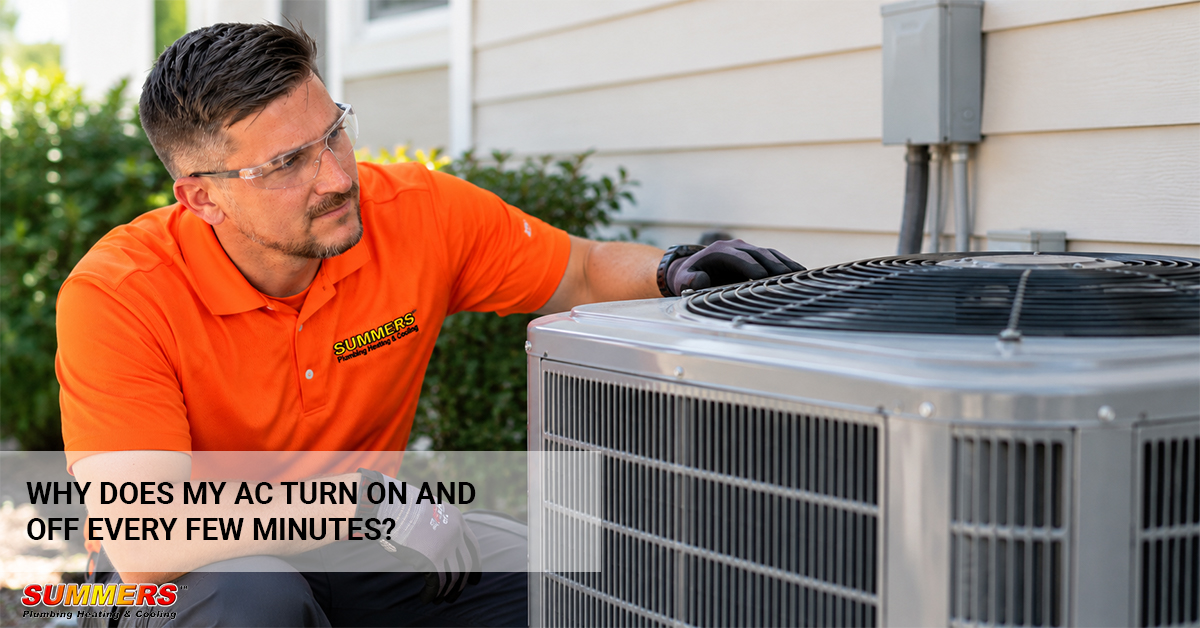
Why Does My AC Turn On and Off Every Few Minutes?
If your AC turns on and off every few minutes, it may have a problem with airflow, the thermostat, refrigerant levels, or an electrical component. This repeated starting and stopping is called short cycling. It can prevent your home from cooling properly and put extra strain on your air conditioner.
A dirty air filter is one of the first things to check. Other causes include an incorrectly placed thermostat, an oversized AC unit, a frozen evaporator coil, or a faulty capacitor.
Check the thermostat and air filter first if it’s safe to do so. If your AC keeps shutting off after only a few minutes, struggles to cool your home, or makes unusual noises, an HVAC technician can identify the cause and recommend the right repair.
What Does It Mean When an AC Keeps Turning On and Off?
When an AC keeps turning on and off after only a few minutes, it may be short cycling. This happens when the system stops cooling before completing a normal cooling cycle, then starts again shortly afterward.
Your air conditioner should run long enough to cool your home and remove excess humidity. Short cycling interrupts that process and may leave rooms warm or uncomfortable.
You may notice these signs:
- The AC starts, runs briefly, and shuts off.
- The system restarts a few minutes later.
- Your home doesn’t reach the thermostat’s set temperature.
- Some rooms feel warm or humid.
- Your energy bills increase without a clear reason.
Occasional changes in operation can be normal as cooling demand changes. However, repeated shutdowns every few minutes may indicate a problem with airflow, the thermostat, refrigerant levels, or another system component.
If your AC repeatedly short cycles, don’t ignore it. Check the air filter and thermostat settings first. If the problem continues, arrange an HVAC inspection to prevent further strain on the system.
7 Common Reasons Your AC Turns On and Off Every Few Minutes
Your AC may keep turning on and off because of restricted airflow, thermostat problems, low refrigerant, or faulty electrical components. The key is to identify what causes the system to shut down before it finishes cooling your home.
1. A Dirty or Clogged Air Filter
A dirty air filter can restrict airflow and cause your AC to overheat or the evaporator coil to freeze. These problems can interfere with normal cooling and may cause the system to shut down.
When dust builds up on the filter, less air reaches the evaporator coil. The AC may struggle to cool your home, and ice can form on the coil in some conditions.
Common signs include:
- Weak airflow from the vents.
- Longer or uneven cooling performance.
- Ice on the evaporator coil or refrigerant lines.
- The AC repeatedly stopping before your home feels cool.
What should you do?
Check the air filter and replace it if it’s dirty. Follow the manufacturer’s instructions for the correct filter type and replacement schedule.
If the AC continues to short cycle after you replace the filter, contact an HVAC technician. Restricted airflow may not be the only problem.
2. A Thermostat Problem
A faulty thermostat can cause your AC to turn on and off repeatedly if it sends incorrect temperature readings or interrupts the cooling cycle.
The thermostat controls when your AC starts and stops. If it’s near a sunny window, close to a heat source, or exposed to a draft, it may read the room temperature incorrectly. A faulty sensor or incorrect setting can also cause cycling problems.
For more troubleshooting advice, see these common AC thermostat problems that can affect your system’s cooling cycle.
Common signs include:
- The AC shuts off before the room reaches the set temperature.
- The displayed temperature changes unexpectedly.
- The system starts again shortly after stopping.
- The room feels warmer or cooler than the thermostat reading suggests.
What should you do?
Check that the thermostat is set to Cool and that the target temperature is lower than the current room temperature. Make sure the thermostat isn’t exposed to direct sunlight or another heat source.
If the problem continues, an HVAC technician can test the thermostat, its wiring, and the system controls.
3. An Oversized Air Conditioner
An oversized AC can short cycle because it cools the room too quickly and shuts off before running long enough to remove enough humidity.
An air conditioner needs to match the home’s cooling requirements. If the unit is too powerful for the space, it may reach the thermostat’s target temperature quickly, stop, and restart soon afterward.
This can leave your home feeling damp or uncomfortable even when the thermostat shows the correct temperature.
Possible signs include:
- The AC runs for only a short time before shutting off.
- The system starts and stops frequently on mild days.
- Some rooms feel humid despite reaching the target temperature.
- The problem has occurred since the AC was installed.
What should you do?
If you suspect the AC is oversized, ask an HVAC professional to assess the system’s capacity and your home’s cooling needs. A proper load calculation can help determine whether the unit is correctly sized.
Don’t replace the AC based on short cycling alone. Thermostat, airflow, and control problems can produce similar symptoms.
4. Low Refrigerant or a Refrigerant Leak
Low refrigerant can cause your AC to cool poorly and may lead to short cycling when the system’s safety controls shut it down. Refrigerant levels can drop if the system develops a leak.
When refrigerant is low, the evaporator coil may not absorb heat properly. In some cases, the coil can freeze, causing the AC to struggle or stop cooling as expected.
Common warning signs include:
- The AC turns off before your home cools down.
- Warm air comes from the vents.
- Ice forms on the evaporator coil or refrigerant lines.
- You hear a hissing sound near the equipment.
These signs don’t confirm a refrigerant leak. Other AC problems can cause similar symptoms.
If your AC keeps shutting off before your home reaches the desired temperature, learn about other possible causes of an AC not cooling properly.
What should you do?
Turn off the cooling function if you notice ice buildup. Contact a qualified HVAC technician to check the refrigerant system and locate any leaks.
Simply adding refrigerant isn’t a proper fix if the system is leaking. The technician should repair the leak and recharge the system as needed.
5. A Frozen Evaporator Coil
A frozen evaporator coil can interfere with normal cooling and may cause your AC to shut down or cycle abnormally. Ice often forms when airflow is restricted or the refrigerant system has a problem.
The evaporator coil absorbs heat from the indoor air. When airflow drops or operating conditions become abnormal, the coil can get too cold and ice over. This reduces cooling performance and may cause water to leak when the ice melts.
Look for these signs:
- Ice or frost on visible refrigerant lines or coil surfaces.
- Weak airflow from the vents.
- The AC runs but doesn’t cool your home properly.
- Water appears around the indoor unit after the ice melts.
What should you do?
Turn off the cooling function if you suspect a frozen coil. Let the ice melt naturally, and replace the air filter if it’s dirty. Don’t chip away at the ice or open the unit to reach internal components.
If the coil freezes again or the AC keeps shutting off, arrange a professional inspection. A technician can check for airflow restrictions, refrigerant problems, and other possible causes.
6. A Faulty Capacitor or Electrical Problem
A faulty capacitor or another electrical problem can prevent your AC’s motor or compressor from starting and running properly. This may cause the system to shut down unexpectedly or repeatedly attempt to restart.
Capacitors help certain AC motors start and run. If a capacitor fails, the outdoor unit may struggle to start or make a humming or clicking sound. Other electrical faults can also interrupt operation.
If your AC also makes unusual humming, clicking, or grinding sounds, read about the possible causes of an AC making loud noises and when to seek professional help.
Possible warning signs include:
- Clicking or humming from the outdoor unit.
- The fan or compressor struggling to start.
- The AC shutting off unexpectedly.
- A circuit breaker that trips repeatedly.
What should you do?
Turn off the system if you notice unusual electrical noises, repeated failed starts, or a tripping breaker. Contact a qualified HVAC technician to inspect the capacitor, wiring, contactor, and other electrical components.
Don’t open electrical compartments or attempt to replace a capacitor yourself. AC components can retain a dangerous electrical charge even after the power is switched off.
7. A Dirty Condenser Coil or Restricted Outdoor Unit
A dirty condenser coil or blocked outdoor unit can contribute to short cycling by preventing the system from releasing heat effectively. The AC may overheat or activate a safety control that stops the compressor.
The outdoor unit releases heat removed from your home. Dirt, leaves, grass clippings, or other obstructions can restrict airflow and reduce the system’s ability to cool properly.
Common signs include:
- The outdoor unit becomes unusually hot.
- The AC runs briefly and then shuts off.
- Cooling performance drops on hot days.
- Leaves or debris block airflow around the outdoor unit.
What should you do?
Turn off the AC before checking the area around the outdoor unit. Remove loose leaves or debris from around the unit if you can do so safely, and keep plants and other objects away from the air intake and discharge areas.
Don’t open the unit or touch electrical components. If the coil appears heavily soiled or the AC continues to short cycle, ask an HVAC technician to inspect and clean the system.
How to Troubleshoot an AC That Keeps Turning On and Off
You can troubleshoot some AC short-cycling problems by checking the thermostat, air filter, and airflow around the unit. If the system keeps shutting down after these checks, an HVAC technician can diagnose the underlying fault.
Follow these steps:
- Check the thermostat settings. Make sure it’s set to Cool and that the target temperature is below the current room temperature. Check the batteries if your thermostat uses them.
- Inspect the air filter. A clogged filter can restrict airflow and contribute to coil freezing. Replace it if it’s dirty, following the manufacturer’s instructions.
- Check the vents. Make sure furniture, curtains, or other objects aren’t blocking supply or return vents.
- Look around the outdoor unit. Remove loose leaves and debris from the surrounding area if it’s safe. Keep the unit’s airflow openings clear, but don’t open its panels.
- Look for signs of ice. If you see ice on the refrigerant lines or accessible coil surfaces, turn off the cooling function and let the ice melt naturally. Don’t chip away at it.
- Note when the AC shuts off. Record how long it runs before stopping, whether the indoor fan keeps running, and whether the outdoor unit restarts. This information can help a technician diagnose the problem.
- Arrange professional service if the problem continues. Repeated short cycling may involve a faulty thermostat, refrigerant leak, capacitor, compressor, or safety control.
Important: If the breaker trips repeatedly, you smell something burning, or you hear unusual electrical noises, stop using the AC and contact a qualified technician. Don’t repeatedly reset a tripping breaker or attempt electrical repairs yourself.
Is It Normal for an AC to Turn On and Off Frequently?
No, an AC that repeatedly turns on and off every few minutes may be short cycling. While an air conditioner should stop when it reaches the thermostat’s target temperature, frequent shutdowns can indicate a problem.
Normal cooling cycles vary depending on the outdoor temperature, your home’s insulation, the AC’s size, and the amount of heat inside. On a hot day, your AC may run for longer periods. When cooling demand is low, it may shut off sooner.
However, if your AC runs for only a few minutes, shuts down, and starts again shortly afterward, check for possible causes such as:
- A dirty air filter restricting airflow.
- A thermostat that reads the temperature incorrectly.
- An oversized air conditioner.
- A frozen evaporator coil or refrigerant problem.
- A faulty electrical component or safety control.
What should you do?
Check the thermostat settings and air filter first. If the AC continues to start and stop every few minutes, arrange an HVAC inspection. A technician can determine whether the cycling is normal for your system or a sign of a fault.
Can Short Cycling Damage Your AC?
Yes, frequent short cycling can put extra strain on your AC’s compressor, motors, and electrical components. It can also reduce cooling performance and increase energy use.
Every time your AC starts, its compressor and other components must begin operating again. Repeated starts and stops can increase wear, especially if the underlying problem continues.
Short cycling can also cause these problems:
- Higher energy bills: Repeated startup cycles can waste energy.
- Uneven cooling: Your AC may shut off before it cools your home properly.
- Poor humidity control: Short run times may leave indoor air feeling damp.
- Extra component wear: Frequent starts can put additional stress on the compressor and electrical parts.
- More expensive repairs: Ignoring the cause may allow a small problem to develop into a larger one.
How can you prevent further damage?
Check the thermostat and replace a dirty air filter if needed. If your AC continues to short cycle, turn it off and arrange an HVAC inspection. Prompt repairs can help protect the system and restore reliable cooling.
How Much Does It Cost to Fix an AC That Keeps Turning On and Off?
The cost to fix an AC that keeps turning on and off depends on the underlying problem, the parts required, and the labor involved. A simple thermostat adjustment or air filter replacement may cost little, while electrical repairs or refrigerant leak repairs can cost more.
Common repairs that may resolve short cycling include:
- Air filter replacement: Replacing a dirty filter to restore proper airflow.
- Thermostat repair or replacement: Fixing inaccurate temperature readings or faulty controls.
- Capacitor replacement: Replacing a failed component that helps a motor start or run.
- Refrigerant leak repair: Finding and repairing a leak before recharging the system.
- Condenser coil cleaning: Removing dirt and debris that restrict heat transfer.
- Compressor or control repairs: Diagnosing more serious mechanical or electrical problems.
The final price depends on your location, AC model, parts availability, and how easily a technician can access the faulty component.
How can you avoid unnecessary repair costs?
Ask the HVAC company to diagnose the problem and provide an itemized estimate before starting the repair. Check your warranty to see whether any parts or labor may be covered.
Avoid replacing the entire AC based on short cycling alone. A technician should identify the cause first, since some problems require only a minor repair.
When Should You Call an HVAC Technician?
Call an HVAC technician if your AC keeps turning on and off every few minutes despite checking the thermostat and air filter. Repeated short cycling can indicate an electrical fault, refrigerant problem, or another issue that needs professional diagnosis.
If your AC continues to short cycle, professional AC repair in Columbus, IN can help identify the cause and recommend the appropriate repair.
Arrange an inspection if you notice any of these signs:
- The AC shuts off after only a few minutes. Frequent shutdowns may indicate a problem with airflow, controls, or system operation.
- Your home isn’t cooling properly. Weak cooling alongside short cycling can point to a frozen coil or refrigerant issue.
- Ice forms on the coil or refrigerant lines. Turn off the cooling function and let the ice melt naturally.
- The outdoor unit hums, clicks, or struggles to start. A faulty capacitor or another electrical component may be responsible.
- The circuit breaker trips repeatedly. Stop using the system and contact a qualified technician. Don’t keep resetting the breaker.
- The AC keeps short-cycling after basic checks. A professional can test the thermostat, electrical components, refrigerant system, and safety controls.
If you smell burning or suspect an electrical hazard, stop using the AC and stay away from affected equipment.
Don’t wait for the problem to get worse. A technician can identify the cause of short cycling and recommend the appropriate repair before the issue leads to further damage.
Frequently Asked Questions
Why Does My AC Turn On for 5 Minutes and Then Shut Off?
Your AC may shut off after five minutes because of a thermostat problem, restricted airflow, a frozen evaporator coil, or an electrical fault. Check the thermostat settings and air filter first. If the problem continues, contact an HVAC technician.
Why Does My AC Turn On and Off Every 2 to 3 Minutes?
An AC that cycles every two to three minutes may have a faulty thermostat, an electrical problem, restricted airflow, or a system control issue. This frequent cycling isn’t something to ignore. Turn off the system if you notice ice, burning smells, or repeated breaker trips, and arrange professional service.
Can a Dirty Air Filter Cause AC Short Cycling?
Yes, a dirty air filter can restrict airflow and contribute to evaporator coil freezing. The ice can interfere with cooling and cause water leaks as it melts. Replace a dirty filter according to the manufacturer’s instructions. If the AC continues to short cycle, have it inspected.
Should I Turn Off My AC If It Keeps Short Cycling?
Yes, turn off the cooling function if your AC repeatedly shuts down every few minutes, especially if you notice ice buildup, unusual electrical noises, or poor cooling. Check the thermostat and filter if it’s safe. If the problem persists, contact an HVAC technician.
Can a Bad Thermostat Make an AC Turn On and Off Repeatedly?
Yes, a faulty thermostat or temperature sensor can cause repeated cycling by sending inaccurate readings or interrupting the cooling cycle. Incorrect placement near sunlight, drafts, or heat sources can also affect its readings. A technician can test the thermostat and its wiring.
Does Low Refrigerant Cause an AC to Turn On and Off?
Yes, low refrigerant from a leak can affect cooling performance and may cause the system to shut down through its protective controls. Other problems can produce similar symptoms, so a technician must confirm the cause and repair any leak before recharging the system.
How Long Should an AC Run Before Shutting Off?
An AC’s cooling cycle depends on the outdoor temperature, indoor heat, thermostat setting, system size, and home insulation. There isn’t one ideal runtime for every system. However, repeated cycles lasting only a few minutes may indicate short cycling and should be checked.
Can Short Cycling Increase My Electricity Bill?
Yes, short cycling can waste energy because the system repeatedly starts and stops without cooling your home efficiently. It may also cause uneven temperatures and extra strain on components. Fixing the underlying problem can help restore efficient operation.
Final Thoughts
If your AC turns on and off every few minutes, it may be short cycling because of a dirty air filter, thermostat problem, frozen evaporator coil, refrigerant issue, or faulty electrical component.
Start by checking the thermostat settings and air filter. If the AC continues to shut down repeatedly, struggles to cool your home, or makes unusual noises, contact an HVAC technician for diagnosis.
Fixing the cause early can help prevent unnecessary energy use, reduce strain on your AC, and restore reliable cooling. Don’t ignore repeated short cycles, especially if you notice ice buildup or electrical warning signs.