

Why Is My AC Leaking Water Inside the House? 7 Common Causes
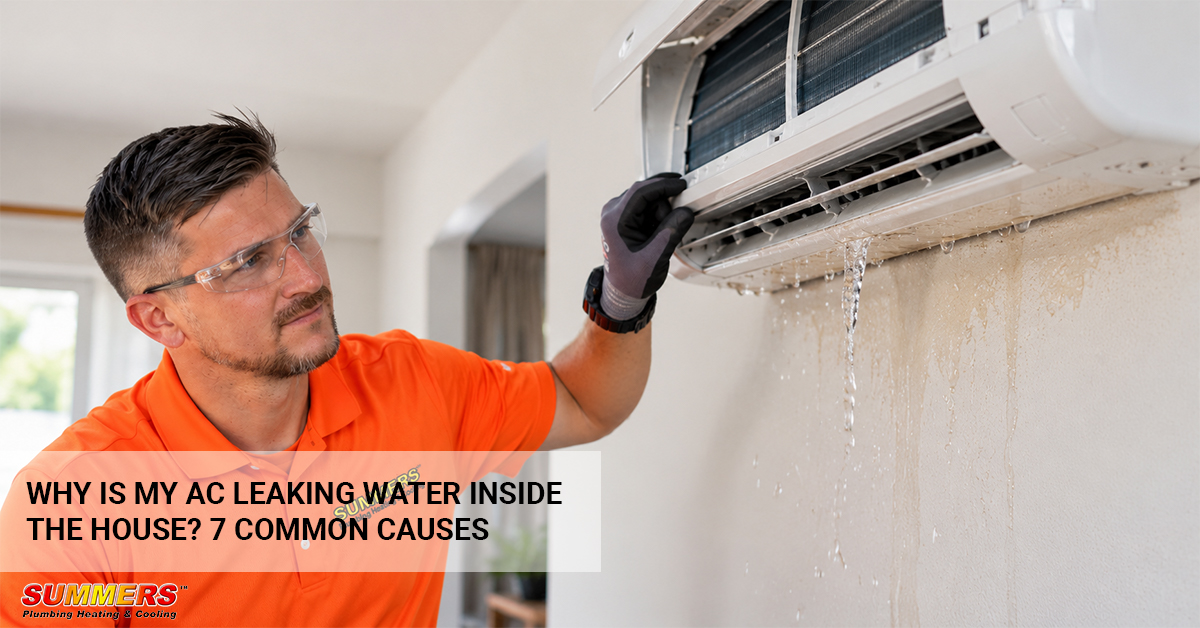
If your AC is leaking water inside the house, a clogged drain line, frozen evaporator coil, or damaged drain pan could be the cause. Your air conditioner naturally produces condensation as it removes moisture from the air. This water should drain outside, not pool around your indoor unit or drip through the ceiling.
Turn off your AC if you notice water leaking indoors. Check the air filter and look for visible drainage problems if it’s safe to do so. If water is near electrical equipment, keep your distance and contact an HVAC technician.
This guide explains seven common causes of AC water leaks, what you can safely check yourself, and when to call a professional.
Why Is My AC Leaking Water Inside the House?
Your AC is usually leaking water indoors because the condensate drain is blocked or ice on the evaporator coil is melting. Other possible causes include a damaged drain pan, restricted airflow, or a faulty condensate pump.
Your AC naturally removes moisture from the air as it cools your home. The moisture collects on the cold evaporator coil, drips into a drain pan, and flows outside through a condensate drain line.
If the drain line gets clogged, water can back up and overflow into your home. If the evaporator coil freezes, melting ice can also cause water to leak indoors.
The leak’s location and your AC’s behavior may help identify the cause. However, an HVAC technician may need to inspect the system to confirm the problem.
7 Common Reasons Your AC Is Leaking Water Indoors
1. A Clogged AC Condensate Drain Line
A clogged condensate drain line is one of the most common reasons an AC leaks water indoors. Dirt, algae, and other debris can build up inside the line and stop water from draining properly.
As your AC cools the air, moisture collects on the evaporator coil and drips into a drain pan. The condensate drain line carries that water outside. If the line becomes blocked, water can back up and overflow around the indoor unit.
Common signs of a clogged drain line include:
- Water pooling near the indoor air handler.
- Water dripping from or around the AC unit.
- A musty smell near the unit.
- Water collecting in the condensate drain pan.
What should you do?
Turn off your AC if water is leaking indoors. If the drain line is easy to access, check for visible blockages without opening electrical compartments.
Avoid using chemical drain cleaners, which may damage parts of the drainage system. If you can’t safely identify or clear the blockage, contact an HVAC technician. They can clear the line and check whether the leak has damaged nearby surfaces.
2. A Frozen Evaporator Coil
A frozen evaporator coil can cause your AC to leak water indoors when the ice melts and overwhelms the drain pan. The coil should get cold enough to cool your home, but it shouldn’t freeze over.
A dirty air filter, blocked airflow, or low refrigerant from a leak can cause the coil to freeze. When the ice melts, water may spill out of the drain pan or leak around the indoor unit.
Common signs of a frozen evaporator coil include:
- Water dripping from the indoor unit.
- Ice or frost on visible refrigerant lines or coil surfaces.
- Weak airflow from the vents.
- Your AC running without cooling your home properly.
What should you do?
Turn off the cooling function if you suspect a frozen coil. Replace a dirty air filter if needed, and let the ice melt naturally. Don’t chip away at the ice or open the unit to reach the coil.
If the coil freezes again or your AC still doesn’t cool properly, call an HVAC technician. They can check for airflow problems, refrigerant leaks, and other causes. If refrigerant is low, the technician should find and repair any leak before recharging the system.
If your AC is leaking water and struggling to cool your home, read our guide to AC not cooling properly to learn about other possible causes.
3. A Cracked or Damaged Drain Pan
A cracked or rusted AC drain pan can cause water to leak onto the floor instead of draining outside. The pan collects condensation from the evaporator coil and directs it into the drain line.
Over time, corrosion or physical damage can create holes in the pan. A clogged drain can also cause water to overflow, even when the pan is intact.
Common signs of a damaged drain pan include:
- Water dripping directly beneath the indoor unit.
- Visible rust or cracks on an accessible pan.
- Water leaking despite no obvious drain line blockage.
- Leaks that continue after previous drainage repairs.
What should you do?
Turn off your AC if water is leaking indoors. Contact an HVAC technician to inspect the drain pan and drainage system. They can determine whether the pan is cracked, rusted, or overflowing and replace it if necessary.
Don’t remove the unit’s panels to inspect internal components unless you’re qualified to do so.
4. A Dirty or Clogged Air Filter
A dirty air filter can cause an AC water leak by restricting airflow and allowing the evaporator coil to freeze. When the ice melts, the excess water may overflow the drain pan or leak around the indoor unit.
As dust builds up on the filter, less air passes through the system. This can lower the coil’s temperature and lead to ice buildup.
Common signs of a dirty air filter include:
- Weak airflow from the vents.
- Your AC taking longer to cool the room.
- Ice forming on visible refrigerant lines or coil surfaces.
- Water leaking as the ice melts.
What should you do?
Turn off the cooling function if you notice ice on the coil or refrigerant lines. Check the air filter and replace it if it’s dirty, following the manufacturer’s instructions. Let any ice melt naturally.
If the coil freezes again or the AC continues to leak, contact an HVAC technician. A clogged filter may be the cause, but other problems can produce similar symptoms.
5. A Failed Condensate Pump
A failed condensate pump can cause an AC to leak water indoors when the system relies on the pump to remove condensation.
Some AC systems use a pump to move collected water to a drain when gravity drainage isn’t practical. If the pump stops working, becomes clogged, or can’t move water out fast enough, its reservoir may overflow.
Common signs of a condensate pump problem include:
- Water collecting around the pump or indoor unit.
- Water overflowing from the pump reservoir.
- The pump failing to operate when water collects.
- Leaks that return while the AC is running.
What should you do?
Turn off your AC if water is overflowing. If the pump is accessible, look for visible damage or a disconnected drain hose. Don’t touch electrical components or open the pump housing.
An HVAC technician can inspect the pump, float switch, and drain line. Depending on the problem, the technician may need to clean the system or replace a faulty part.
6. Improper AC Installation or Drainage Problems
Improper AC installation can cause water leaks if the drain line is disconnected, incorrectly routed, or unable to carry condensation away from the unit.
The drain line needs the correct slope and secure connections to move water outside. If the line sags, kinks, or slopes incorrectly, water may collect, flow backward, or leak around the indoor unit.
Signs of an installation or drainage problem include:
- The leak started soon after a new AC was installed.
- Water repeatedly leaks from the same connection.
- The drain hose appears loose or damaged.
- The problem continues after routine drain line maintenance.
What should you do?
If the leak started after installation or major repairs, contact the installing contractor. Ask them to check the drain line’s slope, connections, and overall setup.
Avoid adjusting the unit or drain line yourself. Incorrect changes can make the leak worse or cause further damage.
7. A Refrigerant Leak or Evaporator Coil Problem
A refrigerant leak can contribute to an AC water leak by causing the evaporator coil to freeze. When the ice melts, water may overflow the drain pan or drip around the indoor unit.
Low refrigerant can affect the coil’s temperature and cooling performance. However, a frozen coil doesn’t automatically mean the system has a refrigerant leak. A dirty filter or restricted airflow can cause similar problems.
Possible warning signs include:
- Your AC struggles to cool your home.
- Ice forms on the evaporator coil or refrigerant lines.
- Water leaks as the ice melts.
- The system continues to perform poorly after you replace a dirty filter.
What should you do?
Turn off the cooling function if you suspect a frozen coil and contact a qualified HVAC technician. They can inspect the coil, test the refrigerant system, and identify the underlying cause.
If the system has a refrigerant leak, the technician should locate and repair it before recharging the system. Don’t attempt to open refrigerant lines or add refrigerant yourself.
How to Tell Why Your AC Is Leaking Water
You can often narrow down the cause of an AC water leak by checking where the water appears and when the leak starts. These clues can help you identify the likely problem, but an HVAC technician may need to inspect the system to confirm it.
| What you notice | Possible cause | What to do |
| Water pooling beneath the indoor unit | Clogged drain line or damaged drain pan | Turn off the AC and arrange an inspection |
| Water appears as ice melts | Frozen evaporator coil | Stop cooling and let the ice melt naturally |
| Water dripping through the ceiling | Overflowing drain pan or blocked drain line | Protect the area and arrange prompt service |
| Water leaks after the AC shuts off | Melting ice or a drainage problem | Turn off the system if the leak continues |
| Water leaks while cooling is weak | Frozen coil, restricted airflow, or refrigerant problem | Stop cooling and arrange a professional diagnosis |
Why Is My AC Leaking Water From the Bottom?
Water leaking from the bottom of an indoor AC unit often points to a clogged drain line, a damaged drain pan, or ice melting from a frozen evaporator coil.
Check around the unit for standing water or visible signs of a blockage. Don’t remove access panels or touch internal components. If the leak continues, turn off the AC and contact an HVAC technician.
Why Is Water Dripping Through My Ceiling From the AC?
Water dripping through the ceiling may mean an attic-mounted air handler has an overflowing drain pan or a blocked condensate drain line.
The leak can damage drywall, insulation, paint, and nearby electrical components. Turn off the AC and protect the area if you can do so safely. If water is near lights, wiring, or other electrical equipment, stay away and contact a qualified professional.
Why Is My AC Leaking Water After It Turns Off?
An AC may leak water after it shuts off because ice on the evaporator coil is melting or water is backing up in the condensate drain system.
A small amount of residual condensation may drain after a cooling cycle, but repeated indoor leaks aren’t something to ignore. If water continues to appear, leave the AC off and arrange an HVAC inspection.
What Should You Do If Your AC Is Leaking Water Inside?
If your AC is leaking water indoors, turn it off, protect the area, and check only what you can inspect safely. Continuing to run the system may lead to more water damage.
Follow these five steps:
- Turn off the AC. Stop the cooling cycle to prevent further water buildup. If you can safely reach the normal controls, switch the system off.
- Protect the area. Move furniture and belongings away from the leak. Use towels or a container to catch dripping water if it’s safe. Never step into standing water near electrical equipment.
- Check the air filter. If the filter is dirty, replace it according to the manufacturer’s instructions. If you see ice on the coil or refrigerant lines, leave the AC off and let the ice melt naturally. Don’t chip away at it.
- Look for visible drainage problems. If the drain line or condensate pump is easy to access, check for obvious damage or disconnected hoses. Don’t remove equipment panels, touch wiring, or attempt repairs you’re not qualified to perform.
- Call an HVAC technician if the leak continues. A technician can inspect the drain line, drain pan, condensate pump, evaporator coil, and refrigerant system to identify the cause and recommend a repair.
If your AC continues to leak water, professional AC repair in Columbus, IN can help identify the cause and prevent further water damage.
Important: If water is near electrical outlets, wiring, or other electrical equipment, stay away from the affected area. Don’t touch wet electrical components or attempt to switch off power from a wet location. Get qualified help. If there’s an immediate electrical hazard, move to safety and contact local emergency services.
Can You Run Your AC If It’s Leaking Water?
No. If your AC is actively leaking water indoors, turn it off until you identify the cause. Continuing to run it can lead to more water damage and may worsen the underlying problem.
Water can soak flooring, damage drywall, stain ceilings, and affect insulation. If a frozen evaporator coil is causing the leak, continued operation may also allow the problem to persist.
Turn off your AC and contact an HVAC technician if:
- Water continues to collect around the indoor unit.
- Ice forms on the evaporator coil or refrigerant lines.
- The drain pan overflows or water drips through the ceiling.
- The leak returns after you replace a dirty air filter.
If water is near electrical outlets, wiring, or other electrical equipment, stay away from the affected area and get qualified help. Don’t restart the AC until it’s safe to do so and the cause of the leak has been addressed.
How Much Does It Cost to Fix an AC Water Leak?
The cost to fix an AC water leak depends on the cause, the parts needed, and how difficult the repair is. Clearing a clogged condensate drain line may cost less than replacing a damaged drain pan, repairing a condensate pump, or fixing a refrigerant leak.
Here are some common repairs that can affect the total cost:
- Clogged drain line: Clearing a blockage and restoring proper drainage.
- Frozen evaporator coil: Finding and fixing the cause of the ice buildup.
- Damaged drain pan: Repairing or replacing a cracked or corroded pan.
- Failed condensate pump: Cleaning or replacing a faulty pump.
- Refrigerant leak: Locating the leak, repairing it, and recharging the system if needed.
The final price also depends on local labor rates, the AC model, parts availability, and whether the technician needs to access equipment in an attic or ceiling.
For a broader look at repair expenses, see our guide to AC repair costs in Columbus, Indiana, and the factors that can affect the final bill.
Before approving the repair, ask the HVAC company to identify the cause, explain the recommended fix, and provide an itemized estimate. Check your warranty, too, as some parts or repairs may be covered.
Don’t choose a repair based on price alone. Fixing the underlying problem can help prevent repeat leaks and further water damage.
How Can You Prevent Your AC From Leaking Water Again?
You can reduce the risk of future AC water leaks by replacing dirty air filters, keeping the condensate drain clear, and scheduling regular HVAC maintenance. These steps help your AC drain condensation properly and maintain good airflow.
Follow these six tips to help prevent another leak:
- Replace the air filter regularly. Follow the manufacturer’s recommended schedule and check it more often if you have pets, dust, or heavy AC use.
- Keep the condensate drain clear. Have the drain line checked and cleaned when needed, especially if you’ve had recurring blockages.
- Schedule routine HVAC maintenance. Ask a technician to inspect the drain pan, drain line, evaporator coil, and condensate pump, if your system has one.
- Address frozen coils promptly. Ice buildup may indicate restricted airflow or a refrigerant problem. Turn off the cooling function and arrange an inspection.
- Watch for early warning signs. Water around the indoor unit, musty odors, or repeated drainage issues can signal a problem that needs attention.
- Check installation and repair work. If a leak starts after installation or servicing, contact the contractor to check the drain line, connections, and drainage setup.
Regular maintenance can help prevent many AC water leaks, but it can’t eliminate every equipment failure or drainage problem. If your AC keeps leaking despite these steps, have an HVAC technician identify and fix the underlying cause.
Frequently Asked Questions
Why Is My AC Leaking Water Inside the House?
An AC usually leaks water indoors because of a clogged condensate drain line, a frozen evaporator coil, or a damaged drain pan. A faulty condensate pump or improper drainage can also cause leaks. Turn off the AC if water is actively leaking and arrange an inspection if the problem continues.
Is It Normal for an AC to Leak Water Inside?
No, water dripping from the indoor unit or pooling on the floor isn’t normal. Your AC naturally produces condensation as it cools your home, but the drainage system should carry that water outside.
Can I Run My AC If It’s Leaking Water?
No, it’s best to turn off your AC while it’s leaking water indoors. Continued operation can worsen water damage or allow the underlying problem to persist. If water is near electrical equipment, stay away and seek qualified help.
Can a Dirty Air Filter Cause an AC Water Leak?
Yes, a dirty air filter can restrict airflow and cause the evaporator coil to freeze. When the ice melts, the water may overflow the drain pan. However, a clogged filter isn’t the only possible cause of an AC leak.
Why Is My AC Leaking Water When It’s Turned Off?
Your AC may continue leaking after shutdown because ice on the evaporator coil is melting or water is backing up in the drain system. If the leak continues or returns, leave the system off and contact an HVAC technician.
How Do I Stop My AC From Leaking Water Inside?
Turn off the AC, protect the surrounding area, and check the air filter if it’s safe to do so. Look for visible drainage problems without opening the unit or touching electrical components. If the leak continues, contact an HVAC technician to identify and fix the cause.
Can an AC Water Leak Damage My House?
Yes, an AC water leak can damage flooring, drywall, insulation, and ceilings. Ongoing moisture can also encourage mold growth. Address the leak promptly to limit damage, especially if water is spreading into walls or other building materials.
When Should I Call an HVAC Technician for an AC Water Leak?
Call an HVAC technician if the leak continues, the drain pan overflows, the evaporator coil freezes, or the AC stops cooling properly. You should also seek prompt professional help if water is dripping through a ceiling or reaching areas near electrical equipment.
Final Thoughts
If your AC is leaking water inside the house, a clogged drain line, frozen evaporator coil, or damaged drain pan may be the cause. A faulty condensate pump or drainage problem can also lead to leaks.
Turn off the AC, protect the affected area, and check only what you can inspect safely. If the leak continues, the coil freezes, or water reaches the ceiling, contact an HVAC technician.
Don’t ignore an indoor AC water leak. Finding and fixing the cause early can help prevent further water damage and keep your cooling system running properly.