
How Much Does AC Repair Cost in Columbus, Indiana? 2026 Guide
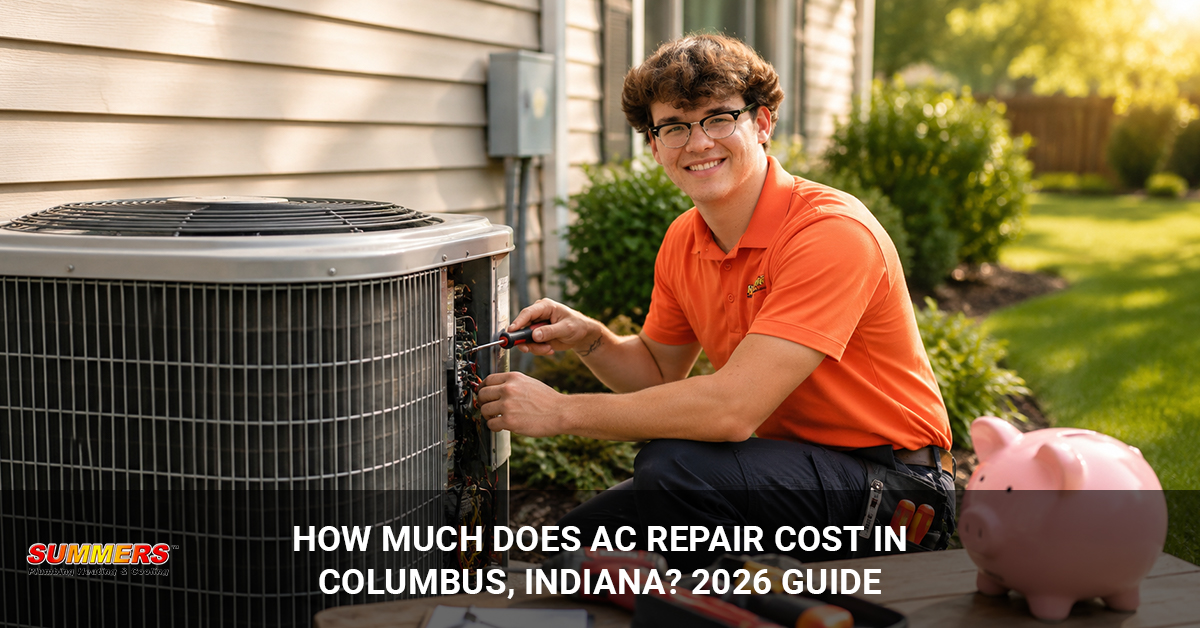
AC repair costs in Columbus, Indiana, vary based on the problem, but simple repairs generally cost much less than major component replacements.
When your air conditioner stops working, one of the first things you want to know is how much the repair will cost. The answer depends on several factors, including what’s causing the problem, the parts required, the amount of labor involved, and the age of your system.
Some repairs can be completed quickly, while others require extensive troubleshooting or major component replacement. Understanding the factors that affect AC repair costs can help you make informed decisions and avoid unexpected surprises.
In this guide, you’ll learn what influences AC repair pricing, the most common types of air conditioner repairs, and when it may be more cost-effective to replace your system instead of repairing it.
How Much Does AC Repair Cost in Columbus, Indiana?
AC repair costs in Columbus, Indiana, depend on the specific problem, the parts that need to be repaired or replaced, and the amount of labor required to complete the work.
Some repairs are relatively simple and can be resolved quickly, while others involve major components that require more time, specialized parts, and advanced diagnostics. As a result, repair costs can vary significantly from one situation to another.
In general, homeowners may pay for:
- Diagnostic and service visits
- Minor component replacements
- Electrical repairs
- Refrigerant-related repairs
- Major mechanical component replacements
For example, a thermostat issue or failed capacitor is typically less expensive to repair than a refrigerant leak, evaporator coil problem, or compressor failure.
It’s also important to remember that the same symptom can have multiple causes. An AC that isn’t cooling properly could be experiencing anything from a dirty component to a major system failure. That’s why a professional HVAC inspection is often the most reliable way to determine the exact problem and receive an accurate repair estimate.
What Factors Affect AC Repair Costs?
Several factors can affect how much you’ll pay for AC repair in Columbus, Indiana.
No two air conditioning repairs are exactly the same. The final cost depends on the type of problem, the parts needed, the time required to complete the repair, and the condition of your system.
Type of Repair Needed
The type of repair is one of the biggest factors affecting cost.
Simple repairs are usually less expensive than repairs involving major HVAC components. For example, replacing a capacitor is typically more affordable than repairing a refrigerant leak or replacing a compressor.
Age of the System
Older air conditioners often cost more to repair.
As systems age, parts can become harder to find, and multiple components may begin to wear out at the same time. Older equipment may also require additional labor during repairs.
If your older system requires frequent repairs, it may be worth comparing repair expenses against current AC installation costs in Columbus to determine which option provides better long-term value.
Brand and Parts Availability
The brand of your HVAC system can influence repair costs.
Some manufacturers use specialized or proprietary components that may be more expensive or take longer to obtain than standard replacement parts.
Labor Requirements
More complex repairs generally require more labor.
If a technician must spend additional time diagnosing the issue, accessing internal components, or disassembling parts of the system, labor costs may increase accordingly.
Emergency or After-Hours Service
Emergency HVAC repairs often cost more than standard service appointments.
If your air conditioner fails during a weekend, holiday, or after normal business hours, additional emergency service fees may apply. Scheduling repairs during regular service hours can sometimes help reduce overall costs.
Common AC Repair Costs in 2026
Some AC repairs are more common than others, and the cost usually depends on the component involved and the complexity of the repair.
While every air conditioning system is different, homeowners frequently encounter the same types of repairs. Understanding these common issues can help you better understand where repair costs may come from when your system stops working properly.
Thermostat Repairs
Thermostat repairs are often among the simpler AC repairs.
A faulty thermostat can prevent your air conditioner from cooling correctly, cause temperature inconsistencies, or stop the system from turning on and off as expected. In some cases, the issue can be resolved through recalibration, while other situations may require thermostat replacement.
Capacitor Replacement
Capacitor replacement is one of the most common air conditioner repairs.
Capacitors provide the electrical boost needed to start and operate motors within the HVAC system. When a capacitor fails, your AC may struggle to start, run intermittently, or stop cooling altogether.
Contactor Replacement
A faulty contactor can prevent your air conditioner from operating properly.
The contactor controls the flow of electricity to major HVAC components, including the outdoor condenser unit. When it fails, the system may not start or may operate inconsistently.
Refrigerant Leak Repair
Refrigerant leak repairs are typically more involved than many other AC repairs.
A technician must locate the leak, repair the damaged area, test the system, and recharge refrigerant levels. Because multiple steps are involved, refrigerant-related repairs are often more complex than standard component replacements.
Evaporator Coil Repair
A damaged evaporator coil can significantly reduce cooling performance.
The evaporator coil absorbs heat from indoor air. If the coil develops a leak or becomes damaged, your system may struggle to cool the home efficiently and could experience refrigerant loss.
Condenser Fan Motor Replacement
The condenser fan motor plays a critical role in releasing heat from the system.
When the fan motor fails, the outdoor unit may overheat, cooling efficiency can decline, and additional HVAC components may be placed under stress.
Blower Motor Repair
Blower motor problems can affect airflow throughout your home.
The blower motor pushes conditioned air through the ductwork and into your living spaces. A failing motor may cause weak airflow, uneven temperatures, or reduced comfort throughout the home.
Compressor Repair or Replacement
Compressor repairs are often among the most significant AC repairs homeowners face.
The compressor is responsible for circulating refrigerant through the air conditioning system. When it begins to fail, cooling performance can decline dramatically. Because compressor repairs can be complex, HVAC professionals often evaluate the age, condition, and overall efficiency of the system before recommending repair or replacement.
How Much Does Refrigerant Leak Repair Cost?
Refrigerant leak repairs are often among the more expensive AC repairs because they involve diagnosing the leak, repairing the problem, and restoring proper refrigerant levels.
Unlike many other air conditioning repairs, fixing a refrigerant leak is usually a multi-step process. A technician must first locate the source of the leak, repair or replace the damaged component, test the system for additional leaks, and then recharge the refrigerant according to manufacturer specifications.
Several factors can affect the overall cost of refrigerant leak repairs, including:
- The location of the leak
- The severity of the damage
- The type of refrigerant used by the system
- The amount of refrigerant needed
- The accessibility of the damaged component
Leaks located inside coils or hard-to-reach areas often require more labor and can increase repair costs. Older systems may also use refrigerants that are more difficult or expensive to obtain.
Because refrigerant is essential to the cooling process, leaks should be repaired as soon as possible. Addressing the issue early can help prevent compressor damage, improve energy efficiency, and reduce the likelihood of more expensive repairs in the future.
One of the most common signs of a refrigerant leak is an AC not cooling properly, which can lead to reduced comfort and higher energy bills if left unresolved.
Is It Better to Repair or Replace Your AC?
Whether you should repair or replace your AC depends on its age, condition, repair history, and overall performance.
In many situations, repairing a newer air conditioner is the most cost-effective choice. However, if an older system continues to experience breakdowns or struggles to cool your home efficiently, replacement may provide better long-term value.
You may want to consider replacing your AC if:
- The system is more than 15 years old
- Repairs are becoming frequent
- Energy bills continue to rise
- Cooling performance remains poor
- Major components have failed
Homeowners who are unsure whether to repair or replace their system should review the most common signs you need a new AC unit before making a final decision.
Newer air conditioners are typically more energy-efficient and reliable than older models. They can also help lower operating costs and improve indoor comfort.
A professional HVAC inspection can help you compare repair costs with replacement options and determine which solution makes the most financial sense for your situation.
Signs You Should Repair Your AC Immediately
Some AC problems should be repaired right away to prevent additional damage and higher repair costs.
Small issues can quickly become major problems if they are ignored. Addressing warning signs early can help protect your system and reduce the risk of a complete breakdown.
Common signs that your AC needs immediate attention include:
- Warm air coming from the vents
- Strange noises during operation
- Frozen evaporator coils
- Water leaks around the system
- Weak airflow
- Rising energy bills
- Short cycling
These symptoms often indicate underlying problems that can worsen over time. Scheduling repairs as soon as possible can help restore cooling performance, improve efficiency, and prevent more costly HVAC repairs in the future.
If your system is producing warm air instead of cool air, learn more about the causes of an AC blowing warm air and when professional service may be required.
Ways to Reduce AC Repair Costs
Regular maintenance is one of the most effective ways to reduce AC repair costs over time.
Many major air conditioning repairs start as small problems that go unnoticed. Routine care helps keep your system running efficiently and allows potential issues to be identified before they become expensive repairs.
Homeowners can help lower long-term repair costs by:
- Scheduling annual HVAC maintenance
- Replacing air filters regularly
- Keeping the outdoor condenser unit clean
- Addressing small issues early
- Monitoring system performance
- Considering a maintenance plan
Preventive maintenance not only helps reduce repair expenses but can also improve energy efficiency, extend equipment life, and lower the risk of unexpected breakdowns.
Following a seasonal HVAC summer maintenance checklist can help homeowners reduce breakdowns, improve efficiency, and avoid unnecessary repair expenses.
Does Homeowners Insurance Cover AC Repairs?
Homeowners insurance may cover AC repairs in certain situations, but it usually does not cover normal wear and tear.
Most insurance policies are designed to cover sudden and unexpected damage caused by specific events. If the damage results from a covered event, your policy may help pay for repairs or replacement.
Coverage may apply in cases involving:
- Storm damage
- Fire damage
- Falling objects
- Certain types of accidental damage
However, homeowners insurance typically does not cover problems caused by:
- Normal wear and tear
- Aging equipment
- Lack of maintenance
- Mechanical breakdowns due to neglect
In addition to insurance coverage, it’s worth checking whether your system is still protected by a manufacturer’s warranty or an HVAC labor warranty. These warranties may help reduce out-of-pocket repair costs for eligible components and repairs.
Why AC Repair Costs Can Increase During Summer
AC repair costs often increase during the summer because demand for HVAC services is at its highest.
When temperatures rise in Columbus, air conditioners run longer and work harder to keep homes comfortable. This increased workload can lead to more system failures and a higher volume of repair requests throughout the season.
Several summer-related factors can affect repair costs, including:
- Increased demand for HVAC service
- Emergency repair requests
- Longer wait times for replacement parts
- Higher system workload during extreme heat
Because HVAC companies are often busiest during peak summer months, emergency service appointments may come with additional fees and longer scheduling delays.
Scheduling routine maintenance before the cooling season begins can help reduce the risk of unexpected breakdowns and costly emergency repairs.
When to Call an HVAC Professional in Columbus, Indiana
You should call an HVAC professional if your AC is experiencing ongoing problems or showing signs of a mechanical failure.
While some issues can be identified through basic troubleshooting, many air conditioning problems require specialized tools, training, and experience to diagnose correctly.
Professional HVAC service is recommended if you notice:
- Refrigerant leaks
- Electrical problems
- Compressor issues
- Frozen evaporator coils
- Repeated system breakdowns
- Poor cooling performance
Ignoring these problems can lead to reduced efficiency, higher energy bills, and more expensive repairs over time.
A qualified HVAC technician can inspect the system, identify the root cause of the issue, and recommend the most effective repair solution to restore reliable cooling.
Frequently Asked Questions
What Is the Average AC Repair Cost in Columbus, Indiana?
The average AC repair cost depends on the specific problem and the components involved.
Simple repairs typically cost less than major repairs involving refrigerant leaks, compressors, evaporator coils, or other critical system components. The most accurate way to determine repair costs is through a professional HVAC inspection.
How Much Does It Cost to Fix an AC That Is Not Cooling?
The cost to repair an AC that isn’t cooling depends on what’s causing the problem.
Some cooling issues are relatively simple, such as thermostat malfunctions or airflow restrictions. Others may involve refrigerant leaks, electrical failures, frozen coils, or compressor problems that require more extensive repairs.
Is AC Repair Cheaper Than Replacement?
In many cases, AC repair is less expensive than replacing the entire system.
However, if an older air conditioner requires frequent repairs or has experienced a major component failure, replacement may provide better long-term value. A professional HVAC evaluation can help determine which option makes the most financial sense.
Should I Repair a 15-Year-Old Air Conditioner?
A 15-year-old air conditioner may still be worth repairing if the issue is minor and the system has been well maintained.
However, if the unit experiences frequent breakdowns, declining efficiency, rising energy bills, or major component failures, replacement may be the more cost-effective solution. Newer systems often provide better performance, improved energy efficiency, and lower operating costs.
Final Thoughts
AC repair costs in Columbus, Indiana vary based on the problem, the condition of the system, and the repairs needed to restore proper operation.
While some air conditioning issues can be resolved with relatively simple repairs, others may involve major components that require more extensive work. Understanding the factors that affect repair costs can help you make informed decisions and avoid unexpected expenses.
The best way to keep repair costs under control is to address problems early. Prompt repairs can prevent additional damage, improve energy efficiency, and extend the life of your HVAC system.
If your air conditioner isn’t cooling properly, is making unusual noises, or is showing other signs of trouble, a professional HVAC inspection can identify the cause and help you determine the most cost-effective solution for your home.