
AC Blowing Warm Air in Columbus, Indiana? Here’s What to Check First
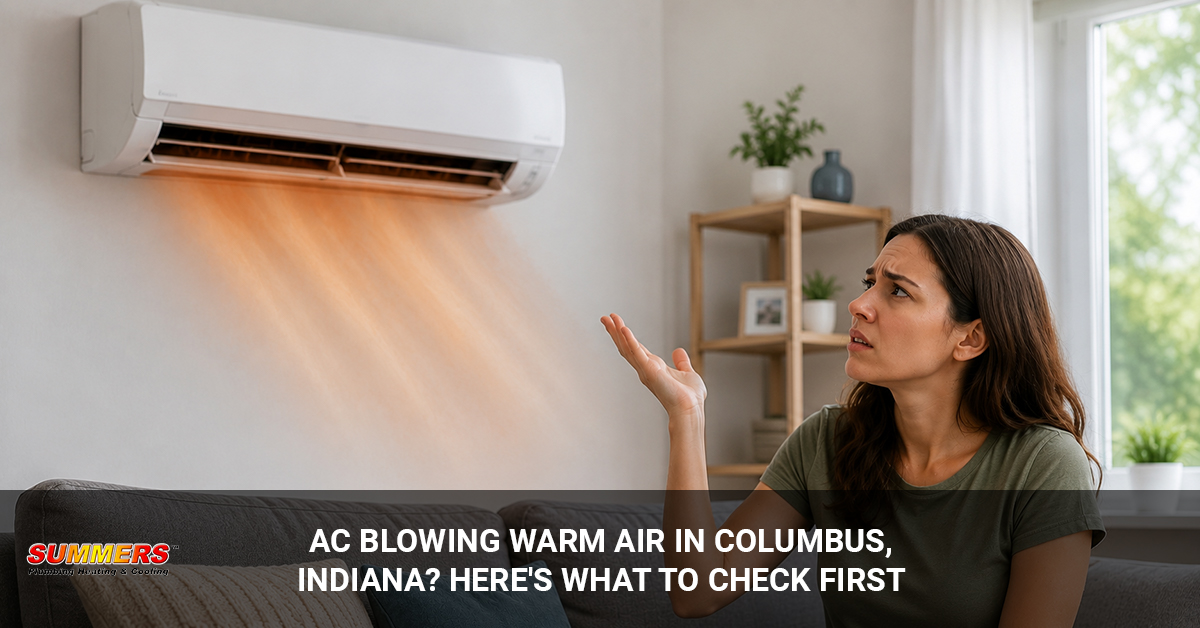
If your AC is blowing warm air, the most likely causes are thermostat issues, a dirty air filter, a tripped breaker, low refrigerant, a frozen coil, or a problem with the outdoor unit.
When your air conditioner stops blowing cold air during a hot Columbus summer, your home can become uncomfortable fast. The good news is that some causes are simple and can be identified in just a few minutes.
Before assuming you need a major repair, it’s worth checking a few common problems. In many cases, a quick inspection can help you find the source of the issue and determine whether professional service is needed.
This guide covers the most common reasons an AC blows warm air, the steps you can take to troubleshoot the problem, and when it’s time to call an HVAC technician in Columbus, Indiana.
Why Is My AC Blowing Warm Air?
Your AC may be blowing warm air because it cannot remove heat from your home effectively.
An air conditioning system cools your home by pulling heat from indoor air and releasing it outside. If any part of that process is disrupted, the system may continue running but deliver warm or room-temperature air through the vents instead of cold air.
Several issues can cause this problem, including:
- Incorrect thermostat settings
- Dirty air filters
- Blocked outdoor condenser units
- Frozen evaporator coils
- Low refrigerant levels
- Electrical problems
- Aging HVAC equipment
Some of these issues are simple to fix, while others require professional repair. Identifying the cause as early as possible can help prevent additional damage, improve system efficiency, and restore comfortable indoor temperatures more quickly.
Check Your Thermostat Settings First
Incorrect thermostat settings are one of the most common reasons an AC blows warm air.
Before checking other parts of your air conditioning system, start with the thermostat. A simple setting issue can prevent your AC from cooling properly, even when the equipment itself is working as designed.
Make Sure It’s Set to Cool
Your thermostat should be set to “Cool” rather than “Fan.”
When the fan setting is selected, the system only circulates air throughout your home. It does not activate the cooling cycle, which means warm or room-temperature air may come from the vents.
Lower the Temperature Setting
Set the thermostat a few degrees below the current room temperature.
If the temperature setting is too high, the system may not receive a signal to start cooling. Lowering the setting can help determine whether the AC responds properly.
Check Smart Thermostat Settings
If you have a smart thermostat, review the schedule and temperature settings.
Incorrect programming, vacation mode settings, or connectivity issues can sometimes prevent the system from cooling when needed.
Replace Thermostat Batteries if Needed
Weak batteries can cause thermostat performance issues and communication problems.
If your thermostat uses batteries and they haven’t been replaced recently, installing fresh batteries is a quick and inexpensive troubleshooting step that may solve the problem.
If your thermostat settings are correct and your AC is still blowing warm air, the issue may be related to airflow, refrigerant levels, or another HVAC component.
Inspect the Air Filter
A dirty air filter can reduce airflow and cause your AC to blow warm air.
Your air filter traps dust, pollen, pet hair, and other airborne particles before they enter the HVAC system. Upgrading to HEPA filters for indoor air quality may help improve filtration while supporting healthier indoor air. Over time, these particles build up and restrict airflow, making it harder for your air conditioner to cool your home effectively.
When airflow is limited, the system has to work harder to maintain the desired temperature. This can reduce efficiency, increase energy usage, and put additional strain on important components.
A clogged air filter can lead to:
- Weak airflow from vents
- Reduced cooling performance
- Higher energy bills
- Frozen evaporator coils
- Increased wear on HVAC components
Checking the air filter is one of the easiest and most affordable troubleshooting steps homeowners can take. If the filter appears dirty or clogged, replace it with a new one and monitor the system’s performance. In many cases, a clean filter can improve airflow and help restore proper cooling.
Check the Circuit Breakers
A tripped circuit breaker can prevent your AC from cooling, even if air is still coming from the vents.
Many air conditioning systems use separate electrical circuits for the indoor and outdoor units. When a breaker trips, the indoor blower may continue running while the outdoor condenser loses power. As a result, the system circulates air through your home but cannot remove heat, causing warm air to come from the vents.
Check your home’s electrical panel and look for any tripped breakers connected to the HVAC system. If you find one, reset it and see if the outdoor unit starts operating normally.
If the breaker trips again or continues to trip repeatedly, do not keep resetting it. Frequent breaker trips often indicate a larger electrical problem, such as faulty wiring, a failing component, or an overloaded circuit.
In these situations, it’s best to contact a qualified HVAC technician to diagnose and repair the issue safely.
Look at the Outdoor Condenser Unit
A dirty or blocked outdoor condenser unit can cause your AC to blow warm air and struggle to cool your home.
The outdoor condenser unit is responsible for releasing the heat that your air conditioner removes from inside your home. If airflow around the unit is restricted, the system cannot release heat efficiently, which reduces cooling performance and forces the AC to work harder.
Inspect the outdoor unit and look for:
- Leaves, dirt, and debris around the unit
- Overgrown grass, bushes, or vegetation
- Dirt buildup on the condenser fins
- A fan that is not spinning properly
Remove any debris around the condenser and make sure there is adequate clearance on all sides. Keeping the area clean helps improve airflow and allows the system to operate more efficiently.
If the outdoor fan is not spinning or the unit does not appear to be running, there may be an electrical or mechanical issue that requires professional HVAC service.
Check for Ice on Refrigerant Lines or Coils
Ice on refrigerant lines or the evaporator coil usually indicates that your AC is not operating properly.
A healthy air conditioning system should not have ice buildup on its components. When ice forms, it often means airflow is restricted, refrigerant levels are low, or another system issue is preventing the AC from absorbing heat as it should.
Common causes of frozen coils include:
- Dirty air filters
- Blocked or restricted airflow
- Low refrigerant levels
- Mechanical component problems
As ice accumulates, your AC becomes less effective at cooling and may eventually stop producing cold air altogether.
If you notice ice on the refrigerant lines or indoor coil, turn off the cooling mode and set the thermostat fan to “On.” Running the fan can help thaw the ice and reduce strain on the system.
Once the ice has melted, check the air filter and make sure all vents are open and unobstructed. If the ice returns after restarting the system, the problem likely requires professional diagnosis and repair.
Low Refrigerant Could Be the Problem
Low refrigerant can cause your AC to blow warm air because it cannot remove heat from your home efficiently.
Refrigerant is the substance that absorbs heat from indoor air and transfers it outside. When refrigerant levels are too low, the cooling process becomes less effective, making it difficult for your air conditioner to keep your home comfortable.
In most cases, low refrigerant is caused by a leak somewhere in the system. Unlike fuel, refrigerant is not used up during normal operation, so a drop in refrigerant levels usually indicates a problem that needs attention.
Common signs of low refrigerant include:
- Warm air coming from the vents
- Ice buildup on refrigerant lines or coils
- Hissing or bubbling sounds
- Longer cooling cycles
- Higher indoor temperatures
- Reduced cooling performance
If you notice these symptoms, it’s important to have the system inspected by a professional. Refrigerant leaks require specialized tools, proper handling procedures, and expert repairs. Simply adding more refrigerant without fixing the leak will only provide a temporary solution.
A qualified HVAC technician can locate the leak, make the necessary repairs, and recharge the system to restore proper cooling performance.
Electrical Problems Can Stop Cooling
Electrical problems can prevent your AC from producing cold air, even when the system appears to be running.
Your air conditioner relies on several electrical components to start and complete the cooling cycle. If a capacitor, contactor, wiring connection, or another electrical part fails, the system may lose its ability to cool your home properly.
Common warning signs of electrical issues include:
- Clicking or buzzing noises
- Frequent circuit breaker trips
- Outdoor unit not starting
- Fan not spinning properly
- Intermittent operation
- Inconsistent cooling performance
Electrical problems can become more serious if left unaddressed. Because HVAC systems contain high-voltage components, repairs should always be performed by a qualified HVAC technician who can safely diagnose and fix the issue.
Could Your AC Be Too Old?
An older air conditioner may struggle to keep your home cool, especially during periods of extreme summer heat.
Most central air conditioning systems last between 10 and 15 years with proper maintenance. As systems age, components wear out, efficiency decreases, and cooling performance often declines.
Signs that your AC may be nearing the end of its lifespan include:
- Frequent repairs
- Rising energy bills
- Uneven cooling throughout the home
- Poor humidity control
- System age over 15 years
If your AC is experiencing multiple issues and repair costs continue to add up, replacement may be the more cost-effective option. A newer high-efficiency system can provide more reliable cooling, better energy efficiency, improved comfort, and lower operating costs. Before upgrading, it’s helpful to understand the factors that affect AC installation costs in Columbus, Indiana.
Troubleshooting Checklist Before Calling for Service
Before calling for HVAC service, check a few common issues that can cause your AC to blow warm air.
Many cooling problems are caused by simple issues that homeowners can identify on their own. Taking a few minutes to inspect your system may help restore cooling or provide useful information for a technician.
Go through this checklist:
- Verify thermostat settings and make sure it’s set to “Cool.”
- Replace a dirty or clogged air filter.
- Inspect circuit breakers for any tripped switches.
- Check the outdoor condenser unit for dirt, debris, or blockages.
- Look for ice buildup on refrigerant lines or coils.
- Listen for unusual sounds such as buzzing, clicking, or grinding.
- Make sure all supply vents are open and unobstructed.
If you’ve completed these steps and your AC is still blowing warm air, professional diagnosis is the next step.
When to Call an HVAC Professional in Columbus, Indiana
You should call an HVAC professional if your AC continues to blow warm air after basic troubleshooting.
While some cooling issues have simple solutions, others require specialized tools and expertise. Delaying repairs can reduce efficiency, increase energy costs, and lead to more extensive damage.
Professional HVAC service is recommended when:
- Refrigerant leaks are suspected
- Ice repeatedly forms on the system
- Electrical issues are present
- Cooling performance continues to decline
- The outdoor unit won’t operate
- The system frequently cycles on and off
An experienced HVAC technician can identify the root cause of the problem and restore your system’s cooling performance safely and efficiently.
How to Prevent AC Problems in the Future
Regular maintenance is the most effective way to prevent AC problems and keep your system running efficiently.
Routine inspections help identify small issues before they turn into costly repairs. They also help your air conditioner perform better during the hottest months of the year.
Annual HVAC maintenance can help:
- Improve system efficiency
- Extend equipment life
- Reduce energy costs
- Prevent unexpected breakdowns
- Identify developing issues early
Following a seasonal HVAC summer checklist and scheduling professional maintenance before the cooling season begins can improve reliability, enhance comfort, and help your air conditioner operate at peak performance throughout the summer.
Final Thoughts
If your AC is blowing warm air in Columbus, Indiana, the problem may be caused by a thermostat issue, dirty air filter, frozen coil, low refrigerant, electrical failure, or another HVAC system malfunction.
Many cooling problems can be identified by checking the thermostat, air filter, circuit breakers, and outdoor condenser unit. Addressing these common issues early may help restore cooling and prevent unnecessary wear on your system.
If your AC continues to blow warm air after basic troubleshooting, it’s best to schedule a professional inspection. A qualified HVAC technician can diagnose the problem, recommend the appropriate repair, and help restore reliable cooling to your home.
Prompt attention to cooling issues can improve comfort, reduce energy costs, and help prevent more expensive repairs in the future.