
Why Your AC Is Not Cooling in Columbus, Indiana (Common Causes & Fixes)
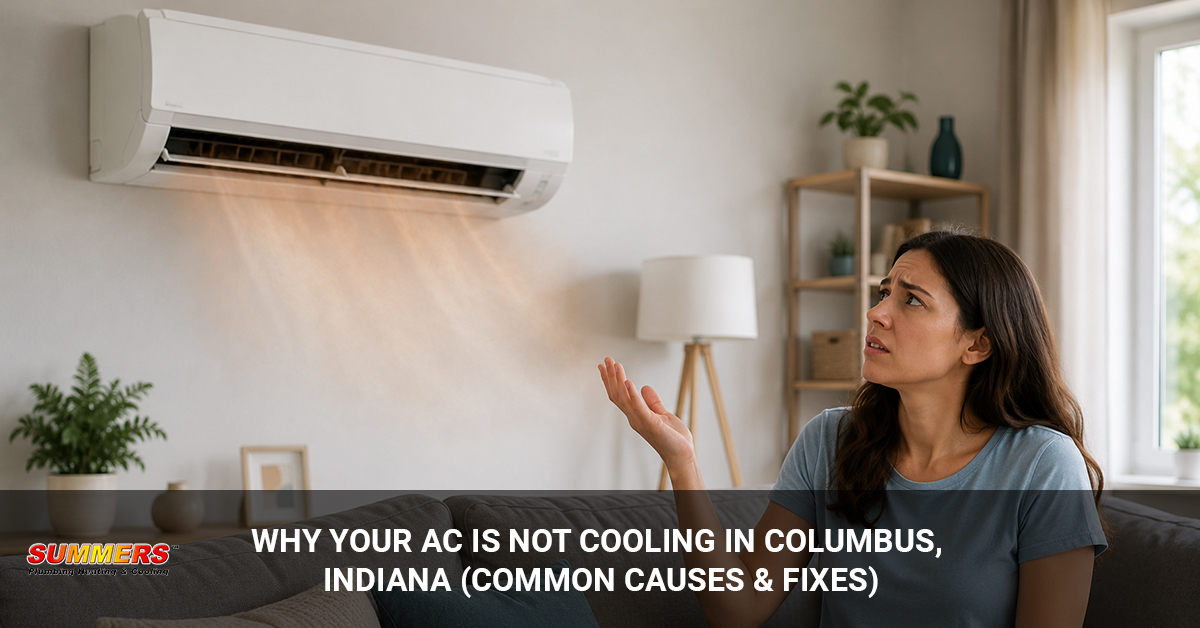
If your AC is running but not cooling your home, the problem is often caused by a dirty air filter, low refrigerant, a frozen coil, thermostat issues, or a malfunctioning component.
When temperatures climb in Columbus, Indiana, a cooling problem can quickly make your home uncomfortable. You may notice warm air coming from the vents, rooms that never seem to cool down, or an AC system that runs all day without reaching the temperature you set.
Some air conditioning problems are simple and can be fixed in a few minutes. Others require professional repairs to prevent further damage and restore proper cooling.
In this guide, you’ll learn the most common reasons an AC stops cooling, the troubleshooting steps you can take, and when it’s time to call an HVAC technician in Columbus, Indiana.
Signs Your AC Is Not Cooling Properly
Your AC may not be cooling properly if it’s blowing warm air, running constantly, creating uneven temperatures, or causing your energy bills to rise.
Air conditioning problems don’t always mean the system has stopped working completely. In many cases, the AC is still running, but it’s struggling to cool your home effectively. Spotting the warning signs early can help you avoid more expensive repairs and prevent a complete system breakdown.
Watch for these common signs:
- Warm air coming from the vents: The air should feel cool and refreshing. If it feels warm or room temperature, your system may have a cooling issue.
- AC runs all day without cooling the house: If your system rarely shuts off but indoor temperatures remain high, it’s likely not operating efficiently.
- Hot and cold spots throughout your home: Uneven temperatures often point to airflow problems, duct leaks, or an aging system.
- High indoor humidity: Your AC should help remove moisture from the air. If your home feels sticky or humid, the system may not be working properly. In some cases, additional indoor air services may be needed to improve humidity control and overall comfort throughout the home.
- Higher-than-normal energy bills: When an AC struggles to cool, it uses more energy and drives up utility costs.
- Weak airflow from vents: Reduced airflow can be caused by a clogged filter, blocked ducts, or blower issues.
- Ice on the indoor or outdoor unit: Ice buildup is often a sign of restricted airflow or low refrigerant levels.
If you notice any of these symptoms, it’s important to identify the cause as soon as possible. Fixing small issues early can help restore comfort and prevent more costly HVAC repairs later.
Check Your Thermostat First
A thermostat setting issue is one of the most common reasons an AC runs but doesn’t cool properly.
Before you assume there’s a problem with your air conditioner, take a few minutes to check your thermostat. Incorrect settings, dead batteries, or connectivity problems can prevent your system from cooling your home as expected.
Verify the Cooling Mode
Make sure your thermostat is set to “Cool” and not “Fan.”
When the thermostat is set to Fan mode, the system simply circulates air throughout your home without cooling it. This can make it seem like the AC is running normally even though it’s not lowering the indoor temperature.
Confirm the Temperature Setting
Set the thermostat at least a few degrees below the current room temperature.
For example, if your home is 78°F, try setting the thermostat to 72°F. If the temperature setting is too high, the cooling cycle may not start.
Replace the Batteries
Weak or dead batteries can cause thermostat display issues, communication problems, or inconsistent system operation.
If your thermostat uses batteries and you haven’t replaced them recently, installing fresh batteries is a simple troubleshooting step worth trying.
Check Smart Thermostat Connectivity
Smart thermostats can sometimes lose their Wi-Fi connection or experience software glitches.
If your thermostat isn’t responding correctly, restart the device and verify that it’s connected to your home’s network. A quick reboot may restore normal operation and cooling performance.
If the thermostat settings are correct and your AC still isn’t cooling, the issue may be related to airflow, refrigerant levels, or another HVAC component.
Dirty Air Filter Restricting Airflow
A dirty air filter is one of the most common reasons an AC struggles to cool a home.
Your air filter is designed to capture dust, pollen, pet hair, and other airborne particles before they enter your HVAC system. Upgrading to high-efficiency filtration can also improve indoor comfort and air quality. Learn more about the benefits of HEPA filters for indoor air quality.
Over time, these contaminants build up and block airflow, making it harder for your air conditioner to move cool air throughout your home.
When airflow is restricted, your system has to work much harder to maintain the desired temperature. This can reduce cooling performance, increase energy costs, and put unnecessary strain on important HVAC components.
A clogged air filter can lead to several problems, including:
- Reduced airflow from vents
- Longer cooling cycles
- Higher energy bills
- Uneven temperatures throughout the home
- Frozen evaporator coils
- Increased wear and tear on the system
In many cases, replacing a dirty filter can immediately improve airflow and cooling performance.
How Often Should Air Filters Be Changed?
Most standard air filters should be replaced every 1 to 3 months.
However, some homes may require more frequent filter changes. You may need to replace your filter sooner if you:
- Have pets that shed hair and dander
- Live with allergy or asthma sufferers
- Run your AC frequently during the summer
- Live in an area with high levels of dust or pollen
A good rule of thumb is to inspect your filter every month and replace it when it appears dirty. Homeowners who are unsure which filter type is best for their HVAC system can compare HEPA vs. standard HVAC filters before making a replacement decision.
Because air filters are inexpensive and easy to replace, checking the filter should be one of the first troubleshooting steps when your AC is not cooling properly.
Frozen Evaporator Coil
A frozen evaporator coil can prevent your AC from cooling properly and often signals an underlying problem with airflow or refrigerant levels.
The evaporator coil is responsible for absorbing heat from the air inside your home. When airflow becomes restricted or refrigerant levels are too low, the coil can get too cold and freeze over. As ice builds up, the system loses its ability to absorb heat efficiently, causing cooling performance to drop.
In some cases, a frozen coil can stop your AC from cooling altogether.
Signs of a Frozen Evaporator Coil
A frozen coil is usually easy to spot if you know what to look for. Common signs include:
- Ice forming on refrigerant lines or indoor components
- Weak airflow from supply vents
- Warm air coming from the vents
- Water pooling around the indoor unit after the ice melts
- Longer-than-normal cooling cycles
- Higher indoor temperatures even when the AC is running
Water around your AC can also have other causes. Learn why your air conditioner leaking water and how to prevent the problem.
If you notice any of these symptoms, it’s important to address the issue quickly before it causes additional strain on the system.
What Should You Do?
If you suspect a frozen evaporator coil, turn off the cooling mode and set the thermostat fan to “On.”
Running the fan helps circulate warm air over the coil and can speed up the thawing process. Depending on the amount of ice buildup, the coil may take several hours to fully defrost.
Once the ice has melted, check the air filter and make sure all vents are open and unobstructed. Restricted airflow is one of the most common causes of frozen coils.
If the coil freezes again after restarting the system, it’s time to call an HVAC professional. Recurring freeze-ups are often caused by low refrigerant levels, refrigerant leaks, airflow restrictions, or other issues that require expert diagnosis and repair.
Low Refrigerant Levels or Refrigerant Leaks
Low refrigerant is a common reason an AC runs but fails to cool your home effectively.
Refrigerant is the substance that absorbs heat from inside your home and transfers it outdoors. Without the proper amount of refrigerant, your air conditioner cannot remove heat efficiently, which leads to poor cooling performance and higher energy usage.
Unlike gasoline in a car, refrigerant is not consumed during normal operation. If refrigerant levels are low, there is usually a leak somewhere in the system that needs to be repaired.
Symptoms of Low Refrigerant
Several warning signs can indicate your AC is low on refrigerant or has a refrigerant leak, including:
- Warm air coming from the vents
- Ice buildup on the evaporator coil or refrigerant lines
- Hissing or bubbling noises near the indoor or outdoor unit
- Longer cooling cycles
- Higher indoor temperatures
- Reduced cooling performance
- Increased energy bills
If these symptoms continue, your system may struggle to keep up with cooling demands, especially during hot summer days in Columbus.
Why Professional Repair Is Necessary
Refrigerant leaks should always be handled by a licensed HVAC technician.
Simply adding more refrigerant is not a permanent fix. If the leak is not found and repaired, the refrigerant will continue to escape, causing the same problem to return.
A professional technician can:
- Locate the source of the leak
- Repair damaged components
- Test the system for additional leaks
- Recharge refrigerant to the manufacturer’s specifications
- Verify the system is operating efficiently
Addressing refrigerant problems early can help prevent compressor damage, improve energy efficiency, and restore reliable cooling throughout your home.
Dirty or Blocked Outdoor Condenser Unit
A dirty or blocked outdoor condenser unit can prevent your AC from releasing heat properly, making it harder to cool your home.
The outdoor condenser unit plays a critical role in the cooling process. After your AC removes heat from inside your home, the condenser releases that heat outdoors. When the unit is covered with dirt, leaves, grass clippings, or other debris, it can’t get rid of heat efficiently.
As a result, your air conditioner has to work harder, run longer, and use more energy to keep your home comfortable.
Common Signs of a Dirty Condenser Unit
If your outdoor unit is dirty or obstructed, you may notice:
- Reduced cooling performance
- Warm or less-cool air coming from vents
- Higher energy bills
- Longer cooling cycles
- AC running constantly during hot weather
- System overheating
- Increased wear on HVAC components
Ignoring these signs can lead to more serious issues and costly repairs over time.
Maintenance Tips
Keeping your outdoor condenser clean can improve efficiency and help prevent cooling problems.
Here are a few simple maintenance steps homeowners can take:
- Keep at least two feet of open space around the unit
- Remove weeds, bushes, and overgrown vegetation
- Clear away leaves, sticks, and other debris
- Gently rinse dirt from the condenser fins using a garden hose
- Avoid stacking items near the unit
- Schedule professional AC maintenance once a year
Regular cleaning allows the condenser to release heat more effectively, improves airflow, and helps your air conditioner perform better during the hottest months of the year.
Electrical Problems and Failed Components
Electrical problems can cause your AC to run improperly or stop cooling altogether.
Your air conditioning system relies on several electrical components to start, operate, and maintain the cooling cycle. If a capacitor, contactor, relay, circuit board, or wiring connection fails, the system may still appear to be running but won’t cool your home effectively.
In some cases, the indoor unit may continue blowing air while the outdoor unit fails to operate, resulting in warm air coming from the vents.
Common Signs of Electrical Problems
Electrical issues often cause noticeable symptoms, including:
- Clicking, buzzing, or humming noises
- Frequent circuit breaker trips
- AC turning on and off unexpectedly
- Outdoor condenser unit not starting
- Fan not spinning properly
- Weak or inconsistent cooling
- Complete system shutdown
These warning signs should not be ignored, as electrical failures can worsen over time and potentially damage other HVAC components.
Why Professional Repairs Are Recommended
Electrical repairs should always be handled by a qualified HVAC technician.
Air conditioning systems contain high-voltage components that can be dangerous to inspect or repair without proper training and equipment. Attempting DIY electrical repairs can increase the risk of injury, further equipment damage, or fire hazards.
A professional technician can safely:
- Test electrical components
- Inspect wiring connections
- Replace failed capacitors or contactors
- Diagnose control board issues
- Verify safe system operation
Fixing electrical problems quickly can help restore cooling performance and prevent more expensive repairs in the future.
Leaky Ductwork
Leaky ductwork can prevent cool air from reaching your rooms, even when your AC is working properly.
Your duct system carries cooled air from the air conditioner to different areas of your home. If there are cracks, gaps, or loose connections in the ducts, a portion of that cooled air can escape into attics, crawl spaces, basements, or wall cavities before it reaches your living spaces.
As a result, your air conditioner has to work harder to maintain the desired temperature, which can reduce comfort and increase energy costs.
Signs of Duct Leaks
Damaged or leaking ductwork often causes the following problems:
- Uneven temperatures between rooms
- Weak airflow from vents
- Certain rooms that never seem to cool properly
- Higher-than-normal energy bills
- Excess dust circulating throughout the home
- AC running longer than usual
These issues are especially common in older homes where ductwork may have deteriorated over time.
How Professional Duct Inspections Help
Many duct leaks are hidden behind walls, above ceilings, or in areas that are difficult to access.
A professional HVAC technician can inspect your duct system, identify air leaks, and recommend repairs to restore proper airflow. Sealing damaged ducts can improve cooling performance, increase energy efficiency, and help your home maintain more consistent temperatures.
If your AC seems to be running normally but certain rooms remain warm, leaky ductwork may be the cause.
Aging or Undersized Air Conditioning Systems
An aging or undersized air conditioning system can struggle to keep your home cool, even when it runs continuously.
Most air conditioners last between 10 and 15 years with proper maintenance. As a system ages, its components naturally wear out, efficiency drops, and cooling performance declines. In other cases, the unit may simply be too small for the home’s cooling needs, making it difficult to maintain a comfortable temperature during hot summer weather.
Signs It May Be Time for Replacement
Several signs may indicate that your AC system is no longer able to cool your home efficiently:
- Frequent repairs
- Rising energy bills
- Uneven cooling
- Poor humidity control
- System age exceeding 15 years
If you’re experiencing multiple issues, replacing the system may be more cost-effective than continuing to invest in repairs.
New high-efficiency air conditioners provide more reliable cooling, better indoor comfort, improved humidity control, and lower energy consumption. Upgrading to a properly sized system can help keep your Columbus home comfortable while reducing long-term operating costs.
Before replacing your system, it’s helpful to understand the factors that influence AC installation costs in Columbus, Indiana.
How Columbus, Indiana, Weather Affects AC Performance
Hot and humid summer weather in Columbus, Indiana, can make your air conditioner work harder and increase the risk of cooling problems.
During periods of high heat and humidity, your AC has to remove both heat and moisture from the indoor air. This added workload can cause the system to run longer, use more energy, and put extra strain on critical components.
High humidity can also make your home feel warmer than it actually is, even when the thermostat is set to a comfortable temperature.
As temperatures rise, homeowners may notice:
- Longer cooling cycles
- Higher energy bills
- Reduced cooling efficiency
- Increased indoor humidity
- More wear and tear on HVAC components
Following a seasonal HVAC summer checklist can help homeowners prepare their systems for extreme heat and reduce the risk of unexpected cooling problems. Professional tune-ups help ensure your system operates efficiently, reduces the risk of unexpected breakdowns, and keeps your home comfortable during Columbus’s hottest and most humid days.
Troubleshooting Steps Before Calling an HVAC Technician
Before calling an HVAC technician, check a few common issues that can prevent your AC from cooling properly.
Many air conditioning problems are caused by simple issues that homeowners can identify and sometimes resolve on their own. Taking a few minutes to inspect your system may save you time and help restore cooling more quickly.
Try these troubleshooting steps:
- Verify thermostat settings: Make sure the thermostat is set to “Cool” and the temperature is lower than the current room temperature.
- Replace a dirty air filter: A clogged filter can restrict airflow and reduce cooling performance.
- Check circuit breakers: A tripped breaker can prevent parts of the AC system from operating correctly.
- Ensure supply vents are open: Closed or blocked vents can limit airflow and create uneven cooling.
- Remove debris around the outdoor unit: Leaves, grass, and dirt can restrict airflow around the condenser.
- Look for ice on refrigerant lines: Ice buildup may indicate airflow restrictions or refrigerant issues.
- Listen for unusual sounds: Clicking, buzzing, grinding, or rattling noises can signal mechanical or electrical problems.
If you’ve completed these checks and your AC still isn’t cooling properly, it’s time to schedule a professional inspection. An HVAC technician can accurately diagnose the issue and recommend the most effective solution.
When to Call an HVAC Professional
You should call an HVAC professional if basic troubleshooting doesn’t solve the problem or your AC continues to struggle to cool your home.
While some cooling issues can be resolved by replacing a filter or adjusting thermostat settings, others require professional diagnosis and repair. Delaying service can lead to higher repair costs, reduced efficiency, and potential damage to your HVAC system.
Contact an HVAC technician if:
- Your AC is blowing warm air continuously
- You suspect a refrigerant leak
- Ice repeatedly forms on the evaporator coil or refrigerant lines
- Electrical issues are present
- The system frequently turns on and off
- Cooling performance continues to decline
- Your energy bills suddenly increase without explanation
Prompt repairs can help prevent further damage, restore cooling performance, and keep your home comfortable during the hottest months of the year.
Prevent Future Cooling Problems With Regular Maintenance
Regular AC maintenance is one of the best ways to prevent cooling problems and extend the life of your system.
Like any major appliance, your air conditioner performs better when it’s inspected and serviced on a routine basis. Annual maintenance helps improve efficiency, reduce wear and tear, and catch small issues before they become expensive repairs.
A professional AC tune-up typically includes:
- Air filter inspection
- Refrigerant level checks
- Evaporator and condenser coil cleaning
- Electrical component testing
- Thermostat calibration
- Condensate drain inspection
- Airflow evaluation
Routine maintenance helps your system run more efficiently, lowers energy costs, improves indoor comfort, and reduces the risk of unexpected breakdowns. Scheduling service before the cooling season begins can help ensure your AC is ready for the summer heat in Columbus, Indiana.
Final Thoughts
If your AC is not cooling your home in Columbus, Indiana, the problem may be caused by a dirty air filter, low refrigerant, a frozen coil, duct leaks, electrical issues, or an aging system.
Some problems can be resolved with simple troubleshooting, such as checking the thermostat, replacing the air filter, or clearing debris around the outdoor unit. However, issues involving refrigerant, electrical components, or repeated cooling failures typically require professional repair.
Addressing cooling problems early can help prevent more expensive repairs, improve energy efficiency, and keep your home comfortable during the summer months.
If your AC continues to blow warm air or struggles to maintain the desired temperature, professional cooling services in Columbus can identify the problem, restore efficiency, and keep your home comfortable throughout the summer.