
Why Is Water Leaking From My Air Conditioner? Causes, Fixes & Prevention
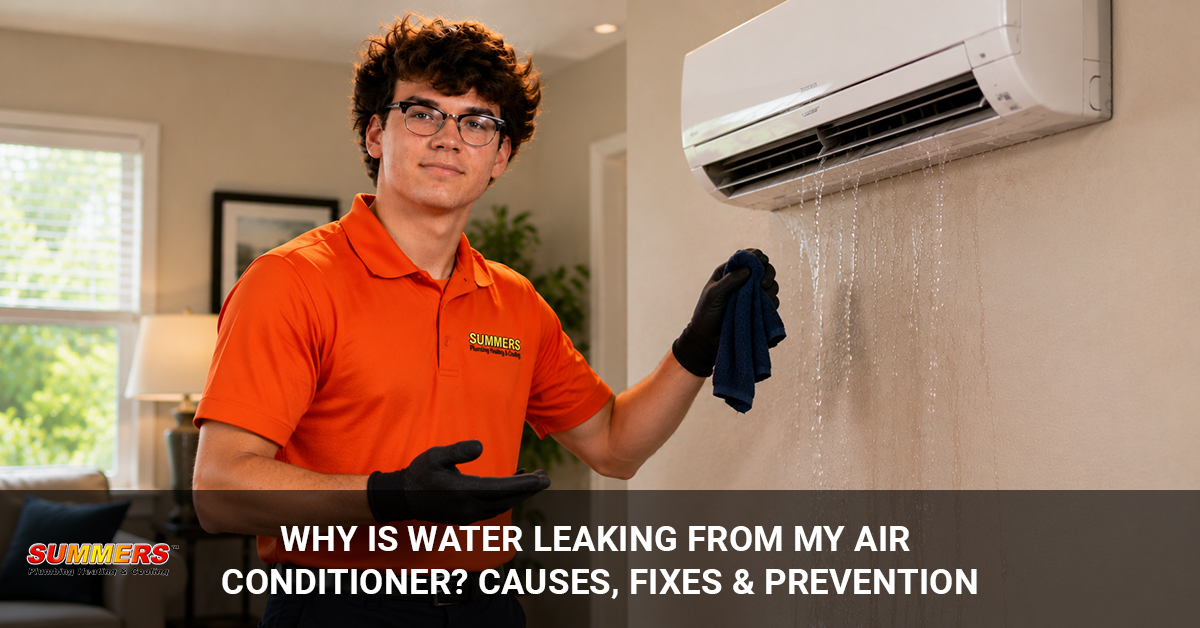
If your air conditioner is leaking water, the most likely cause is that condensation isn’t draining properly. A clogged drain line, dirty air filter, frozen evaporator coil, or damaged drain pan are some of the most common reasons this happens. While some of these issues are easy to fix, others require professional HVAC service.
Your air conditioner naturally removes moisture from the air as it cools your home. Under normal conditions, that water drains safely away through the condensate drain line. If something blocks the drainage system or prevents your AC from working properly, water can back up and leak inside your home.
Don’t ignore an indoor AC water leak. Even a small leak can lead to mold growth, water damage, higher energy bills, and reduced cooling performance if it’s left untreated.
In this guide, you’ll learn the most common reasons an air conditioner leaks water, how to identify the source of the problem, what you can do to fix it, and when it’s time to call an HVAC professional.
Why Is Water Leaking From My Air Conditioner?
Your air conditioner is usually leaking water because condensation isn’t draining out of the system properly. As your AC cools your home, it also removes humidity from the air. The moisture collects on the evaporator coil and is supposed to flow through the condensate drain line and safely out of your home.
When something interrupts that process, water can build up and leak from the indoor unit. The most common causes include a clogged condensate drain line, a frozen evaporator coil, a damaged drain pan, a dirty air filter, or low refrigerant levels. In some cases, an improperly installed air conditioner or a faulty condensate pump may also be to blame.
Although some AC water leaks are caused by simple maintenance issues, others require professional repair. Identifying the cause early can help prevent water damage, improve your air conditioner’s performance, and avoid more expensive repairs in the future.
Is It Normal for an Air Conditioner to Leak Water?
Yes, it’s normal for an air conditioner to produce condensation, but it should never leak water inside your home. As your AC cools the air, it also removes humidity. The moisture collects on the evaporator coil and normally drains through the condensate drain line before exiting outside or into a household drain.
It’s common to see a small amount of water around the outdoor unit, especially on hot or humid days. That’s a normal part of the cooling process and usually isn’t a cause for concern.
However, water dripping from the indoor unit, ceiling, walls, vents, or around the air handler is not normal. Indoor leaks usually mean the condensate drain line is clogged, the drain pan is damaged, the evaporator coil has frozen, or another part of the HVAC system isn’t working properly.
If you notice water leaking inside your home, don’t ignore it. Fixing the problem early can help prevent water damage, mold growth, and more expensive AC repairs.
10 Common Reasons Your Air Conditioner Is Leaking Water
Most indoor AC water leaks are caused by problems with drainage, airflow, or frozen components. The good news is that many of these issues can be identified and repaired before they lead to serious water damage or expensive HVAC repairs.
1. Clogged Condensate Drain Line
A clogged condensate drain line is the most common reason an air conditioner leaks water. As your AC removes humidity from the air, the condensation flows through the drain line and safely drains outside your home. Over time, algae, mold, dirt, and other debris can build up inside the line and block the flow of water.
When the drain line becomes clogged, the water has nowhere to go. Instead, it backs up into the drain pan until it overflows, causing water to leak around the indoor unit. You may also notice musty odors, higher indoor humidity, or your air conditioner shutting off if the condensate safety switch detects the blockage.
In many cases, clearing the clogged drain line restores proper drainage and stops the leak. Regular AC maintenance, including cleaning the condensate drain line, is the best way to prevent this common problem from happening again.
2. Dirty Air Filter
A dirty air filter can cause your air conditioner to leak water by restricting airflow. When the filter becomes clogged with dust and debris, less air passes over the evaporator coil. This can cause the coil to get too cold and freeze.
Once the ice melts, the extra water may overwhelm the drain pan and leak around the indoor unit. You may also notice weak airflow, longer cooling cycles, uneven temperatures, or higher energy bills.
The good news is that this is one of the easiest AC problems to prevent. Replacing your air filter every one to three months or more often if you have pets or allergies helps maintain proper airflow and reduces the risk of frozen coils and water leaks.
3. A Frozen Evaporator Coil
A frozen evaporator coil can cause your air conditioner to leak water when the ice begins to melt. This usually happens because of restricted airflow, low refrigerant levels, or a dirty evaporator coil. As the ice melts, it can produce more water than the drain system is designed to handle, causing water to overflow.
Besides the leak, you may notice ice on the indoor unit or refrigerant lines, weak airflow, poor cooling performance, or an AC that runs longer than usual without reaching the desired temperature.
If you think your evaporator coil is frozen, turn off your air conditioner and let the ice thaw completely before turning it back on. If the problem happens again, schedule an inspection with an HVAC professional. Repeated freezing usually points to an underlying issue that needs to be repaired.
If your system isn’t cooling properly along with freezing, our guide on AC not cooling explains other common causes and the troubleshooting steps you can take before scheduling a repair.
4. A Damaged or Rusted Drain Pan
A damaged or rusted drain pan can allow water to leak from your air conditioner even if the drain line is clear. The drain pan is designed to collect condensation before it drains through the condensate drain line. Over time, older metal drain pans can rust, corrode, or develop small cracks that let water escape.
This problem is most common in older air conditioning systems that have been in use for many years. If you notice water pooling beneath the indoor unit and the drain pan looks rusted or damaged, it may no longer be able to hold condensation properly.
Replacing a cracked or corroded drain pan is usually the best solution. Fixing the problem early can help prevent water damage to your floors, walls, or ceiling and keep your AC draining properly.
5. Low Refrigerant Levels
Low refrigerant can cause your air conditioner to leak water by freezing the evaporator coil. When refrigerant levels are too low, the pressure inside the system drops, causing the coil to become much colder than normal. Moisture on the coil freezes into ice, and when that ice melts, the excess water can overflow the drain pan and leak inside your home.
You may also notice warm air coming from the vents, longer cooling cycles, ice on the refrigerant lines, hissing sounds, or higher energy bills. These are all common signs of a refrigerant leak.
Unlike fuel, refrigerant isn’t consumed during normal operation. If your AC is low on refrigerant, there’s almost always a leak somewhere in the system. An HVAC technician can locate the leak, repair it, and recharge your air conditioner with the correct amount of refrigerant to restore proper performance.
6. A Broken Condensate Pump
A broken condensate pump can cause your air conditioner to leak water because it can’t remove condensation from the system. Not every AC has a condensate pump, but it’s common in homes where the indoor unit is located in a basement, crawl space, or another area where water can’t drain by gravity.
If the pump stops working because of a mechanical failure, power issue, or clogged discharge line, condensation collects in the pump’s reservoir until it overflows. This can lead to water leaking around the indoor unit.
In addition to water on the floor, you may notice your AC shutting off unexpectedly or hear unusual noises coming from the pump. In most cases, repairing or replacing the condensate pump will restore proper drainage and stop the leak.
7. Improper AC Installation
An improperly installed air conditioner can prevent condensation from draining the way it should. If the indoor unit isn’t level or the condensate drain line wasn’t installed with the correct slope, water may collect in the drain pan instead of flowing toward the drain.
This issue is more common with newly installed air conditioners or systems that have recently been relocated or replaced. If your AC has been leaking water since the day it was installed, poor installation could be the cause.
An HVAC professional can inspect the installation, level the indoor unit if necessary, and correct any drainage problems. Once the system is properly installed, condensation should drain normally, and the leak should stop.
8. A Clogged Secondary Drain or Drain Pan
A clogged secondary drain or overflow drain pan can also cause your air conditioner to leak water. Many HVAC systems have a secondary drain line or overflow pan that serves as a backup if the primary condensate drain becomes clogged.
If algae, dirt, or other debris block both drainage paths, the water has nowhere to go and can overflow into your home. This often results in water around the indoor unit or ceiling leaks if the air handler is installed in the attic.
Keeping both the primary and secondary drains clean with regular HVAC maintenance can help prevent unexpected leaks and costly water damage.
9. A Dirty Evaporator Coil
A dirty evaporator coil can cause your air conditioner to leak water by restricting airflow and allowing the coil to freeze. As dust and dirt build up on the coil, it can’t absorb heat efficiently, causing ice to form during normal operation.
When the ice melts, the extra water can overwhelm the drain system and leak around the indoor unit. You may also notice poor cooling performance, longer cooling cycles, or higher energy bills.
Having the evaporator coil professionally cleaned improves airflow, restores cooling efficiency, and helps prevent both frozen coils and water leaks.
10. High Indoor Humidity
High indoor humidity can cause your air conditioner to produce more condensation than it can drain. During periods of very humid weather, your AC works harder to remove moisture from the air. If the drain line is partially clogged or the drainage system can’t keep up, the excess condensation may overflow the drain pan.
Along with water leaks, you may notice your home feels damp, the windows fog up, or your AC runs longer than usual to maintain the desired temperature.
Keeping your home’s humidity between 30% and 50% can reduce excess condensation and help your air conditioner work more efficiently. If high humidity is a constant problem, installing a whole-home dehumidifier may help protect both your HVAC system and your indoor air quality.
How to Find Where the Water Is Coming From
Finding where the water is coming from can help you determine whether it’s a simple maintenance issue or a problem that needs professional repair. Start by checking the easiest and most visible parts of your air conditioning system before assuming there’s a major mechanical problem.
Check the Air Filter
A dirty air filter is one of the first things you should inspect. Remove the filter and check for heavy dust buildup or signs that it’s restricting airflow. If the filter looks dirty, replace it with a new one and monitor the system to see if the leak stops.
Inspect the Drain Pan
The drain pan should have little or no standing water in it. If it’s overflowing, cracked, or heavily rusted, it may be the source of the leak. Older metal drain pans are more likely to corrode over time and should be replaced if they’re damaged.
Look at the Condensate Drain Line
A clogged condensate drain line is the most common cause of indoor AC water leaks. Check around the drain line opening for standing water, algae growth, or visible debris. If you suspect a blockage, avoid pushing objects into the drain line, as this can make the problem worse.
Check for Ice on the Evaporator Coil
Ice on the evaporator coil usually means your air conditioner has another underlying problem. Look for frost or ice on the indoor unit or refrigerant lines. If you find any, turn off the AC and let the coil thaw completely before restarting the system.
Inspect Around the Indoor Unit
Water stains or damp areas around the indoor unit can help you locate the source of the leak. Look for puddles, wet insulation, ceiling stains, peeling paint, or signs of mold around the air handler. These clues can help identify where the water is escaping.
Look for Water Around the Outdoor Unit
A small amount of water around the outdoor unit is usually normal. Your air conditioner naturally produces condensation while cooling your home, especially during hot and humid weather. However, if the indoor unit is leaking while there’s little or no water outside, the problem is most likely somewhere inside your HVAC system.
How to Fix a Leaking Air Conditioner
The best way to fix a leaking air conditioner is to identify and repair the underlying cause. Some water leaks can be resolved with simple maintenance, while others require professional HVAC service. Addressing the problem early can help prevent water damage and keep your system running efficiently.
Replace the Air Filter
Replacing a dirty air filter is one of the easiest ways to stop and prevent AC water leaks. A clean filter improves airflow, reduces the risk of a frozen evaporator coil, and helps your air conditioner cool your home more efficiently. Most disposable filters should be replaced every one to three months.
Clear the Condensate Drain Line
Clearing a clogged condensate drain line restores normal drainage and often stops the leak. If you’re comfortable performing basic AC maintenance, you may be able to remove minor algae or debris from the drain line. However, if the line keeps clogging, it’s best to have it professionally cleaned to prevent recurring problems.
Turn Off a Frozen AC
If your evaporator coil is frozen, turn off the air conditioner immediately. Let the ice melt completely before restarting the system. Running your AC while the coil is frozen can strain the compressor and lead to more expensive repairs. If the coil freezes again, schedule a professional inspection to find the underlying cause.
Empty or Replace the Drain Pan
A damaged or overflowing drain pan should be repaired or replaced as soon as possible. If the pan is full because of a clogged drain line, clearing the blockage and cleaning the pan will usually solve the problem. If the pan is cracked or rusted, replacing it is the best long-term solution.
Clean the Evaporator Coil
Cleaning the evaporator coil improves airflow and helps prevent future water leaks. Because the coil is delicate and easily damaged, professional cleaning is recommended. A clean coil also improves cooling performance and helps your air conditioner run more efficiently.
Repair or Replace the Condensate Pump
A faulty condensate pump must be repaired or replaced before it can remove water properly. If your HVAC system uses a condensate pump, this repair should be handled by a qualified technician to ensure the drainage system works correctly.
Schedule Professional HVAC Service
If your air conditioner continues leaking water after basic troubleshooting, it’s time to call an HVAC professional. A technician can identify hidden drainage problems, repair refrigerant leaks, clean the evaporator coil, inspect the drain system, and make sure your entire air conditioning system is operating safely and efficiently.
When Should You Call an HVAC Professional?
You should call an HVAC professional if your air conditioner keeps leaking water after you’ve tried basic troubleshooting or if you suspect a more serious problem. While replacing a dirty air filter or checking for an obvious drain line blockage is safe for most homeowners, many AC water leaks require specialized tools and professional diagnosis.
It’s time to schedule HVAC service if:
- Water continues leaking after replacing the air filter or clearing a minor drain blockage.
- The evaporator coil freezes repeatedly.
- You suspect your system has a refrigerant leak.
- The condensate pump isn’t working properly.
- The drain pan is cracked, rusted, or leaking.
- The condensate drain line keeps clogging.
- Water has damaged your ceiling, walls, flooring, or insulation.
- Your AC isn’t cooling properly in addition to leaking water.
An HVAC technician can identify the exact cause of the leak, repair damaged components, clean the drainage system, check refrigerant levels, and make sure your air conditioner is operating safely and efficiently. Fixing the problem early can help prevent mold growth, protect your home from costly water damage, and avoid more expensive repairs in the future.
Can You Keep Running an AC That Is Leaking Water?
No, you shouldn’t keep running an air conditioner that’s leaking water inside your home until the problem has been identified. While it’s normal to see a small amount of water around the outdoor unit, water leaking from the indoor unit is a sign that something isn’t working as it should.
Continuing to run a leaking AC can lead to water damage, mold growth, damaged drywall or flooring, and even electrical hazards if water reaches nearby wiring or HVAC components.
If the leak is caused by a frozen evaporator coil or low refrigerant, operating the system can also put additional strain on your air conditioner and lead to more expensive repairs.
When you notice water leaking indoors, turn off the system and check the air filter, condensate drain line, and drain pan for obvious problems. If the leak continues or you can’t determine the cause, schedule an inspection with a qualified HVAC technician before using your air conditioner again.
How to Prevent Your Air Conditioner From Leaking Water
Regular maintenance is the best way to prevent your air conditioner from leaking water. Keeping your HVAC system clean and fixing small problems early can help prevent drainage issues, improve energy efficiency, and extend the life of your air conditioner.
Replace Air Filters Regularly
Replacing your air filter regularly helps maintain proper airflow and reduces the risk of water leaks. A clogged filter can restrict airflow, causing the evaporator coil to freeze and leak water when it thaws. Most disposable filters should be replaced every one to three months, or more often if you have pets, allergies, or heavy AC use.
Schedule Annual AC Maintenance
Annual AC maintenance helps catch small problems before they turn into costly repairs. Following a seasonal HVAC summer checklist is one of the easiest ways to prepare your cooling system, improve efficiency, and reduce the risk of water leaks during the hottest months of the year.
During a professional tune-up, an HVAC technician will inspect the condensate drain line, clean the evaporator coil, check refrigerant levels, test system performance, and make sure water is draining properly.
Keep the Condensate Drain Line Clean
A clean condensate drain line allows water to drain safely out of your air conditioner. Over time, algae, mold, and debris can clog the drain line and cause water to back up into your home. Having the line cleaned during routine maintenance can help prevent future blockages.
Clean the Evaporator Coil
A clean evaporator coil improves airflow and helps prevent freezing. Dust and dirt on the coil reduce cooling efficiency and increase the chance of ice forming. Professional coil cleaning helps your air conditioner run more efficiently and reduces the risk of water leaks.
Reduce Indoor Humidity
Lowering indoor humidity reduces the amount of condensation your air conditioner has to remove. If excess humidity is an ongoing problem in your home, learning how to improve indoor air quality can help reduce moisture, improve comfort, and ease the workload on your air conditioning system.
Keep your home’s humidity between 30% and 50% whenever possible. Using bathroom and kitchen exhaust fans, repairing plumbing leaks, and using a dehumidifier can all help reduce excess moisture.
Check the Drain Pan
Inspecting the drain pan regularly can help you spot problems before they cause water damage. If you notice rust, cracks, standing water, or signs of corrosion, have the drain pan repaired or replaced as soon as possible.
Keep the Unit Level
A properly installed air conditioner drains condensation more effectively. If the indoor unit isn’t level, water may collect in the drain pan instead of flowing into the condensate drain line. If you suspect the unit wasn’t installed correctly, have an HVAC professional inspect and adjust it.
Frequently Asked Questions
Why is my AC leaking water inside my house?
Your AC is usually leaking water inside because condensation isn’t draining properly. The most common causes include a clogged condensate drain line, a frozen evaporator coil, a dirty air filter, a damaged drain pan, or low refrigerant. Identifying the cause early can help prevent water damage and more expensive repairs.
Should I turn off my AC if it’s leaking water?
Yes, you should turn off your AC if it’s leaking water indoors. Continuing to run the system can cause water damage, encourage mold growth, and make the underlying problem worse. After turning it off, inspect the air filter and drain line for obvious issues. If the leak continues, contact an HVAC professional.
Can a dirty air filter cause water to leak?
Yes, a dirty air filter can cause your air conditioner to leak water. A clogged filter restricts airflow, which can cause the evaporator coil to freeze. When the ice melts, the excess water may overflow the drain pan and leak around the indoor unit.
Is a leaking AC dangerous?
A leaking air conditioner isn’t always dangerous, but it shouldn’t be ignored. Water leaks can damage floors, ceilings, drywall, and insulation. They can also promote mold growth and create electrical hazards if moisture reaches wiring or HVAC components.
How much does it cost to fix a leaking air conditioner?
The cost depends on what’s causing the leak. Simple repairs, such as replacing an air filter or clearing a clogged condensate drain line, are usually inexpensive. More complex repairs involving refrigerant leaks, a faulty condensate pump, or damaged HVAC components will typically cost more.
Why is my AC leaking water but still cooling?
Your AC can still cool your home even if it’s leaking water. Many leaks are caused by drainage problems rather than cooling failures. Even if your air conditioner seems to be working normally, the leak should be repaired promptly to prevent water damage and avoid larger HVAC problems.
Can I unclog the condensate drain line myself?
Yes, you can often clear a minor condensate drain line clog yourself if you’re comfortable performing basic AC maintenance. However, if the drain line keeps clogging or you’re unsure how to clean it safely, it’s best to have an HVAC professional inspect and service the system.
Why is my AC leaking only when it’s very humid?
High humidity causes your air conditioner to remove more moisture from the air, which increases the amount of condensation it produces. If the condensate drain line is partially clogged or the drainage system can’t keep up, the excess water can overflow the drain pan and leak inside your home during especially humid weather.
Final Thoughts
Water leaking from your air conditioner is usually a sign that something is preventing condensation from draining properly. While the cause is often a simple maintenance issue such as a clogged condensate drain line or a dirty air filter, it can also indicate more serious problems like a frozen evaporator coil, low refrigerant, or a faulty condensate pump.
The best way to avoid AC water leaks is through regular maintenance. Replacing your air filter on schedule, keeping the condensate drain line clear, and having your system professionally serviced each year can help prevent drainage problems, improve energy efficiency, and extend the life of your air conditioner.
If your AC continues leaking after basic troubleshooting, or you notice poor cooling, repeated freezing, or signs of water damage, don’t wait for the problem to get worse. Scheduling AC repair in Columbus, IN allows a qualified technician to identify the cause of the leak, protect your home from further damage, and restore reliable cooling. Having your HVAC system inspected by a qualified technician can help protect your home, prevent more expensive repairs, and keep your air conditioner running reliably throughout the cooling season.