

HEPA Filters vs Standard HVAC Filters: What’s the Difference?
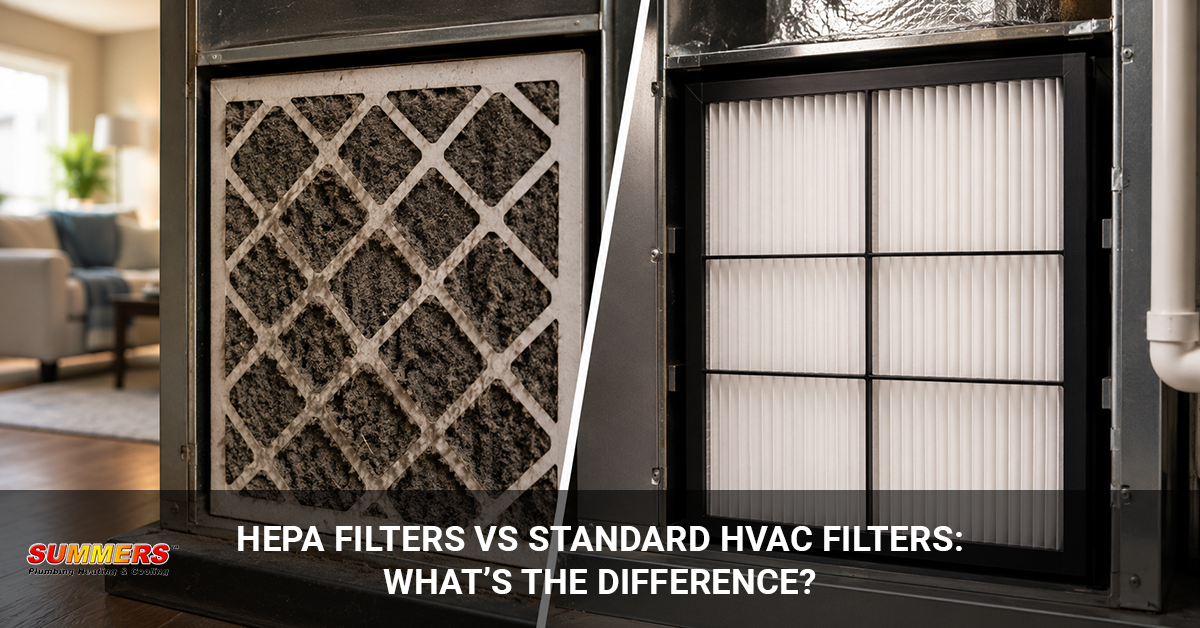
HEPA filters provide much higher air filtration than standard HVAC filters, but not every HVAC system is designed to handle true HEPA filtration. Standard HVAC filters are more commonly used in residential systems because they balance airflow, filtration, and system efficiency more effectively for most homes.
Many homeowners want cleaner indoor air, especially when dealing with allergies, pet dander, dust buildup, smoke particles, or poor indoor air quality. Choosing the wrong HVAC filter, however, can sometimes reduce airflow and strain the heating and cooling system.
This guide explains the differences between HEPA filters and standard HVAC filters, including filtration efficiency, airflow impact, maintenance requirements, costs, and which option works best for different homes and HVAC systems.
What Is a HEPA Filter?
A HEPA filter is a high-efficiency air filter designed to capture extremely small airborne particles. These filters are commonly used in environments where very clean air is important, especially where indoor air quality and allergen control are major concerns.
HEPA filters are much more effective than standard HVAC filters at trapping microscopic airborne contaminants.
HEPA Filter Definition
HEPA stands for High-Efficiency Particulate Air. A true HEPA filter is designed to capture at least 99.97% of airborne particles as small as 0.3 microns.
HEPA filters are significantly more efficient than standard residential HVAC filters at removing fine airborne particles from indoor air.
How HEPA Filters Work
HEPA filters use dense layers of filtration material to trap tiny airborne particles as air passes through the filter.
The filter captures particles using:
- Interception
- Impaction
- Diffusion
This filtration process helps remove microscopic pollutants before they circulate throughout the indoor environment.
What HEPA Filters Capture
HEPA filters are designed to capture a wide range of airborne contaminants that can affect indoor air quality.
HEPA filters can help remove:
- Dust
- Pollen
- Pet dander
- Smoke particles
- Mold spores
- Bacteria
This high level of filtration makes HEPA filters especially popular for homes with allergy concerns, pets, or poor indoor air quality.
HEPA Filter Efficiency Ratings
True HEPA filters are among the highest-rated air filtration systems available for indoor air cleaning.
A true HEPA filter captures:
- 99.97% of particles at 0.3 microns
Some products labeled as “HEPA-type” or “HEPA-like” may not meet true HEPA filtration standards, so checking product specifications is important.
Where HEPA Filters Are Commonly Used
HEPA filters are commonly used in environments where air cleanliness is especially important.
Common HEPA filter applications include:
- Hospitals
- Clean rooms
- Air purifiers
- Specialized HVAC systems
Many portable air purifiers use HEPA filtration because of its strong ability to remove fine airborne particles and allergens.
What Is a Standard HVAC Filter?
A standard HVAC filter is designed to protect the heating and cooling system while providing basic indoor air filtration. These filters are commonly installed in residential furnaces and air conditioning systems because they help balance airflow, system protection, and everyday air cleaning.
Most homes use standard HVAC filters as part of regular furnace and air conditioner maintenance.
Standard HVAC Filter Definition
Standard HVAC filters help trap larger airborne particles before they enter the HVAC system. Their primary purpose is often to protect HVAC equipment from dust, dirt, and debris buildup that can reduce system efficiency.
Some higher-quality standard filters can also improve indoor air quality significantly by capturing smaller airborne particles.
How Standard HVAC Filters Work
Standard HVAC filters capture airborne particles as air flows through the heating or cooling system.
The filter helps reduce:
- Dust circulation
- Dirt buildup
- Debris inside HVAC components
This helps improve HVAC performance, maintain airflow, and protect internal equipment from damage.
Common Types of Standard HVAC Filters
Several types of standard HVAC filters are commonly used in residential systems. Each type offers different levels of filtration efficiency, airflow, and maintenance requirements.
Common filter types include:
- Fiberglass filters
- Pleated filters
- Washable filters
Pleated filters are often more effective than basic fiberglass filters because they can capture smaller airborne particles.
What Standard HVAC Filters Capture
Standard HVAC filters can help capture many common household airborne particles that circulate through the heating and cooling system.
These filters may trap:
- Dust
- Lint
- Pet hair
- Pollen
- Larger debris particles
Higher MERV-rated filters usually capture smaller particles more effectively and may improve indoor air quality.
MERV Ratings Explained
Most standard HVAC filters use MERV ratings to measure filtration performance.
MERV stands for Minimum Efficiency Reporting Value. Higher MERV ratings generally capture smaller airborne particles more effectively than lower-rated filters.
Common residential MERV ratings include:
- MERV 8
- MERV 11
- MERV 13
Higher MERV ratings may improve filtration performance, but they can also reduce airflow in some HVAC systems if the equipment is not designed to handle denser filters.
HEPA Filters vs Standard HVAC Filters: Key Differences
HEPA filters and standard HVAC filters differ in filtration efficiency, airflow resistance, HVAC compatibility, maintenance needs, and overall indoor air cleaning performance. Understanding these differences can help homeowners choose the best filter for both air quality and HVAC system protection.
Filtration Efficiency Comparison
HEPA filters are much more efficient at capturing microscopic airborne particles than standard HVAC filters. True HEPA filters are designed to trap extremely small contaminants that many standard filters cannot capture effectively.
HEPA filters can help remove:
- Fine dust
- Smoke particles
- Bacteria
- Tiny allergens
Standard HVAC filters mainly capture larger airborne particles unless they use higher MERV ratings. If you’re trying to choose the best HVAC filters for wildfire smoke and allergies, our guide explains which options provide better filtration for smoke particles and allergens.
Airflow Restriction Differences
HEPA filters are denser than standard HVAC filters, which means they can restrict airflow more significantly inside the HVAC system.
Restricted airflow may:
- Reduce HVAC efficiency
- Increase system strain
- Affect heating and cooling performance
Standard filters usually allow better airflow in most residential heating and cooling systems.
Dust and Allergen Removal
HEPA filters generally remove allergens and fine airborne dust more effectively than standard HVAC filters.
HEPA filtration may help reduce:
- Allergy symptoms
- Pet dander
- Fine airborne dust
- Smoke particles
Higher-quality MERV-rated filters can also improve allergen control in many homes without requiring full HEPA filtration.
HVAC System Compatibility
Not every HVAC system is designed to handle true HEPA filtration. Some residential systems may struggle to move enough air through dense HEPA material safely and efficiently.
Some HVAC systems may experience:
- Reduced airflow
- Increased static pressure
- System strain
Professional HVAC evaluation may be needed before installing HEPA filtration in a whole-home system.
Maintenance Requirements
HEPA filters often require careful maintenance and regular replacement to maintain proper airflow and filtration performance.
Standard HVAC filters are usually:
- Easier to replace
- Less expensive
- More widely available
Regular filter maintenance is important for both indoor air quality and HVAC system efficiency.
Lifespan Comparison
Filter lifespan varies depending on:
- Indoor air quality
- Pets
- Dust levels
- HVAC usage
Many standard HVAC filters require replacement every 1–3 months, while some HEPA systems may last longer depending on usage conditions and filter design.
Cost Comparison
HEPA filters are usually more expensive than standard HVAC filters because of their advanced filtration performance and denser construction.
Costs may include:
- Filter replacement
- HVAC modifications
- Air purifier maintenance
Standard HVAC filters are generally more affordable for routine residential use.
Which Filter Improves Indoor Air Quality More?
HEPA filters usually provide the highest level of indoor air filtration and particle removal. However, many homes achieve very good indoor air quality improvement using properly sized high-MERV HVAC filters without the airflow restrictions of true HEPA filtration.
The best option often depends on:
- HVAC system compatibility
- Allergy concerns
- Indoor air quality needs
- Airflow requirements
- Maintenance preferences
How HEPA Filters Improve Indoor Air Quality
HEPA filters are highly effective at removing microscopic airborne particles that can affect indoor comfort, air cleanliness, and respiratory health. Their advanced filtration design helps reduce many common indoor air pollutants found in homes.
Removing Airborne Allergens
HEPA filters help reduce airborne allergens by trapping tiny particles before they circulate throughout the home.
HEPA filtration may help capture:
- Pollen
- Dust mites
- Mold spores
- Pet dander
This improved filtration may help reduce allergy symptoms and improve indoor comfort for sensitive individuals.
Reducing Pet Dander
Homes with pets often contain higher levels of airborne hair, dander, and fine dust particles. HEPA filters can trap smaller pet-related particles more effectively than many standard HVAC filters.
This may help reduce:
- Pet allergens
- Airborne fur particles
- Dust buildup
Better filtration may also help improve overall indoor air cleanliness in pet-friendly homes.
Capturing Fine Dust Particles
HEPA filters are highly effective at trapping very fine dust particles before they circulate through the indoor air.
Fine airborne dust can come from:
- Clothing fibers
- Outdoor pollutants
- Household activity
- Pet movement
Reducing fine dust may help improve indoor air quality and reduce visible dust buildup around the home.
Helping With Smoke and Odors
Some HEPA filtration systems combined with activated carbon filters may help reduce smoke particles and certain indoor odors.
These systems may help reduce:
- Smoke particles
- Cooking odors
- Indoor air pollutants
Activated carbon filters are often paired with HEPA filtration to improve odor control performance.
Mold Spore Filtration Benefits
HEPA filtration may help reduce airborne mold spores that contribute to poor indoor air quality and allergy concerns.
Mold spores can circulate through indoor air and may affect:
- Respiratory comfort
- Allergy symptoms
- Indoor air cleanliness
Capturing mold spores before they spread throughout the home may help improve overall air quality conditions.
Limitations of HEPA Filters in HVAC Systems
HEPA filters provide excellent air filtration, but they are not ideal for every HVAC system. Because HEPA filters are much denser than standard HVAC filters, they can sometimes create airflow and system performance problems in residential heating and cooling equipment.
Airflow Restriction Concerns
HEPA filters are very dense, which can significantly reduce airflow through the HVAC system if the equipment is not designed to handle high-efficiency filtration.
Poor airflow may:
- Reduce heating and cooling efficiency
- Increase equipment strain
- Affect indoor comfort
Restricted airflow can also force the HVAC system to run longer heating or cooling cycles.
HVAC Compatibility Problems
Many residential HVAC systems are not designed for true HEPA filtration. Some systems may struggle to move enough air through dense filter material safely and efficiently.
Systems without proper airflow capacity may experience:
- Reduced efficiency
- Increased equipment wear
- Airflow imbalance
Older HVAC systems are especially vulnerable to airflow problems caused by overly restrictive filters.
Static Pressure Issues
High-efficiency filters can increase static pressure inside HVAC systems, forcing the equipment to work harder to move air throughout the home.
Excessive static pressure may lead to:
- Reduced airflow
- Blower motor strain
- Higher energy usage
- Reduced HVAC lifespan
Proper airflow balance is important for both comfort and system performance.
Why Some HVAC Systems Cannot Use True HEPA Filters
Some HVAC systems simply cannot move enough air through dense HEPA filter material without reducing performance or stressing the equipment.
This is often because:
- Residential systems are designed for lower airflow resistance
- Standard blower motors may not handle HEPA pressure levels
- Existing ductwork may not support restricted airflow properly
Professional modifications may sometimes be required before adding whole-home HEPA filtration.
When HVAC Modifications May Be Needed
Whole-home HEPA filtration systems may require HVAC upgrades or airflow modifications to operate correctly.
Possible modifications may include:
- Stronger blower motors
- Additional filtration cabinets
- HVAC redesign adjustments
- Ductwork improvements
Professional HVAC evaluation is important before upgrading to HEPA filtration to avoid airflow problems and equipment strain.
Benefits of Standard HVAC Filters
Standard HVAC filters remain the most common option for residential heating and cooling systems because they provide a practical balance between airflow, filtration, affordability, and HVAC system protection. For many homes, standard filters offer enough filtration without creating airflow problems.
Better Airflow for Most HVAC Systems
Most residential HVAC systems are designed to work efficiently with standard filters and moderate MERV ratings. These filters usually allow better airflow than dense HEPA filters.
Good airflow helps:
- Maintain heating and cooling performance
- Reduce HVAC strain
- Improve energy efficiency
- Support consistent indoor comfort
Proper airflow is important for keeping the HVAC system operating safely and efficiently.
Lower Cost
Standard HVAC filters are usually much more affordable than HEPA filtration systems. Replacement filters are widely available and generally cost less for routine maintenance.
Lower costs may include:
- Less expensive filters
- Reduced maintenance expenses
- Fewer HVAC modification needs
This makes standard filters a practical choice for many homeowners.
Easier Replacement
Most standard HVAC filters are easy for homeowners to replace without professional assistance. Regular filter replacement is one of the simplest HVAC maintenance tasks.
Many filters can be replaced in just a few minutes by:
- Turning off the HVAC system
- Removing the old filter
- Inserting the new filter correctly
Routine replacement helps maintain proper airflow and system performance.
Good Basic Dust Protection
Standard HVAC filters help reduce dust and debris buildup inside the heating and cooling system.
These filters help reduce:
- Dust buildup
- Debris accumulation
- HVAC component contamination
Protecting internal HVAC components may help reduce wear and extend system lifespan.
Widely Compatible With Residential Systems
Most residential furnaces and air conditioners are designed for standard HVAC filters. Standard filters usually work well with existing airflow capacity and HVAC system design.
This wide compatibility helps reduce the risk of:
- Airflow restriction
- Static pressure problems
- Excess equipment strain
For many homes, standard HVAC filters provide a reliable balance between indoor air filtration and overall HVAC efficiency.
Final Thoughts
HEPA filters provide much stronger air filtration than standard HVAC filters, but they may not work properly with every residential HVAC system. While HEPA filtration can greatly improve indoor air quality, the dense filter material may also reduce airflow and place additional strain on some heating and cooling systems.
Standard HVAC filters often provide a better balance between airflow, filtration performance, HVAC protection, and affordability for most homes. Higher MERV-rated filters can also improve allergen and dust control without the airflow restrictions commonly associated with true HEPA filters.
Choosing the right HVAC filter depends on several factors, including:
- HVAC system compatibility
- Indoor air quality needs
- Allergy concerns
- Pets in the home
- Overall airflow requirements
Regular filter replacement and proper HVAC maintenance remain important no matter which type of filter you choose. Clean filters help improve airflow, protect HVAC equipment, support energy efficiency, and maintain healthier indoor air throughout the home.