
Fall Furnace Maintenance Checklist: Prepare for Winter
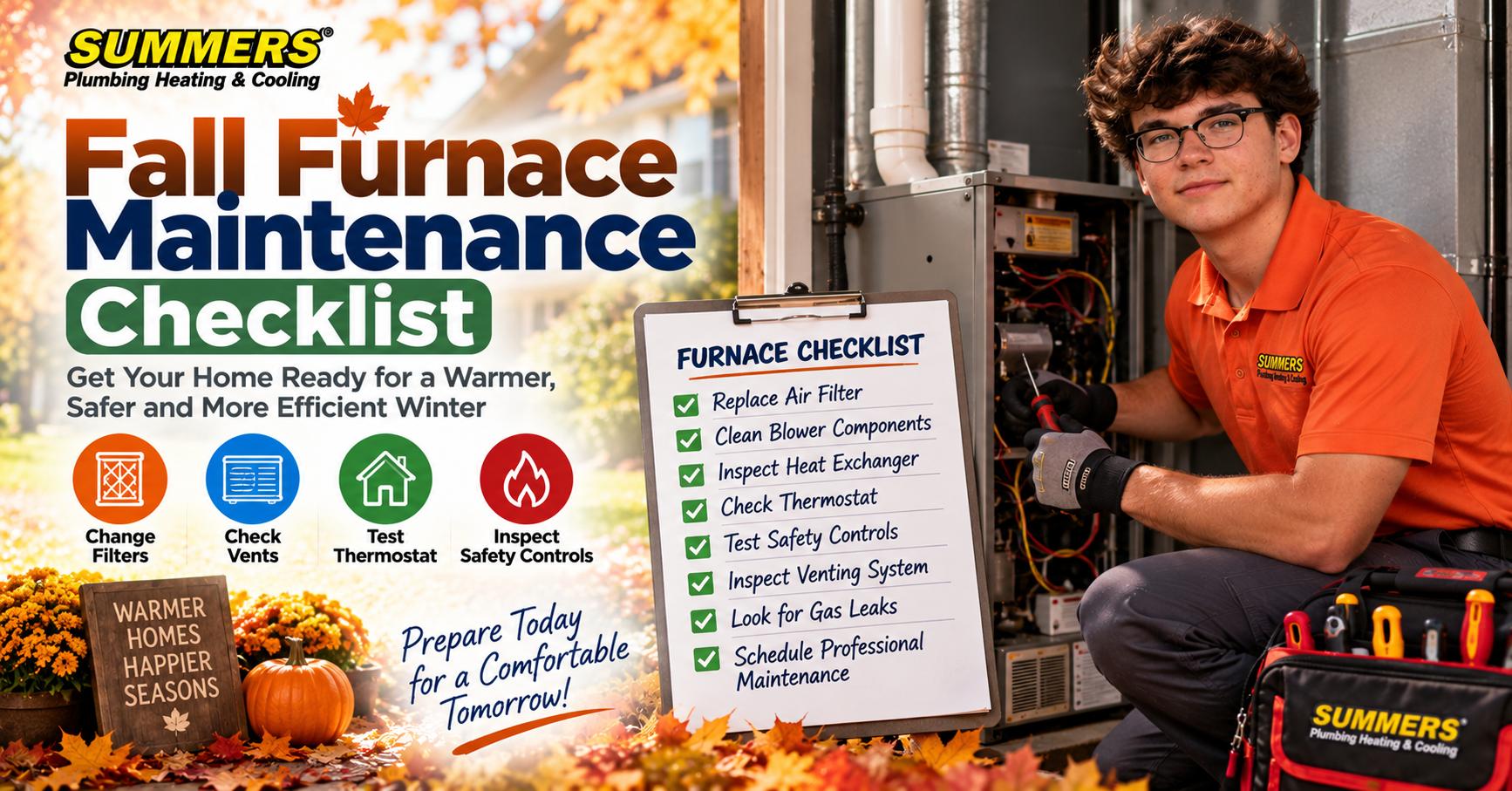
A fall furnace maintenance checklist helps prepare your heating system for colder weather and catch problems before you need the furnace every day. The most important tasks include replacing the filter, checking the thermostat, cleaning vents, clearing the furnace area, testing the system, checking carbon monoxide detectors, and scheduling professional maintenance.
Taking these steps in fall can help improve heating performance, maintain proper airflow, and reduce the chance of an unexpected breakdown during winter.
Fall Furnace Maintenance Checklist: What Should You Do?
Before cold weather arrives, work through these furnace maintenance tasks:
- Replace or clean the furnace filter.
- Test the thermostat.
- Clean supply vents and return grilles.
- Clear the area around the furnace.
- Inspect the furnace for visible problems.
- Check accessible furnace venting.
- Inspect accessible ductwork.
- Test the furnace before winter.
- Listen for unusual sounds.
- Check for unusual odors.
- Test carbon monoxide detectors.
- Schedule professional furnace maintenance.
Some tasks are simple homeowner checks, while gas, combustion, electrical, and internal furnace work should be left to a qualified HVAC professional.
1. Replace or Clean the Furnace Filter
Replace or clean the furnace filter before the heating season begins. A clogged filter restricts airflow and can make the furnace work harder to heat your home.
Remove the existing filter and check its condition. If it is dirty or clogged, replace it with the correct size and type recommended for your furnace.
Check the filter regularly during winter because heating frequency, pets, dust, and indoor air quality can affect how quickly it becomes dirty.
Avoid choosing an extremely restrictive filter simply because it has a higher filtration rating. Your furnace needs adequate airflow to operate properly.
2. Check the Thermostat
Test the thermostat before you need regular heating. Switch the thermostat to heat and raise the temperature slightly above the current room temperature.
The furnace should respond and begin a heating cycle.
Also check:
- The thermostat display
- Batteries, if applicable
- Heating schedule
- Temperature accuracy
- Whether the furnace responds to temperature changes
If the thermostat calls for heat but the furnace doesn’t start, don’t repeatedly reset the system. The problem could involve the thermostat, power supply, ignition system, safety controls, or another component.
3. Clean Supply Vents and Return Grilles
Clean supply vents and return grilles before winter to maintain good airflow. Dust, pet hair, and debris can accumulate around these openings during the year.
Vacuum visible dust from the grilles and make sure furniture, curtains, rugs, or other objects aren’t blocking them.
Pay attention to rooms that consistently receive weak airflow. If cleaning the vents and replacing the filter doesn’t improve the problem, the cause may be related to ductwork, the blower, dampers, or another HVAC component.
4. Clear the Area Around the Furnace
Keep the area around the furnace clean and unobstructed. Remove boxes, clothing, cleaning supplies, storage items, and anything else that could interfere with access or create a fire hazard.
Don’t use the furnace area as a storage space.
Keeping the area clear also gives a technician easier access if the furnace needs inspection or repair.
For fuel-burning furnaces, never store flammable materials near the equipment.
5. Inspect the Furnace for Visible Problems
Look at the outside of the furnace and surrounding area for obvious signs of trouble.
Check for:
- Rust or corrosion
- Water around the furnace
- Damaged components
- Loose-looking connections
- Unusual staining
- Signs of previous leaks
A visual inspection does not replace professional maintenance. Don’t remove furnace panels or attempt to inspect internal combustion components unless you’re qualified to do so.
If you see water leaking around the furnace or significant corrosion, arrange an inspection before using the system heavily.
6. Check Furnace Venting and Flue
Check accessible furnace venting for obvious damage, loose sections, gaps, or other visible problems. Proper venting is especially important for fuel-burning furnaces because combustion gases need to leave the home safely.
Don’t modify, disconnect, or repair the furnace flue yourself.
If you notice damaged venting, unusual exhaust odors, soot, corrosion, or other concerns, stop and have the system inspected by a qualified HVAC professional.
7. Inspect Accessible Ductwork
Inspect accessible ductwork for obvious damage, disconnected sections, or loose connections.
Duct problems can allow heated air to escape before it reaches your rooms. They can also contribute to uneven temperatures and increased heating costs.
Look for rooms that consistently feel colder than others. If one area has poor airflow despite an open vent and clean filter, there may be a duct or airflow problem that requires further inspection.
Don’t open walls or ceilings just to inspect hidden ducts. Focus on accessible areas and have a professional investigate persistent airflow problems.
8. Test the Furnace Before Winter
Test your furnace before the first major cold spell. Running it in fall gives you time to identify problems before you depend on it every day.
Raise the thermostat slightly and let the furnace complete a heating cycle.
Check whether:
- The furnace starts normally.
- Warm air comes from the vents.
- Airflow feels adequate.
- The furnace reaches the thermostat setting.
- The system turns off normally.
- There are no unusual sounds.
- There are no persistent unusual smells.
If the furnace doesn’t heat properly, get it checked before temperatures drop significantly.
9. Listen for Unusual Furnace Sounds
Listen to the furnace when it starts, runs, and shuts down. New or unusually loud sounds can indicate a mechanical or airflow problem.
Watch for:
- Banging
- Rattling
- Grinding
- Scraping
- Squealing
- Repeated clicking
- Loud popping
The meaning of a sound depends on the furnace and when the noise occurs. A rattling sound, for example, can have a different cause from a grinding noise.
Don’t ignore a new sound simply because the furnace still produces heat. Early diagnosis may prevent a small problem from becoming a larger repair.
10. Check for Unusual Furnace Smells
A dusty smell may occur briefly when a furnace is first turned on after sitting unused for months. However, a persistent burning, electrical, or gas odor should not be ignored.
If you smell gas, leave the area and follow your local gas utility’s emergency procedures. Don’t operate electrical switches or create flames near a suspected gas leak.
A strong burning or electrical smell can also indicate an overheating or electrical problem. Turn the furnace off and have it inspected.
Never rely on smell alone to detect carbon monoxide because carbon monoxide is colorless and odorless.
11. Test Carbon Monoxide Detectors
Test your carbon monoxide detectors before the heating season. This is especially important if your home uses a gas, oil, or other fuel-burning furnace.
Check that:
- The detector powers on.
- The test function works.
- Batteries are replaced when needed.
- Detectors are installed according to the manufacturer’s instructions.
- Expired detectors are replaced.
If a carbon monoxide alarm sounds, leave the home and contact the appropriate emergency or utility service. Don’t assume the alarm is a false alarm without having the situation checked.
12. Schedule Professional Furnace Maintenance
Schedule professional furnace maintenance in fall, especially if the system hasn’t been serviced recently. A technician can inspect internal components and safety systems that aren’t appropriate for most homeowners to handle.
Depending on the furnace, professional maintenance may include checking:
- Heat exchanger
- Burners
- Ignition system
- Flame sensor
- Blower motor
- Electrical connections
- Safety controls
- Gas pressure
- Venting
- Combustion performance
- Airflow
- Overall heating operation
The exact inspection varies by furnace type and manufacturer.
Professional maintenance is particularly important for older furnaces, systems with previous repair problems, and furnaces that have been sitting unused for an extended period.
What Should Be Done Before Turning on the Furnace After Summer?
Before turning on your furnace after summer, replace the filter, clean vents and returns, clear the area around the furnace, check the thermostat, inspect visible components, and test the system.
You should also make sure your carbon monoxide detectors are working.
The first test should be brief. Pay attention to the startup, airflow, temperature of the air coming from the vents, sounds, and smells.
If anything seems abnormal, turn the furnace off and have it inspected rather than continuing to run it.
How Often Should a Furnace Be Serviced?
A furnace should generally receive professional maintenance at least once a year, with fall being a convenient time for heating-system maintenance. If you’re planning seasonal service, understanding furnace maintenance cost can help you budget for routine care.
Annual maintenance gives a technician an opportunity to inspect the system before the furnace enters its busiest operating period.
However, maintenance needs can vary depending on the furnace type, age, usage, manufacturer’s recommendations, and previous problems.
Homeowners should still check the filter regularly between professional visits.
What Happens If You Skip Fall Furnace Maintenance?
Skipping fall furnace maintenance can increase the chance of reduced heating performance, airflow problems, unexpected repairs, and winter breakdowns.
Potential problems include:
- Restricted airflow
- Uneven heating
- Higher energy use
- Longer heating cycles
- Ignition problems
- Drainage issues
- Unexpected shutdowns
- More expensive emergency repairs
Maintenance doesn’t guarantee that a furnace won’t fail. It does give you an opportunity to identify worn or malfunctioning components before winter demand increases.
DIY vs. Professional Furnace Maintenance
Some furnace maintenance tasks are suitable for homeowners, while others require specialized tools, training, and safety procedures.
| Maintenance Task | DIY | Professional |
| Replace furnace filter | ✓ | |
| Clean vents and returns | ✓ | |
| Clear area around furnace | ✓ | |
| Test thermostat | ✓ | |
| Test CO detector | ✓ | |
| Check visible venting | ✓ | |
| Inspect heat exchanger | ✓ | |
| Inspect burners | ✓ | |
| Check gas pressure | ✓ | |
| Inspect electrical components | ✓ | |
| Test safety controls | ✓ | |
| Check combustion | ✓ | |
| Detailed furnace inspection | ✓ |
Don’t bypass safety switches or attempt to repair gas, electrical, ignition, or combustion components yourself.
Simple Fall Furnace Maintenance Checklist
Use this quick checklist before winter:
- Replace or clean the furnace filter
- Test the thermostat
- Clean supply vents and return grilles
- Clear the area around the furnace
- Inspect the furnace for visible problems
- Check accessible venting and flue
- Inspect accessible ductwork
- Test the furnace
- Listen for unusual sounds
- Check for unusual odors
- Test carbon monoxide detectors
- Schedule professional furnace maintenance
Save or print this checklist so you can use it each fall.
When Should You Call a Furnace Professional?
Call a furnace professional when the system won’t start, doesn’t produce enough heat, repeatedly shuts down, makes unusual noises, or shows signs of a mechanical, electrical, gas, or combustion problem.
Get professional help if you notice:
- The furnace blows cold air.
- The furnace won’t start.
- The system repeatedly short cycles.
- The circuit breaker repeatedly trips.
- The furnace makes loud banging, grinding, or scraping sounds.
- You smell gas.
- You notice a strong burning or electrical odor.
- Water is leaking around the furnace.
- The furnace produces soot or unusual exhaust.
- A carbon monoxide detector alarms.
- Heating performance has noticeably declined.
Don’t wait until the first freezing night to address these problems. Fall is usually a much better time to diagnose and repair a furnace.
Final Takeaway
A fall furnace maintenance checklist should cover the filter, thermostat, vents, furnace area, ductwork, venting, system operation, unusual sounds and smells, and carbon monoxide detectors.
Homeowners can handle basic cleaning and inspection tasks, but furnace components involving gas, electricity, combustion, ignition, and safety controls should be handled by a qualified professional.
Testing your furnace and scheduling maintenance before winter gives you a better chance of finding problems while there’s still time to fix them.
FAQs
Is fall a good time to service a furnace?
Yes, fall is a good time to service a furnace because it prepares the system for increased winter use and gives you time to address problems before cold weather arrives.
What should be included in a fall furnace maintenance checklist?
A fall furnace maintenance checklist should include replacing the filter, testing the thermostat, cleaning vents, clearing the furnace area, checking accessible ductwork and venting, testing the furnace, checking CO detectors, and scheduling professional maintenance.
How do I prepare my furnace for winter?
Replace the filter, clean vents and returns, clear the furnace area, check the thermostat, inspect visible components, test the furnace, and have professional maintenance performed before heavy winter use.
Should I run my furnace before winter?
Yes, testing your furnace before winter can help identify problems before you need it regularly. Watch for proper heating, airflow, unusual sounds, odors, and repeated shutdowns.
How often should I change my furnace filter?
Check your furnace filter regularly and replace or clean it according to the manufacturer’s recommendations. Homes with pets, dust, or high furnace use may require more frequent filter changes.
How often should a furnace be professionally serviced?
A furnace should generally be professionally serviced at least once a year. Fall is a convenient time because it allows the system to be checked before winter heating demand increases.
What happens if I don’t service my furnace before winter?
Skipping maintenance can contribute to poor airflow, reduced heating performance, higher energy use, unexpected breakdowns, and potentially more expensive repairs.
Can I perform furnace maintenance myself?
You can safely handle basic tasks such as replacing the filter, cleaning vents, clearing the area around the furnace, testing the thermostat, and checking carbon monoxide detectors. Gas, electrical, combustion, and internal furnace work should be left to a qualified professional.