

Spring HVAC Maintenance Checklist: Prepare Your AC for Summer
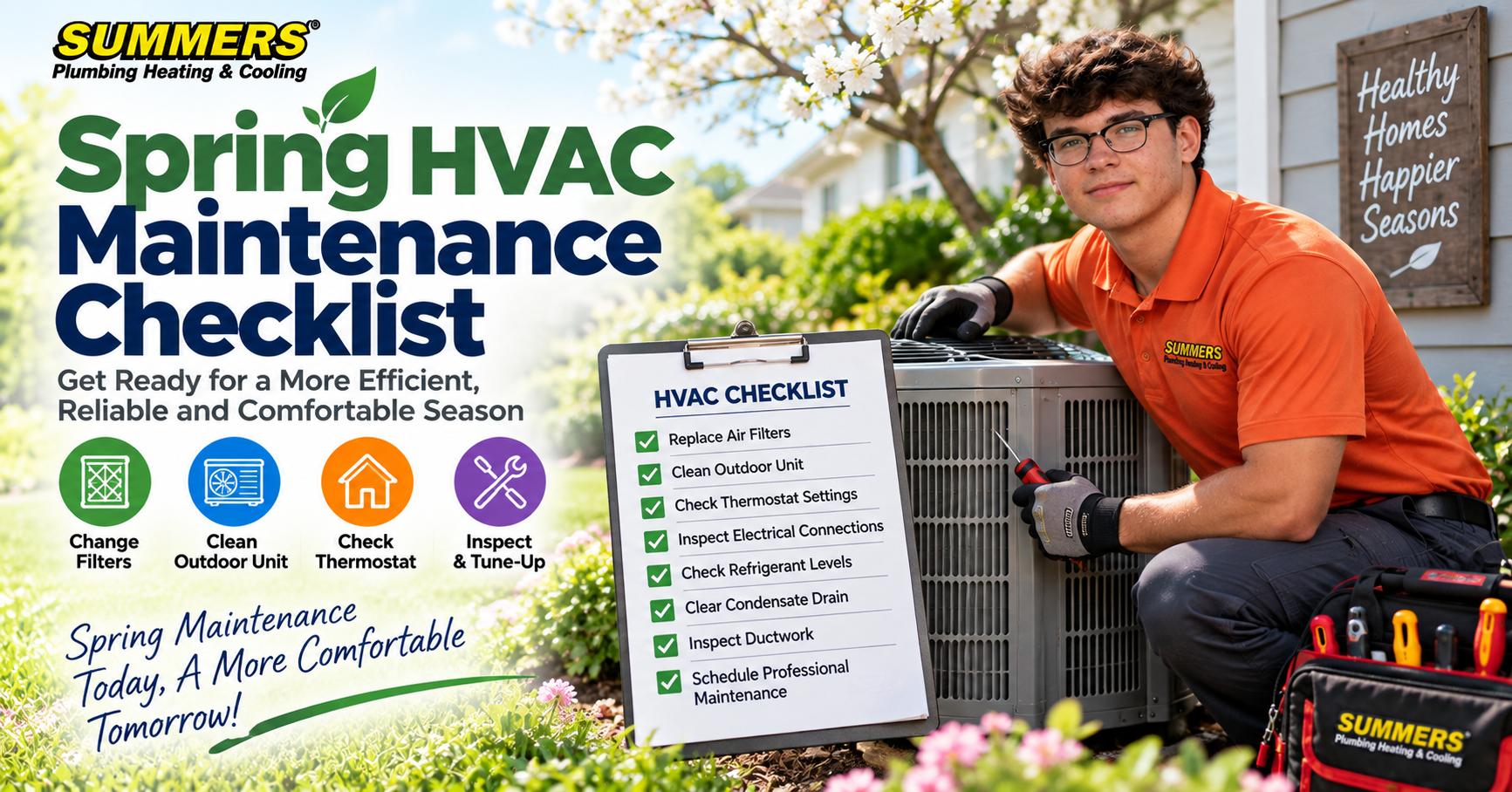
Spring is the best time to prepare your HVAC system for the warmer months ahead. A spring HVAC maintenance checklist should include changing the filter, checking airflow, cleaning around the outdoor unit, testing the AC, inspecting the condensate drain, and scheduling professional maintenance.
Taking care of these tasks before summer can help your system cool your home more efficiently and reduce the risk of an unexpected breakdown during the hottest days.
Spring HVAC Maintenance Checklist: What Should You Do?
A complete spring HVAC maintenance checklist includes these essential tasks:
- Replace or clean the HVAC filter.
- Clean supply vents and return grilles.
- Check the thermostat.
- Inspect the outdoor AC unit.
- Clear leaves, grass, and debris around the condenser.
- Check refrigerant-line insulation.
- Inspect accessible ductwork.
- Check the condensate drain.
- Test the AC before hot weather arrives.
- Listen for unusual sounds.
- Check for unusual smells.
- Schedule professional HVAC maintenance.
Most of these checks are simple, but electrical, refrigerant, and internal component work should be handled by a qualified HVAC professional.
1. Replace or Clean the HVAC Filter
Replacing or cleaning the HVAC filter is one of the easiest and most important spring maintenance tasks. A dirty filter restricts airflow and can make your HVAC system work harder to cool your home.
Check the filter before switching to regular AC use. If it is visibly dirty or clogged, replace it according to the manufacturer’s recommendations.
A clean filter can help maintain proper airflow and reduce the amount of dust entering the system.
How often you need to replace the filter depends on the filter type, home conditions, pets, and system usage. Some filters last longer than others, so follow the filter manufacturer’s instructions rather than replacing it based on a fixed schedule alone.
2. Clean Supply Vents and Return Grilles
Clean your supply vents and return grilles in spring to remove accumulated dust and debris. Blocked or dirty vents can reduce airflow and make some rooms feel warmer than others.
Vacuum visible dust from the grilles and make sure furniture, curtains, rugs, or other objects are not blocking them.
Also check whether certain rooms consistently have weak airflow. Poor airflow can sometimes point to duct problems, a dirty filter, blower issues, or other HVAC problems.
3. Check Your Thermostat
Test your thermostat before you need your AC every day. Set it to cooling mode and make sure the system responds properly.
Check that:
- The thermostat display works.
- The system switches to cooling.
- The indoor temperature changes as expected.
- The thermostat batteries are working if it uses batteries.
- Your programmed schedule is appropriate for spring and summer.
If the thermostat calls for cooling but the AC does not start, don’t repeatedly reset the system. There may be an electrical, thermostat, or equipment problem that needs professional diagnosis. If you notice issues with the thermostat, see these common AC thermostat problems and possible causes.
4. Inspect the Outdoor AC Unit
Inspect the outdoor condenser before summer arrives. Look around the unit for leaves, grass, branches, dirt, or other debris that may have collected during winter.
Check for obvious signs of physical damage and make sure the unit is sitting properly.
Keep plants and vegetation from growing too close to the condenser. Restricted airflow around the outdoor unit can make it harder for the system to release heat.
Don’t remove electrical panels or attempt to repair internal components during a basic inspection.
5. Clear Debris Around the Condenser
Clear leaves, grass, weeds, and other debris from around the outdoor AC unit to maintain good airflow. Trim vegetation that has grown too close during the winter and early spring.
The condenser needs adequate space around it to move air efficiently. Don’t use the area around the unit for storing garden equipment, boxes, furniture, or other items.
If the condenser coil itself needs a thorough cleaning, it’s better to have the work done carefully rather than damaging the delicate fins.
6. Check Refrigerant Lines and Insulation
Check the visible refrigerant lines for damaged or missing insulation. The larger refrigerant line is normally insulated, and damaged insulation can affect system performance.
You should also look for obvious signs of a refrigerant problem, such as:
- Ice forming on the refrigerant line
- Poor cooling
- Hissing sounds
- Unexpectedly high cooling costs
- The AC running for long periods without reaching the set temperature
Don’t try to add refrigerant yourself. Refrigerant service requires the appropriate equipment and should be performed by a qualified HVAC technician.
7. Inspect Ductwork and Airflow
Check accessible ductwork for obvious damage, disconnected sections, or loose connections. Duct leaks can allow conditioned air to escape before it reaches your living spaces.
Pay attention to rooms that consistently have weak airflow or feel much warmer than the rest of the house.
Poor airflow can have several causes, including:
- Dirty filters
- Blocked vents
- Duct leaks
- Blower problems
- Improper system sizing
- Closed dampers
If basic checks don’t solve the problem, have an HVAC professional inspect the system and ductwork.
8. Check the Condensate Drain
Checking the condensate drain is an important part of spring HVAC maintenance because your AC produces moisture while it operates.
A clogged drain can cause water to back up and potentially leak around the indoor unit.
Look for standing water, water stains, or signs of moisture around the indoor HVAC equipment. If your system has an accessible drain line, make sure there are no obvious signs of blockage.
If water is already leaking from the system, turn off the equipment if necessary and have it inspected rather than ignoring the problem.
9. Test Your AC Before Summer
Test your air conditioner before the first major heat wave. Running the system in advance gives you time to identify problems while HVAC service may be easier to schedule.
When testing the AC, check whether:
- Cool air comes from the supply vents.
- Airflow is reasonably strong.
- The indoor temperature begins to drop.
- The outdoor unit starts normally.
- The system turns off when the desired temperature is reached.
- There are no unusual noises or odors.
- Water isn’t leaking around the indoor equipment.
If the AC runs continuously but can’t cool the home properly, don’t wait until the hottest day of summer to call for service. If your AC isn’t cooling properly, have the problem diagnosed before summer demand increases.
10. Listen for Unusual HVAC Sounds
Unusual sounds can be an early warning sign of an HVAC problem. Listen carefully when the system starts, runs, and shuts down.
Pay attention to sounds such as:
- Grinding
- Squealing
- Rattling
- Banging
- Hissing
- Repeated clicking
A minor sound can sometimes indicate a loose component, worn motor, airflow issue, or another mechanical problem.
If the sound is loud, new, or getting worse, have the system inspected before continuing heavy AC use.
11. Check for Unusual HVAC Smells
Your HVAC system should not produce persistent burning, electrical, or strong musty odors during normal operation.
A temporary dusty smell when first starting the system after a long period of inactivity may occur, but a persistent or unusual odor deserves attention.
Turn the system off and seek professional help if you notice a strong burning or electrical smell, especially if it is accompanied by smoke, unusual noises, or electrical problems.
Musty smells may also point to moisture or biological growth somewhere in the HVAC system or ductwork.
12. Schedule Professional Spring HVAC Maintenance
Professional HVAC maintenance is worth scheduling in spring because a technician can inspect components that homeowners cannot safely check themselves. Use an HVAC maintenance checklist to keep track of routine maintenance throughout the year.
A typical professional AC maintenance visit may include checking:
- Electrical connections
- Capacitors and contactors
- Condenser and evaporator coils
- Refrigerant system performance
- Blower operation
- Airflow
- Condensate drainage
- Safety controls
- System temperature performance
- Overall cooling operation
The exact maintenance tasks depend on your HVAC system and its condition. Scheduling an AC tune-up in spring can help identify potential cooling problems before the system needs to run heavily during summer.
Professional maintenance is especially important if the system is older, has had previous problems, or has not been serviced recently.
What Should Be Done Before Turning on the AC After Winter?
Before using your AC regularly after winter, replace the filter, clean vents, clear debris from the outdoor unit, check the thermostat, inspect visible components, and test the system.
You don’t need to perform complicated repairs just because the AC has been off for several months. The goal is to make sure the basic components are clean, accessible, and operating normally before summer demand increases.
If the AC makes unusual noises, doesn’t cool properly, leaks water, or repeatedly shuts off, schedule professional service.
How Often Should HVAC Maintenance Be Done?
Most homeowners should have their HVAC system professionally inspected at least once a year, although the ideal schedule depends on the equipment and how heavily it is used.
Spring is a good time for AC-focused maintenance because it allows problems to be found before the system needs to run continuously during summer.
If your home has separate heating and cooling equipment, you may benefit from seasonal maintenance for each system.
Regular filter checks and basic homeowner inspections should also continue throughout the year.
What Happens If You Skip Spring HVAC Maintenance?
Skipping spring HVAC maintenance can increase the chance of poor cooling performance and unexpected problems during summer.
Potential issues include:
- Reduced airflow
- Higher energy consumption
- Uneven cooling
- Longer cooling cycles
- Drain problems
- Poor indoor comfort
- Unexpected AC breakdowns
- More expensive repairs
Maintenance cannot prevent every HVAC failure, but finding problems early can make repairs easier and help you avoid an emergency during extreme heat.
DIY vs. Professional HVAC Maintenance
Some spring HVAC tasks are safe for homeowners, while others require professional equipment and training.
| Maintenance Task | DIY | Professional |
| Replace HVAC filter | ✓ | |
| Clean vents and returns | ✓ | |
| Clear debris around outdoor unit | ✓ | |
| Check thermostat | ✓ | |
| Inspect visible insulation | ✓ | |
| Clean internal coils | ✓ | |
| Check electrical components | ✓ | |
| Test refrigerant system | ✓ | |
| Repair refrigerant leaks | ✓ | |
| Detailed HVAC inspection | ✓ |
Never bypass safety controls or open electrical panels simply to perform a spring inspection.
Simple Spring HVAC Maintenance Checklist
Use this quick checklist before summer:
- Replace or clean the HVAC filter
- Clean supply vents and return grilles
- Check thermostat operation
- Clear debris around the outdoor unit
- Inspect the condenser for visible damage
- Check refrigerant-line insulation
- Inspect accessible ductwork
- Check for condensate drain problems
- Test the AC
- Listen for unusual sounds
- Check for unusual odors
- Schedule professional HVAC maintenance if needed
Keeping this checklist handy can make seasonal HVAC maintenance easier and help you catch small problems before they become bigger ones.
When Should You Call an HVAC Professional?
You should call an HVAC professional when your AC doesn’t cool properly, makes unusual noises, leaks water, repeatedly shuts off, or shows signs of an electrical or refrigerant problem.
Professional service is particularly important if you notice:
- The AC blows warm air.
- The system runs continuously without cooling the home.
- The circuit breaker keeps tripping.
- Ice forms on the indoor coil or refrigerant line.
- Water leaks around the indoor unit.
- You smell burning or an electrical odor.
- The outdoor unit won’t start.
- The system repeatedly short cycles.
- Cooling performance has noticeably declined.
Addressing these issues in spring is usually better than waiting until the system fails during a summer heat wave.
Final Takeaway
A spring HVAC maintenance checklist should start with simple tasks such as replacing the filter, cleaning vents, checking the thermostat, clearing the outdoor unit, inspecting airflow, and testing the AC.
Professional maintenance should handle electrical components, refrigerant-related problems, internal components, and detailed system performance checks.
The best time to find an AC problem is before you depend on it every day. A spring check gives you a chance to fix problems early and head into summer with a system that’s ready for the workload.
FAQs
Is spring a good time to service an HVAC system?
Yes, spring is a good time to service an HVAC system because it prepares the AC for increased summer use and gives you time to address problems before extreme heat arrives.
What should I do to my AC in the spring?
Replace the filter, clean vents, clear debris around the outdoor unit, check the thermostat, inspect visible components, test cooling, and schedule professional maintenance when needed.
Should I run my AC after winter?
Yes, testing your AC in spring can help identify cooling problems before summer. Start with a brief test and check for proper airflow, cooling, unusual sounds, odors, and leaks.
How often should I change my HVAC filter in spring?
Check your HVAC filter regularly and replace or clean it according to the filter manufacturer’s recommendations. Homes with pets, allergies, or heavy dust may require more frequent filter changes.
How do I prepare my AC for summer?
Prepare your AC by replacing the filter, cleaning vents, clearing the outdoor condenser, checking airflow, testing the thermostat and cooling system, and scheduling professional maintenance.
Does spring HVAC maintenance save money?
Spring HVAC maintenance can help reduce wasted energy by addressing problems that affect system performance. It can also help identify issues before they turn into more expensive repairs.
Can I clean my AC unit myself?
You can safely remove leaves, grass, and other debris from around the outdoor unit, but internal AC cleaning and electrical work should be left to a qualified HVAC professional.