

Why Is My AC Tripping the Circuit Breaker? 7 Common Causes
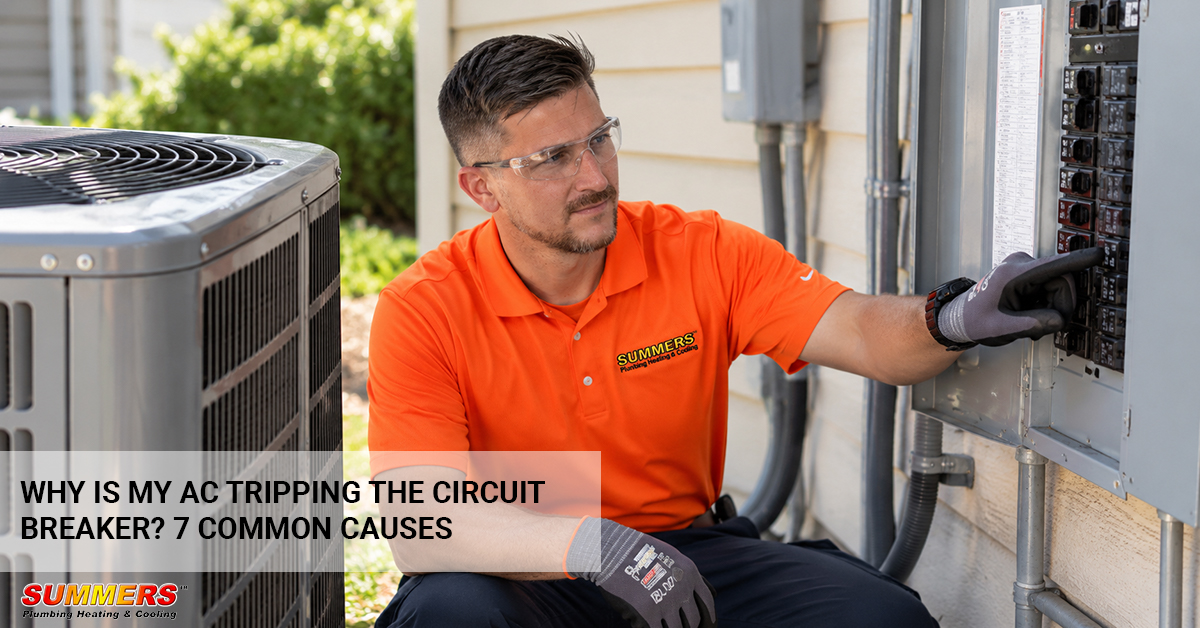
If your AC keeps tripping the circuit breaker, something may be wrong with the air conditioner or its electrical circuit. Common causes include a bad capacitor, a struggling compressor, a faulty fan motor, damaged wiring, or an overloaded circuit.
The timing of the trip can help you narrow down the problem. If the breaker trips as soon as the AC starts, there may be an electrical fault or a problem with a motor or compressor. If it trips after the system runs for a while, overheating or excessive electrical demand may be involved.
What should you do? Turn off the AC and avoid repeatedly resetting the breaker. You can check the air filter and look for visible debris around the outdoor unit, but leave electrical testing and internal repairs to a qualified professional.
In this guide, you’ll learn the seven common reasons an AC trips the breaker, what different symptoms may mean, and when to call an HVAC technician or electrician.
Why Does My AC Keep Tripping the Circuit Breaker?
Your AC keeps tripping the circuit breaker when it draws too much current or develops an electrical fault. Common causes include a failing capacitor, a struggling compressor, a faulty fan motor, damaged wiring, or a problem with the breaker itself.
Pay attention to when the breaker trips. If it trips as soon as the AC starts, there may be a short circuit, a ground fault, or a problem with the compressor or motor. If it trips after running for several minutes, overheating or sustained excessive current may be the cause.
You may be able to spot simple maintenance issues, such as a clogged air filter or debris around the outdoor unit. However, these do not explain every breaker trip. A qualified HVAC technician or electrician may need to inspect the system and test its electrical components to find the actual cause.
Important: If the breaker trips repeatedly, leave it off and arrange a professional inspection. Never keep resetting it to force the AC to run.
7 Common Reasons Your AC Trips the Breaker
Your AC may trip the circuit breaker because of a failing component, an electrical fault, or a problem that causes the system to draw too much current. Here are seven common causes, the warning signs to watch for, and what to do next.
1. A Failing AC Capacitor
A failing AC capacitor can make the compressor or fan motor struggle to start, which may contribute to a breaker trip.
The capacitor helps the motor start or run, depending on the system design. When it fails, you may notice that the outdoor unit hums but does not start properly, or the AC stops working during startup.
Common warning signs include:
- The outdoor unit hums but the fan or compressor does not start normally.
- The AC struggles to start or shuts down unexpectedly.
- You hear unusual noises when the system starts.
- The breaker trips as the compressor tries to start.
These signs do not always mean the capacitor is bad. A faulty motor, compressor problem, or electrical supply issue can cause similar symptoms.
What should you do?
Turn off the AC and contact a qualified HVAC technician. The technician can test the capacitor and check other components before recommending a repair.
Do not open the unit or attempt to replace the capacitor yourself. Capacitors can retain a dangerous electrical charge even after the power is disconnected.
2. A Dirty Condenser Coil or Restricted Airflow
A dirty condenser coil or restricted airflow can reduce your AC’s efficiency and put extra strain on the system. In some cases, this strain may contribute to overheating or electrical problems that cause the breaker to trip.
The outdoor condenser coil releases heat from your home. When dirt, grass, or leaves build up on the coil, the system may struggle to release that heat. Inside your home, a clogged air filter or blocked return vent can also restrict airflow and affect cooling performance.
Common warning signs include:
- The AC runs for a long time but struggles to cool your home.
- Airflow from the vents feels weak.
- Dirt or debris blocks parts of the outdoor unit.
- The system shuts down during periods of heavy use.
Keep in mind that a dirty coil or air filter does not automatically cause a breaker to trip. A motor problem or electrical fault may be responsible.
What should you do?
Check the air filter and replace it according to the manufacturer’s recommendations. Clear loose leaves and debris from around the outdoor unit, keeping the required clearance.
Avoid removing panels or reaching inside the equipment. If the breaker continues to trip, leave the AC off and have a qualified HVAC technician inspect the system.
3. A Failing AC Compressor
A failing AC compressor can trip the circuit breaker if it struggles to start, overheats, or develops an internal electrical fault.
The compressor circulates refrigerant through your AC system to move heat out of your home. If it develops a problem, the system may draw too much current or shut down unexpectedly.
Common warning signs include:
- The breaker trips when the outdoor unit starts.
- You hear an unusual humming or buzzing sound.
- The AC stops cooling your home.
- The breaker trips repeatedly during cooling cycles.
These symptoms don’t always mean the compressor has failed. A bad capacitor, a motor problem, or an electrical supply issue can cause similar symptoms.
A compressor problem can also affect your home’s cooling performance. Learn about other possible causes of an AC not cooling properly and how these issues can be diagnosed.
What should you do?
Turn off the AC and contact a qualified HVAC technician. The technician can test the compressor, inspect its starting components, and check the electrical supply to identify the cause.
If the compressor has failed, ask whether repair or replacement makes more sense for your system’s age, condition, and repair cost.
Before deciding on a repair, it’s helpful to understand the potential expense. Read our guide to AC repair costs in Columbus, Indiana, to learn which factors can affect your repair bill.
4. A Faulty AC Fan Motor
A faulty AC fan motor can trip the circuit breaker if it overheats, develops an electrical fault, or draws more current than it should.
Your AC typically has an indoor blower motor that moves air through your home and an outdoor fan motor that helps release heat. If either motor stops working properly, the system may struggle to cool your home and may develop other problems.
Common warning signs include:
- The outdoor fan doesn’t run when expected.
- You hear grinding, squealing, or unusual humming.
- Airflow from the indoor vents is weak.
- The breaker trips while the AC is running.
A fan that won’t spin doesn’t automatically mean the motor has failed. A bad capacitor, an obstruction, or another electrical problem could be responsible.
Grinding, squealing, or humming may indicate a problem with a fan motor or another component. Learn more about the possible causes of an AC making loud noises and when to seek professional help.
What should you do?
Turn off the AC if the breaker trips repeatedly or the fan operates abnormally. Don’t reach through the outdoor unit’s grille or try to spin the fan by hand.
A qualified HVAC technician can inspect the fan motor, capacitor, and electrical connections to determine what’s causing the problem.
5. Damaged Wiring, Loose Connections, or a Short Circuit
Damaged wiring, loose connections, or a short circuit can cause your AC breaker to trip and may create a risk of electric shock or fire.
Wiring can become damaged over time because of age, corrosion, vibration, physical damage, or poor installation. Loose electrical connections can also overheat and cause the breaker to trip.
A short circuit happens when electricity takes an unintended path. A ground fault occurs when electrical current escapes its intended path and flows toward ground. Both can cause a breaker or other protective device to trip.
Warning signs include:
- The breaker trips as soon as the AC starts.
- You notice a burning smell near the unit or electrical panel.
- You see melted or damaged electrical components.
- You hear unusual buzzing or crackling near electrical equipment.
- The problem starts after electrical work or a new installation.
Some wiring problems have no obvious warning signs. A breaker that keeps tripping may be the first indication.
What should you do?
Turn off the AC and arrange an inspection by a qualified electrician or HVAC technician. The right professional depends on where the fault is located.
If you notice smoke, sparks, or a burning smell, stay away from the affected equipment. If there is smoke or fire, move to safety and contact emergency services. Never open electrical panels or attempt to repair exposed wiring yourself.
6. An Overloaded Circuit or Incorrect Breaker Rating
An overloaded circuit can trip your AC breaker when electrical demand exceeds what the circuit can safely handle.
Air conditioners need properly sized electrical circuits. Depending on the system, your central AC may require a dedicated circuit and a breaker that matches the equipment’s specifications and applicable electrical requirements.
A circuit may be unsuitable for the equipment, or an underlying AC problem may cause the system to draw more current than normal. A breaker that is incorrectly sized for the installation can also cause problems.
What should you do?
Have a qualified electrician check the circuit, wiring, breaker rating, and AC manufacturer’s requirements.
Never install a larger breaker just to stop it from tripping. The breaker protects the wiring from excessive current, and using an incorrectly rated breaker can create a fire hazard.
7. A Worn or Defective Circuit Breaker
A worn or defective circuit breaker can cause repeated trips, but you should rule out problems with the AC and its wiring before blaming the breaker.
Circuit breakers can deteriorate over time. However, a breaker that trips repeatedly may be doing its job by protecting the circuit from excessive current or an electrical fault.
Possible warning signs include:
- The breaker trips repeatedly without an obvious pattern.
- The breaker won’t stay in its normal position.
- You notice visible damage around the electrical panel.
- The problem continues after the AC has been inspected or repaired.
These signs don’t confirm that the breaker is faulty. An electrical inspection is needed to identify the actual cause.
What should you do?
Contact a qualified electrician to inspect the breaker, electrical panel, and circuit. If the electrician finds that the problem originates in the AC itself, a qualified HVAC technician may also need to inspect the system.
Never remove the panel cover or attempt to replace the breaker yourself.
Why Does My AC Breaker Trip at Different Times?
The time your AC breaker trips can help you narrow down the possible cause. A breaker that trips immediately may indicate an electrical fault, while one that trips after several minutes may point to overheating or excessive current draw.
The timing is a useful clue, but a technician must inspect the system to confirm the problem.
Why Does My AC Breaker Trip Immediately?
If your AC breaker trips immediately, a short circuit, ground fault, damaged wiring, or an electrical fault inside the equipment may be responsible.
A faulty compressor or motor can also cause an immediate trip. If this happens as soon as you turn on the AC, leave the breaker off and call a qualified professional.
Don’t keep resetting the breaker. Repeated attempts to restart the system can expose you to an unresolved electrical hazard.
Why Does My AC Breaker Trip When the AC Starts?
Your AC breaker may trip during startup if the compressor or motor draws excessive current or has trouble starting.
Common causes include:
- A failing capacitor.
- A compressor that struggles to start.
- A faulty fan or motor.
- A problem with the electrical supply or wiring.
A brief increase in current during startup is normal, but repeated breaker trips are not. A qualified HVAC technician can test the starting components and measure current draw to identify the cause.
Why Does My AC Breaker Trip After 5–30 Minutes?
If your AC breaker trips after running for several minutes, the system may be drawing too much current, overheating, or developing an electrical or motor problem.
Some faults appear only after components heat up or the system runs under a sustained load. Restricted airflow or a dirty condenser coil may also affect system performance, although neither automatically explains a breaker trip.
Turn off the AC if the problem repeats. Have a qualified technician inspect the system rather than repeatedly resetting the breaker.
Why Does My AC Breaker Trip Only on Hot Days?
If your AC breaker trips only on hot days, increased cooling demand may be exposing an existing problem with the equipment or electrical circuit.
During hot weather, your AC may run longer and work harder to remove heat from your home. Possible causes include:
- A dirty outdoor condenser coil.
- A compressor or motor struggling under heavy demand.
- An electrical connection or circuit problem.
- A component that overheats during extended operation.
Hot weather alone doesn’t explain repeated breaker trips. If the problem occurs mainly on very hot days, leave the system off after a trip and arrange a professional inspection.
What Should You Do When Your AC Trips the Breaker?
If your AC trips the breaker, turn off the system, check for visible warning signs, and avoid repeatedly resetting the breaker. You can perform a few basic checks, but a professional should investigate repeated trips.
Step 1: Turn Off the AC
If the breaker trips, leave the AC off instead of trying to restart it repeatedly.
Check for warning signs such as a burning smell, smoke, sparks, or visible electrical damage. If you notice any of these signs, stay away from the equipment and electrical panel. If there is a fire or immediate danger, move to safety and contact emergency services.
Step 2: Check the Thermostat and Air Filter
If there are no signs of an electrical hazard, check the thermostat settings and inspect the air filter.
Make sure the thermostat is set to cooling mode and replace a dirty filter according to the manufacturer’s instructions.
These simple checks can help identify maintenance issues, but they won’t fix a faulty compressor, damaged wiring, or another electrical problem.
If your thermostat isn’t controlling the cooling cycle correctly, review these common AC thermostat problems to understand what might be affecting your system.
Step 3: Check for Debris Around the Outdoor Unit
Leaves, grass, and other debris can block airflow around the outdoor condenser.
From a safe distance, look for visible obstructions and clear away loose debris around the unit. Keep the manufacturer’s recommended clearance, and don’t remove panels or reach through the grille.
If the unit looks damaged or makes unusual noises, leave the AC off and arrange professional service.
Step 4: Don’t Keep Resetting the Breaker
Repeatedly resetting a breaker that keeps tripping won’t fix the underlying problem and may expose you to an electrical hazard.
If the breaker trips again, leave it off and call a qualified professional. Never attempt to reset it if you notice burning, smoke, sparks, or other signs of electrical damage.
Step 5: Call a Qualified Professional
A qualified HVAC technician can inspect the capacitor, compressor, fan motors, and other AC components. A licensed electrician can check the breaker, electrical panel, wiring, and circuit.
Depending on the cause, you may need one or both professionals. Their testing can identify the fault and help prevent the breaker from tripping again.
If you need professional help diagnosing the problem, our AC repair services in Columbus, IN can help identify issues affecting your air conditioner’s performance.
When Should You Call an HVAC Technician or Electrician?
Call a professional if your AC keeps tripping the breaker, struggles to start, makes unusual noises, or shuts down during a cooling cycle. Repeated trips can signal an electrical fault or a failing AC component that needs proper diagnosis.
Call an HVAC technician if:
- The outdoor unit hums but doesn’t start properly.
- The AC struggles to cool your home.
- You suspect a faulty capacitor, compressor, or fan motor.
- The system shuts down repeatedly while running.
Call a qualified electrician if:
- The breaker trips repeatedly, and the cause is unclear.
- You suspect damaged wiring or a faulty breaker.
- You notice problems with the electrical panel or circuit.
- The issue started after electrical work or a new installation.
Sometimes, both professionals may need to inspect the system to identify the cause.
Get urgent help if you notice a burning smell, smoke, sparks, or melted electrical components. Stay away from the affected equipment, and contact emergency services if there’s a fire or immediate danger. Don’t use the AC again until a qualified professional confirms it’s safe.
How Can You Prevent Your AC Breaker From Tripping Again?
You can reduce the risk of AC breaker trips by keeping the system clean, scheduling regular maintenance, and fixing unusual operating problems early. However, maintenance cannot prevent every electrical fault.
Here are six ways to help keep your AC running reliably:
- Replace the air filter regularly. A clogged filter restricts airflow and can affect cooling performance. Follow the manufacturer’s replacement schedule and check the filter more often in dusty conditions.
- Keep the outdoor unit clear. Remove loose leaves and debris around the condenser. Don’t open the unit or touch its electrical components.
- Schedule regular AC maintenance. A qualified HVAC technician can inspect the system, check its operation, and identify potential problems before they become more serious.
- Pay attention to unusual noises. Humming, grinding, or repeated startup problems may indicate a faulty component. Arrange an inspection instead of ignoring these signs.
- Address breaker trips promptly. If the breaker trips repeatedly, leave it off and have the cause diagnosed. Resetting it won’t fix an underlying fault.
- Keep electrical work compliant. Have a qualified electrician inspect circuit or breaker problems and ensure repairs meet applicable electrical requirements.
Regular maintenance can improve your AC’s performance and help catch developing problems early. If the breaker keeps tripping despite proper maintenance, arrange a professional inspection rather than assuming the problem is minor.
Frequently Asked Questions
Why does my AC keep tripping the circuit breaker?
Your AC may keep tripping the breaker because of a failing capacitor, compressor or fan motor problem, damaged wiring, a short circuit, or an overloaded circuit. A defective breaker is another possibility. A qualified professional can inspect the system and test the electrical components to find the cause.
Is it safe to reset an AC circuit breaker?
Repeatedly resetting an AC breaker is unsafe when the cause of the trip is unknown. If it trips again, leave it off and call a qualified professional. Never attempt a reset if you notice smoke, sparks, a burning smell, or visible electrical damage.
Can a bad capacitor trip an AC breaker?
Yes, a bad capacitor can contribute to an AC breaker trip if the affected motor or compressor struggles to start or draws abnormal current. However, a failing motor or another electrical problem can cause similar symptoms. A technician should test the components before recommending a replacement.
Can a dirty air filter cause an AC breaker to trip?
A clogged air filter can restrict airflow and affect your AC’s performance, but it doesn’t automatically explain a breaker trip. If the breaker keeps tripping, a technician should check for electrical faults, motor problems, and other possible causes.
Why does my AC trip the breaker after a few minutes?
An AC breaker that trips after several minutes may indicate overheating, sustained excessive current, a motor problem, or a faulty electrical connection. The timing can help narrow down the possibilities, but it cannot confirm the cause. Leave the system off if the problem repeats and arrange a professional inspection.
Can a bad AC compressor trip the breaker?
Yes, a failing compressor can trip the breaker if it struggles to start, overheats, or develops an internal electrical fault. A technician should also check the capacitor, electrical supply, and other components before recommending compressor repair or replacement.
Should I call an HVAC technician or an electrician?
Call an HVAC technician if you suspect a faulty capacitor, compressor, fan motor, or another AC component. Contact a qualified electrician for suspected wiring, circuit breaker, or electrical panel problems. You may need both professionals if the source of the fault is unclear.
Why does my AC breaker trip only when it’s hot outside?
Your AC breaker may trip on hot days because the system runs longer and works harder to cool your home, exposing an existing equipment or electrical problem. A dirty condenser coil, struggling compressor, motor fault, or circuit issue may be responsible. Repeated trips need professional diagnosis, even if the AC works normally in cooler weather.
Final Thoughts
If your AC keeps tripping the circuit breaker, don’t ignore it or keep resetting the breaker. The problem could be a failing capacitor, a struggling compressor, damaged wiring, or another electrical fault.
If your AC has recurring problems or needs expensive repairs, review these signs you need AC replacement to help evaluate whether replacing the system may make more sense.
You can check the thermostat, replace a dirty air filter, and look for debris around the outdoor unit. However, leave electrical testing and internal repairs to a qualified HVAC technician or electrician.