Furnace Blowing Cold Air Instead of Heat? Here’s What Could Be Wrong
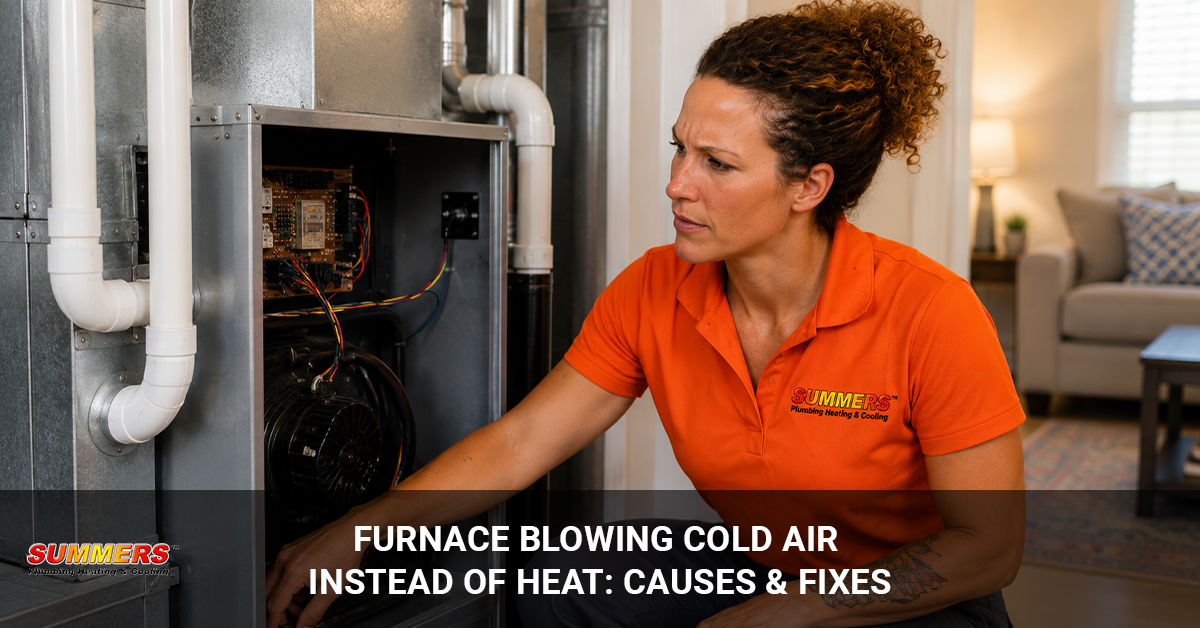
If your furnace is blowing cold air instead of heat, the problem could be as simple as the thermostat settings or as serious as a failed ignition system. The exact cause depends on your furnace and what happens before the cold air starts coming from the vents.
In many homes, the issue turns out to be something minor. A dirty air filter, an overheated furnace, or the fan running continuously can all make it feel like your heating system has stopped working. In other cases, worn or faulty components prevent the furnace from producing heat and require professional repair.
The first step is figuring out why your furnace is blowing cold air. Some problems are safe to check yourself, while others should be left to a licensed HVAC technician to avoid damaging the system or creating a safety risk.
This guide explains the most common reasons a furnace blows cold air, how to troubleshoot the problem safely, when it’s time to call a professional, and what you can do to help prevent it from happening again.
Why Is Your Furnace Blowing Cold Air?
Your furnace blows cold air when the blower is running, but the system isn’t producing heat. In other words, air is moving through your vents, but it isn’t being warmed before it reaches your rooms.
A furnace normally follows a simple heating cycle. It starts the burners or heating elements, warms the heat exchanger, and then turns on the blower to circulate heated air throughout your home. If any part of that process fails, the blower may still run, but it will push cool or cold air through the vents instead.
The cause can be something simple, like the thermostat set incorrectly or a dirty air filter. It can also be a mechanical problem, such as an ignition failure, overheating, a faulty flame sensor, or another component that prevents the furnace from heating properly. If your system isn’t producing any heat at all, our guide on why your furnace is not heating explains additional causes and troubleshooting steps.
The good news is that many of these issues are easy to identify. Once you understand the most common causes, you’ll know which problems you can safely troubleshoot yourself and when it’s time to call an HVAC professional.
Below are the most common reasons your furnace is blowing cold air instead of heat.
10 Common Reasons Your Furnace Is Blowing Cold Air
1. The Thermostat Is Set Incorrectly
Incorrect thermostat settings are one of the most common reasons a furnace blows cold air. Before assuming your furnace needs a repair, check the thermostat first because the fix may be as simple as changing one setting.
A common mistake is leaving the fan set to ON instead of AUTO. When the fan is set to ON, it runs all the time, even when the furnace isn’t heating. As a result, it keeps blowing room-temperature air through the vents, which often feels cold.
You should also make sure:
- The thermostat is set to HEAT.
- The temperature is set higher than the current room temperature.
- The fan is set to AUTO instead of ON.
- The batteries are working if your thermostat uses them.
- The display is on and responding normally.
- A programmed schedule hasn’t lowered the temperature automatically.
If the thermostat recently lost power or was reset, it may also need to be reprogrammed.
What You Can Do
Set the thermostat to HEAT, switch the fan from ON to AUTO, and raise the temperature a few degrees above the current room temperature. Then wait several minutes to see if the furnace starts a heating cycle and warm air begins coming from the vents.
If the thermostat is blank, unresponsive, or still doesn’t signal the furnace to heat, replace the batteries if applicable. If that doesn’t solve the problem, the thermostat or its wiring may need to be inspected by an HVAC technician. Some thermostat issues affect both heating and cooling systems. Learn more about common thermostat problems that can prevent your HVAC system from operating correctly.
2. A Dirty Air Filter Is Restricting Airflow
A dirty air filter can cause your furnace to blow cold air by restricting airflow and making the system overheat. When this happens, the furnace shuts off the burners to protect itself, but the blower often keeps running, so you only feel cool air coming from the vents.
Over time, furnace filters collect dust, pet hair, pollen, and other debris. As the filter becomes clogged, less air moves through the system. The restricted airflow causes the heat exchanger to get too hot, triggering the high-limit safety switch. This safety feature turns off the burners to prevent damage while allowing the blower to continue circulating air.
A clogged filter doesn’t just affect comfort. It can also:
- Reduce heating efficiency.
- Increase energy bills.
- Cause the furnace to cycle on and off more often.
- Put extra strain on the blower motor.
- Shorten the lifespan of the furnace.
Signs Your Air Filter Needs to Be Replaced
Your air filter may be clogged if you notice:
- Weak airflow from the vents.
- More dust around your home.
- Higher heating bills than usual.
- The furnace frequently turns on and off.
- A filter that looks gray, dirty, or packed with debris.
What You Can Do
Turn off the furnace and inspect the air filter. If it looks dirty, replace it with a new filter that matches the size and MERV rating recommended by the manufacturer.
Most homes should replace the furnace filter every one to three months. If you have pets, allergies, or run your heating system frequently, you may need to replace it more often.
3. The Pilot Light Is Out (Older Gas Furnaces)
A blown-out pilot light can cause an older gas furnace to blow cold air because the burners can’t ignite without it. Even though the blower may continue running, the furnace won’t produce heat until the pilot light is working again.
The pilot light is a small flame that ignites the main gas burners. If it goes out, the heating cycle stops before warm air is produced, leaving only cool air coming through the vents.
Common reasons a pilot light goes out include:
- A strong draft near the furnace.
- Dirt or debris around the pilot assembly.
- A faulty or worn thermocouple.
- A temporary interruption in the gas supply.
Some older furnaces include instructions for safely relighting the pilot light. If the pilot won’t stay lit or keeps going out, there’s likely an underlying problem that should be inspected by an HVAC technician.
What You Can Do
If your furnace manual includes instructions for relighting the pilot light, follow them carefully. If the pilot light goes out again after being relit, stop troubleshooting and schedule a professional inspection. A faulty thermocouple, gas supply issue, or other component may need repair.
Safety Tip: Never try to relight the pilot light if you smell natural gas. Leave the area immediately, avoid using electrical switches, and contact your gas utility company or a licensed HVAC technician.
4. The Electronic Ignition System Has Failed
A failed electronic ignition system can prevent your furnace from lighting the burners, causing it to blow cold air instead of heat. Since the burners never ignite, the blower may continue circulating unheated air through your home’s vents.
Unlike older furnaces that rely on a standing pilot light, most modern gas furnaces use an electronic ignition system. Depending on the model, this is either a hot surface igniter or an intermittent spark igniter. When your thermostat calls for heat, the ignition system lights the burners, allowing the furnace to warm the heat exchanger before the blower distributes heated air throughout your home.
Like any mechanical or electrical component, igniters wear out over time. Normal use, electrical problems, dirt buildup, or age can eventually cause the ignition system to fail, preventing the furnace from completing the heating cycle.
Common signs of an electronic ignition problem include:
- The furnace tries to start several times but never produces heat.
- You hear clicking sounds, but the burners don’t ignite.
- The burners ignite briefly and then shut off.
- The furnace shuts down shortly after startup.
- An error code appears on the furnace’s control board.
Electronic ignition problems aren’t considered DIY repairs because they involve both gas and electrical components. If you suspect the igniter has failed, it’s safest to turn the furnace off and have it inspected by a qualified HVAC technician. Replacing the faulty component promptly can restore reliable heating and help prevent additional wear on other furnace parts.
5. The Furnace Is Overheating
An overheating furnace can shut off the burners while allowing the blower fan to keep running, which causes cold air to come from the vents. This is a built-in safety feature designed to protect the furnace from serious damage.
Modern furnaces have a high-limit switch that monitors the temperature inside the unit. If restricted airflow or another problem causes the furnace to get too hot, the switch automatically turns off the burners. The blower continues running to cool the heat exchanger, making it seem like the furnace is operating normally even though it’s no longer producing heat.
Several issues can cause a furnace to overheat, including:
- A clogged air filter that restricts airflow.
- Closed or blocked supply vents.
- Blocked return air vents.
- Dirty blower components.
- A failing blower motor.
- Leaky or restricted ductwork.
If your furnace overheats only once, replacing a dirty air filter and making sure all vents are open may solve the problem. However, if the burners continue shutting off after these basic checks, the system should be inspected by an HVAC technician.
Ignoring an overheating furnace isn’t a good idea. Repeated overheating puts extra stress on the heat exchanger and other critical components. In severe cases, it can lead to a cracked heat exchanger, which is one of the most expensive furnace repairs and often makes replacement the more practical option.
6. The Flame Sensor Is Dirty
A dirty flame sensor can prevent your furnace from staying on long enough to heat your home. Although the burners may ignite briefly, the furnace quickly shuts them off if the flame sensor doesn’t detect a steady flame.
The flame sensor is an important safety device found in most modern gas furnaces. Its job is to confirm that the burners are operating correctly. If it can’t detect the flame, the furnace automatically closes the gas valve to prevent unburned gas from accumulating inside the system.
Over time, the flame sensor can become coated with dirt, dust, or carbon deposits. Even a thin layer of buildup can interfere with its ability to detect the burner flame, causing the furnace to shut down only a few seconds after ignition.
Common signs of a dirty flame sensor include:
- The burners ignite but shut off within a few seconds.
- The furnace repeatedly attempts to restart.
- The blower runs, but warm air never reaches your home.
- The furnace frequently turns on and off without completing a heating cycle.
In many cases, a dirty flame sensor can be cleaned and restored instead of replaced. However, if the sensor is damaged, corroded, or continues causing problems after cleaning, replacement may be necessary.
Because the flame sensor is part of the furnace’s gas safety system, it’s best to have it cleaned or replaced during a professional furnace maintenance visit. Regular maintenance helps prevent this common issue and keeps your heating system operating safely and efficiently.
7. The Condensate Drain Is Clogged (High-Efficiency Furnaces)
A clogged condensate drain can cause a high-efficiency furnace to shut down the heating cycle, leaving the blower fan to circulate cold air. This is a common issue with condensing furnaces and is designed to protect the system from water damage.
Unlike standard furnaces, high-efficiency models extract more heat from the combustion process. As the exhaust gases cool, they produce condensation that drains through a condensate line. If that drain becomes clogged with dirt, algae, sludge, or other debris, water can back up inside the furnace.
Most modern condensing furnaces have a safety switch that detects excess water. When it senses a backup, the switch turns off the burners to protect internal components from damage. The blower may continue running, making it seem like the furnace is working even though it’s no longer producing heat.
Common signs of a clogged condensate drain include:
- Water is pooling around the furnace.
- The furnace starts but shuts off after a short time.
- Intermittent heating throughout the day.
- Error codes related to drainage or pressure switches.
- Gurgling sounds near the condensate line.
Minor blockages can sometimes be cleared by cleaning the condensate drain line. However, if the blockage returns or you aren’t comfortable working on the system, it’s best to have an HVAC technician inspect and clean the drain. Regular furnace maintenance helps keep the condensate system clear and reduces the risk of unexpected heating problems.
8. There’s a Gas Supply Problem
A furnace won’t produce heat if it isn’t receiving enough natural gas or propane. Without a steady fuel supply, the burners can’t ignite, even though the blower fan may continue running and push cold air through your home’s vents.
Several issues can interrupt the gas supply to your furnace, including:
- A closed gas shut-off valve.
- A temporary service interruption from the gas utility.
- Low gas pressure.
- A faulty gas valve.
- A malfunction within the furnace’s gas control system.
If you’ve recently had plumbing or gas work completed, it’s worth checking whether the furnace’s gas shut-off valve was accidentally left closed. You can also see if other gas appliances, such as your stove or water heater, are operating normally. If multiple gas appliances aren’t working, the issue may be with your home’s gas supply rather than the furnace itself.
However, if you smell natural gas or suspect a gas leak, don’t try to diagnose or restart the furnace. Leave the building immediately, avoid using electrical switches or open flames, and contact your gas utility company or emergency services from a safe location.
Because gas systems involve serious safety risks, repairs should always be performed by a licensed HVAC technician or qualified gas professional.
9. Your Ductwork Is Leaking or Damaged
Leaky or damaged ductwork can make it seem like your furnace is blowing cold air even when it’s producing heat normally. If warm air escapes before it reaches your vents, your home won’t heat evenly, and the air coming from the registers may feel much cooler than expected.
As heated air travels through the duct system, cracks, loose connections, disconnected sections, or poor insulation can allow it to leak into the attic, crawl space, basement, or inside your walls. The longer the air travels through damaged ducts, the more heat it loses before reaching your living spaces.
Duct leaks don’t just reduce comfort; they also force your furnace to run longer to maintain the thermostat setting. That extra runtime increases energy consumption and puts additional wear on your heating system.
Common signs of damaged or leaking ductwork include:
- Some rooms are much colder than others.
- Weak airflow from one or more vents.
- Higher-than-normal heating bills.
- Excessive dust around supply registers.
- Whistling, rattling, or vibrating noises inside the ductwork.
- The furnace runs longer than usual to heat the home.
Because most ductwork is hidden behind walls, ceilings, or in crawl spaces, locating leaks isn’t always easy. A professional duct inspection can identify disconnected sections, air leaks, damaged insulation, or airflow restrictions that reduce your furnace’s performance. Sealing and insulating the duct system can improve comfort, increase energy efficiency, and help warm air reach every room more effectively.
10. The Blower Motor or Control Board Has Failed
A faulty blower motor or control board can prevent your furnace from completing a normal heating cycle, causing it to blow cold air instead of warm air. While these problems are less common than dirty filters or thermostat issues, they usually require professional diagnosis and repair.
The blower motor moves heated air from the furnace through your ductwork and into your home. The control board acts as the furnace’s control center, telling each component when to start and stop during the heating cycle. If either part fails, the furnace may not operate in the correct sequence, preventing warm air from reaching your vents.
Common signs of a blower motor or control board problem include:
- The blower fan runs continuously.
- The furnace starts but doesn’t complete the heating cycle.
- The burners fail to stay on.
- The system repeatedly shuts down and restarts.
- Error codes appear on the furnace’s control board.
- The furnace behaves unpredictably or experiences intermittent electrical issues.
Because these components involve electrical testing and specialized diagnostic equipment, they aren’t suitable for DIY repairs. Replacing the wrong part can be expensive and may not solve the problem if the underlying issue hasn’t been identified correctly.
If you’ve ruled out common causes like thermostat settings, a dirty air filter, or airflow restrictions, have an HVAC technician inspect the blower motor and control board. A professional diagnosis can identify the failed component and help determine whether repair or replacement is the most cost-effective solution, especially if the furnace is older.
Why Does My Furnace Blow Cold Air Only Sometimes?
If your furnace only blows cold air occasionally, the issue is often intermittent rather than a complete system failure. In some cases, this behavior is completely normal. In others, it can be an early warning sign of a developing problem that should be addressed before it leads to a breakdown.
Here are the most common reasons a furnace may only blow cold air from time to time.
During Startup
It’s normal for many furnaces to blow slightly cool air for the first minute or two after they start. The blower fan often turns on before the heat exchanger has fully warmed up. Once the burners have heated the heat exchanger, the air coming from the vents should quickly become warm.
If the air stays cold for several minutes instead of warming up, the furnace may have another issue that needs attention.
Between Heating Cycles
Your thermostat settings can also make it seem like the furnace is blowing cold air. If the fan is set to ON, the blower runs continuously, even after the burners shut off. During these off cycles, it circulates room-temperature air through your ductwork.
Changing the fan setting from ON to AUTO allows the blower to run only when the furnace is actively producing heat.
The Furnace Is Overheating
An overheating furnace may alternate between blowing warm and cold air. When the high-limit safety switch detects excessive temperatures, it shuts off the burners while allowing the blower to keep running and cool the system. After the furnace cools down, the burners restart and the heating cycle begins again.
If this pattern happens repeatedly, restricted airflow or another mechanical issue is likely preventing the furnace from operating normally.
A Dirty Flame Sensor Causes Intermittent Shutdowns
A dirty flame sensor doesn’t always fail completely. Sometimes it detects the burner flame correctly, and other times it doesn’t. This inconsistent performance can cause the furnace to heat normally during one cycle but shut the burners off during the next, resulting in occasional bursts of cold air.
Cleaning or replacing the flame sensor often resolves this issue.
Thermostat or Electrical Problems
Intermittent thermostat or electrical issues can also interrupt the heating cycle. Loose wiring, a malfunctioning thermostat, damaged sensors, or failing electrical components may occasionally prevent the furnace from receiving the signal to keep heating.
These problems can be difficult to diagnose because they don’t happen consistently and may only occur under certain conditions.
If your furnace blows cold air only occasionally and you can’t identify an obvious cause, it’s a good idea to schedule a professional inspection. Intermittent problems rarely fix themselves, and addressing them early can help prevent a complete system failure during the coldest part of the heating season.
What You Can Check Before Calling an HVAC Technician
Before scheduling an HVAC repair, there are several simple checks you can safely perform at home. Many furnace problems are caused by minor issues that can be resolved in just a few minutes, potentially saving you the cost of an unnecessary service call.
Start with these basic troubleshooting steps before assuming there’s a major mechanical problem.
Check the Thermostat Settings
Begin by making sure your thermostat is set to HEAT and that the temperature is set higher than the current room temperature. Also, verify that the fan is set to AUTO instead of ON. When the fan is set to ON, it runs continuously, which can make it seem like the furnace is blowing cold air between heating cycles.
If your thermostat uses batteries, replace them if the display is dim or unresponsive.
Inspect and Replace the Air Filter
A dirty air filter is one of the most common causes of furnace heating problems. Remove the filter and inspect it for dust and debris. If it looks clogged or discolored, replace it with a new one that matches the manufacturer’s recommended size and MERV rating.
A clean filter improves airflow, helps prevent overheating, and allows the furnace to operate more efficiently.
Make Sure All Vents Are Open
Walk through your home and check that both supply and return vents are fully open and free from obstructions. Furniture, rugs, curtains, or storage boxes can block airflow, forcing the furnace to work harder and increasing the risk of overheating.
Keeping vents open also helps maintain even temperatures throughout your home.
Check the Circuit Breaker
If the furnace won’t start or isn’t operating correctly, inspect your home’s electrical panel for a tripped circuit breaker. If you find one, reset it once and see if the furnace starts normally.
If the breaker trips again, don’t continue resetting it. Repeated tripping usually indicates an electrical problem that should be inspected by an HVAC technician or licensed electrician.
Confirm the Gas Supply
If you have a gas furnace, make sure the gas shut-off valve is fully open. You can also check whether other gas appliances, such as your stove or water heater, are working normally.
If none of your gas appliances have fuel, the issue may be with your home’s gas supply rather than the furnace. In that case, contact your gas utility provider for assistance.
Check for Error Codes
Many modern furnaces have diagnostic systems that display flashing LED lights or error codes when something goes wrong. These codes can provide valuable clues about the source of the problem.
Refer to your furnace owner’s manual to identify the meaning of the code before attempting any additional troubleshooting.
Reset the Furnace if the Manufacturer Recommends It
Some furnaces have a reset procedure that can clear certain fault conditions. If your owner’s manual recommends resetting the system, follow those instructions carefully.
Avoid repeatedly resetting the furnace if it continues shutting down. Frequent resets won’t fix the underlying problem and may allow a more serious issue to go unnoticed.
If these troubleshooting steps don’t restore heat, or if you notice gas odors, burning smells, unusual noises, or repeated system shutdowns, stop using the furnace and schedule professional HVAC service. Never attempt to disassemble gas valves, ignition systems, or electrical components, as these repairs require specialized training and equipment.
When Should You Call an HVAC Professional?
You should call an HVAC professional if your furnace continues blowing cold air after basic troubleshooting or if you notice signs of a mechanical, gas, or electrical problem. While homeowners can safely check things like the thermostat, air filter, and vents, many furnace repairs require specialized tools and training.
Schedule a professional inspection if you experience any of the following:
- Your furnace continues blowing cold air after checking the thermostat, air filter, and vents.
- The burners won’t ignite or shut off a few seconds after starting.
- The furnace repeatedly turns on and off without completing a heating cycle.
- You hear loud banging, grinding, squealing, or rattling noises.
- Error codes appear on the furnace and don’t clear after following the manufacturer’s instructions.
- Water is leaking around a high-efficiency furnace.
- The blower fan runs continuously and won’t turn off.
- You notice a burning smell, melted wires, or other signs of electrical damage.
- Your energy bills suddenly increase without a change in weather or thermostat settings.
Delaying repairs can turn a relatively small problem into a much more expensive one. For example, continuing to operate an overheating furnace can damage the heat exchanger, while ignoring ignition problems can leave your home without heat when you need it most.
Never ignore gas or carbon monoxide warnings. If you smell natural gas, suspect a gas leak, or your carbon monoxide detector goes off, leave your home immediately. Do not try to restart the furnace, flip electrical switches, or investigate the source of the leak. Contact your gas utility company or emergency services from a safe location.
A licensed HVAC technician can safely diagnose gas, electrical, airflow, and mechanical issues using specialized testing equipment. They’ll identify the root cause of the problem, recommend the most cost-effective repair, and make sure your furnace is operating safely before putting it back into service.
Can You Keep Running a Furnace That Blows Cold Air?
In most cases, no. You shouldn’t continue running a furnace that consistently blows cold air because the underlying problem could become worse and lead to more expensive repairs.
If the furnace isn’t producing heat, letting it run won’t warm your home. Instead, it wastes energy while putting unnecessary strain on components like the blower motor. Depending on what’s causing the problem, continued operation may also damage other parts of the heating system.
Running a malfunctioning furnace can lead to:
- Higher energy bills because the system runs without heating your home.
- Increased wear on the blower motor and other moving parts.
- Repeated overheating that can damage the heat exchanger.
- Additional stress on the ignition system or control board.
- Reduced indoor comfort during cold weather.
- Frozen pipes if your home’s temperature drops too low during freezing conditions.
That said, not every instance of cold air indicates a problem. Many furnaces blow slightly cool air for the first minute or two after starting because the blower begins running before the heat exchanger reaches its operating temperature. Once the furnace warms up, the air should become noticeably warmer.
If your furnace continues blowing cold air throughout the entire heating cycle, turn the system off after performing the basic troubleshooting steps covered earlier in this guide. If checking the thermostat, replacing the air filter, and confirming proper airflow don’t solve the problem, schedule a professional inspection.
It’s especially important to stop using the furnace and call an HVAC technician if you notice unusual noises, burning odors, repeated shutdowns, gas smells, or signs of electrical damage. Addressing the problem early is usually less expensive than waiting until a minor issue causes a major system failure.
How Much Does It Cost to Fix a Furnace That Blows Cold Air?
The cost to fix a furnace that blows cold air depends on the underlying cause. Some problems can be resolved with simple maintenance, while others require replacing major components, so there’s no single repair cost that applies to every situation.
Minor issues are usually the least expensive to fix. For example, replacing a dirty air filter, correcting thermostat settings, cleaning a flame sensor, or clearing a clogged condensate drain often costs much less than repairing mechanical or electrical components.
Repairs become more expensive when critical furnace parts fail. Components such as the igniter, blower motor, control board, gas valve, or inducer motor require specialized parts and labor, which increases the overall repair cost.
Several factors affect how much you’ll pay for a furnace repair, including:
- The type and efficiency of your furnace.
- Which component has failed.
- The age and condition of the heating system.
- Whether replacement parts are readily available.
- Local labor rates.
- Emergency, weekend, or after-hours service charges.
- Whether additional maintenance or repairs are needed.
In some cases, repairing the furnace may not be the most cost-effective option. If your system is 15 to 20 years old, breaks down frequently, or has a cracked heat exchanger, replacing the furnace may provide better long-term value than investing in another major repair. A new, energy-efficient furnace can also reduce heating costs and improve reliability.
The only way to know the actual repair cost is to have the furnace professionally inspected. An HVAC technician can diagnose the root cause, explain your repair options, and provide an accurate estimate before any work begins. This allows you to compare the cost of repairing the existing furnace with the potential benefits of replacing it if the system is nearing the end of its expected lifespan.
How to Prevent Your Furnace From Blowing Cold Air
Regular furnace maintenance is the best way to prevent your furnace from blowing cold air unexpectedly. Following these tips to prevent furnace breakdowns can help reduce unexpected heating problems and extend the life of your system.
Taking care of your heating system throughout the year improves efficiency, reduces the risk of breakdowns, and helps catch small problems before they become expensive repairs. A few simple maintenance habits can go a long way toward keeping your furnace running all winter reliably.
Replace the Air Filter Regularly
A clean air filter is one of the most important parts of furnace maintenance. When the filter becomes clogged with dust, pet hair, and other debris, it restricts airflow, making the furnace work harder and increasing the risk of overheating.
Check the filter every month during the heating season and replace it whenever it appears dirty. Most homeowners should replace their furnace filter every one to three months, although homes with pets, smokers, or allergy sufferers may need more frequent replacements.
Schedule Annual Furnace Maintenance
Having your furnace professionally serviced once a year is one of the best ways to avoid unexpected heating problems. Wondering what to expect? Learn more about furnace maintenance costs and what’s typically included in a professional tune-up. Ideally, schedule maintenance in the fall before the heating season begins.
During a tune-up, an HVAC technician will inspect the system, clean important components, test safety controls, check the ignition system, inspect the heat exchanger, verify airflow, and make sure the furnace is operating safely and efficiently.
Annual maintenance can also identify worn parts before they fail during the coldest months of the year.
Keep Supply and Return Vents Clear
Your furnace depends on proper airflow to heat your home efficiently. Blocked supply or return vents can restrict airflow, reduce heating performance, and increase the likelihood of overheating.
Walk through your home periodically to make sure furniture, rugs, curtains, or storage boxes aren’t blocking any vents.
Check Your Thermostat
Your thermostat plays a critical role in how your furnace operates. Make sure it’s set to HEAT during the winter and keep the fan setting on AUTO unless you intentionally want continuous air circulation.
If your thermostat uses batteries, replace them as recommended by the manufacturer to prevent unexpected heating interruptions.
Don’t Ignore Warning Signs
Many furnace failures start with small warning signs. If you notice unusual noises, burning odors, frequent cycling, weak airflow, or uneven heating, don’t assume the problem will go away on its own.
Addressing minor issues early is often much less expensive than waiting until a major component fails.
Have Your Ductwork Inspected
Even a perfectly functioning furnace can’t heat your home efficiently if warm air is leaking from damaged ductwork. Over time, ducts can develop leaks, loose connections, or damaged insulation that reduce airflow and waste energy.
If you notice uneven temperatures, weak airflow, or consistently high heating bills, consider having your ductwork professionally inspected. Sealing leaks and improving insulation can increase comfort, improve efficiency, and help your furnace deliver warm air more effectively throughout your home.
By replacing air filters regularly, scheduling annual maintenance, keeping airflow unrestricted, and addressing small problems early, you can significantly reduce the chances of your furnace blowing cold air and extend the life of your heating system.
Frequently Asked Questions
Why is my furnace running but not heating?
If your furnace is running but not producing heat, the problem is usually related to the heating cycle rather than the blower fan. Common causes include incorrect thermostat settings, a clogged air filter, ignition failure, a dirty flame sensor, a gas supply issue, or the furnace shutting down because of overheating. Start by checking the thermostat, replacing the air filter, and making sure all vents are open. If the furnace still won’t heat, it’s time to schedule a professional inspection.
Can a dirty air filter cause a furnace to blow cold air?
Yes. A dirty air filter is one of the most common reasons a furnace blows cold air. When the filter becomes clogged, it restricts airflow and can cause the furnace to overheat. The high-limit safety switch then shuts off the burners to protect the system, while the blower fan continues running. As a result, cool air comes from the vents even though the furnace appears to be operating.
Why does my furnace still blow cold air after changing the filter?
If replacing the air filter doesn’t solve the problem, another component is likely preventing the furnace from producing heat. Possible causes include incorrect thermostat settings, a faulty igniter, a dirty flame sensor, a malfunctioning gas valve, a failed blower motor, or a problem with the control board. A professional diagnosis can identify the exact cause.
Should I turn my furnace off if it’s blowing cold air?
Yes, if your furnace continues blowing cold air throughout the entire heating cycle, it’s usually best to turn it off after performing basic troubleshooting. Running the furnace without producing heat wastes energy and may place additional strain on important components. If the problem isn’t something simple, such as a thermostat setting or dirty air filter, have the system inspected by an HVAC technician.
Why is my furnace heating some rooms but not others?
Uneven heating is often caused by airflow problems rather than the furnace itself. Blocked vents, leaking or poorly insulated ductwork, dirty air filters, and an improperly balanced HVAC system can all prevent warm air from reaching certain rooms. In some homes, poor insulation, drafty windows, or the layout of the house can also contribute to uneven temperatures.
Is it safe to reset my furnace?
Resetting your furnace once according to the manufacturer’s instructions is generally safe and may clear a temporary fault. However, if the furnace continues shutting down and requires repeated resets, don’t keep restarting it. Frequent shutdowns usually indicate an underlying problem that should be diagnosed and repaired by a qualified HVAC technician.
How often should a furnace be serviced?
Most HVAC professionals recommend servicing your furnace once a year, ideally before the heating season begins. An annual tune-up includes inspecting safety controls, cleaning key components, checking the ignition system, testing airflow, and identifying worn parts before they fail. Regular maintenance helps improve efficiency, reduce the risk of unexpected breakdowns, and extend the lifespan of your furnace.
Final Thoughts
A furnace blowing cold air instead of heat doesn’t always mean you’re facing a major repair. In many cases, the problem is caused by something relatively simple, such as incorrect thermostat settings, a clogged air filter, or restricted airflow. However, issues involving the ignition system, flame sensor, gas supply, blower motor, or control board typically require professional diagnosis and repair.
The best approach is to identify the cause as early as possible. Addressing small problems before they worsen can help restore heat faster, reduce repair costs, and prevent unnecessary wear on your furnace. Regular maintenance, replacing the air filter on schedule, and paying attention to warning signs like unusual noises, frequent cycling, or weak airflow can go a long way toward keeping your heating system operating efficiently.
If you’ve completed the basic troubleshooting steps in this guide and your furnace is still blowing cold air, don’t continue running the system in hopes that the problem will resolve itself. Schedule professional furnace maintenance to have your heating system inspected, serviced, and prepared for reliable performance throughout the heating season. A qualified HVAC technician can diagnose the issue, recommend the most cost-effective solution, and ensure your furnace is operating safely and reliably before the cold weather sets in.