
Why Is My Furnace Leaking Water? Causes and Next Steps
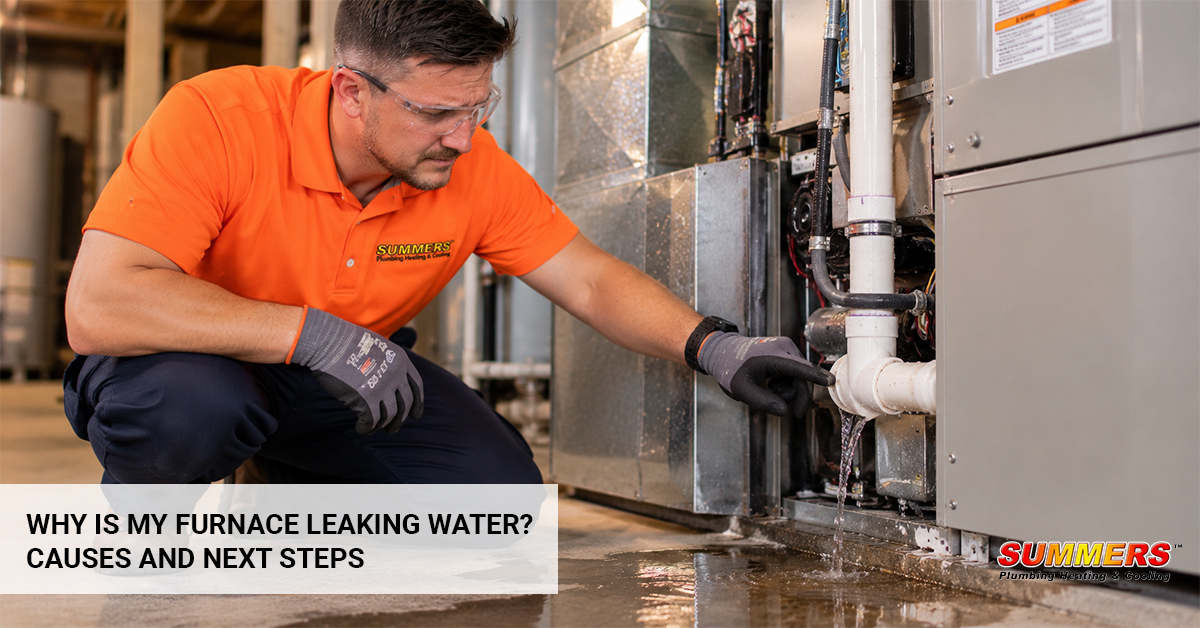
If your furnace is leaking water, the most common causes include a clogged condensate drain line, a failed condensate pump, or a leaking whole-house humidifier. The source of the leak depends on your furnace type and whether your heating or cooling system is running.
High-efficiency furnaces naturally produce condensation during operation. However, the water should drain through a dedicated line instead of pooling around the unit. A leak may also come from an air conditioner, nearby plumbing, or another connected component.
In this guide, you’ll learn what causes furnace water leaks, how to identify the source, what you can safely check, and when to call an HVAC technician.
Why Is My Furnace Leaking Water?
Your furnace is most likely leaking water because condensation cannot drain properly or a nearby component is leaking. A clogged condensate drain line is a common cause in high-efficiency furnaces.
The cause often depends on your furnace type and the equipment connected to it.
- High-efficiency furnace: These furnaces produce condensation as they extract extra heat from combustion gases. A clogged drain line, blocked condensate trap, or failed condensate pump can cause water to back up and leak.
- Conventional furnace: These furnaces typically don’t produce condensate during normal heating. Water around the unit may come from a whole-house humidifier, nearby plumbing, an air conditioner, or another equipment problem.
- Furnace with a connected air conditioner: The indoor AC evaporator coil may sit above the furnace or share its cabinet. If the AC drain line becomes clogged, water can overflow and collect around the furnace, even when the furnace isn’t the source of the leak.
If you notice water pooling around your furnace, check for visible moisture near nearby pipes, drain lines, the humidifier, and the air conditioner. Don’t open the furnace cabinet or touch wet electrical components. If the leak is active, the source is unclear, or water is near electrical parts, turn the system off if you can do so safely and contact an HVAC technician.
7 Common Reasons Your Furnace Is Leaking Water
A furnace can leak water because of a clogged condensate drain, damaged tubing, a failed condensate pump, or a leak from connected HVAC equipment. The first step is to identify where the water is coming from. Here are seven common causes to check.
1. A Clogged Condensate Drain Line
A clogged condensate drain line is a common reason a high-efficiency furnace leaks water. This line carries condensation away from the furnace during normal operation.
Over time, dirt, debris, and biological buildup can restrict the drain. When water cannot flow out properly, it may back up into the condensate system and leak onto the floor.
Common signs include:
- Water pooling near the bottom of the furnace
- Moisture around the condensate drain tubing
- Water backing up near the drain connection
- The furnace shutting down because a safety switch detects a drainage problem
What you can do: If water is actively leaking or the source is unclear, turn off the furnace if you can do so safely. Check for visible moisture around the drain line, but don’t disconnect internal components or open the furnace cabinet. If the drain appears blocked or the leak continues, contact an HVAC technician to inspect the drain line, clean the condensate trap, and check the drainage system.
Avoid forcing tools into the drain or using chemical cleaners unless the furnace manufacturer specifically recommends them.
2. A Failed Condensate Pump
A failed condensate pump can cause water to leak around your furnace when condensation cannot drain away on its own. This usually happens in installations where gravity cannot carry the water to a suitable drain.
The pump collects condensation in a small reservoir and moves it through a discharge tube to a drain. If the pump loses power, becomes clogged, or stops working, water can build up and overflow.
Common signs of a faulty condensate pump include:
- Water pooling around the pump or furnace
- A reservoir that stays full
- Water leaking from the pump or discharge tubing
- The furnace shutting down after water backs up
What you can do: Check for visible water around the pump and look for obvious damage without touching wet electrical components. Don’t open the pump or attempt electrical repairs while it’s powered. An HVAC technician can inspect the pump, discharge tubing, power supply, and overflow safety switch, then repair or replace any faulty parts.
3. A Cracked or Damaged Condensate Drain Pan
A cracked or damaged condensate drain pan can cause water to leak onto the floor instead of flowing into the drain. This problem is more commonly associated with an air conditioner’s indoor evaporator coil than with the furnace itself.
The drain pan collects condensation from the evaporator coil and directs it toward a drain line. Over time, rust, cracks, improper positioning, or physical damage can prevent the pan from containing the water properly. A clogged drain line or damaged drain pan can also cause AC leaking water inside the house, especially when the air conditioner is running.
Common signs include:
- Water pooling beneath the indoor AC coil or furnace cabinet
- Moisture around the edges of the drain pan
- Water appearing while the air conditioner is running
- Signs of rust or visible damage on an accessible part of the pan
What you can do: Check for visible cracks, rust, or standing water around the accessible exterior of the drain pan. Don’t remove equipment panels or reach inside the system. If the pan appears damaged or water continues to leak, ask an HVAC technician to inspect it, replace it if necessary, and check the drain line for blockages.
4. A Disconnected or Damaged Condensate Drain Hose
A disconnected, cracked, or damaged condensate drain hose can cause water to leak around your furnace, even if the drain line isn’t clogged.
The hose carries condensation away from the furnace or connected HVAC equipment. Over time, its connections may loosen, the tubing may crack, or the material may deteriorate. When this happens, water can escape before reaching the intended drain.
Common signs include:
- Water dripping from an accessible hose or connection
- Moisture around the condensate tubing
- Water collecting near the furnace base
- Leaks that continue even when the main drain isn’t visibly blocked
A blockage farther down the drain line can also force water out through a weak connection, so the hose may not be the only problem.
What you can do: If the area is safe and dry, visually inspect accessible tubing for cracks, loose connections, or signs of leakage. Don’t disconnect the hose or reach inside the furnace cabinet. If water is actively leaking, turn off the system if you can do so safely and arrange a repair. An HVAC technician can inspect the full drainage path, repair damaged tubing, and confirm that condensate flows to the proper outlet.
5. A Frozen or Blocked Condensate Drain Line
A frozen or blocked condensate drain line can cause a high-efficiency furnace to leak water or shut down during cold weather.
If the drain line runs through an unheated area or is exposed to freezing temperatures, water inside may freeze and block the flow of condensation. A blockage can also develop from dirt or other buildup. When water cannot drain properly, it may back up and leak from the system.
Common signs include:
- Water pooling near the furnace
- Visible ice around an accessible exterior drain outlet
- Water backing up near the condensate tubing
- The furnace repeatedly shutting down during cold weather
What you can do: If water is leaking or the furnace isn’t operating correctly, turn off the system if you can do so safely. Don’t use an open flame, boiling water, or improvised heating equipment to thaw the line. Contact an HVAC technician to clear the blockage safely and determine whether the drain needs insulation or other freeze protection.
6. A Leaking Whole-House Humidifier
A leaking whole-house humidifier can cause water to collect around your furnace because it often connects to the home’s water supply and drainage system.
A cracked water line, loose connection, clogged drain, or faulty valve can allow water to escape while the humidifier runs. Since the humidifier is often installed on or near the furnace, the leak can look like a furnace problem.
Common signs include:
- Water dripping from the humidifier or its connections
- Moisture around the water supply tubing
- Water pooling beneath the humidifier
- Leaks that occur while the humidifier is operating
What you can do: If the humidifier has an accessible water shutoff and you can operate it safely, turn off the water supply. Don’t touch wet electrical components or dismantle the unit. An HVAC technician can inspect the supply line, valve, drain, and humidifier components to identify the source and repair the leak.
7. An Air Conditioner or Plumbing Leak
A leaking air conditioner or nearby plumbing can make it look as though your furnace is leaking water. The actual source may be another component installed nearby or above the furnace.
When an air conditioner runs, its indoor evaporator coil removes moisture from the air. This condensation collects in a drain pan and flows through a drain line. If the line becomes clogged or the pan overflows, water may collect around the furnace cabinet. If your cooling system is causing the leak, read our guide on common causes of an air conditioner leaking water and how to address them.
Nearby plumbing, a water heater, or another appliance can also leak into the same area.
What you can do: Pay attention to when the water appears and where it collects.
- Water appears while the AC runs: The evaporator coil, drain pan, or condensate line may be responsible.
- Water appears near a pipe or fitting: A plumbing connection may be leaking.
- Water appears near another appliance: Check whether that appliance has a visible leak.
If you suspect a clogged AC drain or frozen evaporator coil, turn off the air conditioner and arrange an inspection. If the water source isn’t clear, contact an HVAC technician or plumber, depending on where the leak appears. Avoid touching wet electrical components or opening equipment cabinets.
Is It Normal for a Furnace to Leak Water?
No, water pooling on the floor around your furnace isn’t normal. However, a high-efficiency furnace naturally produces condensation during operation, and that water should drain away through the proper drainage system.
High-efficiency furnaces extract extra heat from combustion gases, causing water vapor to condense. A condensate drain carries this water away from the unit. If the drain becomes clogged, the pump fails, or a connection leaks, water may collect around the furnace.
Conventional furnaces generally don’t produce the same amount of condensate during normal heating. If you notice water around one, the source could be a nearby humidifier, air conditioner, plumbing connection, or equipment problem.
The key difference is whether the water drains properly. Condensation flowing through the intended drainage system is normal for a high-efficiency furnace. Water leaking from the equipment or pooling on the floor isn’t and should be investigated to prevent further damage.
For more information, see Trane’s guide to furnace water leaks.
What to Do If Your Furnace Is Leaking Water
If your furnace is leaking water, protect the area, avoid wet electrical components, and look for the source without opening the equipment. These steps can help limit water damage and determine whether you need an HVAC technician or plumber.
1. Turn Off the System if Necessary
If water is actively leaking, the source is unclear, or moisture is near electrical components, stop using the system. Turn it off at the thermostat only if you can do so safely without approaching wet equipment.
Never touch wet electrical connections, open the furnace cabinet, or handle a wet breaker. If you notice smoke, a burning electrical smell, or another sign of an electrical hazard, stay away and seek professional help.
2. Locate the Source of the Water
Look around the furnace without removing panels or disconnecting hoses. Check for visible moisture near the condensate drain line, condensate pump, whole-house humidifier, AC drain pan, and nearby plumbing.
Pay attention to when the leak occurs. Water that appears during heating may come from the furnace’s condensate system, while water that appears during cooling may come from the air conditioner’s drainage system.
These observations can help an HVAC technician narrow down the cause.
3. Check the Air Filter and Visible Drainage Area
A dirty air filter can restrict airflow and contribute to an evaporator coil freezing while the air conditioner runs. When the ice melts, the resulting water may overwhelm the drainage system and leak near the furnace.
Check the filter and replace it if needed, following the manufacturer’s recommendations. You can also look for visible obstructions around accessible drain outlets.
Don’t remove internal furnace components or attempt to clear an inaccessible condensate trap yourself.
4. Remove Standing Water if It’s Safe
If the floor is safe to access and there are no electrical hazards, use towels to absorb a small amount of standing water. Keeping the area dry can help limit damage to flooring and nearby materials.
Taking quick action can help prevent water damage in your home and protect nearby flooring, walls, and other household materials.
Don’t use electrical equipment to remove water near wet wiring or electrical components. If the leak is substantial, continues, or reaches an unsafe area, stay clear and arrange professional assistance.
5. Call an HVAC Technician When Needed
Contact an HVAC technician if the leak continues, the condensate pump appears faulty, the drain line may be blocked, or water seems to be coming from inside the furnace.
A professional can inspect the condensate drainage system, connected HVAC equipment, and relevant safety controls. If the water appears to come from a plumbing pipe or water supply line, contact a plumber instead.
Important: Don’t restart the system until the cause of a significant leak has been addressed, particularly if water has reached electrical components or the furnace has shut down unexpectedly.
Can You Run a Furnace That Is Leaking Water?
No, you shouldn’t keep running a furnace with an active or unexplained water leak until you identify the cause. Water can damage electrical components, cause corrosion, and affect how the system operates.
A clogged condensate drain or faulty pump may cause a leak in a high-efficiency furnace. Some models may also shut down automatically when a safety control detects a drainage problem. However, water around your furnace could come from a nearby humidifier, plumbing connection, or air conditioner.
If water is actively leaking, the source is unclear, or moisture is near electrical components, turn off the system if you can do so safely. Never touch wet wiring or electrical connections.
If your furnace repeatedly shuts down, don’t keep restarting it. Call an HVAC technician to inspect the system, identify the source of the leak, and confirm that the furnace is safe to use before turning it back on.
How Much Does It Cost to Fix a Leaking Furnace?
The cost to fix a leaking furnace depends on what’s causing the leak, which parts need repair, and local labor rates. Clearing a clogged drain line is usually simpler than replacing a failed condensate pump or repairing a damaged component.
Here are some common furnace leak repairs:
- Condensate drain cleaning: Clearing a blockage in the drain line or condensate trap.
- Drain hose repair: Reconnecting loose tubing or replacing a cracked hose.
- Condensate pump replacement: Replacing a pump that can no longer remove water properly.
- Humidifier repair: Fixing a leaking water line, valve, drain, or internal component.
- AC drainage repair: Clearing a clogged evaporator drain or replacing a damaged drain pan.
- Major furnace repairs: Diagnosing and repairing an internal component that requires specialized work.
The final price depends on the repair, parts, labor, and whether the technician finds additional damage. Emergency service or repairs outside normal business hours may also cost more.
Before approving a repair, ask the technician to identify the source of the leak and provide an itemized estimate. If the water comes from a nearby plumbing pipe rather than the HVAC system, you may need a plumber instead.
How to Prevent Furnace Water Leaks
Regular furnace maintenance can help prevent water leaks by keeping the drainage system clear and catching worn or damaged components early. Scheduling professional furnace maintenance in Columbus, IN can help identify drainage problems and worn components before they cause water leaks.
Follow these steps to reduce the risk of leaks:
- Schedule annual furnace maintenance: Have an HVAC technician inspect the condensate drain, pump, and other key components.
- Replace air filters regularly: Follow the manufacturer’s recommendations to maintain proper airflow and help prevent your AC evaporator coil from freezing.
- Inspect visible drain tubing: Look for cracks, loose connections, or signs of water buildup. Don’t disconnect hoses or open the furnace cabinet.
- Maintain the condensate pump: If your system uses a pump, have it and its discharge line checked during routine maintenance.
- Service your whole-house humidifier: Follow the manufacturer’s cleaning and maintenance instructions to help prevent leaks from its water supply and drainage connections.
- Keep drain outlets clear: Check accessible outlets for debris or ice, especially during freezing weather.
- Fix small leaks promptly: Don’t ignore water puddles, damp tubing, or repeated furnace shutdowns. These signs may point to a drainage problem that needs attention.
You can also follow this HVAC maintenance checklist to keep your heating and cooling equipment properly maintained throughout the year.
Regular maintenance can lower the risk of furnace water leaks, but it can’t prevent every problem. If you notice water around your furnace, have the source identified before the leak causes further damage.
When to Call an HVAC Technician
Call an HVAC technician if your furnace keeps leaking water, shuts down repeatedly, or shows signs of an internal problem. Get professional help promptly if water is near electrical components or you can’t identify the source of the leak.
Arrange an inspection if you notice any of these signs:
- Water continues pooling around the furnace.
- The condensate drain line or pump appears blocked or damaged.
- The furnace repeatedly shuts down or won’t start.
- Water appears to be coming from inside the furnace cabinet.
- You notice rust, corrosion, or visible damage around the unit.
- The connected humidifier or air conditioner appears to be leaking.
- You suspect a problem with the heat exchanger or combustion system.
Don’t try to repair gas connections, electrical components, or the heat exchanger yourself. These repairs require specialized training and equipment.
If you suspect a gas leak, leave the building immediately. Don’t operate electrical switches or use devices inside. Once you’re safely outside, contact your gas utility or emergency services.
An HVAC technician can identify the source of the water, check for related damage, and determine whether your furnace is safe to operate.
Frequently Asked Questions
Why Is My Furnace Leaking Water When the Heat Is On?
Your furnace may leak water while heating because of a clogged condensate drain, a failed condensate pump, or a damaged drain connection. High-efficiency furnaces naturally produce condensation, but the water should drain away through the designated system. If water pools on the floor, have the source checked.
Why Is My Furnace Leaking Water in the Winter?
A furnace may leak water in winter because its condensate drain line has frozen or become blocked. A damaged hose, failed pump, or leaking whole-house humidifier can also cause the problem. If water is leaking or the furnace keeps shutting down, turn it off if you can do so safely and contact an HVAC technician.
Can a Clogged Furnace Filter Cause a Water Leak?
A clogged furnace filter usually doesn’t cause a direct furnace water leak. However, a dirty filter can restrict airflow and contribute to an AC evaporator coil freezing. When the ice melts, excess water may overflow the drainage system. Replace the filter according to the manufacturer’s recommendations and arrange an inspection if the leak continues.
Why Is My Furnace Leaking Water From the Bottom?
Water leaking from the bottom of a furnace may indicate a clogged condensate drain, a failed pump, a damaged connection, or another equipment problem. The water could also come from a nearby air conditioner or plumbing connection. Check the surrounding area for visible moisture without opening the furnace cabinet.
Is a Leaking High-Efficiency Furnace Normal?
No, water pooling around a high-efficiency furnace isn’t normal, even though the furnace naturally produces condensation during operation. The condensate drain system should carry that water away. A clogged drain, faulty pump, or damaged connection may cause water to leak onto the floor.
Can a Clogged Condensate Drain Damage My Furnace?
Yes, a clogged condensate drain can cause water to back up and damage nearby components, flooring, or other materials. Some high-efficiency furnaces may also shut down when a safety control detects a drainage problem. If water continues to collect, have an HVAC technician inspect the drain and related components.
Why Is My Furnace Leaking Water When the AC Is Running?
If water appears around your furnace while the AC is running, the cause may be a clogged evaporator coil drain, an overflowing drain pan, or a frozen coil that’s thawing. The AC’s indoor coil may sit above or beside the furnace. Turn off the AC if you suspect a drainage problem, and arrange service if the leak continues.
Should I Turn Off My Furnace If It Is Leaking Water?
Yes, turn off the furnace if water is actively leaking, the source is unclear, or moisture is near electrical components, provided you can do so safely. Never touch wet electrical equipment or keep restarting a furnace that repeatedly shuts down. If the problem persists, have the system inspected before using it again.
Can I Fix a Leaking Furnace Myself?
You can check the air filter and look for visible leaks around accessible tubing if the area is dry and safe. However, repairing a condensate pump, clearing internal drains, or working on electrical and combustion components may require professional service. Don’t open the furnace cabinet or disconnect internal parts unless the manufacturer specifically permits the task and you can perform it safely.
Final Thoughts
If your furnace is leaking water, the cause may be a clogged condensate drain, a failed pump, damaged tubing, or a leaking humidifier. A nearby air conditioner or plumbing connection could also be responsible.
Start by checking the visible area and noting when the leak occurs. Don’t open the furnace cabinet or touch wet electrical components. If water keeps pooling, the furnace repeatedly shuts down, or you can’t identify the source, contact a qualified HVAC technician.
Don’t ignore a furnace water leak. Finding the cause early can help prevent further damage and get your heating system back to safe, reliable operation.