

Why Is My Water Heater Making Popping Noises? Causes, Fixes, and When to Worry
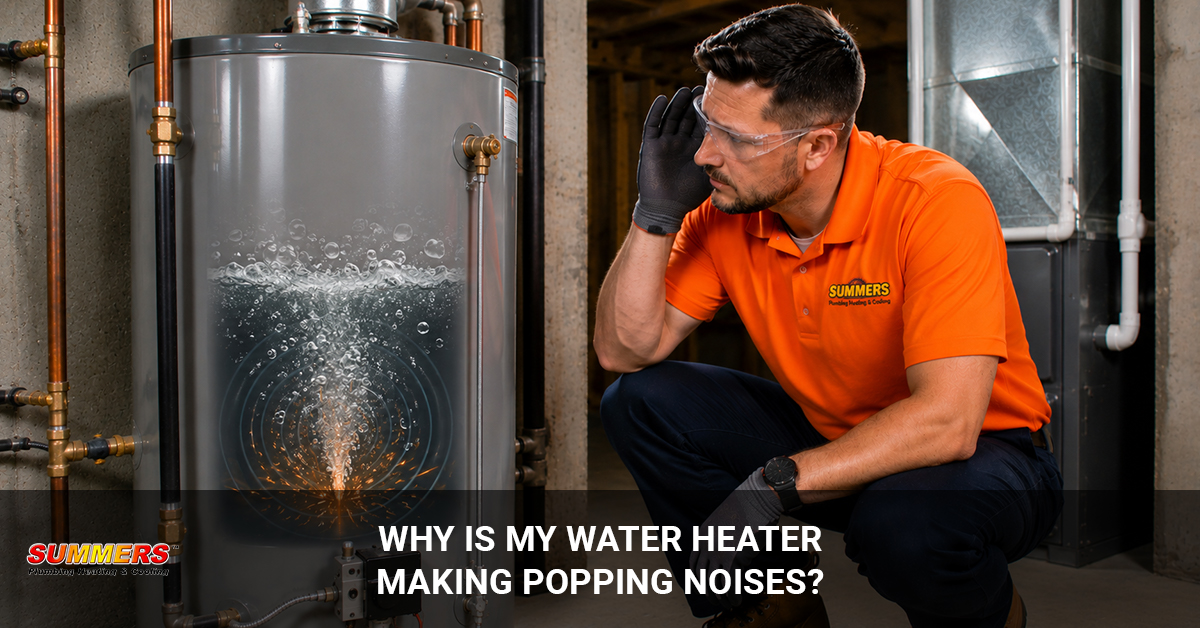
A water heater usually makes popping noises because sediment has built up at the bottom of the tank. As the water heats up, steam becomes trapped beneath the sediment and bursts through it, creating the popping or rumbling sounds you hear.
In most cases, this isn’t an emergency, but it isn’t something you should ignore. As sediment continues to build up, your water heater has to work harder to heat the water. That can reduce efficiency, increase your energy bills, and shorten the lifespan of the unit.
Hard water is the most common reason sediment forms inside a water heater. Minerals like calcium and magnesium settle at the bottom of the tank over time, especially in areas with hard water. While sediment buildup is the leading cause, popping noises can also result from overheating, mineral scale on heating elements, excessive tank pressure, or an aging water heater.
The good news is that many popping noise problems can be resolved with routine maintenance, such as flushing the tank. However, if the noise continues or you notice leaks, rusty water, or inconsistent hot water, it’s a sign that your water heater should be inspected by a licensed plumber.
In this guide, you’ll learn the most common causes of water heater popping noises, how to identify the source of the problem, the best ways to fix it, and when repair or replacement is the smarter option.
Why Is My Water Heater Making Popping Noises?
A water heater usually makes popping noises because sediment has built up at the bottom of the tank. As the water heats up, steam gets trapped beneath the sediment. When the steam bubbles break through the buildup, they create the popping, knocking, or rumbling sounds you hear.
Sediment buildup is a common problem, especially in homes with hard water. Minerals like calcium and magnesium naturally separate from the water during the heating process and settle at the bottom of the tank. Over time, these minerals form a thick layer that makes it harder for heat to reach the water.
Here’s how the popping noise happens:
- The burner or heating element heats the bottom of the tank.
- Water trapped beneath the sediment becomes hotter than the surrounding water.
- Steam bubbles begin to form under the sediment layer.
- As pressure builds, the bubbles force their way through the sediment.
- When the bubbles burst, they create the popping or rumbling noise.
The thicker the sediment layer becomes, the louder and more frequent the noise usually gets. Besides making your water heater noisy, sediment buildup can also reduce its performance.
It may lead to:
- Lower heating efficiency
- Higher energy bills
- Longer hot water recovery times
- Overheating inside the tank
- Extra wear on the burner or heating element
- A shorter water heater lifespan
Gas water heaters are more likely to make popping noises because the burner sits directly beneath the tank, where sediment collects. The intense heat creates more steam under the sediment, making the popping sounds easier to hear. Electric water heaters can also make popping or crackling noises, but these are often caused by mineral scale forming on the heating elements rather than sediment alone.
Is It Normal for a Water Heater to Make Popping Noises?
Occasional popping noises can be normal, but loud, frequent, or persistent popping usually means your water heater needs attention. In most cases, ongoing popping sounds are caused by sediment buildup inside the tank rather than normal operation.
It’s normal for a water heater to make a few sounds while heating water. As metal parts expand and contract or the thermostat cycles on and off, you may hear light clicking or humming. These sounds are usually harmless and don’t indicate a problem.
Normal water heater sounds include:
- Soft clicking as the thermostat turns the heating system on or off
- Gentle humming from electric heating elements
- Brief ticking or expansion noises as metal parts warm up and cool down
- Light water movement inside the tank during a heating cycle
However, some noises are a sign that your water heater should be inspected. If the sounds become louder, happen more often, or continue after each heating cycle, sediment buildup or another issue may be affecting the system’s performance.
Pay attention if your water heater makes:
- Loud popping sounds
- Constant rumbling
- Repeated knocking
- Hissing that continues after the water has heated
- Banging noises
- Whistling sounds
- New noises that gradually become louder over time
If these sounds continue for several days or keep getting worse, don’t ignore them. Scheduling maintenance early can help remove sediment, restore efficiency, and prevent more expensive repairs later.
What Causes a Water Heater to Pop?
Sediment buildup is the most common cause of a popping water heater, but hard water, overheating, mineral scale, high tank pressure, and age can also create popping or rumbling noises. Identifying the cause helps determine whether routine maintenance will solve the problem or if professional repairs are needed.
Sediment and Mineral Buildup
Sediment buildup is responsible for most water heater popping noises. As water is heated, minerals naturally settle at the bottom of the tank and gradually form a layer of sediment.
When the burner or heating element warms the tank, water trapped beneath the sediment turns into steam. The steam bubbles push through the mineral deposits and burst, creating the popping or rumbling sounds you hear.
This problem is more common in homes with hard water because mineral deposits build up much faster.
Hard Water
Hard water speeds up sediment buildup inside your water heater. Water with high levels of calcium and magnesium leaves behind mineral deposits every time the heater runs.
Over time, these minerals harden into scale on the bottom of the tank and other internal components. The more scale that builds up, the more likely your water heater is to make popping noises and lose efficiency.
If you live in an area with hard water, flushing the tank more frequently or installing a water softener can help reduce mineral buildup.
Overheating Water
Water that’s set too hot can make popping noises worse. Higher water temperatures create more steam beneath the sediment layer, which leads to louder and more frequent popping sounds.
For most homes, setting the water heater to 120°F provides enough hot water while improving energy efficiency, slowing mineral buildup, and reducing the risk of scalding.
Scale on Heating Elements (Electric Water Heaters)
Electric water heaters can make popping or crackling noises when mineral scale builds up on the heating elements. Unlike gas models, electric water heaters use upper and lower heating elements inside the tank instead of a burner underneath it.
As mineral deposits collect on these elements, they expand and contract during heating cycles, producing crackling, sizzling, or popping sounds. If the buildup becomes severe, cleaning or replacing the heating elements may be necessary.
Excessive Tank Pressure
High pressure inside the tank can also cause unusual noises. Although it’s less common than sediment buildup, excessive water pressure or a faulty temperature and pressure (T&P) relief valve may create popping, banging, or other unusual sounds during operation.
Because pressure-related problems can affect the safe operation of the water heater, they should be inspected by a qualified plumber as soon as possible.
Aging Water Heater
Older water heaters are more likely to develop popping noises because wear and mineral buildup increase over time. As the unit ages, sediment continues to accumulate, internal components wear out, and corrosion becomes more common.
An older water heater may experience:
- Heavy sediment buildup
- Corrosion inside the tank
- Worn heating elements
- Reduced heating efficiency
- Longer hot water recovery times
If your water heater is 10 to 15 years old or older and continues making loud popping noises even after being flushed or serviced, replacing the unit may be a better long-term investment than continuing to repair it.
Other Water Heater Noises and What They Mean
Different water heater noises can point to different problems. While popping is usually caused by sediment buildup, other sounds may indicate hard water, plumbing issues, high pressure, or normal operation.
The table below explains what the most common water heater noises mean and whether they require attention.
| Noise | Most Likely Cause | Should You Be Concerned? |
| Popping | Sediment buildup in the tank | Yes, schedule maintenance |
| Rumbling | Heavy sediment buildup | Yes |
| Crackling | Condensation or mineral deposits | Usually not |
| Hissing | Water leak, overheating, or heating element issue | Sometimes |
| Whistling | Restricted water flow or high pressure | Yes |
| Banging | Water hammer or excessive pressure | Yes |
| Ticking | Pipes expanding and contracting | Usually not |
Popping
Popping noises are usually caused by sediment buildup inside the tank. Steam becomes trapped beneath the sediment and bursts through it as the water heats, creating the popping sound. Flushing the tank often resolves this issue if it’s caught early.
Rumbling
A rumbling noise usually means a large amount of sediment has collected inside the tank. As the sediment layer thickens, it traps more water and steam, creating a deeper, rolling sound. A rumbling water heater often indicates it’s overdue for maintenance.
Crackling
Light crackling is often normal and isn’t usually a cause for concern. It can happen when condensation drips onto a hot burner or when small mineral deposits heat up during a heating cycle. If the sound stops after the water heater finishes heating, it’s generally harmless.
Hissing
A hissing noise can indicate a leak, overheating, or a problem with an electric heating element. It may occur when water comes into contact with a hot surface or when excessive pressure develops inside the tank.
If the hissing continues or you notice water around the unit, don’t ignore it. Have the water heater inspected by a qualified plumber.
Whistling
Whistling sounds are usually caused by restricted water flow or high water pressure. Mineral buildup inside valves or partially closed valves can restrict water movement and create a whistling noise as water passes through.
Persistent whistling should be inspected because it may affect your water heater’s performance.
Banging
Loud banging noises are often caused by water hammer or excessive pressure in the plumbing system. Water hammer occurs when flowing water suddenly stops or changes direction, creating a pressure shock that causes pipes or the water heater to bang.
Because repeated pressure surges can damage plumbing components, persistent banging should be evaluated by a licensed plumber.
Ticking
Ticking noises are usually normal and are often caused by pipes expanding and contracting. As hot water flows through metal pipes, they naturally expand. When the system cools, the pipes contract, creating a light ticking sound.
If the ticking is occasional and isn’t accompanied by other problems, it’s generally nothing to worry about.
Is a Popping Water Heater Dangerous?
A popping water heater is usually not dangerous, but it is a sign that your water heater needs attention. In most cases, the popping noise is caused by sediment buildup, not an immediate safety hazard. However, ignoring the problem can reduce efficiency, increase operating costs, and shorten the life of the unit.
As sediment collects at the bottom of the tank, it creates a barrier between the heat source and the water. This forces the burner or heating element to work harder and longer to heat the water.
Over time, sediment buildup can lead to:
- Higher energy bills
- Longer hot water recovery times
- Increased gas or electricity use
- Overheating at the bottom of the tank
- Extra wear on the burner or heating elements
- A shorter water heater lifespan
Addressing the problem early with routine maintenance can help prevent more expensive repairs and keep your water heater operating efficiently.
When Does It Become a Safety Concern?
A popping water heater becomes a safety concern when the noise is accompanied by signs of a more serious problem. While sediment buildup alone rarely creates an emergency, certain symptoms should never be ignored.
Contact a licensed plumber if you notice:
- Water is leaking from the tank
- Rust-colored or discolored hot water
- A rotten egg smell from the hot water
- Little or no hot water
- Water that’s unusually hot or inconsistent in temperature
- A leaking temperature and pressure (T&P) relief valve
- Loud banging noises that continue after the heating cycle
These symptoms may indicate issues such as excessive pressure, corrosion, a failing component, or a water heater nearing the end of its lifespan. Having the system inspected promptly can help prevent further damage and ensure it continues to operate safely.
How to Fix a Water Heater Making Popping Noises
The best way to fix a water heater making popping noises is to remove the sediment that’s causing the sound. In many cases, routine maintenance is enough to eliminate the noise, improve efficiency, and help extend the life of the water heater.
Flush the Water Heater Tank
Flushing the tank is the most effective way to remove sediment buildup. Over time, minerals settle at the bottom of the tank and create the popping or rumbling sounds you hear. Flushing the tank removes much of this buildup and allows heat to transfer more efficiently to the water.
Most manufacturers recommend flushing a traditional tank water heater once a year. If you have hard water, you may need to flush it more often to prevent excessive mineral buildup.
If your water heater is older or has never been flushed, it’s a good idea to have the service performed by a licensed plumber. Heavy sediment or older drain valves can make the job more difficult and increase the risk of damage.
Inspect the Heating Elements (Electric Water Heaters)
Electric water heaters may need their heating elements inspected if popping or crackling noises continue. Mineral scale can build up on the upper and lower heating elements, reducing efficiency and creating unusual sounds during heating cycles.
If the buildup is severe, cleaning or replacing the heating elements may restore normal operation and improve heating performance.
Lower the Water Temperature
Lowering the thermostat can reduce steam formation and slow mineral buildup. Water that’s set too hot creates more steam beneath sediment deposits, making popping noises louder and more frequent.
For most households, setting the water heater to 120°F provides enough hot water while improving energy efficiency and reducing the risk of scalding.
Install a Water Softener
A water softener helps prevent future sediment buildup in homes with hard water. By removing excess calcium and magnesium before the water enters the tank, a water softener reduces the minerals that cause scale and sediment.
Benefits include:
- Fewer popping and rumbling noises
- Improved energy efficiency
- Longer water heater lifespan
- Less frequent maintenance
If hard water is a recurring problem in your area, installing a water softener can help protect both your water heater and your home’s plumbing system.
Schedule Professional Maintenance
Annual maintenance is one of the best ways to keep your water heater running quietly and efficiently. A licensed plumber can identify small issues before they turn into expensive repairs and help keep the system operating at peak performance.
During a maintenance visit, a plumber may:
- Flush the tank to remove sediment
- Inspect the burner or heating elements
- Check the anode rod for corrosion
- Test the temperature and pressure (T&P) relief valve
- Inspect the tank for leaks or rust
- Identify worn or failing components
Regular maintenance not only helps eliminate popping noises but also improves efficiency, extends the life of the water heater, and reduces the likelihood of unexpected breakdowns.
When Should You Call a Plumber?
You should call a plumber if your water heater continues making popping noises after maintenance or shows signs of a more serious problem. While sediment buildup is the most common cause of popping sounds, ongoing noise may indicate that the unit needs professional repair or replacement.
A licensed plumber should inspect your water heater if you notice any of the following:
- Popping or rumbling noises continue after the tank has been flushed
- Water is leaking around the base of the tank
- Rust-colored or discolored hot water
- A rotten egg smell is coming from the hot water
- Inconsistent hot water or no hot water at all
- A leaking temperature and pressure (T&P) relief valve
- The water heater is 10 to 15 years old and is becoming louder over time
- Visible rust or corrosion on the tank or plumbing connections
If you notice water pooling around the base of your unit, learn about water heater leaking from the bottom and what you should do next.
These symptoms may indicate problems that go beyond sediment buildup, such as internal corrosion, worn components, excessive pressure, or a water heater nearing the end of its service life.
Addressing these issues early can help prevent more expensive repairs, improve your water heater’s performance, and reduce the risk of an unexpected breakdown. If a plumber determines that the tank is severely corroded or leaking, replacing the water heater is often the safest and most cost-effective long-term solution.
Can Sediment Damage a Water Heater?
Yes, sediment buildup can damage a water heater if it’s not removed. What may start as an occasional popping noise can eventually reduce efficiency, increase energy costs, and shorten the lifespan of the unit.
As minerals collect at the bottom of the tank, they form a layer of sediment that acts as insulation between the heat source and the water. This makes it harder for the burner or heating elements to transfer heat, forcing the water heater to work longer to produce the same amount of hot water.
Over time, excessive sediment buildup can cause:
- Reduced heating efficiency
- Longer hot water recovery times
- Higher gas or electricity bills
- Overheating at the bottom of the tank
- Increased wear on the burner or heating elements
- Premature tank failure
- A shorter overall lifespan
The longer sediment remains inside the tank, the greater the strain on the entire system. In severe cases, excessive heat can damage the tank lining, reducing the water heater’s reliability and increasing the likelihood of costly repairs or replacement.
The best way to prevent sediment damage is through regular maintenance. Flushing the tank at least once a year helps remove mineral deposits before they become a serious problem. If you live in an area with hard water, more frequent flushing or installing a water softener can help reduce sediment buildup and keep your water heater running efficiently for years to come.
How to Prevent Water Heater Popping Noises
The best way to prevent water heater popping noises is to stop sediment from building up inside the tank. Regular maintenance keeps your water heater running efficiently, reduces energy costs, and helps extend its lifespan.
Here are some of the most effective ways to prevent popping and rumbling noises.
Flush the Tank Annually
Flushing your water heater once a year removes sediment before it becomes a problem. This simple maintenance task helps improve heating efficiency and prevents the mineral buildup that causes popping sounds.
If your home has hard water, consider flushing the tank more often because minerals accumulate more quickly. Scheduling annual water heater maintenance helps remove sediment buildup before it reduces efficiency or causes loud popping noises.
Test the Temperature and Pressure Relief Valve
The temperature and pressure (T&P) relief valve helps keep your water heater operating safely. It releases excess pressure if it builds up inside the tank.
Having the valve inspected during annual maintenance helps ensure it’s working properly and can identify potential problems before they become serious.
Inspect the Anode Rod
The anode rod protects your water heater from rust and corrosion. It attracts corrosive minerals before they can damage the inside of the tank.
Because the anode rod wears out over time, it should be inspected regularly and replaced when necessary. A healthy anode rod can help extend the life of your water heater.
Install a Water Softener
A water softener helps reduce mineral buildup if you have hard water. By removing excess calcium and magnesium before the water enters the tank, it slows the formation of sediment and scale.
A water softener can help:
- Reduce sediment buildup
- Improve heating efficiency
- Extend the lifespan of your water heater
- Reduce maintenance requirements
Keep the Water Temperature Around 120°F
Setting your water heater to about 120°F helps reduce sediment buildup and improve efficiency. This temperature provides enough hot water for most households while lowering energy use and reducing the risk of scalding.
Lower water temperatures also slow the formation of mineral deposits inside the tank.
Schedule Annual Professional Maintenance
Professional maintenance helps catch small problems before they become expensive repairs. A yearly inspection keeps your water heater operating safely and efficiently.
During a maintenance visit, a plumber may:
- Flush the tank
- Inspect the burner or heating elements
- Check the anode rod
- Test safety controls, including the T&P relief valve
- Look for leaks, rust, or corrosion
Routine maintenance can improve performance and help prevent unexpected breakdowns.
Replace an Aging Water Heater
Replacing an older water heater before it fails can save you from costly repairs and water damage. Most traditional tank water heaters last 8 to 12 years, although some well-maintained units may last longer.
If your water heater is nearing the end of its lifespan and continues making loud popping noises despite regular maintenance, replacement is often the most reliable and cost-effective long-term solution.
Repair or Replace a Noisy Water Heater?
Repair a noisy water heater if the problem is minor and the unit is still in good condition. Replace it if the tank is old, leaking, or becoming unreliable. The right choice depends on the age of the water heater, the cause of the noise, and the cost of repairs.
If popping noises are caused by sediment buildup, flushing the tank or performing routine maintenance is often enough to solve the problem. However, if the water heater has multiple issues or is nearing the end of its lifespan, replacing it may save you money in the long run.
Use the table below as a general guide.
| Repair Your Water Heater If… | Replace Your Water Heater If… |
| It’s less than 10 years old | It’s 10–15 years old or older |
| The noise is caused by minor sediment buildup | The tank is leaking or heavily corroded |
| The unit still provides reliable hot water | Repairs are becoming frequent or expensive |
| There are no visible signs of rust or leaks | Heating performance continues to decline |
| A plumber confirms the water heater is in good condition | The repair cost is close to the cost of a new unit |
While repairs are often the most affordable solution for newer water heaters, continuing to repair an older unit may not be the best investment. If repair costs continue to add up or the tank is showing signs of wear, replacing the water heater with a newer, more energy-efficient model can improve reliability, reduce energy bills, and help prevent unexpected breakdowns.
If you’re unsure which option is right for your situation, have a licensed plumber inspect the system. They can identify the cause of the noise, evaluate the overall condition of the water heater, and recommend the most cost-effective solution.
Frequently Asked Questions
Why does my water heater make popping noises when heating water?
Your water heater usually makes popping noises because sediment has built up at the bottom of the tank. As the burner or heating element heats the water, steam becomes trapped beneath the sediment. When the steam bubbles burst through the mineral deposits, they create the popping or rumbling sounds you hear.
Is sediment buildup in a water heater dangerous?
Sediment buildup isn’t usually dangerous, but it can cause problems if it’s left untreated. Over time, it reduces heating efficiency, increases energy bills, makes the water heater work harder, and can shorten the life of the tank. Regular maintenance helps prevent these issues.
Will flushing the tank stop popping noises?
Yes, in many cases, flushing the tank will stop popping noises. Removing the sediment allows heat to transfer more efficiently and eliminates the steam bubbles that cause the sound. If the noise continues after flushing, the water heater should be inspected by a licensed plumber.
How often should I flush my water heater?
Most water heaters should be flushed once a year. If your home has hard water, flushing the tank every six months may be a better option because mineral deposits build up more quickly.
Can hard water cause popping sounds?
Yes, hard water is one of the most common causes of popping noises. The calcium and magnesium in hard water settle inside the tank over time, forming sediment that traps steam and creates popping or rumbling sounds during the heating cycle.
Should I replace my noisy water heater?
Not always. If the noise is caused by sediment buildup and the water heater is in good condition, flushing the tank or performing routine maintenance may solve the problem. However, if the unit is 10 to 15 years old, leaking, heavily corroded, or requiring frequent repairs, replacing it is often the better long-term investment. If replacement is the better option, consider the benefits of installing a tankless water heater for improved efficiency, longer lifespan, and endless hot water.
Is a popping gas water heater different from an electric one?
Yes, the cause of the noise can differ slightly. Gas water heaters usually make popping noises because sediment collects directly above the burner. Electric water heaters can also make popping or crackling sounds, but they’re often caused by mineral scale forming on the heating elements.
How long can I ignore a popping water heater?
You shouldn’t ignore persistent popping noises. While they aren’t usually an emergency, ongoing popping is a sign that sediment is building up inside the tank. Delaying maintenance can reduce efficiency, increase energy costs, damage internal components, and lead to more expensive repairs or premature water heater replacement.
Final Thoughts
Sediment buildup is the most common cause of popping noises in a water heater, and regular maintenance is usually the best solution. Flushing the tank, keeping the water temperature around 120°F, and scheduling annual maintenance can help prevent mineral buildup, improve efficiency, and extend the life of your water heater.
While an occasional noise may be normal, persistent popping, rumbling, or banging sounds shouldn’t be ignored. These noises often indicate that your water heater is working harder than it should, which can lead to higher energy bills, reduced performance, and unnecessary wear on the system.
If the noise continues after flushing the tank or you notice warning signs such as water leaks, rusty hot water, inconsistent water temperatures, or visible corrosion, it’s time to have the unit inspected by a licensed plumber. They can determine whether a repair will solve the problem or if replacing the water heater is the more cost-effective option.
Taking care of unusual noises early can help you avoid expensive repairs, improve your water heater’s efficiency, and ensure your home has a dependable supply of hot water for years to come.