

Water Heater Leaking From the Bottom: Causes, Fixes, and When to Replace It
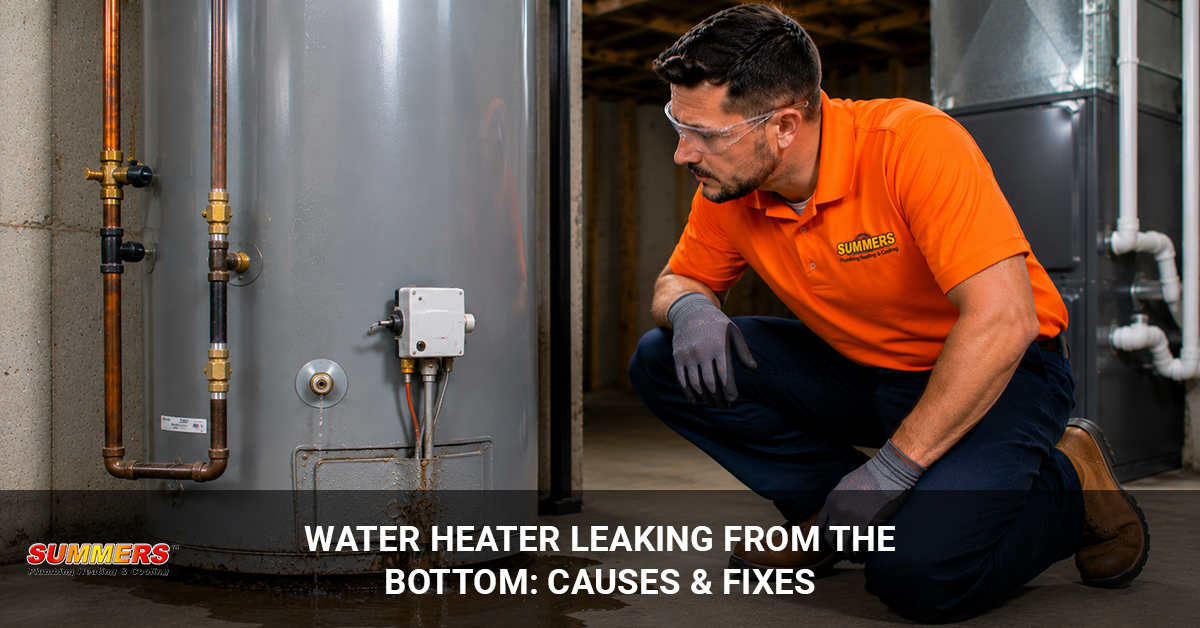
A water heater leaking from the bottom is often caused by a faulty drain valve, a leaking pressure relief valve, loose plumbing connections, or a corroded tank. Some of these problems are quick and inexpensive to fix, while others mean the water heater needs to be replaced.
Seeing water around the bottom of your water heater can be stressful, but don’t assume the tank itself has failed. In many cases, the leak starts higher up on the unit and runs down the sides before collecting on the floor. That’s why finding the exact source of the leak is the first step toward the right solution.
Common causes include a loose drain valve, a leaking temperature and pressure (T&P) relief valve, worn plumbing connections, condensation, excessive pressure inside the tank, or internal corrosion. Leaks from valves and fittings can often be repaired. However, if the storage tank itself is leaking, replacing the water heater is usually the only permanent solution.
The good news is that many leaks can be identified before they lead to major water damage. Acting quickly can help protect your home, reduce repair costs, and prevent a complete system failure.
In this guide, you’ll learn the most common reasons a water heater leaks from the bottom, how to identify the source of the leak, whether it’s safe to keep using the unit, and when repairing or replacing the water heater is the smarter choice.
Why Is My Water Heater Leaking From the Bottom?
A water heater can leak from the bottom because of a faulty drain valve, a leaking temperature and pressure (T&P) relief valve, loose plumbing connections, condensation, internal corrosion, or a cracked tank. Finding the exact source of the leak is the first step because some problems are easy to repair, while others require replacing the entire water heater.
Drain Valve Leak
A leaking drain valve is one of the most common causes of water around the bottom of a water heater. The drain valve sits near the base of the tank and is used to flush out sediment during routine maintenance.
Over time, the valve can loosen, wear out, or become damaged, allowing water to drip onto the floor.
A drain valve may leak because of:
- A loose valve connection
- A worn or damaged valve
- Mineral buildup preventing the valve from sealing properly
In many cases, tightening or replacing the drain valve is enough to stop the leak.
Internal Tank Corrosion
Internal tank corrosion is one of the most serious causes of a leaking water heater. As the water heater ages, the protective lining inside the tank gradually wears down, allowing rust to form.
Over time, corrosion can create small holes in the tank, causing water to leak from the bottom.
Unfortunately, once the storage tank begins leaking, it usually can’t be repaired. Replacing the water heater is typically the only reliable long-term solution.
Temperature and Pressure (T&P) Relief Valve Leak
A leaking T&P relief valve can make it look like the water heater is leaking from the bottom. This safety valve is designed to release water if the temperature or pressure inside the tank becomes too high.
When the valve opens, water can run down the side of the tank and collect on the floor, making it appear as though the leak is coming from underneath the unit.
A leaking T&P relief valve may be caused by:
- Excessive water pressure
- Water overheating inside the tank
- A faulty or worn relief valve
- A problem with the expansion tank, if your system has one
If the valve continues to leak, it should be inspected by a licensed plumber to determine the underlying cause.
Condensation
Condensation can sometimes be mistaken for a water heater leak. When cold water enters a warm tank, moisture can form on the outside of the unit and drip onto the floor.
This is more likely to happen when:
- Your household is using a large amount of hot water
- Very cold groundwater enters the tank
- The surrounding air is warm and humid
Condensation usually stops once the water heater finishes heating the water. If moisture continues to collect after the heating cycle, you may have an actual leak that needs further inspection.
Loose Plumbing Connections
Loose plumbing connections can also cause water to collect around the bottom of the water heater. Even a slow drip from a pipe or fitting can run down the side of the tank and create the appearance of a bottom leak.
Inspect these areas for moisture:
- Hot water outlet pipe
- Cold water inlet pipe
- Pipe fittings
- Flexible water supply lines
Many plumbing connection leaks can be repaired by tightening the fitting or replacing a damaged connector.
Cracked Tank
A cracked water heater tank usually means the unit needs to be replaced. Cracks can develop as a result of age, internal corrosion, excessive pressure, or years of repeated heating and cooling.
Unlike a leaking valve or plumbing connection, a cracked storage tank cannot be permanently repaired.
If you see water leaking directly from the metal tank, turn off the water heater and the water supply as soon as possible, then contact a licensed plumber. Replacing the water heater is usually the safest and most cost-effective solution.
Is a Water Heater Leaking From the Bottom Dangerous?
Yes, a water heater leaking from the bottom can become dangerous if it’s left untreated. While a small leak isn’t always an emergency, ignoring it can lead to water damage, mold growth, electrical hazards, or even complete water heater failure.
How serious the problem is depends on where the leak is coming from and how much water is leaking. For example, a slow drip from a loose drain valve is usually much easier to fix than a leak caused by a corroded tank or excessive pressure inside the system.
If the leak isn’t repaired, it can lead to:
- Water damage to floors, walls, and nearby belongings
- Mold and mildew growth from excess moisture
- Electrical hazards around electric water heaters
- Gas safety concerns if water reaches the burner or gas controls
- Reduced heating efficiency and higher energy bills
- Complete tank failure if corrosion continues to spread
Even a small leak can become a much larger problem over time, so it’s best to identify the cause as soon as possible.
When Should You Turn Off the Water Heater?
Turn off your water heater immediately if the leak is severe or appears to be coming from the tank itself. Shutting off the unit can help prevent further damage and reduce safety risks while you arrange for repairs.
You should turn off the water heater if you notice:
- Water is pooling quickly around the base of the tank
- Water is leaking directly from the metal tank
- Rust-colored or discolored hot water
- Little or no hot water
- A strong gas smell near a gas water heater
- Water coming into contact with electrical components or wiring
After turning off the water heater, close the cold water supply valve to stop more water from entering the tank. Then contact a licensed plumber to inspect the system and determine whether the leak can be repaired or if the water heater needs to be replaced. Acting quickly can help prevent expensive water damage and avoid a complete system failure.
How to Find the Source of the Leak
The first step in fixing a leaking water heater is finding the exact source of the leak. Even if water is pooling at the bottom of the unit, the leak may actually be coming from a valve, pipe, or fitting higher up and simply running down the sides of the tank.
Start by wiping the outside of the water heater dry with a towel. Then monitor the unit while it’s heating or shortly after hot water has been used. This makes it easier to see where fresh water first appears.
Inspect these common areas:
- Drain valve near the bottom of the tank
- Temperature and pressure (T&P) relief valve
- Hot and cold water supply connections
- The metal tank itself
- Signs of condensation on the outside of the tank
Use the checklist below to help identify the source.
| Inspection Area | What to Look For |
| Drain valve | Dripping water or moisture around the valve |
| T&P relief valve | Water coming from the valve or discharge pipe |
| Water supply lines | Loose fittings, corrosion, or dripping connections |
| Tank body | Rust, corrosion, or water seeping through the metal |
| Condensation | Moisture covering the outside of the tank without a visible leak |
If you don’t find an obvious leak, check the floor around the water heater over the next several hours. Sometimes a slow leak only appears while the unit is actively heating water.
If you still can’t determine where the water is coming from, the leak may be hidden behind the insulation or caused by internal tank damage. In that case, it’s best to have the water heater inspected by a licensed plumber, who can accurately diagnose the problem and recommend the appropriate repair or replacement.
How to Fix a Water Heater Leaking From the Bottom
The best way to fix a water heater leaking from the bottom depends on where the leak is coming from. Leaks caused by valves or plumbing connections can often be repaired, but a leaking storage tank usually needs to be replaced.
Tighten or Replace the Drain Valve
A leaking drain valve is one of the easiest water heater problems to fix. If the valve has loosened over time, tightening it may stop a slow drip.
If the valve is cracked, worn out, or no longer seals properly, replacing it is usually the most effective solution. In many cases, this simple repair can stop the leak without replacing the entire water heater.
Replace the T&P Relief Valve
A leaking temperature and pressure (T&P) relief valve should be inspected and replaced if necessary. This safety valve releases water when pressure or temperature inside the tank becomes too high.
If it continues leaking, the valve may have failed or there may be an underlying issue, such as excessive water pressure or overheating. A licensed plumber can determine whether replacing the valve is enough or if another repair is needed.
Tighten Water Connections
Loose plumbing connections are another common source of water heater leaks. Over time, pipe fittings can loosen because of vibration, temperature changes, or normal wear.
If the leak is coming from a connection, tightening the fitting may solve the problem. If the fitting or flexible water supply line is damaged or corroded, replacing the affected part is usually the best option.
Address Condensation Issues
Condensation can look like a leak even when the water heater is working properly. Moisture often forms on the outside of the tank when a large amount of hot water is used or when cold water enters a warm tank.
If the moisture disappears after the heating cycle, condensation is likely the cause. Improving ventilation, reducing indoor humidity, or insulating cold water pipes can help reduce condensation.
Replace a Corroded Tank
A leaking water heater tank usually cannot be repaired. Once corrosion creates holes in the metal tank, there is no permanent repair that will restore its integrity.
If water is leaking directly from the tank, replacing the water heater is typically the safest and most cost-effective long-term solution. Continuing to use a corroded tank increases the risk of a larger leak or complete tank failure.
Can You Still Use a Water Heater That’s Leaking?
It depends on the source and severity of the leak. A small leak from a drain valve or plumbing connection may allow you to use the water heater temporarily until it can be repaired. However, if the tank itself is leaking, you should stop using the unit as soon as possible.
In some situations, short-term use may be possible if:
- The leak is small and only drips occasionally.
- The water is coming from a loose plumbing connection or drain valve.
- There are no signs of electrical hazards or gas leaks.
- A repair has already been scheduled.
Even with a minor leak, you shouldn’t delay repairs. Small leaks often become larger over time and can lead to water damage if left untreated.
You should stop using the water heater immediately and contact a licensed plumber if:
- Water is leaking directly from the tank.
- Water is pooling quickly around the unit.
- The leak is getting worse.
- You smell gas near a gas water heater.
- Water is reaching electrical components or wiring.
- The temperature and pressure (T&P) relief valve continues leaking.
Using a water heater with a leaking tank or an unresolved safety issue can increase the risk of water damage, reduce the system’s efficiency, and lead to complete water heater failure. If you’re unsure whether it’s safe to continue using the unit, it’s best to turn it off and have it inspected by a qualified plumber as soon as possible.
Should You Repair or Replace a Leaking Water Heater?
Repair your water heater if the leak is coming from a replaceable part, but replace it if the tank itself is leaking or the unit is nearing the end of its lifespan. The location of the leak, the age of the water heater, and the cost of repairs are the biggest factors in deciding which option makes the most sense.
Leaks caused by a drain valve, plumbing connection, or temperature and pressure (T&P) relief valve are usually straightforward and relatively inexpensive to fix. However, if the storage tank has developed an internal leak because of corrosion, replacing the water heater is typically the only long-term solution. If replacement is the best option, our water heater installation experts can help you choose the right size and energy-efficient model for your home.
Use the table below as a general guide.
| Repair If… | Replace If… |
| The drain valve is leaking | The tank is leaking |
| A plumbing connection is loose | The water heater is 10–12 years old or older |
| The T&P relief valve is faulty | The tank is heavily corroded |
| The repair is minor and affordable | Repairs are becoming frequent or expensive |
| The rest of the water heater is in good condition | Repair costs are close to the cost of a new unit |
In many cases, repairing a newer water heater is the most cost-effective choice. But if the unit is older and has multiple problems, continuing to repair it may cost more over time than installing a new, energy-efficient model.
If you’re not sure whether to repair or replace your water heater, have it inspected by a licensed plumber. They can identify the source of the leak, evaluate the overall condition of the system, and recommend the option that provides the best long-term value.
How Much Does It Cost to Repair or Replace a Leaking Water Heater?
The cost to repair or replace a leaking water heater depends on the source of the leak. Minor repairs, such as replacing a valve or fixing a plumbing connection, are usually much less expensive than installing a new water heater.
The table below shows typical price ranges for common repairs and replacements.
| Repair or Service | Typical Cost |
| Drain valve replacement | $100–$250 |
| Temperature and pressure (T&P) relief valve replacement | $150–$350 |
| Plumbing connection repair | $100–$300 |
| New tank water heater installation | $1,000–$3,500+ |
The total cost can vary based on several factors, including:
- The size of the water heater
- Whether it’s a gas or electric model
- Local labor rates
- Permit or inspection requirements
- The brand and model of the water heater
- Whether plumbing, venting, or electrical upgrades are needed during installation
In many cases, repairing a leaking valve or plumbing connection is the most affordable option. However, if the storage tank is leaking because of internal corrosion, investing in repairs usually isn’t worthwhile. Replacing an older water heater often provides better long-term value, improved energy efficiency, and greater reliability.
If you’re unsure which option is more cost-effective, a licensed plumber can inspect the unit, identify the source of the leak, and provide an estimate for both repair and replacement so you can make an informed decision.
How to Prevent Water Heater Leaks
Regular maintenance is the best way to prevent water heater leaks and extend the life of your system. Scheduling annual water heater maintenance helps identify worn components early, reduce sediment buildup, and prevent many common causes of leaks. Taking care of small issues before they become major problems can help you avoid costly repairs, water damage, and unexpected water heater failure.
Here are some simple ways to reduce the risk of leaks.
Flush the Tank Every Year
Flushing your water heater once a year helps remove sediment before it causes damage. Over time, minerals settle at the bottom of the tank, reducing efficiency and increasing the risk of overheating and internal corrosion.
If your home has hard water, flushing the tank every six months may be a better option to keep sediment under control.
Inspect the Anode Rod
The anode rod helps protect the inside of the tank from rust and corrosion. It attracts corrosive minerals, preventing them from attacking the tank’s steel lining.
Because the anode rod wears out over time, it should be inspected during routine maintenance and replaced when necessary. Replacing a worn anode rod can significantly extend the life of your water heater.
Test the Temperature and Pressure (T&P) Relief Valve
The T&P relief valve is a critical safety feature that prevents excessive pressure from building up inside the tank. Checking it periodically helps ensure it’s working properly.
If the valve leaks continuously or doesn’t operate as it should, have it inspected or replaced by a qualified plumber.
Check Plumbing Connections
Inspect the water supply lines and fittings regularly for signs of leaks. Even a slow drip can lead to water damage if it’s left untreated.
Look for:
- Moisture around pipe fittings
- Rust or corrosion
- Mineral deposits
- Loose plumbing connections
Fixing a small leak early is usually much less expensive than repairing water damage caused by a larger leak.
Install a Drain Pan
A drain pan provides extra protection if your water heater develops a leak. It sits beneath the unit and collects leaking water, directing it to a nearby drain when properly installed.
While a drain pan won’t stop a leak, it can help minimize damage to floors and surrounding areas until repairs are completed.
Monitor Water Pressure
Keeping your home’s water pressure within the recommended range helps protect your water heater. Excessive pressure puts extra stress on the tank, valves, and plumbing connections, increasing the risk of leaks.
If your home’s water pressure is consistently high, a pressure-reducing valve can help protect both your water heater and your plumbing system.
Replace an Aging Water Heater
Replacing an older water heater before it fails can help you avoid unexpected leaks and costly water damage. Most traditional tank water heaters last 8 to 12 years, although well-maintained units may last longer.
If your water heater is nearing the end of its lifespan and showing signs of corrosion, repeated leaks, or declining performance, replacing it is often the most reliable and cost-effective long-term solution.
When Should You Call a Plumber?
You should call a plumber if the leak is coming from the tank, keeps getting worse, or is accompanied by other warning signs. While some leaks caused by valves or plumbing connections can be repaired, others may indicate a serious problem that requires professional attention.
Contact a licensed plumber if you notice:
- Water is leaking directly from the metal tank
- A large puddle is forming around the water heater
- Rust-colored or discolored hot water
- A gas smell near a gas water heater
- Little or no hot water, or inconsistent water temperatures
- The temperature and pressure (T&P) relief valve is leaking continuously
- Visible rust or corrosion on the tank or plumbing connections
- A water heater that is more than 10 years old and has started leaking
These signs may indicate internal corrosion, excessive pressure, a failing component, or a water heater that has reached the end of its service life.
Don’t wait for a small leak to become a major problem. Prompt repairs can help prevent costly water damage, improve your water heater’s performance, and reduce the risk of an unexpected system failure. If the tank itself is leaking, replacing the water heater is usually the safest and most cost-effective long-term solution.
Frequently Asked Questions
Why is my water heater leaking from the bottom?
A water heater usually leaks from the bottom because of a faulty drain valve, a leaking temperature and pressure (T&P) relief valve, loose plumbing connections, condensation, or internal tank corrosion. Since water can run down the sides of the tank, it’s important to identify the exact source of the leak before deciding on the right repair.
Can a leaking water heater be repaired?
Yes, many water heater leaks can be repaired. Leaks caused by a drain valve, plumbing connection, or T&P relief valve are often straightforward and relatively inexpensive to fix. However, if the storage tank itself is leaking because of corrosion, replacing the water heater is usually the only permanent solution.
Does a leaking tank mean the water heater needs to be replaced?
In most cases, yes. Once the metal tank begins leaking, it usually means internal corrosion has weakened the tank. Because the tank cannot be permanently repaired, replacing the water heater is the safest and most reliable long-term option.
Should I turn off my leaking water heater?
Yes, you should turn off your water heater if the leak is severe or appears to be coming from the tank. You should also shut off the water supply to prevent additional water damage while waiting for repairs. If you have a gas water heater and notice the smell of gas, leave the area and contact your gas utility or a qualified professional immediately.
Is condensation on a water heater normal?
Yes, light condensation can be normal. Moisture often forms on the outside of the tank during periods of heavy hot water use or when cold water enters a warm tank. If the moisture disappears after the heating cycle, it’s usually condensation. If it continues or gets worse, inspect the unit for an actual leak.
How long will a leaking water heater last?
It depends on what’s causing the leak. A minor leak from a valve or plumbing fitting may continue until it’s repaired. However, if the storage tank is leaking, it can fail without warning. Replacing a leaking tank should not be delayed because the leak is likely to get worse over time.
Can sediment cause a water heater to leak?
Yes, excessive sediment buildup can contribute to water heater leaks. Over time, sediment can trap heat at the bottom of the tank, causing overheating that accelerates corrosion and increases the risk of internal tank damage.
How much does a water heater leak repair cost?
Minor water heater leak repairs typically cost between $100 and $350, while replacing a water heater generally costs $1,000 to $3,500 or more. The total cost depends on the source of the leak, the type and size of the water heater, local labor rates, and whether additional plumbing or venting work is required.
Final Thoughts
A water heater leaking from the bottom doesn’t always mean it needs to be replaced, but it’s a problem you should address as soon as possible. Some leaks are caused by a loose drain valve, a faulty temperature and pressure (T&P) relief valve, or a plumbing connection that can often be repaired. However, if the storage tank itself is leaking, internal corrosion has likely occurred, and replacing the water heater is usually the best long-term solution.
The most important step is finding the source of the leak early. Fixing a small problem before it gets worse can help prevent water damage, reduce repair costs, and extend the life of your water heater.
If you’re unable to identify the source of the leak or the water heater continues leaking after basic troubleshooting, have it inspected by a licensed plumber. They can determine whether a simple repair will solve the problem or if replacing the unit is the safer and more cost-effective option.
Keeping up with routine maintenance such as flushing the tank, inspecting the anode rod, testing the T&P relief valve, and checking plumbing connections can help prevent future leaks, improve efficiency, and keep your water heater operating reliably for years to come.