
Common HVAC Problems During Seasonal Changes
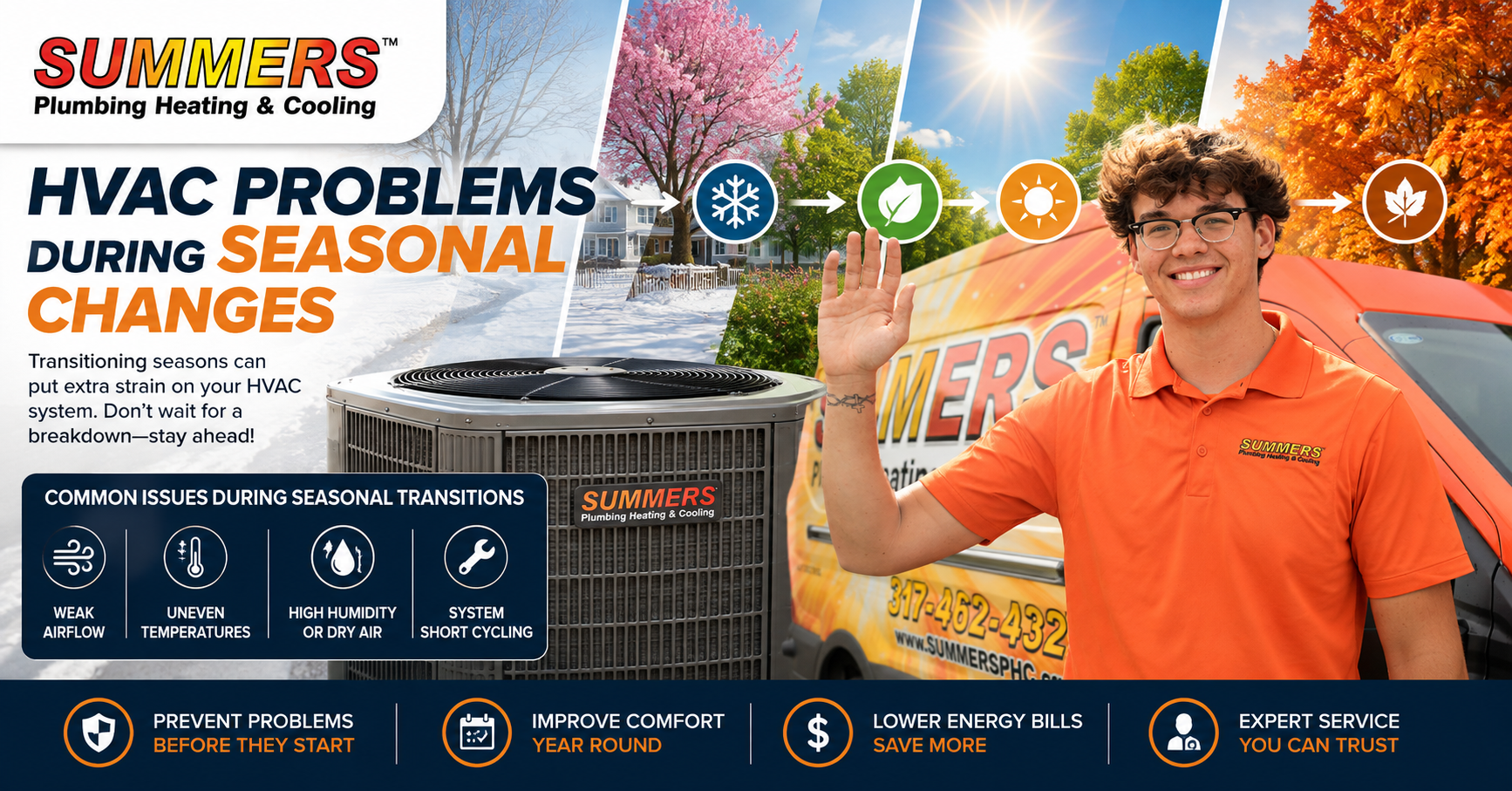
HVAC problems often show up when homeowners switch from heating to cooling or cooling to heating. A system that sat unused for months may struggle to start, develop airflow problems, or show signs of worn components.
The most common seasonal HVAC problems include startup failures, weak airflow, uneven temperatures, short cycling, unusual noises, strange odors, heating or cooling problems, and water leaks.
You can safely check a few basic things yourself, such as the thermostat, air filter, vents, and circuit breaker. Leave electrical, refrigerant, gas, and internal equipment repairs to a qualified HVAC professional.
Why Do HVAC Problems Happen During Seasonal Changes?
HVAC problems can appear during seasonal changes because the system starts working differently after a period of limited use. The first heating or cooling cycle can expose problems that went unnoticed during the off-season.
Common causes include:
- Dirty or clogged air filters
- Blocked supply or return vents
- Thermostat problems
- Outdoor debris
- Condensate drainage issues
- Worn electrical or mechanical components
- Poor airflow
- Equipment that needs professional service
- Increased demand during sudden temperature changes
A system may work normally at the end of one season but show a problem when you switch it to the opposite mode months later.
Common HVAC Problems During Seasonal Changes
The most common seasonal HVAC problems involve starting the system, maintaining airflow, controlling temperature, and handling the increased workload that comes with changing weather.
1. HVAC System Won’t Turn On
An HVAC system that won’t start may have a thermostat setting, power, or equipment problem. Start with simple checks before assuming the system needs a repair.
Check that:
- The thermostat uses the correct heating or cooling mode.
- The temperature setting calls for heating or cooling.
- The thermostat has working batteries, if applicable.
- The circuit breaker hasn’t tripped.
- The system’s service switch remains on.
If these checks don’t get the system running, don’t open the equipment or attempt an electrical repair. If your AC won’t turn on after these basic checks, have an HVAC professional diagnose the problem. Have an HVAC professional diagnose the problem.
2. Weak Airflow From the Vents
Weak airflow often results from a dirty filter, blocked vents, ductwork problems, or an equipment issue. Start with the easiest checks before calling for service.
Check the air filter and replace it if it looks dirty. Then make sure supply and return vents remain open and unobstructed.
If airflow stays weak after these basic checks, the problem may involve the blower, ductwork, or another HVAC component. Persistent weak airflow can also affect cooling performance, so professional diagnosis may be necessary. A professional can identify the actual cause.
3. Uneven Heating or Cooling
Uneven temperatures can result from airflow restrictions, ductwork issues, thermostat location, insulation, or HVAC performance problems.
First, check that vents remain open and furniture doesn’t block them. Also check whether the thermostat sits near a draft, direct sunlight, or another heat source that could affect its reading.
If some rooms remain consistently hotter or colder, have an HVAC professional evaluate the airflow and system.
4. HVAC Short Cycling
Short cycling occurs when an HVAC system starts and stops repeatedly instead of completing normal heating or cooling cycles. Several problems can cause this behavior.
Possible causes include:
- Restricted airflow
- A dirty filter
- Thermostat problems
- Equipment issues
- Improper system sizing
Check the filter first and make sure vents aren’t blocked. If the system continues to short cycle, arrange professional service rather than repeatedly restarting it.
5. Unusual HVAC Noises
New or persistent HVAC noises can indicate a mechanical, electrical, or airflow problem. Pay attention to changes from the sounds your system normally makes.
Common warning sounds include:
- Banging: May indicate a loose or mechanical component.
- Grinding: Can point to a problem with moving parts.
- Squealing: May indicate a belt, motor, or other mechanical issue.
- Rattling: Can come from loose parts or debris.
- Hissing: May indicate an airflow or refrigerant-related issue.
- Buzzing: Can have several causes, including electrical or mechanical problems.
Don’t rely on the sound alone to diagnose the problem. If a new noise continues, turn to a qualified HVAC professional.
6. Unusual HVAC Smells
Some odors can occur when you start an HVAC system after a long period of inactivity, but persistent or strong odors need attention.
A brief dusty smell can occur when accumulated dust heats up during the first heating cycles. A musty smell may point to moisture or buildup that needs investigation.
More concerning odors include:
- Persistent burning smells
- Electrical or plastic odors
- Strong chemical odors
- Gas smells
If you smell gas, leave the area and follow your local gas utility’s emergency instructions. Don’t use switches, flames, or electrical equipment near a suspected gas leak.
7. AC Blowing Warm Air
An AC blowing warm air after the heating season can have a thermostat, airflow, outdoor-unit, refrigerant, electrical, or mechanical problem.
Start with these basic checks:
- Make sure the thermostat shows cooling mode.
- Set the temperature below the current indoor temperature.
- Check the air filter.
- Make sure supply and return vents remain open.
- Check whether the outdoor unit operates.
If the system still blows warm air, don’t attempt to add refrigerant or open the equipment. Refrigerant and electrical work require proper training and equipment.
8. Furnace Blowing Cold Air
A furnace blowing cold air when you expect heat may have a thermostat, airflow, ignition, or equipment problem.
Check that the thermostat uses heating mode and calls for heat. Then inspect the air filter and make sure the vents remain open.
If the furnace still doesn’t produce heat, arrange professional service. Don’t attempt to repair burners, ignition components, gas connections, or other internal furnace parts yourself.
9. Water Leaks or Excessive Condensation
Water around HVAC equipment can indicate a condensate drainage problem, drain pan issue, frozen AC coil, or condensate pump problem.
Check for:
- Water around the indoor unit
- A full drain pan
- Wet areas near the condensate line
- Water stains
- Repeated condensation or leakage
A small amount of normal condensation can occur during AC operation, but water that collects where it shouldn’t needs attention. If you can’t identify the cause safely, call an HVAC professional.
Seasonal HVAC Problems: Spring vs. Fall
The most common problems differ depending on which system you turn on after the seasonal transition.
| Seasonal Change | Common HVAC Problems |
| Winter → Spring | AC won’t start, warm air, weak airflow, water leaks |
| Spring → Summer | Poor cooling, short cycling, uneven cooling, drainage issues |
| Summer → Fall | Furnace won’t start, weak heat, unusual odors |
| Fall → Winter | Short cycling, poor heating, airflow problems, unusual furnace noises |
Testing the system before you need it every day gives you more time to address problems.
What HVAC Problems Can You Check Yourself?
You can safely check several basic HVAC issues without opening the equipment or handling specialized components.
Start with:
- Thermostat: Confirm the mode and temperature settings.
- Air filter: Check for dirt and replace it when needed.
- Vents: Make sure supply and return vents stay clear.
- Circuit breaker: Check whether the HVAC breaker has tripped.
- Outdoor unit: Remove loose leaves and debris from around the equipment.
- Water leaks: Look for obvious water around the indoor unit.
- Thermostat batteries: Replace weak batteries when applicable.
Stop troubleshooting if the problem involves electrical wiring, refrigerant, gas, combustion, or internal HVAC components.
When Should You Call an HVAC Professional?
Call an HVAC professional when basic checks don’t solve the problem or when the issue involves components you shouldn’t service yourself.
Professional service makes sense when:
- The system won’t start
- Heating or cooling remains inadequate
- Airflow stays weak
- Short cycling continues
- Water keeps leaking
- Unusual noises persist
- Strong or unusual odors continue
- You suspect an electrical problem
- You suspect a refrigerant problem
- The furnace has ignition problems
- You smell gas
- The system repeatedly shuts down
Don’t wait for a complete system failure if the equipment shows a persistent warning sign. Early diagnosis can help you understand the problem and determine the appropriate repair.
How Can You Prevent Seasonal HVAC Problems?
You can reduce the chance of seasonal HVAC problems by checking the system before you need it heavily. A short inspection can reveal simple issues before extreme temperatures arrive.
Before each heating or cooling season:
- Check or replace the air filter.
- Test the thermostat.
- Make sure vents and returns remain clear.
- Remove loose debris around the outdoor unit.
- Check for visible water leaks.
- Run the system before peak seasonal demand.
- Pay attention to unusual noises and odors.
- Schedule professional maintenance when your system needs specialized service.
These steps won’t prevent every HVAC failure, but they can help you spot problems before they become an emergency.
Frequently Asked Questions
Why do HVAC problems happen when the seasons change?
HVAC problems often appear during seasonal changes because the system starts operating in a different mode after a period of limited use. Dirty filters, airflow restrictions, thermostat problems, drainage issues, and worn components can become noticeable when the system starts working again.
What HVAC problems are common in spring?
Common spring HVAC problems include an AC that won’t start, warm air from the vents, weak airflow, uneven cooling, water leaks, and unusual noises. Testing the AC before hot weather arrives can help identify these problems early.
What HVAC problems are common in fall?
Common fall HVAC problems include a furnace that won’t start, weak airflow, uneven heating, short cycling, unusual noises, and persistent odors. Check the filter and thermostat first, then call a professional if the problem continues.
Why won’t my AC turn on after winter?
Check the thermostat mode and temperature, thermostat batteries, and circuit breaker first. If the AC still won’t start, the system may have an electrical, control, or mechanical problem that requires professional diagnosis.
Why won’t my furnace turn on after summer?
Check that the thermostat calls for heat and that the circuit breaker hasn’t tripped. If the furnace still doesn’t start, an ignition, electrical, control, or other equipment problem may require professional service.
Why is my HVAC system blowing warm or cold air?
Incorrect thermostat settings, restricted airflow, equipment problems, and other system issues can cause unexpected air temperature. Check the thermostat and filter first. If the problem continues, have the system inspected.
Why does my HVAC system make noise when I turn it on?
An HVAC system may make some normal operating sounds, but new banging, grinding, squealing, rattling, hissing, or buzzing can indicate a problem. Persistent or unusual sounds deserve professional inspection.
Should I have my HVAC system checked before each season?
You should check basic HVAC items before each heating and cooling season and follow your equipment manufacturer’s recommendations for professional maintenance. Seasonal checks can help you identify problems before you depend heavily on the system.
Final Takeaway
Seasonal changes can reveal HVAC problems that remained unnoticed while the system sat unused. The most common issues include startup failures, weak airflow, uneven temperatures, short cycling, unusual noises and odors, heating or cooling problems, and water leaks.
Start with simple checks such as the thermostat, air filter, vents, and outdoor-unit area. If the problem involves electrical components, refrigerant, gas, combustion, or internal equipment, stop troubleshooting and call a qualified HVAC professional.