

Why Does My Heat Pump Keep Switching to Auxiliary Heat?
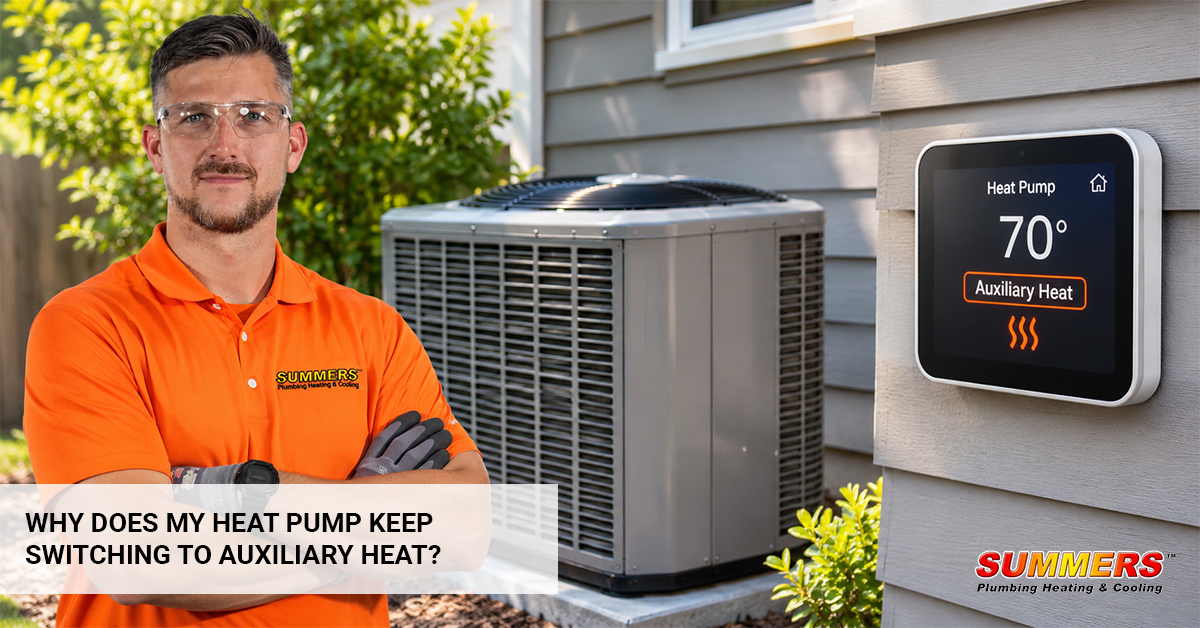
If your heat pump keeps switching to auxiliary heat, it may be struggling to keep your home warm. This often happens during cold weather, but it can also point to a problem with your thermostat, air filter, or heating system.
Auxiliary heat (AUX HEAT) gives your heat pump extra heating power when it cannot meet your home’s heating needs. Most systems use electric heat strips to provide this extra warmth. These heating elements help maintain a comfortable indoor temperature, but they can also increase your electricity bill.
Seeing AUX HEAT on your thermostat once in a while isn’t usually a reason to worry. It often happens when outdoor temperatures drop, or your heat pump needs extra time to warm your home.
However, if AUX HEAT keeps turning on, even when the weather isn’t very cold, something may be wrong.
The good news is that you can check a few common causes yourself. Let’s look at why your heat pump keeps switching to auxiliary heat, how to reduce unnecessary usage, and when it’s time to call an HVAC technician.
What Does Auxiliary Heat Mean on a Heat Pump?
Auxiliary heat is a backup heating source that helps your heat pump keep your home warm when the primary system cannot produce enough heat. You’ll usually see it displayed as AUX HEAT on your thermostat.
A heat pump normally moves heat from outdoor air into your home. However, when outdoor temperatures drop, or your home needs more warmth, the system may struggle to keep up. That’s when auxiliary heat provides extra heating.
How Does Auxiliary Heat Work?
Most heat pumps use electric heat strips installed inside the indoor air handler. These heating elements generate additional heat and help your system reach the temperature you’ve selected on the thermostat.
Your heat pump may turn on auxiliary heat when:
- Outdoor temperatures drop too low.
- Your indoor temperature falls several degrees below the thermostat setting.
- You increase the thermostat temperature too quickly.
- The heat pump enters a defrost cycle.
- Your home needs more heat than the heat pump can provide.
Occasional AUX HEAT operation is normal, especially during cold weather. However, if it stays on for long periods, your system may need attention.
Is Auxiliary Heat the Same as Emergency Heat?
No. Auxiliary heat and emergency heat serve different purposes.
Auxiliary heat automatically works alongside your heat pump when the system needs extra heating power.
Emergency heat is a separate thermostat setting that typically turns off the heat pump compressor and uses the backup heating system instead.
In simple terms, auxiliary heat supports your heat pump during normal operation, while emergency heat provides an alternative when the heat pump cannot operate properly.
Why Does My Heat Pump Keep Switching to Auxiliary Heat?
Your heat pump may keep switching to auxiliary heat because it cannot produce enough warmth to maintain your thermostat’s temperature setting. Cold weather is a common reason, but thermostat settings, airflow problems, and worn-out components can also cause frequent AUX HEAT activation.
Sometimes, this is normal. However, if your heat pump keeps using auxiliary heat even during mild weather, it’s worth checking the system.
Here are eight common reasons your heat pump keeps switching to auxiliary heat and what you can do about them.
1. Outdoor Temperatures Are Too Low
Cold outdoor temperatures are one of the most common reasons your heat pump switches to auxiliary heat. Seasonal temperature changes can also affect your heating system’s performance. Learn more about common HVAC problems during seasonal changes and how to address them.
A heat pump pulls heat from outdoor air and moves it inside your home. However, when temperatures drop, the system has to work harder to provide enough warmth.
If your heat pump cannot keep up with your home’s heating needs, the thermostat turns on auxiliary heat to help warm your home.
This is usually normal during very cold weather. Still, the exact temperature that triggers AUX HEAT depends on your equipment and home.
Here are some signs that cold weather is causing the problem:
- AUX HEAT appears more often on cold mornings.
- Your heat pump runs longer than usual.
- Your home takes more time to reach the desired temperature.
- AUX HEAT turns off when outdoor temperatures rise.
The temperature at which auxiliary heat activates varies from one system to another. It depends on your heat pump’s capacity, outdoor conditions, home insulation, and thermostat settings.
What can you do?
Keep your thermostat at a steady temperature instead of making sudden changes. Also, check your home’s insulation and seal gaps around doors and windows. These small steps can help your heat pump maintain indoor comfort without relying on backup heat as often.
2. You Keep Raising the Thermostat Temperature
Frequently raising your thermostat temperature can make your heat pump switch to auxiliary heat more often.
For example, suppose your home is at 66°F, and you suddenly increase the thermostat to 72°F. Your heat pump now has to work harder to warm the house.
If the system cannot reach the new temperature quickly enough, the thermostat may turn on auxiliary heat to provide extra warmth.
This often happens when you make large temperature changes after lowering the thermostat overnight or while you’re away from home.
How Can You Prevent This Problem?
You can reduce unnecessary AUX HEAT activation with a few simple changes:
- Keep your thermostat at a comfortable, consistent temperature.
- Avoid raising the temperature by several degrees at once.
- Make smaller adjustments when your home feels cold.
- Set a reasonable heating schedule instead of changing the temperature frequently.
These simple habits can help your heat pump maintain indoor comfort without relying on auxiliary heat as often.
Keep in mind that the right thermostat settings depend on your heat pump and the manufacturer’s recommendations.
3. Your Heat Pump Is Running a Defrost Cycle
Your heat pump may switch to auxiliary heat during a defrost cycle to keep your home warm while it removes frost from the outdoor unit.
During cold, humid weather, frost can build up on the outdoor coil. This is normal because your heat pump pulls heat from the outdoor air. However, too much frost can reduce the system’s ability to transfer heat.
To remove the frost, your heat pump starts a defrost cycle. During this process, it temporarily reverses its operation to send warm refrigerant through the outdoor coil. This melts the accumulated frost and helps restore normal airflow.
While this happens, your system may produce less warm air indoors. That’s why auxiliary heat may turn on to keep your home comfortable. If your outdoor unit develops thick ice that doesn’t melt after a defrost cycle, read our guide on what to do when your heat pump is covered in ice.
What Are the Signs of a Normal Defrost Cycle?
You may notice a few changes when your heat pump enters defrost mode:
- Steam rising from the outdoor unit as the ice melts.
- The outdoor fan temporarily stops running.
- A brief increase in auxiliary heat usage.
- Frost gradually disappearing from the outdoor coil.
- A temporary change in the sound of the outdoor unit.
These signs are usually normal. Once the defrost cycle finishes, your heat pump should return to regular heating operation.
When Should You Be Concerned?
If thick ice stays on your outdoor unit or keeps building up without melting, your heat pump may have a problem.
A faulty defrost control, damaged sensor, restricted airflow, or refrigerant issue could prevent the system from removing frost properly.
In that case, contact an HVAC technician to inspect the outdoor unit and identify the cause.
4. Your Air Filter Is Dirty or Clogged
A dirty air filter can restrict airflow and make your heat pump work harder to keep your home warm. When the system cannot move enough air, it may struggle to maintain your thermostat’s temperature setting and rely on auxiliary heat more often.
Over time, dust, pet hair, and other debris collect on the filter. This buildup blocks airflow and makes it harder for your heat pump to distribute warm air throughout your home.
As a result, some rooms may feel colder than others, and your heating system may run longer than usual.
What Are the Signs of a Dirty Air Filter?
Look for these common warning signs:
- Weak airflow from your supply vents.
- Uneven temperatures between rooms.
- Longer heating cycles.
- More frequent AUX HEAT activation.
- More dust around your home.
If you notice these problems, check your air filter first.
How Can You Fix It?
Remove the air filter and check for visible dust and dirt. If it looks clogged, replace it with the correct size and type recommended for your heat pump.
Most standard air filters need replacement every 1–3 months. However, the right schedule depends on your filter type, household conditions, pets, and system usage.
Make it a habit to check your filter regularly, even if it hasn’t reached its expected replacement date.
A clean air filter helps maintain proper airflow, improves heating performance, and reduces unnecessary strain on your heat pump.
5. Your Outdoor Unit Has Restricted Airflow
Blocked airflow around your outdoor heat pump can reduce its heating performance and cause it to use auxiliary heat more often.
Your heat pump needs enough outdoor air to collect heat and transfer it into your home. However, leaves, dirt, snow, and other debris can block the outdoor coil and limit airflow.
When this happens, your system may struggle to produce enough heat. As a result, the thermostat may turn on auxiliary heat to help maintain your indoor temperature.
What Should You Check Around Your Outdoor Unit?
Take a look at the outdoor unit and check for:
- Leaves, branches, and other debris around the equipment.
- Snow covering the unit or blocking airflow.
- Dirt buildup on the outdoor coil.
- Plants or bushes growing too close to the unit.
- Visible damage to the outdoor fan or coil.
How Can You Fix Restricted Airflow?
Start by removing loose leaves, branches, and debris around the outdoor unit. Keep plants and other objects away from the equipment, following the manufacturer’s recommended clearance.
Also, check the unit regularly, especially during fall and winter when leaves and snow can collect around it.
Never use sharp tools to remove ice or try to open the outdoor unit yourself. If you notice heavy ice buildup, a damaged fan, or a coil that remains blocked, contact an HVAC technician.
Keeping the outdoor unit clear helps your heat pump collect heat more effectively and maintain better heating performance.
6. Your Heat Pump Has Low Refrigerant
Low refrigerant can reduce your heat pump’s heating capacity and cause it to rely on auxiliary heat more often.
Your heat pump uses refrigerant to move heat between the indoor and outdoor units. When the refrigerant level drops because of a leak, the system may struggle to produce enough warmth for your home.
Your heat pump might continue running, but it won’t heat your home as effectively. As a result, the thermostat may turn on auxiliary heat to make up for the difference.
What Are the Signs of Low Refrigerant?
Watch for these common warning signs:
- Weak heating from your supply vents.
- Longer heating cycles than usual.
- Ice buildup on refrigerant lines or coils.
- Hissing or bubbling sounds near the equipment.
- More frequent auxiliary heat activation.
If you notice several of these signs, your heat pump may have a refrigerant leak.
How Can You Fix a Refrigerant Problem?
Refrigerant doesn’t normally run out during regular heat pump operation. If the level is low, there’s usually a leak somewhere in the system.
An HVAC technician can check the refrigerant levels, locate the leak, repair the damaged area, and recharge the system to the manufacturer’s specifications.
Don’t try to add refrigerant yourself. A professional should handle refrigerant testing and repairs to protect your equipment and ensure safe operation.
7. Your Thermostat Has Incorrect Settings or a Faulty Sensor
Incorrect thermostat settings or a faulty temperature sensor can cause your heat pump to switch to auxiliary heat more often than necessary.
Your thermostat controls when your heat pump runs and when it needs extra heating support. If it reads the indoor temperature incorrectly or uses the wrong settings, it may turn on AUX HEAT even when your heat pump can still provide enough warmth.
For example, some thermostats use balance point and heating stage settings to decide when auxiliary heat should activate. If these settings aren’t configured correctly, your backup heating system may run more often than needed.
What Should You Check on Your Thermostat?
Start with these simple checks:
- Make sure your thermostat is set to HEAT, not EMERGENCY HEAT.
- Check your heating schedule for large temperature changes.
- Review the auxiliary heat and heating stage settings.
- Keep the thermostat away from direct sunlight and other heat sources.
- Compare the displayed indoor temperature with the actual room temperature.
These checks can help you spot simple thermostat problems before they affect your heating performance.
When Should You Call an HVAC Technician?
If your thermostat keeps activating AUX HEAT without an obvious reason, the problem may involve its temperature sensor, wiring, or internal controls.
An HVAC technician can test the thermostat, check its settings, and make sure it communicates properly with your heat pump.
Avoid changing advanced installer settings unless you know what they do. Incorrect adjustments can affect your system’s heating performance.
8. Your Heat Pump Has a Failing Compressor
A failing compressor can prevent your heat pump from producing enough heat, causing the system to rely more heavily on auxiliary heat.
The compressor is one of the most important parts of your heat pump. It moves refrigerant through the system and helps transfer heat between the indoor and outdoor units.
When the compressor becomes damaged or stops working properly, your heat pump may lose much of its heating capacity. Even if the indoor unit continues running, your home may not get enough warm air.
As a result, the thermostat may activate auxiliary heat more frequently to maintain your desired indoor temperature.
What Are the Signs of a Failing Heat Pump Compressor?
Watch for these common warning signs:
- The outdoor unit doesn’t start or operate properly.
- Your heat pump produces very little warm air.
- You hear unusual buzzing, clicking, or grinding noises.
- The system frequently shuts down or struggles to restart.
- Auxiliary heat runs for extended periods.
If you notice these problems, don’t ignore them. A damaged compressor can affect your entire heating system.
How Can You Fix a Compressor Problem?
Compressor problems need professional attention. An HVAC technician can test the compressor, inspect electrical components, and check refrigerant conditions to find the cause.
Depending on the damage, the technician may recommend an electrical repair, another component repair, or compressor replacement.
Don’t attempt to repair or open the compressor yourself. A professional diagnosis can help you avoid further damage and decide on the most practical repair option.
Is It Normal for a Heat Pump to Keep Switching to Auxiliary Heat?
Yes, it’s normal for a heat pump to use auxiliary heat occasionally, especially during very cold weather or a defrost cycle. However, if AUX HEAT keeps turning on or runs for hours, your system may have a problem.
Auxiliary heat helps your heat pump provide extra warmth when the primary system cannot meet your home’s heating needs. So, seeing AUX HEAT on your thermostat from time to time doesn’t always mean something is wrong.
The important thing is how often it turns on and how long it stays active.
When Is Auxiliary Heat Normal?
Your heat pump may use auxiliary heat under a few common conditions:
- During very cold weather: Your heat pump may need extra heating support when outdoor temperatures drop.
- During defrost cycles: The system may use auxiliary heat to keep your home comfortable while melting frost from the outdoor coil.
- After a large thermostat adjustment: Raising the temperature several degrees can trigger supplemental heating.
- During high heating demand: Your home may need more warmth than the heat pump can provide on its own.
In these situations, auxiliary heat should usually turn off when the extra heating demand decreases.
When Does Auxiliary Heat Indicate a Problem?
Frequent AUX HEAT activation may indicate that your heat pump isn’t working as efficiently as it should.
Pay attention to these warning signs:
| Normal operation | Possible problem |
| Activates during very cold weather | Activates frequently in mild weather |
| Runs briefly during defrost cycles | Runs continuously for hours |
| Turns on after a large thermostat adjustment | Turns on without any temperature changes |
| Helps maintain indoor comfort | Indoor temperature keeps dropping |
| Turns off when heating demand decreases | Stays active for extended periods |
If your heat pump occasionally uses auxiliary heat during cold weather, you probably don’t need to worry.
However, if AUX HEAT appears almost every time your system runs, even during mild weather, have an HVAC technician inspect the equipment.
Finding the cause early can help prevent unnecessary energy use and more expensive repairs.
How to Stop Your Heat Pump From Switching to Auxiliary Heat So Often
You can reduce unnecessary auxiliary heat usage by maintaining your heat pump, checking your thermostat settings, and keeping proper airflow throughout the system. Although you cannot prevent AUX HEAT from activating completely, a few simple steps can help your heat pump work more efficiently.
Here are six ways to reduce frequent auxiliary heat activation.
1. Keep Your Thermostat at a Consistent Temperature
Keeping your thermostat at a steady temperature can help reduce unnecessary auxiliary heat usage.
When you suddenly raise the temperature by several degrees, your heat pump may struggle to warm your home quickly enough. As a result, the thermostat may turn on AUX HEAT to provide extra warmth.
Instead, choose a comfortable temperature and avoid making large adjustments throughout the day.
If you use a programmable thermostat, set a heating schedule that avoids significant temperature changes. This allows your heat pump to maintain indoor comfort without relying on backup heat as often.
2. Replace Your Dirty Air Filter
Replace your air filter regularly to maintain proper airflow and help your heat pump run efficiently.
A dirty filter blocks airflow and makes it harder for your system to distribute warm air throughout your home. This can increase heating demand and cause auxiliary heat to activate more often.
Check your filter regularly and replace it when you notice dust and dirt buildup. Also, make sure you use the correct filter size and type for your system.
3. Check for Obstructions Around the Outdoor Unit
Keep the area around your outdoor heat pump clear to maintain proper airflow.
Leaves, branches, dirt, and snow can block the outdoor coil and reduce your system’s ability to collect heat.
Take a few minutes to inspect the unit and remove any loose debris around it. Also, trim nearby plants and keep objects away from the equipment according to the manufacturer’s clearance recommendations.
If thick ice remains on the outdoor coil after a defrost cycle, contact an HVAC technician for an inspection.
4. Inspect Your Thermostat Settings
Incorrect thermostat settings can cause your heat pump to use auxiliary heat more often than necessary.
Check your thermostat to make sure it is set up correctly. Pay attention to these settings:
- Heating mode: Make sure the system is set to HEAT rather than EMERGENCY HEAT.
- Temperature setting: Avoid making sudden temperature changes.
- Heating schedule: Check for large temperature setbacks.
- Auxiliary heat settings: Make sure the heating stages are configured correctly.
- Emergency heat setting: Avoid selecting this mode during normal heat pump operation.
If you’re unsure about the advanced settings, ask an HVAC technician to check them. Incorrect adjustments can affect your system’s performance.
5. Avoid Large Temperature Setbacks
Lowering your thermostat too much when leaving home can make your heat pump work harder when you return.
For example, if you lower the temperature significantly overnight and then raise it several degrees in the morning, your thermostat may activate auxiliary heat to warm your home faster.
Instead, use moderate temperature adjustments and give your heat pump enough time to warm your home.
This simple change can help reduce unnecessary backup heating and improve everyday comfort.
6. Schedule Professional Heat Pump Maintenance
Regular heat pump maintenance helps identify small problems before they affect your system’s heating performance. If your heating system needs professional attention, learn about our heating system maintenance services.
An HVAC technician can inspect important components and make sure your heat pump operates properly.
During a maintenance visit, the technician may check:
- Refrigerant levels and possible leaks.
- Indoor and outdoor coil conditions.
- Electrical connections and components.
- Thermostat operation and settings.
- Defrost controls and sensors.
- Compressor performance.
- Airflow and blower operation.
If your heat pump keeps switching to auxiliary heat despite these basic checks, professional maintenance can help identify the underlying problem.
Keeping your system in good condition can improve heating performance, reduce unnecessary AUX HEAT usage, and help prevent unexpected breakdowns. You can also follow these tips on how to make your HVAC system last longer and maintain reliable performance.
Does Auxiliary Heat Increase Your Electricity Bill?
Yes, auxiliary heat can increase your electricity bill, especially when your heat pump uses electric resistance heat strips for extended periods.
Your heat pump normally moves heat from outdoor air into your home. This process uses electricity to transfer heat rather than generate it directly.
Auxiliary heat works differently. Electric heat strips use electricity to produce heat directly. Because of this, they generally consume more electricity to provide the same amount of warmth.
For example, an efficient heat pump can deliver multiple units of heat for every unit of electricity it uses. However, electric resistance heating typically delivers about one unit of heat for each unit of electricity consumed.
That’s why frequent AUX HEAT operation can make your monthly electricity bill noticeably higher.
What Causes Higher Electricity Bills From Auxiliary Heat?
Several conditions can increase your electricity usage when auxiliary heat runs frequently:
- Extremely cold weather: Your heat pump may need backup heating to maintain indoor comfort.
- Incorrect thermostat settings: Large temperature adjustments can trigger auxiliary heat more often.
- Dirty air filters: Restricted airflow makes it harder for your heat pump to distribute warm air.
- Refrigerant leaks: Low refrigerant can reduce heating performance and increase backup heating demand.
- Mechanical problems: A faulty compressor or other damaged component may cause your system to rely more on auxiliary heat.
- Extended AUX HEAT operation: The longer electric heat strips run, the more electricity they consume.
How Can You Reduce Auxiliary Heat Energy Costs?
You can reduce unnecessary electricity use by keeping your heat pump in good condition and following a few simple habits.
- Replace dirty air filters regularly.
- Keep leaves, snow, and debris away from the outdoor unit.
- Maintain a consistent thermostat temperature.
- Avoid large temperature adjustments.
- Schedule regular heat pump maintenance.
- Have a technician inspect your system if AUX HEAT runs too often.
Remember, auxiliary heat isn’t always a sign of a problem. Your heat pump needs backup heating during certain conditions. The goal is to prevent unnecessary operation while keeping your home comfortable.
When Should You Call an HVAC Technician?
You should call an HVAC technician if your heat pump keeps switching to auxiliary heat, runs constantly, or struggles to keep your home warm.
Occasional AUX HEAT activation is normal, especially during cold weather. However, frequent or prolonged operation may point to a problem with your heating system.
Pay attention to these warning signs:
- Auxiliary heat runs constantly: AUX HEAT stays on for long periods, even when outdoor temperatures are moderate.
- Your home isn’t getting warm: The thermostat displays AUX HEAT, but your indoor temperature keeps dropping.
- The outdoor unit has heavy ice buildup: Thick ice remains on the coil even after the defrost cycle.
- Your electricity bill suddenly increases: Your heating costs rise without a clear change in weather or energy usage.
- Your heat pump makes unusual noises: Buzzing, grinding, or repeated clicking may indicate a mechanical or electrical problem.
- The outdoor unit stops working: Your indoor system continues running, but the outdoor unit doesn’t operate as expected.
What Will an HVAC Technician Check?
An experienced HVAC technician can inspect your heating system to identify why it keeps switching to auxiliary heat. If your system isn’t providing enough warmth, explore our professional heating services in Columbus, IN, to get the help you need.
Depending on the symptoms, the technician may check:
- Thermostat settings and temperature sensors.
- Compressor operation and electrical connections.
- Refrigerant levels and possible leaks.
- Indoor and outdoor coil conditions.
- Defrost controls and sensors.
- Airflow and blower performance.
These checks help identify whether the problem comes from a simple setting, restricted airflow, or a damaged component.
If your heat pump isn’t providing enough warmth, don’t wait until it stops working completely. Schedule a professional inspection to find the problem early and avoid potentially expensive repairs.
Frequently Asked Questions
Why Does My Heat Pump Go Into AUX Heat Every Few Minutes?
Your heat pump may switch to AUX HEAT every few minutes because of incorrect thermostat settings, restricted airflow, or a problem with the heating system. A faulty temperature sensor or control issue can also cause repeated activation.
First, check your air filter and thermostat settings. If the problem continues, especially during mild weather, have an HVAC technician inspect your system.
At What Temperature Should a Heat Pump Switch to Auxiliary Heat?
There is no fixed outdoor temperature that triggers auxiliary heat on every heat pump. The activation point depends on your system’s heating capacity, outdoor temperature, home insulation, and thermostat settings.
Some heat pumps need backup heating in moderately cold weather, while others can operate efficiently at much lower temperatures. Your system’s balance point helps determine when additional heating becomes necessary.
Should My Heat Pump Run on Auxiliary Heat All Night?
Your heat pump may run on auxiliary heat for several hours during extremely cold weather. However, if AUX HEAT stays on all night during mild weather, your system may have a problem.
Check your thermostat settings and air filter first. If the backup heat continues running without a clear reason, contact an HVAC technician.
How Do I Stop My Heat Pump From Using AUX Heat?
You can reduce unnecessary AUX HEAT usage by keeping your thermostat at a consistent temperature, replacing dirty air filters, and keeping the outdoor unit clear.
Also, avoid making large temperature adjustments. If auxiliary heat continues activating frequently, have a technician check your thermostat settings, airflow, and heating system components.
Is It Bad to Run Auxiliary Heat Constantly?
Running auxiliary heat constantly can increase your electricity bill, especially when your system uses electric heat strips. It may also indicate that your heat pump isn’t providing enough warmth on its own.
Although extended operation can be normal during extremely cold weather, frequent use in moderate conditions deserves attention. Have an HVAC technician inspect the system to find the cause.
Should I Turn Off Auxiliary Heat on My Thermostat?
No, you generally shouldn’t turn off auxiliary heat without understanding your heat pump’s operating requirements. Auxiliary heat provides extra warmth when the primary heating system needs support, including during very cold weather and defrost cycles.
Your thermostat is designed to control this heating automatically. Leave the settings as recommended by the manufacturer unless an HVAC technician advises otherwise.
What Is the Difference Between AUX Heat and Emergency Heat?
AUX HEAT and EMERGENCY HEAT both use your system’s backup heating source, but they work differently.
Auxiliary heat automatically supports your heat pump when it needs extra heating power. Emergency heat is a separate thermostat setting that typically turns off the outdoor heat pump compressor and uses the backup heating system instead.
In simple terms, AUX HEAT helps your heat pump during normal operation, while EMERGENCY HEAT provides an alternative when the heat pump cannot operate properly.
Final Thoughts
If your heat pump keeps switching to auxiliary heat, cold weather or sudden thermostat adjustments may be the reason. However, dirty air filters, restricted airflow, low refrigerant, and compressor problems can also cause frequent AUX HEAT activation.
Start with a few simple checks. Make sure your thermostat settings are correct, replace a dirty air filter, and keep the outdoor unit clear of leaves and debris.
If your heat pump continues relying on auxiliary heat, even during mild weather, it’s time to call an HVAC technician. A professional inspection can help identify the problem before it leads to higher electricity bills or costly repairs.
Regular maintenance and proper thermostat settings can help your heat pump run efficiently, reduce unnecessary auxiliary heat usage, and keep your home comfortable throughout the heating season.