
How Long Do HVAC Systems Last? Average Lifespan Guide
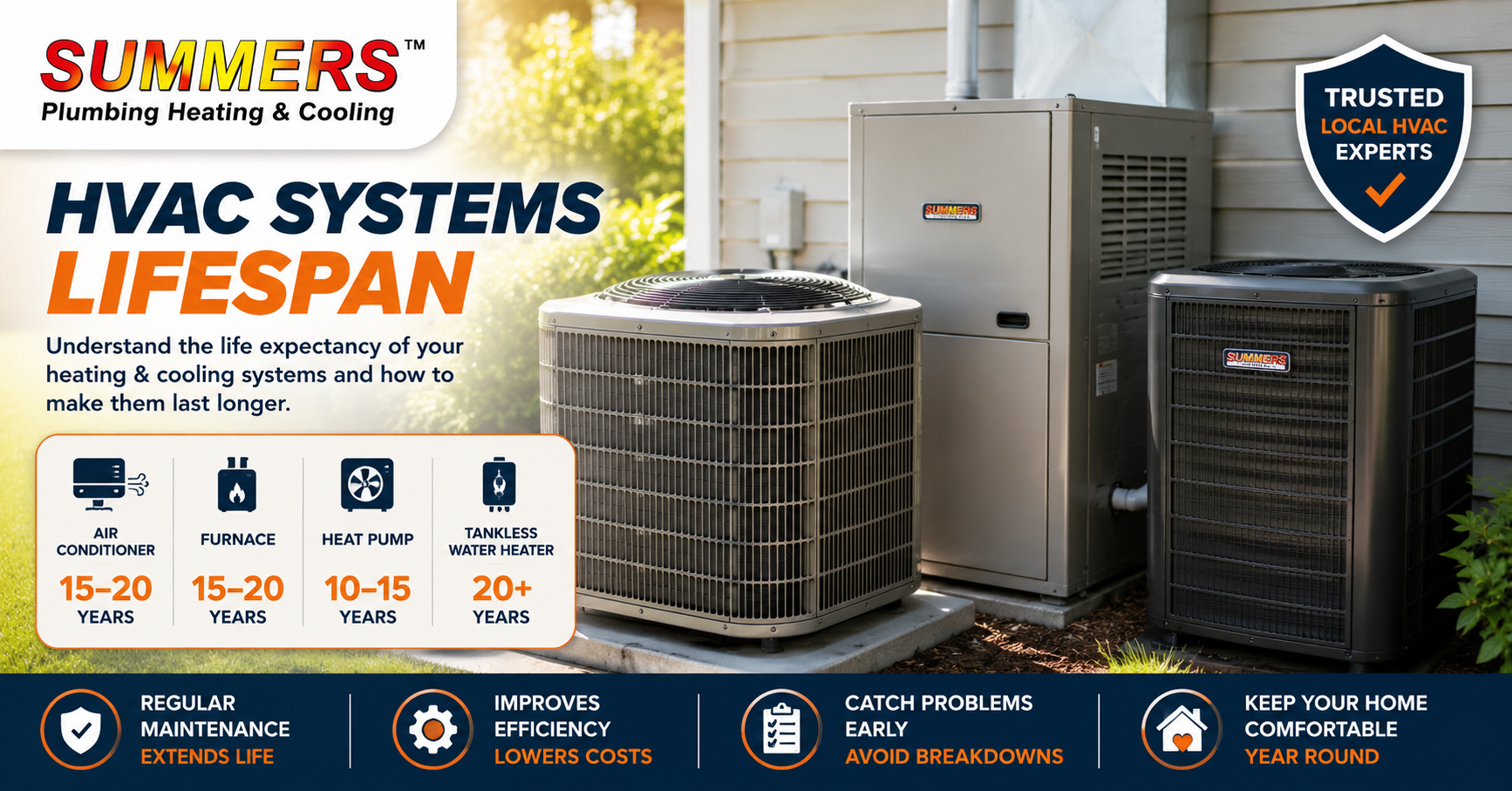
Most residential HVAC systems last 10 to 20 years, but the actual lifespan depends on the type of system, installation quality, maintenance, usage, and local climate. Central air conditioners and heat pumps often last around 10–15 years, while furnaces commonly last 15–20 years.
Age alone doesn’t mean you need a new HVAC system. A well-maintained system can continue working beyond its typical lifespan, while poor maintenance or heavy use can shorten its service life.
How Long Does an HVAC System Last?
An HVAC system typically lasts 10–20 years, although different types of heating and cooling equipment have different expected lifespans.
| HVAC System | Typical Lifespan |
| Central air conditioner | 10–15 years |
| Heat pump | 10–15 years |
| Furnace | 15–20 years |
| Boiler | 15–30 years |
| Ductless mini-split | 10–20 years |
These ranges provide a general guide rather than a guarantee. Your system may last longer or need replacement sooner depending on how you use it, how well you maintain it, and how well the original installer sized and installed it.
What Affects HVAC System Lifespan?
Several factors can determine how long your HVAC equipment continues to operate reliably.
Maintenance
Regular maintenance can help keep an HVAC system operating properly and can help you catch worn or failing components early.
Simple maintenance includes checking air filters, keeping airflow clear, and keeping outdoor equipment free from debris. Professional furnace maintenance can address components that require specialized tools and training.
Installation Quality
A properly installed HVAC system generally has a better chance of delivering reliable performance over its service life.
Installation quality includes:
- Correct system sizing
- Proper refrigerant charge
- Correct electrical connections
- Proper drainage
- Correct ductwork connections
- Proper airflow
- Correct equipment setup
An oversized or undersized system can operate differently from a properly matched system and may experience unnecessary operating problems.
System Usage
The amount of work your HVAC system performs affects its wear over time.
A system that runs heavily through long periods of extreme heat or cold experiences more operating hours than one used in a mild climate. Frequent cycling can also indicate an underlying issue that deserves attention.
Climate and Outdoor Conditions
Your local climate can affect HVAC equipment because temperature, humidity, dust, and other environmental conditions influence how hard the system works.
For example, an air conditioner in a region with long, hot summers may accumulate substantially more cooling hours than one in a mild climate.
Outdoor equipment also faces weather and debris. Keeping the area around the condenser clear helps maintain proper airflow.
Equipment Age and Quality
Equipment design and component quality also affect service life. As an HVAC system gets older, components naturally experience more wear, and finding replacement parts can sometimes become more difficult.
Older equipment may continue working reliably, so don’t replace it solely because it has reached a particular age.
How Do You Know When an HVAC System Needs Replacement?
An HVAC system may need replacement when its age combines with frequent repairs, declining performance, or increasing operating problems.
Watch for these signs:
- Frequent breakdowns: You keep calling for repairs.
- Rising repair costs: Major components require expensive repairs.
- Uneven heating or cooling: Some rooms remain too hot or too cold.
- Weak airflow: Airflow stays poor even after basic checks.
- Rising energy bills: Your system uses more energy without a clear change in usage.
- Unusual noises: New or persistent sounds indicate a possible mechanical problem.
- Frequent short cycling: The system starts and stops repeatedly.
- Refrigerant problems: An older AC or heat pump develops refrigerant-related issues.
- Poor temperature control: The system struggles to maintain the thermostat setting.
- Advanced age: The equipment approaches or exceeds its typical service life.
One symptom doesn’t automatically mean you need a replacement. Have an HVAC professional diagnose the problem before making that decision. If you’re noticing declining cooling performance or repeated AC problems, review these signs you need AC replacement before deciding whether replacement is necessary.
Should You Repair or Replace an Old HVAC System?
Repairing an older HVAC system can make sense when the equipment remains reliable and the repair costs stay reasonable. Replacement becomes more attractive when the system needs frequent or expensive repairs and its performance continues to decline.
| Consideration | Repair | Replace |
| System age | Relatively young | Near or beyond expected lifespan |
| Repair cost | Reasonable | Major or recurring |
| Reliability | Generally reliable | Frequent breakdowns |
| Performance | Still adequate | Declining |
| Operating costs | Acceptable | Increasing |
| Remaining service life | Good | Limited |
Don’t use age as the only deciding factor. Consider the repair cost, system condition, reliability, comfort, operating costs, and expected remaining service life.
For example, spending money on a reasonable repair for an older but otherwise reliable system can make sense. A major repair on an aging system that already needs frequent service may make replacement worth considering.
How Can You Make Your HVAC System Last Longer?
You can help your HVAC system reach its expected service life by keeping airflow clear, following maintenance recommendations, and addressing problems early. For practical tips on extending your system’s service life, learn how to make your HVAC system last longer.
Replace or Clean the Air Filter
Check your filter regularly and replace it when it becomes dirty. A clogged filter can restrict airflow and make the system work harder.
Follow the filter manufacturer’s recommendations, but check the filter more often if your home has pets, dust, or other conditions that cause faster buildup.
Keep Outdoor Equipment Clear
Keep leaves, grass, weeds, and other debris away from your outdoor AC or heat pump.
Clear loose debris from around the unit and maintain the clearance recommended by the equipment manufacturer. Avoid damaging the condenser fins while cleaning around the equipment.
Maintain Proper Airflow
Keep supply and return vents open and unobstructed.
Furniture, rugs, curtains, and stored items can block airflow. If your system continues to have weak airflow after you check the filter and vents, have an HVAC professional investigate the cause.
Schedule Professional Maintenance
Follow your equipment manufacturer’s maintenance recommendations and have a qualified HVAC professional inspect the system when it needs specialized service.
Professional furnace maintenance service can include checking system operation, electrical components, airflow, drainage, coils, controls, and other equipment-specific components.
Address Problems Early
Don’t ignore unusual noises, odors, leaks, weak airflow, or changes in heating and cooling performance.
A small performance change doesn’t always mean a major failure will follow, but early diagnosis can help you understand the problem before it becomes a more disruptive repair.
Use the System as Intended
Use your HVAC system according to the manufacturer’s instructions and avoid making changes that interfere with normal operation.
Keep the thermostat settings reasonable for the season and don’t repeatedly override safety controls or restart equipment that shuts down unexpectedly.
When Should You Start Planning for HVAC Replacement?
Start planning for replacement when your HVAC system approaches the end of its typical service life or begins developing frequent performance and repair problems.
You don’t need to wait for a complete failure. Planning ahead gives you time to:
- Compare replacement options
- Get multiple estimates
- Review equipment specifications
- Check warranties
- Consider installation requirements
- Budget for the project
- Avoid making a rushed decision during extreme weather
If your system still performs well and doesn’t require frequent repairs, you can continue using it while keeping an eye on its condition.
HVAC Lifespan by System Type: Quick Comparison
Different HVAC systems have different typical service lives, so the type of equipment matters when estimating how long yours may last.
| System Type | Typical Lifespan |
| Central AC | 10–15 years |
| Heat pump | 10–15 years |
| Furnace | 15–20 years |
| Boiler | 15–30 years |
| Ductless mini-split | 10–20 years |
Use these figures as general planning ranges rather than fixed replacement deadlines. Maintenance, installation, climate, and system usage can all change the actual service life.
Frequently Asked Questions
How many years does an HVAC system usually last?
Most residential HVAC systems last about 10–20 years, depending on the equipment type, installation, maintenance, usage, and climate. Some systems can last longer with proper care.
What is the average life of a central air conditioner?
A central air conditioner typically lasts around 10–15 years. Heavy use, poor maintenance, installation problems, and extreme outdoor conditions can affect its service life.
How long does a furnace last?
A residential furnace commonly lasts around 15–20 years. Regular maintenance and proper installation can help the system reach its expected service life.
How long does a heat pump last?
A heat pump typically lasts around 10–15 years, although actual service life varies with climate, maintenance, installation, and how frequently you use the system.
How often should an HVAC system be replaced?
You should replace an HVAC system when its condition, repair needs, performance, and remaining service life make replacement more practical than continued repairs. Don’t replace equipment based on age alone.
Can regular maintenance extend HVAC system life?
Regular maintenance can help keep an HVAC system operating properly and identify developing problems early. It cannot guarantee a specific additional number of years because equipment condition and operating conditions vary.
Is it worth repairing a 15-year-old HVAC system?
It can be worth repairing a 15-year-old HVAC system if the repair costs remain reasonable and the equipment still provides reliable performance. If major repairs keep occurring, compare the repair cost and expected remaining life with the cost of replacement.
What are the signs that an HVAC system needs replacement?
Frequent breakdowns, expensive repairs, declining heating or cooling performance, rising operating costs, repeated short cycling, and advanced equipment age can all indicate that replacement deserves consideration. Have a professional diagnose the system before deciding.
Final Takeaway
Most residential HVAC systems last about 10–20 years, but no single lifespan applies to every system. Central ACs and heat pumps often reach 10–15 years, while furnaces commonly last 15–20 years.
Maintenance, installation quality, system usage, and climate all affect how long your equipment lasts. When an older system starts requiring frequent repairs or struggles to maintain comfortable temperatures, compare the cost of continued repairs with replacement rather than relying on age alone.