

Sediment Buildup in Water Heaters Explained: Causes & Fixes
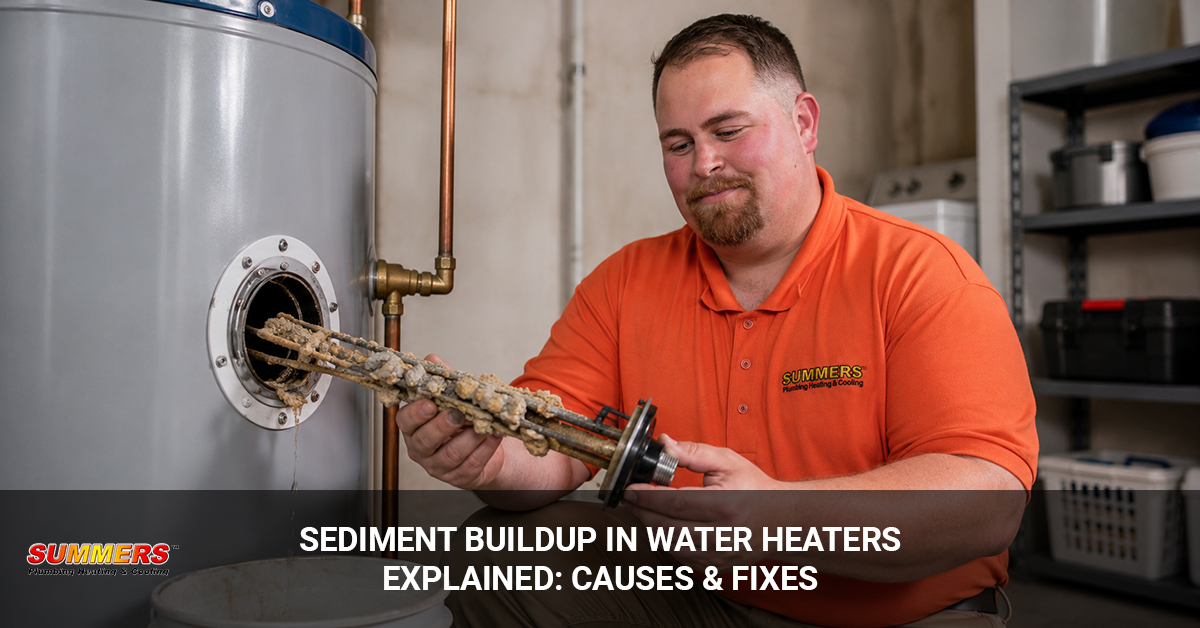
Sediment buildup is a common water heater problem that can reduce efficiency, increase energy bills, and shorten the life of your unit. Over time, naturally occurring minerals in your water settle at the bottom of the tank, creating a layer of sediment that makes the water heater work harder to heat water.
The problem usually develops gradually, so many homeowners don’t notice it until they start hearing popping noises, running out of hot water sooner than expected, or seeing higher utility bills. The longer sediment is left inside the tank, the more strain it puts on the heating system.
The good news is that sediment buildup is easy to manage with regular maintenance. Flushing the tank, keeping up with routine inspections, and addressing problems early can help your water heater run more efficiently and last longer.
In this guide, you’ll learn what sediment buildup is, why it happens, the signs to look for, how it affects your water heater, and the best ways to remove and prevent it.
What Is Sediment Buildup in a Water Heater?
Sediment buildup is the collection of minerals that settle at the bottom of a tank water heater over time. These minerals, mainly calcium and magnesium, are naturally found in many water supplies. As the water heats up, the minerals separate from the water and sink to the bottom of the tank.
A small amount of sediment is normal and happens in almost every tank water heater. The problem starts when those mineral deposits continue to build up year after year. As the sediment layer becomes thicker, it creates a barrier between the heat source and the water, forcing the burner or heating elements to work harder. This reduces efficiency, increases energy use, and puts extra strain on the system.
Homes with hard water are more likely to experience sediment buildup because the water contains higher levels of dissolved minerals. The harder the water, the faster those minerals accumulate inside the tank. That’s why water heaters in hard water areas often need to be flushed more frequently.
Sediment buildup is most common in traditional tank water heaters because they constantly store and heat water. While tankless systems don’t develop the same type of sediment layer as traditional tanks, it’s still worth comparing tankless vs. traditional water heaters if you’re considering a replacement. However, they can still develop mineral scale inside the heat exchanger if hard water isn’t treated.
While a thin layer of sediment isn’t usually a concern, excessive buildup can lead to slower heating, less hot water, strange popping or rumbling noises, higher energy bills, and a shorter water heater lifespan. Regular maintenance helps keep sediment under control and prevents these problems from becoming more serious.
What Causes Sediment Buildup?
Sediment buildup is caused by minerals in the water that settle at the bottom of the tank every time the water heater heats water. While some sediment is normal, certain conditions can cause it to build up much faster and affect your water heater’s performance.
Here are the most common causes.
Hard Water
Hard water is the leading cause of sediment buildup in a water heater. It contains high levels of minerals like calcium and magnesium. When the water is heated, these minerals separate from the water and settle at the bottom of the tank.
As the deposits build up, the water heater has to work harder to heat the water. This lowers efficiency, increases energy use, and can shorten the unit’s lifespan.
If you live in an area with hard water, installing a water softener and flushing the tank regularly can help reduce mineral buildup and keep your water heater running efficiently.
Repeated Heating Cycles
Every heating cycle leaves behind a small amount of mineral deposits. Since your water heater heats fresh water several times a day, those deposits gradually build up over months and years.
Even if your water isn’t considered very hard, repeated heating eventually creates sediment inside the tank. That’s why regular maintenance is important for every tank water heater, regardless of your water quality.
Not Flushing the Tank Regularly
Skipping annual maintenance allows sediment to continue building up. Over time, the loose mineral deposits harden into a thick layer that’s much more difficult to remove.
A heavily coated tank takes longer to heat water, uses more energy, and puts extra stress on the burner or heating elements. In severe cases, the trapped heat can even damage the tank.
Flushing the tank at least once a year is one of the simplest and most effective ways to prevent sediment-related problems.
Older Water Heaters
Older water heaters naturally collect more sediment than newer ones. Even with routine flushing, a small amount of mineral buildup often remains inside the tank. After years of use, those leftover deposits can grow into a thick layer.
As the unit ages, sediment buildup combined with normal wear makes the water heater less efficient and more likely to develop problems. If your water heater is more than 10 years old and you’re noticing reduced hot water, unusual noises, or higher energy bills, sediment buildup could be a contributing factor.
A professional inspection can determine whether flushing the tank will improve performance or if the water heater is nearing the end of its lifespan.
How Does Sediment Buildup Affect a Water Heater?
Sediment buildup reduces your water heater’s efficiency, increases energy costs, and can shorten its lifespan. As minerals collect at the bottom of the tank, they create a barrier between the heat source and the water. This makes the burner or heating elements work longer to produce the same amount of hot water, putting extra strain on the entire system.
Here are the most common ways sediment buildup affects a water heater.
Lower Heating Efficiency
Sediment makes it harder for your water heater to heat water efficiently. The mineral layer blocks heat from reaching the water, so the burner or heating elements have to work longer to warm the tank.
As a result, the water heater takes more time to produce hot water and uses more energy during each heating cycle.
Reduced Hot Water Supply
Sediment buildup can reduce the amount of hot water your water heater provides. As mineral deposits accumulate, they take up space inside the tank that should be storing hot water.
This means you may run out of hot water sooner, especially during long showers or when several fixtures are using hot water at the same time.
Strange Noises
Rumbling, popping, or banging noises are often caused by sediment buildup. Water trapped beneath the layer of minerals turns into steam as it’s heated. When the steam escapes, it creates the popping or rumbling sounds you hear.
If these noises become louder or more frequent, it’s usually a sign that the sediment layer has become thicker and the tank needs to be flushed.
Higher Energy Bills
Sediment buildup can increase your monthly energy bills. Since the water heater has to work harder and run longer to heat the water, it uses more gas or electricity than it normally would.
If you’ve noticed higher utility bills without changing your hot water usage, sediment buildup could be one of the reasons.
Overheating and Component Damage
Too much sediment can cause your water heater to overheat. The trapped heat puts extra stress on the burner, heating elements, and other internal components.
Over time, this added strain can lead to worn-out parts, more frequent repairs, and reduced system performance.
Shorter Water Heater Lifespan
Heavy sediment buildup can shorten the life of your water heater. The extra workload created by poor heat transfer causes the system to wear out faster and increases the risk of internal damage.
Flushing the tank regularly helps remove sediment before it becomes a serious problem. With proper maintenance, your water heater can run more efficiently and last several years longer.
What Are the Signs of Sediment Buildup?
Sediment buildup usually causes noticeable changes in your water heater’s performance before it becomes a serious problem. If you recognize these warning signs early, you can often remove the sediment with routine maintenance and avoid costly repairs or an early replacement.
Here are the most common signs that sediment has built up inside your water heater.
Rumbling or Popping Noises
Rumbling or popping sounds are one of the most common signs of sediment buildup. As the burner heats the tank, water trapped beneath the layer of sediment turns into steam. When the steam bubbles break through the mineral deposits, they create the popping, crackling, or rumbling noises you hear.
If the noises continue after flushing the tank, the sediment may have hardened, or another issue could be affecting the water heater.
Hot Water Runs Out Quickly
If your hot water doesn’t last as long as it used to, sediment buildup could be the reason. The layer of minerals takes up space inside the tank, reducing the amount of hot water it can store.
If you’re running out of hot water sooner than normal and your household’s water usage hasn’t changed, it’s a good idea to inspect the water heater.
Water Takes Longer to Heat
A longer wait for hot water often means the water heater is losing efficiency. Because the heat has to pass through the sediment before reaching the water, the heating process slows down.
If it takes noticeably longer for your faucets or shower to produce hot water, sediment buildup may be reducing your water heater’s performance.
Inconsistent Water Temperature
Water that changes from hot to lukewarm without warning can be a sign of sediment buildup. Thick mineral deposits make it harder for the water heater to maintain a steady water temperature.
If this problem continues after checking the thermostat, sediment inside the tank could be the cause.
Higher Utility Bills
A sudden increase in your energy bills can indicate that your water heater is working harder than it should. As sediment builds up, the system needs more gas or electricity to heat the same amount of water.
If your energy costs are rising without an increase in hot water usage, sediment buildup may be affecting your water heater’s efficiency.
Reduced Hot Water Pressure
Reduced hot water pressure can sometimes be caused by loose mineral deposits. Sediment can partially block plumbing connections or clog fixtures, restricting the flow of hot water.
If you notice lower pressure only when using hot water, have your water heater and plumbing system inspected to determine whether sediment buildup is the cause.
Can Sediment Buildup Be Removed?
Yes. In most cases, sediment buildup can be removed by flushing the water heater. Flushing clears out loose mineral deposits from the bottom of the tank, helping the unit heat water more efficiently and restoring its performance.
If the sediment hasn’t hardened or damaged the tank, a thorough flush is often all that’s needed to solve the problem. However, if the buildup has been ignored for years, additional repairs or even a replacement may be necessary.
Flushing the Tank
Flushing the tank is the most effective way to remove sediment from a tank water heater. The process involves turning off the power or gas, draining the tank, and flushing it with fresh water until the mineral deposits are washed out.
For most homes, flushing the water heater once a year is enough to keep sediment under control. If you have hard water, flushing the tank every six months can help prevent excessive mineral buildup and keep the system running efficiently.
Can You Flush It Yourself?
Yes, many homeowners can flush a water heater themselves. If you’re comfortable with basic home maintenance and follow the manufacturer’s instructions, it’s a relatively simple job.
Before you begin, always:
- Turn off the electricity or gas supply.
- Shut off the cold water supply.
- Allow the tank to cool if the water is hot.
- Refill the tank completely before restoring power to an electric water heater.
If you’re unsure about any step, it’s safer to have the work done by a professional.
When to Call a Professional
Call a licensed plumber if flushing doesn’t solve the problem or you suspect more serious damage. While routine flushing is a simple maintenance task, some situations require professional equipment and expertise.
You should contact a plumber if:
- The drain valve is clogged.
- The tank won’t drain completely.
- Heavy sediment remains after flushing.
- Rumbling or popping noises continue.
- The tank is leaking.
- You’re not comfortable performing the maintenance yourself.
If sediment buildup has affected your system’s performance, scheduling professional water heater repair can help restore efficiency and prevent further damage. If years of sediment buildup have permanently damaged the tank, professional water heater installation may be the most cost-effective long-term solution.
How Can You Prevent Sediment Buildup?
Regular maintenance is the best way to prevent sediment buildup in a water heater. While you can’t completely stop minerals from settling inside the tank, you can slow the buildup and keep your water heater running efficiently with a few simple maintenance steps.
Here are the best ways to prevent sediment from becoming a bigger problem.
Flush the Tank Every Year
Flushing the tank once a year as part of annual water heater maintenance is the most effective way to remove sediment before it causes problems. This maintenance removes loose mineral deposits from the bottom of the tank, helping the water heater heat water more efficiently and reducing unnecessary wear.
If your home has hard water, flushing the tank every six months is a better option. More frequent flushing helps prevent heavy mineral buildup and can extend the life of your water heater.
Install a Water Softener
A water softener helps reduce the minerals that cause sediment buildup. Homes with hard water have higher levels of calcium and magnesium, which settle inside the tank every time the water is heated.
By removing these minerals before they reach the water heater, a water softener slows sediment buildup, improves efficiency, and also helps protect other plumbing fixtures and water-using appliances throughout your home.
Inspect the Anode Rod
Checking the anode rod regularly helps protect your water heater from internal corrosion. The anode rod attracts corrosive minerals before they can attack the steel tank, helping prevent rust and extending the unit’s lifespan.
Although it doesn’t prevent sediment from forming, it works alongside routine maintenance to protect the tank. Have the anode rod inspected every 3 to 5 years and replace it if it’s heavily worn.
Schedule Routine Maintenance
A yearly professional inspection can help prevent small problems from turning into costly repairs. During a maintenance visit, a plumber can flush the tank, inspect the heating system, test the temperature and pressure (T&P) relief valve, examine the anode rod, and check for leaks, corrosion, or other signs of wear.
Routine maintenance improves performance, increases efficiency, and helps your water heater last longer.
Keep the Water Temperature at 120°F
Setting your water heater to 120°F (49°C) can help reduce mineral buildup and improve efficiency. Higher temperatures cause minerals to separate from the water more quickly, allowing sediment to build up faster inside the tank.
Keeping the thermostat at the recommended temperature also reduces energy consumption, lowers utility bills, and decreases the risk of accidental scalding.
Frequently Asked Questions
Is sediment buildup normal in a water heater?
Yes. A small amount of sediment is normal in every tank water heater. As water is heated, naturally occurring minerals settle at the bottom of the tank. Sediment only becomes a problem when it builds up over time and isn’t removed through regular maintenance.
Does hard water always cause sediment buildup?
Hard water speeds up sediment buildup, but it isn’t the only cause. Every tank water heater collects some mineral deposits over time. However, homes with hard water experience faster buildup and typically need more frequent flushing to keep the system operating efficiently.
How often should I flush my water heater?
Most tank water heaters should be flushed once a year. If you live in an area with hard water or notice signs of sediment buildup, flushing the tank every six months can help improve performance and prevent excessive mineral deposits.
Can sediment buildup damage a water heater?
Yes. If left untreated, sediment buildup can reduce heating efficiency, increase energy bills, damage heating components, and shorten the lifespan of the water heater. In severe cases, it can even contribute to premature tank failure.
Can I flush my water heater myself?
Yes, many homeowners can safely flush a water heater themselves. If you’re comfortable with basic maintenance and follow the manufacturer’s instructions, it’s a relatively simple task. However, if the drain valve is clogged, the tank won’t drain properly, or you’re unsure how to do it safely, it’s best to contact a licensed plumber.
Will flushing my water heater improve its performance?
Yes. Flushing removes accumulated sediment, allowing the water heater to heat water more efficiently. It can improve hot water availability, reduce energy consumption, eliminate rumbling or popping noises, and help extend the life of the unit.
Final Thoughts
Sediment buildup is a normal part of owning a tank water heater, but it should never be ignored. As mineral deposits collect at the bottom of the tank, your water heater has to work harder to heat water. This reduces efficiency, increases energy costs, and puts extra strain on the system. If left untreated, sediment buildup can lead to costly repairs or even shorten the life of your water heater.
The good news is that sediment buildup is largely preventable. Flushing the tank once a year, inspecting the anode rod, and scheduling routine maintenance can keep your water heater operating efficiently and help prevent expensive problems. If your home has hard water, installing a water softener and flushing the tank every six months can provide even greater protection.
If you’re hearing rumbling or popping noises, running out of hot water faster than usual, or noticing higher energy bills, don’t wait for the problem to get worse. Having your water heater inspected and maintained early can improve its performance, extend its lifespan, and help ensure you have reliable hot water for years to come.