

Furnace Filter Direction: Which Way Should It Face?
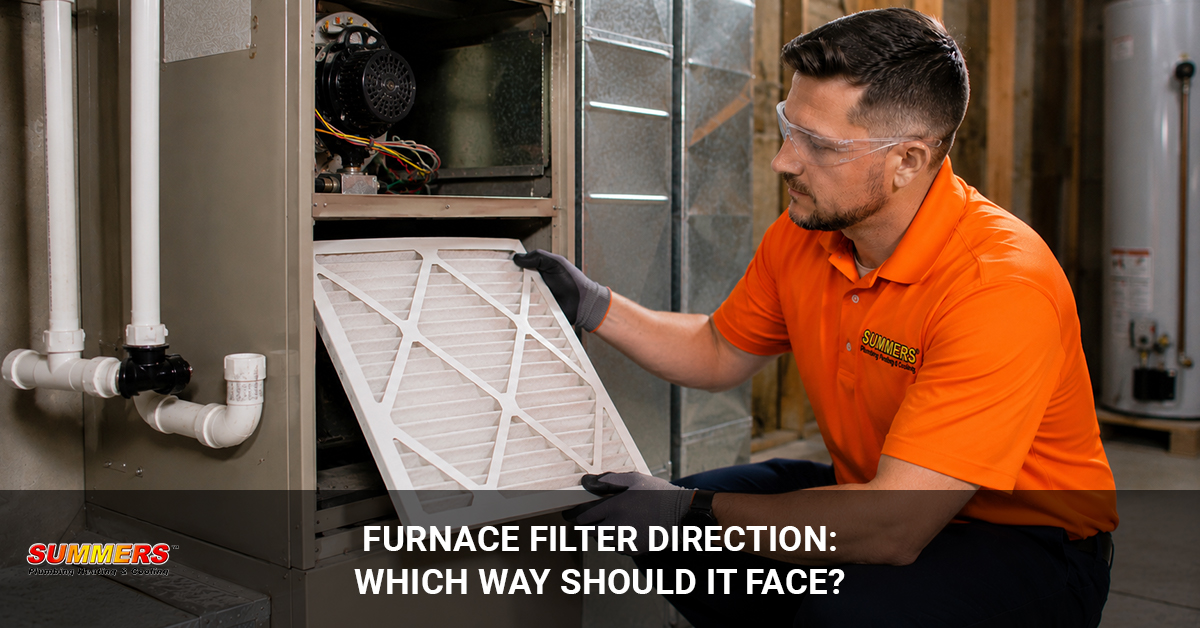
If you’re wondering which way a furnace filter should face, the arrow on the filter should always point toward the furnace or air handler. The arrow shows the direction of airflow, not the direction you insert the filter. As air moves from your home’s return vents into the furnace, the filter should be positioned to catch dust and debris before they reach the blower motor and other internal components.
It’s easy to install a furnace filter backward, especially if you’re replacing one for the first time. While your furnace may still run, the filter won’t work as efficiently as it was designed to. Incorrect installation can reduce airflow, make your heating system work harder, increase energy bills, and shorten the life of important HVAC components.
The good news is that checking the filter direction only takes a few seconds. Once you know what the airflow arrow means, replacing your furnace filter becomes a quick and simple maintenance task.
In this guide, you’ll learn how to identify the correct furnace filter direction, follow the airflow arrow, replace your filter the right way, avoid common installation mistakes, and keep your heating system running all season efficiently.
Which Way Should a Furnace Filter Face?
A furnace filter should always be installed with the airflow arrow pointing toward the furnace or air handler. The arrow indicates the direction air flows through your HVAC system. Since air moves from the return vents into the furnace before being heated and sent back through the supply vents, the filter must face the same direction.
Installing the filter correctly helps trap dust, dirt, pollen, pet dander, and other airborne particles before they reach the blower motor and other internal furnace components. This improves airflow, protects your HVAC system from dirt buildup, and helps it run more efficiently. If you’re ever unsure, remember this simple rule: the arrow always points toward the furnace, never toward the return air vent.
Why Furnace Filter Direction Matters
Furnace filter direction matters because it helps maintain proper airflow, protects your HVAC system, and improves indoor air quality. Every furnace filter is designed to work in one direction. When it’s installed correctly, it captures airborne particles while allowing air to flow smoothly through the system. If it’s installed backward, the filter won’t perform as efficiently, which can reduce airflow and make your furnace work harder.
The Filter Protects Your Furnace
A properly installed furnace filter keeps dust and debris from reaching your furnace’s internal components. As air circulates through your home, it carries dust, pet hair, pollen, lint, and other airborne particles. Before that air reaches the blower motor and heat exchanger, it passes through the filter.
The filter traps these contaminants and helps keep critical furnace components clean. This reduces dirt buildup, improves system efficiency, and lowers the risk of unnecessary wear and costly repairs. Over time, a clean and correctly installed filter can also help extend the lifespan of your heating system.
Proper Airflow Keeps Your Heating System Efficient
Installing your furnace filter in the correct direction helps maintain proper airflow, allowing your heating system to operate efficiently. Every furnace is designed to move a specific amount of air through the system. When airflow isn’t restricted, your furnace heats your home more effectively, uses less energy, and experiences less wear over time.
A correctly installed filter helps:
- Maintain steady airflow throughout the system
- Improve heating performance
- Reduce strain on the blower motor
- Keep temperatures more consistent from room to room
- Lower monthly energy costs
On the other hand, a clogged filter or one installed backward can restrict airflow. This forces your furnace to work harder, reduces its efficiency, and may lead to higher utility bills and unnecessary wear on HVAC components.
Correct Installation Improves Indoor Air Quality
Installing your furnace filter correctly helps remove airborne particles and keeps the air in your home cleaner. Pairing a properly installed filter with indoor air quality services can further reduce airborne allergens, dust, and pollutants throughout your home.
As your heating system runs, all the air circulating through your home passes through the furnace filter. A properly installed filter captures contaminants before they can be recirculated into your living spaces.
A quality furnace filter can help trap:
- Household dust
- Pet dander
- Pollen
- Mold spores
- Lint
- Dust mites
- Other airborne debris
Cleaner indoor air can make your home more comfortable and may help reduce allergy and asthma symptoms by lowering the amount of airborne particles circulating through your HVAC system. Replacing your filter on time is just as important as installing it in the correct direction to maintain good indoor air quality.
It Helps Prevent Unnecessary Wear
Installing your furnace filter in the correct direction helps reduce strain on your heating system and can extend its lifespan. When airflow is restricted by a clogged or improperly installed filter, the blower motor has to work harder to move air through the furnace. Over time, this added strain can reduce your system’s efficiency and increase the risk of wear on important components.
Poor airflow can lead to:
- Faster wear on moving parts
- Higher energy bills
- Reduced heating efficiency
- More frequent maintenance and repairs
Taking a few seconds to install the filter correctly is a simple maintenance step that helps your furnace run as designed. Combined with regular filter replacements, proper installation can improve performance, lower operating costs, and help keep your heating system working reliably for years.
Understanding How Air Flows Through a Furnace
Air flows from your home’s return vents, through the furnace filter, into the furnace, and then back to your rooms through the supply vents. Understanding this airflow path makes it easy to install your furnace filter correctly because the airflow arrow should always point in the same direction the air is moving toward the furnace or air handler.
Here’s how the process works:
Step 1: Air Enters Through the Return Vents
Your HVAC system pulls cooler air from inside your home through the return air vents. This air contains dust, pet dander, pollen, lint, and other airborne particles that need to be filtered before entering the furnace.
Step 2: Air Passes Through the Furnace Filter
Before the air reaches the furnace, it flows through the furnace filter. The filter traps dust, dirt, pollen, pet hair, and other contaminants, helping protect the blower motor and other internal components from buildup.
Step 3: The Blower Motor Pulls in the Filtered Air
Once the air has been filtered, it enters the blower compartment. The blower motor pushes the clean air through the furnace so it can be heated and distributed throughout your home.
Step 4: The Furnace Heats the Air
The filtered air passes over the heat exchanger, where it is warmed before continuing through the ductwork. This process allows your furnace to deliver comfortable, heated air without mixing combustion gases with the air you breathe.
Step 5: Warm Air Is Sent Back to Your Home
The heated air travels through the supply ducts and exits through the supply vents in each room, raising the indoor temperature until the thermostat reaches the desired setting.
Furnace Airflow Path
Return Vent → Furnace Filter → Blower Motor → Heat Exchanger → Supply Ducts → Rooms
Because the furnace filter sits between the return vents and the furnace, the airflow arrow on the filter should always point toward the furnace or blower motor. If you’re ever unsure which way to install the filter, simply follow the direction the air travels through the system. This simple rule works for nearly every residential forced-air furnace.
How to Tell Which Way Air Is Flowing
The easiest way to determine airflow is to follow the path air takes from your home’s return vents to the furnace. Since the furnace filter sits in this path, the airflow arrow should always point toward the furnace, blower motor, or air handler.
If you’re not sure which direction the air is moving, use these simple methods.
Look for the Arrow on the Filter
The arrow printed on the filter shows the correct direction of airflow. It’s there to help you install the filter correctly, not to indicate which side goes in first.
The arrow should always point toward the:
- Furnace
- Blower motor or blower compartment
- Air handler
If the arrow points toward the return air vent or away from the furnace, remove the filter and reinstall it correctly.
Find the Return Air Duct
The return air duct carries air from your home back to the furnace. Since the air flows from the return duct into the furnace, the filter arrow should point in the same direction.
The airflow path looks like this:
Return Vent → Furnace Filter → Furnace
Following this path makes it easy to determine the correct filter direction.
Locate the Blower Motor
The blower motor pulls air through the filter before circulating it throughout your home. If you can see the blower compartment, simply install the filter so the arrow points toward it.
A simple rule to remember is:
The airflow arrow always points toward the equipment that moves the air, not toward the room or return vent.
Follow the Air’s Journey
If you’re still unsure, think about where the air travels through your HVAC system. Air always follows the same route:
- From your living spaces
- Into the return air vents
- Through the furnace filter
- Into the furnace
- Out through the supply ducts
- Back into your rooms through the supply vents
The airflow arrow should always point in this direction. If you follow the path the air takes, you’ll install the furnace filter correctly every time.
Which Way Should the Furnace Filter Arrow Point?
The furnace filter arrow should always point toward the furnace, blower motor, or air handler because it shows the direction of airflow. This rule applies to nearly every residential forced-air heating system. While the filter slot may be positioned differently depending on your furnace, the arrow should always follow the path of the moving air.
Vertical Furnace Installations
For vertical furnaces, the arrow should point in the direction air flows into the furnace. These systems are commonly installed in basements, garages, utility rooms, and closets.
If the return duct is below the furnace, air moves upward, so the arrow should point up toward the furnace. If the return duct enters from above, the air flows downward, and the arrow should point down toward the furnace.
Rather than focusing on whether the arrow points up or down, simply follow the direction of airflow.
Horizontal Furnace Installations
For horizontal furnaces, the filter arrow should point toward the furnace cabinet or blower compartment. These systems are often installed in attics, crawl spaces, or other areas with limited vertical space.
Because air moves sideways through the system, the arrow should also point sideways toward the furnace. Never install the filter with the arrow pointing back toward the return air duct.
Ceiling or Attic HVAC Units
For ceiling-mounted or attic air handlers, the arrow should always point toward the air handler. Even though these systems may be installed in different positions, the airflow direction doesn’t change.
Whether the unit is mounted horizontally or vertically, the filter should always face the direction the air is traveling into the equipment.
Basement Furnace Installations
Most basement furnaces have a filter slot near the return air duct, and the arrow should point toward the furnace. Before installing the new filter:
- Locate where the return duct connects to the furnace.
- Slide the filter into the filter rack.
- Make sure the airflow arrow points toward the furnace cabinet.
If you’re unsure, look for airflow markings on the filter housing or check the direction of the old filter before removing it.
Upflow, Downflow, and Horizontal Systems
The type of furnace changes the airflow direction, but it doesn’t change the installation rule. No matter which system you have, the airflow arrow should always point toward the furnace.
- Upflow furnace: Arrow points upward toward the furnace.
- Downflow furnace: Arrow points downward toward the furnace.
- Horizontal furnace: Arrow points sideways toward the furnace.
Instead of memorizing different installation positions, remember one simple rule:
The airflow arrow always points toward the furnace, blower motor, or air handler, never toward the return air vent.
Following this rule will help you install your furnace filter correctly every time, regardless of your furnace’s design.
How to Replace a Furnace Filter Correctly (Step-by-Step)
Replacing a furnace filter is quick and easy when you follow the correct steps. Installing the filter properly helps maintain good airflow, protects your heating system, and improves indoor air quality. Most homeowners can complete the job in just a few minutes without any special tools.
Step 1: Turn Off the Furnace
Start by turning off your furnace before removing the old filter. You can do this using the thermostat or the power switch located near the furnace.
Turning off the system prevents the blower from pulling dust and debris into the furnace while the filter is removed. It also makes the replacement process safer and easier.
Step 2: Locate the Filter Compartment
Next, find the furnace filter compartment. Depending on your HVAC system, the filter is usually located in one of these places:
- Between the return air duct and the furnace
- Inside a filter slot on the side or bottom of the furnace
- Behind a return air grille in a wall or ceiling
- Inside the blower compartment on some systems
If you can’t find the filter, check your furnace owner’s manual or look for an access panel near the return duct.
Step 3: Remove the Old Filter
Carefully slide the old filter out of the filter slot. Before setting it aside, take a moment to inspect it.
Pay attention to:
- The direction of the airflow arrow
- The filter size printed on the frame
- Any heavy dust buildup or visible damage
If the filter is covered with dirt and debris, it’s a sign that it was due for replacement and may have been restricting airflow.
Step 4: Check the Filter Size
Always install a replacement filter that matches the size of the old one. The correct dimensions are printed on the side of the filter frame.
Some of the most common furnace filter sizes include:
- 16 × 20 × 1
- 16 × 25 × 1
- 20 × 20 × 1
- 20 × 25 × 1
- 16 × 25 × 4
- 20 × 25 × 4
Using the wrong size can leave gaps around the filter, allowing dust and other airborne particles to bypass the filter and enter your HVAC system.
Step 5: Check the Airflow Arrow
Before installing the new filter, locate the airflow arrow printed on the frame. This arrow shows the direction air should move through the filter.
Make sure the arrow points toward:
- The furnace
- The blower motor
- The air handler
This is the most important step. If the arrow points the wrong way, the filter won’t perform as efficiently as it should.
Step 6: Install the New Filter
Slide the new filter into the filter slot with the arrow pointing toward the furnace. It should fit snugly without forcing it into place.
A properly installed filter should:
- Sit flat inside the filter compartment
- Fit securely without bending
- Leave little or no space around the edges
- Have the airflow arrow pointing toward the furnace
If the filter doesn’t fit easily, double-check that you’ve purchased the correct size.
Step 7: Restart the Furnace
After installing the new filter, close the access panel and turn the furnace back on. Let the system run for several minutes to make sure everything is working properly.
Check for these signs of a successful installation:
- Warm air flows normally from the supply vents.
- Airflow feels steady and consistent.
- The furnace runs without unusual noises.
- There are no warning lights or error messages.
If the system operates normally, you’ve successfully installed the furnace filter. Regularly checking and replacing your filter every one to three months or as recommended by the manufacturer will help keep your furnace running efficiently and extend its lifespan.
What Happens If You Install a Furnace Filter Backward?
A furnace can usually still run with the filter installed backward, but it won’t operate as efficiently. The filter is designed to work in one direction, so reversing it can reduce airflow, lower heating performance, and put extra strain on your HVAC system. While it isn’t likely to cause immediate damage, leaving the filter backward for weeks or months can contribute to higher energy costs and unnecessary wear.
Reduced Airflow
A backward furnace filter can restrict airflow through your heating system. Most filters are engineered to allow air to flow smoothly in one direction while trapping airborne particles. When installed incorrectly, airflow may become more restricted.
Poor airflow can lead to:
- Uneven heating throughout your home
- Longer heating cycles
- Reduced comfort
- Less efficient furnace operation
If your home takes longer than usual to warm up, a backward filter could be one of the causes.
Higher Energy Bills
Restricted airflow makes your furnace work harder to heat your home. When the blower motor has to push air through an improperly installed filter, it uses more energy to maintain the temperature set on your thermostat.
Over time, this extra workload can increase your monthly heating costs.
More Wear on HVAC Components
Improper filter installation can put unnecessary stress on your furnace. When airflow is restricted, several components have to work harder than they were designed to.
This can increase wear on the:
- Blower motor
- Fan assembly
- Heat exchanger
- Air handler components
Although a backward filter usually won’t damage your furnace right away, leaving it installed incorrectly for an extended period can shorten the life of these components.
Reduced Indoor Air Quality
A backward filter may not capture airborne particles as effectively. Furnace filters are designed to trap dust, pollen, pet dander, and other contaminants as air flows in a specific direction.
When the filter is reversed, it may still collect some debris, but it won’t filter the air as efficiently. If you continue noticing dust, odors, or allergy symptoms, review these signs of poor indoor air quality to determine whether additional HVAC solutions are needed. As a result, more airborne particles can continue circulating throughout your home, reducing indoor air quality.
Reduced Heating Performance
Restricted airflow can make your heating system less effective. If the filter is installed backward, you may notice that your furnace doesn’t heat your home as well as it should.
Common signs include:
- Weak airflow from supply vents
- Uneven temperatures between rooms
- Longer furnace run times
- Difficulty reaching the thermostat setting
These symptoms can also be caused by a dirty or clogged filter, so it’s a good idea to inspect your filter regularly and replace it as recommended. If you find it’s installed backward, simply turn it around so the airflow arrow points toward the furnace or blower motor.
Where Is the Furnace Filter Located?
A furnace filter is usually located between the return air duct and the furnace, but its exact location depends on your HVAC system. Most filters are easy to access and are installed where air enters the furnace so they can trap dust and debris before they reach the blower motor.
Here are the most common places to find a furnace filter.
Between the Return Air Duct and the Furnace
The most common location is in a filter slot between the return air duct and the furnace. This narrow slot is typically found on the side, bottom, or top of the furnace, depending on the system’s design.
Since air flows from the return duct into the furnace, the airflow arrow should point toward the furnace.
Inside the Return Air Duct
Some HVAC systems have the filter installed inside the return air duct. These filters are often located just before the duct connects to the furnace and can usually be accessed from the side of the unit.
When replacing the filter, make sure the airflow arrow points toward the furnace or blower motor.
Behind a Return Air Grille
Some homes have filters installed behind one or more return air grilles instead of at the furnace. These grilles are commonly found:
- On walls
- In ceilings
- In hallways
- In central living areas
When replacing a filter in a return grille, install it so the airflow arrow points into the ductwork and toward the furnace, not toward the room.
Inside the Blower Compartment
Some older furnaces and packaged HVAC units have the filter inside the blower compartment. Accessing the filter may require removing a service panel on the furnace.
If your filter is located inside the blower compartment, check your owner’s manual before opening the unit. Once you’ve located the filter, install the replacement with the airflow arrow pointing toward the blower motor or furnace.
Tip: If you’re having trouble finding your furnace filter, follow the return air duct to the furnace. In most homes, the filter is installed somewhere along this path so it can clean the air before it enters the heating system.
How Often Should You Replace a Furnace Filter?
Most furnace filters should be replaced every 1 to 3 months, but the right schedule depends on the filter type, your home’s air quality, and how often your heating system runs. Replacing the filter on time helps maintain proper airflow, improves indoor air quality, and reduces strain on your furnace.
Here are the recommended replacement intervals for common furnace filters:
| Filter Type | Recommended Replacement Interval |
| Fiberglass filter | Every 30 days |
| 1-inch pleated filter | Every 60–90 days |
| 2-inch pleated filter | Every 3–6 months |
| 4–5-inch media filter | Every 6–12 months |
| HEPA or specialty filter | Follow the manufacturer’s recommendations |
Even if your filter has not reached its recommended replacement date, check it once a month, especially during the heating season. A quick inspection can help you determine whether it needs to be replaced sooner.
You May Need to Replace Your Filter More Often If:
Some homes require more frequent filter changes because the filter collects dust and debris faster. Consider replacing your filter sooner if:
- You have one or more pets.
- Someone in your home has allergies or asthma.
- You smoke indoors.
- You’re remodeling or renovating your home.
- You live in a dusty area.
- Your furnace runs frequently during the winter.
A good rule of thumb is simple: if the filter looks dirty, replace it. Waiting too long to change a clogged filter can restrict airflow, reduce heating efficiency, increase energy bills, and put unnecessary strain on your HVAC system. Regular filter replacements are one of the easiest and most effective ways to keep your furnace running efficiently.
Common Furnace Filter Installation Mistakes
Replacing a furnace filter is simple, but a few common mistakes can reduce its performance and affect your heating system. Avoiding these errors will help maintain proper airflow, improve energy efficiency, and protect your HVAC equipment.
Installing the Filter Backward
Installing the filter backward is the most common mistake homeowners make. Before sliding the new filter into place, always check the airflow arrow printed on the frame.
Remember this simple rule:
The airflow arrow should always point toward the furnace, blower motor, or air handler not toward the return air vent.
Installing the filter in the correct direction helps it capture airborne particles efficiently and keeps your heating system running as designed.
Using the Wrong Filter Size
Always use the correct filter size recommended for your furnace. A filter that’s too small can leave gaps around the edges, allowing dust and debris to bypass the filter. A filter that’s too large may not fit properly and can bend or become damaged during installation.
Before buying a replacement, check the dimensions printed on the old filter or refer to your furnace owner’s manual.
Choosing a MERV Rating That’s Too High
A higher MERV rating isn’t always the best choice. While high-MERV filters capture smaller particles, they also create more airflow resistance.
If your furnace isn’t designed for a high-efficiency filter, airflow may decrease, causing your heating system to work harder.
Most residential HVAC systems perform well with filters rated between MERV 8 and MERV 13, but always follow your furnace manufacturer’s recommendations.
Forgetting to Replace the Filter
Even a properly installed filter needs to be replaced regularly. As dust and debris build up, the filter becomes clogged and restricts airflow.
A dirty filter can:
- Restrict airflow
- Increase heating costs
- Reduce indoor comfort
- Make your furnace work harder
- Shorten the lifespan of your heating system
Checking your filter once a month and replacing it when it’s dirty is one of the easiest ways to keep your furnace operating efficiently.
Reusing Disposable Filters
Disposable furnace filters should never be cleaned and reused. Vacuuming or washing a disposable filter can damage the filter media and reduce its ability to trap airborne particles.
If you have a reusable filter, clean it according to the manufacturer’s instructions and allow it to dry completely before reinstalling it.
How to Know If Your Furnace Filter Is Installed Correctly
The easiest way to tell if your furnace filter is installed correctly is to check that the airflow arrow points toward the furnace. After replacing the filter, take a few moments to confirm everything is installed properly before restarting your heating system.
Here are a few signs that your filter is installed correctly.
The Airflow Arrow Points Toward the Furnace
The airflow arrow should always point toward the furnace, blower motor, or air handler. This indicates that the filter is facing the same direction as the airflow through your HVAC system.
Before closing the filter compartment, make sure the arrow points toward:
- The furnace
- The blower motor
- The air handler
If the arrow points toward the return air vent or the room, remove the filter and reinstall it correctly. This simple check ensures your filter can trap dust and debris effectively while maintaining proper airflow.
The Filter Fits Securely
A properly installed furnace filter should fit snugly inside the filter slot without bending or leaving gaps. The filter should slide into place easily and sit flat in the compartment. If it’s loose or the wrong size, unfiltered air can flow around the filter instead of through it.
A correctly fitted filter helps:
- Prevent dust and debris from bypassing the filter
- Maintain proper airflow
- Protect the blower motor and other HVAC components
- Improve overall system efficiency
If the filter doesn’t fit properly, double-check that you’ve purchased the correct size before installing it.
Your Furnace Runs Normally
A correctly installed furnace filter allows your heating system to operate as it should. After replacing the filter, restart the furnace and let it run for a few minutes.
Your furnace should:
- Start and stop normally
- Deliver steady airflow through the vents
- Heat your home evenly
- Run without unusual noises or vibrations
If you notice weak airflow, uneven heating, or the furnace struggles to reach the thermostat setting, inspect the filter to make sure it’s installed in the correct direction and isn’t clogged. If the problem continues after replacing the filter, it may be time to have your HVAC system inspected by a professional.
Airflow Feels Strong at the Supply Vents
Strong, consistent airflow from your supply vents is another sign that your furnace filter is installed correctly. After the furnace has been running for several minutes, check the airflow at a few vents throughout your home.
If the airflow feels steady and consistent, your filter is likely installed properly.
Weak airflow may be caused by:
- A dirty or clogged furnace filter
- A filter installed backward
- Blocked or leaking ductwork
- A blower motor or other HVAC problem
If replacing or reinstalling the filter doesn’t improve airflow, contact an HVAC professional to inspect your heating system and identify the underlying issue.
When Should You Call an HVAC Professional?
You should call an HVAC professional if you’re unsure how to install the filter or if your furnace continues to have airflow or performance problems after replacing it. While changing a furnace filter is a simple maintenance task, ongoing heating issues often point to a problem that requires professional diagnosis and repair.
Consider scheduling HVAC service if:
- You can’t find the furnace filter.
- Your HVAC system has multiple filters,, and you’re unsure where they all are.
- There are no airflow arrows or installation markings on the filter housing.
- Your furnace shuts off or displays an error code after replacing the filter.
- Airflow remains weak even with a clean, properly installed filter.
- You hear unusual noises from the blower motor or other furnace components.
- Your heating bills increase unexpectedly despite replacing the filter regularly.
- You suspect a problem with the blower motor, ductwork, or another part of the HVAC system.
A licensed HVAC technician can inspect your furnace, identify airflow restrictions, check the blower motor and ductwork, and make any necessary repairs. Addressing these issues early can help prevent more expensive repairs, improve your furnace’s efficiency, and keep your home comfortable throughout the heating season.
Frequently Asked Questions
Which way should the arrow point on a furnace filter?
The airflow arrow should always point toward the furnace, blower motor, or air handler. The arrow shows the direction air moves through your HVAC system, so it should never point toward the return air vent or the room.
What happens if a furnace filter is installed backward?
A furnace can still run with the filter installed backward, but it won’t operate as efficiently. A backward filter can restrict airflow, reduce heating performance, increase energy bills, and put extra strain on your furnace. If you notice the filter is backward, simply reinstall it with the arrow pointing toward the furnace.
Does furnace filter direction really matter?
Yes, furnace filter direction is important. Filters are designed to capture dust, pollen, pet dander, and other airborne particles as air flows in one direction. Installing the filter correctly helps maintain proper airflow, protects HVAC components, and improves indoor air quality.
Can a furnace run with the filter backward?
Yes, but it isn’t recommended. While the furnace will usually continue operating, a backward filter can reduce airflow and make your heating system work harder. Correcting the filter direction can improve efficiency and help prevent unnecessary wear.
Which side of the furnace is the return air?
The return air side is where air enters the furnace from your home. The furnace filter is typically installed between the return air duct and the furnace. The airflow arrow should always point from the return duct toward the furnace.
Should the furnace filter arrow point toward the blower?
Yes. Since the blower motor pulls air through the filter before distributing it throughout your home, the airflow arrow should point toward the blower compartment or air handler.
Can installing a filter backward damage a furnace?
A backward filter is unlikely to damage your furnace immediately, but it can cause problems over time. Restricted airflow can increase wear on the blower motor and other HVAC components, reduce heating efficiency, and lead to higher energy costs if the filter remains installed incorrectly.
How often should I check my furnace filter?
Check your furnace filter at least once a month, especially during the heating season. Replace it whenever it looks dirty or according to the manufacturer’s recommended replacement schedule. Homes with pets, allergies, or heavy furnace use may need more frequent filter changes.
Can I use a higher MERV filter for better air quality?
Only if your HVAC system is designed to support it, higher MERV filters capture smaller airborne particles, but they also create more airflow resistance. If allergy relief is your primary goal, learn how HEPA filters compare to standard furnace filters and when they’re the right choice for your home. Before switching to a higher MERV rating, check your furnace owner’s manual or ask an HVAC professional to ensure it’s compatible with your system.
Final Thoughts
Installing your furnace filter in the correct direction is a simple maintenance task that can improve your heating system’s performance and help it last longer. It only takes a few minutes, but making sure the airflow arrow points the right way helps maintain proper airflow, protect key HVAC components, and improve the air circulating throughout your home.
The one rule to remember is simple:
The airflow arrow on your furnace filter should always point toward the furnace, blower motor, or air handler, not toward the return air vent.
Replacing your furnace filter on a regular schedule is just as important as installing it correctly. A clean, properly installed filter helps your furnace run more efficiently, lowers energy costs, supports better indoor air quality, and reduces unnecessary wear on your heating system.
If you’re unsure which way the filter should face, can’t find the filter compartment, or continue to experience airflow problems after replacing the filter, contact a licensed HVAC professional. A quick inspection can ensure your furnace is operating safely, efficiently, and ready to keep your home comfortable throughout the heating season.