
Why Is My AC Short-Cycling? Causes and Fixes
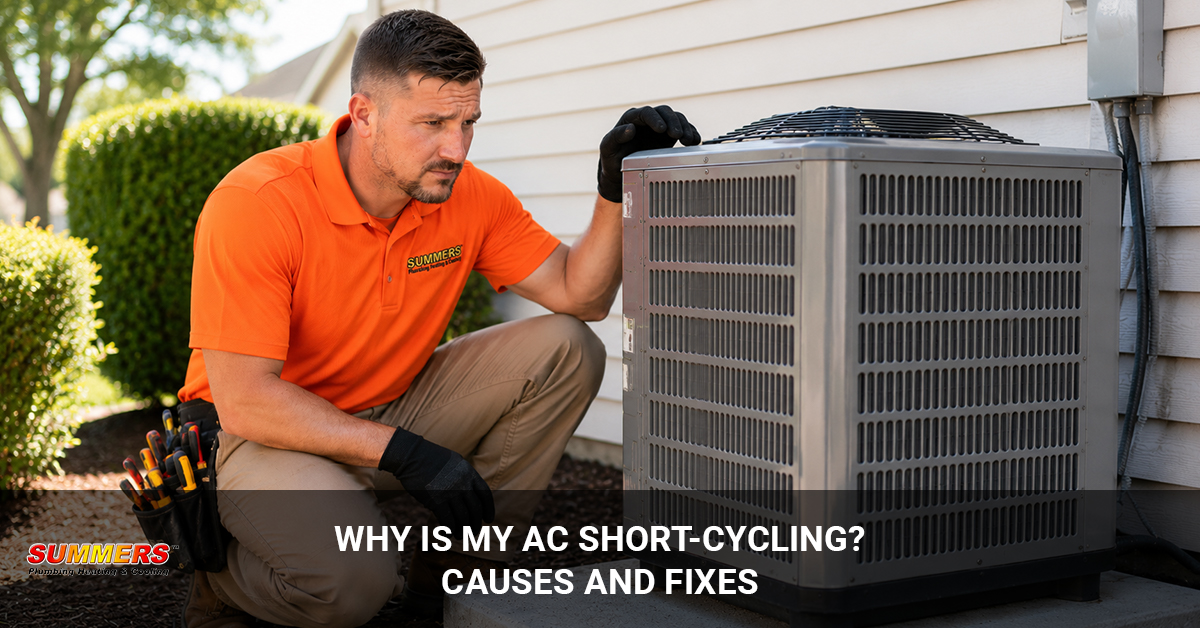
If your AC keeps turning on and off every few minutes, it’s likely short-cycling. Short cycling happens when your air conditioner shuts off before completing a normal cooling cycle, and it can lead to higher energy bills, uneven cooling, and unnecessary wear on your HVAC system.
A healthy air conditioner should typically run for about 10 to 20 minutes before shutting off, although the exact run time depends on your home’s size, outdoor temperature, and thermostat settings. When the system turns off after only a few minutes and starts again shortly afterward, something is preventing it from operating properly.
In some cases, the solution is simple. A dirty air filter, blocked vents, or incorrect thermostat settings can all cause short cycling. Other problems, such as a refrigerant leak, electrical failure, or an oversized air conditioner, require professional diagnosis and repair.
The longer you ignore short cycling, the greater the risk of damaging expensive components like the compressor. Fixing the problem early can improve your home’s comfort, lower your energy costs, and help extend the life of your air conditioning system.
In this guide, you’ll learn the most common causes of AC short cycling, how to troubleshoot the issue safely, and when it’s time to call an HVAC professional.
What Does AC Short Cycling Mean?
AC short cycling means your air conditioner turns on and off too frequently without completing a full cooling cycle. Instead of running long enough to cool your home and remove excess humidity, the system shuts off after just a few minutes and then starts again shortly afterward.
Under normal conditions, most air conditioners run for about 10 to 20 minutes per cooling cycle, depending on your home’s size, outdoor temperature, and thermostat settings. These longer cycles help maintain a consistent indoor temperature while removing moisture from the air. When your AC short-cycles, it can’t do either job effectively.
Common Signs of AC Short Cycling
You may have an AC short cycling problem if you notice any of these signs:
- Your AC turns off after only a few minutes.
- The system starts again shortly after shutting down.
- Some rooms stay warmer than others.
- Your home feels cool but still humid.
- Your energy bills are higher than usual.
- Your AC seems to run all day without keeping your home comfortable.
Short cycling is more than just an annoyance. Every time your air conditioner starts, the compressor uses the most electricity. Frequent starts put extra stress on the compressor and other critical components, increasing energy costs and the risk of expensive repairs. Addressing the issue early can help protect your system, improve efficiency, and extend the lifespan of your air conditioner.
Why Is My AC Short-Cycling?
Your AC may short-cycle because of restricted airflow, thermostat issues, low refrigerant, electrical problems, or an incorrectly sized system. Some causes are simple enough to fix yourself, while others require professional HVAC repair.
Below are the most common reasons your air conditioner keeps turning on and off.
1. Dirty Air Filter Restricting Airflow
A dirty air filter is one of the most common causes of AC short cycling because it restricts airflow through your system. When the filter becomes clogged with dust, pet hair, and debris, your air conditioner can’t move enough air over the evaporator coil.
Restricted airflow can cause the evaporator coil to freeze or the system to overheat. Many modern air conditioners have built-in safety controls that shut the system down when this happens. Once the system warms up or the ice begins to melt, the AC starts running again, creating the short-cycling pattern.
Signs of a Dirty Air Filter
You may have a clogged air filter if you notice:
- Weak airflow from your vents
- Rooms taking longer to cool
- Dust collecting around supply vents
- Ice on the refrigerant lines or indoor coil
- Higher-than-normal energy bills
How to Fix It
Start by checking your air filter. If it looks dirty or clogged, replace it with a new filter that matches your HVAC system’s recommended size and MERV rating.
To help prevent future problems:
- Check your air filter every month.
- Replace standard filters every 1–3 months.
- Replace filters more often if you have pets, allergies, or use your AC frequently.
Replacing a dirty filter is one of the easiest and most affordable ways to improve your AC’s performance and prevent short cycling.
2. Thermostat Problems
A faulty thermostat can cause your AC to short-cycle by sending incorrect signals to your cooling system. If the thermostat can’t accurately read your home’s temperature, it may tell the air conditioner to shut off too soon or restart too often.
Several thermostat issues can lead to short cycling.
Common Thermostat Issues
Poor thermostat location
If the thermostat is installed near a sunny window, kitchen appliance, or supply vent, it may detect temperatures that don’t reflect the rest of your home. For example, direct sunlight can make the thermostat think the house is warmer than it actually is, causing the AC to cycle more often.
Low batteries
Weak batteries can cause programmable thermostats to lose power or communicate inconsistently with your HVAC system.
Incorrect thermostat settings
Incorrect cooling settings, frequent schedule changes, or switching between heating and cooling modes can also cause your AC to cycle unnecessarily.
Calibration issues
Over time, older thermostats may become less accurate. If the thermostat displays the wrong room temperature, your air conditioner won’t know when to start or stop correctly.
What You Can Check
Before scheduling an HVAC repair, try these simple troubleshooting steps:
- Replace the thermostat batteries.
- Make sure the thermostat is set to Cool mode.
- Set the fan to Auto instead of On.
- Compare the thermostat’s temperature reading with a separate room thermometer.
- Ensure furniture, curtains, or decorations aren’t blocking the thermostat.
If your AC continues to short-cycle after checking these items, the thermostat may need professional testing, recalibration, or replacement.
3. Low Refrigerant Due to a Leak
Low refrigerant can cause your AC to short-cycle because it prevents the system from cooling efficiently. In most cases, low refrigerant means there’s a leak somewhere in the sealed refrigerant line.
Unlike gasoline in a car, refrigerant isn’t used up during normal operation. It continuously circulates through your air conditioning system, absorbing heat from inside your home and releasing it outdoors. If the refrigerant level drops, your AC won’t be able to remove heat effectively.
Low refrigerant also changes the pressure inside the system. As the pressure drops, the evaporator coil can become too cold and freeze. Many air conditioners have safety controls that shut the system down when this happens. After the ice melts, the system starts again, creating the repeated on-and-off cycling.
Signs of Low Refrigerant
Your AC may have a refrigerant leak if you notice:
- The AC blows lukewarm or only slightly cool air.
- Your home takes much longer to cool.
- Ice forms on the refrigerant lines or evaporator coil.
- You hear hissing or bubbling sounds near the refrigerant tubing.
- Your energy bills increase even though your home isn’t as comfortable.
Why You Shouldn’t Ignore Refrigerant Problems
Running an air conditioner with low refrigerant puts extra strain on the compressor, which is one of the most expensive parts of the system to replace. Ignoring the problem can turn a relatively simple repair into a major expense.
Because refrigerant is contained in a sealed system, it should never need to be “topped off.” If the level is low, the leak must be located and repaired first. A licensed HVAC technician can safely repair the leak, recharge the refrigerant to the correct level, and test the system to ensure it’s operating properly.
4. Oversized Air Conditioner
An oversized air conditioner can short-cycle because it cools your home too quickly. While a larger AC may seem like a better choice, an oversized system often creates more problems than it solves.
When an air conditioner has more cooling capacity than your home needs, it reaches the thermostat’s target temperature within just a few minutes. The thermostat then shuts the system off before it completes a full cooling cycle. A few minutes later, the temperature rises again, and the AC starts another short cycle.
Short cycles don’t give the system enough time to remove humidity from your home. As a result, your house may feel cool but still damp or sticky. Frequent starts also increase wear on the compressor, capacitor, and other electrical components.
Signs Your AC May Be Oversized
Your air conditioner may be too large if you notice:
- Cooling cycles last only a few minutes.
- Your home feels humid even when it’s cool.
- Some rooms cool faster than others.
- Energy bills remain higher than expected.
- The short-cycling problem started soon after a new AC was installed.
Why Proper AC Sizing Matters
Choosing the right-sized air conditioner is essential for comfort, efficiency, and long-term reliability. HVAC professionals use a Manual J load calculation to determine the correct system size for your home.
This calculation considers several factors, including:
- Your home’s square footage
- Insulation levels
- Number and size of windows
- Ceiling height
- Local climate
- Sun exposure
- Number of occupants
Installing an air conditioner based on a professional load calculation—not simply choosing a larger unit helps your system run longer, cool more evenly, remove humidity effectively, and avoid short-cycling problems.
5. Frozen Evaporator Coil
A frozen evaporator coil can cause your AC to short-cycle because it prevents the system from absorbing heat properly. When the coil freezes, your air conditioner loses cooling efficiency and may shut down automatically to protect itself from damage.
The evaporator coil removes heat from the air inside your home. If airflow is restricted or refrigerant levels are too low, the coil can become colder than it should. Moisture in the air then freezes on the coil, creating a layer of ice that blocks airflow even more.
As the ice builds up, your AC struggles to cool your home. Many systems have safety controls that temporarily shut the unit off when the coil gets too cold. Once the ice begins to melt, the system starts again, leading to repeated short cycling.
Common Causes of a Frozen Evaporator Coil
Several issues can cause the evaporator coil to freeze, including:
- Dirty or clogged air filters
- Blocked supply or return vents
- Low refrigerant from a leak
- Dirty evaporator coils
- A faulty blower motor or blower fan
Signs of a Frozen Evaporator Coil
You may have a frozen evaporator coil if you notice:
- Ice on the indoor coil or refrigerant lines
- Weak airflow from your vents
- Warm air instead of cool air
- Water dripping around the indoor unit after the ice melts
- Your AC is repeatedly turning on and off
What to Do If Your Coil Is Frozen
If you see ice on your air conditioner, turn the cooling system off to prevent further damage. You can switch the thermostat fan setting to On to help melt the ice faster.
After the coil has completely thawed, check the air filter and make sure all supply and return vents are open. If the coil freezes again, schedule an HVAC inspection. A recurring frozen coil usually indicates a refrigerant leak, airflow problem, or failing component that requires professional repair.
6. Dirty Condenser Coil
A dirty condenser coil can cause your AC to short-cycle because it can’t release heat efficiently. When the outdoor coil is covered with dirt and debris, your air conditioner has to work much harder to cool your home.
The condenser coil releases the heat collected from inside your house. Over time, dust, leaves, grass clippings, pollen, and other debris can accumulate on the coil. This buildup acts like insulation, trapping heat inside the system and causing operating pressures to rise.
As the system overheats, built-in safety controls may shut the compressor down before the cooling cycle is complete. After the unit cools, it starts again, creating the repeated on-and-off cycling homeowners experience.
Signs of a Dirty Condenser Coil
Your outdoor coil may need cleaning if you notice:
- Your AC turns on and off frequently.
- Warm or weak airflow from indoor vents.
- Higher-than-normal energy bills.
- The outdoor unit feels unusually hot.
- Cooling performance drops during hot weather.
How to Prevent a Dirty Condenser Coil
Regular maintenance can help keep your condenser working efficiently.
Here are a few simple steps:
- Remove leaves, grass, and debris from around the outdoor unit.
- Keep at least 2 feet of clearance around the condenser for proper airflow.
- Gently rinse the outside of the coil with a garden hose. Avoid using a pressure washer, as it can damage the delicate fins.
- Schedule professional HVAC maintenance once a year to clean the condenser coil and inspect the entire cooling system.
Keeping the outdoor unit clean helps your air conditioner run more efficiently, lowers energy costs, and reduces the risk of short cycling and premature compressor failure.
7. Electrical Problems
Electrical problems can cause your AC to short-cycle by interrupting the power needed to keep the system running. If an electrical component begins to fail, your air conditioner may start normally but shut off after only a few minutes before trying to restart again.
Several electrical parts work together to start and operate your air conditioning system. When one of these components wears out or becomes damaged, the cooling cycle can become irregular.
Common Electrical Problems
Some of the most common electrical issues that can cause AC short cycling include:
- A failing capacitor
- A worn contactor
- Loose or damaged electrical connections
- A faulty control board
- Defective relay switches
For example, a weak capacitor may not provide enough power to keep the compressor running. The compressor starts, loses power, shuts off, and then tries to restart a few minutes later.
Electrical problems often become more noticeable during the hottest days of summer when your air conditioner is working the hardest.
Warning Signs of Electrical Problems
You may have an electrical issue if you notice:
- Clicking sounds from the outdoor unit
- Buzzing or humming noises
- Circuit breakers that trip repeatedly
- A burning smell near the HVAC system
- The AC starts but shuts off almost immediately
If your system stops responding altogether instead of cycling, that’s a different issue; see our guide on AC not turning on for troubleshooting steps.
Because air conditioners use high-voltage electrical components, electrical repairs should always be performed by a licensed HVAC technician. Attempting to repair these components yourself can be dangerous and may cause additional damage to the system.
8. Compressor Problems
A failing compressor can cause your AC to short-cycle because it can’t maintain the pressure needed for normal cooling. Since the compressor circulates refrigerant throughout the system, any problem with this component can affect your air conditioner’s overall performance.
The compressor is often called the heart of an air conditioning system. When it begins to wear out, overheat, or develop internal damage, built-in safety controls may shut it down to prevent further damage. After the compressor cools, it attempts to restart, creating the repeated on-and-off cycling homeowners experience.
Common Compressor Problems
A compressor may short-cycle because of:
- Internal mechanical wear
- Overheating
- Damaged electrical windings
- Hard-start issues
- Age-related component failure
Signs of a Failing Compressor
Your compressor may be struggling if you notice:
- Loud humming or buzzing noises
- Weak or inconsistent cooling
- Frequent circuit breaker trips
- Higher-than-normal energy bills
- Your AC is repeatedly turning on and off
Compressor problems should never be ignored. Continuing to run the system can increase damage and may eventually lead to complete compressor failure, which is one of the most expensive HVAC repairs. If you suspect a compressor issue, have your air conditioner inspected by a qualified HVAC technician as soon as possible.
9. Clogged Condensate Drain or Safety Switch Activation
A clogged condensate drain can cause your AC to short-cycle by triggering the system’s safety switch. When the drain line becomes blocked, water can’t drain properly, so it backs up into the drain pan.
As your air conditioner cools your home, it also removes moisture from the indoor air. This moisture flows through a condensate drain line and safely exits your home. Over time, algae, mold, dirt, and other debris can clog the drain line, preventing water from draining.
Many modern air conditioning systems include a float switch or condensate safety switch. When water collects in the drain pan, the float switch automatically shuts the system off to help prevent water damage. Once the water level drops, the AC may restart, creating a short-cycling pattern.
Signs of a Clogged Condensate Drain
You may have a blocked condensate drain if you notice:
- Water is pooling around the indoor unit
- Damp or musty odors near the air handler
- Frequent or unexpected system shutdowns
- A full or overflowing drain pan
- Visible algae or debris inside the drain line
How to Prevent a Clogged Drain
Routine HVAC maintenance is the best way to prevent condensate drain problems. During an annual tune-up, an HVAC technician can clean the drain line, inspect the drain pan, and test the safety switch to ensure everything is working properly.
If you notice water leaking around your indoor unit or your AC repeatedly shuts off without an obvious reason, schedule a professional inspection. Fixing a clogged condensate drain early can prevent water damage, improve system reliability, and stop unnecessary short cycling.
Can I Fix AC Short Cycling Myself?
Yes, you can fix some causes of AC short cycling yourself, but others require professional HVAC repair. Simple issues like a dirty air filter or incorrect thermostat settings can often be resolved in just a few minutes. However, refrigerant leaks, electrical faults, and compressor problems should always be handled by a qualified HVAC technician.
Before scheduling a repair, try these basic troubleshooting steps.
| Safe DIY Checks | Call an HVAC Technician |
| Replace a dirty air filter | Repair a refrigerant leak |
| Check and replace thermostat batteries | Diagnose compressor problems |
| Verify thermostat settings | Troubleshoot electrical issues |
| Remove leaves and debris around the outdoor unit | Recharge refrigerant |
| Make sure supply vents are fully open | Repair a frozen evaporator coil caused by low refrigerant |
| Ensure return vents aren’t blocked by furniture or rugs | Evaluate an oversized AC system |
If your air conditioner continues to short-cycle after completing these basic checks, don’t keep running it. Repeated short cycling can increase energy costs and place extra strain on the compressor and other expensive components.
A professional HVAC technician can inspect your system, identify the root cause, and recommend the right repair before the problem becomes more serious.
What Happens If You Ignore AC Short Cycling?
Ignoring AC short cycling can lead to higher energy bills, poor cooling performance, and costly HVAC repairs. Even if your air conditioner still produces cool air, frequent on-and-off cycling puts extra stress on the system and can shorten its lifespan.
Here are the biggest risks of delaying repairs.
Higher Energy Bills
Short cycling increases your electricity costs because your AC uses the most energy every time it starts. If you’ve noticed a spike on your utility statement, read our breakdown of why your energy bill is unusually high for other contributing causes. When the system repeatedly turns on and off, it never reaches its most efficient operating state, causing your energy bills to rise.
Poor Indoor Comfort
Your home may never cool evenly if your AC short-cycles. Because the cooling cycle ends too soon, some rooms may stay warmer than others, making it difficult to maintain a consistent indoor temperature.
High Indoor Humidity
Short cycling prevents your air conditioner from removing enough moisture from the air. While your home may feel cooler, it can still feel damp or sticky because the AC doesn’t run long enough to properly dehumidify your indoor air.
Increased Wear on HVAC Components
Frequent starts place extra strain on your HVAC system. Components like the compressor, capacitor, contactor, and fan motor experience more wear every time the system starts. Over time, this can reduce their lifespan and increase the likelihood of unexpected breakdowns.
More Expensive Repairs
Small problems often become expensive repairs when they’re ignored. For example, a dirty air filter or faulty thermostat can eventually lead to compressor damage if the system continues to short-cycle. Addressing the problem early is usually much less expensive than replacing major HVAC components later.
If your air conditioner keeps turning on and off every few minutes, don’t wait for it to stop working completely. Identifying and fixing the cause early can improve your comfort, reduce energy costs, and help your HVAC system last longer.
How HVAC Professionals Diagnose AC Short Cycling
HVAC professionals diagnose AC short cycling by inspecting the entire cooling system to identify the root cause, not just the symptoms. Since several different issues can cause short cycling, a thorough inspection helps ensure the correct problem is repaired the first time.
During a service visit, a technician will typically perform several diagnostic tests, including:
- Inspecting the air filter and checking overall airflow
- Measuring refrigerant pressure and system performance
- Checking for refrigerant leaks
- Testing the thermostat for accurate temperature readings
- Inspecting electrical components, wiring, and connections
- Examining the evaporator and condenser coils for dirt or damage
- Measuring the temperature difference between the supply and return air
- Testing the capacitor and contactor for proper operation
- Inspecting and cleaning the condensate drain if necessary
- Evaluating compressor performance and operating pressures
These tests help determine whether the problem is caused by poor airflow, low refrigerant, a faulty thermostat, electrical issues, or a failing compressor.
A professional diagnosis is important because replacing parts without identifying the real cause can waste time and money. Once the source of the problem is confirmed, your HVAC technician can recommend the most effective repair to restore reliable cooling and prevent future short cycling.
How to Prevent AC Short Cycling
The best way to prevent AC short cycling is to keep your air conditioning system clean, well-maintained, and serviced regularly. Simple maintenance tasks can improve efficiency, reduce wear on important components, and help you avoid unexpected breakdowns.
Here are five ways to keep your air conditioner running smoothly.
Replace Air Filters Regularly
A clean air filter helps your AC maintain proper airflow and prevents many common cooling problems. Check your air filter once a month and replace it every 1–3 months, or more often if you have pets, allergies, or use your AC heavily.
Replacing a dirty filter improves airflow, helps prevent frozen evaporator coils, and reduces strain on your HVAC system.
Schedule Annual HVAC Maintenance
Annual HVAC maintenance helps catch small problems before they turn into expensive repairs. During a professional tune-up, a technician will inspect the system, clean the coils, check refrigerant levels, test electrical components, and ensure everything is operating safely and efficiently.
Regular maintenance can also improve energy efficiency and extend the lifespan of your air conditioner.
Keep the Outdoor Unit Clean
A clean outdoor condenser allows your air conditioner to release heat more efficiently. Leaves, grass clippings, dirt, and other debris can block airflow around the condenser, forcing your AC to work harder.
To keep the unit operating properly:
- Remove leaves, weeds, and debris from around the condenser.
- Maintain at least 2 feet of clearance around the outdoor unit.
- Gently rinse the outside of the condenser with a garden hose when needed.
Monitor Thermostat Performance
A properly functioning thermostat helps your air conditioner complete normal cooling cycles. Replace thermostat batteries when needed and make sure the thermostat accurately measures your home’s temperature.
If your thermostat is outdated or unreliable, upgrading to a programmable or smart thermostat can improve comfort, efficiency, and system performance.
Address Problems Early
Small AC problems are usually much easier and less expensive to fix than major system failures. If you notice unusual noises, weak airflow, uneven cooling, higher energy bills, or frequent short cycling, don’t ignore the warning signs.
Scheduling an HVAC inspection early can help prevent costly repairs, improve your home’s comfort, and keep your air conditioner running efficiently throughout the cooling season.
Frequently Asked Questions
Why does my AC turn on and off every five minutes?
If your AC turns on and off every five minutes, it’s most likely short cycling. This usually happens because of a dirty air filter, thermostat issues, low refrigerant, a frozen evaporator coil, electrical problems, or an oversized air conditioner. If replacing the air filter and checking the thermostat don’t solve the problem, schedule an HVAC inspection to identify the underlying cause.
Is AC short cycling dangerous?
AC short cycling isn’t usually a safety hazard, but it can damage your air conditioner over time. Frequent starts put extra strain on the compressor and other critical components, leading to higher energy bills, reduced efficiency, and potentially expensive repairs if the problem isn’t fixed.
Can a dirty air filter cause AC short cycling?
Yes, a dirty air filter is one of the most common causes of AC short cycling. A clogged filter restricts airflow, which can cause the evaporator coil to freeze or the system to overheat. Replacing the air filter regularly helps maintain proper airflow and can often resolve the problem.
Will low refrigerant cause short cycling?
Yes, low refrigerant can cause your AC to short cycle. When refrigerant levels are low, the system can’t cool your home efficiently, and the evaporator coil may freeze. This can trigger safety controls that repeatedly shut the system on and off until the issue is repaired.
Does a bad thermostat cause AC short cycling?
Yes, a faulty thermostat can cause your AC to short cycle. Incorrect temperature readings, poor thermostat placement, weak batteries, or internal thermostat problems can all cause the system to turn on and off more often than it should.
Can an oversized AC unit be fixed?
An oversized AC unit usually can’t be fixed with simple adjustments, but there are ways to improve its performance. Depending on your home’s layout and the severity of the problem, an HVAC professional may recommend thermostat adjustments, zoning solutions, variable-speed equipment, or replacing the system with one that’s properly sized using a Manual J load calculation.
If you’re unsure whether repair or replacement makes more financial sense, our guide on AC replacement vs. repair costs can help you decide.
Should I keep using my AC if it’s short-cycling?
No, you shouldn’t continue using your AC if it keeps short-cycling. Running the system before the problem is fixed can increase wear on the compressor and other components, leading to higher repair costs. If basic troubleshooting doesn’t solve the issue, it’s best to have your air conditioner inspected by a qualified HVAC technician.
Final Thoughts
AC short cycling is a problem you shouldn’t ignore because it can reduce your system’s efficiency and lead to costly repairs. While some causes, such as a dirty air filter or incorrect thermostat settings, are simple to fix, others, including refrigerant leaks, electrical issues, compressor problems, or an oversized air conditioner, require professional diagnosis and repair.
The sooner you identify the cause, the easier and less expensive the repair is likely to be. Fixing short cycling early can lower your energy bills, improve indoor comfort, extend the lifespan of your HVAC system, and help prevent unexpected breakdowns.
If your AC continues to turn on and off every few minutes after you’ve replaced the air filter and checked the thermostat, don’t keep running it. In these situations, it’s best to schedule emergency AC repair rather than risk further damage to your system.