
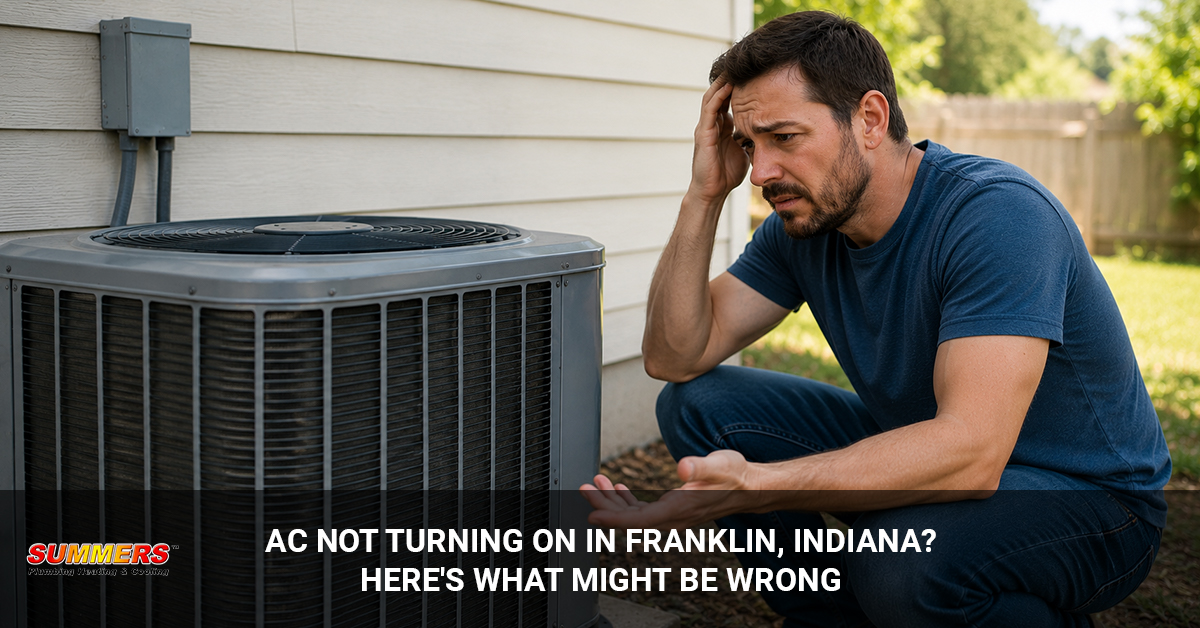
AC Not Turning On in Franklin, Indiana? Here’s What Might Be Wrong
If your AC is not turning on, the problem is usually related to the thermostat, power supply, electrical components, condensate drain system, or a failed HVAC part.
When your air conditioner refuses to start on a hot day in Franklin, it can quickly become uncomfortable inside your home. You adjust the thermostat, wait for the system to respond, and nothing happens. Sometimes the entire system is unresponsive. Other times, the indoor unit runs while the outdoor unit stays off.
The good news is that some startup problems are simple to identify and may have straightforward solutions. A thermostat setting, a tripped breaker, or a clogged drain line can sometimes prevent the system from turning on. In other cases, the issue may involve electrical components or mechanical failures that require professional repair.
Understanding the most common causes can help you narrow down the problem and determine whether basic troubleshooting is enough or if it’s time to call an HVAC technician.
In this guide, you’ll learn why an AC may not turn on, what you can safely check yourself, and when professional HVAC service is the best solution.
A quick response can often prevent additional damage, restore cooling faster, and help keep repair costs under control.
Why Is My AC Not Turning On?
Your AC may not turn on because it isn’t getting power, the thermostat isn’t sending the correct signal, or a key component has stopped working.
An air conditioning system depends on multiple electrical and mechanical parts working together. If one part of the startup process fails, the entire system may remain off. In some cases, the issue is simple and can be resolved with basic troubleshooting. In others, professional repairs may be required.
Some of the most common reasons an AC won’t start include:
- Thermostat issues
- Tripped circuit breakers
- Power supply problems
- Clogged condensate drains
- Failed capacitors
- Faulty contactors
- Electrical problems
- Aging HVAC equipment
Because several different problems can produce the same symptom, it’s important to identify the cause before attempting repairs.
For example, a thermostat that is set incorrectly can prevent the system from receiving a cooling command. A tripped breaker can cut power to the unit. A failed capacitor may stop the compressor or fan from starting. Even a clogged condensate drain can activate a safety switch that shuts the system down.
The sooner the problem is identified, the easier it is to prevent additional damage and restore cooling to your home. If basic troubleshooting doesn’t solve the issue, a professional HVAC inspection can determine exactly what’s preventing your AC from turning on.
Check the Thermostat First
The thermostat is one of the first things you should check when your AC won’t turn on.
Because the thermostat controls when the air conditioner starts and stops, even a small setting issue can prevent the system from running. Before assuming there’s a major HVAC problem, take a few minutes to verify that the thermostat is working properly.
Verify Cooling Mode
Make sure the thermostat is set to “Cool” mode.
It’s surprisingly common for thermostats to be accidentally switched to “Heat”, “Fan”, or “Off.” If the thermostat isn’t set to cooling mode, your AC won’t receive the signal to start.
Lower the Temperature Setting
Set the thermostat several degrees below the current room temperature.
This ensures the thermostat is actively calling for cooling. If the temperature setting is too high, the system may not recognize the need to turn on.
Replace Thermostat Batteries
Weak or dead batteries can prevent some thermostats from functioning properly.
If your thermostat uses batteries, replacing them is a quick and inexpensive troubleshooting step that can sometimes solve the problem immediately.
Common signs of thermostat battery issues include:
- Blank display screen
- Unresponsive controls
- Intermittent operation
- Incorrect temperature readings
Check Smart Thermostat Settings
If you have a smart thermostat, review its settings carefully.
Incorrect schedules, temperature programs, vacation settings, or connectivity issues can sometimes prevent the system from starting when expected. Make sure the thermostat is connected, operating normally, and calling for cooling.
Because thermostat problems are often easy to fix, checking the thermostat should always be one of the first troubleshooting steps when your AC refuses to turn on.
Check Your Circuit Breaker
A tripped circuit breaker can completely prevent your air conditioner from turning on.
Your AC system requires a significant amount of electricity to operate. If the breaker trips, power to part or all of the system may be interrupted, causing the air conditioner to remain off even when the thermostat is calling for cooling.
Checking the breaker panel is one of the quickest troubleshooting steps homeowners can perform.
Tripped AC Breakers
Start by inspecting your home’s electrical panel.
Look for a breaker that is in the middle position or clearly marked as tripped. Many HVAC systems have dedicated breakers for the indoor and outdoor units, so check both if applicable.
If the AC breaker has tripped, resetting it may restore normal operation.
Electrical Overloads
Electrical overloads can cause breakers to trip unexpectedly.
Common causes include:
- Power surges
- Overloaded circuits
- Faulty electrical components
- Aging HVAC equipment
- Motor startup issues
In some cases, the breaker may trip only once and never cause another problem. However, repeated trips should not be ignored.
When a Breaker Trips Repeatedly
If the breaker trips again after being reset, stop troubleshooting and contact an HVAC professional.
Repeated breaker trips often indicate a more serious issue within the air conditioning system. Problems such as failing capacitors, compressor issues, damaged wiring, or electrical shorts can all cause breakers to trip repeatedly.
Continuing to reset the breaker without identifying the root cause can increase the risk of equipment damage and create potential electrical safety concerns.
If your AC continues shutting off power, professional diagnosis is the safest and most effective solution.
Make Sure the AC Disconnect Switch Is On
The AC disconnect switch must be on for the outdoor unit to receive power.
Many homeowners overlook this switch because it is located outside near the condenser unit. If it has been turned off during maintenance, repairs, landscaping work, or electrical service, your air conditioner may not start even though everything else appears normal.
The disconnect switch is usually mounted in a small box on the wall near the outdoor unit.
Before assuming there is a major HVAC problem, perform a simple visual inspection to make sure the disconnect is in the proper position. If the switch is off, restoring power may solve the issue immediately.
However, if you’re unsure how the disconnect works or notice damaged wiring, do not attempt electrical repairs yourself. Contact an HVAC professional to inspect the system safely.
A Clogged Condensate Drain Could Shut Down the System
A clogged condensate drain can trigger a safety switch that prevents your AC from turning on.
Modern air conditioning systems often include built-in safety features designed to prevent water damage. When the condensate drain becomes blocked, the system may automatically shut down to protect your home.
How Drain Safety Switches Work
As your AC removes humidity from the air, condensation flows into a drain pan and exits through the condensate drain line.
If the drain line becomes clogged, water begins accumulating in the pan. Once the water reaches a certain level, the safety switch shuts off the air conditioner to prevent overflow and potential water damage.
Signs of a Drainage Problem
Several warning signs may indicate a clogged condensate drain.
Common symptoms include:
- Water around the indoor unit
- A full drain pan
- High indoor humidity
- AC system not starting
You may also notice musty odors or excess moisture near the air handler.
Why Professional Cleaning May Be Needed
Minor drain clogs can sometimes be cleared, but severe blockages often require professional cleaning.
Over time, algae, dirt, sludge, and debris can build up inside the drain line and restrict water flow. An HVAC technician can safely clean the drain, verify proper operation of the safety switch, and ensure the system is draining correctly.
Addressing drainage problems early can help prevent water damage, restore normal operation, and reduce the risk of future shutdowns.
Failed Capacitors Can Prevent Startup
A failed capacitor is one of the most common reasons an AC system won’t turn on.
Capacitors play a critical role in the startup process. When a capacitor fails, important components such as the compressor, blower motor, or condenser fan may not receive the electrical boost needed to start operating.
As a result, the system may remain completely unresponsive or only partially function.
What a Capacitor Does
Capacitors store and release electrical energy to help HVAC motors start and run efficiently.
Your air conditioning system relies on capacitors to support several major components, including:
- Compressor
- Blower motor
- Condenser fan motor
Without a properly functioning capacitor, these components may struggle to start or fail to operate altogether.
Signs of a Failed Capacitor
Several warning signs can indicate a capacitor problem.
Common symptoms include:
- Clicking sounds when the system tries to start
- Humming noises from the outdoor unit
- AC won’t turn on
- Outdoor unit not running
- Intermittent system operation
In some cases, the thermostat may appear to be working normally while the air conditioner fails to start.
Why Capacitor Replacement Requires Professional Service
Capacitors can store electrical energy even after power has been disconnected.
Because of this, they can pose a serious electrical hazard if handled incorrectly. Proper diagnosis and replacement require specialized knowledge and safety precautions.
If a capacitor failure is suspected, it’s best to contact a qualified HVAC technician. Professional replacement can safely restore operation and help prevent additional damage to other HVAC components.
Faulty Contactors May Stop the AC From Running
A faulty contactor can prevent your air conditioner from receiving the power needed to start.
The contactor is an electrical component that acts like a switch between the thermostat and the outdoor unit. When it fails, the compressor and condenser fan may not receive power, causing the AC to remain off even though the thermostat is calling for cooling.
Contactor problems are common in older systems and can lead to intermittent or complete startup failures.
How Contactors Control Power
The contactor controls the flow of electricity to major components in the outdoor unit.
When the thermostat signals that cooling is needed, the contactor closes and allows power to reach the compressor and condenser fan motor. This starts the cooling cycle and allows the air conditioner to operate normally.
If the contactor becomes worn, damaged, or stuck, power may not reach these components.
Signs of a Bad Contactor
Several symptoms can indicate a failing contactor.
Common warning signs include:
- Clicking sounds from the outdoor unit
- Intermittent system operation
- Outdoor unit not starting
- AC won’t turn on
- Cooling that starts and stops unexpectedly
These symptoms often become more noticeable as the contactor continues to wear out.
When Replacement Is Necessary
A damaged contactor usually needs to be replaced rather than repaired.
Because the contactor plays an important role in safely controlling electrical power, replacement is typically the most reliable solution when failure occurs.
If your AC is not turning on and other basic troubleshooting steps haven’t solved the problem, a professional HVAC technician can inspect the contactor and determine whether replacement is needed to restore normal operation.
Electrical Problems Can Prevent Your AC From Starting
Electrical problems can prevent your AC from turning on even when the thermostat appears to be working correctly.
Your air conditioning system relies on a network of electrical components to communicate, deliver power, and start the cooling cycle. If any part of that system fails, the AC may become partially or completely unresponsive.
Because electrical issues can affect multiple components at once, professional diagnosis is often needed to identify the exact cause.
Loose Wiring
Loose wiring can interrupt the flow of electricity throughout the system.
Over time, vibration, age, and normal wear can cause electrical connections to loosen. Even a small wiring issue can prevent critical HVAC components from receiving power.
Damaged Connections
Damaged or corroded electrical connections can interfere with system operation.
Exposure to moisture, heat, and age can cause wires and terminals to deteriorate. When connections become damaged, components may fail to start or operate inconsistently.
Blown Fuses
Some HVAC systems use fuses to protect electrical components from damage.
Power surges, electrical faults, or component failures can cause a fuse to blow, preventing the system from turning on until the issue is addressed.
Control Board Issues
The control board acts as the communication center of the HVAC system.
A malfunctioning control board can disrupt communication between the thermostat and key components, preventing the system from starting properly. In some cases, the thermostat may appear normal while the AC remains completely unresponsive.
Because electrical systems can be dangerous to work on and often require specialized testing equipment, electrical repairs should always be handled by a trained HVAC professional. Prompt diagnosis can help prevent additional damage and restore reliable system operation.
Could the Outdoor Unit Be the Problem?
Yes, problems with the outdoor condenser unit can prevent your AC from turning on and cooling your home.
Many homeowners focus on the thermostat or indoor equipment when troubleshooting. However, even if the indoor unit appears to be operating normally, a problem with the outdoor unit can stop the cooling process completely.
The outdoor condenser contains several important components that work together to remove heat from your home. If one of these components fails, the system may not start or cool properly.
Outdoor Unit Not Starting
If the outdoor unit is not running, the issue is often related to an electrical or component failure.
Common causes include:
- Failed capacitor
- Faulty contactor
- Tripped breaker
- Power supply issues
- Damaged wiring
When the outdoor unit doesn’t receive power, the cooling cycle cannot begin.
Fan Not Running
The condenser fan plays an important role in releasing heat outdoors.
If the fan motor fails, the system may struggle to operate efficiently or may shut down entirely to protect other components. You may notice that the outdoor unit is humming but the fan is not spinning.
A non-working condenser fan should be inspected promptly to prevent additional system damage.
Compressor Problems
The compressor is the heart of the air conditioning system.
It circulates refrigerant and allows the cooling process to function properly. If the compressor fails, the AC may not start at all or may run without producing cool air.
Common signs of compressor problems include:
- Outdoor unit not starting
- Clicking or buzzing noises
- Warm air from vents
- Repeated breaker trips
Because compressor issues can be complex and expensive, professional diagnosis is usually required to determine whether repair or replacement is the best option.
If the outdoor unit is not operating correctly, an HVAC technician can inspect the system and identify the exact cause of the startup failure. In some cases, outdoor unit problems eventually lead to symptoms similar to an AC running but not cooling, even if the system appears to be operating.
Is Your AC System Too Old?
An older air conditioner may be the reason your AC is struggling to start or no longer operates reliably.
Like any mechanical equipment, air conditioning systems wear out over time. As components age, they become less efficient, more prone to failure, and often more expensive to repair. Even well-maintained systems eventually reach a point where ongoing repairs may no longer make financial sense.
Most central air conditioning systems last between 10 and 15 years when properly maintained. After that, the likelihood of breakdowns typically increases.
Signs that age may be contributing to startup problems include:
- Frequent breakdowns
- Rising energy bills
- Poor cooling performance
- Expensive repairs
- System age is over 15 years
Older systems may also use outdated components that are difficult to find or replace, which can increase repair costs and extend service times.
If your AC has required multiple repairs in recent years and continues to experience startup issues, it may be time to compare the cost of repairs with the benefits of a replacement system. Newer air conditioners are generally more energy-efficient, more reliable, and better at maintaining consistent indoor comfort.
A professional HVAC evaluation can help determine whether repairing your existing system or investing in a replacement will provide the best long-term value for your home. If replacement is the better option, understanding when to schedule an AC installation in Franklin can help you plan for improved comfort and efficiency.
Troubleshooting Checklist Before Calling for Service
Before scheduling an HVAC repair appointment, there are several simple checks you can perform that may help identify the problem.
Many AC startup issues are caused by basic power, thermostat, or airflow problems that can sometimes be resolved quickly. Taking a few minutes to inspect the system may save time and help you better understand what’s preventing the AC from turning on.
Try the following troubleshooting steps:
- Verify thermostat settings
- Replace thermostat batteries
- Check the circuit breaker
- Inspect the AC disconnect switch
- Check the air filter
- Look for drain line issues
- Listen for unusual sounds
Pay attention to any clicking, buzzing, humming, or repeated attempts to start, as these sounds can provide clues about the underlying problem.
If the system still won’t start after completing these checks, professional diagnosis is usually the next step.
When to Call an HVAC Professional in Franklin, Indiana
You should call an HVAC professional if your AC remains unresponsive after basic troubleshooting.
While homeowners can safely check settings, filters, and breakers, many startup failures involve electrical components or mechanical issues that require specialized tools and training to diagnose.
Professional service is recommended when:
- Breakers repeatedly trip
- Capacitor failure is suspected
- Electrical issues are present
- The outdoor unit won’t start
- The system remains completely unresponsive
- Cooling problems continue
These symptoms often indicate underlying problems that can worsen if left unaddressed. Continuing to operate a malfunctioning system or repeatedly resetting breakers can increase the risk of equipment damage.
Prompt repairs can help prevent more costly breakdowns, improve system reliability, and restore comfort to your home as quickly as possible. A qualified HVAC technician can accurately identify the cause of the problem and recommend the most effective repair solution.
How to Prevent Future AC Startup Problems
Regular maintenance is the most effective way to prevent AC startup problems and unexpected breakdowns.
Many air conditioning failures develop gradually over time. Small issues such as worn electrical components, restricted airflow, or minor performance problems can often be identified and corrected before they leave you without cooling.
A proactive approach can improve system reliability, extend equipment life, and reduce repair costs.
Schedule Annual Maintenance
Annual HVAC maintenance helps identify potential problems before they become major repairs.
During a professional tune-up, technicians inspect critical components, test system operation, check electrical connections, and look for signs of wear. These inspections can often catch developing issues before they cause a complete system failure.
Change Filters Regularly
Clean air filters help your AC operate efficiently and reliably.
A dirty filter restricts airflow, increases system strain, and can contribute to overheating and other performance issues. Most homeowners should replace filters every 1 to 3 months, depending on usage and indoor air quality conditions. Improving indoor air quality can reduce airborne contaminants and help HVAC systems operate more efficiently.
Keep Electrical Components Inspected
Routine inspections can help identify electrical issues before they prevent the system from starting.
Components such as capacitors, contactors, wiring, and control boards naturally wear over time. Regular inspections allow technicians to spot potential failures and make repairs before a breakdown occurs.
Address Small Problems Early
Minor HVAC problems are usually easier and less expensive to repair than major system failures.
If you notice unusual noises, weak airflow, longer cooling cycles, rising energy bills, or inconsistent performance, don’t wait for the problem to get worse. Early repairs can often prevent larger issues and help keep your system operating reliably throughout the cooling season.
Consistent maintenance and prompt attention to warning signs are the best ways to reduce the risk of future AC startup problems and maintain dependable home comfort.
Frequently Asked Questions
Why Won’t My AC Turn On Even Though the Thermostat Is Set Correctly?
If the thermostat is set correctly and your AC still won’t turn on, the problem is often related to power or component failure.
Common causes include tripped breakers, failed capacitors, clogged condensate drain lines, faulty contactors, electrical issues, or problems within the outdoor unit. A professional inspection can identify the exact cause if basic troubleshooting doesn’t resolve the issue.
Can a Tripped Breaker Stop My AC From Turning On?
Yes, a tripped breaker can completely prevent your AC from operating.
Air conditioners require significant electrical power, and a tripped breaker can interrupt power to part or all of the HVAC system. If the breaker trips repeatedly after being reset, professional diagnosis is recommended.
How Do I Know If My AC Capacitor Is Bad?
A failing capacitor often causes startup problems.
Common signs include:
- Clicking sounds
- Humming noises
- Difficulty starting
- Outdoor unit not running
- AC not turning on
Because capacitors store electrical energy, testing and replacement should be handled by an HVAC professional.
Why Is My Outdoor AC Unit Not Turning On?
An outdoor unit may fail to start due to electrical or mechanical problems.
Possible causes include:
- Capacitor failure
- Faulty contactor
- Tripped breaker
- Damaged wiring
- Compressor issues
A technician can inspect the outdoor unit and determine which component is preventing operation.
Should I Reset My AC Breaker?
You can safely reset a tripped breaker once.
If the breaker trips again shortly after being reset, stop troubleshooting and contact an HVAC professional. Repeated breaker trips often indicate a larger electrical issue that requires repair.
When Should I Replace My Air Conditioner?
Replacement may be the better option when an older system becomes unreliable or expensive to maintain.
Many homeowners consider replacement when:
- The system is more than 15 years old
- Repairs become frequent
- Energy bills continue to increase
- Cooling performance declines
- Major components fail
A professional HVAC evaluation can help determine whether repair or replacement provides the best long-term value.
Final Thoughts
If your AC is not turning on in Franklin, Indiana, it’s important to identify the cause as quickly as possible.
In some cases, the problem may be something simple, such as incorrect thermostat settings, a tripped breaker, or a clogged condensate drain. In other situations, the issue may involve electrical components, the outdoor unit, or a mechanical failure that requires professional repair.
Starting with basic troubleshooting can help rule out common causes and may even restore operation without the need for service. However, if the system remains unresponsive or repeatedly experiences startup problems, professional diagnosis is the safest and most effective solution.
Addressing AC startup issues early can help prevent larger repairs, improve system reliability, extend equipment life, and restore comfort to your home. The sooner the problem is identified, the sooner you can get your cooling system back up and running when you need it most.