
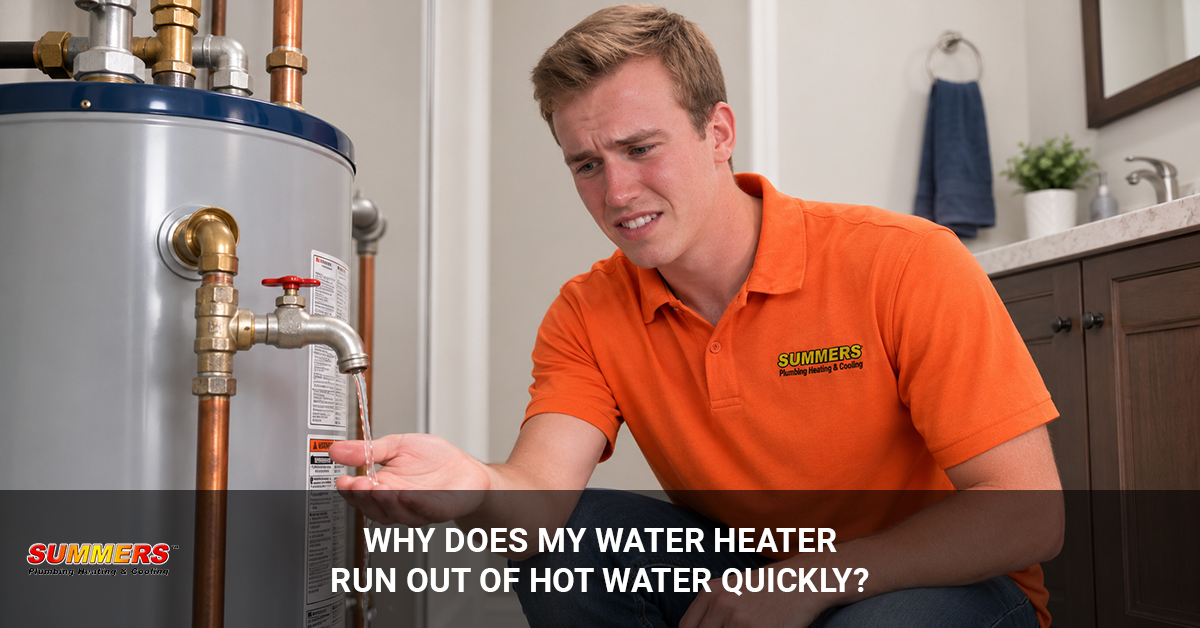
Why Does My Water Heater Run Out of Hot Water Quickly?
Running out of hot water faster than usual is a common problem, and it’s often a sign that your water heater needs attention. Whether your shower turns cold halfway through or the hot water barely lasts for one load of dishes, the issue usually has an identifiable cause.
In many homes, the problem is something simple, like sediment buildup inside the tank, a faulty heating element, or a thermostat that isn’t heating the water properly. In other cases, the water heater may be too small for your family’s hot water needs or nearing the end of its lifespan.
The good news is that a lack of hot water doesn’t always mean you need a new water heater. Many issues can be fixed with routine maintenance or a targeted repair, especially if they’re caught early.
This guide explains why your water heater runs out of hot water quickly, how to pinpoint the most likely cause, what you can do to fix it, and when it’s time to call a professional plumber.
Why Does My Water Heater Run Out of Hot Water Quickly?
Your water heater runs out of hot water quickly because it isn’t heating or storing enough hot water to keep up with your household’s demand. The most common causes include sediment buildup inside the tank, a faulty heating element, a malfunctioning thermostat, a damaged dip tube, gas burner problems, an undersized water heater, or an aging unit.
Some of these issues reduce the amount of hot water your tank can hold, while others prevent the water from heating to the correct temperature. As a result, you may notice your shower turns cold sooner than it used to or your hot water doesn’t last through normal daily tasks.
The good news is that many of these problems can be fixed without replacing the entire water heater. Regular maintenance, such as flushing the tank or replacing worn components, often restores your hot water supply. If the unit is older or has significant internal damage, however, replacing it may be the more reliable and cost-effective solution.
How to Tell What’s Causing the Problem
The way your hot water behaves can help you identify what’s causing the problem. Paying attention to when the hot water runs out and how it changes can narrow down the issue before you schedule a repair.
For example, if your hot water only lasts through one shower, the tank may have sediment buildup, a failed heating element, or it may simply be too small for your household. If the water is only lukewarm, a faulty thermostat or heating element is often to blame. When the water starts hot but turns cold within a few minutes, a damaged dip tube or high hot water demand could be the cause.
Here’s a quick guide to the most common symptoms and what they may mean:
| Symptom | Possible Cause |
| Hot water lasts for only one shower | Sediment buildup, failed heating element, or undersized water heater |
| Water is warm but never fully hot | Faulty thermostat or heating element |
| Water starts hot but quickly turns cold | Broken dip tube or excessive hot water use |
| Hot water takes a long time to recover | Sediment buildup or gas burner/heating element problems |
| Water temperature constantly changes | Faulty thermostat or mixing valve issue |
While these symptoms can point you in the right direction, they don’t always confirm the exact problem. Some issues have similar warning signs, so if the hot water problem continues after basic troubleshooting, it’s best to have a licensed plumber inspect the water heater and recommend the right repair.
8 Reasons Your Water Heater Runs Out of Hot Water Quickly
1. Sediment Has Built Up Inside the Tank
Sediment buildup is one of the most common reasons a water heater runs out of hot water quickly. Over time, minerals like calcium and magnesium naturally settle at the bottom of the tank, especially in homes with hard water.
As the sediment layer gets thicker, it takes up space that should be filled with hot water. It also creates a barrier between the water and the burner or heating element, making it harder for the water heater to heat efficiently. This means you’ll have less hot water available, and it will take longer for the tank to recover after use.
Signs of sediment buildup
- Hot water doesn’t last as long as it used to.
- You hear rumbling, popping, or banging noises from the tank.
- The water heater takes longer to reheat.
- Energy bills have increased without a clear reason.
- Hot water looks cloudy or discolored.
Ignoring sediment buildup can reduce your water heater’s efficiency, increase energy costs, and shorten the life of the tank.
How to fix it
Flushing the tank removes built-up sediment and helps restore your water heater’s performance. Most manufacturers recommend flushing a tank water heater once a year, or more often if you have hard water. If your unit has never been flushed or you’re hearing loud rumbling noises, it’s best to have a plumber inspect it before performing maintenance, as excessive sediment can sometimes damage older tanks.
2. A Heating Element Has Failed (Electric Water Heaters)
A failed heating element is one of the most common reasons an electric water heater runs out of hot water too quickly. Since electric water heaters rely on heating elements instead of a gas burner, even one faulty element can significantly reduce the amount of hot water available.
Most electric tank water heaters have two heating elements:
- Upper heating element – Heats the upper portion of the tank and helps provide hot water quickly.
- Lower heating element – Heats the lower portion of the tank and keeps the rest of the stored water at the desired temperature.
If either element stops working, only part of the tank heats properly. You may still have hot water at first, but it will run out much sooner than normal because the entire tank isn’t reaching the correct temperature.
Signs of a failed heating element
- Hot water lasts only a few minutes.
- Water never gets as hot as it used to.
- The water heater takes much longer to recover after use.
- The circuit breaker trips repeatedly.
- You suddenly notice a reduced hot water supply without any other obvious issues.
Heating elements naturally wear out over time due to constant heating cycles and mineral buildup, making them one of the most commonly replaced parts in electric water heaters.
How to fix it
A licensed plumber or electrician can test the upper and lower heating elements with a multimeter to identify the faulty component. In most cases, replacing a failed heating element is a straightforward and cost-effective repair, provided the tank itself is still in good condition. If both elements have failed or the water heater is more than 10 years old, it may be worth comparing the cost of repair with the cost of replacing the unit.
3. The Thermostat Is Set Too Low or Isn’t Working Properly
A thermostat that’s set too low or isn’t working correctly can cause your water heater to run out of hot water faster than expected. Since the thermostat controls the water temperature, it must signal the burner or heating elements to heat the water to the correct level.
If the temperature is set too low, the water never gets hot enough. As a result, you’ll use more hot water to reach a comfortable temperature, making it seem like the tank empties much faster. A faulty thermostat can also cause inconsistent heating by failing to turn the heating system on or off at the right time.
For most homes, the recommended thermostat setting is 120°F (49°C). This temperature provides enough hot water for everyday use while helping reduce energy costs and lowering the risk of scalding.
Signs of a faulty thermostat
- Water temperature changes throughout the day.
- Water is warm but never fully hot.
- The amount of hot water varies from one use to the next.
- The water heater cycles on and off more often than normal.
How to fix it
Start by checking the thermostat setting to make sure it hasn’t been accidentally lowered. If it’s already set to 120°F and you’re still experiencing inconsistent water temperatures, the thermostat may be faulty. A professional plumber can test the thermostat and replace it if necessary.
4. The Dip Tube Is Damaged or Broken
A damaged dip tube can cause your hot water to run out much sooner because cold water mixes with the hot water inside the tank. Although it’s a simple part, the dip tube plays an important role in keeping your hot water supply consistent.
The dip tube directs incoming cold water to the bottom of the tank, where it can be heated before rising to the top. If the tube cracks, breaks, or becomes disconnected, cold water is released near the top of the tank instead. This mixes with the stored hot water, causing the water from your faucets or shower to turn cold much sooner than it should.
Dip tube problems are more common in older water heaters, particularly models that used plastic dip tubes that became brittle and deteriorated over time.
Signs of a damaged dip tube
- Hot water runs out much faster than it used to.
- Water temperature changes suddenly while you’re showering.
- Small plastic pieces collect in faucet aerators or showerheads.
- The water heater appears to heat normally, but the hot water doesn’t last.
How to fix it
A broken dip tube usually needs to be replaced. While the replacement part is inexpensive, accessing it requires partially disassembling the water heater. For that reason, it’s generally best to have a licensed plumber handle the repair and inspect the unit for any additional issues.
5. Gas Burner or Pilot Light Problems (Gas Water Heaters)
A faulty gas burner or pilot light can prevent your water heater from heating water efficiently, causing you to run out of hot water sooner than expected. Since the burner generates the heat needed to warm the water, even a small problem can reduce your water heater’s performance.
Common issues include a weak burner flame, a clogged burner assembly, a faulty thermocouple, or a malfunctioning gas control valve. These problems reduce the amount of heat produced, so the tank takes longer to recover after hot water is used.
Signs of gas burner or pilot light problems
- Hot water doesn’t last as long as it used to.
- The pilot light won’t stay lit.
- Water takes longer than normal to heat.
- You notice soot, dirt, or discoloration around the burner.
- The burner doesn’t ignite consistently or fails to stay on.
How to fix it
First, check whether the pilot light is lit if your water heater uses one. If it’s out, follow the manufacturer’s instructions to relight it safely. If the pilot won’t stay lit, the burner looks dirty, or the water heater keeps having heating problems, contact a licensed plumber. Gas water heater repairs involve combustible gas and safety components, so a qualified professional should always handle them.
6. Your Water Heater Is Too Small for Your Household
Your water heater may run out of hot water quickly simply because it’s too small for your household’s needs. Even a properly functioning water heater can only store a limited amount of hot water before it needs time to recover.
If you’ve added family members, renovated your home, or started using more hot water each day, your current unit may no longer have enough capacity. Back-to-back showers, laundry, dishwashing, and other daily tasks can empty the tank faster than it can reheat.
Signs your water heater is undersized
- Hot water consistently runs out during busy mornings.
- The problem started after your household grew.
- Running two showers at the same time causes the water to turn cold.
- The water heater performs well when only one fixture is using hot water.
How to fix it
If your water heater is in good condition, you may be able to make the hot water last longer by spacing out showers and running appliances like the dishwasher or washing machine at different times.
However, if your family’s hot water demand has permanently increased, upgrading to a larger tank water heater or switching to a properly sized tankless water heater may be the best long-term solution. A plumber can help determine the right size based on the number of people in your home and your daily hot water usage.
7. Too Many Fixtures Are Using Hot Water at the Same Time
Using multiple hot water fixtures at the same time can quickly drain your water heater’s supply, even if it’s working properly. Every water heater has a limited amount of stored hot water, and once it’s used up, the unit needs time to heat a new supply.
This often happens during busy mornings when several family members are getting ready at the same time. If your household uses more hot water than the tank can produce, you’ll likely notice the water turning cold before everyone is finished.
For example, your water heater may struggle to keep up if you’re:
- Taking two showers at the same time.
- Running the dishwasher while someone is showering.
- Using the washing machine during peak hours.
- Filling a large bathtub while other fixtures are in use.
If this only happens when multiple appliances or fixtures are running, your water heater may not have a mechanical problem. It’s simply reaching its maximum capacity.
How to fix it
You can often solve the problem by reducing simultaneous hot water use.
Here are a few simple ways to make your hot water last longer:
- Space out showers instead of taking them back-to-back.
- Run the dishwasher and washing machine during off-peak hours.
- Install low-flow showerheads to reduce hot water consumption.
- Upgrade to a larger or higher-recovery water heater if your family’s hot water demand has increased.
8. Your Water Heater Is Reaching the End of Its Life
An aging water heater may no longer be able to provide enough hot water, even if it has been well maintained. As water heaters get older, their efficiency declines, internal components wear out, and sediment buildup becomes more difficult to remove.
Most traditional tank water heaters last between 8 and 12 years, although regular maintenance can sometimes extend their lifespan. If your unit is approaching this age and you’re experiencing frequent hot water problems, it may be nearing the end of its service life.
Signs your water heater may need replacement
- The unit is more than 10 years old.
- Hot water doesn’t last as long as it used to.
- Rust-colored water comes from hot water faucets.
- The tank is leaking.
- Repairs are becoming more frequent.
- Energy bills continue to increase without another explanation.
While replacing a thermostat or heating element can restore performance in some cases, major repairs on an older water heater are often not worth the investment. If your unit has multiple issues or the tank itself is deteriorating, replacing it with a newer, more energy-efficient model is usually the better long-term solution. A new water heater can provide a more reliable hot water supply, lower energy costs, and reduce the risk of unexpected breakdowns.
How to Fix a Water Heater That Runs Out of Hot Water Quickly
The best way to fix a water heater that runs out of hot water quickly is to identify the underlying cause first. Some problems, like incorrect thermostat settings or sediment buildup, can often be resolved with basic maintenance. Others require professional repairs to restore your hot water safely and efficiently.
Troubleshooting Steps You Can Try
Before calling a plumber, there are a few simple things you can check yourself. These basic troubleshooting steps may solve the problem if it’s caused by a minor issue.
- Check the thermostat setting. Make sure it’s set to 120°F (49°C), which is the recommended temperature for most homes.
- Flush the water heater. If sediment buildup is reducing the tank’s capacity, flushing it can improve heating performance and restore hot water.
- Reduce simultaneous hot water use. Avoid running multiple showers or appliances that use hot water at the same time.
- Reset the circuit breaker. If you have an electric water heater, check whether the breaker has tripped and reset it if necessary.
- Check the pilot light. For gas water heaters, make sure the pilot light is lit and follow the manufacturer’s instructions if it needs to be relit.
If you’ve tried these steps and your hot water still runs out quickly, the problem is likely caused by a faulty component that requires professional attention.
Repairs Best Left to a Professional
Some water heater repairs involve electricity, natural gas, or internal plumbing components that should only be handled by a qualified technician. Attempting these repairs yourself can lead to further damage or create safety hazards.
Contact a licensed plumber if you suspect any of the following:
- A failed heating element.
- A faulty thermostat.
- A damaged dip tube.
- Burner, pilot light, or gas valve problems.
- Internal tank leaks.
- A defective mixing valve.
A professional plumber can accurately diagnose the issue, recommend the most cost-effective solution, and ensure your water heater operates safely and reliably. If the unit is old or has multiple failing components, they can also help you decide whether repairing or replacing the water heater is the better investment.
When Should You Replace Instead of Repair?
You should replace your water heater instead of repairing it if the unit is old, has a leaking tank, or the cost of repairs is close to the price of a new one. While many water heater problems can be fixed, there comes a point when replacement offers better value and long-term reliability.
Here are some signs it’s time to replace your water heater:
- The tank is leaking. A leaking tank usually means the inner tank has corroded, and it can’t be repaired.
- The unit is more than 10 to 12 years old. Older water heaters are less efficient and more likely to develop costly problems.
- Repairs are becoming frequent. If you’re calling a plumber every few months, replacing the unit may save you money in the long run.
- There’s internal corrosion. Rust inside the tank or rust-colored hot water often indicates the tank is deteriorating from the inside.
- The repair is expensive. If a major repair costs nearly as much as a new water heater, replacement is usually the better investment.
- Your household needs more hot water. If your family’s hot water demand has increased, upgrading to a larger or higher-capacity water heater can improve comfort and reduce the chances of running out of hot water.
A new, properly sized water heater can provide a more reliable hot water supply, improve energy efficiency, lower utility bills, and reduce the risk of unexpected breakdowns. If you’re unsure whether to repair or replace your water heater, a licensed plumber can evaluate its condition and recommend the most cost-effective solution.
How to Prevent Your Water Heater From Running Out of Hot Water
Regular maintenance is the best way to prevent your water heater from running out of hot water. Taking care of your water heater helps it heat water more efficiently, reduces the risk of unexpected breakdowns, and can extend its lifespan.
Follow these simple maintenance tips to keep your water heater performing at its best:
- Flush the tank once a year as part of annual water heater maintenance. Removing sediment buildup improves heating efficiency and helps the tank hold more hot water.
- Inspect the anode rod every three to five years. Replacing a worn anode rod helps prevent internal tank corrosion.
- Keep the thermostat set to 120°F (49°C). This temperature provides plenty of hot water while improving energy efficiency and reducing the risk of scalding.
- Schedule annual professional maintenance. A plumber can inspect the unit, identify worn components, and fix small issues before they become costly repairs.
- Address minor problems early. Strange noises, inconsistent water temperatures, or longer recovery times shouldn’t be ignored, as they can indicate developing issues.
- Install a water softener if you have hard water. Softening the water reduces mineral buildup inside the tank and helps the water heater operate more efficiently.
- Choose the right size water heater for your home. If your household has grown or your hot water usage has increased, upgrading to a properly sized tank or tankless water heater can prevent frequent shortages.
A little preventive maintenance goes a long way. By caring for your water heater throughout the year, you can enjoy a more reliable hot water supply, lower energy bills, and a longer-lasting system.
Frequently Asked Questions
Why does my shower run out of hot water after 10 minutes?
If your shower runs out of hot water after about 10 minutes, your water heater may not be heating or storing enough hot water. Common causes include sediment buildup inside the tank, a failed heating element, a damaged dip tube, or a water heater that’s too small for your household. If the problem happens regularly, it’s best to have the system inspected to identify the exact cause.
Can sediment really make a water heater run out of hot water?
Yes. Sediment buildup is one of the most common reasons a water heater runs out of hot water quickly. As minerals collect at the bottom of the tank, they reduce the amount of hot water the tank can store and make it harder for the heating system to warm the water efficiently. Flushing the tank regularly can help prevent this problem.
How do I know if my heating element is bad?
A faulty heating element often causes lukewarm water, shorter hot water duration, longer recovery times, or inconsistent water temperatures. In some cases, your electric water heater may only produce a small amount of hot water before it turns cold. A licensed plumber can test the heating elements with a multimeter to determine if one needs to be replaced.
Is it worth repairing an old water heater?
It depends on the water heater’s age, condition, and the cost of the repair. If the unit is more than 10 years old, has a leaking tank, or requires an expensive repair, replacing it is often the more cost-effective option. However, newer water heaters with minor issues can usually be repaired and continue operating reliably for years.
Why does my hot water run out faster in winter?
Hot water often runs out faster in winter because the incoming groundwater is much colder than it is during warmer months. Your water heater has to work harder and longer to heat the colder water, which increases recovery time and can reduce the amount of hot water available during periods of heavy use.
Final Thoughts
If your water heater runs out of hot water quickly, don’t ignore the problem. In many cases, the issue is caused by something that can be repaired, such as sediment buildup, a faulty heating element, a thermostat problem, or a damaged dip tube. In other situations, an older or undersized water heater may no longer be able to meet your household’s hot water needs.
The sooner you identify the cause, the easier and less expensive it is to fix. Regular maintenance, including flushing the tank, checking the anode rod, and scheduling annual inspections, can improve performance and help extend the life of your water heater.
If you’ve tried basic troubleshooting and your hot water still doesn’t last, it’s time to call a licensed plumber. A professional inspection can pinpoint the problem, recommend the right repair, and help you decide whether replacing the water heater is the better long-term solution.
With the right maintenance and timely repairs, you can enjoy a reliable supply of hot water while improving your water heater’s efficiency and lifespan.