

Why Does My Hot Water Smell Like Rotten Eggs?
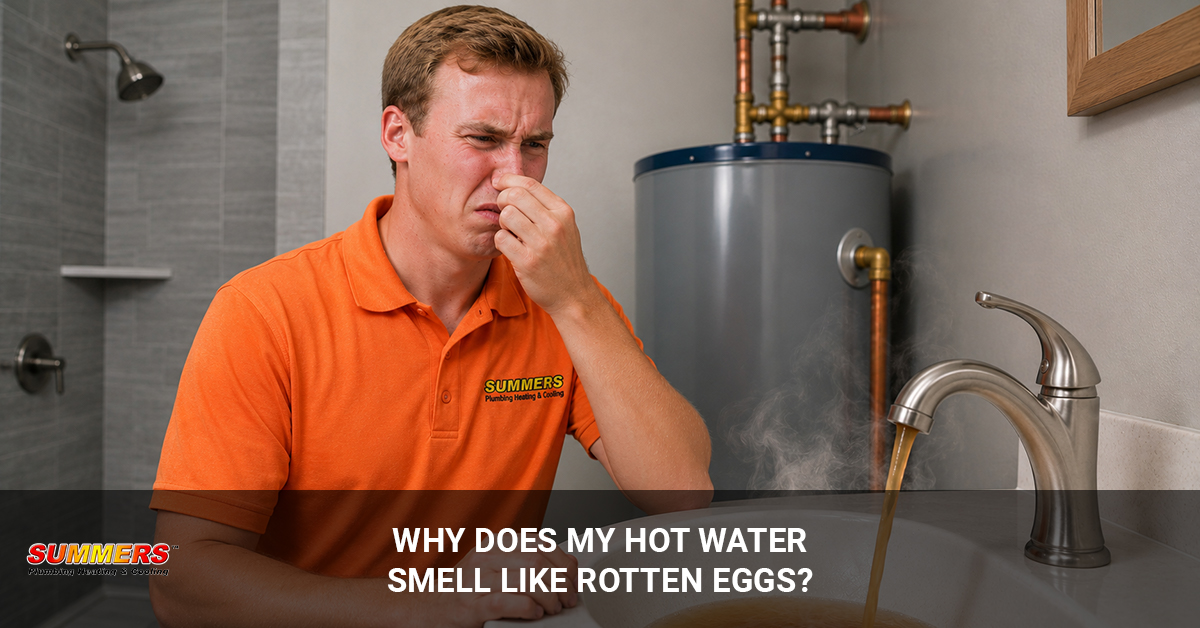
Your hot water usually smells like rotten eggs because hydrogen sulfide gas is forming inside your water heater or is present in your water supply. The smell is unpleasant, but it doesn’t always mean your water heater is failing. In many cases, the problem can be fixed with routine maintenance or a simple repair.
If the odor only comes from the hot water, the issue is most likely inside the water heater. Sulfur-reducing bacteria, a worn-out anode rod, or sediment buildup are the most common causes. These problems can create hydrogen sulfide gas, which gives off the familiar rotten egg smell.
If both your hot and cold water have the same odor, the source is probably your water supply rather than the water heater. Homes with private wells are more likely to have naturally occurring sulfur in the groundwater, while municipal water systems can occasionally develop temporary odor issues.
The good news is that most sulfur smells don’t require a new water heater. Flushing the tank, replacing the anode rod, or treating the water supply is often enough to eliminate the odor. The key is to identify where the smell is coming from before choosing a solution.
In this guide, you’ll learn the most common reasons hot water smells like rotten eggs, how to pinpoint the source of the odor, the best ways to get rid of it, when you can fix it yourself, and when it’s time to call a plumber.
Why Does My Hot Water Smell Like Rotten Eggs?
Hot water smells like rotten eggs because hydrogen sulfide gas is being produced inside your water heater or is naturally present in your water supply. In most homes, the odor is caused by a problem inside the water heater rather than the water itself.
If the smell only comes from the hot water, the water heater is usually the source. Sulfur-reducing bacteria can grow inside the tank, especially if the water heater sits unused for long periods or is set to a low temperature. Another common cause is the magnesium anode rod, which can react with naturally occurring sulfur in the water and produce hydrogen sulfide gas.
If both your hot and cold water smell like rotten eggs, the problem is more likely coming from your water supply. Homes with private wells are especially prone to naturally occurring hydrogen sulfide gas, while municipal water systems can occasionally experience temporary water quality issues that affect odor.
The smell may be unpleasant, but it doesn’t automatically mean you need a new water heater. In many cases, the problem can be solved by flushing the tank, disinfecting the water heater, replacing a worn anode rod, or treating the water supply. The right solution depends on identifying where the odor is coming from.
The following sections explain the most common causes of rotten egg-smelling hot water, how to determine the source of the odor, and the best ways to get rid of it and keep it from coming back.
8 Common Causes of Rotten Egg Smell in Hot Water
A rotten egg smell in hot water is most often caused by bacteria inside the water heater, a reaction involving the anode rod, or sulfur in your water supply. Finding the exact cause is the first step because each problem has a different solution.
Here are the most common reasons your hot water smells like sulfur.
1. Sulfur-Reducing Bacteria Inside the Water Heater
Sulfur-reducing bacteria are the most common cause of a rotten egg smell in hot water. These naturally occurring bacteria feed on sulfur compounds and produce hydrogen sulfide gas, which creates the strong sulfur odor.
The bacteria aren’t usually harmful, but they can multiply inside a water heater when conditions are right. They’re more likely to grow if the water heater sits unused for several days, contains sediment, or is set to a low temperature.
Signs this is the problem:
- The smell only comes from the hot water.
- The odor is stronger after you’ve been away from home.
- The water heater hasn’t been flushed in a long time.
- The smell fades after running the hot water for a few minutes.
How to fix it:
Flushing and disinfecting the water heater is often enough to remove the bacteria and eliminate the odor. If the smell returns, the anode rod may need to be replaced, or the tank may require a more thorough disinfection by a plumber.
2. A Worn-Out Magnesium Anode Rod
A worn or reacting magnesium anode rod can create the rotten egg smell by producing hydrogen sulfide gas inside the water heater. This is one of the most common causes when the odor is limited to hot water.
The anode rod is designed to protect the inside of the water heater from rust by attracting corrosion before it reaches the steel tank. However, in homes with sulfur in the water, especially those with well water or a water softener, the magnesium rod can react with sulfur compounds and create the unpleasant smell.
Signs this is the problem:
- Only the hot water smells.
- The odor started after installing a new water heater.
- Your home uses a water softener.
- Flushing the tank helps temporarily but doesn’t solve the problem.
How to fix it:
Replacing the magnesium anode rod with an aluminum-zinc anode rod often eliminates the odor while continuing to protect the tank from corrosion. A licensed plumber can inspect the rod and recommend the best replacement for your water quality.
3. Sediment Buildup Inside the Water Heater
Sediment buildup can cause a rotten egg smell by creating an ideal environment for odor-causing bacteria to grow. Minerals from hard water settle at the bottom of the tank over time, trapping bacteria and reducing the water heater’s efficiency.
As sediment accumulates, it can also make your water heater work harder, increase energy costs, and shorten the unit’s lifespan.
Signs this is the problem:
- The hot water smells like sulfur.
- You hear popping or rumbling noises from the tank.
- Hot water runs out faster than usual.
- The water heater hasn’t been flushed in several years.
How to fix it:
Drain and flush the water heater to remove sediment buildup. If the tank contains excessive sediment or the odor returns quickly, professional maintenance may be necessary.
4. Hydrogen Sulfide in Well Water
If both your hot and cold water smell like rotten eggs, your well water may naturally contain hydrogen sulfide gas. This sulfur compound occurs naturally in some groundwater and is a common issue for homes with private wells.
Unlike problems inside the water heater, hydrogen sulfide in well water affects the entire home’s water supply.
Signs this is the problem:
- Both hot and cold water have the same odor.
- Every faucet produces the smell.
- Your home uses a private well.
- The odor is noticeable immediately after turning on the water.
How to fix it:
Have your well water professionally tested. Depending on the results, installing a filtration or oxidation system can remove hydrogen sulfide and improve water quality.
5. Water Softener Reactions
A water softener can make a sulfur smell more noticeable by increasing the chemical reaction inside the water heater. While the softener itself doesn’t create the odor, softened water can react more readily with a magnesium anode rod.
This is why some homeowners notice the smell shortly after installing a water softener.
Signs this is the problem:
- The odor started after adding a water softener.
- Only the hot water smells.
- The water heater is otherwise working normally.
How to fix it:
Check that the water softener is operating correctly and have the anode rod inspected. Replacing a magnesium rod with an aluminum-zinc model often resolves the problem.
6. Bacteria Inside Household Plumbing
Sometimes the rotten egg smell comes from bacteria inside your plumbing pipes instead of the water heater. Although less common, bacteria can grow in sections of plumbing where water sits for long periods, creating odors at specific fixtures.
Signs this is the problem:
- Only one faucet has the odor.
- Both hot and cold water from the same faucet smell.
- The smell comes and goes.
How to fix it:
Clean the faucet aerator, flush the plumbing lines, and disinfect the affected fixture if needed. If the odor persists, have a plumber inspect the plumbing system for bacterial growth.
7. Water Heater Temperature Is Set Too Low
A water heater set too low can encourage sulfur-reducing bacteria to grow inside the tank. Lower temperatures create conditions where bacteria can multiply more easily, especially if the hot water isn’t used regularly.
Signs this is the problem:
- Persistent sulfur odor.
- Water heater temperature is set below the recommended level.
- The smell is worse after the home has been vacant.
How to fix it:
Check your water heater’s temperature setting. If appropriate for your household and the manufacturer’s recommendations, temporarily increasing the temperature may help reduce bacterial growth. Always use caution, as higher water temperatures can increase the risk of scalding.
8. An Aging or Failing Water Heater
An older water heater may develop recurring sulfur odors because of internal corrosion, sediment buildup, and worn components. As the tank ages, these problems become more common and can be difficult to fix permanently.
If your water heater is nearing the end of its lifespan, replacing it may be more cost-effective than making repeated repairs.
Signs this is the problem:
- The water heater is more than 10–12 years old.
- Rust-colored hot water.
- Water leaking around the tank.
- The rotten egg smell keeps coming back.
- Frequent repair issues.
How to fix it:
If maintenance and minor repairs no longer solve the problem, replacing the water heater is often the best long-term solution. A new unit can eliminate recurring odors, improve energy efficiency, and provide more reliable hot water.
How to Tell Where the Rotten Egg Smell Is Coming From
The easiest way to identify the source of a rotten egg smell is to compare your hot and cold water at different faucets throughout your home. A few simple checks can help you determine whether the odor is coming from the water heater, your plumbing system, or your water supply.
Use the table below to narrow down the cause:
| What You Notice | Most Likely Cause |
| Only hot water smells | Sulfur-reducing bacteria, a worn anode rod, or sediment inside the water heater |
| Hot and cold water smell | Hydrogen sulfide in well water or a water supply issue |
| Only one faucet smells | Dirty drain, clogged aerator, or bacteria in the plumbing near that fixture |
| Smell is stronger after vacation | Bacteria growing inside the water heater while water sat unused |
| Rust-colored hot water with a sulfur smell | An aging or corroded water heater |
| Every faucet has the same odor | Well water contamination or a problem with the water supply |
If Only Your Hot Water Smells
Start by testing both the hot and cold water in several locations, including the kitchen sink, bathroom faucets, showers, and tubs. If the odor only appears when using hot water, the water heater is almost always the source of the problem. Common causes include sulfur-reducing bacteria, a worn anode rod, or sediment buildup inside the tank.
If Both Hot and Cold Water Smell
If both your hot and cold water smell like rotten eggs, the issue is more likely coming from your water supply. Homes with private wells are especially prone to naturally occurring hydrogen sulfide gas, while municipal water systems can occasionally experience temporary water quality issues that affect odor.
If the Smell Comes From Only One Faucet
If the smell is limited to just one faucet, the problem is probably local to that fixture. A dirty drain, clogged aerator, or bacteria inside the nearby plumbing can create an odor that resembles sulfur. Cleaning the aerator and disinfecting the drain often solves the problem.
When to Test Your Water Supply
For homes with private wells, scheduling a professional water test is the best way to confirm whether hydrogen sulfide or other contaminants are present. If you’re connected to a municipal water system and the odor appears suddenly, check with your neighbors or contact your local water utility to find out if maintenance or treatment changes may be affecting the water.
Final Check Before Choosing a Solution
Taking a few minutes to identify where the smell is coming from can save you time, prevent unnecessary repairs, and help you choose the most effective solution the first time.
How to Get Rid of Rotten Egg Smell in Hot Water
The best way to get rid of a rotten egg smell in hot water is to identify what’s causing it and fix the underlying problem. In many cases, flushing the water heater or replacing a worn anode rod is enough to eliminate the odor. If the smell comes from your water supply, you may need water treatment instead.
Follow these steps to remove the sulfur smell from your hot water.
Step 1: Find Out Where the Smell Is Coming From
Start by checking whether the odor is only in the hot water or in both the hot and cold water. This simple test helps narrow down the source of the problem.
- If only the hot water smells, the issue is most likely inside the water heater.
- If both hot and cold water smell, the problem is likely your well water or municipal water supply.
- If only one faucet has the odor, inspect the faucet, drain, and nearby plumbing.
Knowing where the smell occurs will help you choose the right solution and avoid unnecessary repairs.
Step 2: Flush the Water Heater
Flushing the water heater removes sediment and bacteria that can cause sulfur odors. Over time, minerals settle at the bottom of the tank, creating an environment where sulfur-reducing bacteria can grow.
Drain and flush the tank according to the manufacturer’s instructions. This maintenance removes sediment, improves heating efficiency, and often gets rid of the rotten egg smell.
If you have hard water, flushing the water heater once a year can help prevent the odor from returning.
Step 3: Inspect the Anode Rod
A worn or reacting anode rod is one of the most common reasons hot water smells like sulfur. The magnesium anode rod can react with sulfur compounds in the water and produce hydrogen sulfide gas.
If the rod is heavily corroded or made of magnesium, replacing it with an aluminum-zinc anode rod often solves the problem while continuing to protect the water heater from corrosion.
Step 4: Disinfect the Water Heater
If bacteria are causing the odor, disinfecting the water heater may eliminate the smell completely. Sanitizing the tank kills sulfur-reducing bacteria that continue producing hydrogen sulfide gas even after flushing.
Because this process involves safely disinfecting the water heater, many homeowners choose to have a licensed plumber perform the service.
Step 5: Test Your Water Supply
If both your hot and cold water smell like rotten eggs, have your water tested. The problem may not be inside the water heater at all.
Homes with private wells should be tested for hydrogen sulfide, sulfur bacteria, and other water quality issues. Depending on the results, installing a whole-home water filtration system or other treatment solution may be recommended to remove hydrogen sulfide and improve water quality.
If you’re connected to a municipal water system, contact your local water utility to find out if there are any temporary water quality issues or maintenance projects affecting your area.
Step 6: Replace an Aging Water Heater
If your water heater is nearing the end of its lifespan and the smell keeps returning, it may be time to decide whether to repair or replace your water heater. Older water heaters often develop recurring odor problems because of internal corrosion, worn anode rods, and heavy sediment buildup.
Most traditional tank water heaters last 10 to 12 years with proper maintenance. If your unit is leaking, producing rusty water, or requires frequent repairs in addition to the sulfur smell, installing a new water heater is often more cost-effective than continuing to repair the old one.
Replacing an aging unit can eliminate recurring odors, improve energy efficiency, provide more reliable hot water, and reduce the risk of unexpected leaks or tank failure.
Can You Fix Rotten Egg Smell Yourself?
Yes, you can fix many rotten egg smell problems yourself if the cause is related to routine water heater maintenance. Simple issues like sediment buildup, minor bacterial growth, or a dirty faucet aerator can often be resolved without hiring a plumber.
If the odor is coming from the water heater and there are no signs of leaks or major damage, you can try a few basic maintenance tasks before calling a professional.
DIY fixes you can try:
- Flush the water heater to remove sediment and bacteria.
- Clean faucet aerators to remove mineral buildup and debris.
- Check the water heater temperature and make sure it’s set according to the manufacturer’s recommendations.
- Inspect visible plumbing connections for leaks, rust, or corrosion.
- Replace the anode rod if you have the tools, experience, and are comfortable working on water heaters.
Many homeowners find that one or more of these steps removes the sulfur smell, especially if the problem is caught early.
However, not every rotten egg odor can be fixed with DIY maintenance.
Call a licensed plumber if:
- The smell returns soon after flushing the water heater.
- Your water heater is leaking.
- Rust-colored water comes from the hot water tap.
- The tank shows signs of heavy corrosion.
- You suspect bacteria inside your plumbing system.
- Your home uses well water that needs testing or treatment.
- You can’t determine where the odor is coming from.
A licensed plumber can inspect your water heater, test your water if needed, and identify the exact cause of the odor. Getting a professional diagnosis can prevent unnecessary repairs, protect your plumbing system, and ensure the problem is fixed the first time correctly.
Is Rotten Egg Smell in Hot Water Dangerous?
In most cases, a rotten egg smell in hot water is not dangerous, but it should never be ignored. The odor is usually caused by small amounts of hydrogen sulfide gas, sulfur-reducing bacteria, or a chemical reaction inside the water heater. While these issues are often more unpleasant than harmful, they can point to a problem that needs attention.
For most homeowners, the smell doesn’t mean the water is unsafe for bathing, cleaning, or other everyday household uses. However, it can indicate that your water heater needs maintenance or that your water supply should be tested.
A persistent sulfur smell may be a sign of:
- Sulfur-reducing bacteria growing inside the water heater.
- Excessive sediment buildup in the tank.
- A worn or deteriorating anode rod.
- Hydrogen sulfide in well water.
- An aging or failing water heater.
- Water quality issues that require professional testing.
Although hydrogen sulfide is commonly found in low concentrations in household water, higher levels can affect the taste, odor, and overall quality of your water. If you rely on a private well, regular water testing is the best way to ensure your water remains safe and meets local water quality standards.
You should also pay attention to other warning signs. If the sulfur smell becomes unusually strong, your water turns yellow, brown, or rusty, or you notice sediment, leaks, or a sudden change in water quality, don’t ignore the problem. These symptoms could indicate a more serious issue with your water heater or water supply.
If you’re unsure what’s causing the odor or the smell persists after basic maintenance, contact a licensed plumber or water treatment specialist. They can identify the source of the problem, recommend the appropriate repair or treatment, and help ensure your water is clean, safe, and odor-free.
When Should You Call a Plumber?
You should call a plumber if the rotten egg smell doesn’t go away after basic troubleshooting or if the problem is beyond routine water heater maintenance. While many sulfur odors can be resolved by flushing the tank or replacing an anode rod, persistent or recurring odors often require professional diagnosis.
It’s time to contact a licensed plumber if:
- The rotten egg smell returns shortly after flushing the water heater.
- Your water heater is leaking or showing signs of water damage.
- The tank is heavily corroded or has visible rust.
- Rust-colored or discolored hot water comes from your faucets.
- The odor is present throughout your home’s plumbing system.
- The anode rod needs to be inspected or replaced.
- Your water heater is more than 10 to 12 years old and continues to have odor problems.
- Your home uses well water that needs testing or treatment.
- You’re unable to identify the source of the smell.
If the odor persists, scheduling professional water heater repair can help identify the exact cause before the problem becomes more expensive to fix. They can inspect the water heater, check the condition of the anode rod, flush and disinfect the tank, test your water for hydrogen sulfide and other contaminants, and determine whether the issue is coming from the water heater, your plumbing system, or the water supply.
Calling a plumber early can help prevent unnecessary repairs, improve your water quality, and extend the life of your water heater. It can also save you money by fixing the problem before it leads to corrosion, leaks, or the need for a full water heater replacement.
How Much Does It Cost to Fix Rotten Egg Smell?
The cost to fix a rotten egg smell in hot water depends on the cause of the problem and the repair required. Simple maintenance, such as flushing the water heater, is relatively affordable, while replacing the water heater or installing a water treatment system is a much larger investment.
Here are the typical costs homeowners can expect:
| Repair | Typical Cost |
| Flush water heater | $100–$250 |
| Replace anode rod | $150–$400 |
| Water quality testing | $50–$300 |
| Well water filtration system | $800–$3,000+ |
| Replace water heater | $1,000–$3,500+ |
Several factors can affect the total repair cost, including:
- The underlying cause of the sulfur odor.
- The age and condition of your water heater.
- Local labor rates and service fees.
- The type and quality of replacement parts.
- Whether your home uses well water and requires a filtration system.
- Whether emergency plumbing service is needed.
In many cases, the least expensive repairs involve routine maintenance, such as flushing the tank or replacing a worn anode rod. However, if the water heater is old, leaking, or heavily corroded, replacing the unit may be the most cost-effective long-term solution.
Addressing the problem as soon as you notice the odor can help prevent more serious issues. Fixing a small problem early is almost always less expensive than waiting until corrosion, water damage, or complete water heater failure leads to major repairs or replacement.
How to Prevent Rotten Egg Smell in Hot Water
Regular water heater maintenance is the best way to prevent a rotten egg smell from developing in your hot water. Keeping your water heater clean and replacing worn components before they fail can help stop sulfur odors before they become a recurring problem.
Follow these maintenance tips to keep your hot water fresh and odor-free:
- Flush your water heater once a year as part of annual water heater maintenance to remove sediment and reduce bacterial growth.
- Replace the anode rod when recommended by the manufacturer or if it’s heavily corroded.
- Keep your water heater set to the manufacturer’s recommended temperature to help discourage bacterial growth while maintaining safe water temperatures.
- Test your well water regularly if your home uses a private well, especially if you’ve noticed sulfur odors before.
- Service your water softener according to the manufacturer’s maintenance schedule to ensure it’s working properly.
- Clean faucet aerators periodically to remove mineral deposits and debris that can trap bacteria.
- Schedule routine plumbing and water heater inspections, especially if your home has an older plumbing system or a water heater that’s approaching the end of its lifespan.
It’s also a good idea to pay attention to small changes in your hot water. If you notice even a faint sulfur smell, don’t wait for it to become stronger. Addressing the issue early can prevent bacteria from spreading, reduce sediment buildup, and help you avoid more expensive repairs later.
A little preventive maintenance each year can go a long way. It helps keep your hot water smelling clean, improves your water heater’s efficiency, extends the life of your plumbing system, and reduces the risk of unexpected repairs or water heater replacement.
Final Thoughts
A rotten egg smell in hot water is usually a sign of a problem that can be fixed with the right maintenance or repair. In most cases, the odor is caused by sulfur-reducing bacteria, a worn anode rod, sediment buildup inside the water heater, or hydrogen sulfide in the water supply, not a water heater that needs immediate replacement.
Many homeowners can resolve the problem by flushing the water heater, replacing the anode rod, or keeping up with routine maintenance. However, if the smell keeps coming back, your hot water is rusty, the tank is leaking, or the water heater is more than 10 years old, it’s best to have the system inspected by a licensed plumber.
The key is to identify the source of the odor as early as possible. Taking action before the problem gets worse can improve your water quality, extend the life of your water heater, reduce the risk of costly plumbing repairs, and help ensure your home has clean, odor-free hot water for years to come.
Frequently Asked Questions
Why does only my hot water smell like rotten eggs?
If only your hot water smells like rotten eggs, the problem is usually inside the water heater. The most common causes are sulfur-reducing bacteria, sediment buildup, or a chemical reaction between the magnesium anode rod and sulfur compounds in the water. Flushing the tank or replacing the anode rod often resolves the issue.
Is it safe to shower if my hot water smells like sulfur?
Yes, it’s generally safe to shower if your hot water smells like sulfur. In most homes, the odor is caused by low levels of hydrogen sulfide gas or naturally occurring bacteria and doesn’t pose a health risk during normal use. However, if the smell is unusually strong or you’re concerned about your water quality, have your water tested and consult a plumber or water treatment professional.
Will flushing my water heater remove the smell?
Yes, flushing the water heater often removes the rotten egg smell. Flushing helps remove sediment and bacteria that can produce hydrogen sulfide gas inside the tank. If the odor comes back shortly after flushing, the anode rod may need to be replaced, or the problem may be related to your water supply.
How often should I replace the anode rod?
Most anode rods should be inspected every 2 to 3 years and replaced when they’re heavily corroded. The actual replacement schedule depends on your water quality, how often you use hot water, and the manufacturer’s recommendations. Regular inspections help protect the tank from corrosion and can prevent sulfur odors from developing.
Can a water softener cause a rotten egg smell?
A water softener doesn’t directly cause a rotten egg smell, but it can make the odor more noticeable. Softened water can increase the reaction between sulfur compounds and a magnesium anode rod inside the water heater, leading to the production of hydrogen sulfide gas. Replacing the anode rod often solves the problem.
Why does the smell come back after flushing the water heater?
If the smell returns after flushing the water heater, the underlying cause hasn’t been fully resolved. Sulfur-reducing bacteria may still be present, the anode rod may need replacement, or the sulfur odor may be coming from your well water or municipal water supply. A professional inspection can help identify the exact cause.
Should I replace my water heater if it smells like sulfur?
Not necessarily. Many sulfur odor problems can be fixed by flushing the tank, replacing the anode rod, or disinfecting the water heater. However, if your water heater is more than 10 to 12 years old, is leaking, producing rusty water, or continues to smell after multiple repairs, replacing the unit may be the most cost-effective long-term solution.
Can municipal water cause a rotten egg smell?
Yes, although it’s less common than well water. Temporary changes in water treatment, maintenance work, or naturally occurring sulfur compounds can occasionally cause odors in municipal water systems. If both your hot and cold water smell like rotten eggs, contact your local water utility or have your water tested to determine the source of the problem.