Drain Cleaning vs Drain Repair: What Do You Really Need?
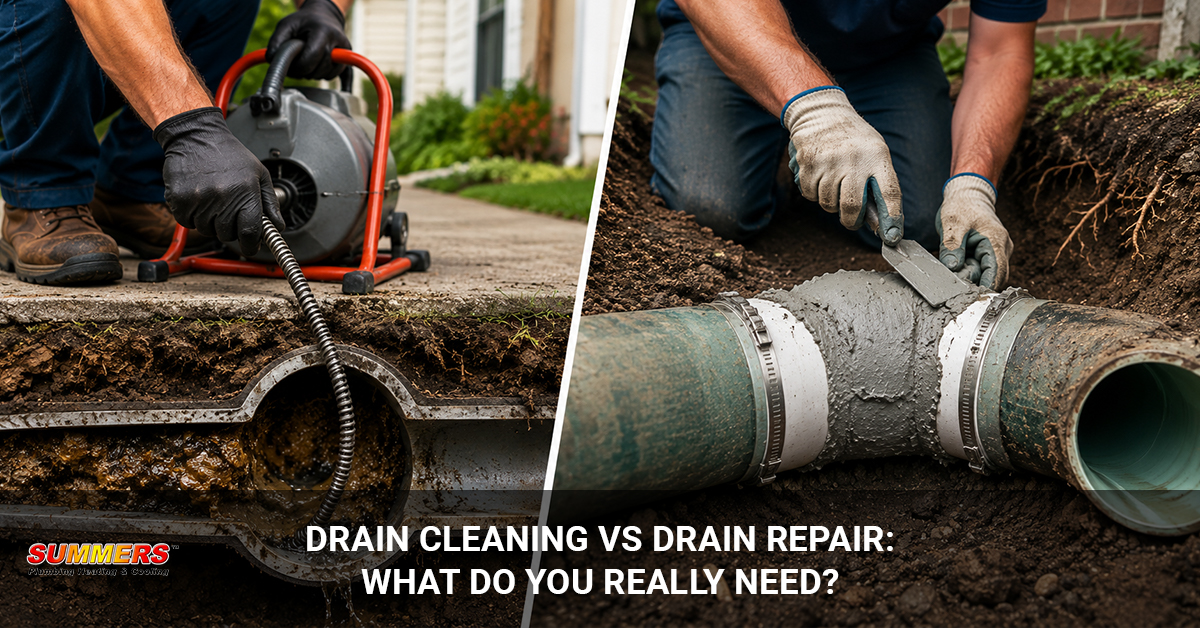
Drain cleaning removes clogs and buildup inside pipes, while drain repair fixes damaged, leaking, or broken drain lines. The right solution depends on whether the problem is caused by a simple blockage or actual pipe damage.
Many homeowners assume every drain problem only needs cleaning. However, recurring clogs, sewage smells, leaks, or multiple backed-up drains often point to deeper plumbing issues that cleaning alone cannot fix.
This guide explains the difference between drain cleaning and drain repair, including warning signs, costs, inspection methods, and how to determine which service your plumbing system actually needs.
What Is Drain Cleaning?
Drain cleaning removes clogs, debris, and buildup inside plumbing pipes to restore proper water flow. It is commonly recommended for slow drains, minor blockages, and routine plumbing maintenance before larger problems develop.
In many homes, professional drain cleaning can improve drainage and help prevent recurring clogs.
How Drain Cleaning Works
Drain cleaning focuses on clearing blockages inside the pipe rather than repairing the pipe itself. Plumbers use specialized tools and equipment to remove buildup that restricts water flow.
Common causes of drain clogs include:
- Grease buildup
- Hair clogs
- Soap residue
- Food debris
- Mineral buildup
Once the blockage is removed, water can usually flow normally again without replacing any pipe sections.
Common Drain Cleaning Methods
Plumbers use different drain cleaning methods depending on the location and severity of the clog.
Common drain cleaning methods include:
- Drain snaking
- Hydro jetting
- Motorized augers
- Main line cleaning
Some methods break apart clogs, while others fully clean the inside walls of the pipe to remove heavy buildup.
Problems Drain Cleaning Can Solve
Drain cleaning is often effective for many common household plumbing problems caused by buildup inside the pipes.
Professional cleaning can usually fix:
- Slow drains
- Hair clogs
- Grease buildup
- Soap scum accumulation
- Minor root intrusion
- Small drain blockages
Routine drain cleaning may also help reduce the risk of future clogs and improve overall plumbing performance.
When Drain Cleaning Is Usually Recommended
Drain cleaning is usually recommended when the drain pipe itself is still in good condition and the problem is caused by buildup or blockage rather than structural pipe damage.
Cleaning is often the right solution for:
- Slow-draining sinks
- Occasional clogs
- Minor backups
- Gurgling drains
- Mild drain odors
If the same drain problems keep returning after cleaning, the plumbing system may need a deeper inspection to check for damaged pipes, root intrusion, or other underlying issues.
What Is Drain Repair?
Drain repair fixes damaged, leaking, or structurally compromised drain pipes that cannot be solved with cleaning alone. Unlike drain cleaning, repair focuses on fixing the actual pipe damage causing recurring plumbing problems.
In many cases, drain repair is necessary to stop ongoing leaks, backups, or pipe deterioration before larger plumbing damage occurs.
How Drain Repair Works
Drain repair focuses on repairing or replacing damaged sections of the drain pipe. Plumbers usually begin with a professional inspection to locate the exact cause and location of the problem before recommending repairs.
Drain repair may involve:
- Pipe patching
- Pipe replacement
- Joint repair
- Trenchless pipe repair
The goal is to restore the structural integrity of the plumbing system and prevent future drain failures.
Common Drain Repair Methods
Plumbers use different repair methods depending on the type of pipe damage and how accessible the drain line is.
Common drain repair options include:
- Pipe patching
- Sectional pipe replacement
- Trenchless drain repair
- Full drain line replacement
Some repairs require excavation to access underground pipes, while others can be completed with minimal digging using trenchless technology.
Problems That Usually Require Drain Repair
Drain repair is often necessary when the pipe itself is damaged rather than simply clogged with debris.
Repair is commonly recommended for:
- Cracked pipes
- Pipe collapse
- Corrosion
- Severe root intrusion
- Pipe separation
- Leaking drain lines
These problems usually continue returning if homeowners only rely on repeated drain cleaning without fixing the damaged pipe.
When Drain Repair Is Recommended
Drain repair is typically recommended when drain problems become frequent, widespread, or severe enough to indicate structural pipe damage.
Repair may be needed when:
- Clogs keep returning
- Water leaks appear
- Multiple drains back up
- Sewage smells develop
- Pipe damage is confirmed during inspection
Ignoring damaged drain pipes can eventually lead to water damage, mold growth, sewage backups, and more expensive plumbing repairs later.
Drain Cleaning vs Drain Repair: Key Differences
Drain cleaning and drain repair solve very different plumbing problems. Understanding the difference can help homeowners avoid unnecessary expenses, repeated service calls, and ongoing drain issues.
Purpose of Each Service
Drain cleaning removes buildup, debris, and blockages inside the pipe to restore proper water flow. Drain repair fixes damaged drain pipes that have structural problems such as cracks, leaks, corrosion, or collapsed sections.
In simple terms:
- Drain cleaning clears the blockage
- Drain repair fixes the pipe itself
Cost Comparison
Drain cleaning is usually much less expensive because it only involves removing clogs or buildup inside the plumbing system.
Drain repair costs more because plumbers may need to:
- Repair damaged pipe sections
- Replace broken pipes
- Access hidden plumbing
- Perform excavation or trenchless repairs
The more severe the pipe damage is, the higher the repair cost usually becomes.
Installation and Repair Time
Most professional drain cleaning services can be completed quickly, often during a single service visit. Basic clogs may only take a short amount of time to clear.
Drain repairs usually take longer depending on:
- Pipe accessibility
- Severity of damage
- Excavation needs
- Pipe replacement requirements
- Inspection findings
More complex drain repairs may require multiple visits or additional restoration work afterward.
Long-Term Effectiveness
Drain cleaning can solve temporary clogging problems caused by grease, hair, soap buildup, or debris. However, if the pipe itself is damaged, the problem often returns until the structural issue is repaired properly.
Repeated clogs are often a sign that cleaning alone is no longer enough.
Which Option Solves Recurring Problems?
Recurring clogs, sewage backups, foul odors, or water leaks often point to deeper drain pipe damage that drain cleaning alone cannot permanently solve.
Problems such as:
- Cracked pipes
- Root intrusion
- Pipe collapse
- Corrosion
- Pipe separation
usually require drain repair instead of repeated cleaning services.
Can Drain Cleaning Prevent Future Repairs?
Routine drain cleaning may help reduce buildup and identify plumbing problems early, before larger drain repairs become necessary.
Preventive cleaning can help:
- Improve water flow
- Reduce grease buildup
- Prevent severe clogs
- Extend pipe life
- Catch small issues earlier
However, routine cleaning cannot stop structural pipe deterioration once the drain line becomes damaged.
Signs You May Only Need Drain Cleaning
Some drain problems are caused by buildup inside otherwise healthy pipes. In these situations, professional drain cleaning is often enough to restore proper drainage without needing pipe repairs.
Slow-Draining Sinks or Tubs
Slow-draining sinks, tubs, or showers are commonly caused by buildup inside the drain pipe. Hair, soap scum, grease, and debris can gradually narrow the pipe and restrict water flow over time.
Professional drain cleaning can usually remove the buildup and improve drainage quickly.
Occasional Clogs
Minor clogs that happen occasionally are often manageable with professional drain cleaning. Small blockages caused by food waste, grease, hair, or soap buildup usually do not mean the pipe itself is damaged.
However, clogs that keep returning in the same drain may eventually require further inspection.
Gurgling Sounds in Drains
Gurgling sounds coming from drains may indicate partial blockages trapping air inside the pipe. As water struggles to move through the restricted drain, trapped air can create bubbling or gurgling noises.
Cleaning the drain may help restore normal airflow and drainage.
Mild Drain Odors
Mild drain odors are often caused by buildup inside the pipe rather than structural plumbing damage. Grease, food debris, soap residue, and organic material can create unpleasant smells as they collect inside the drain.
Professional cleaning can often remove the buildup causing the odor.
Water Backing Up Slowly
Slow drain backups may signal developing clogs that can often be cleared before major plumbing damage occurs. Water that drains slowly or briefly backs up into sinks or tubs is commonly caused by partial blockages rather than broken pipes.
Addressing these warning signs early may help prevent larger drain problems later.
Signs You May Need Drain Repair Instead
Some drain problems are warning signs of structural pipe damage rather than simple clogs. When drain issues keep returning or start affecting multiple areas of the home, the plumbing system may need professional drain repair instead of repeated cleaning.
Recurring Drain Backups
Repeated drain backups often indicate damaged, deteriorating, or partially collapsed drain pipes. If the same drain keeps clogging shortly after cleaning, the problem may be deeper inside the plumbing system.
Recurring backups are commonly linked to:
- Cracked pipes
- Root intrusion
- Pipe separation
- Severe buildup inside damaged pipes
Multiple Clogged Drains Throughout the House
If several drains clog or back up at the same time, the main drain line may be damaged. Problems affecting multiple fixtures often point to larger plumbing issues rather than isolated drain clogs.
Common warning signs include:
- Toilets backing up
- Sinks draining slowly
- Tubs filling with wastewater
- Gurgling drains throughout the home
Water Leaks Under Floors or Walls
Leaks around plumbing areas may indicate cracked, separated, or leaking drain pipes hidden behind walls or beneath floors.
Signs of hidden drain leaks may include:
- Water stains
- Soft flooring
- Warped walls
- Damp drywall
- Unexplained moisture
Drain leaks left untreated can eventually lead to major water damage.
Sewage Smells Around the Property
Persistent sewer odors around the home or yard can signal underground drain line leaks or broken sewer pipes. Strong sewage smells should never be ignored because they often indicate hidden plumbing damage.
Underground leaks may also attract pests and create sanitation concerns.
Cracked or Collapsed Pipes
Cracked or collapsed pipes usually require repair or replacement rather than repeated cleaning. Structural pipe damage can block wastewater flow and eventually cause severe backups or leaks.
Pipe collapse is more common in:
- Older plumbing systems
- Corroded pipes
- Root-damaged sewer lines
- Shifting soil conditions
Tree Root Intrusion
Large tree roots can crack, separate, or crush underground drain pipes over time. Root intrusion is one of the most common causes of severe drain line damage.
As roots continue growing inside the pipe, they can create:
- Recurring clogs
- Pipe separation
- Slow drainage
- Complete blockages
Mold or Water Damage Near Plumbing
Moisture caused by leaking drain pipes can eventually lead to mold growth, wood rot, and structural damage around the home.
Signs of water damage near plumbing may include:
- Mold smells
- Discolored walls
- Peeling paint
- Soft drywall
- Damp flooring
Professional drain repair can help stop ongoing leaks before the damage spreads further.
Common Causes of Drain Problems
Several common issues can lead to drain clogs, slow drainage, or pipe damage over time. Understanding what causes drain problems can help homeowners prevent expensive plumbing repairs and recurring backups.
Grease and Food Buildup
Grease, cooking oil, and food waste can harden inside kitchen drain pipes and slowly restrict water flow. As the buildup thickens, it can trap additional debris and eventually create stubborn clogs.
Grease buildup is one of the most common causes of kitchen drain problems.
Hair and Soap Scum
Hair and soap residue commonly collect inside bathroom drains, especially in showers, tubs, and sink pipes. Over time, this buildup can narrow the drain opening and slow water flow significantly.
Hair clogs are especially common in:
- Shower drains
- Bathtub drains
- Bathroom sinks
Flushing Improper Materials
Flushing improper materials down toilets or drains can quickly clog the plumbing system. Many items labeled as “flushable” still create buildup inside pipes.
Materials that commonly cause drain blockages include:
- Wipes
- Paper towels
- Hygiene products
- Cotton swabs
- Grease and food scraps
These materials do not break down easily and can create severe drain backups.
Tree Root Growth
Tree roots naturally seek moisture and can enter small cracks or joints in underground drain pipes. Once inside, roots continue growing and may eventually block or damage the pipe.
Root intrusion can lead to:
- Recurring clogs
- Slow drains
- Pipe separation
- Pipe collapse
Older sewer and drain systems are especially vulnerable to root damage.
Aging Drain Pipes
Older drain pipes are more vulnerable to cracking, corrosion, shifting, and structural failure. As plumbing systems age, they often become weaker and more prone to leaks or recurring blockages.
Common aging pipe materials include:
- Cast iron
- Clay pipes
- Orangeburg pipes
Older plumbing systems may eventually require repair or replacement.
Corrosion and Pipe Deterioration
Metal drain pipes can weaken over time because of rust, corrosion, and constant moisture exposure. Corroded pipes may develop rough interior surfaces that trap debris and restrict water flow.
Severe corrosion can eventually lead to:
- Pipe leaks
- Cracks
- Structural weakness
- Pipe collapse
Professional inspections can help identify corrosion problems before major plumbing damage occurs.
How Plumbers Diagnose Drain Problems
Professional drain diagnosis helps determine whether drain cleaning or drain repair is the better solution. Modern plumbing equipment allows plumbers to identify hidden drain problems accurately before recommending repairs or replacements.
Drain Camera Inspections
Drain camera inspections allow plumbers to inspect the inside of pipes using a small waterproof camera attached to a flexible cable. The live video feed helps identify the exact location and severity of the problem without unnecessary digging.
Drain cameras can help locate:
- Clogs
- Cracks
- Root intrusion
- Pipe collapse
- Corrosion
- Pipe separation
Camera inspections are one of the most effective ways to diagnose recurring drain problems accurately.
Drain Flow Testing
Drain flow testing helps plumbers evaluate how well water moves through the plumbing system. Slow drainage or poor flow may indicate partial blockages, buildup, or damaged pipes restricting water movement.
Flow testing can also help identify:
- Weak drainage performance
- Hidden obstructions
- Partial backups
- Main line restrictions
Leak Detection Methods
Specialized leak detection equipment can help plumbers locate hidden plumbing leaks inside walls, floors, ceilings, or underground drain lines.
Modern leak detection methods may include:
- Moisture sensors
- Pressure testing
- Acoustic leak detection
- Thermal imaging equipment
Finding leaks early can help prevent larger water damage and mold problems later.
Why Professional Diagnosis Matters
A professional drain inspection helps homeowners avoid temporary fixes that fail to solve the real problem. Repeated drain cleaning may not help if the plumbing system has structural pipe damage underneath.
Proper diagnosis can help:
- Identify the true cause of the problem
- Prevent unnecessary repairs
- Reduce recurring backups
- Protect the plumbing system long term
- Save money on repeated service calls
In many cases, a professional inspection can reveal whether a simple cleaning is enough or if the drain line needs repair or replacement.
Drain Cleaning Costs
Drain cleaning costs vary depending on the severity of the blockage, the location of the drain, and the cleaning method used. Simple clogs are usually less expensive to clear, while main sewer line blockages or heavy buildup may require more advanced equipment and labor.
Average Drain Cleaning Cost
Most professional drain cleaning services cost between $100 and $500 depending on the type of blockage and the equipment needed to remove it.
Basic sink or shower drain cleaning is usually less expensive, while main drain line cleaning or severe blockages often cost more.
Cost by Cleaning Method
Drain cleaning pricing often varies based on the cleaning method used and how difficult the clog is to remove.
Common drain cleaning methods include:
- Drain snaking
- Hydro jetting
- Main drain cleaning
Hydro jetting may cost more because it uses high-pressure water to thoroughly clean grease, sludge, and buildup from the inside walls of the pipe.
Main sewer line cleaning also tends to cost more because it often requires larger equipment and additional labor.
Factors That Affect Drain Cleaning Pricing
Several factors can affect the total cost of professional drain cleaning services.
Pricing often depends on:
- Drain location
- Severity of the blockage
- Pipe accessibility
- Emergency or after-hours service calls
- Pipe condition
- Type of cleaning equipment required
Hard-to-reach drains, severe clogs, and older plumbing systems may require more labor and increase the total cleaning cost.
Drain Repair Costs
Drain repair costs are usually higher than drain cleaning costs because damaged pipes often require more labor, specialized equipment, and partial pipe replacement. The total price depends on the severity of the damage, the pipe location, and the repair method used.
Average Drain Repair Cost
Most drain repairs cost between $500 and $5,000 or more depending on how serious the pipe damage is and how difficult the repair is to complete.
Small localized repairs are usually less expensive, while major drain line replacement or underground pipe repairs can increase costs significantly.
Cost by Repair Type
Drain repair pricing often varies based on the type of repair needed and the condition of the plumbing system.
Common drain repair services include:
- Pipe patching
- Pipe replacement
- Trenchless repair
- Main drain line repair
Trenchless repairs may cost more upfront but can reduce excavation and property damage in some situations.
Additional Costs Homeowners Should Expect
Drain repair projects sometimes involve additional restoration or repair expenses after the plumbing work is completed.
Additional costs may include:
- Drywall repair
- Flooring repair
- Excavation
- Landscaping restoration
- Concrete replacement
- Permit fees
Repairs involving underground drain lines or hidden plumbing inside walls often require extra restoration work afterward.
Factors That Affect Repair Pricing
Several factors can affect the total cost of drain repair.
Drain repair pricing often depends on:
- Pipe depth
- Pipe material
- Accessibility
- Severity of the damage
- Local labor rates
- Inspection requirements
- Excavation needs
Older plumbing systems, difficult pipe access, and severe structural damage usually increase labor time and overall repair costs.
Hydro Jetting vs Traditional Drain Snaking
Hydro jetting and traditional drain snaking are both common drain cleaning methods, but they work in very different ways. The best option depends on the type of clog, the condition of the pipes, and how severe the blockage is.
What Is Hydro Jetting?
Hydro jetting uses high-pressure water to clean the inside of drain pipes and remove heavy buildup. The water pressure is strong enough to break apart grease, sludge, debris, mineral buildup, and even some tree roots inside the plumbing system.
Unlike basic clog removal, hydro jetting cleans the inner pipe walls more thoroughly.
Benefits of Hydro Jetting
Hydro jetting often provides deeper and longer-lasting drain cleaning compared to traditional snaking methods.
Benefits of hydro jetting may include:
- More thorough pipe cleaning
- Better grease and sludge removal
- Improved water flow
- Longer-lasting results
- Reduced buildup inside pipes
Hydro jetting is commonly used for severe drain buildup and main sewer line cleaning.
When Drain Snaking Works Better
Drain snaking is often the better option for smaller or simpler clogs that do not require full pipe cleaning.
Drain snaking may work well for:
- Small clogs
- Hair blockages
- Minor drain obstructions
- Simple sink or tub clogs
Snaking is usually faster and less expensive for basic drain blockages.
Which Cleaning Method Lasts Longer?
Hydro jetting usually provides longer-lasting results because it removes buildup from the inside walls of the pipe instead of simply punching through the blockage.
Drain snaking often restores flow quickly, but some grease or residue may remain inside the pipe after cleaning.
Is Hydro Jetting Safe for Older Pipes?
Older or fragile pipes may require professional inspection before hydro jetting because high-pressure water can worsen existing pipe damage.
Plumbers often inspect older plumbing systems first to check for:
- Cracks
- Corrosion
- Weak pipe walls
- Pipe separation
If the pipes are severely damaged, drain repair may be safer than aggressive hydro jetting.
Can Drain Problems Lead to Bigger Plumbing Damage?
Yes, untreated drain problems can eventually lead to serious plumbing and property damage. Small clogs, leaks, or slow drains may seem minor at first, but they can become much more expensive if the underlying problem is ignored.
Water Damage Risks
Leaking or backed-up drains can damage floors, walls, cabinets, and ceilings over time. Even small plumbing leaks can slowly spread moisture into surrounding materials and weaken parts of the home.
Drain-related water damage may lead to:
- Warped flooring
- Stained walls or ceilings
- Damaged cabinets
- Soft drywall
- Wood rot
The longer the leak continues, the more expensive the repairs often become.
Mold Growth Concerns
Persistent moisture from leaking pipes can create the perfect conditions for mold growth. Mold often develops in hidden areas behind walls, under flooring, or inside cabinets where moisture remains trapped.
Signs of possible mold problems may include:
- Musty odors
- Dark wall spots
- Increased humidity
- Allergy-like symptoms
Fixing drain leaks early can help reduce mold risks and improve indoor air quality.
Foundation and Structural Risks
Long-term underground drain leaks may weaken the soil around the home’s foundation. Excess moisture beneath the property can sometimes contribute to:
- Soil shifting
- Foundation settling
- Cracks in walls or floors
- Structural instability
Underground drain line problems should be inspected quickly to prevent larger structural damage.
Why Early Repairs Matter
Fixing small drain problems early can help prevent larger and more expensive plumbing repairs later. Early detection may also reduce the risk of:
- Major water damage
- Sewer backups
- Mold growth
- Pipe collapse
- Emergency plumbing repairs
Professional inspections and timely repairs can help protect both the plumbing system and the overall condition of the home.
How to Prevent Future Drain Problems
Preventive maintenance can help reduce drain clogs, pipe damage, and expensive plumbing repairs. Small habits and routine plumbing care can keep drains flowing properly and help prevent larger problems later.
Avoid Pouring Grease Down Drains
Grease, cooking oil, and fat should never be poured down kitchen drains. As grease cools, it hardens inside the pipes and gradually creates severe blockages that restrict water flow.
Instead of pouring grease into the sink, allow it to cool and dispose of it properly in the trash.
Use Drain Screens
Drain screens help catch hair, food particles, soap residue, and debris before they enter the plumbing system. They are especially useful for:
- Kitchen sinks
- Bathroom sinks
- Shower drains
- Bathtubs
Using drain screens regularly can help reduce clogs and improve drain performance.
Schedule Routine Drain Cleaning
Routine drain cleaning can help remove buildup before major clogs develop. Professional cleaning may help prevent:
- Slow drains
- Grease accumulation
- Soap scum buildup
- Minor root intrusion
Homes with older plumbing systems or recurring drain issues may benefit from regular maintenance cleaning.
Avoid Flushing Wipes and Hygiene Products
Many products labeled as “flushable” can still clog drain systems and sewer lines. Toilets should only be used for human waste and toilet paper.
Avoid flushing:
- Wipes
- Paper towels
- Hygiene products
- Cotton swabs
- Dental floss
These materials can collect inside pipes and create serious blockages over time.
Monitor Tree Root Growth
Large tree roots near underground sewer or drain lines should be monitored regularly. Roots naturally seek moisture and can enter small cracks or pipe joints underground.
Regular sewer inspections may help identify root intrusion early before it causes:
- Pipe cracks
- Recurring clogs
- Sewer backups
- Pipe collapse
Preventive maintenance can often extend the life of the plumbing system and reduce the risk of expensive drain repairs later.
Drain Cleaning or Drain Repair: Which Is Best?
The best solution depends on whether the drain problem is caused by buildup inside the pipe or actual structural pipe damage. Minor clogs often only need professional cleaning, while damaged drain lines usually require repair to solve the problem long term.
A professional plumbing inspection can help determine which option is the most effective and cost-efficient for your situation.
When Cleaning Is Enough
Drain cleaning is usually enough when the drain pipe itself is still in good condition and the issue is caused by buildup or blockage.
Cleaning is often the right solution for:
- Minor clogs
- Slow drains
- Grease buildup
- Hair blockages
- Soap scum accumulation
- Small drain obstructions
Professional cleaning can often restore normal water flow quickly without major plumbing repairs.
When Repair Is the Better Long-Term Solution
Drain repair is often the better long-term solution when the pipe itself is damaged or deteriorating. Repeated cleaning usually will not permanently fix structural plumbing problems.
Repair is commonly recommended for:
- Recurring clogs
- Pipe leaks
- Tree root damage
- Pipe collapse
- Corrosion
- Pipe separation
In these situations, repairing or replacing the damaged pipe can help prevent ongoing plumbing issues and future water damage.
Questions to Ask a Plumber
Homeowners should ask detailed questions before deciding between drain cleaning and drain repair. Understanding the condition of the plumbing system can help avoid unnecessary expenses and temporary fixes.
Important questions may include:
- What did the inspection find?
- Is the pipe damaged or simply clogged?
- Will cleaning fully solve the issue?
- How long will the repair last?
- What are the total repair costs?
- Are there any long-term risks?
A clear explanation from the plumber can help homeowners make a more informed decision.
Importance of Camera Inspections Before Repairs
Camera inspections help identify the true cause of drain problems before major repairs are recommended. A drain camera can show whether the issue is caused by:
- Grease buildup
- Root intrusion
- Cracked pipes
- Pipe collapse
- Corrosion
- Severe blockages
Professional inspections help prevent unnecessary repairs and ensure homeowners choose the correct long-term solution for their plumbing system.
Final Thoughts
Drain cleaning is often the right solution for minor clogs, buildup, and slow drains, while drain repair is usually necessary for damaged, leaking, or deteriorating pipes. The best long-term solution depends on whether the problem is caused by a simple blockage or structural pipe damage.
Although drain cleaning can temporarily restore water flow, recurring backups, foul odors, leaks, and repeated clogs often require professional drain repair instead of repeated cleanings. A professional plumbing inspection can help identify the real cause of the problem and prevent unnecessary expenses.
Addressing drain issues early can help protect your plumbing system, reduce the risk of water damage, and prevent more expensive plumbing repairs later.