
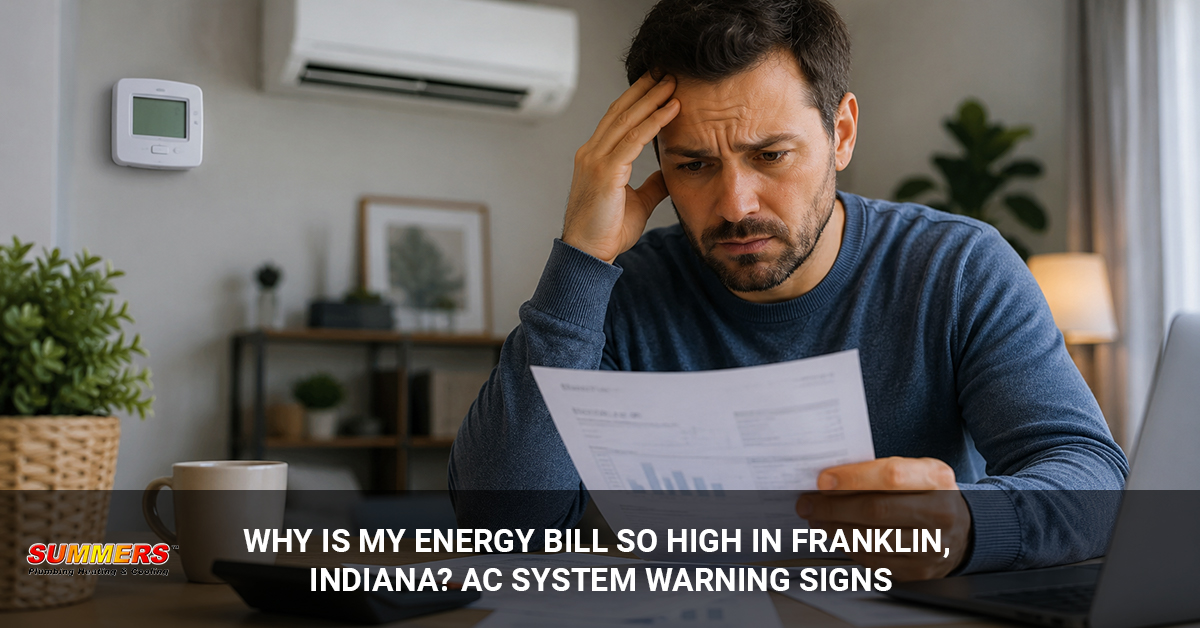
Why Is My Energy Bill So High in Franklin, Indiana? AC System Warning Signs
If your energy bill has increased significantly, your air conditioner may be using more electricity than necessary because of airflow problems, poor maintenance, refrigerant issues, aging equipment, or declining system efficiency.
Many homeowners in Franklin notice their utility bills climbing during the summer and immediately assume it’s caused by hotter weather. While outdoor temperatures can certainly affect energy usage, a sudden or unusually large increase often points to a problem with the HVAC system itself.
Your air conditioner is one of the biggest energy users in your home. When it isn’t operating efficiently, it must run longer and work harder to keep your home comfortable. That extra workload increases electricity consumption and drives up monthly utility costs.
The good news is that rising energy bills often act as an early warning sign. In many cases, your AC starts showing efficiency problems long before it completely breaks down. Identifying those warning signs early can help you avoid costly repairs, improve comfort, and lower operating costs.
In this guide, you’ll learn the most common reasons energy bills increase, how your air conditioner may be contributing to the problem, and when it’s time to schedule professional HVAC service in Franklin, Indiana.
For many homeowners, solving the issue early can lead to lower utility bills, better cooling performance, and a longer-lasting HVAC system.
Why Is My Energy Bill So High?
A high energy bill is often a sign that your air conditioner is using more electricity than it should to keep your home cool.
When an AC system loses efficiency, it has to run longer and work harder to maintain the temperature you’ve set on the thermostat. Even minor issues can gradually increase energy consumption and lead to noticeably higher utility bills over time.
Some of the most common causes include:
- Dirty air filters
- Aging HVAC equipment
- Refrigerant problems
- Poor airflow
- Leaky ductwork
- Thermostat issues
- Lack of routine maintenance
Many of these problems develop slowly, which is why homeowners often don’t notice anything is wrong until they receive a higher-than-normal energy bill.
If your utility costs continue rising without a clear explanation, your air conditioner may be signaling that it needs attention.
Your AC System May Be Working Harder Than Necessary
An overworked air conditioner often consumes more energy while providing less comfort.
Your AC is designed to cool your home efficiently by cycling on and off throughout the day. When something interferes with that process, the system may run longer than normal and use significantly more electricity.
Longer Cooling Cycles
Long cooling cycles are often one of the first signs of declining efficiency.
If your AC seems to run constantly or takes much longer to cool your home than it used to, the system may be struggling to remove heat effectively. This can be caused by airflow restrictions, refrigerant issues, dirty components, or aging equipment.
Increased Energy Consumption
The longer your air conditioner runs, the more energy it consumes.
Even a small drop in efficiency can increase monthly electricity usage. Over time, this extra energy consumption can have a noticeable impact on your utility bills.
Reduced System Efficiency
As HVAC components age and wear down, overall system performance declines.
Dirty coils, worn motors, refrigerant problems, and restricted airflow can all reduce efficiency. When the system becomes less effective at removing heat, it must work harder to achieve the same level of comfort.
This increased workload not only raises energy costs but can also place additional strain on critical HVAC components, potentially leading to more repairs in the future.
Dirty Air Filters Can Increase Energy Bills
A dirty air filter is one of the most common and easiest-to-fix causes of high energy bills.
Your air filter captures dust, pollen, pet hair, and other airborne particles before they enter the HVAC system. Over time, these particles build up and restrict airflow. When that happens, your air conditioner has to work harder and run longer to cool your home.
Even a simple clogged filter can reduce efficiency and increase monthly cooling costs. Improving overall indoor air quality can also help reduce airborne contaminants that contribute to filter buildup and HVAC strain.
How Air Filters Affect Airflow
Proper airflow is essential for efficient AC performance.
Your air conditioner is designed to move a specific amount of air through the system. When the filter becomes clogged, airflow decreases and the system struggles to distribute conditioned air throughout your home.
Restricted airflow can also place additional stress on components such as the blower motor and evaporator coil.
Why Restricted Airflow Increases Costs
When airflow is restricted, your AC must operate longer to reach the desired temperature.
The longer the system runs, the more electricity it consumes. What starts as a simple dirty filter can eventually lead to higher utility bills, reduced comfort, and increased wear on HVAC components.
In some cases, severe airflow restrictions can even contribute to frozen evaporator coils and additional repair needs.
How Often Filters Should Be Replaced
Most homeowners should replace their air filters every 1 to 3 months.
However, replacement frequency can vary based on several factors, including:
- Number of occupants in the home
- Presence of pets
- Indoor air quality conditions
- Amount of AC usage
- Local dust and pollen levels
Checking the filter regularly and replacing it when it becomes dirty is one of the simplest ways to improve efficiency, reduce energy costs, and help your AC operate at peak performance. Installing whole-home HEPA filters can further improve filtration and support long-term HVAC efficiency.
Refrigerant Problems Can Reduce Efficiency
Refrigerant problems can significantly increase energy bills because your AC must work much harder to cool your home.
Refrigerant is the substance that absorbs heat from indoor air and carries it outside. When refrigerant levels are too low, the cooling process becomes less effective. As a result, your air conditioner runs longer, uses more electricity, and struggles to maintain comfortable indoor temperatures.
If left unaddressed, refrigerant issues can reduce efficiency, increase wear on the system, and lead to more expensive repairs.
Low Refrigerant Levels
Low refrigerant levels reduce your AC’s ability to remove heat from your home.
When there isn’t enough refrigerant circulating through the system, cooling performance drops and the air conditioner may run almost continuously without reaching the temperature set on the thermostat.
This extra runtime increases energy consumption and can cause utility bills to climb.
Refrigerant Leaks
Refrigerant does not get used up during normal operation.
If refrigerant levels are low, there is usually a leak somewhere in the system. Leaks can develop in coils, refrigerant lines, or other components and often worsen over time if not repaired.
Simply adding refrigerant may provide temporary relief, but it will not solve the problem unless the leak is properly located and repaired.
Signs of Refrigerant Problems
Several warning signs may indicate low refrigerant levels or a refrigerant leak.
Common symptoms include:
- Warm air coming from vents
- Ice on refrigerant lines
- Longer cooling cycles
- Hissing or bubbling sounds
- Rising energy bills
If you notice any of these signs, professional HVAC service is recommended. Prompt repairs can restore cooling performance, improve efficiency, and help prevent damage to important components such as the compressor.
Dirty Evaporator and Condenser Coils
Dirty evaporator and condenser coils can make your air conditioner work harder, run longer, and use more electricity.
Your AC system relies on these coils to transfer heat efficiently. The evaporator coil absorbs heat from inside your home, while the condenser coil releases that heat outdoors. When dirt and debris build up on either coil, the cooling process becomes less effective.
As efficiency drops, your system must work harder to maintain comfortable indoor temperatures, which can lead to higher energy bills.
How Dirty Coils Affect Performance
Dirty coils reduce your AC’s ability to transfer heat.
Over time, dust, dirt, and other contaminants form a layer on the coil surfaces. This buildup acts like insulation, preventing heat from moving efficiently through the system.
As a result, the air conditioner may:
- Run longer than normal
- Struggle to cool the home
- Deliver uneven temperatures
- Experience increased wear on components
Increased Cooling Costs
When cooling efficiency decreases, energy usage increases.
Because the system must run longer to achieve the same level of comfort, electricity consumption rises. Many homeowners notice higher utility bills long before they realize dirty coils are affecting performance.
Ignoring coil maintenance can also increase strain on major HVAC components, potentially leading to additional repair costs.
Benefits of Professional Coil Cleaning
Professional coil cleaning helps restore proper system performance and efficiency.
Benefits often include:
- Improved cooling efficiency
- Better indoor comfort
- Lower energy consumption
- Reduced strain on HVAC components
- More consistent cooling performance
Regular maintenance and coil cleaning can help your AC operate more efficiently, extend equipment life, and keep cooling costs under control throughout the summer.
Leaky Ductwork Can Waste Conditioned Air
Leaky ductwork can increase energy bills by allowing cooled air to escape before it reaches the rooms in your home.
Your duct system is responsible for delivering conditioned air throughout the house. When ducts develop leaks, gaps, or loose connections, a portion of that cooled air is lost along the way. Even if your air conditioner is operating properly, your home may still feel less comfortable because the air isn’t reaching its intended destination.
This air loss forces the AC to run longer and consume more energy.
Air Loss Through Duct Leaks
Leaking ducts can waste a surprising amount of conditioned air.
Instead of flowing into your living spaces, cooled air may escape into:
- Attics
- Crawl spaces
- Basements
- Wall cavities
- Unconditioned storage areas
As more air escapes, the system must work harder to maintain the temperature set on your thermostat.
Uneven Cooling
Uneven temperatures throughout the home are a common sign of ductwork problems.
Rooms farther away from the HVAC system may feel warmer than others because less conditioned air is reaching those areas. Some homeowners notice persistent hot spots even when the AC runs continuously.
Higher Utility Bills
When cooled air is lost through leaking ducts, your air conditioner must compensate by running longer.
This additional runtime increases energy consumption and raises monthly utility costs. Over time, duct leaks can significantly reduce system efficiency and place extra strain on HVAC components.
A professional duct inspection can identify hidden leaks and airflow problems, helping improve comfort, increase efficiency, and lower cooling costs. Professional duct sealing can help eliminate air loss and improve the overall efficiency of your HVAC system.
Thermostat Problems Can Increase Cooling Costs
Thermostat problems can cause your air conditioner to run longer than necessary, leading to higher energy bills.
The thermostat controls when your AC turns on and off. If it isn’t working correctly, the system may cool the home longer than needed or operate at inefficient settings. Even small thermostat issues can increase energy consumption over time.
Incorrect Temperature Settings
Setting the thermostat lower than necessary can significantly increase cooling costs.
Many homeowners lower the temperature hoping to cool the house faster, but an air conditioner cools at the same rate regardless of the setting. Lower settings simply cause the system to run longer, using more electricity in the process.
Choosing a reasonable and consistent temperature can help reduce unnecessary energy usage.
Calibration Issues
A poorly calibrated thermostat may not accurately measure indoor temperatures.
If the thermostat thinks your home is warmer than it actually is, it may continue calling for cooling even after the desired temperature has been reached. This can increase runtime, reduce efficiency, and raise monthly utility bills.
Signs of a calibration issue may include:
- Inconsistent temperatures
- Frequent cycling
- Rooms feeling warmer or cooler than the thermostat reading
Smart Thermostat Programming Errors
Incorrect smart thermostat settings can increase energy costs without you realizing it.
Schedules, vacation settings, temperature overrides, and programming errors may cause the AC to run when it isn’t needed. Reviewing your thermostat settings regularly can help ensure the system is operating as efficiently as possible.
A properly functioning thermostat helps maintain comfort, improve efficiency, and keep cooling costs under control throughout the summer.
Aging AC Systems Often Cost More to Operate
Older air conditioners typically consume more energy and cost more to operate than newer systems.
As an AC system ages, normal wear and tear affect its ability to cool efficiently. Components become less effective, cooling performance declines, and the system often has to work harder to maintain comfortable indoor temperatures.
This extra workload can lead to higher utility bills and more frequent service calls.
Declining Efficiency
Older systems generally require more electricity to deliver the same level of cooling.
Years of operation can reduce the efficiency of key components such as the compressor, coils, motors, and blower assembly. Even if the system still runs, it may no longer perform as efficiently as it did when it was new.
As efficiency declines, energy consumption increases.
Increased Repair Needs
Frequent repairs are often a sign that an AC system is nearing the end of its useful life.
While occasional repairs are normal, repeated breakdowns can indicate that multiple components are wearing out. Repair costs can add up quickly, especially when older equipment requires hard-to-find replacement parts.
Common warning signs include:
- Frequent service calls
- Rising repair expenses
- Reduced reliability
- Longer cooling cycles
- Inconsistent temperatures
When Replacement May Be Worth Considering
Replacing an older air conditioner can sometimes be more cost-effective than continuing to repair it.
Many homeowners begin considering replacement when:
- The system is more than 15 years old
- Energy bills continue to increase
- Repairs become frequent
- Cooling performance declines
Newer air conditioning systems are generally more energy-efficient and can provide improved comfort, lower operating costs, and greater reliability. Homeowners considering an upgrade can learn more about AC installation in Franklin and the benefits of modern energy-efficient systems.
If your current system is showing multiple signs of age, a professional HVAC evaluation can help determine whether replacement is the better long-term investment.
Common AC Warning Signs That Often Accompany High Energy Bills
High energy bills are often a symptom of a larger HVAC problem.
When an air conditioner loses efficiency, it usually shows other warning signs before a major breakdown occurs. Paying attention to these symptoms can help you identify problems early, improve system performance, and avoid costly repairs.
Weak Airflow
Weak airflow often indicates an issue with your HVAC system’s ability to circulate air.
Common causes include:
- Dirty air filters
- Blower motor problems
- Blocked vents
- Leaky ductwork
If certain rooms feel stuffy or take longer to cool, restricted airflow may be contributing to both comfort issues and higher energy costs.
Warm Air From Vents
Warm air coming from your vents is a sign that the AC is not cooling efficiently.
This problem can be caused by:
- Low refrigerant levels
- Dirty coils
- Compressor issues
- Thermostat problems
When the system struggles to cool the air properly, it often runs longer and uses more electricity.
Uneven Temperatures
Hot and cold spots throughout the home can indicate airflow or ductwork issues.
If some rooms feel comfortable while others remain warm, your system may be losing conditioned air or struggling to distribute it evenly. This can force the AC to work harder and increase energy consumption.
Strange Noises
Unusual sounds often signal developing mechanical problems.
Common noises include:
- Grinding
- Buzzing
- Squealing
- Rattling
- Banging
Ignoring these sounds can allow small issues to become larger and more expensive repairs.
Frequent Cycling
Frequent cycling, also known as short cycling, occurs when the AC turns on and off repeatedly.
Short cycling can be caused by thermostat problems, airflow restrictions, refrigerant issues, or improperly sized equipment. It increases energy usage, places extra strain on components, and can shorten system lifespan.
Frozen Coils
Frozen evaporator coils are a common sign of airflow or refrigerant problems.
Ice buildup typically occurs when the coil becomes too cold due to restricted airflow or low refrigerant levels. A frozen system often struggles to cool the home efficiently and may cause energy bills to rise significantly.
If you notice one or more of these warning signs along with increasing utility costs, a professional HVAC inspection can help identify the underlying problem and restore efficient system performance.
How Seasonal Heat Affects Energy Usage
Higher summer temperatures naturally cause energy usage to increase.
As outdoor temperatures rise, your air conditioner must remove more heat from your home to maintain a comfortable indoor temperature. This means the system runs longer and uses more electricity throughout the day.
During periods of extreme heat, it’s normal to see some increase in your utility bills. However, your AC should still cool your home efficiently. If energy costs suddenly spike or increase far more than expected, your system may be experiencing an efficiency problem.
Common reasons summer heat can expose HVAC issues include:
- Longer cooling cycles
- Increased strain on components
- Reduced performance from aging equipment
- Existing airflow restrictions becoming more noticeable
- Refrigerant or maintenance issues affecting efficiency
A system that is properly maintained is generally better equipped to handle heavy summer workloads while keeping energy costs under control.
Ways to Lower Your Cooling Costs
Reducing cooling costs often starts with improving your AC system’s efficiency.
Small maintenance tasks and energy-saving habits can make a noticeable difference in both comfort and monthly utility bills.
Replace Air Filters Regularly
Clean air filters help maintain proper airflow throughout the system.
Replacing dirty filters allows your AC to operate more efficiently, reduces strain on components, and helps lower energy consumption.
Schedule Annual HVAC Maintenance
Annual maintenance is one of the most effective ways to improve system efficiency.
Professional tune-ups help identify developing problems, clean important components, verify proper operation, and keep the system running at peak performance.
Seal Air Leaks
Air leaks allow conditioned air to escape and force your AC to work harder.
Inspecting and sealing gaps around:
- Windows
- Doors
- Ductwork
- Attic access points
can help reduce energy waste and improve indoor comfort.
Use a Programmable Thermostat
A programmable or smart thermostat can help reduce unnecessary cooling cycles.
Adjusting temperatures automatically when you’re sleeping or away from home helps lower energy usage without sacrificing comfort.
Keep the Outdoor Unit Clean
The outdoor condenser requires adequate airflow to operate efficiently.
Regularly remove leaves, grass clippings, weeds, and debris from around the unit. Keeping the area clear helps improve heat transfer, reduce system strain, and support efficient cooling performance.
By combining these simple strategies with routine HVAC maintenance, many homeowners can reduce cooling costs, improve comfort, and extend the life of their air conditioning system.
When to Call an HVAC Professional in Franklin, Indiana
You should contact an HVAC professional if your energy bills keep increasing and you can’t identify a clear reason why.
While some causes of high energy usage are easy to fix, others involve hidden HVAC problems that require professional diagnosis. Issues such as refrigerant leaks, airflow restrictions, failing components, or declining system efficiency can continue driving up utility costs if left unresolved.
Professional service is recommended if:
- Cooling performance declines
- Energy bills continue to increase
- Refrigerant issues are suspected
- Airflow problems exist
- System efficiency worsens
- The AC runs constantly
These symptoms often indicate an underlying problem that is reducing efficiency and increasing operating costs. A professional HVAC inspection can identify the source of the issue and recommend the most cost-effective solution for restoring performance.
Frequently Asked Questions
Why Did My Electric Bill Suddenly Increase?
A sudden increase in your electric bill is often caused by increased AC usage, extreme outdoor temperatures, HVAC efficiency problems, or a system that is running longer than normal.
If the increase is larger than expected, it’s worth having your HVAC system inspected for underlying issues.
Can a Dirty AC Filter Raise Energy Bills?
Yes, a dirty air filter can increase energy bills.
When the filter becomes clogged, airflow is restricted and the system must work harder to cool your home. This additional workload increases electricity consumption and can reduce overall efficiency.
Does Low Refrigerant Increase Energy Costs?
Yes, low refrigerant levels often lead to higher energy usage.
An AC system with insufficient refrigerant must run longer to remove heat from your home, which increases electricity consumption and places extra strain on HVAC components.
How Do I Know If My AC Is Wasting Energy?
Several warning signs may indicate that your AC is operating inefficiently.
Common signs include:
- Rising utility bills
- Long cooling cycles
- Uneven temperatures
- Weak airflow
- Reduced cooling performance
- Constant system operation
If these symptoms occur together, your system may benefit from a professional inspection.
Should I Replace an Older AC to Lower Energy Bills?
In some cases, replacing an older AC can significantly reduce cooling costs.
If your system is more than 15 years old, requires frequent repairs, or struggles to cool your home efficiently, upgrading to a newer system may provide lower energy bills and improved comfort.
How Often Should AC Maintenance Be Performed?
Most HVAC professionals recommend annual maintenance.
Scheduling a tune-up before the cooling season begins helps identify developing problems, improve efficiency, and reduce the risk of costly breakdowns during the summer.
Final Thoughts
If your energy bill is unusually high in Franklin, Indiana, your air conditioner may be telling you that something isn’t working as efficiently as it should.
Problems such as dirty air filters, refrigerant leaks, airflow restrictions, ductwork issues, thermostat problems, and aging equipment can all increase energy consumption and force your AC to work harder than necessary.
The sooner these issues are identified, the easier they are often to correct. Addressing efficiency problems early can help lower utility costs, improve indoor comfort, reduce wear on your HVAC system, and prevent larger repairs down the road.
If your cooling costs continue to rise despite normal usage, a professional HVAC inspection can help uncover the cause and restore efficient, reliable performance.