

AC Replacement vs Repair in Franklin, Indiana Cost Comparison
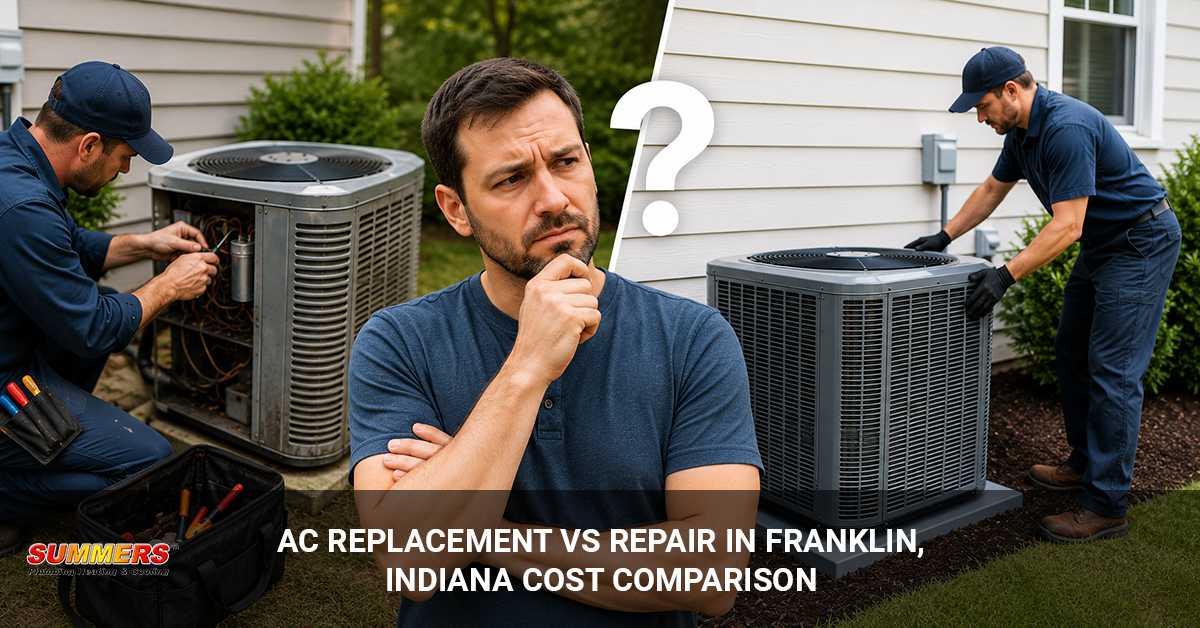
AC repair is usually the better choice for newer systems with minor problems, while AC replacement often saves more money when an older unit requires frequent or expensive repairs.
Many Franklin homeowners face this decision when their air conditioner stops cooling properly, runs constantly, or starts driving up energy bills. At first glance, repairing the system may seem like the most affordable option. However, repeated repairs can quickly add up and may not solve underlying efficiency or reliability issues.
The right choice depends on several factors, including the age of your system, the cost of the repair, how often the unit breaks down, and how much you spend on monthly energy bills. In some cases, a simple repair can add years of life to your air conditioner. In others, replacing the system can lower operating costs, improve comfort, and prevent future breakdowns.
In this guide, you’ll learn the typical costs of AC repair and AC replacement in Franklin, Indiana, the pros and cons of each option, and the signs that indicate when replacing your air conditioner may be the smarter long-term investment.
AC Repair vs AC Replacement: Understanding the Difference
The main difference between AC repair and AC replacement is that a repair fixes specific problems within your existing system, while a replacement installs a new cooling system altogether.
Knowing the difference can help you make a more informed decision when your air conditioner develops problems. In many cases, a repair can restore performance and extend the life of the system. However, if the unit is older or experiencing major failures, replacement may provide better long-term value.
What Is Considered an AC Repair?
An AC repair involves fixing or replacing individual components while keeping the current air conditioning system in operation.
Repairs are typically recommended when the problem is isolated and the system still has several years of useful life remaining. The goal is to restore cooling performance without the expense of installing new equipment.
Common AC repairs include:
- Replacing a faulty capacitor
- Repairing refrigerant leaks
- Fixing damaged electrical connections
- Replacing a fan motor
- Installing a new thermostat
- Cleaning or repairing evaporator coils
- Replacing contactors or relays
- Clearing clogged condensate drain lines
Most repairs can be completed within a single service visit and cost significantly less than a full system replacement. Professional emergency AC repair in Franklin can often restore cooling performance quickly when unexpected breakdowns occur.
What Is Considered an AC Replacement?
An AC replacement involves removing the existing air conditioner and installing a new cooling system.
Replacement is often recommended when the current system is nearing the end of its lifespan, requires frequent repairs, or has suffered a major component failure. A new system can improve energy efficiency, reduce repair costs, and provide more reliable cooling.
A typical AC replacement may include:
- A new outdoor condenser unit
- A new indoor evaporator coil
- Updated refrigerant components
- New electrical connections
- A programmable or smart thermostat
- System testing and performance calibration
Because modern air conditioners are designed to operate more efficiently than older models, replacement can also help lower monthly energy bills and improve indoor comfort throughout your home. Homeowners considering a system upgrade can learn more about AC installation in Franklin and what to expect during the replacement process.
Average AC Repair Costs in Franklin, Indiana
AC repair costs in Franklin, Indiana, typically range from a few hundred dollars for minor fixes to several thousand dollars for major component repairs.
The total cost depends on the type of repair, the age of the system, the availability of parts, and the amount of labor required. While many common repairs are affordable, major failures involving the compressor or coils can significantly increase the cost.
Typical Air Conditioner Repair Costs
The table below shows common AC repairs and their typical cost ranges.
| Repair Type | Estimated Cost Range |
| Capacitor Replacement | $100–$400 |
| Thermostat Repair or Replacement | $100–$350 |
| Refrigerant Leak Repair | $200–$1,500 |
| Fan Motor Replacement | $300–$900 |
| Condenser Coil Repair | $500–$2,000 |
| Compressor Repair or Replacement | $800–$2,300 |
Smaller repairs, such as replacing a capacitor or thermostat, are often worth fixing because they can restore normal operation at a relatively low cost. However, expensive repairs on an aging system may make replacement a more practical long-term solution.
Factors That Affect AC Repair Costs
Several factors determine how much you’ll pay for air conditioner repairs.
System Age
Older air conditioners often cost more to repair because replacement parts may be difficult to find or no longer widely available. In some cases, manufacturers stop producing parts for older models, which can increase both parts and labor costs.
Refrigerant Type
The type of refrigerant your system uses can have a major impact on repair costs. Older units that rely on discontinued refrigerants are often more expensive to service because the refrigerant is harder to obtain and costs more than modern alternatives.
Severity of Damage
Minor issues such as loose wiring, clogged drain lines, or faulty capacitors are usually less expensive to fix. Major problems involving compressors, condenser coils, or multiple system components typically require more labor and higher-cost parts.
Emergency Service Calls
Repairs performed during evenings, weekends, holidays, or extreme weather conditions often come with additional service fees. Scheduling repairs during normal business hours can sometimes help reduce costs.
Labor Requirements
Some repairs are straightforward and can be completed quickly. Others require extensive troubleshooting, refrigerant handling, or partial system disassembly, which can increase labor charges.
Warranty Coverage
If your air conditioner is still under a manufacturer or parts warranty, you may only need to pay for labor. Warranty coverage can significantly reduce out-of-pocket repair expenses.
Understanding these cost factors can help homeowners evaluate whether repairing an existing system makes financial sense or if investing in a new air conditioner would provide better value.
Average AC Replacement Costs in Franklin, Indiana
AC replacement costs in Franklin, Indiana typically range from $4,500 to $15,000 or more, depending on the size of the home, the type of system installed, and its energy efficiency rating.
Although replacing an air conditioner requires a larger upfront investment than a repair, a new system can reduce energy costs, improve indoor comfort, and minimize the risk of unexpected breakdowns. For homeowners with older or unreliable equipment, replacement often provides better long-term value.
Typical AC Replacement Cost Ranges
The cost of a new air conditioning system varies based on equipment efficiency, cooling capacity, and installation requirements.
| System Type | Estimated Cost Range |
| Entry-Level Central AC | $4,500–$7,000 |
| Mid-Efficiency System | $6,500–$10,000 |
| High-Efficiency System | $8,000–$15,000+ |
These estimates generally include both equipment and professional installation. However, the final price can vary depending on your home’s specific cooling needs and whether additional upgrades are required.
What Is Included in AC Replacement?
A professional AC replacement involves much more than simply swapping out the outdoor unit. Proper installation is essential for system performance, efficiency, and longevity.
Most AC replacement projects include:
- Removal and disposal of old equipment
- Installation of a new outdoor condenser unit
- Installation of a new indoor evaporator coil
- Refrigerant charging and pressure testing
- Electrical connections and safety checks
- Thermostat installation and setup
- System calibration and performance testing
- Manufacturer warranty registration
Some installations may also require ductwork modifications, electrical upgrades, drain line improvements, or airflow adjustments to ensure the new system operates efficiently.
Factors That Affect AC Replacement Costs
Several factors can influence the total cost of replacing an air conditioner.
Home Size
Larger homes typically require higher-capacity systems to cool the space effectively. As system size increases, equipment and installation costs usually increase as well.
Energy Efficiency Rating
High-efficiency air conditioners often cost more upfront but can reduce monthly energy bills. Many homeowners choose higher-efficiency models to lower long-term operating costs.
System Capacity
Air conditioners are sized based on the cooling demands of the home. Installing a properly sized system is critical for comfort, efficiency, and equipment lifespan.
Installation Complexity
Homes with difficult equipment access, outdated electrical systems, or ductwork issues may require additional labor and materials, increasing installation costs.
Additional Upgrades
Adding a smart thermostat, indoor air quality equipment, zoning controls, or ductwork improvements can increase the overall project cost while enhancing system performance.
While AC replacement requires a greater initial investment, many homeowners find that improved efficiency, lower repair expenses, and increased reliability help offset the cost over time.
AC Repair vs Replacement Cost Comparison
AC repair is usually the more affordable short-term option, while AC replacement often provides greater long-term value through lower operating costs and improved reliability.
The best choice depends on the age of your system, the cost of the repair, and how long you expect the air conditioner to continue operating efficiently. A low-cost repair on a newer unit may be a smart investment. However, repeatedly repairing an older system can become more expensive than replacing it.
AC Repair vs AC Replacement: Side-by-Side Comparison
| Factor | AC Repair | AC Replacement |
| Upfront Cost | Lower | Higher |
| Monthly Energy Bills | Usually Similar | Often Lower |
| Reliability | May Decline Over Time | Typically High |
| Warranty Coverage | Limited | New Manufacturer Warranty |
| Lifespan | Extends Existing System | Provides New System Life |
| Future Repair Risk | Higher | Lower |
Upfront Cost
AC repair generally costs less upfront than a full replacement.
Most repairs involve replacing specific components, making them a more budget-friendly solution in the short term. Replacement requires purchasing new equipment and paying for installation, resulting in a larger initial investment.
Monthly Energy Bills
AC replacement often reduces monthly energy costs.
Newer air conditioners are designed to operate more efficiently than older systems. As a result, homeowners may see lower utility bills, especially during Franklin’s hottest summer months.
Reliability
A new air conditioner is typically more reliable than an older repaired system.
While repairs can restore performance, they cannot reverse years of wear and tear. Older systems are more likely to experience additional breakdowns, even after a successful repair.
Warranty Coverage
New systems usually come with a manufacturer’s warranty protection.
Most repairs include limited warranties on parts or labor. In contrast, a replacement system often includes extensive warranty coverage that can help reduce future repair expenses.
Lifespan
Repairs can extend the life of an existing system, but replacement provides an entirely new lifespan.
A successful repair may add several years of service to a well-maintained unit. However, replacing the system resets the clock and can provide 10 to 15 years or more of dependable cooling.
Future Repair Risk
Older systems generally carry a higher risk of future repairs.
As air conditioners age, multiple components begin to wear out. Even if one issue is repaired, another problem may develop shortly afterward. A new system significantly reduces the likelihood of major repair costs in the near future.
Which Option Saves More Money?
Repairing an air conditioner usually makes the most financial sense when the system is relatively new, the repair cost is reasonable, and the unit has a history of reliable performance.
Replacing the system is often the better investment when the air conditioner is more than 10 to 15 years old, requires frequent repairs, or has experienced a major component failure. Although replacement costs more upfront, it can lower energy bills, reduce repair expenses, and provide greater peace of mind over the long term.
When AC Repair Makes Sense
AC repair makes sense when the system is relatively new, the problem is minor, and the cost of the repair is reasonable.
In many cases, repairing an air conditioner is the most cost-effective option. If your AC is less than 10 years old and has been properly maintained, a repair can often restore performance and add several more years to the system’s lifespan.
Repair is usually worth considering when:
- The system is less than 10 years old
- The repair involves a minor component, such as a capacitor or thermostat
- The unit has a good maintenance history
- Energy bills have remained relatively stable
- The repair cost is significantly lower than replacement
- The system has not required frequent repairs in the past
For many Franklin homeowners, a well-timed repair can delay the need for replacement and keep the home comfortable without a major investment.
When AC Replacement Makes Sense
AC replacement makes sense when the system is old, repair costs are high, or performance continues to decline.
While repairs can solve many problems, there comes a point when replacing the system provides better value. Older air conditioners often become less efficient and more prone to breakdowns, leading to higher operating and repair costs.
Replacement is often the better option when:
- The system is 12 to 15 years old or older
- A compressor, coil, or other major component has failed
- Repairs are becoming more frequent
- Cooling performance has noticeably declined
- Energy bills continue to increase
- The system uses outdated refrigerant
- Repair costs are approaching the cost of replacement
A new high-efficiency air conditioner can improve comfort, lower utility bills, and reduce the risk of unexpected breakdowns.
The $5,000 Rule for HVAC Decisions
The $5,000 Rule is a simple guideline that can help determine whether repairing or replacing an air conditioner makes more financial sense.
To use the rule, multiply the age of the system by the estimated repair cost.
Examples:
- 12-year-old AC × $500 repair = $6,000
- 15-year-old AC × $700 repair = $10,500
If the result is more than $5,000, replacement may be worth considering. If the result is less than $5,000, repairing the system may still be a reasonable option.
The $5,000 Rule is not a strict formula, but it can provide a useful starting point when evaluating a major repair. Other factors, such as energy efficiency, repair history, overall system condition, and future plans for the home, should also be considered before making a final decision.
How Energy Efficiency Affects Long-Term Costs
Energy efficiency directly affects how much you spend to cool your home over time.
Older air conditioners typically use more electricity to produce the same amount of cooling as newer systems. As equipment ages, wear and tear can further reduce efficiency, causing the system to run longer and increasing monthly utility bills.
Modern air conditioners are designed to deliver better performance while using less energy. Following a seasonal HVAC summer prep plan can also help maintain efficiency and reduce unnecessary energy consumption.
Although a high-efficiency system may cost more upfront, the lower operating costs can help offset that investment over the life of the equipment.
Benefits of High-Efficiency Systems
High-efficiency air conditioners can lower energy costs, improve comfort, and provide more consistent performance throughout your home.
Some of the key benefits include:
- Lower monthly utility bills
- More consistent indoor temperatures
- Improved humidity control
- Quieter operation
- Reduced environmental impact
- Less strain on system components
- Better overall comfort during extreme weather
For homeowners in Franklin, Indiana, energy efficiency can make a noticeable difference during the hot and humid summer months. A high-efficiency air conditioner typically cools the home more effectively while using less electricity, helping reduce long-term operating costs.
Over time, the savings on energy bills combined with fewer performance issues can make a newer, high-efficiency system a worthwhile investment.
Signs Your Air Conditioner Should Be Replaced
Frequent repairs, rising energy bills, and declining performance are some of the clearest signs that it may be time to replace your air conditioner.
While many AC problems can be repaired, older systems often reach a point where replacement becomes the more practical and cost-effective solution. Recognizing the warning signs early can help you avoid unexpected breakdowns and costly emergency repairs.
Frequent Breakdowns
Frequent breakdowns are often a sign that your air conditioner is nearing the end of its lifespan.
If you’re scheduling repair calls every cooling season, the costs can quickly add up. Replacing the system may provide better value than continuing to invest in recurring repairs.
Rising Energy Bills
Increasing energy bills can indicate that your air conditioner is losing efficiency.
As systems age, they often have to work harder and run longer to maintain the desired temperature. This extra energy use can significantly increase monthly cooling costs.
Uneven Cooling
Uneven cooling can be a sign that your air conditioner is no longer operating efficiently.
If some rooms feel comfortable while others remain warm, the system may be struggling to distribute air properly or keep up with your home’s cooling demands.
Constant Operation
An air conditioner that runs almost continuously may be losing its ability to cool efficiently.
While longer run times are common during extremely hot weather, a system that rarely shuts off could be undersized, worn out, or experiencing performance issues.
Major Component Failure
Major component failures often make replacement a more attractive option than repair.
Problems involving the compressor, condenser coil, or evaporator coil can be expensive to fix, especially on older systems. In many cases, investing that money in a new, more efficient air conditioner provides greater long-term value and reliability.
Financing Options for AC Replacement
Financing can make AC replacement more affordable by allowing homeowners to spread the cost over time instead of paying the full amount upfront.
A new air conditioner is a significant investment, but many homeowners choose financing to make the purchase fit their budget. Financing can also help you replace a failing system sooner rather than delaying replacement and facing additional repair costs.
Common financing options include:
- Monthly payment plans
- Manufacturer financing promotions
- Seasonal rebates
- Energy-efficiency incentives
Depending on the program, financing may offer low monthly payments, promotional interest rates, or special savings opportunities. Combined with the lower operating costs of a high-efficiency system, financing can make upgrading your air conditioner more manageable.
How to Decide Between Repairing and Replacing Your AC
The best way to decide between repairing and replacing your AC is to compare the system’s age, repair costs, efficiency, and overall condition.
Every situation is different, which is why it’s important to look beyond the immediate repair bill. In some cases, a repair can provide years of additional service. In others, replacement may save more money over the long term.
Before making a decision, ask yourself:
- How old is the current system?
- How much will the repair cost?
- Have there been multiple repairs recently?
- Are energy bills increasing?
- Will a new system improve comfort and efficiency?
- How long do you plan to stay in the home?
If your air conditioner is relatively new and the repair is minor, fixing the system is often the most cost-effective choice. However, if the unit is older, requires frequent repairs, or struggles to cool your home efficiently, replacement may offer better value.
A professional HVAC evaluation can help you make an informed decision by providing accurate repair estimates, assessing the condition of the system, and comparing the long-term costs of repair versus replacement.
Frequently Asked Questions
Is it cheaper to repair or replace an AC unit?
Repairing an AC unit is usually cheaper upfront, but replacement may save more money over time.
If the system is relatively new and the repair is minor, fixing it is often the most cost-effective option. However, if the unit is older, requires frequent repairs, or has a major component failure, replacement can reduce future repair costs and improve energy efficiency.
At what age should an air conditioner be replaced?
Most air conditioners should be considered for replacement when they reach 12 to 15 years of age.
While some systems last longer with proper maintenance, older units often become less efficient and more prone to breakdowns. As repair costs increase, replacement may provide better long-term value.
Can a new AC system lower energy bills?
Yes, a new AC system can lower energy bills by operating more efficiently than older equipment.
Modern air conditioners use less electricity to produce the same amount of cooling. Homeowners often see noticeable savings on utility costs after upgrading from an aging system.
Should I replace my AC if the compressor fails?
A compressor failure may justify replacement, especially if the system is older.
Compressor repairs or replacements can be expensive. If the air conditioner is approaching the end of its expected lifespan, investing in a new system may be a better long-term solution than repairing a major component.
Final Thoughts
AC repair is often the best choice for newer systems with minor issues, while AC replacement usually offers better long-term value for older units with declining performance or frequent breakdowns.
The right decision depends on several factors, including the age of the system, repair costs, energy efficiency, and future reliability. Looking beyond the immediate expense can help you avoid ongoing repair bills and unexpected cooling problems.
If you’re unsure whether to repair or replace your air conditioner, a professional HVAC evaluation can provide the information needed to make a confident decision. By comparing the condition of your system, estimated repair costs, and potential energy savings, you can choose the option that delivers the best value for your home and budget.