

AC Capacitor Failure: Symptoms Every Homeowner Should Know
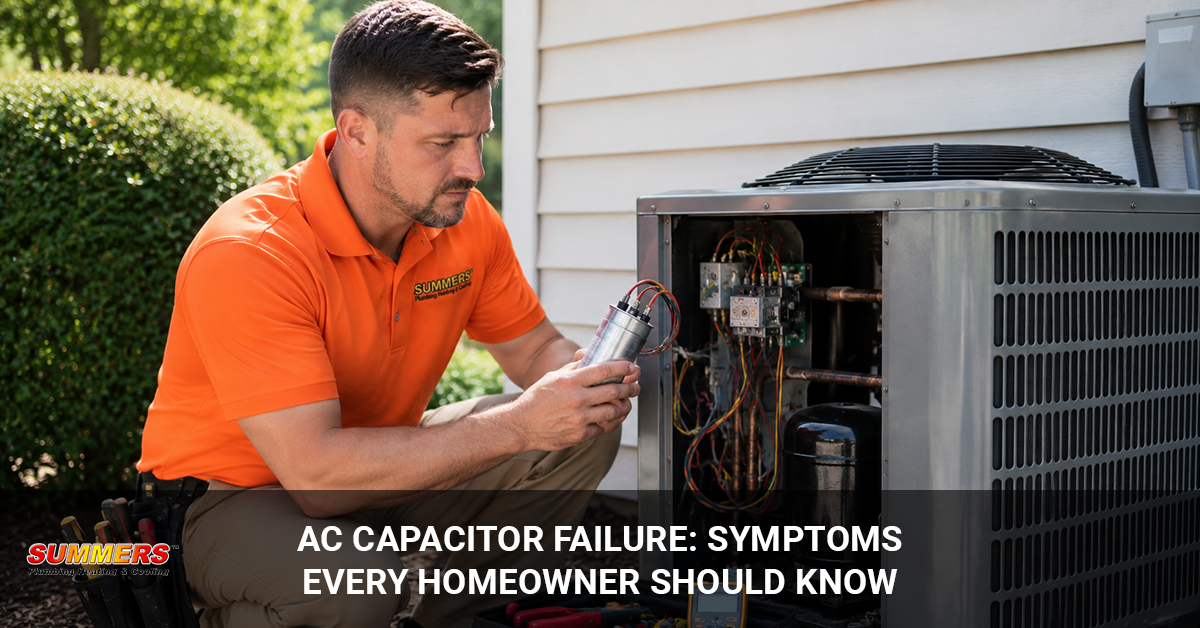
A failing AC capacitor can prevent your air conditioner from starting, reduce cooling performance, or cause the system to stop working altogether. Although the capacitor is a small part of your HVAC system, it’s essential for starting and running the compressor and fan motor.
When a capacitor begins to fail, your air conditioner will often give you warning signs before it stops working completely. You might notice humming noises, warm air coming from the vents, delayed startup, or an outdoor fan that won’t spin. Identifying these symptoms early can help you avoid a complete breakdown and prevent damage to more expensive components, such as the compressor.
Some capacitor problems can look similar to other HVAC issues, which is why it’s important to understand the warning signs before assuming the worst. Knowing what to look for can help you decide whether it’s time for a simple repair or a professional inspection.
In this guide, you’ll learn what an AC capacitor does, the most common symptoms of capacitor failure, what causes capacitors to fail, and when it’s time to call an HVAC technician.
What Is an AC Capacitor?
An AC capacitor is an electrical component that stores and releases energy to help your air conditioner start and run properly. Without a working capacitor, the compressor and fan motor may not receive enough power to start or continue running.
When your thermostat calls for cooling, the capacitor provides a quick burst of electricity to start the compressor and fan motor. Once the system is running, it helps deliver a steady flow of power so these components continue operating efficiently throughout the cooling cycle.
Although the capacitor is small, it plays a big role in your air conditioner’s performance. If it begins to fail, your AC may take longer to start, blow warm air, make unusual noises, cycle short, or stop working altogether. Replacing a failing capacitor early can often prevent more expensive repairs and help keep your cooling system running reliably.
Types of AC Capacitors
Most residential air conditioners use one of three types of capacitors: a start capacitor, a run capacitor, or a dual run capacitor. Each type has a different job, but all are essential for keeping your air conditioner running efficiently.
Start Capacitor
A start capacitor provides the extra burst of electricity needed to start the compressor or fan motor. It delivers a high amount of power for just a few seconds when your air conditioner starts. Once the motor reaches its normal operating speed, the start capacitor switches off.
Run Capacitor
A run capacitor helps the compressor and fan motor continue running after they start. Instead of providing a one-time burst of power, it supplies a steady flow of electricity throughout the cooling cycle. This helps your air conditioner operate efficiently and reduces strain on the motors.
Dual Run Capacitor
A dual run capacitor combines two run capacitors into a single component. It powers both the compressor and the outdoor condenser fan motor, making it the most common type of capacitor used in modern residential air conditioning systems.
If a dual run capacitor fails, it can affect one or both components, leading to problems such as warm air, a fan that won’t spin, or an AC that won’t start.
What Happens When an AC Capacitor Fails?
When an AC capacitor fails, your air conditioner can’t supply enough electrical power to the compressor or fan motor, making it difficult for the system to start or run properly. As a result, your AC may struggle to cool your home or stop working altogether.
In the early stages of capacitor failure, your air conditioner may still operate, but you’ll likely notice warning signs such as delayed startup, humming noises, weak cooling, or short cycling. These symptoms usually become more noticeable as the capacitor continues to wear out.
Eventually, the capacitor may fail completely. When that happens, the compressor, condenser fan motor, or both may not start at all. Even though your thermostat is calling for cooling, your air conditioner won’t be able to circulate refrigerant or remove heat from your home.
A failing capacitor doesn’t just affect cooling performance; it can also put extra strain on other HVAC components. Motors that repeatedly struggle to start draw more electricity, generate excess heat, and wear out faster. Over time, this additional stress can damage expensive parts like the compressor, leading to much higher repair costs. This added electrical strain is also a common hidden cause behind a sudden spike in your energy bill.
That’s why it’s important to address capacitor problems as soon as you notice the warning signs. Replacing a worn capacitor early is usually a simple repair that can help prevent a more costly HVAC breakdown.
9 Common AC Capacitor Failure Symptoms
A failing AC capacitor usually shows several warning signs before it stops working completely. Recognizing these symptoms early can help you schedule repairs before your air conditioner breaks down during the hottest days of the year.
Here are the most common signs that your AC capacitor may be failing.
1. Your AC Won’t Turn On
If your air conditioner won’t turn on, a failed capacitor could be preventing the compressor or fan motor from starting. Even if your thermostat is set correctly and calling for cooling, the outdoor unit may stay completely silent or fail to respond.
While a bad capacitor is a common cause of this problem, other issues, such as a faulty contactor, blown fuse, or compressor failure, can produce similar symptoms. A professional inspection is the best way to identify the exact cause.
For a closer look at the other possible causes, check out our guide on the AC not turning on.
2. Humming Noise from the Outdoor Unit
A humming noise from the outdoor unit often means the capacitor is struggling to start the compressor or fan motor. The motor receives electrical power but doesn’t get the extra boost needed to begin spinning.
Instead of starting normally, the motor hums while trying to operate. If the system continues running in this condition, it can overheat the motor and lead to more expensive repairs.
If you hear a persistent humming sound and the outdoor fan isn’t spinning, turn the air conditioner off and schedule an HVAC inspection as soon as possible.
3. Condenser Fan Isn’t Spinning
If the outdoor condenser fan isn’t spinning, a failing capacitor may not be supplying enough power to the fan motor. Without the fan moving air across the condenser coil, your air conditioner can’t release heat efficiently.
As temperatures inside the system rise, the compressor may overheat and automatically shut down to protect itself. Even if the fan occasionally starts, inconsistent operation is a warning sign that shouldn’t be ignored.
4. Warm Air Coming from the Vents
Warm air coming from your vents can be a sign that a bad capacitor is preventing the compressor from running properly. Without the compressor circulating refrigerant, your air conditioner can’t remove heat from your home.
Although warm airflow can be caused by several HVAC problems, capacitor failure is one of the most common electrical issues behind poor cooling performance.
If your thermostat is set correctly but your AC isn’t producing cold air, have the system inspected before continued operation causes additional damage.
5. AC Takes Longer to Start
If your AC takes longer than usual to start, a weak capacitor may be the reason. The capacitor provides the extra electrical boost your compressor and fan motor need to start. When it begins to fail, your system may hesitate for a few seconds before it turns on.
This problem is often called hard starting. It puts extra strain on the compressor every time your air conditioner starts. Over time, that added stress can lead to costly repairs.
If you’ve noticed your AC taking longer to kick on, don’t wait until it stops working completely. Replacing a worn capacitor is usually much less expensive than replacing a damaged compressor.
6. AC Keeps Tripping the Circuit Breaker
If your AC keeps tripping the circuit breaker, a failing capacitor could be causing the problem. A weak capacitor forces the compressor or fan motor to work harder during startup, which increases the electrical load. When that load becomes too high, the breaker shuts off power to protect your electrical system.
A bad capacitor isn’t the only possible cause. A failing compressor, damaged wiring, or a faulty fan motor can also trip the breaker.
If the breaker trips again after you reset it once, stop using the air conditioner and schedule an HVAC inspection. Repeatedly resetting the breaker can lead to more serious damage.
7. Burning Smell Near the Outdoor Unit
A burning smell coming from your outdoor AC unit is a warning sign that shouldn’t be ignored. In many cases, a failing capacitor overheats and creates a burning odor. Damaged wiring or an overheating motor can produce the same smell.
Turn your air conditioner off as soon as you notice the odor. Continuing to run the system could damage other electrical components and increase repair costs.
If you smell something burning, have an HVAC technician inspect the unit as soon as possible.
8. AC Short Cycling
If your AC turns on and off every few minutes, a weak capacitor may be causing short cycling. A failing capacitor can’t provide steady power to the compressor or fan motor, so the system struggles to complete a normal cooling cycle.
Short cycling reduces your home’s comfort, wastes energy, and puts extra wear on your HVAC system. Over time, it can shorten the life of the compressor.
A bad capacitor is one possible cause, but thermostat issues, restricted airflow, or low refrigerant can also lead to short cycling. A professional inspection can identify the exact problem. For a full breakdown of causes and fixes, read our guide, Why Is My AC Short-Cycling?
9. Visible Damage to the Capacitor
Visible damage is one of the easiest ways to recognize a failed AC capacitor. A healthy capacitor has a flat top and a clean exterior with no signs of leaks or corrosion.
If you safely inspect your outdoor unit after turning off the power, look for these warning signs:
- A swollen or bulging top
- Leaking oil or fluid
- Rust or corrosion around the terminals
- Cracks or a damaged casing
Any of these signs usually means the capacitor has failed or is close to failing. Because capacitors can store electricity even after the power is off, never touch or remove one yourself. It’s safest to have an HVAC technician replace it.
Signs of a Bad Capacitor
A damaged capacitor often shows visible signs that it needs to be replaced. If you safely inspect your outdoor AC unit with the power turned off, look for these warning signs:
- A bulging or swollen top
- Oil is leaking from the capacitor
- Rust or corrosion around the terminals
- Burn marks or discoloration
- A cracked or damaged casing
These signs usually mean the capacitor has failed or is close to failing. Even if your AC is still running, a damaged capacitor can stop working without warning and may lead to more expensive repairs.
Never touch or try to remove the capacitor yourself. Capacitors can hold a dangerous electrical charge even after the power has been turned off. For your safety, leave capacitor testing and replacement to a qualified HVAC technician.
What Causes an AC Capacitor to Fail?
AC capacitors usually fail because of age, heat, electrical stress, or normal wear and tear. Over time, every capacitor loses its ability to store and release the electrical energy needed to start and run your air conditioner’s compressor and fan motor.
Here are the most common reasons an AC capacitor fails.
Normal Wear and Tear
Normal wear is the most common reason an AC capacitor fails. Every time your air conditioner starts, the capacitor goes through a charging and discharging cycle. After thousands of cycles, it gradually becomes weaker and less effective until it can no longer provide enough power to the system.
Extreme Summer Heat
High outdoor temperatures can shorten the life of an AC capacitor. During hot weather, your air conditioner runs longer to keep your home cool. The extra heat inside the outdoor unit puts more stress on the capacitor and speeds up wear.
Power Surges
Power surges can damage or weaken an AC capacitor. Lightning strikes, utility power fluctuations, and sudden electrical spikes can reduce the capacitor’s performance or cause it to fail without warning.
Installing a whole-home surge protector can help reduce the risk of electrical damage to your HVAC system.
Age
Most AC capacitors last between 8 and 15 years. Their lifespan depends on how often your air conditioner runs, your local climate, and how well the system is maintained. As the capacitor gets older, it’s more likely to become weak and eventually fail.
Poor Maintenance
Lack of maintenance can cause a capacitor to wear out faster. Dirty condenser coils, clogged air filters, restricted airflow, and overworked motors make your air conditioner work harder than necessary. That extra strain increases the workload on the capacitor and can shorten its lifespan.
Scheduling annual HVAC maintenance helps keep the system running efficiently and can identify a weakening capacitor before it fails completely.
Can You Replace an AC Capacitor Yourself?
No, replacing an AC capacitor is not a DIY job for most homeowners. While the part itself isn’t expensive, it can store a dangerous electrical charge even after the power is turned off.
Touching the capacitor or its terminals can result in a serious electrical shock. There’s also a risk of installing the wrong replacement. A capacitor with the wrong microfarad rating or voltage can damage the compressor, fan motor, or other electrical components.
A licensed HVAC technician knows how to safely discharge the capacitor, confirm the correct specifications, and install a replacement that matches your air conditioner’s requirements. Professional replacement helps protect both your safety and your HVAC system.
How HVAC Technicians Diagnose a Bad Capacitor
HVAC technicians diagnose a bad capacitor by performing a visual inspection and electrical testing. This process confirms whether the capacitor is actually causing the problem before any parts are replaced.
During the inspection, a technician may:
- Look for a bulging top, oil leaks, corrosion, or other visible damage.
- Measure the capacitor’s microfarad (µF) rating with a digital multimeter.
- Test the compressor and condenser fan motor to make sure they’re operating correctly.
- Check voltage levels, wiring, and electrical connections.
- Inspect the contactor and other electrical components for related issues.
- Verify that the system starts, runs, and cools properly after testing.
A weak capacitor can cause symptoms that look similar to other HVAC problems. That’s why professional testing is important. It helps identify the real cause of the issue, prevents unnecessary repairs, and ensures the correct part is replaced.
How Much Does AC Capacitor Replacement Cost?
AC capacitor replacement typically costs between $120 and $350, including parts and labor. The exact price depends on the type of capacitor, your HVAC system, local labor rates, and whether any additional electrical repairs are needed.
In most cases, replacing a capacitor is one of the least expensive AC repairs. The part itself is relatively affordable, but professional installation ensures it’s replaced safely and correctly.
Replacing a weak capacitor early can also save you money. If the capacitor fails completely, it can put extra strain on the compressor or fan motor, leading to much more expensive repairs.
If your HVAC technician recommends replacing a weakening capacitor, it’s usually best to do it before it causes a complete system breakdown, especially during the hottest months of the year when your air conditioner is working the hardest.
How to Prevent AC Capacitor Failure
Regular HVAC maintenance is the best way to prevent AC capacitor failure. While every capacitor eventually wears out, routine inspections can catch problems early and help you avoid unexpected breakdowns.
Schedule Annual HVAC Maintenance
Annual HVAC maintenance helps identify a weak capacitor before it fails. During a tune-up, a technician tests electrical components, checks the capacitor’s performance, cleans the system, and replaces worn parts when needed. Preventive maintenance can extend the life of your air conditioner and reduce the risk of costly repairs.
Keep the Outdoor Unit Clean
A clean outdoor unit helps reduce stress on the capacitor and other electrical components. Remove leaves, grass, dirt, and other debris from around the condenser to maintain proper airflow. Better airflow helps your air conditioner run more efficiently and prevents unnecessary strain on the system.
Install Surge Protection
Surge protection can help protect your AC capacitor from electrical damage. Power surges caused by lightning strikes or utility fluctuations can weaken or destroy sensitive HVAC components. Installing a whole-home or HVAC surge protector can reduce the risk of electrical damage.
Address Electrical Problems Early
Don’t ignore warning signs like delayed starts, humming noises, short cycling, or repeated breaker trips. These symptoms can point to a weakening capacitor or another electrical issue. Scheduling an HVAC inspection as soon as you notice these problems can prevent more serious damage and help you avoid an unexpected AC breakdown.
Frequently Asked Questions
Can an AC run with a bad capacitor?
Yes, but it won’t run reliably. A weak capacitor may allow your air conditioner to start occasionally, but it can struggle to power the compressor or fan motor. Continuing to run the system can lead to more expensive repairs.
What happens if a capacitor completely fails?
If the capacitor fails completely, your AC may not start at all. Without the electrical boost from the capacitor, the compressor or condenser fan motor can’t begin operating, leaving your home without cooling.
How long does an AC capacitor last?
Most AC capacitors last between 8 and 15 years. Their lifespan depends on factors such as climate, how often your air conditioner runs, electrical conditions, and whether the system receives regular maintenance.
Can a bad capacitor damage the compressor?
Yes, a bad capacitor can damage the compressor over time. A weak capacitor forces the compressor to work harder every time it starts. That extra strain increases wear and can eventually lead to compressor failure.
Can I replace an AC capacitor myself?
No, it’s not recommended. Even after the power is turned off, a capacitor can hold a dangerous electrical charge. Replacing it incorrectly can also damage your HVAC system. It’s safest to leave the job to a qualified HVAC technician.
What does a bad AC capacitor sound like?
A bad capacitor often causes a humming or buzzing noise. You may hear the outdoor unit trying to start, but the compressor or fan motor can’t get enough power to begin running.
How do I know if my AC capacitor is bad?
Several warning signs can point to a failing AC capacitor. Common symptoms include:
- The AC won’t start.
- The outdoor fan won’t spin.
- Warm air blows from the vents.
- The system takes longer than normal to start.
- The AC keeps turning on and off (short cycling).
- The circuit breaker trips repeatedly.
- You hear humming or buzzing noises.
- The capacitor looks swollen, leaking, corroded, or damaged.
If you notice one or more of these signs, schedule an HVAC inspection as soon as possible. Replacing a weak capacitor early can help prevent a complete system breakdown and avoid more costly repairs.
Final Thoughts
A failing AC capacitor should be replaced as soon as possible to avoid a complete air conditioner breakdown. Although it’s a small part, the capacitor is essential for starting and running your AC system.
If you’ve noticed warning signs like humming noises, delayed startup, warm air from the vents, short cycling, or repeated circuit breaker trips, don’t ignore them. Replacing a weak capacitor early is usually a simple, affordable repair that can help prevent damage to the compressor or fan motor.
If you’re not sure whether your AC capacitor is failing, schedule an inspection with a qualified HVAC technician. And if your system has already stopped cooling, our emergency AC repair team can diagnose and fix the issue fast. A professional can accurately diagnose the problem, replace the capacitor if needed, and make sure your air conditioner is running safely and efficiently. Taking care of the issue early can help you avoid unexpected breakdowns and keep your home comfortable all summer long.