

Frozen AC Unit in Bloomington, Indiana? Causes and Repair Options
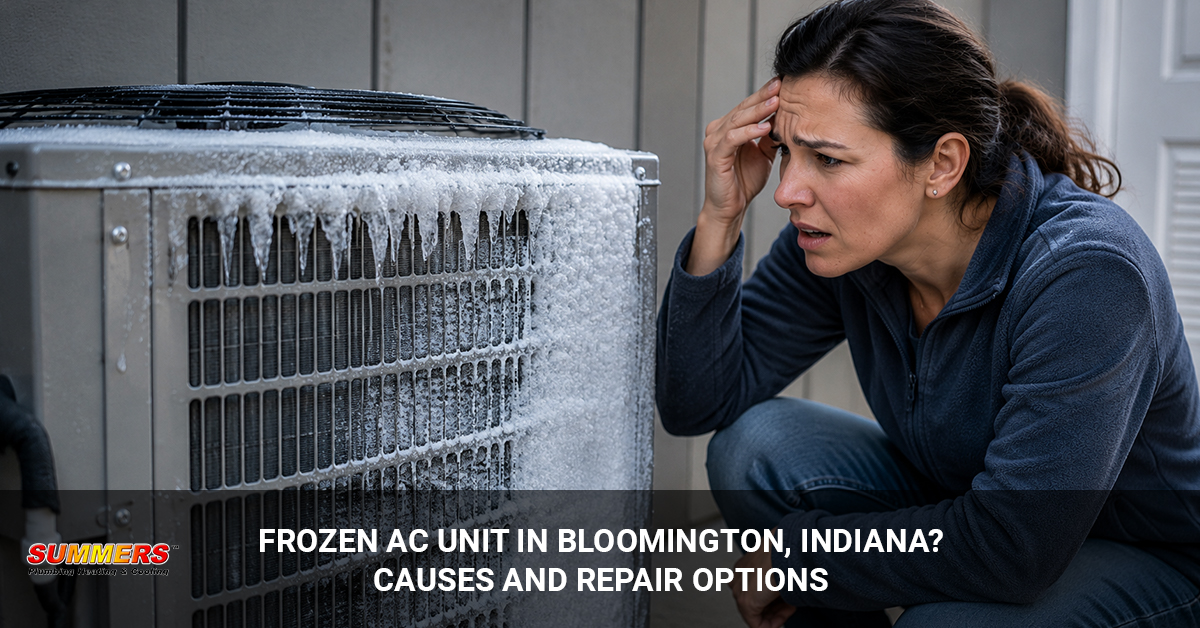
A frozen AC unit is usually caused by restricted airflow, a dirty air filter, low refrigerant levels, blocked vents, dirty coils, or a mechanical problem.
If you’ve noticed ice on your air conditioner during a hot Bloomington summer, it’s a sign that something isn’t working properly. An air conditioner should cool your home, but it should never be covered in ice. When freezing occurs, the system can lose cooling power, run less efficiently, and become vulnerable to more serious damage.
The good news is that some causes of a frozen AC are relatively simple to identify. In some cases, replacing a dirty air filter or improving airflow may solve the problem. In other situations, professional repairs are needed to address refrigerant leaks, electrical issues, or failing components.
In this guide, you’ll learn the most common reasons an AC unit freezes, what steps you can take to troubleshoot the issue, and when it’s time to call an HVAC professional in Bloomington, Indiana.
A frozen AC should never be ignored. Addressing the problem early can help restore comfort, improve efficiency, and prevent more expensive repairs down the road.
Why Is My AC Unit Frozen?
Your AC unit freezes when the evaporator coil gets too cold and moisture in the air turns into ice.
An air conditioner needs a steady flow of warm indoor air to pass over the evaporator coil. When airflow is restricted or refrigerant levels are too low, the coil temperature can drop below freezing. As moisture collects on the coil, it freezes and gradually builds into a layer of ice.
Several issues can cause a frozen AC unit, including:
- Dirty air filters
- Restricted airflow
- Low refrigerant levels
- Blocked vents
- Dirty evaporator coils
- Blower fan problems
- Mechanical failures
The longer the ice remains on the system, the more difficult it becomes for your AC to cool your home efficiently. In many cases, cooling performance drops significantly as the ice continues to build.
Signs Your AC Unit Is Frozen
A frozen AC unit often shows warning signs before the ice becomes obvious.
Recognizing these symptoms early can help prevent additional damage and reduce the risk of more expensive repairs.
Ice on Refrigerant Lines
Ice on the copper refrigerant lines is one of the clearest signs of a frozen AC system.
If you see frost or ice forming on the lines near the indoor or outdoor unit, the system may be experiencing an airflow or refrigerant problem.
Ice on the Indoor Coil
Visible ice on the evaporator coil usually indicates a more serious freezing issue.
The evaporator coil should never be covered in ice during normal operation. Ice buildup often points to restricted airflow, low refrigerant, or another system malfunction.
Weak Airflow
Weak airflow from your vents is a common symptom of a frozen coil.
As ice builds up, it blocks airflow through the system and prevents cool air from circulating properly throughout your home.
Warm Air From Vents
A frozen AC may blow warm or slightly cool air instead of properly conditioned air.
Even though the system is running, the ice prevents the evaporator coil from absorbing heat efficiently, reducing cooling performance.
Water Around the Indoor Unit
Water around the indoor unit can appear when the ice begins to melt.
After the system thaws, excess water may drip into the drain pan or around the air handler. If you notice water along with poor cooling performance, a frozen coil may be the cause.
If you notice one or more of these warning signs, it’s important to address the issue quickly before the freezing problem becomes more severe.
Dirty Air Filters and Restricted Airflow
A dirty air filter is one of the most common reasons an AC unit freezes.
Your air filter plays an important role in maintaining proper airflow throughout the HVAC system. As it collects dust, pollen, pet hair, and other airborne particles, the filter gradually becomes clogged. When this happens, less air can move across the evaporator coil, increasing the risk of freezing.
In many cases, a simple filter replacement can help restore airflow and improve cooling performance.
How Air Filters Affect Cooling
Proper airflow allows the evaporator coil to absorb heat from your home’s air. Maintaining good indoor air quality and proper airflow can help improve HVAC performance and reduce strain on the system.
When enough warm air passes over the coil, the system can maintain normal operating temperatures and cool your home efficiently. A clean filter helps ensure consistent airflow and supports overall system performance.
Why Restricted Airflow Causes Freezing
Restricted airflow can cause the evaporator coil to become too cold.
When the coil doesn’t receive enough warm air, moisture that normally drains away can freeze on its surface. Over time, that thin layer of frost can turn into a thick sheet of ice, making the cooling problem even worse.
As ice continues to build, you may notice:
- Weak airflow from vents
- Longer cooling cycles
- Reduced cooling performance
- Higher energy bills
- Warm air coming from vents
When to Replace Air Filters
Most homeowners should replace standard air filters every 1 to 3 months.
However, homes with pets, allergy sufferers, or heavy AC usage may need more frequent filter changes. Regular filter replacement is one of the easiest and most affordable ways to prevent airflow problems and reduce the risk of a frozen AC unit.
Checking the air filter should always be one of the first troubleshooting steps when an air conditioner freezes.
Low Refrigerant Levels Can Cause Ice Buildup
Low refrigerant is one of the most common causes of a frozen AC unit.
Refrigerant is responsible for absorbing heat from inside your home and carrying it outdoors. When refrigerant levels drop because of a leak, the pressure inside the system changes. This can cause the evaporator coil to become too cold, allowing moisture to freeze on the coil and refrigerant lines.
If the leak isn’t repaired, ice will often continue returning even after the system is thawed.
How Refrigerant Affects Coil Temperature
Proper refrigerant levels help your AC maintain the correct operating pressure and temperature.
When the refrigerant charge is correct, the evaporator coil can absorb heat efficiently without freezing. Low refrigerant disrupts this process and can cause coil temperatures to drop below freezing.
As ice accumulates, cooling performance decreases and the system has to work harder to keep your home comfortable.
Signs of a Refrigerant Leak
Several warning signs may indicate your AC is low on refrigerant.
Common symptoms include:
- Ice on refrigerant lines
- Warm air coming from vents
- Hissing or bubbling sounds
- Longer cooling cycles
- Reduced cooling performance
You may also notice higher energy bills and difficulty maintaining the thermostat setting.
Why Professional Repair Is Required
Refrigerant leaks require professional diagnosis and repair.
A technician must locate the source of the leak, repair the damaged component, test the system, and recharge the refrigerant to the manufacturer’s specifications. Simply adding more refrigerant without fixing the leak will only provide temporary relief and can lead to recurring problems.
Addressing refrigerant leaks early can help prevent compressor damage, improve cooling performance, and reduce the risk of more expensive HVAC repairs.
Blocked or Closed Supply Vents
Blocked or closed vents can reduce airflow and increase the risk of a frozen AC unit.
Your air conditioning system is designed to move a specific amount of air throughout your home. When vents are blocked or closed, airflow becomes restricted, making it harder for the evaporator coil to absorb heat properly. This can cause the coil temperature to drop and ice to form.
Many homeowners close vents in unused rooms thinking it will save energy, but doing so can actually create airflow problems and place additional strain on the HVAC system.
Common airflow restrictions include:
- Closed supply vents
- Furniture blocking vents
- Dirty vent covers
- Obstructed return vents
Walk through your home and make sure vents are fully open and free from obstructions. Maintaining proper airflow is one of the simplest ways to help prevent coil freezing and improve overall system performance. In some homes, professional duct cleaning services may be recommended to improve airflow throughout the HVAC system.
Dirty Evaporator Coils
Dirty evaporator coils can reduce cooling performance and cause ice to build up on the system.
The evaporator coil is responsible for absorbing heat from the air inside your home. Over time, dust, dirt, and other contaminants can collect on the coil surface. This buildup acts like insulation, preventing the coil from absorbing heat efficiently.
When heat transfer is reduced, the coil can become too cold and moisture on the surface may begin to freeze.
How Dirt Causes Coil Freezing
Dirt prevents the evaporator coil from absorbing enough heat from the airflow passing over it.
As the coil temperature drops, condensation freezes and gradually forms a layer of ice. The thicker the ice becomes, the harder it is for the system to cool your home.
Signs the Coil Needs Cleaning
Several symptoms may indicate that dirty coils are affecting your AC’s performance.
Common signs include:
- Reduced cooling performance
- Longer cooling cycles
- Ice formation on the coil
- Higher energy bills
You may also notice that your home takes longer to reach the desired temperature.
Benefits of Professional Coil Cleaning
Professional coil cleaning helps restore proper heat transfer and system efficiency.
Regular coil cleaning can help:
- Restore proper airflow
- Improve cooling efficiency
- Enhance overall system performance
- Reduce energy consumption
Keeping the evaporator coil clean helps your air conditioner operate more efficiently, lowers strain on HVAC components, and reduces the likelihood of future freezing problems.
Blower Fan Problems and Mechanical Issues
Blower fan problems can restrict airflow and cause your AC unit to freeze.
The blower motor is responsible for moving warm indoor air across the evaporator coil. When airflow drops because of a fan or mechanical problem, the coil can become too cold and ice may begin to form.
If airflow remains restricted, the freezing problem will often continue even after the ice has been removed.
Failing Blower Motors
A failing blower motor may not move enough air through the HVAC system.
As blower motors wear out, they can lose efficiency, operate inconsistently, or stop working altogether. Reduced airflow prevents the evaporator coil from absorbing enough heat, increasing the likelihood of freezing.
Common signs of a failing blower motor include:
- Weak airflow from vents
- Unusual noises
- Intermittent operation
- Longer cooling cycles
Fan Speed Problems
Incorrect fan speeds can also contribute to freezing issues.
If the blower fan is running too slowly, not enough warm air passes over the evaporator coil. This can cause coil temperatures to drop below freezing and allow ice to build up over time.
A technician can inspect the system and verify that the blower is operating at the correct speed for your home’s cooling needs.
Electrical Component Failures
Electrical problems can affect blower performance and reduce airflow throughout the system.
Components such as capacitors, relays, control boards, and wiring connections all play a role in blower operation. When one of these parts fails, airflow may decrease and cooling performance can suffer.
Warning signs of electrical issues may include:
- Intermittent system operation
- Unusual clicking or buzzing sounds
- Weak airflow
- Frequent system shutdowns
Because electrical and mechanical problems can be difficult to diagnose accurately, professional HVAC service is usually recommended. Identifying and repairing these issues early can help prevent recurring freezing problems and protect the rest of the system from unnecessary damage.
What Should You Do If Your AC Is Frozen?
If your AC is frozen, the first step is to safely thaw the system and identify what caused the ice to form.
Continuing to run a frozen air conditioner can make the problem worse and potentially damage important components. Taking a few simple steps can help protect the system while you determine whether professional repairs are needed.
Turn Off Cooling Mode
Turn the thermostat from “Cool” to “Off.”
This stops the cooling cycle and prevents additional ice from forming on the evaporator coil and refrigerant lines.
Switch Fan to “On”
Set the thermostat fan to “On.”
Running the fan without cooling helps move warm air across the frozen coil, which can speed up the thawing process. Depending on the amount of ice, it may take several hours for the system to thaw completely.
Replace the Air Filter
Check the air filter and replace it if it appears dirty.
A clogged filter is one of the most common causes of restricted airflow and frozen coils. Installing a clean filter can help restore proper airflow and may prevent the issue from returning.
Check Vents and Registers
Make sure all supply and return vents are open and unobstructed.
Look for furniture, rugs, curtains, or other items that could block airflow. Proper airflow throughout the home is essential for normal AC operation.
Monitor for Recurring Ice
After the system has fully thawed, restart the AC and monitor its performance.
If ice forms again, there is likely an underlying problem such as a refrigerant leak, blower fan issue, dirty coil, or airflow restriction that requires professional attention.
A frozen AC unit is often a symptom of a larger issue. If the system continues freezing after these troubleshooting steps, scheduling an HVAC inspection is the best way to prevent further damage and restore reliable cooling.
Can You Continue Running a Frozen AC Unit?
No, you should not continue running a frozen AC unit.
Although it may be tempting to keep the system running during hot weather, operating an air conditioner with ice on the coils or refrigerant lines can cause additional damage and make repairs more expensive.
When ice is present, the system cannot transfer heat properly. This forces the AC to work harder while delivering less cooling, putting extra stress on important components.
Potential risks of running a frozen AC include:
- Reduced cooling performance
- Higher energy bills
- Compressor damage
- Increased repair costs
- Shortened equipment life
The safest approach is to turn off the cooling mode and allow the system to thaw completely before restarting it. If the freezing problem returns, professional diagnosis is recommended.
When to Call an HVAC Professional in Bloomington, Indiana
You should contact an HVAC professional if your AC continues freezing after basic troubleshooting.
While replacing a dirty air filter or opening blocked vents may solve some airflow issues, recurring ice buildup usually points to a more serious problem that requires professional attention.
Professional HVAC service is recommended when:
- Ice returns after the system thaws
- Refrigerant leaks are suspected
- Airflow remains weak
- Cooling performance is poor
- Mechanical problems are present
A trained technician can identify the root cause of the freezing issue, whether it’s a refrigerant leak, blower motor problem, dirty coil, or another system malfunction.
Addressing the problem early can help prevent compressor damage, improve energy efficiency, and restore reliable cooling before a minor issue becomes a major repair.
Repair vs. Replacement: Which Makes More Sense?
Whether you should repair or replace your AC depends on the system’s age, condition, repair history, and overall efficiency.
In many cases, repairing a newer system is the most cost-effective option. However, if your air conditioner is older and experiencing recurring problems, replacement may provide better long-term value.
A professional HVAC inspection can help determine which option makes the most financial sense for your situation. Reviewing the benefits of AC repair vs replacement can help homeowners make a more informed decision when major issues arise.
Age of the System
The age of your AC is one of the biggest factors when deciding between repair and replacement.
Most air conditioning systems last between 10 and 15 years with proper maintenance. As systems get older, components wear out, efficiency declines, and breakdowns become more common.
If your AC is approaching or exceeding 15 years of age, replacement may be worth considering, especially if major repairs are needed.
Frequency of Repairs
Frequent repairs are often a sign that a system is nearing the end of its useful life.
If you’re calling for HVAC service multiple times each year, the cost of ongoing repairs can quickly add up. In some cases, investing in a new system may save money over the long term.
Cost of Major Repairs
Expensive repairs on an aging air conditioner don’t always provide the best return on investment.
Problems involving compressors, evaporator coils, or major refrigerant leaks can be costly to repair. When a large repair is needed on an older system, replacement may be the more practical solution.
Energy Efficiency Considerations
Newer air conditioners are typically much more energy-efficient than older models.
Modern systems use less energy to provide the same level of cooling, which can help reduce monthly utility bills. Many homeowners also benefit from improved humidity control, more consistent temperatures, and greater overall comfort.
If your current AC struggles to cool your home efficiently, upgrading to a newer system may lower operating costs while improving reliability and performance. Modern AC installation options in Bloomington offer improved efficiency, comfort, and long-term energy savings.
How to Prevent Your AC From Freezing Again
Regular maintenance is the most effective way to prevent your AC from freezing in the future.
Most frozen AC problems start with small issues such as restricted airflow, dirty components, or minor cooling problems. Taking care of your system throughout the year can help reduce the risk of ice buildup and costly repairs.
Change Filters Regularly
Replacing your air filter regularly helps maintain proper airflow throughout the HVAC system.
A clogged filter is one of the leading causes of frozen evaporator coils. Most homeowners should replace standard air filters every 1 to 3 months, although homes with pets or heavy AC usage may need more frequent replacements.
Schedule Annual Maintenance
Annual HVAC maintenance helps identify potential problems before they turn into major repairs.
During a professional tune-up, technicians inspect critical components, clean coils, check refrigerant levels, test airflow, and ensure the system is operating efficiently. Routine maintenance can significantly reduce the likelihood of freezing issues.
Following a seasonal HVAC summer prep checklist can help reduce the risk of airflow problems, freezing issues, and unexpected breakdowns.
Keep Vents Open
Proper airflow is essential for keeping your AC operating correctly.
Make sure supply and return vents remain open and free from obstructions such as furniture, rugs, curtains, or other household items. Restricting airflow can cause the evaporator coil to become too cold and freeze.
Address Cooling Issues Early
Small cooling problems rarely improve on their own.
If you notice weak airflow, uneven cooling, unusual noises, rising energy bills, or longer cooling cycles, schedule service as soon as possible. Addressing minor issues early can prevent larger repairs, improve system efficiency, and help keep your AC running reliably throughout the cooling season.
A little preventive maintenance can go a long way toward protecting your air conditioner and avoiding future freezing problems.
Frequently Asked Questions
Why Does My AC Keep Freezing Up?
An AC usually keeps freezing because of restricted airflow, low refrigerant levels, dirty coils, or a mechanical problem.
Common causes include dirty air filters, blocked vents, refrigerant leaks, blower fan issues, and other problems that prevent the system from operating normally. If the unit continues freezing after basic troubleshooting, professional diagnosis is recommended.
Will a Frozen AC Fix Itself?
No, a frozen AC will not fix itself.
While the ice may eventually melt, the underlying issue that caused the freezing will still be present. Without proper repairs, the system will likely freeze again and continue losing cooling performance.
How Long Does It Take for a Frozen AC to Thaw?
Most frozen AC units take several hours to thaw completely.
The exact time depends on how much ice has accumulated. Running the fan with the cooling mode turned off can help speed up the thawing process.
Can a Dirty Filter Cause an AC to Freeze?
Yes, a dirty air filter is one of the most common causes of a frozen AC unit.
A clogged filter restricts airflow across the evaporator coil. When airflow drops, the coil can become too cold and moisture begins freezing on its surface.
Is Low Refrigerant Always the Cause of a Frozen AC?
No, low refrigerant is not the only cause of a frozen AC.
Airflow restrictions, dirty evaporator coils, blocked vents, blower motor problems, and other mechanical issues can also cause the coil to freeze. A professional inspection can identify the exact cause.
Should I Turn My AC Off if It Freezes?
Yes, you should turn off the cooling mode if your AC freezes.
Continuing to run a frozen system can increase strain on HVAC components and potentially cause additional damage. Turning the system off and allowing it to thaw is usually the safest first step.
Final Thoughts
If your AC unit is frozen in Bloomington, Indiana, don’t ignore the problem.
A frozen air conditioner is usually a sign that something is preventing the system from operating properly. In many cases, the issue is related to restricted airflow, low refrigerant levels, dirty components, or a mechanical failure that needs attention.
Simple steps such as replacing a dirty air filter, opening blocked vents, and allowing the system to thaw may help resolve some problems. However, if ice continues to return, it’s important to have the system inspected by an HVAC professional.
Addressing a frozen AC early can help prevent more expensive repairs, improve energy efficiency, extend the life of your equipment, and restore reliable cooling to your home. The sooner the underlying issue is identified and repaired, the better your chances of avoiding a complete system breakdown during Bloomington’s hottest summer days.